Zhubei
🇹🇼 Taiwan
The Silicon Valley of the East Meets Suburban Chill
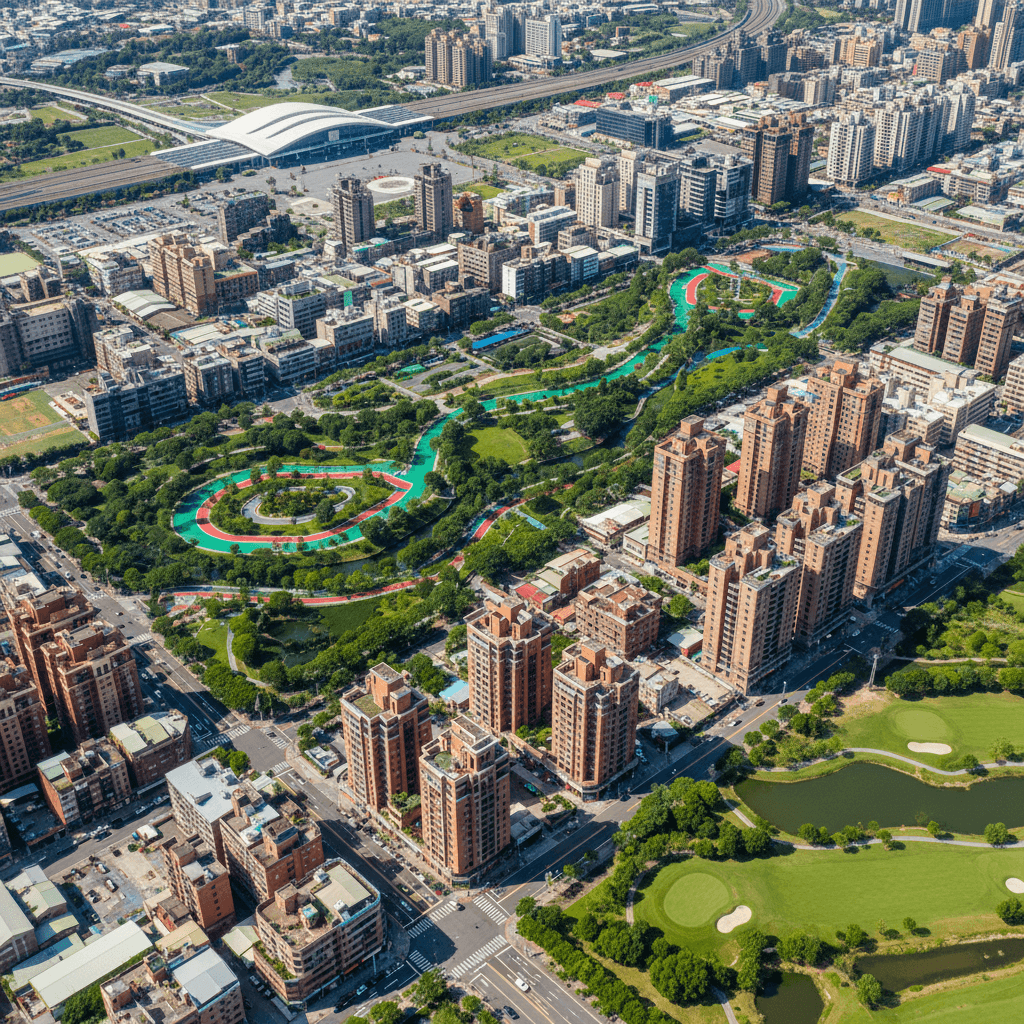
Zhubei is what happens when you take Taiwan's relentless tech ambition and drop it into a spacious, family-oriented suburb. While Taipei feels like a neon-soaked labyrinth and Tainan feels like a museum, Zhubei is shiny, wide open, and surprisingly quiet. It functions as the high-end bedroom community for the Hsinchu Science Park, meaning you're surrounded by the world's most advanced semiconductor engineers during the day and a peaceful, park-filled retreat by night.
For digital nomads, the appeal isn't about wild parties or ancient temples. It's about a high-functioning life. You're trading the cramped "shoebox" apartments of the capital for modern high-rises with floor-to-ceiling windows and lightning-fast fiber internet. Most travelers find the vibe here is about deep work. It's a place to finish that big project, hit the gym, and grab a world-class coffee without the sensory overload of a major metropolis.
The Daily Flow
Life here centers around the High Speed Rail (HSR) station. This area is the heartbeat for expats and remote workers because it’s walkable, safe, and packed with upscale cafes. You'll likely start your morning at a local spot like Starbucks or a boutique roastery, where the Wi-Fi is consistently 100-500Mbps. Since the city is built for the tech elite, the infrastructure is flawless. You can leave your laptop on the table to grab a refill without a second thought; Taiwan’s safety is legendary, and Zhubei is no exception.
By evening, the pace slows down even further. You won't find many nightclubs, but the night markets near the city center offer a more authentic, less crowded experience than those in Taipei. Expats recommend the area around Guanpu or the HSR station for a mix of convenience and quiet. It's a "slow living" destination in a high-tech wrapper.
What It Costs
Zhubei isn't the cheapest spot in Southeast Asia, but it’s a steal compared to Western tech hubs or even central Taipei. You’ll generally find costs are 20 to 30 percent lower than in the capital. Here is a breakdown of what to expect for a mid-range lifestyle:
- Modern Studio/1BR: 15,000 to 20,000 NT$ ($450 to $600 USD)
- Monthly Food Budget: 9,000 to 15,000 NT$ ($275 to $450 USD)
- Coworking Desk: 5,000 to 8,000 NT$ ($150 to $240 USD)
- Transportation (Ubike/Local Bus): 1,000 NT$ ($30 USD)
If you're on a budget, sticking to street food like beef noodles or stinky tofu for $3 to $6 a meal will keep your costs down. If you want the "comfortable" tier with frequent dinners at places like Din Tai Fung and private gym memberships, plan for a total monthly spend of around $2,500 USD.
The Nomad Advantage
The game-changer for 2025 is Taiwan's Digital Nomad Visa (launched January 2025) allows up to 6 months initially, with extensions possible up to 2 years total. with proof of remote income. This makes Zhubei an ideal base for those who want to explore the island without the stress of "visa runs" every 90 days. While English isn't as widely spoken here as it is in Taipei's Xinyi district, the locals are incredibly patient. Having Google Translate and an Airalo eSIM ready to go will solve 99 percent of your communication hurdles.
The real magic of Zhubei is its connectivity. You’re only 30 minutes from Taipei by HSR if you need a big city fix, and one hour from Taoyuan International Airport. But when you're done, you get to retreat back to a city that feels like it was designed specifically for focus and recovery. It’s a polished, professional, and peaceful alternative to the typical nomad trail.
The Zhubei Advantage
If you're eyeing Taiwan but the rental prices in Taipei make you wince, Zhubei is the strategic middle ground. It's roughly 20% to 30% cheaper than the capital, yet it sits right on the High-Speed Rail line, meaning you can be in the heart of Taipei in about 35 minutes for a few hundred NT$. It's a tech-heavy suburb that feels polished and modern, largely because it serves the Hsinchu Science Park crowd. You won't find the gritty charm of Tainan here; instead, you get wide sidewalks, new apartment complexes, and a high concentration of high-earning locals which keeps the infrastructure top-tier.
Monthly Budget Breakdown
Living here comfortably doesn't require a Silicon Valley salary, but it isn't "backpacking cheap" either. Most digital nomads find that a monthly budget of $1,500 to $2,000 USD allows for a very high quality of life, including a modern studio, daily cafe visits, and plenty of weekend trips.
Housing and Utilities
Rent will be your biggest expense, but the value for money is excellent compared to the cramped studios of Taipei. Most nomads look for housing near the Hsinchu HSR station or the newer developments in the Guanpu area.
- Budget Studio: NT$10,000 to NT$15,000 ($300 to $450 USD). Expect a simple, older "suite" style room, likely a walk-up.
- Mid-Range 1BR: NT$15,000 to NT$20,000 ($450 to $600 USD). This gets you into a modern building, often with an elevator and potentially a small gym.
- Luxury/Modern Condo: NT$20,000+ ($600+ USD). These are the gleaming glass towers you see near the station, featuring 24-hour security and high-end finishes.
- Utilities: Budget about NT$2,000 to NT$3,000 for electricity and water, especially in the summer when the AC stays on 24/7.
Food and Dining
Zhubei is a land of contrasts when it comes to eating. You can survive on delicious night market staples for pennies or drop a week's grocery budget on a single Japanese omakase dinner. Expats recommend ভারসাম্য (balance) by hitting local spots during the week and saving the fancy bistros for the weekend.
- Local Eats: A bowl of beef noodles or a set meal at a local "biandang" shop runs NT$100 to NT$180 ($3 to $6 USD).
- Mid-Range Dining: A nice dinner at a place like Din Tai Fung or a trendy brunch cafe will cost NT$300 to NT$800 ($9 to $25 USD) per person.
- Coffee Culture: A latte at a specialty roaster or a Starbucks is roughly NT$120 to NT$160 ($4 to $5 USD). Many nomads use these as de facto offices for the price of a drink.
Connectivity and Transport
Getting around is remarkably cheap if you use the public systems. The Ubike system is a nomad favorite for short hops between cafes. For longer stays, look into the TPASS or a standard EasyCard for seamless taps on buses and trains.
- Monthly Transport: NT$1,000 to NT$2,000 ($30 to $60 USD) covers most bus and local train usage.
- Internet: Home fiber is fast and reliable. Mobile data is even better; an unlimited 5G SIM from Chunghwa Telecom costs about NT$500 ($15 USD) per month.
- Coworking: While Zhubei is short on dedicated nomad hubs, Hsinchu has spaces like JustCo where a hot desk goes for roughly NT$8,000 ($240 USD) a month.
The Bottom Line
Zhubei is an ideal "slow-burn" destination. It’s safe enough that travelers often leave their laptops on the table while grabbing a refill, and the 2025 Digital Nomad Visa makes staying for 180 days a straightforward process. You're paying for convenience, safety, and some of the fastest internet on the planet, all while keeping your overhead significantly lower than in Asia's primary hubs.
Digital Nomads: The High-Speed Rail (HSR) District
If you're landing in Zhubei with a laptop and a need for speed, the area surrounding the HSR Hsinchu Station is your base camp. This is the most modern slice of the city, characterized by wide boulevards and slick glass towers. It's the neighborhood that feels most like a global tech hub, making it easy to transition if you're coming from places like Singapore or Seattle.
- The Work Setup: While dedicated coworking spaces are still popping up, nomads here swear by the high-end cafe culture. You'll find plenty of reliable outlets and 500Mbps fiber connections. Starbucks remains a reliable backup for long sessions, but local boutique roasters are where the real work happens.
- Convenience: You can hop on a train and be in central Taipei in 35 minutes for about NT$290. It's the perfect balance for those who want a quiet home base without giving up access to the capital's nightlife.
- Costs: Expect to pay a premium for the location. Modern studios here range from NT$18,000 to NT$22,000.
Expats and Tech Professionals: Guanpu and the Science Park Fringe
Just across the river from the main Zhubei sprawl lies the Guanpu area. It technically sits on the Hsinchu City border, but for anyone working in or around the Hsinchu Science Park, it's the place to be. This neighborhood is the heart of Taiwan's "Silicon Valley" and feels incredibly international.
Expats often choose this area because it's designed for efficiency. You've got Costco nearby for bulk supplies and a high density of English-speaking services. The vibe is professional and upscale, with plenty of mid-range dining options like Din Tai Fung within a short drive or Uber ride. Living here puts you in the center of the action for networking with semiconductor pros and hardware innovators.
Families: Liujia and the Riverside Parks
Zhubei is arguably the most family-friendly city in Taiwan right now, and the Liujia district is the reason why. This neighborhood blends old-school Taiwanese charm with massive green lungs like the Hsinchu County Riverside Park. It's quieter than the HSR district and feels much more like a community than a transit hub.
- Safety and Space: You'll see parents pushing strollers at 10:00 PM without a second thought. The streets are wider and more walkable than older Taiwanese neighborhoods, and the air quality is generally better than in the deep urban canyons of Taipei.
- Housing: You can find spacious three-bedroom apartments for NT$30,000 to NT$40,000, which would be impossible in the capital. Many buildings come with private gyms and play areas for kids.
- Education: Proximity to international schools and high-quality bilingual kindergartens makes this the default choice for relocating families.
Solo Travelers and Budget Seekers: Old Zhubei (Near the Train Station)
For those who want an authentic local experience without the "tech park" price tag, head toward the original Zhubei Train Station (the western side of the city). This is where the suburban gloss fades into traditional Taiwan. It's noisier, more crowded, and significantly more affordable.
Solo travelers love this area for the Zhubei Night Market, where you can grab a massive bowl of beef noodles or crispy stinky tofu for under NT$100. Renting a modest older studio here can drop your monthly housing costs to NT$10,000 or NT$12,000. While you'll need to use Google Translate more often here than in the HSR district, the hospitality is unmatched. It's also the best spot for Ubike enthusiasts, as the flat terrain makes it easy to zip between local dumpling shops and 24-hour convenience stores.
Connectivity and Speed
You won't have to worry about the internet in Zhubei. Taiwan consistently ranks among the fastest countries globally for connection speeds, and this tech-heavy suburb is no exception. Most apartments and modern cafes offer speeds between 100Mbps and 500Mbps as a standard. If you're planning to stream or handle heavy uploads for work, you'll find the infrastructure incredibly reliable.
For mobile data, skip the roaming and grab a local SIM or an eSIM. Airalo is the go-to for most nomads arriving at the airport for immediate data, but for longer stays, head to a Chunghwa Telecom storefront. You can get unlimited 5G data for roughly NT$300 to NT$500 per month. The coverage in Zhubei is seamless, even when you're tucked away in a basement dumpling shop or riding the high-speed rail.
Coworking Spaces
Zhubei is still developing its dedicated coworking scene compared to Taipei, but its proximity to the Hsinchu Science Park means professional spaces are within reach. Most nomads here lean on the neighboring Hsinchu City hubs for a structured office environment. JustCo is a heavy hitter in the region, offering hot desks and private offices that cater to the tech crowd. Expect to pay around NT$5,000 to NT$8,000 per month for a hot desk, while daily passes usually hover around NT$200 to NT$300.
- JustCo (Hsinchu): Best for a corporate, high-end feel with great networking opportunities.
- Local Libraries: The Hsinchu County Cultural Affairs Bureau library in Zhubei is a quiet, free alternative, though you'll need to arrive early to snag a seat with a power outlet.
The Cafe Office Culture
If you prefer a more relaxed vibe, Zhubei has a thriving cafe culture. Unlike some European cities where laptop use is discouraged, many Taiwanese cafes embrace the "work from anywhere" lifestyle. Starbucks remains a reliable fallback because they allow you to reserve tables through their app and almost always have accessible outlets. However, the local specialty coffee shops near the Hsinchu High-Speed Rail Station are where you'll find the best atmosphere.
Look for spots with "No Time Limit" signs. Many cafes provide free, high-speed Wi-Fi and power strips at communal tables. It's common practice to buy a coffee for NT$120 to NT$180 and stay for a few hours. Just remember that many local spots close earlier than they do in Taipei, often around 7:00 PM or 8:00 PM, so plan your deep-work sessions for the morning or afternoon.
Practical Remote Work Tips
Since Zhubei is a commuter town for the semiconductor industry, the cafes can get surprisingly busy during lunch hours and on weekends. If you need absolute silence for a call, your best bet is working from your apartment or booking a private meeting room at a coworking space. Most nomads find that the residential areas near Guanpu offer the best balance of quiet surroundings and decent Wi-Fi.
- Power Plugs: Taiwan uses Type A and B sockets (same as the US and Canada), so bring an adapter if you're coming from Europe or Australia.
- Public Wi-Fi: The "iTaiwan" government Wi-Fi is available in many public spaces and train stations, though it's better for quick messages than heavy work.
- Registration: If you're applying for the new Digital Nomad Visa (available as of January 2025), having a local address in Zhubei will make setting up your home internet much easier, as providers usually require proof of residency or a deposit.
Personal Safety and the "Laptop Test"
If you're coming from North America or Europe, the safety levels in Zhubei will feel almost surreal. It's the kind of place where locals routinely leave their iPhones and MacBook Pros on a cafe table to go use the restroom or order a second latte. Theft is remarkably rare, and violent crime against foreigners is practically non-existent. You can walk through the park or down a side street at 3:00 AM without a second thought.
There aren't really any "bad neighborhoods" to avoid here. Even the quieter industrial outskirts or the older residential blocks are perfectly safe. The biggest physical threat you'll face isn't a person; it's the traffic. Like much of Taiwan, scooters can zip out of alleys unexpectedly, and sidewalks are sometimes blocked by parked bikes, forcing you into the street. Keep your eyes up when crossing the road, especially during the 6:00 PM tech-worker rush hour.
Healthcare Quality and Access
Taiwan has one of the best healthcare systems on the planet, and Zhubei sits right in a medical sweet spot. Since it's a wealthy tech hub, the facilities are modern and efficient. Hsinchu Mackay Memorial Hospital is the go-to for most expats in the area. It's a massive, high-tier facility where you'll find plenty of English-speaking doctors and staff. If you're staying closer to the High-Speed Rail station, the China Medical University Hsinchu Hospital is another world-class option.
For minor issues like a cold or a skin rash, skip the hospital and head to a local clinic. You'll see them everywhere, usually marked with a green cross. A visit without local insurance typically costs between $15 and $30 USD (around NT$500 to NT$1,000), including the consultation and three days of medication. It's often faster and cheaper than using your international travel insurance for small stuff.
- Emergency Numbers: Dial 110 for police and 119 for ambulance or fire services.
- Pharmacies: Look for Cosmed or Watson’s for over-the-counter meds. For prescriptions, look for the smaller "Pharmacy" signs with the blue and white health insurance logo.
- Dental Care: Dental clinics are on almost every corner. They're incredibly high-quality and very affordable for out-of-pocket payers.
Insurance and the Digital Nomad Visa
If you're entering on the new Digital Nomad Visa (available as of January 2025), you'll need to maintain your own private health insurance for the duration of your 180-day stay. Most nomads use providers like SafetyWing or Genki, which are widely accepted. While you won't be eligible for the National Health Insurance (NHI) scheme unless you transition to an ARC (Alien Resident Certificate) and stay for six months, the out-of-pocket costs are low enough that it rarely matters for routine care.
One pro tip for Zhubei: keep an EasyCard in your wallet. While it's primarily for the bus and Ubike, you can use it to pay at many pharmacies and even for small fees at some clinics. It saves you from fumbling with cash when you're feeling under the weather.
Natural Hazards
You should be aware that Taiwan is seismically active. Small tremors are common and usually nothing to worry about. Most buildings in Zhubei are relatively new and built to strict earthquake codes. During the summer and autumn, typhoons can occasionally shut the city down for a day or two. When a "Typhoon Day" is declared, stay indoors, grab some snacks from the nearest 7-Eleven, and wait for it to pass. The city infrastructure is well-equipped to handle the heavy rain.
The Logistics of Life in Zhubei
Zhubei is a city built for efficiency. While it lacks the sprawling subway networks of Taipei, it makes up for it with a hyper-connected high speed rail hub and a grid that is surprisingly easy to master. Most nomads find that once they have a transit card in their pocket, the city opens up quickly.
The High Speed Rail (THSR) Advantage
The Hsinchu High Speed Rail Station is actually located right in the heart of Zhubei, making it the city's most important transit asset. It is the gateway to the rest of the island. You can be in the center of Taipei in about 35 minutes for roughly NT$290, or reach Taoyuan International Airport in under 20 minutes. For digital nomads who need to bounce between tech meetups in the capital and their home base in Zhubei, this is a total game changer.
Getting Around on Two Wheels
If you are staying within the city core, YouBike is your best friend. These bright yellow and white bikes are everywhere. You'll need a local phone number and an EasyCard or iPass to register at the kiosk. It is incredibly cheap, often costing less than NT$10 or $20 for a quick cross-town trip. The terrain here is mostly flat, so you won't break a sweat getting to a cafe.
For longer stays, many expats recommend renting or buying a second hand scooter. It is the quintessential Taiwan experience and gives you the freedom to explore the foothills of the nearby mountains. A daily rental usually runs around NT$500, but monthly deals can be negotiated much lower. Just make sure you have an International Driving Permit that specifically covers motorcycles.
Public Buses and Ride-Hailing
Zhubei has a decent local bus system, but it can be a bit intimidating if you don't speak Mandarin. The Bus+ app is a lifesaver here, providing real-time arrivals so you aren't standing in the humidity for too long. Fares are usually a flat NT$15.
When you don't feel like pedaling or waiting for a bus, Uber is reliable and widely available. It is generally more transparent than hailing a traditional yellow cab, as the price is locked in before you jump in. Expect to pay between NT$150 and NT$300 for most trips within the city limits.
The Essential Transit Kit
- EasyCard (Yoyo Card): Pick one up at any 7-Eleven or FamilyMart for NT$100. You'll use this for buses, trains, YouBikes, and even buying snacks at convenience stores.
- Google Maps: It is surprisingly accurate for bus timings and walking routes in Zhubei.
- T-Ex Mobile Ticketing: The official app for booking High Speed Rail tickets without standing in line.
Walking and Walkability
The area around the HSR station and the newer residential blocks near Guanpu are designed with wide sidewalks, which is a luxury in Taiwan. However, like much of the country, sidewalks can sometimes disappear or be blocked by parked scooters. Travelers often say that while the city is walkable in pockets, you'll want a set of wheels if you plan on living anywhere outside the immediate station district.
The Language Landscape
In Zhubei, Mandarin Chinese is the undisputed king of communication. Unlike the tourist heavy districts of Taipei, you will find a more authentic, local linguistic environment here. Because the city sits right next to the Hsinchu Science Park, you'll encounter a higher density of English speakers among the tech engineers and researchers living in the modern high rises near the High Speed Rail station. However, once you step into a local noodle shop or a traditional market, English proficiency drops off quickly.
Hokkien, often called Taiwanese, is also widely spoken, especially by the older generation and long term residents. You don't need to learn it to survive, but hearing it provides a beautiful soundtrack to daily life in the suburbs. Most nomads find that while the language barrier exists, the local "Taiwanese hospitality" usually bridges the gap. People are incredibly patient and will often go out of their way to help you via hand gestures or by finding a younger person who speaks some English.
Digital Survival Tools
You shouldn't try to navigate Zhubei without a few specific apps on your phone. Google Translate is your best friend, particularly the camera feature for deciphering menus that don't have pictures. Since Traditional Chinese characters are used in Taiwan, make sure you have that specific language pack downloaded for offline use.
- Line: This is the "everything app" of Taiwan. Whether you are talking to a landlord, joining a local hiking group, or booking a hair appointment, it happens on Line.
- Uber: While the app is for rides, it's also a great way to see the names of locations in both English and Chinese, which helps with navigation.
- Waygo: An alternative translation app that many expats recommend for its ability to translate vertical text and menus without needing a data connection.
Key Phrases for Daily Life
Learning a few basics goes a long way in building rapport with the locals. Even a botched attempt at Mandarin is usually met with a warm smile and "your Chinese is so good!" (even when it definitely isn't). Start with these essentials:
- Nǐ hǎo: Hello. (Use "Nín hǎo" for a more polite version when speaking to elders).
- Xièxie: Thank you. You'll say this dozens of times a day.
- Bù yòng: No thank you / I don't need it. Very useful when offered a plastic bag at 7-Eleven.
- Duō shǎo qián?: How much does it cost?
- Yǒu yīng wén mènu ma?: Do you have an English menu?
- Tíng chē: Stop here (useful for taxis).
Communication Logistics
To stay connected, you'll want a local SIM card immediately. Chunghwa Telecom is the gold standard for coverage, especially if you plan on heading into the nearby mountains for weekend hikes. You can pick up a 30 day unlimited data SIM for about NT$1000 (~$30 USD), which includes data and some voice credit. If you prefer the digital route, Airalo works perfectly well for data, though having a local number is helpful for using the Ubike app or ordering food delivery.
For professional communication, the internet speeds in Zhubei are some of the best in Asia. Most modern apartments and "laptop friendly" cafes offer speeds between 100Mbps and 500Mbps. If you are working with teams in the US or Europe, you'll find the infrastructure more than capable of handling high definition video calls without a hiccup. Just keep in mind that in local coworking spaces, the default language for interfaces and contracts will be Chinese, so keep that translation app handy during your first visit.
The Seasonal Rhythm
Zhubei shares much of the subtropical climate found in northern Taiwan, but it has a distinct personality shaped by the famous Hsinchu winds. These powerful gusts, known as the Siberian High, sweep through the city during the autumn and winter months. While they keep the air quality better than in many industrial hubs, they can make a 15°C (59°F) day feel significantly colder. Most nomads find the sweet spot for visiting falls between October and December, when the oppressive summer humidity breaks and the typhoon season winds down.
If you're planning a long stay, prepare for four distinct seasons that aren't always predictable. Spring is a gamble of mist and light rain, while summer is a marathon of heat. Locals and expats generally structure their outdoor activities around the early morning or late evening to avoid the midday sun, which often pushes temperatures above 34°C (93°F) with heavy humidity.
Best Times to Visit
- Peak Season (October to December): This is the goldilocks zone. The weather is dry, the sky is often clear, and temperatures hover around a comfortable 22°C (72°F). It is the best time for hiking the nearby mountains or exploring the Zhubei night markets without breaking a sweat.
- Shoulder Season (March to May): Spring brings the cherry blossoms and the Hakka Tung Blossom Festival in the surrounding hills. It is beautiful but damp, as the plum rain season typically starts in May, bringing consistent afternoon showers.
- Off-Peak (June to September): Expect intense heat and the occasional typhoon. While the infrastructure in Zhubei is built to handle storms, typhoons can occasionally shut down public transport and businesses for a day or two.
The Temperature Breakdown
Spring (March to May): Temperatures range from 18°C to 26°C (64°F to 79°F). You will want a light waterproof jacket and an umbrella. This is a great time for nomads who enjoy cafe hopping, as the misty weather makes for a cozy work atmosphere.
Summer (June to August): It gets hot, often peaking at 35°C (95°F). Humidity is the real story here, often staying above 75%. Air conditioning isn't just a luxury; it is a requirement for your apartment. Most travelers spend their days in coworking spaces or libraries and wait until 7:00 PM to head out for food.
Autumn (September to November): Generally considered the best weather of the year. The humidity drops, and the temperature settles between 20°C and 28°C (68°F to 82°F). This is the ideal window for digital nomads to arrive and get settled before the winter chill.
Winter (December to February): It is rarely freezing, with lows around 12°C (54°F), but the lack of central heating in most Taiwanese buildings makes it feel colder indoors. The Hsinchu winds are at their peak during these months. Expats recommend bringing high quality layers and perhaps purchasing a small space heater for your rental.
Planning Around Holidays
The Lunar New Year, which usually falls in late January or February, is the biggest event on the calendar. During this week, Zhubei becomes incredibly quiet as people head to their hometowns. Many smaller restaurants and shops close for three to five days. However, the Lantern Festival that follows is a spectacular time to be in the region, with local celebrations that are far less crowded than the massive events in Taipei.
If you are arriving on the Digital Nomad Visa after January 2025, aim for an October start date. You will get the best weather for your first three months, allowing you to explore the Hsinchu Science Park area and the nearby hiking trails before the damp spring weather arrives.
Connectivity and Tech Setup
Taiwan is a global leader in internet speeds, and Zhubei is no exception. You can expect 100 to 500Mbps to be the standard in most modern apartments and cafes. For your mobile data, skip the airport lines and grab an eSIM via Airalo before you land, or head to a Chunghwa Telecom shop once you settle in. Unlimited 5G data plans usually run between NT$300 and NT$500 per month.
While Zhubei doesn't have a massive dedicated coworking scene yet, it's a quick hop over to Hsinchu City for spaces like JustCo. Most local nomads prefer the "cafe office" lifestyle. Starbucks is a reliable standby where it's socially acceptable to camp out with a laptop for a few hours, provided you buy a coffee. If you need a more professional setup, expect to pay around NT$5,000 to NT$8,000 for a monthly hot desk in the Hsinchu area.
The Digital Nomad Visa
Starting in January 2025, Taiwan introduced a specific Digital Nomad Visa that's a game changer for long term stays. It allows you to stay for up to 180 days, which is perfect if you want to use Zhubei as a base to explore the rest of the island. You'll need to show proof of income or a previous nomad visa from another country to qualify. For those looking for something more permanent, the Gold Card remains the gold standard for high earners in the tech sector.
Average Monthly Costs
Zhubei is significantly more affordable than Taipei, often coming in 20% to 30% cheaper across the board. Here is what a typical monthly budget looks like for a mid range lifestyle:
- Housing: A modern studio or one bedroom apartment near the High Speed Rail station usually costs between NT$15,000 and NT$20,000 ($450 to $600 USD).
- Food: If you eat like a local at night markets, you can get by on $6 USD per meal. For mid range dining like Din Tai Fung, budget about $15 to $25 USD.
- Transportation: A mix of Ubike rentals and the occasional Uber will likely cost you NT$1,000 to NT$2,000 per month.
Getting Around
The THSR Hsinchu Station is the heart of Zhubei's transit. You can reach Taipei in about 30 minutes for roughly NT$290. For daily errands, the Ubike system is your best friend. The first 30 minutes are often free or heavily subsidized, and there are docking stations all over the city center. Just download the app and register using your EasyCard, which you can also use to pay at 7-Eleven and on local buses.
Safety and Health
This is one of the safest places on earth. It's common to see nomads leave their laptops on a cafe table while they grab a refill or use the restroom. Violent crime is almost non existent. If you do get sick, Hsinchu Mackay Memorial Hospital is the go to for expats because they have a high number of English speaking staff. For minor issues, look for a Cosmed or Watsons pharmacy; they are on almost every major corner.
Language and Social Life
English isn't as widely spoken here as it is in Taipei's Xinyi district, so download Google Translate for offline use. Learning basic Mandarin phrases like Ni hao (hello) and Xie xie (thanks) goes a long way with local vendors. To find your community, join the Digital Nomads Taiwan or Room Abroad Facebook groups. Most expat meetups happen in nearby Hsinchu City, but the Zhubei tech crowd is growing quickly, and you'll often find people networking in the newer craft beer bars near the station.
Need visa and immigration info for Taiwan?
🇹🇼 View Taiwan Country GuideEasy Landing
Settle in, no stress
Monthly Budget Estimates
More cities in Taiwan
Hualien City
🇹🇼 Taiwan
Yilan City
🇹🇼 Taiwan
Hengchun
🇹🇼 Taiwan