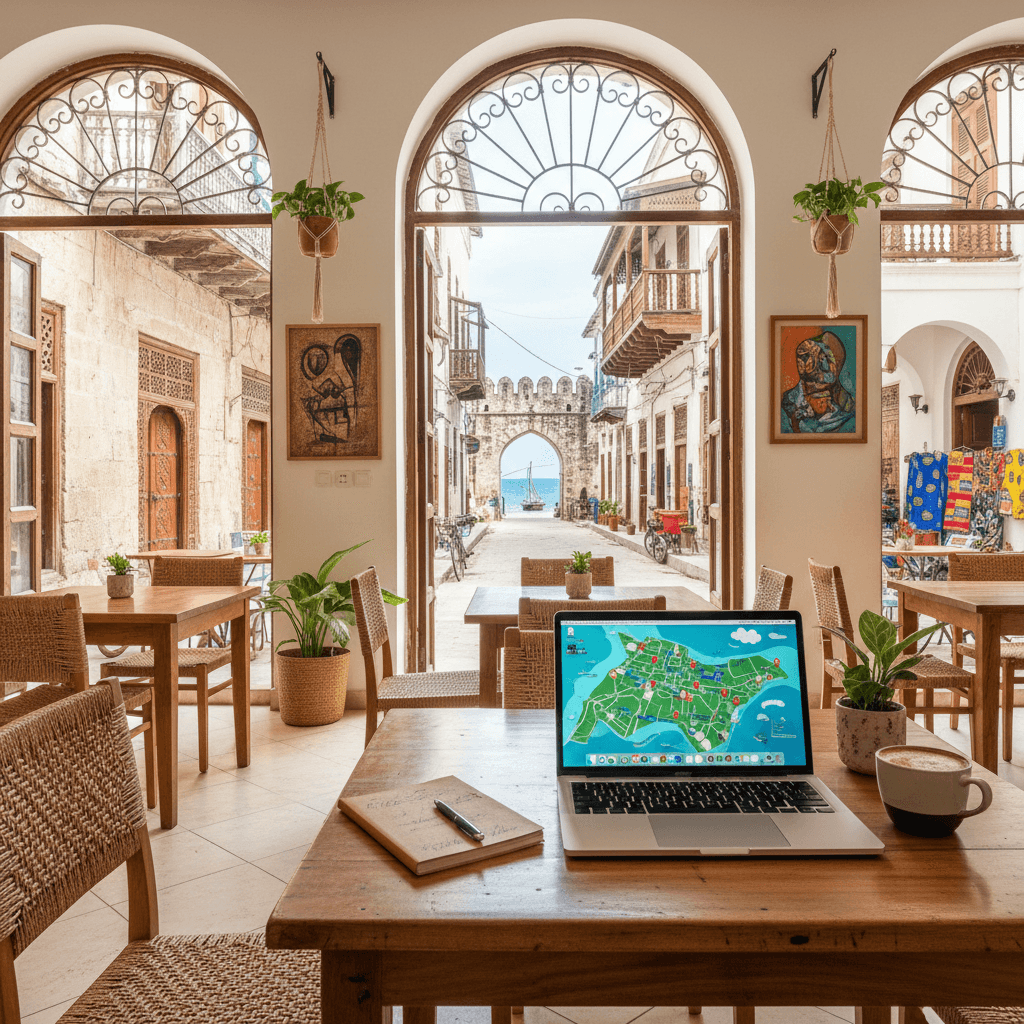
Zanzibar City
🇹🇿 Tanzania
Zanzibar City is a sensory overload in the best way possible. It is where the scent of cloves and cinnamon from Stone Town markets hits the salty humidity of the Indian Ocean. Unlike the high speed tech hubs of Nairobi or Cape Town, life here moves at the pace of the tides. It is a place where you can spend your morning on a Zoom call and your afternoon on a wooden dhow watching the sunset with a $2 beer in hand.
The Vibe
The island is currently in a strange, exciting transition. On one hand, you have the ancient, winding alleys of Stone Town where English is widely spoken and history feels heavy. On the other, the Dunia Cyber City project on the Fumba Peninsula is positioning the island as a crypto friendly tech haven. Most nomads find the reality somewhere in between. It is a "workation" paradise where you trade lightning fast fiber optics for white sand and a community that values sunset beach hangs over corporate networking.
Expats often warn that if you have a massive, deadline heavy workload, Zanzibar will test your patience. Power outages happen and the average internet speed hovers around 30-70 Mbps depending on provider and location. However, if you can handle a bit of "pole pole" (slowly, slowly) culture, the lifestyle is hard to beat. You are looking at a monthly spend between $1,000 and $1,200 for a comfortable mid range life, though budget travelers can squeak by on $642 if they stick to local spots.
Top Neighborhoods for Nomads
- Stone Town: Best for short stays and culture lovers. It is walkable and has the most reliable WiFi in cafes, but it gets noisy and lacks direct beach access. Expect to pay $300 to $600 for a studio.
- Nungwi & Kendwa: The north coast is the social heart. It has the most stunning turquoise water and a solid mix of coworking cafes. Rent for a 1BR beach spot runs $400 to $800.
- Paje: The go to for kitesurfers and serious remote workers. It feels younger and more active. This is where you will find Vela Paje, a dedicated coworking space with air conditioning and generator backups for $10 to $20 a day.
- Jambiani: A quieter, more affordable alternative to Paje. It is perfect for families or solo nomads who want to disappear into a local village vibe. Rent is cheaper here, often $350 to $700.
Practical Realities
Getting around is an adventure. You will likely use Bolt for quick trips, which costs about $3 to $5, or hop on a dala dala minibus for $0.50 if you are feeling brave. For more freedom, travelers often rent scooters for about $10 a day. Just watch out for potholes and the occasional livestock in the road.
For connectivity, skip the hotel WiFi and head straight for a Zantel SIM card at the airport. You can get 30GB of data for about $12. Using the MyVodacom app for top ups is the standard move. While the island does not have a formal digital nomad visa yet, the 90 day tourist visa is the standard entry point for most remote workers.
Social life revolves around food and the water. You will find yourself eating $2 seafood skewers at the Forodhani Gardens night market or splurging $25 on a fusion dinner in Stone Town. The Zanzibar Digital Nomads Facebook group is the best way to find meetups, though most connections happen naturally over a coffee in Paje or a sunset drink in Nungwi. Respect the local customs; keep your shoulders and knees covered when you are in town, and save the swimwear for the beach.
The Monthly Bottom Line
Zanzibar offers a rare balance where your dollar stretches far without sacrificing the tropical aesthetic. Most nomads find they can live comfortably on $1,000 to $1,200 per month, though budget travelers often hack it for around $642 by sticking to local markets and guest houses. If you want the full "island life" experience with a private beach villa in Paje and frequent seafood dinners, expect to budget upwards of $1,681.
Cash is still king here. While Wise is great for transfers and M-Pesa is widely used for daily transactions, you'll want to keep a stash of Tanzanian Shillings for street food and dala-dalas. ATMs are easy to find in Stone Town but get scarce once you head to the coast, so plan your withdrawals accordingly.
Breaking Down the Budget
- Housing: A studio or one-bedroom in the winding alleys of Stone Town usually runs between $300 and $600. If you're looking for ocean views in Nungwi or Kendwa, prices jump to $400 to $800. Many nomads use Facebook groups like Zanzibar Digital Nomads to find monthly rentals that beat standard Airbnb rates.
- Food and Drink: You can grab a filling meal of mishkaki or ugali from a street vendor for $1 to $3. Mid-range spots like Embassy Restaurant Sowa serve up local curries for $5 to $10, while high-end fusion dinners in Stone Town or at beach resorts will cost $15 to $25.
- Connectivity: A Zantel SIM card is the gold standard for signal strength. You can pick one up for $1 and load 30GB of data for about $12. For a stable workspace with power backups, Vela Paje offers daily passes for $10 to $20, which is a smart investment given the island's frequent power flickers.
- Transportation: The Bolt app is reliable for short trips, costing $3 to $5. If you're feeling adventurous, the dala-dala buses are just $0.50 per ride. Many long-termers end up renting a scooter for about $10 a day to explore the coast on their own schedule.
Location-Specific Costs
Where you plant your laptop changes your overhead. Stone Town is the most affordable for those who want to be near markets and cafes, but the beach hubs come with a "sand tax."
Stone Town
- Best for: Culture lovers and short-term stays.
- Rent: $300 to $600 per month.
- Vibe: Busy, historic, and walkable, though it lacks direct beach access.
Nungwi & Kendwa
- Best for: Social nomads and nightlife.
- Rent: $400 to $800 per month.
- Vibe: Stunning turquoise waters and a high density of coworking cafes, though prices spike during the high season.
Paje & Jambiani
- Best for: Kitesurfers and slow-paced living.
- Rent: $350 to $700 per month.
- Vibe: Paje is the hub for active nomads with newer fiber internet, while Jambiani is much quieter and more affordable for families.
The Infrastructure Trade-off
Living here isn't just about the price tag; it's about managing expectations. While the Dunia Cyber City project on the Fumba Peninsula is signaling a high-tech future with low tax incentives for remote workers, the current reality involves 28 Mbps average speeds and occasional outages. Most successful nomads treat Zanzibar as a 1 to 3 month destination rather than a permanent base. It's affordable and inspiring, provided you have a mobile hotspot and a backup battery in your bag.
The Nomad Hubs: Nungwi and Paje
If your priority is a mix of high speed kitesurfing and high speed internet, head straight to Paje on the southeast coast. It is widely considered the island's digital nomad capital, as the Vela Paje residences offer modern workspaces for residents. The vibe here is young and active, though it gets quite windy during the peak seasons.
For those who want a social life that rivals the scenery, Nungwi at the northern tip is the place to be. It has some of the most reliable beachside WiFi and a heavy concentration of laptop friendly cafes. Rent for a 1BR apartment here ranges from $400 to $800. It is more touristy than the south, but the sunset views and evening beach parties make it easy to meet fellow travelers.
- Rent: $400 to $800 per month
- Best for: Socializing, water sports, and coworking infrastructure
- Local Tip: Use the Zantel network here; it generally outperforms Vodacom in the northern coastal areas.
The Expat Choice: Kendwa
Just down the road from Nungwi, Kendwa offers a slightly more elevated and permanent feel. Expats often settle here because the beaches are less affected by the dramatic tides, meaning you can swim at any time of day. It is quieter than Nungwi but close enough to commute for dinner or drinks. You will find more spacious villas and long term rental options, often with ocean views that make the $500 to $900 rent feel like a bargain.
While it lacks a formal coworking hub, many of the upscale resorts are welcoming to remote workers who buy a coffee or lunch. The community here is tight knit, often connecting through local Facebook groups to organize weekend boat trips or shared grocery runs from Stone Town.
The Solo Traveler Base: Stone Town
If you are coming for culture rather than just the coastline, Stone Town is your home base. It is the historic heart of the island where you can get a studio for $300 to $600. Everything is walkable, from the fresh seafood at the night markets to the labyrinth of spice shops. It feels like living in a museum, though the noise and lack of direct beach access can be draining for stays longer than a month.
Solo travelers love the ease of meeting people in spots like Embassy Restaurant Sowa. You will also find the most consistent fiber internet on the island here, with speeds averaging 28 Mbps. Just be sure to dress modestly by covering your shoulders and knees to respect local customs in this predominantly Muslim area.
- Rent: $300 to $600 per month
- Best for: History buffs, foodies, and short term stays
- Safety: Generally safe, but avoid unlit alleys at night and keep an eye on your phone in crowded markets.
The Family Retreat: Jambiani
Families and those seeking a slower pace usually gravitate toward Jambiani. It is a long, sleepy village where the local culture hasn't been overshadowed by big resorts. It is one of the most affordable areas, with houses available for $350 to $700. The reef is close to the shore, making it great for kids to explore during low tide.
The trade off is the infrastructure. Internet is noticeably slower here, and you will definitely need a Zantel SIM with a 30GB data pack for about $12 as a backup. There is very little nightlife, which is exactly why people choose it. It is peaceful, safe, and offers a glimpse into authentic Zanzibari life that you won't find in the northern hubs.
The Future: Fumba Peninsula
Keep an eye on Dunia Cyber City on the Fumba Peninsula. It is an emerging tech focused special economic zone designed specifically for the modern remote worker. While still in development, it aims to house up to 7,000 residents with massive tax incentives, including a 5% tax rate for remote workers. For now, it is a quiet alternative for those who want to be near the airport and Stone Town without the constant hustle of the city center.
Connectivity Realities
Working from Zanzibar feels like a dream until the power cuts out right before a Zoom call. While the island is modernizing fast, the internet remains a bit of a wild card. You can expect average speeds around 30-70 Mbps, improving with fiber rollout, which is plenty for emails and basic tasks, but heavy video editors will struggle. Fiber optics are rolling out across the island, especially in Stone Town and Paje, making the situation much better than it was even two years ago.
The golden rule here is redundancy. Never rely solely on hotel WiFi. Most seasoned nomads carry a local SIM card as a hotspot backup. Power outages happen, usually without warning, so choosing a workspace with a generator is the difference between a productive afternoon and a forced day off.
The SIM Card Strategy
Grab a SIM card immediately upon landing at the airport or in Stone Town. It's cheap and saves you from hunting for WiFi passwords every hour. Local providers are reliable, and getting set up takes about ten minutes with your passport.
- Zantel: Generally considered the best for the island. They have the strongest signal in remote beach areas. You can get 30GB of data for about $12.
- Vodacom: A solid second choice with great coverage in Stone Town. Use the MyVodacom app to manage your top-ups easily.
- Airalo: If you prefer an eSIM and don't mind paying a premium for convenience, this works well, though local physical SIMs are significantly cheaper.
Coworking Spaces and Laptop-Friendly Cafes
Zanzibar isn't Nairobi or Cape Town; the coworking scene is small but high quality. Most people work from their guesthouses or beach cafes, but a few dedicated spots have emerged for those who need a professional environment.
Dar Mar Hostel & Coworking in Paje ($8/day) is a reliable choice for those needing a dedicated workspace. It's a great place to meet other nomads and escape the afternoon heat while ensuring you stay productive.
In Stone Town, you won't find many formal coworking hubs, but the hotel rooftops and cafes are laptop-friendly. Many nomads head to the historic hotels because they often have the most stable fiber connections and comfortable seating. In Nungwi and Kendwa, the vibe is more "digital nomad cafe" than office. You'll find plenty of people working with their toes in the sand, though the glare from the sun can make screens hard to see.
Future Tech: Dunia Cyber City
Keep an eye on the Fumba Peninsula. The Dunia Cyber City project is a massive tech hub currently in development. It's designed as a crypto-friendly special economic zone. Once it's fully operational, it's expected to house thousands of residents with top-tier infrastructure and massive tax incentives. For now, it's a glimpse into Zanzibar's future as a tech destination, but most current nomads still stick to the established beach hubs.
Digital Nomad Community
The community is incredibly welcoming, but it's decentralized. You won't find one single building where everyone hangs out. Instead, join the Zanzibar Digital Nomads Facebook group. It's the best place to find out about impromptu meetups, beach bonfires in Paje, or which cafe currently has the fastest WiFi. Most social life revolves around kitesurfing sessions or sunset drinks, so it's easy to balance a 40-hour work week with an island lifestyle.
Staying Safe on the Island
Zanzibar City is generally a low-stress environment for nomads. Most travelers feel completely secure in hubs like Nungwi and Paje, where the community is tight-knit and locals are accustomed to foreigners working from laptops. That said, petty crime does happen. Most incidents involve pickpocketing in the crowded markets of Stone Town or opportunistic theft on the beaches.
Expats generally follow a few simple rules to stay off the radar. Avoid walking through isolated beach stretches or unlit alleys in Stone Town after dark. If you're heading home late, grab a Bolt or a taxi rather than walking. It's also smart to keep your high-end tech out of sight when you're moving between cafes; don't leave your MacBook or iPhone unattended on a table while you grab a coffee.
- Emergency Number: Dial 112 for police or medical emergencies.
- Solo Safety: Solo female travelers report feeling mostly safe, though you might deal with "Papasi" (informal guides) offering tours. A polite but firm "Hapana asante" (No thank you) usually does the trick.
- Nightlife: Stick to well-known spots in Kendwa or Nungwi for evening drinks, and always keep an eye on your glass.
Healthcare Essentials
For minor ailments or stomach issues, you'll find plenty of pharmacies stocked with basic medications across the island. However, for anything serious, medical facilities in Zanzibar are relatively basic. Mnazi Mmoja Hospital in Stone Town is the main public facility, but most nomads and expats prefer private clinics for a faster, more western-standard experience.
If you face a major medical emergency, the standard procedure is to be stabilized and then flown to Dar es Salaam or Nairobi, where the hospitals are significantly better equipped. Because of this, high-quality travel insurance with medical evacuation coverage is non-negotiable here.
- Malaria: Zanzibar is a malaria-risk zone. Most long-termers use prophylaxis or are extremely diligent with mosquito repellent and nets, especially during the rainy seasons.
- Water Safety: Never drink the tap water. Stick to bottled water or high-quality filters. Even when brushing your teeth, many travelers prefer using bottled water to avoid "Zanzi-belly."
- Vaccinations: Ensure your routine shots are up to date. You'll also need proof of Yellow Fever vaccination if you're arriving from a country where it's endemic.
Practical Tips for Wellness
The tropical heat is no joke, especially during the humid months of March through May. Dehydration is a common reason nomads end up feeling under the weather. Keep a steady supply of electrolytes on hand. If you need specialized medication, bring a full supply from home, as specific brands can be hard to track down in local pharmacies.
For dental work or specialized consultations, expats often wait until they have a layover in a larger hub. While the island pace is great for your mental health, the physical infrastructure requires a bit of DIY management. Keep a small first-aid kit with rehydration salts, antibiotics, and antiseptic cream to handle the basics without needing a hospital run.
The Logistics of Island Life
Moving around Zanzibar is an exercise in patience and adaptability. While Stone Town is perfectly walkable, its labyrinth of alleys is too narrow for anything larger than a Vespa. Once you head toward the coastal hubs like Paje or Nungwi, you'll need to choose between local flavor and modern convenience. Most nomads find that the Bolt app is the most reliable way to secure a ride without the "tourist tax" negotiation, usually costing between $3 and $5 for short hops.
For those on a tighter budget, the dala-dala minibuses are the backbone of island transport. They're crowded, loud, and don't follow a strict schedule, but at $0.50 a ride, they're unbeatable for price. If you're feeling adventurous, Boda boda motorcycle taxis are everywhere. They'll zip you through traffic for $1 or $2, though expats usually recommend these only for short distances during daylight hours.
Driving Yourself
If you plan on staying for more than a couple of weeks, renting your own wheels is the way to go. It gives you the freedom to chase the best WiFi or a quiet sunset without waiting on a driver. You can pick up a scooter from beach vendors for roughly $10 a day, or less if you negotiate a monthly rate. Small 4x4 vehicles like Suzuki Samurais are also popular for navigating the island's potholes; expect to pay around $25 to $35 daily for these.
Keep in mind that roads outside the main town are improving but remain unpredictable. You'll need an International Driving Permit, and local police checkpoints are frequent. Most travelers find that a polite smile and having your paperwork ready makes these interactions quick and painless.
Key Transit Hubs and Costs
- Airport (ZNZ) Transfers: A taxi to Stone Town takes 20 to 45 minutes and costs $20 to $30. Pre-booking through your accommodation is often the smoothest move.
- Stone Town to Paje/Nungwi: This is about an hour's drive. A private taxi will run you $40 to $50, while a shared shuttle or dala-dala is significantly cheaper.
- Bicycles: In flatter areas like Jambiani and Paje, many nomads rent bikes for $5 a day to get between their villa and coworking spots like Vela.
The Digital Nomad Commute
The "commute" here is rarely about distance and more about infrastructure. If you're based in the upcoming Dunia Cyber City on the Fumba Peninsula, you'll eventually see more streamlined transport links. For now, most remote workers cluster in Paje or Nungwi where they can walk to cafes. If you're heading to a specific coworking space for a deadline, factor in an extra 15 minutes for "Zanzibar time." Things move slower here, and a sudden tropical downpour can turn a quick scooter trip into a long coffee break.
Reliability is key for work, so if you're staying in a remote village like Jambiani, ensure you have a backup transport plan. Power outages can occasionally affect fuel pumps or digital payment systems, so keeping a bit of cash in Tanzanian Shillings is a smart move for any trip across the island.
The Swahili Connection
You'll find that language in Zanzibar is a beautiful reflection of the island's history. Swahili is the primary language, but it's heavily flavored with Arabic, Persian, and Portuguese influences. For a nomad, this creates a welcoming atmosphere where communication is rarely a barrier, especially in the hubs where you'll likely spend most of your time.
In Stone Town, Nungwi, and Paje, English is widely spoken. Most locals working in tourism, hospitality, and the growing tech scene at Dunia Cyber City are proficient. You can expect about 80% comprehension in these areas. Whether you're ordering a seafood curry or negotiating a scooter rental, you'll get by just fine with English.
Mastering the Basics
While you can survive on English alone, learning a few Swahili phrases goes a long way. It shifts you from a "tourist" to a "guest" in the eyes of locals. Zanzibar has a polite, respectful social fabric where greetings aren't just a formality; they're a requirement. Always greet people with your right hand, and keep these essentials in your back pocket:
- Jambo: The standard hello you'll hear everywhere.
- Habari: How are you? (A more formal and respected way to start a conversation).
- Asante: Thank you.
- Karibu: Welcome.
- Pole pole: Slowly, slowly. This is the island's unofficial motto, especially when the WiFi at a cafe hits a snag.
Expats recommend downloading the Google Translate offline Swahili pack. It's a lifesaver when you're exploring the more remote parts of Jambiani or trying to read specific labels at a local pharmacy.
Digital Communication and Connectivity
When it comes to staying connected, don't rely solely on your accommodation's WiFi. Even though fiber upgrades are rolling out, power outages are a reality here. Most nomads use their phones as a primary or backup hotspot. You'll want to pick up a local SIM card immediately upon arrival at ZNZ Airport or at a shop in town.
- Data bundles: You can typically find packages ranging from $8-12 for 10-20GB from providers like Zantel or Vodacom.
- Vodacom: A solid alternative with great coverage in Stone Town. You can manage your balance easily through the MyVodacom app.
- Airalo: If you prefer the convenience of an eSIM, this works well, though physical local SIMs usually offer better data rates.
For financial communication, M-Pesa is king. It's a mobile money service that locals use for everything from paying for Dala-dala rides to settling bills at small restaurants. Setting this up on your local number makes life significantly easier if you're staying more than a few weeks.
Cultural Nuances in Conversation
Communication in Zanzibar is as much about what you do as what you say. The island is conservative, particularly in Stone Town. Travelers often find that dressing modestly, covering shoulders and knees, leads to much more positive interactions. Public displays of affection are generally frowned upon and can make conversations awkward or uncomfortable for locals.
If you're looking for a community to help bridge the gap, the Zanzibar Digital Nomads Facebook group is the go-to resource. It's where you'll find meetups at Vela Paje or advice on the best local agents for long term apartment rentals. Between the friendly local "Karibu" and the active expat forums, you'll never feel truly out of the loop.
The Tropical Rhythm
Zanzibar City doesn't do "mild." You're looking at a tropical climate where the thermometer hovers around 27°C (81°F) almost year-round. It's the kind of heat that dictates your work schedule; most nomads find they're most productive in the breezy early mornings before the midday sun makes a hammock more appealing than a laptop screen.
The island follows a fairly predictable pattern of sun and rain, but when it rains here, it really pours. Understanding these cycles is the difference between a productive month in Stone Town and being trapped in a damp Airbnb watching the power cycle on and off.
The Golden Window: June to October
If you're planning your first stint on the island, aim for the long dry season from June to October. This is prime time for a reason. The temperatures stay between 25°C and 30°C, and the humidity drops to manageable levels. The "Kusi" winds kick in during this period, which is great news if you're heading to Paje for kitesurfing after work.
- Vibe: Clear blue skies and the most reliable power grid stability.
- Crowds: It's peak tourist season, so expect Stone Town alleys to be tight and prices for short term rentals to climb.
- Nomad Tip: This is when the Zanzibar Digital Nomads Facebook group is most active with meetups and beach bonfire invites.
The Short Rains: November and December
Don't let the "rainy" label scare you off in late autumn. The short rains usually consist of heavy, 30 minute bursts followed by immediate sunshine. It's actually quite refreshing. Temperatures start to climb as the island heads toward its hottest months, and the landscape turns a brilliant, deep green.
Expats often recommend this window because the "holiday" crowds haven't fully descended yet, but the dust of the dry season has settled. Just make sure your workstation isn't directly under a thatched roof that hasn't been patched in a few years.
The Heat and The Big Rains: January to May
January and February are the hottest months. If you aren't in a space with high quality AC, like Vela Paje, you'll feel the burn. Humidity levels spike, making 30°C feel significantly heavier.
Then comes April, the month most seasoned travelers avoid. This is the heart of the "Masika" or long rains. It's not just a few showers; it can rain for days on end. Many boutique hotels and beach restaurants in Nungwi or Jambiani actually shut down for maintenance during this time.
- The Downside: Humidity can wreak havoc on electronics. Keep your laptop in a sealed bag when not in use.
- The Upside: Rent prices for villas can drop by 30 to 50 percent if you're willing to negotiate.
- Power Warning: Heavy storms frequently lead to grid outages. If you're working on a deadline, ensure you have a charged power bank and a Zantel SIM card for a hotspot backup.
What to Pack
Zanzibar is a conservative, predominantly Muslim society, so your wardrobe needs to balance the heat with local customs. In Stone Town, nomads should keep shoulders and knees covered despite the 28°C heat. Lightweight linen and cotton are your best friends here. Save the bikinis and board shorts for the private beaches in Kendwa. Always pack a high quality surge protector; the island's power fluctuations are notorious for frying laptop chargers during the rainy season transitions.
Navigating the Island Life
Living in Zanzibar City as a remote worker requires a bit of a mental shift. You're trading high speed fiber and 24/7 convenience for turquoise waters and a pace of life that locals call "pole pole" (slowly, slowly). While the infrastructure is catching up, most nomads find that a stay of 1 to 3 months is the sweet spot. Any longer and the occasional power cuts or internet hiccups might start to test your patience if you're managing a heavy workload.
Cost of Living and Budgeting
Your monthly burn rate depends heavily on how much time you spend in tourist hubs versus local spots. A comfortable lifestyle usually lands around $1,681, but you can get by on $642 if you're sticking to street food and budget guesthouses. Most mid-range nomads find $1,000 to $1,200 covers a nice apartment, coworking fees, and plenty of seafood dinners.
- Housing: Expect to pay $300 to $600 for a studio in Stone Town. Beachfront spots in Nungwi or Paje jump to $400 to $800.
- Food: Street food like mishkaki or ugali costs $1 to $3. A proper seafood curry at a local restaurant is usually $5 to $10, while high end fusion spots in Stone Town run $15 to $25.
- Transport: Dala-dalas (local buses) are just $0.50 per ride. If you prefer your own wheels, scooter rentals go for about $10 a day.
Where to Set Up Your Desk
Each neighborhood has a distinct personality. Expats and nomads usually gravitate toward a few specific hubs depending on their work style.
Stone Town
- Best for: History buffs and short term stays.
- Pros: Walkable, better WiFi availability, and endless cafes.
- Cons: Noisy, crowded, and limited beach access.
Nungwi & Kendwa
- Best for: Socializing and classic beach vibes.
- Pros: Stunning water, active nightlife, and a solid nomad community.
- Cons: Highly seasonal and can feel overly touristy.
Paje & Jambiani
- Best for: Kitesurfers and quiet seekers.
- Pros: Home to Vela Paje, the island's premier coworking space with backup generators.
- Cons: Paje gets very windy; Jambiani has slower internet and minimal nightlife.
Connectivity and Power
Internet speeds average around 28 Mbps, but reliability is the real challenge. Fiber is expanding, but power outages still happen. Travelers recommend having a mobile hotspot as a permanent backup. Grab a Zantel or Vodacom SIM card at the airport for about $1; a 30GB data package costs roughly $12. Zantel generally offers the most consistent signal across the island. For banking, M-Pesa is used everywhere for small payments, while Wise is the go-to for international transfers.
Health and Safety
Zanzibar is generally safe, but common sense goes a long way. Stick to well lit areas in Stone Town at night and avoid isolated beaches after dark. Pickpocketing happens in crowded markets, so keep your tech tucked away. For healthcare, Stone Town has basic facilities like Mnazi Mmoja, but for anything serious, expats typically head to Dar es Salaam. Don't forget your malaria prophylaxis, as the risk remains present year round.
Local Customs and Etiquette
This is a conservative culture, so respect is the local currency. Dress modestly when you aren't on the sand; cover your shoulders and knees when walking through Stone Town. Always use your right hand for greetings or exchanging money, and ask before taking photos of locals. While there isn't a specific digital nomad visa yet, the 90 day tourist visa is the standard entry method, and extensions are possible if you decide the island life suits you.
Need visa and immigration info for Tanzania?
🇹🇿 View Tanzania Country GuideHidden Gem
Worth the effort