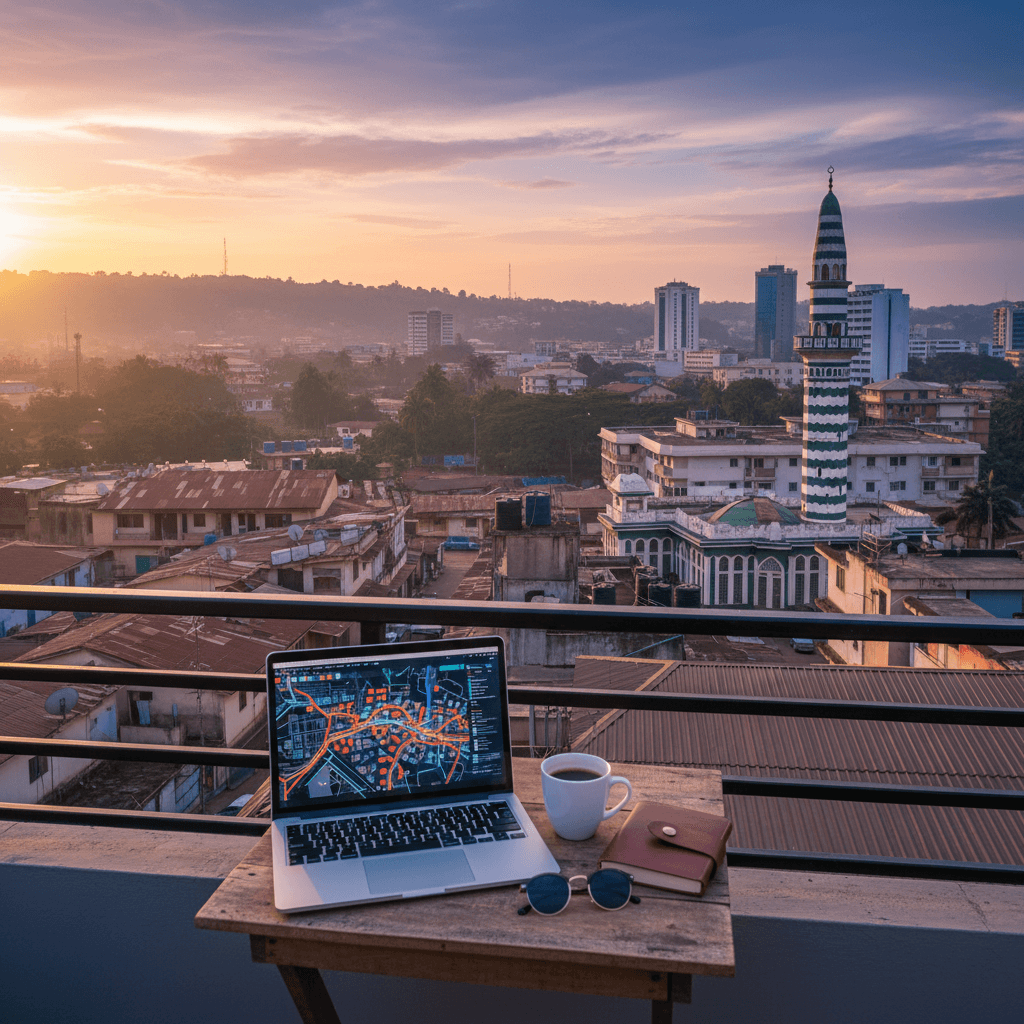
Yaounde
🇨🇲 Cameroon
Yaoundé doesn't try to impress you. It's Cameroon's political capital, not its commercial one, so there's none of the frantic energy you'd find in Douala. What you get instead is a city that runs on its own schedule, where government workers fill the streets at noon, motos weave through gridlocked intersections trailing exhaust and noise and the smell of Poulet DG frying in palm oil drifts out of roadside stalls by mid-afternoon.
The city sits on a series of hills, which sounds scenic and, honestly, it's, though it also means your taxi is grinding uphill half the time and traffic jams form in ways that feel almost architectural. Most nomads find the pace surprisingly manageable once they stop fighting it.
What makes Yaoundé genuinely different from other African nomad bases is the combination of low costs and a real expat infrastructure without the tourist polish. Nobody's selling you a curated experience here. Essengue is where most long-term expats and nomads land, a quieter residential pocket with cafes that'll let you work through a second coffee without side-eye and a neighborhood feel that Bastos, for all its upscale restaurants and security, can't quite replicate.
The frustrations are real. Power cuts happen without warning, sometimes for hours, internet speeds are inconsistent outside hotels and the few coworking spaces and the rainy season from March through November means October can dump rain on you for 25 days straight. That's not a minor inconvenience, it reshapes your whole routine.
French is non-negotiable. English gets you almost nowhere outside expat circles, so Google Translate becomes a daily tool, not a backup. Still, locals are warm in a way that feels genuine rather than transactional, greet people properly and you'll find doors open faster than you'd expect.
The cost of living is, frankly, one of the strongest arguments for being here. A mid-range life in Essengue runs around $800 to $1,200 a month, street food lunches cost $5 and a doctor's visit is about $21. For a capital city, that's remarkable.
Yaoundé rewards patience. It's not a city that reveals itself in a week, but stay a month and you'll understand why some nomads quietly extend their visas and stop looking for flights out.
Yaoundé is, honestly, one of the more affordable capitals you'll find in Central Africa. Monthly costs for a solo person average around $671 with rent included, closer to $459 without. That's genuinely low.
Where you live shapes everything here. Centre Ville studios run $107-115 a month, which sounds great until you factor in the noise, the traffic and the exhaust fumes that hang in the air by 8am. Essengue is where most nomads and expats land, with one-bedrooms going for $200-400 a month in a quieter residential stretch full of small cafes and the faint smell of grilled plantain drifting in from the street. Bastos is the splurge option, rents hit $665 and up and you're paying for safety, good restaurants and the kind of uninterrupted sleep that's harder to find elsewhere.
Monthly Budget Tiers
- Budget ($500-700): Shared place in Mokolo, street food daily, moto-taxis everywhere
- Mid-range ($800-1,200): 1BR in Essengue, mix of cafes and local restaurants, regular taxis
- Comfortable ($1,500+): Bastos apartment, upscale dining, coworking membership
Food is cheap, turns out, if you eat like a local. Street food runs about $5 a meal, think Poulet DG or Ndolé from a stall with plastic stools and a charcoal smell that gets into your clothes. A sit-down lunch at a mid-range spot like La Terrasse costs $5-10, dinner for two climbs to around $26. Upscale dining at the Hilton can hit $50 or more, that's the exception not the rule.
Transport is one of the cheaper line items. A moto-taxi across town costs under a dollar, a monthly bus pass runs $18 and an 8km taxi ride is around $4. Yango handles ride-hailing and often has promo fares, it's worth downloading before you arrive.
Coworking is limited, frankly. Premier Bureau Coworking starts at roughly $75 a month and is your best real option, with AC and meeting rooms. Day passes at hotel business centers run $17-33. Most nomads just set up in cafes in Essengue, order something every hour or two and call it a workday.
For Digital Nomads
Essengue is your base. It's quieter than the center, has a growing cluster of cafes where you can work if you're buying coffee and the expat community there's, honestly, the most useful network you'll find in the city. Rent for a one-bedroom runs $200 to $400 a month, which is reasonable, WiFi in the better apartments and cafes hits 15 to 30 Mbps, though power cuts will test your patience more than once a week.
Coworking options are thin. Premier Bureau Coworking starts at around $75 a month and has AC and meeting rooms, so it's worth it if you need reliable infrastructure, but don't expect a buzzing scene with a dozen spaces to choose from.
For Expats
Bastos is where most long-term expats land and it's not hard to see why. It's the safest neighborhood in the city, restaurants and bars are actually good and the streets don't smell like exhaust and rotting produce the way Mokolo does at noon. Expensive, though. Rent pushes $665 and up, traffic in and out is genuinely maddening during peak hours and you'll pay Hilton prices for dinner if you're not careful.
Essengue works just as well for expats who want a calmer setup at a fraction of the cost, it's just farther from the nightlife circuit around Le Pacha and La Bodega.
For Families
Essengue again, turns out, is the practical answer. It's residential, it's quieter and the streets are walkable during the day without the chaos that defines Centre Ville. Healthcare is accessible from here too, Hôpital Général de Yaoundé handles serious cases and a doctor's visit runs about $21. Schools and daily errands don't require crossing the city, which matters more than people expect once they're actually living here.
For Solo Travelers and First-Timers
Start in Centre Ville. It's central, transport connections are good and a one-bedroom studio runs as low as $107 a month. Noisy? Yes. Crowded? Constantly. But you'll figure out how the city moves faster from here than anywhere else and Yango rides make it easy to escape when the honking and heat get to be too much.
Skip Mokolo unless you're chasing street food. The Poulet DG is worth it, the pickpocketing risk after dark isn't.
Yaoundé's internet situation is, honestly, a mixed bag. You'll get 15 to 30 Mbps in most hotels and cafes, which is workable for video calls and uploads, but the speeds can drop without warning, especially during peak hours or when the power flickers and the generator kicks in with that low diesel rumble that becomes the soundtrack to your afternoon.
Test your connection with Speedtest before committing to any cafe or apartment. Don't assume the number on the router sticker means anything real.
Coworking Spaces
The options here are thin. Premier Bureau Coworking starts at around 45,000 XAF (~$75) per month, with air conditioning, high-speed internet and meeting rooms. Day passes at hotel business centers run 10,000 to 20,000 XAF ($17 to $33), which adds up fast if you're doing it daily, so most nomads who stay longer than two weeks just go straight to a monthly coworking membership.
Cafes in Essengue are, turns out, the informal fallback for a lot of remote workers. Buy something every hour or so and nobody bothers you, the vibe is relaxed and the espresso is decent. Just don't expect fiber speeds.
SIM Cards & Mobile Data
- MTN: Best coverage and speeds in the city; 1GB daily bundles dial *157#, costs roughly $2 to $10 depending on the package
- Orange: Solid secondary option, widely available
- Nexttel / Yoomee: Worth knowing about but most nomads stick with MTN
Pick up a SIM at any MTN or Orange store for around 500 XAF. Registration is required, so bring your passport, it's a five-minute process and frankly less painful than most countries.
Practical Reality
Power cuts are the bigger problem, not the internet itself. A good portable battery or UPS is genuinely useful here, coworking spaces handle this better than apartments do. Bastos and Essengue cafes tend to have more reliable backup power than spots closer to Mokolo or the market areas.
If you're doing anything bandwidth-heavy, mornings are your window, connectivity degrades noticeably by mid-afternoon and by evening you're sometimes just hoping for the best.
Yaoundé is, honestly, the safest major city in Cameroon right now, which isn't saying a huge amount given the country's ongoing regional crises in the Anglophone Northwest and Southwest, but day-to-day life in the capital feels calm compared to Douala. Still, you'd be foolish to treat it like Copenhagen.
Stick to Bastos, Essengue and Centre Ville during daylight. Mokolo market is fine in the morning, chaotic and pickpocket-prone by afternoon, avoid it entirely after dark. Unlit streets anywhere in the city are a genuine risk at night, so take a Yango or Heetch rather than walking, it's cheap enough that there's no good reason not to.
A few things most nomads don't think about until they're here:
- Police emergency: 117
- Ambulance: Contact hospitals directly; there's no reliable centralized dispatch
- Night travel: Moto-taxis after dark are a bad idea, full stop
- Markets: Keep your phone in a front pocket, not a back one
Healthcare is a mixed picture. Hôpital Général de Yaoundé is the go-to for anything serious, it handles surgery and oncology with reasonably modern equipment by regional standards and expats generally trust it for emergencies. Centre Hospitalier d'Essos is another solid option. A standard doctor's visit runs around $21, which is surprisingly affordable, though anything involving specialist care or imaging will cost more and move slowly.
Pharmacies are everywhere. You won't struggle to find one near Essengue or Centre Ville and many stock medications you'd need a prescription for back home, turns out that's either reassuring or alarming depending on your perspective.
Travel insurance isn't optional here. Medical evacuation to Europe or South Africa is expensive and if something goes seriously wrong, you want a policy that covers it. Don't cheap out on this one.
The political situation bears watching. Cameroon's Anglophone conflict doesn't directly affect Yaoundé, but it shapes the national mood and occasionally affects movement in western regions if you're planning day trips. Check your government's travel advisory before you go and again before any travel outside the capital.
Getting around Yaoundé is, honestly, a mix of cheap options and genuine frustration. Traffic congestion in the center can be maddening, especially during morning and evening peaks when the smell of exhaust hangs thick in the air and horns don't stop.
The backbone of local transport is the shared taxi and moto-taxi system. Moto-taxis are fast, weave through gridlock and cost almost nothing, around 350 XAF ($0.57) per trip, though they're not the safest option and helmets are rarely offered. Most nomads use them for short hops and switch to regular taxis for longer distances.
Ride-hailing apps have changed things a bit. Yango operates here and frequently runs promo fares, Heetch is the other main option, both are worth having on your phone because they spare you the negotiation theater of flagging down a street taxi. That said, surge pricing and driver availability can be inconsistent, so don't rely on them exclusively.
- Moto-taxi: ~350 XAF per short trip, fast but bumpy
- Shared taxi: ~500 XAF in-town, fixed routes
- Private taxi (8km): ~$4, negotiate before you get in
- Monthly bus pass: ~$18, turns out it's rarely worth it for nomads
- Yango/Heetch: metered, safer, slightly pricier
The airport, Nsimalen International, sits about 21km south of the city center. A taxi there runs $10 to $13 and takes roughly 26 minutes outside peak hours, longer if traffic's bad, which it often is.
Walking is fine in daytime Centre Ville and Essengue, the streets are uneven but manageable. Don't walk unlit areas at night though, even in relatively safe neighborhoods. There's no meaningful bike or scooter rental infrastructure here, so don't count on that.
Frankly, the most practical setup most nomads land on is Yango for planned trips, moto-taxis for quick errands and building your schedule around avoiding the worst traffic windows. Basing yourself in Essengue or Centre Ville helps, both neighborhoods put you close enough to daily needs that you won't need transport constantly.
French is the working language of Yaoundé. Full stop. You'll hear it everywhere, from market vendors in Mokolo to waitstaff in Bastos restaurants and if your French is rusty or nonexistent, daily life gets frustrating fast.
English exists here, technically. Cameroon is officially bilingual, but Yaoundé skews heavily francophone and the English you'll encounter is mostly Cameroonian Pidgin English, which is, honestly, its own thing entirely and not particularly close to what you learned in school. Don't count on English getting you through a taxi negotiation or a pharmacy visit.
Most nomads who settle in for more than a few weeks pick up survival French quickly, because they have to. Expats in Essengue recommend learning numbers and basic transaction phrases before you arrive, not after you're standing at a street stall trying to buy Poulet DG and holding up a queue. Google Translate works well enough for written text, it struggles more with spoken Cameroonian French, which moves fast and drops syllables.
A few phrases that actually matter:
- Merci / Merci beaucoup: Thank you / Thank you very much
- Combien ça coûte? How much does this cost?
- Oui / Non: Yes / No
- S'il vous plaît: Please
- Je ne comprends pas: I don't understand
- Parlez-vous anglais? Do you speak English?
That last one will usually get you a polite "un peu" and a sympathetic shrug, locals are warm and patient with foreigners who make an effort, so even broken French goes a long way socially.
Written communication is, turns out, easier to manage. WhatsApp runs everything here, business contacts, landlords, coworking inquiries, all of it happens over WhatsApp, so having a local SIM loaded with data matters more than you'd think. MTN gives you the best coverage in the city and their bundles are cheap enough that running out of data shouldn't be a problem.
One thing that catches people off guard: formal interactions, government offices, banks, anything administrative, run strictly in French with zero accommodation for English speakers. If you're dealing with paperwork, bring someone who can translate or budget for a local fixer.
Yaoundé sits at around 750 meters elevation, which takes the edge off what would otherwise be punishing equatorial heat. Highs hover between 27 and 30°C year-round, so it's never truly cold, but it's also, honestly, far more bearable than coastal Douala. The real variable isn't temperature. It's rain.
The city runs on two rainy seasons and two dry seasons, which sounds tidy until you realize the wet periods stretch from March through November with only a brief lull in July and August. October is the wettest month, with around 200-300mm of rainfall over 20-25 days. That's not a drizzle situation, that's the kind of rain that turns red-clay roads into rivers and makes afternoon plans pointless.
The smell of a Yaoundé downpour is something else: wet earth, woodsmoke and street food fat all hitting at once, the sound of it hammering corrugated rooftops so loud you can't hear yourself think. Dramatic, sure, but it gets old fast if you're trying to work or move around the city.
December through February is the sweet spot. Skies clear, humidity drops and getting around actually feels manageable. Most long-term nomads time their arrival for December, the city's energy picks up around the holidays and the weather cooperates for once. January and February stay dry and pleasant, temperatures sit comfortably in the high 20s and you won't spend half your day waiting out storms.
Quick Season Breakdown
- Best months: December, January, February (dry, low humidity, clear skies)
- Shoulder months: July and August (brief dry spell mid-year, still some rain)
- Avoid if possible: October (wettest month, ~295mm, serious flooding risk)
- Rainy seasons: March to June, September to November
If you're only coming for a few weeks, don't bother gambling on the shoulder months, the dry season window is short enough that it's not worth the risk. Book December through February and you'll actually get to see the city rather than watch it from under an awning.
There's no bad time to visit if you're flexible and unbothered by rain, turns out plenty of nomads are. But if you want Yaoundé at its most livable, the dry season isn't a suggestion.
Get your SIM card sorted before anything else. MTN has the best coverage in Yaoundé and you can pick one up at the airport or any MTN store for around 500 XAF. Data bundles run roughly $2 to $10 depending on how much you need and you can check your balance or buy more by dialing *157#. Orange works too, it's just, honestly, a bit spottier in residential areas like Essengue.
For cash, international cards work at major ATMs but the fees are genuinely annoying, so pull out larger amounts less frequently. MTN Mobile Money (MoMo) and Orange Money are how most locals actually pay for things and you'll want to set up at least one of them for markets, taxis and smaller vendors who don't take cards at all.
Finding an apartment takes legwork. Airbnb exists but it's limited, most expats end up using local agents or word-of-mouth through the expat community, which you can tap into via InterNations events or the Essengue cafe circuit. Expect to negotiate, landlords in the mid-range bracket ($200 to $400/month) often have room to move on price, arguing politely is expected, walking away immediately isn't.
A few customs worth knowing before you land:
- Dress: Modest clothing is the norm, especially outside Bastos and Centre Ville. Shorts and sleeveless tops read as disrespectful in markets and government buildings.
- Greetings: Always greet before launching into a transaction. Skipping pleasantries is considered rude, turns out locals notice immediately.
- Tipping: Light tipping is appreciated but not mandatory. Round up on taxis, leave a small amount at restaurants.
- Language: French is non-negotiable here. Download Google Translate offline before you arrive; even basic phrases like Merci and S'il vous plaît go a long way.
Day trips are worth planning. Mefou National Park is the closest thing to a primate sanctuary you'll find near the city, though it runs $240 or more for a guided visit, not cheap. The Ebogo ecotourism site is a cheaper alternative if you want to get out of the city without the price tag.
October is the worst month to visit. Rain every few days, grey skies and roads that flood fast. December through February is when Yaoundé actually feels good to be in.
Need visa and immigration info for Cameroon?
🇨🇲 View Cameroon Country GuideHidden Gem
Worth the effort