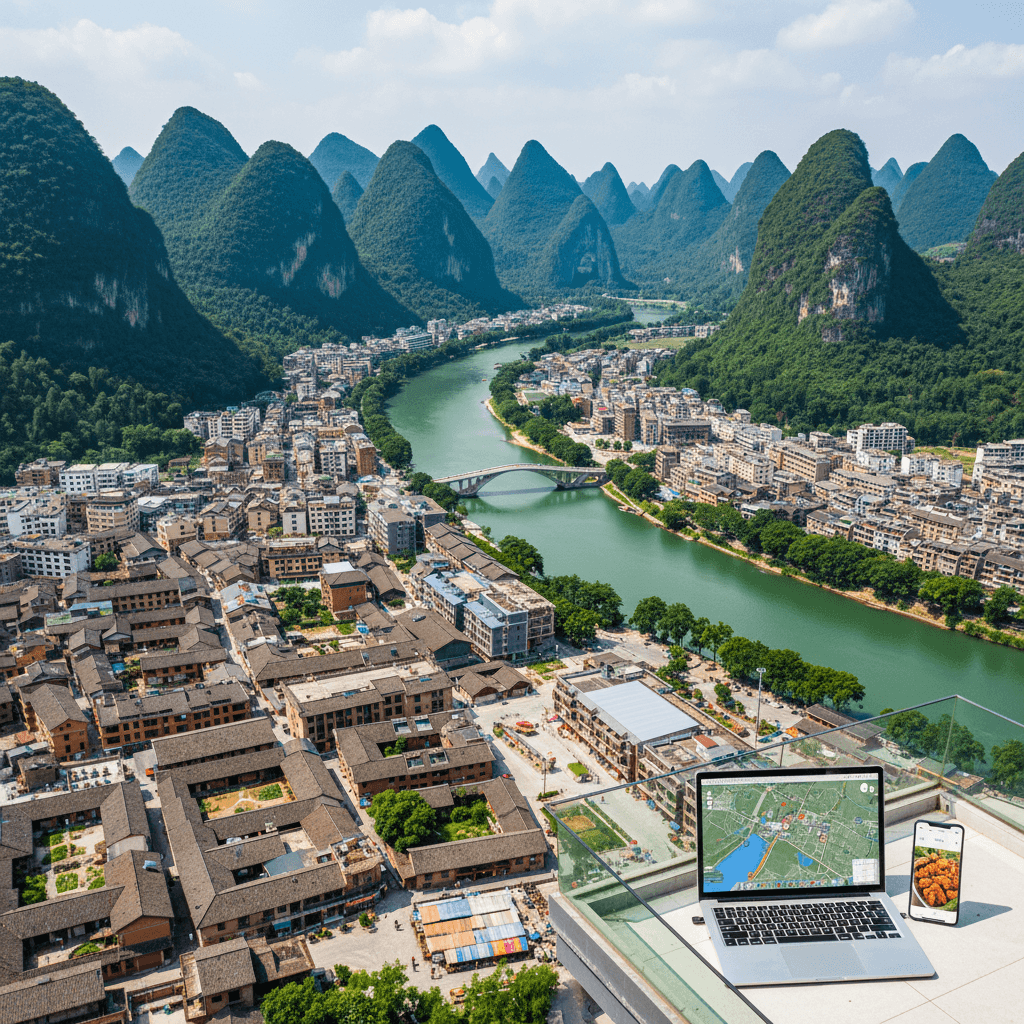
Yangshuo
🇨🇳 China
Yangshuo isn't your typical Chinese megacity. There are no gleaming skyscrapers or tangled subway lines here. Instead, you're dropped into a landscape that looks like a traditional ink wash painting come to life. Towering limestone karsts erupt from the earth in every direction, draped in deep green vegetation and often shrouded in a low hanging mist that makes the whole place feel ancient and slightly surreal.
The vibe is distinctly slow. While the rest of China moves at breakneck speed, Yangshuo invites you to trade your laptop for a bike or an e-scooter. It’s a destination for nomads who want to detox from urban chaos without sacrificing high speed internet or a decent cup of coffee. You'll find a quirky mix of rock climbers, backpackers, and remote workers who have all realized that staring at a karst peak beats staring at a cubicle wall any day of the week.
The Cost of Living
Living here is remarkably affordable, even by Southeast Asian standards. Most nomads find they can live comfortably on about $1,844 a month, though you can easily scale that down if you're eating local. Here's how the monthly tiers usually break down:
- Budget ($1,000): You're staying in shared guesthouses, eating 15 RMB bowls of Guilin rice noodles, and getting around on a pedal bike.
- Mid-range ($1,500): This covers a private room or a small apartment outside the tourist center, daily e-scooter rentals at 25 RMB, and a mix of local spots and Western cafes.
- Comfortable ($2,500+): You're living in a high end boutique hotel like Yangshuo Mountain Retreat, dining at the best spots on West Street, and hiring private drivers for excursions.
Where to Set Up Camp
Choosing your neighborhood is the difference between a party vibe and a meditative retreat. Most people gravitate toward one of three areas:
West Street (The Hub)
This is the heart of the action. It's loud, neon lit, and packed with bars and souvenir shops. It's the best place for solo travelers who want to socialize or find a pizza and a craft beer. However, the crowds can be overwhelming and prices are often inflated for tourists.
Yulong River Villages (The Nomad Choice)
Villages like Jiuxian offer the authentic Yangshuo experience. It’s quiet, surrounded by rice paddies, and much cheaper. You'll need an e-scooter to get into town, but the peace and the riverside views are worth the commute. This is where you'll find the most focus for deep work.
Town Center Outskirts
A middle ground that works well for families. You’re within walking distance of the markets and schools, but far enough from West Street to avoid the midnight music. It’s safe, walkable, and provides easy access to the surrounding hills.
Internet and Productivity
Despite its rural appearance, the tech infrastructure is solid. WiFi speeds average around 8 Mbps, which is plenty for video calls and uploads. There aren't any dedicated coworking spaces yet, but the cafe culture is thriving. You'll see plenty of people working from their laptops in the afternoon. Just make sure you've got your Alipay or WeChat Pay set up before you arrive, as China is almost entirely cashless now. For data, many nomads recommend a Yesim eSIM to stay connected the moment they cross the border.
The Daily Rhythm
Life here revolves around the outdoors. You might spend your morning working from a cafe, then spend the afternoon rock climbing or taking a bamboo raft down the Yulong River. The social scene is informal; you’ll meet people at climbing gyms or over a communal dinner at a guesthouse. While Mandarin is the primary language, you'll find enough English on West Street to get by. For everything else, a camera translation app is your best friend for deciphering menus and street signs. It's a place that rewards curiosity and a willingness to get a little lost in the countryside.
Living the Karst Dream
Yangshuo isn't your typical Chinese concrete jungle. It's a place where you'll find yourself answering emails while staring at limestone peaks that look like they've been plucked from an ancient ink wash painting. For digital nomads, the monthly burn rate sits around $1,844, though you can live for significantly less if you trade the tourist traps of West Street for a quiet village life.
The town operates on a sliding scale of convenience versus cost. If you want craft beer and pizza, you'll pay prices that rival Shanghai. If you eat like a local, you'll be full for the price of a coffee back home. Most nomads find that the real value lies in the outskirts, where the air is cleaner and the rent is cheaper.
Budget Tiers
- The Budget Nomad (~$1,000/month): You're staying in a modest guesthouse or a shared apartment, eating 15 RMB Guilin rice noodles for lunch, and getting around on a pedal bike.
- The Mid-Range Professional (~$1,500/month): This covers a private one bedroom apartment or a long stay rate at a nice guesthouse, frequent mid range meals, and an eScooter rental to explore the Yulong River valley.
- The High End Resident (~$2,500/month): You're likely staying at a premium spot like Yangshuo Mountain Retreat, dining at upscale West Street spots, and using Didi drivers to get everywhere.
Housing and Neighborhoods
Finding a place isn't always as simple as hitting a Western booking site. Many expats recommend starting in a guesthouse for a week and then scouting local platforms or asking around in person to find long term deals in the villages.
West Street
- Best For: Social butterflies and short stays.
- Rent: Highest in the area due to demand.
- Vibe: Chaotic and touristy but very English friendly with plenty of bars.
- The Catch: It's loud at night and prices for everything from water to dinner are inflated.
Yulong River Villages (e.g., Jiuxian)
- Best For: Serious remote workers and nature lovers.
- Rent: Significantly lower than the town center.
- Vibe: Peaceful, authentic, and surrounded by rice paddies.
- The Catch: You'll need an eScooter to get groceries, and English speakers are harder to find.
Daily Expenses
Food is where your budget can fluctuate wildly. A bowl of local noodles might cost 10 to 20 RMB, while a Western meal on West Street can easily hit 100 RMB. If you're looking to save, stick to the side streets away from the neon lights.
Transportation is cheap and efficient. Renting an eScooter usually costs about 25 RMB a day, which is the gold standard for getting around. If you need something with more kick, a motorbike goes for about 120 RMB including fuel. For longer trips or rainy days, Didi is the essential app for affordable ride hailing.
Connectivity and Work
Despite the rural setting, the internet is surprisingly reliable. You'll see speeds around 8 Mbps, which is plenty for video calls. There aren't any dedicated coworking spaces yet, so the local cafe culture is your office. Places like Omeida or the various cafes along the river offer solid WiFi and a workspace for the price of a latte.
Before you land, make sure you have your tech stack ready. An eSIM from Yesim is a popular choice for instant data. You'll also need to set up Alipay or WeChat Pay immediately, as China is virtually cashless. Most shops and even street food vendors expect a QR code scan for payment.
Health and Safety
Yangshuo is remarkably safe, even for solo travelers late at night. The biggest risk is usually a slippery trail or a hectic intersection on West Street. For minor issues, local pharmacies are everywhere, and a one hour massage will only set you back 30 to 50 RMB. For anything serious, you'll want to head to the larger hospitals in Guilin, which is about an hour away by car.
For Digital Nomads: Yulong River Villages
If you are coming to Yangshuo to actually get work done while staring at limestone peaks, head straight for the villages along the Yulong River. Jiuxian Village is the gold standard here. It is quiet, authentic, and far enough from the megaphone-wielding tour groups to maintain your sanity. You will find ancient stone houses converted into boutique guesthouses that offer surprisingly reliable 8 Mbps WiFi.
Most nomads here skip dedicated coworking spaces, since there are none, and instead set up shop in cafes or guesthouse courtyards. The vibe is slow and focused on nature. You can spend your mornings on Zoom calls and your afternoons cycling through rice paddies or rock climbing. It is a low-stress lifestyle that costs around $1,500 to $1,844 a month for a comfortable mid-range setup.
- Rent: Budget for guesthouses or long-term apartment rentals outside the main drag; prices are significantly lower than in Tier 1 Chinese cities.
- Vibe: Peaceful, scenic, and rural.
- Transport: You will definitely want an eScooter, which runs about 25 RMB ($3.50) per day.
For Solo Travelers: West Street (Xi Jie)
Solo travelers looking for social energy and easy logistics should stick to the West Street area. This is the historic heart of town, though it has evolved into a neon-lit hub of bars, craft beer spots, and souvenir shops. It is loud and unashamedly touristy, but it is also the only place where you will find a high concentration of English speakers and other travelers to grab a drink with.
The food scene here is the most diverse in the region. You can grab a bowl of Guilin rice noodles for 10 to 20 RMB on a side street or sit down for a decent pizza if you are feeling homesick. While "haters" often complain about the overdevelopment, there is no denying the convenience of having everything from rock climbing gyms to Didi drivers right at your doorstep.
- Social Life: High. This is where the nightlife happens and where most climbing guides base themselves.
- Drawbacks: Expect inflated prices and thick crowds, especially during Chinese national holidays.
- Safety: Very safe, though the streets get chaotic at night with foot traffic and performers.
For Families: Town Center Outskirts
Families usually find their sweet spot in the residential outskirts of the town center. These areas offer a balance between the convenience of the city and the quiet of the countryside. You are close enough to the hospitals and pharmacies in town, but far enough away that the bass from West Street bars won't keep the kids awake.
The streets here are walkable and safe. You can easily catch a Didi to the Impression Liu Sanjie light show or head out for a family raft trip on the river. Many expats recommend staying near the parks or the library area where the pace is more predictable and local. It feels like a real community rather than a tourist resort.
- Amenities: Easy access to supermarkets, fruit stalls, and local schools.
- Activities: Close to easy hiking trails and bike rental shops that carry child seats.
- Healthcare: Basic needs are met by local clinics; more serious issues require a trip to nearby Guilin.
For Long-Term Expats: The Rural Fringe
Expats who have fallen in love with the karst landscape often move further into the valley. Areas near Moon Hill or the smaller hamlets tucked behind the main mountains offer the ultimate escape. Life here revolves around the seasons and the weather. You will need to be comfortable using translation apps for everything, as English is almost non-existent once you leave the tourist zones.
The cost of living drops significantly here if you eat like a local and avoid the western-style cafes. A budget of $1,000 a month can go a long way if you are sharing a house and cooking at home. It is a rugged, beautiful way to live, best suited for those who want to master Mandarin or spend every waking hour on a rock face.
- Internet: Surprisingly good; even remote farmhouses often have fiber optic connections.
- Essentials: Make sure you have Alipay or WeChat Pay set up before you move out here, as cash is becoming a relic.
- Community: Small but tight-knit; you will meet people through the local climbing scene or Tai Chi circles.
Getting Connected
Internet in Yangshuo is surprisingly reliable for a town tucked between limestone peaks. You’ll find average speeds of around 8 Mbps, which is plenty for video calls and standard remote work tasks. While the rural setting might make you worry about dropouts, most guesthouses and cafes in the area have solid, stable WiFi that supports a growing nomad community.
Before you touch down, handle your connectivity. Most expats recommend using an eSIM like Yesim to get data immediately upon arrival. If you're looking for a deal, use the code QEOIB848 for a 5€ credit. If you prefer a physical SIM, you can pick one up in town, but make sure your phone is unlocked. You'll also need to have your "Great Firewall" workarounds ready to go before you cross the border, as downloading them locally is a headache you don't want.
The Coworking Scene
If you're looking for a sleek, glass-walled dedicated coworking space with ergonomic chairs and free-flowing kombucha, you won't find it here. Yangshuo doesn't have formal coworking hubs yet. Instead, the "office" of choice is the local cafe. The town has a thriving cafe culture where nobody will bat an eye if you sit with a laptop for a few hours, provided you're buying coffee or lunch.
For a social atmosphere, head toward West Street. It's the tourist heart of the city and has the highest concentration of English-speaking staff and western-style amenities. The downside is the noise; it can get chaotic in the afternoons. If you need deep focus, grab an eScooter for about 25 RMB (3 EUR) a day and head to the villages along the Yulong River, like Jiuxian. Many guesthouses there, such as the Yangshuo Mountain Retreat, offer quiet patios with stunning karst views and decent WiFi, making for a much more peaceful workday.
Digital Essentials
Living and working in Yangshuo requires a specific digital toolkit. China is almost entirely cashless, so setting up Alipay or WeChat Pay is mandatory. You can link most international cards to these apps now, which lets you pay for everything from a 15 RMB bowl of Guilin rice noodles to your monthly rent.
- Didi: This is the local version of Uber. It's cheap, reliable, and has an English interface. Use it for longer trips or when you don't feel like braving the humidity on a bike.
- Trip.com: The easiest way to book high-speed trains to Guilin or flights without needing a local bank account.
- Translation Apps: Outside of the main tourist shops on West Street, English is rare. Use an app with a camera translation feature to read menus and street signs.
Nomad Work-Life Balance
The real draw for nomads here isn't the desk setup; it's what happens when you close the laptop. The low cost of living, roughly $1,844 per month for a comfortable lifestyle, means you can afford to work fewer hours and spend more time outside. Most people break up their work sessions with a quick bike ride through the rice paddies or a rock climbing session. Local climbing guides are easy to find and are a great way to meet other active expats. If you need a break from the screen, a 30 to 50 RMB massage is the standard way to end a long day of typing.
A Peaceful State of Mind
Yangshuo feels worlds away from the high pressure environments of Shanghai or Shenzhen. Most nomads find the town incredibly safe, even when wandering back to a guesthouse late at night after a few drinks on West Street. Violent crime is virtually nonexistent here. The local culture is rooted in a slow, rural pace where people generally look out for one another.
Your biggest concern won't be safety, but rather the sensory overload of West Street. While it's the social heart of town, the crowds can get overwhelming during peak domestic travel seasons. If you're staying in the more remote villages like Jiuxian or along the Yulong River, the only "danger" you'll likely face is a wandering water buffalo or a slippery path after a sudden rainstorm.
Health and Medical Care
For day to day health needs, Yangshuo is well equipped with local pharmacies. You'll find plenty of these around the town center and near the markets. Many pharmacists are used to tourists, but having a translation app like Pleco or Google Translate (with an offline pack) is a must for explaining specific symptoms. Expect to pay between 30 and 50 RMB for a high quality professional massage, which many expats use as a regular part of their physical wellness routine after a day of rock climbing.
If you deal with anything more serious than a cold or a minor scrape, you'll need to head to Guilin. The hospitals in Yangshuo are fine for basic stabilization, but Guilin offers much larger facilities with better diagnostic equipment. It's about a 60 to 90 minute drive depending on traffic. Most long term nomads use SafetyWing insurance to cover these types of emergencies, as it's designed for the flexibility of the nomad lifestyle.
Practical Safety Tips
- Road Safety: This is your highest risk area. If you're renting an eScooter for 25 RMB a day, wear a helmet and stay alert. Local traffic patterns can feel chaotic to Westerners, with bikes and scooters often moving against the flow of traffic.
- Digital Safety: Since you'll be relying on WeChat and Alipay for everything from buying water to paying rent, keep your phone charged and secure. Losing your phone is a much bigger headache than losing your wallet in China.
- Emergency Transport: Don't rely on flagging down a taxi if you're in a hurry or have a medical issue. Use the Didi app. It's the local version of Uber, it has an English interface, and it tracks your ride via GPS, which adds an extra layer of security.
- Water Quality: Don't drink the tap water. Even locals boil it or buy large 5 gallon jugs for their homes and guesthouses. Stick to bottled or filtered water for drinking and brushing your teeth if you have a sensitive stomach.
Navigation and Support
Because English isn't widely spoken once you leave the main tourist drag of West Street, your phone is your lifeline. Beyond translation apps, make sure you have a reliable way to bypass local internet restrictions to access your usual work tools. Many nomads recommend setting up an eSIM through Yesim before landing to ensure they have data the moment they step off the train.
If you find yourself in a pinch, the staff at guesthouses like Yangshuo Mountain Retreat are incredibly helpful and often act as informal fixers for the expat community. They can help coordinate drivers to Guilin or find specific medical supplies that might not be available in the smaller village shops.
The Logistics of Karst Living
Moving around Yangshuo is less about navigating a grid and more about flowing with the terrain. The town center is compact enough to cover on foot, but the real magic happens when you venture into the limestone peaks. For daily life, most nomads rely on a mix of two wheels and smartphone apps.
Mastering the eScooter
If you want to live like a local, you'll need an eScooter. They're the lifeblood of the region, allowing you to zip between rice paddies and riverside cafes without breaking a sweat. You can rent one for roughly 30 RMB per day, though you can often negotiate a better rate for a monthly lease. They're silent, easy to park, and perfect for the narrow paths in villages like Jiuxian.
For those who prefer a bit more power for longer explorations, motorbikes are available for around 120 RMB per day, which usually includes your fuel. Just keep an eye on your battery levels; while charging points are popping up, getting stranded in a rural valley is a rookie mistake you'll only want to make once.
Ride-Hailing and Apps
When the weather turns or you're heading out for a nice dinner on West Street, Didi is your best friend. It's China's version of Uber and it works seamlessly here. You'll want to download the app and set up your payment (Alipay or WeChat Pay) before you arrive.
- Didi: Cheap, reliable, and avoids the "tourist tax" sometimes found with street taxis.
- Local Taxis: Available but notorious for skipping the meter. Always agree on a price before getting in if you aren't using an app.
- Bicycles: Best for the Yulong River paths where motorized vehicles are sometimes restricted. Expect to pay 10 to 20 RMB for a day rental.
Getting to Yangshuo
Most nomads arrive via Guilin Liangjiang International Airport. From there, you have a few choices. You can book a private driver through your guesthouse, which is the low-stress option, or grab a Didi directly from the arrivals hall.
The high-speed train is another popular route. Use the Trip.com app to book your tickets in advance. The Yangshuo Railway Station is actually located in Xingping, about 45 minutes outside the main town, so you'll need to catch a local bus or a Didi for the final leg of the journey.
Practical Transport Tips
- Navigation: Google Maps is often inaccurate here. Use Apple Maps or Amap (Gaode) for better precision, even if you can't read all the Chinese characters.
- Safety: Helmets aren't always strictly enforced by locals, but the gravel on rural roads can be slippery. Wear one.
- Walking: Stick to the town center or West Street for walkability. If you're staying in the countryside, a set of wheels is mandatory.
- Payment: Cash is increasingly rare. Ensure your Alipay or WeChat Pay is linked to a functional card so you can scan QR codes for bus fares or bike rentals instantly.
Transport Cost Summary
- eScooter Rental: ~30 RMB per day
- Motorbike Rental: ~120 RMB per day
- Bicycle Rental: ~15 RMB per day
- Didi Ride (Short Town Trip): ~10 to 20 RMB
- Private Car from Guilin: ~200 to 300 RMB
The Language Barrier and How to Break It
In Yangshuo, your experience with the local tongue depends entirely on your coordinates. If you're hanging out on West Street or staying at a popular spot like the Yangshuo Mountain Retreat, you'll find plenty of English speakers among the shop owners, rock climbing guides, and restaurant staff. The town has been a backpacker staple for decades, so the tourism industry here is well-versed in western needs.
Once you wander into the countryside or the smaller villages like Jiuxian, English disappears almost completely. Most locals speak Mandarin or the Guilin dialect. While the locals are incredibly friendly and patient with foreigners, you shouldn't expect them to understand anything beyond basic gestures without some digital help. Nomads who stay long term often find that learning a few polite phrases goes a long way in building rapport with neighbors.
Digital Lifelines: Essential Apps
You shouldn't even think about boarding your flight without a suite of apps installed. China is a mobile-first society, and Yangshuo is no exception. While you'll see some menus with English translations, many smaller local spots use QR codes for ordering that are exclusively in Chinese.
- WeChat & Alipay: These are non-negotiable. Beyond just messaging, these are your primary payment methods. Cash is becoming a rarity, and many vendors won't even have change for large bills.
- Translator Apps: Use an app with a camera translation feature. This is the only way to read street signs, ingredient lists, or complex menus in the village centers.
- Didi: This is the local version of Uber. It has a built-in English interface and a translation tool that allows you to text your driver. It's the safest and most transparent way to get around without haggling over prices.
- Trip.com: The easiest way to book your high-speed train tickets to Guilin or other parts of the country without needing to navigate a Chinese-only interface.
Staying Connected: SIMs and WiFi
The internet in Yangshuo is surprisingly reliable for such a rural setting. Most guesthouses and cafes offer speeds around 8 Mbps, which is plenty for video calls and remote work. However, the "Great Firewall" is still a factor. You'll need a reliable roaming plan or a specific setup to access western sites like Google, Slack, or Instagram.
Expats frequently recommend using an eSIM for immediate data upon arrival. Yesim is a popular choice among the nomad community here. If you prefer a local physical SIM, you can pick one up in town, but you'll need your passport and a bit of patience for the registration process. If you're planning to hunker down in a cafe for a work session, most owners are happy to share their WiFi password, though they might expect you to order a second round of coffee or some food in exchange for the bandwidth.
Social Etiquette and Communication Style
Communication here is less about the words and more about the vibe. The pace of life is slow, and the locals value a relaxed, polite approach. When you're negotiating for an eScooter rental, which usually runs about 25 RMB a day, keep it friendly. Aggressive haggling is generally frowned upon and won't get you far.
If you're looking to meet people, the social language of Yangshuo is centered around activities. You'll find your "tribe" not in a boardroom, but at the local rock climbing crags or in Tai Chi classes. Most nomads find that the shared struggle of learning a few Mandarin words or navigating a local market creates an instant bond with other expats in the area.
The Seasonal Rhythm
Yangshuo is a place where the weather dictates your entire workflow. Because the main draw is the outdoors, timing your stay is the difference between a productive, scenic residency and being stuck indoors watching the rain lash against karst peaks. Most nomads aim for the sweet spots in Spring (April to May) and Autumn (September to November). During these months, the humidity is manageable, and the temperatures are perfect for taking your laptop to a riverside cafe or hitting the climbing crags after a morning deep-work session.
Autumn is arguably the gold standard. The air is crisp, the skies are often clear, and the rice fields in villages like Jiuxian turn a brilliant gold before harvest. It is the best time for cycling the Yulong River paths without melting into your shirt. Spring is beautiful and lush, but it brings the misty, ethereal atmosphere that Guilin is famous for. While it's poetic, it also means frequent drizzle, so keep a dry bag handy for your gear.
Avoiding the Summer Swell
Summer, specifically July and August, is a double-edged sword. It is undeniably hot and humid, with temperatures frequently climbing high enough to make e-scooter rides feel like moving through a hair dryer. This is also the peak rainy season. When it pours here, it really pours, occasionally causing the Li River to swell and halting the bamboo raft trips.
More importantly, this is when domestic tourism peaks. West Street becomes a chaotic sea of tour groups and selfie sticks. If you are living in the town center, the noise levels and inflated "tourist season" prices for short-term rentals can be frustrating. If you have to be here in summer, retreat to the countryside villages where the mountain breeze and river proximity keep things a few degrees cooler.
Winter: The Quiet Season
From December through February, Yangshuo goes into a bit of a slumber. It doesn't get freezing, but the damp cold in South China seeps into your bones because most traditional guesthouses lack central heating. You'll find yourself relying on electric blankets and AC units set to heat mode. The upside? Prices for long-term stays plummet, and you'll have the hiking trails almost entirely to yourself. It’s a great time for writers or developers who want zero distractions, provided they pack some high-quality thermal layers.
Key Dates to Watch
China's "Golden Week" holidays are the only times you might actually want to leave town. During National Day (first week of October) and Chinese New Year (usually January or February), transport becomes a nightmare and prices for everything triple. Most expats and long-term nomads use these weeks to take a "visa run" or head to a quieter province. If you stay, book your train tickets via Trip.com weeks in advance and stock up on groceries to avoid the West Street madness.
Planning Your Stay
- Digital Nomad Sweet Spot: September to November. Best balance of fast WiFi stability and outdoor accessibility.
- Climbing Season: October and November are the peak months for the rock climbing community due to dry rock faces and cool grip.
- The Rain Gear Factor: If visiting in May or June, an umbrella is useless against the wind; buy a heavy-duty local poncho for your e-scooter.
- Minimum Stay: While tourists do it in two days, nomads usually find 4 to 6 weeks is the minimum to actually find a rhythm between the town's social life and the countryside's peace.
Connectivity and the Digital Setup
Internet speeds in Yangshuo are surprisingly reliable for a rural town, averaging around 8 Mbps. While you won't find dedicated coworking spaces like you would in Shanghai, the cafe culture here is the backbone of the nomad scene. Most people set up shop in local spots with a view of the karst peaks. To stay connected the moment you land, grab a Yesim eSIM. If you want to save a few bucks, use the code QEOIB848 for a 5€ credit.
Before you arrive, download WeChat and Alipay. China is almost entirely cashless now, and you will need these apps for everything from buying street food to paying for your guesthouse. You should also install a camera-based translation app. English is common enough on West Street, but once you head into the villages, you will be pointing at screens and menus to get by.
Cost of Living
Most nomads find they can live comfortably here on about $1,844 per month. If you are on a tight budget, sticking to shared housing and street food can pull that down to $1,000. For a mid-range lifestyle with a private room and frequent scooter rentals, plan for closer to $1,500.
- Meals: A bowl of Guilin rice noodles costs between 10 and 20 RMB. If you crave pizza or craft beer on West Street, expect to pay inflated tourist prices.
- Transport: Renting an eScooter is the best way to see the valley and costs about 25 RMB ($3.50) per day. A full motorbike will run you closer to 120 RMB.
- Wellness: Local massages are a steal, usually ranging from 30 to 50 RMB for an hour.
Choosing Your Neighborhood
Where you stay completely changes your experience of Yangshuo. The town is small, but the vibe shifts block by block.
West Street
- Best For: Solo travelers and social butterflies.
- Pros: This is the heart of the action with the best nightlife, plenty of English speakers, and endless food options.
- Cons: It is loud, crowded, and significantly more expensive than the rest of town.
Yulong River Villages (Jiuxian)
- Best For: Deep work and nature lovers.
- Pros: This is the idyllic China you see in paintings. It is quiet, authentic, and surrounded by hiking trails.
- Cons: You will be reliant on an eScooter to get anywhere, and English is rare.
Town Center Outskirts
- Best For: Families and long-termers.
- Pros: A balanced middle ground. It is walkable and safe, with easy access to schools and markets without the 2:00 AM noise of West Street.
- Cons: You still deal with some tourist spillover during peak seasons.
Getting Around and Staying Safe
The town center is highly walkable, but you will want wheels to explore the karst landscapes. Didi is the local version of Uber; download it and link your card before you leave home. It is much more reliable than trying to flag down a taxi, as some local drivers might try to dodge using the meter with foreigners.
Yangshuo is incredibly safe, even at night. There aren't any specific areas to avoid, though West Street gets chaotic after dark. For healthcare, there are local pharmacies for the basics, but for anything serious, you will likely need to head to the hospitals in Guilin. Expats generally recommend Safety Wing insurance to cover any unexpected medical runs or transport needs.
Timing Your Stay
Skip the summer if you can. It is the peak of the rainy season and the heat is stifling. Spring and fall are the sweet spots for rock climbing and hiking. Plan for at least 4 to 6 weeks to get a feel for the pace, though many nomads find the low-stress lifestyle keeps them here for months. If you are coming for a short stint, look into the 240-hour visa-free transit options which can make the entry process much smoother.
Need visa and immigration info for China?
🇨🇳 View China Country GuideWild Card
Expect the unexpected