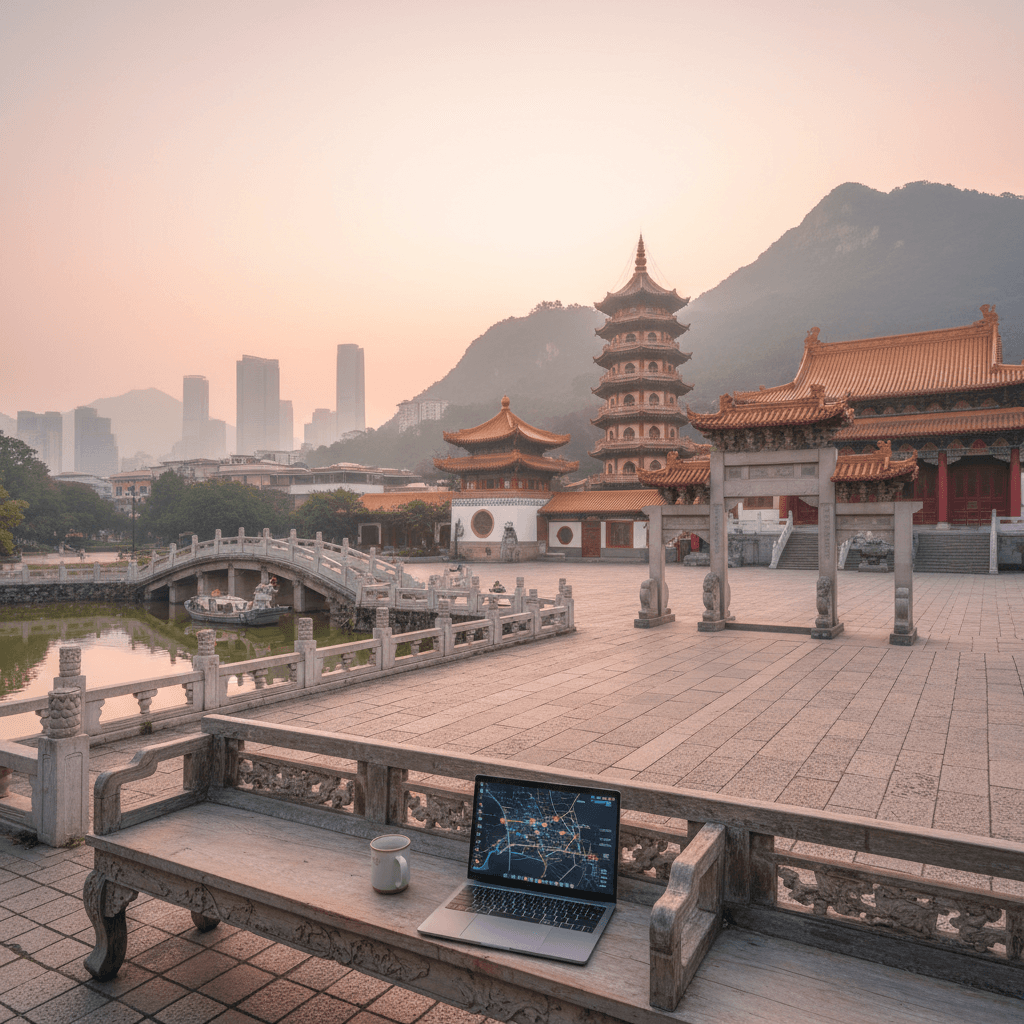
Xiamen
🇨🇳 China
The Island Pulse
Xiamen doesn't feel like the rest of China. While Shanghai and Shenzhen are sprinting toward the future, Xiamen is content to sit back, sip a cup of Oolong tea, and watch the tide come in. It’s a garden city on the sea where the air is actually breathable and the pace of life mimics the slow roll of the waves along the Ring Road. For nomads, it offers a rare middle ground: you get the high tech infrastructure of a tier two Chinese city without the frantic, high pressure "996" work culture found elsewhere.
The vibe is distinctly subtropical and breezy. You'll spend your mornings working from a cafe in the Siming District and your late afternoons biking the coastal paths or exploring the car free, colonial alleys of Gulangyu Island. It’s a place where modern glass skyscrapers overlook ancient temples and street food stalls specializing in oyster omelets. The emotional experience here is one of relief. You’re in China, but you’re not in a rush.
The Reality Check: Tech and Talk
Living here requires a bit of digital gymnastics. The Great Firewall is the biggest hurdle for anyone relying on Google, Slack, or WhatsApp. Most successful nomads set up a high quality VPN or a Hong Kong based eSIM before they even touch down at Gaoqi International Airport. Internet speeds average around 200-300 Mbps download, which is excellent for remote work. You'll need to embrace the local ecosystem; WeChat and Alipay aren't just convenient, they're mandatory for everything from buying a 3 CNY bottle of water to paying your rent.
English proficiency is low, hovering around a 1 or 2 out of 10. You’ll rely heavily on translation apps like Pleco or the scan to translate feature in WeChat. However, the locals are generally patient and the city is exceptionally safe. You can walk through the brightly lit streets of Siming at 2:00 AM without a second thought, which adds to that relaxed, low stress atmosphere nomads rave about.
Cost of Living Breakdown
Your monthly burn in Xiamen will likely land between $1,200 and $1,800 depending on how much you indulge in the local seafood scene. It’s significantly more affordable than the global hubs, but pricier than the rural interior.
- Budget Tier ($1,000): Shared housing in Jimei or Huli, sticking to 20 CNY street food meals, and using the 2 CNY bus system.
- Mid-Range ($1,500): A private studio in Siming, a mix of local eats and the occasional 100 CNY western meal, and frequent Didi rides.
- Comfortable ($2,000+): A luxury apartment near Xiamen University, high end seafood dinners at 150+ CNY, and a dedicated desk at a coworking space.
Where to Plant Your Flag
Choosing a neighborhood defines your Xiamen experience. Most foreigners gravitate toward the southern coast for the views and the community.
Siming District
- The Vibe: The heartbeat of the city. It’s walkable, coastal, and home to Xiamen University.
- Rent: 3,000 to 6,000 CNY for a decent one bedroom.
- Pros: Best access to beaches, western style cafes, and the most active expat community.
- Cons: Can get extremely crowded on weekends and during holidays.
Zengcuoyan
- The Vibe: A former fishing village turned bohemian arts district.
- Rent: 2,500 to 4,500 CNY for small, creative spaces.
- Pros: Incredible food, artsy atmosphere, and very affordable for solo travelers.
- Cons: The internet can be spotty in the older buildings and it’s very tourist heavy.
Huli District
- The Vibe: Modern, industrial, and practical. This is where the business happens.
- Rent: 2,800 to 5,000 CNY.
- Pros: Close to the airport, newer apartment complexes with better amenities, and great shopping malls.
- Cons: Lacks the historical charm and beach access of Siming.
Timing Your Stay
The sweet spot for Xiamen is March to May or October to November. During these windows, the temperature sits comfortably between 20°C and 28°C. You’ll want to avoid the summer months of July through September if possible; the humidity is punishing and typhoon season can occasionally ground your travel plans. Winters are mild and dry, rarely dropping below 10°C, making it a viable year round destination if you don't mind a bit of a chill in January.
The Cost of Living in Xiamen
Xiamen occupies a unique middle ground in China. It lacks the eye watering price tags of Shanghai or Beijing, but its coastal appeal and high quality of life mean it isn't a bargain basement destination either. Most digital nomads find that a monthly budget between $1,000 and $1,800 covers a comfortable lifestyle, depending on how much they prioritize a view of the water.
The city operates almost entirely on a cashless basis. You will need to set up Alipay or WeChat Pay immediately, linking your international card to pay for everything from a 2 CNY bus ride to a 100 CNY seafood dinner. While the Great Firewall is a persistent hurdle, nomads generally bypass this by using a Hong Kong based eSIM or a reliable VPN installed before arrival.
Monthly Budget Tiers
- The Budget Nomad ($1,000): You'll likely stay in a shared apartment or a studio in Jimei or the artsy Zengcuoyan village. Your diet will consist of 20 CNY street food and local noodles, and you'll rely heavily on the efficient bus and metro system.
- The Mid-Range Professional ($1,500): This covers a private one bedroom apartment in the Siming District, frequent air conditioning use, and a mix of local eats and the occasional Western meal. You'll likely use Didi ride hailing apps for convenience.
- The High End Resident ($2,000+): This budget grants you a modern high rise apartment near the Xiamen University area or a luxury build in Huli, plus regular nights out at upscale seafood spots and a dedicated desk at a coworking space.
Housing and Neighborhoods
Rent is your biggest variable. The Siming District is the heart of the action and where most expats gravitate. It's walkable and close to the beaches, though it carries a premium. If you want something more modern and don't mind a slightly more industrial, shopping mall vibe, Huli District offers newer builds with better amenities.
- Siming (Central): Expect to pay 3,000 to 6,000 CNY for a decent studio or one bedroom. It is crowded but puts you near the best cafes and the ferry to Gulangyu.
- Zengcuoyan: This former fishing village turned bohemian enclave is popular with solo travelers. It is more affordable than central Siming, though the internet can be spotty in older buildings.
- Huli District: Prices are slightly lower than Siming for more square footage. It's a solid choice if you prefer a quieter, more residential atmosphere.
- Gulangyu Island: While beautiful, living here is impractical for most. Everything has to be hauled in by hand, making groceries and services significantly more expensive.
Food and Drink
Seafood is the local currency here. You can find incredible value at the night markets or small stalls where a meal costs 20 to 50 CNY. If you head to a mid range restaurant, expect to pay between 50 and 100 CNY per person. Coffee culture is growing, with a latte usually costing around 25 to 35 CNY. If you're on a budget, stick to the local Oolong tea houses which are a staple of Xiamen social life.
Transport and Connectivity
Getting around is remarkably cheap. The metro and bus systems are world class, with fares rarely exceeding 5 CNY. For longer trips or late nights, a Didi ride across town usually lands between 15 and 40 CNY. If you want to explore the Ring Road, bike rentals via the Amap app cost roughly 10 CNY per hour.
Connectivity is generally excellent. Average speeds around 200-300 Mbps download are common, making the city well-suited for heavy video work. Coworking spaces in Siming or Huli typically charge between 500 and 1,500 CNY per month for a hot desk. Most nomads recommend getting a local physical SIM for about 100 CNY a month to access local apps, while keeping an international roaming plan or eSIM for unrestricted web access.
For Nomads: Siming District (The Central Hub)
If you're landing in Xiamen to work, Siming is where you'll spend 90% of your time. It is the heart of the city, stretching from the ferry terminals to the university. Most nomads gravitate toward the area around Siming South Road because it balances old school Fujian charm with modern amenities. You can grab a coffee in a renovated colonial building and then walk five minutes to a high tech office tower.
- Rent: Expect to pay between 3,000 and 6,000 CNY ($420 to $840) for a decent 1BR or studio.
- Coworking: While specific brands shift, you'll find plenty of WeWork style spaces for 500 to 1,500 CNY ($70 to $210) per month.
- Why it works: It is highly walkable and puts you near the best cafes. The downside is the price tag and the crowds during public holidays.
For Solo Travelers: Zengcuoyan (The Bohemian Village)
Zengcuoyan used to be a quiet fishing village, but it has transformed into a maze of narrow alleys filled with street food, boutique hostels, and art shops. It is perfect for solo travelers who want a social atmosphere without the corporate feel of the city center. The vibe is artsy and laid back, located right along the Huandao Road coastal path.
- Vibe: Quirky, youth oriented, and very close to the beach.
- Food: This is street food heaven. You can eat well for 20 to 50 CNY ($3 to $7) per meal.
- The Trade off: The internet here can be spotty in older buildings. If you have a deadline, you might need to head back into Siming for a stable connection.
For Expats: Huli District (Modern Convenience)
If you are planning to stay for six months or more, Huli is often the more practical choice. It is the industrial and commercial engine of the island, featuring newer apartment complexes and massive shopping malls. It lacks the historical soul of Siming, but it makes up for it with wider roads and better value for your money. Many long term residents settle near Jinshan Road or the Huli District area.
- Rent: Generally 15% to 20% cheaper than Siming for equivalent square footage.
- Lifestyle: This is where you'll find the big international grocery stores and modern gyms. It is less "touristy" and feels more like a functional city.
- Commute: The metro system is efficient here, with rides costing between 2 and 5 CNY, making it easy to reach the beaches on weekends.
For Families: Jimei District (The Quiet Suburbs)
Located on the mainland across the bridge, Jimei is famous for its "Jimei School Village" architecture. It is significantly quieter than the island districts and offers a much more suburban pace of life. Families often choose this area for the lower density, better air quality, and proximity to schools. It feels like a different world compared to the dense urban canyons of the city center.
- Atmosphere: Educational, green, and spacious.
- Transport: You are further from the action. A Didi ride to the Siming waterfront will take about 30 to 40 minutes and cost around 50 CNY.
- Pros: Excellent for those who want a "local" life away from the expat bubble.
For Short Term Visitors: Gulangyu Island (The Car Free Escape)
Gulangyu is a pedestrian only island famous for its colonial mansions and piano museums. While it is a top tier tourist destination, it is a unique place to stay for a few nights. There are no cars or scooters allowed, so be prepared to walk everywhere. Most visitors take the ferry from the International Cruise Terminal or Lundu Pier.
- Costs: Everything is marked up here. Expect higher prices for both food and accommodation.
- Experience: It is incredibly scenic and quiet at night once the day trippers leave.
- Warning: It is not a place for "work." The no car rule makes moving luggage a chore, and the tourist crowds during the day can be overwhelming.
The Connectivity Reality
Working from Xiamen is a study in contrasts. You'll be sitting in a beautiful cafe overlooking the Taiwan Strait, but your connection to the outside world requires some pre-planning. The Great Firewall is the biggest hurdle here. If you rely on Slack, Google, or WhatsApp, you need a solid strategy before you land. Most nomads recommend a Hong Kong based eSIM. Because these roam through Hong Kong servers, they often bypass the firewall entirely without needing a separate VPN, though having a backup VPN like Astrill already installed on your laptop is standard practice.
Average internet speeds in Xiamen are around 200-300 Mbps download. This is more than enough for heavy video calls and large file transfers. If you're planning a long stay, getting a local physical SIM from China Mobile or China Unicom at the airport is a smart move. It costs about 100 CNY per month for high data limits, but you'll need your passport to register it. This local number is your golden ticket to using apps like Meituan for food delivery or Didi for rides.
Coworking Spaces and Where to Set Up
Xiamen doesn't have a massive, centralized coworking scene like Shanghai, but the infrastructure is growing in the tech hubs. Most spaces are concentrated in the Siming and Huli districts. Expect to pay between 500 and 1,500 CNY for a monthly hot desk. While specific international brands are rare, local hubs in the Xiamen Heartland area or near Siming South Road offer modern setups with ergonomic chairs and stable Wi-Fi.
Many nomads skip the formal offices and lean into the city's rich cafe culture. The area around Xiamen University and the bohemian streets of Zengcuoyan are packed with spots where you can camp out for a few hours. Just keep in mind that English is limited, so have Pleco or Baidu Translate ready on your phone to ask for the Wi-Fi password.
Digital Nomad Toolkit
Living here is nearly impossible without two specific apps: Alipay and WeChat. China is a cashless society, and even the smallest street food stall in Zengcuoyan expects a QR code scan. You can now link international credit cards to these apps, making life much easier than it was a few years ago. For getting around, Amap is the local version of Google Maps. It's in Chinese, but the interface is intuitive enough to follow the blue line while walking or to call a Didi.
- Pre-arrival: Install your VPN and buy a roaming eSIM.
- On the ground: Get a local SIM for a "real" Chinese phone number.
- Financials: Set up Alipay and link your home bank card immediately.
- Navigation: Download Amap and Pleco for offline translation.
The Work-Life Balance
The real draw of Xiamen isn't just the connectivity, it's the lifestyle. The city has a relaxed coastal vibe that encourages you to close the laptop by 5:00 PM. You can spend your mornings working from a tea house in Siming and your evenings biking along the Huandao Road coastal path. If you need a complete break from the digital world, the ferry to Gulangyu Island takes you to a car-free zone filled with colonial architecture and quiet gardens. It's not the fastest place to run an online empire, but for a nomad looking to trade stress for seafood and sea breezes, it's a top-tier choice.
Xiamen is a breath of fresh air compared to the high pressure environments of Shanghai or Beijing. Most nomads find it remarkably safe, even late at night, thanks to a combination of a relaxed coastal culture and a heavy presence of smart city technology. While you should still keep an eye on your phone in crowded areas like the Zengcuoyan village or the Gulangyu ferry terminal, violent crime is almost non-existent for foreigners.
Staying Safe and Navigating the Streets
The biggest safety hurdle you'll face isn't crime, it's the traffic. While the city is walkable, especially in the Siming District, electric scooters often zip silently onto sidewalks. Always look both ways, even when you have a green light. If you find yourself in a pinch, memorize these emergency numbers:
- Police: 110
- Medical Emergencies: 120
- Fire Department: 119
- Traffic Accidents: 122
Expats recommend avoiding isolated stretches of the beach on the Huandao Road after midnight. Not because of crime, but because the tide can come in quickly and lighting is sparse in certain natural preserves.
Healthcare Infrastructure
If you get sick, you're in good hands, particularly in the core urban areas. Xiamen has modern medical facilities with high standards of care. Most nomads head to the major hospitals in Siming, such as those near Siming South Road. These facilities are used to seeing international students from Xiamen University and are generally more prepared for foreign patients.
Expect to pay out of pocket if you don't have local social insurance. A standard consultation might cost between 20 CNY and 100 CNY, but specialized tests or international wing services will be significantly higher. Pharmacies are on almost every corner, though English is rarely spoken. Use Pleco or Baidu Translate to show the pharmacist what you need.
Practical Health Tips
The subtropical humidity can be a shock to the system, especially during the typhoon season from July to September. Dehydration and heat exhaustion are common for newcomers who spend the day trekking up Sunlight Rock on Gulangyu. Stick to bottled water, as tap water in Xiamen isn't safe for drinking without boiling it first.
Recent policy shifts have made it easier for travelers on the 240-hour (10-day) visa-free transit policy to access medical services. If you're staying long term, it's a good idea to register with a local clinic early on. Most hospitals now require you to register and pay via Alipay or WeChat Pay, so ensure your digital wallet is linked to an international card before you actually need a doctor.
Insurance and Logistics
Don't arrive without a solid international health insurance policy that covers medical evacuation. While Xiamen's local hospitals are great for routine issues, serious complications might require a trip to Hong Kong or Taipei for more specialized English speaking care. Keep a digital copy of your passport and your latest entry stamp on your phone, as hospitals will ask for your ID before they can admit you for anything beyond basic first aid.
Getting Around Xiamen
Xiamen is a rarity in China: a major urban center where you actually want to spend time outdoors. The city is split between the mainland and Xiamen Island, but as a nomad, you'll likely spend 90% of your time on the island side, specifically in the Siming District. It is remarkably walkable, especially along the coast, and the infrastructure is designed to keep you moving without much stress.
Public Transit: Metro and Buses
The metro system is clean, modern, and incredibly cheap. You can cross most of the city for between 2 CNY and 5 CNY. While the network is expanding, the existing lines connect the airport in Huli directly to the hubs in Siming. If the metro doesn't go exactly where you need, the bus system fills the gaps. Look for Bus No. 1, 751, or 841 if you are heading toward Xiamen University or the nearby beach areas. Most buses charge a flat 1 CNY or 2 CNY fee.
Ride-Hailing and Apps
Forget trying to hail a taxi on the street. Everyone here uses Didi, which is integrated into Alipay and WeChat. It is much cheaper than Western ride-sharing services, with most cross-town trips costing between 10 CNY and 30 CNY. If you are coming from Xiamen Gaoqi International Airport, a Didi to the center of Siming will run you about 50 CNY and take roughly 30 minutes. Make sure you have your payment apps set up before you land; Xiamen is effectively a cashless society.
Cycling the Ring Road
One of the best ways to see the coast is by bike. The Huandao Road (Ring Road) features dedicated paths that are perfect for a weekend ride or a scenic commute. You can rent public bikes or scooters using the Amap (Gaode) app for about 10 CNY per hour. It is the preferred way for locals and expats to reach the quieter stretches of beach near Zengcuoyan. Just keep an eye on the battery level if you're grabing an electric scooter, as the coastal wind can drain them faster than expected.
Gulangyu Ferry Logistics
Getting to Gulangyu Island is a bit different for foreigners than it is for locals. You'll need to take a ferry from the International Cruise Center Terminal during the day. Tickets usually cost around 35 CNY to 50 CNY for a round trip. Remember to bring your passport, as you cannot board without it. Once you're on the island, there are zero cars or bikes allowed. It is strictly a walking zone, so wear comfortable shoes if you plan to explore the colonial architecture and hilly viewpoints.
Navigation Tips
- Amap (Gaode): This is the gold standard for navigation. Google Maps is wildly inaccurate here and often blocked. Download Amap and use the offline map feature.
- Translation: Since English proficiency is low, around 1 or 2 out of 5, keep Pleco or Baidu Translate handy for showing addresses to drivers.
- Walking: Siming and the Xiamen University area are very pedestrian friendly, but the humidity from July to September can make long walks exhausting. Stick to the metro during these months.
- eSIMs: To keep your maps and translation apps working seamlessly without a clunky VPN, buy a Hong Kong based eSIM before you arrive. It bypasses the Great Firewall and keeps you connected to your usual apps while on the move.
The Linguistic Reality
Xiamen is a city where your smartphone is your best friend. While the "island vibe" feels international, English proficiency remains low, sitting at about a 1 or 2 out of 5 on the nomad scale. You'll find some English speakers around Xiamen University in the Siming District, but don't expect the barista at a local tea house or the driver on Didi to speak much more than the basics.
Most locals speak Mandarin, but you'll also hear the rhythmic, melodic sounds of the Minnan dialect (Hokkien). It's the traditional tongue of the region, and while you aren't expected to learn it, hearing it in the seafood markets of Zengcuoyan adds a layer of local flavor you won't get in Beijing. Most nomads find that a mix of patience, translated screenshots, and hand gestures gets the job done.
Digital Survival Kit
If you land without the right apps, you're effectively stranded. Because the Great Firewall blocks Google, Slack, and WhatsApp, your communication strategy starts before you even board the plane. Expats recommend installing a reliable VPN on both your phone and laptop while still outside of China. Even better, grab a Hong Kong-based eSIM. These often route data through HK, allowing you to access your usual apps without a VPN, though a local physical SIM is still better for high-speed data and registering for local services.
- Pleco: The gold standard for translation. It works offline and allows you to draw characters you see on signs.
- Baidu Translate: Great for voice-to-voice conversations when you're trying to explain a complex order to a waiter.
- WeChat (Weixin): This isn't just an app; it's your entire life. It's how you message friends, pay for 20 CNY street food, and join expat groups to find out where the weekend meetups are.
- Amap (Gaode): Forget Google Maps. This is what you'll use to find your way through the winding alleys of Gulangyu Island.
The Cashless Barrier
Communication in Xiamen is often silent and digital. Cash is increasingly rare, and many vendors prefer a QR code scan over a 50 CNY note. You'll need to link your international credit card to Alipay or WeChat Pay immediately. Travelers often say that once your payment apps are verified, the "language barrier" shrinks significantly because you can scan menus to translate them and pay without saying a word.
Making Connections
The expat community here is smaller and more tight-knit than in Shanghai. Most social life happens in the Siming District or the artsy corners of Zengcuoyan. If you're looking to meet people, head to the cafes near the university or join WeChat groups specifically for Xiamen nomads. The 240-hour (10-day) visa-free transit policy has started bringing in more short-term remote workers, so the community is slowly diversifying.
Practical Phrases for Your First Day
While translation apps do the heavy lifting, knowing a few phrases goes a long way with the locals, who are generally patient with foreigners. Stick to these basics to start:
- Ni hao: Hello.
- Xiexie: Thank you.
- Duoshao qian?: How much? (Useful in the seafood markets where prices aren't always posted).
- Ting bu dong: I don't understand (A polite way to signal you need to switch to your translation app).
- Na ge: That one (Perfect for pointing at the freshest catch of the day).
Communication here is less about perfect grammar and more about having your digital tools ready. Once you have your Alipay verified and your VPN running, the relaxed coastal rhythm of Xiamen becomes much easier to navigate.
The Seasonal Sweet Spot
Xiamen is a rare bird in China, a subtropical island city where the air stays relatively clean and the winters don't bite. If you're planning a stint here, aim for the shoulder seasons. March to May and October to November are the goldilocks zones. During these months, temperatures hover between 20°C and 28°C (68°F to 82°F). You'll get plenty of sunshine for those coastal bike rides along Huandao Road without melting into your laptop.
Autumn is particularly favored by the nomad community. The humidity drops, the skies turn a sharp blue, and the rain stays away. It's the best time to grab a tea at a sidewalk cafe in Siming or spend a Saturday trekking through the colonial alleys of Gulangyu Island. Just keep an eye on the calendar; the first week of October is a national holiday, and the city gets swamped with domestic tourists, driving up prices and crowds.
Summer: The Humidity and Typhoon Factor
From July through September, Xiamen turns into a steam room. Temperatures frequently hit 35°C (95°F), but the high humidity makes it feel much hotter. This is also typhoon season. While the city is well prepared for storms, a heavy system can ground flights and keep you indoors for a few days. If you're here during the summer, you'll spend most of your workday chasing the strongest air conditioning in Huli District's modern office blocks.
The silver lining to a summer stay is the beach culture. Evenings at Zengcuoyan become much more lively as the sun goes down and the sea breeze finally kicks in. Just be ready for sudden, heavy downpours that can soak you in seconds.
Winter: Mild but Damp
Winter runs from December to February. Unlike Beijing or Shanghai, you won't see snow here. Temperatures usually stay between 10°C and 20°C (50°F to 68°F). It's technically dry season, but the coastal air can feel chilly and damp, especially since many older apartments in the Siming South Road area lack central heating. You'll want a decent jacket and maybe a space heater for your desk. It’s a quiet, introspective time in the city, perfect for focused deep work before the spring humidity arrives.
Quick Climate Reference
- Best for Outdoor Work: October and November. Low rain, clear skies, and comfortable 24°C (75°F) averages.
- Rainiest Months: June and August. Pack a sturdy umbrella and expect 80% plus humidity.
- Peak Tourist Season: February (Lunar New Year) and early October. Expect accommodation prices to double.
- Coldest Month: January. It rarely drops below 10°C (50°F), but the wind off the water adds a bite.
The Nomad Verdict
Most long term travelers recommend arriving in late September. This allows you to settle in just as the blistering summer heat breaks, giving you a solid three to four months of perfect weather to explore the island. By the time the damp chill of January hits, you'll have already found your favorite indoor tea houses and coworking spots to wait out the short winter.
Survival Basics: Money and Connectivity
Xiamen is a cashless society where physical wallets are mostly decorative. You'll need Alipay or WeChat Pay to do anything from buying a 2 CNY bus ticket to paying your rent. Most nomads link their international Visa or Mastercard to these apps before landing. If you're staying longer, a local bank account makes life easier, but for short stints, the "TourPass" features usually suffice.
The Great Firewall is the biggest hurdle for remote work here. Standard tools like Slack, Google, and WhatsApp are blocked. Most expats recommend buying a Hong Kong based eSIM before you fly; these usually bypass the firewall without needing a separate VPN. For a stable home setup, you'll want a high quality VPN installed on all devices before you enter the country. Expect average speeds around 200-300 Mbps download, which is excellent for video calls and remote collaboration.
Cost of Living Breakdown
While cheaper than Shanghai, Xiamen isn't "backpacking through Thailand" cheap. It's a premium coastal city. A comfortable monthly budget sits between $1,500 and $2,000, though you can scrape by on $1,000 if you stick to street food and shared housing.
- Studio Apartment (Siming): 3,000 to 6,000 CNY ($420 to $840)
- Street Food Meal: 20 to 50 CNY ($3 to $7)
- Mid-range Dinner: 50 to 100 CNY ($7 to $14)
- Monthly Coworking Desk: 500 to 1,500 CNY ($70 to $210)
- Metro/Bus Ride: 2 to 5 CNY ($0.30 to $0.70)
Where to Set Up Your Base
Choosing the right neighborhood defines your Xiamen experience. Most nomads gravitate toward Siming District, specifically the areas around Siming South Road or Xiamen University. It's walkable, packed with cafes, and close to the beach. It's the most expensive part of town, but the convenience is worth the markup.
If you want an artsier, slightly more chaotic vibe, check out Zengcuoyan. It's a former fishing village turned bohemian enclave. The internet can be hit or miss in the older buildings, so check the Wi-Fi before signing a lease. For a more modern, corporate feel with better shopping malls, Huli District is the place to look, though it lacks the historic charm of the south.
Getting Around the Island
The city is surprisingly easy to navigate. The Metro is spotless and efficient, and Didi (the local Uber) is incredibly cheap; most cross town trips cost between 10 and 30 CNY. For the scenic route, grab a bike via the Amap app and ride along the Huandao Road coastal path. If you're heading to Gulangyu Island, remember that it's pedestrian only. You'll need to catch a ferry from the Siming terminals, and it's best to book your tickets in advance on WeChat during peak season.
Health and Safety
Xiamen is remarkably safe, even late at night. Violent crime is nearly nonexistent, though you should keep an eye on your phone in crowded markets like Zhongshan Road. For medical needs, Siming has several high quality hospitals. If you have an emergency, dial 110 for police or 120 for medical assistance. Most doctors won't speak fluent English, so keep a translation app like Pleco or Baidu Translate ready on your phone.
Language and Etiquette
English proficiency is low, hovering around a 1 or 2 out of 5. You'll survive with translation apps and hand gestures, but learning basic Mandarin phrases like Ni hao (hello) and Duoshao qian? (how much?) goes a long way. Xiamen has a deep tea culture; if someone invites you for Oolong, it's a social gesture rather than just a drink. Take your time, enjoy the pour, and don't rush the conversation.
Best Times to Visit
Aim for March to May or October to November. The weather is mild, usually between 20 and 28 degrees Celsius. Avoid the summer months from July to September unless you enjoy extreme humidity and the occasional typhoon. Winter is dry and cool, rarely dropping below 10 degrees, making it a solid escape from the harsher climates of Northern China.
Need visa and immigration info for China?
🇨🇳 View China Country GuideHidden Gem
Worth the effort
Monthly Budget Estimates
More cities in China
Zhuhai
🇨🇳 China
Fuzhou
🇨🇳 China
Sanya
🇨🇳 China