Xi'an
🇨🇳 China
The Ancient Capital Meets the Modern Remote Worker
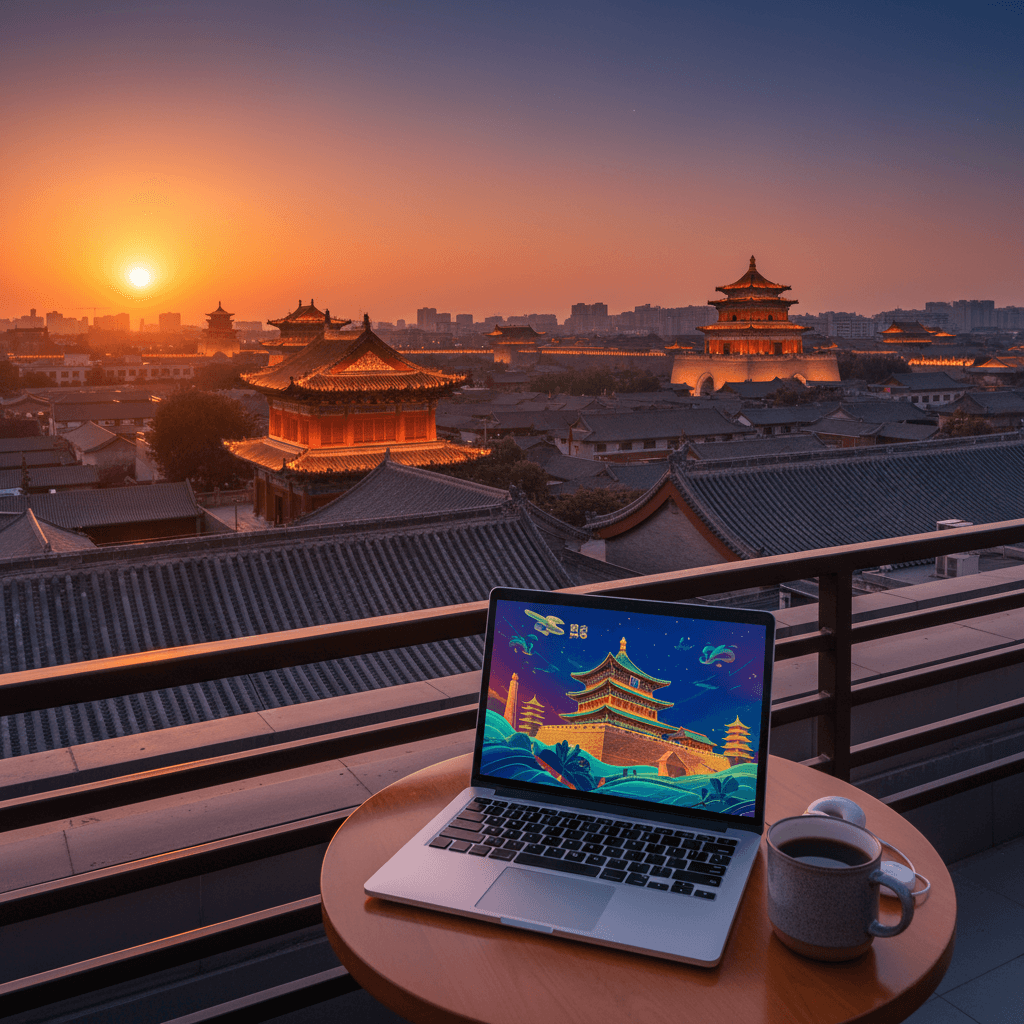
Xi'an isn't your typical glass and steel Chinese megacity. While places like Shanghai feel like they're sprinting toward the future, Xi'an is content to let its history breathe. It was the starting point of the Silk Road and served as the capital for thirteen dynasties, and you feel that weight the moment you see the massive 14 kilometer fortification wall that circles the city center. It’s one of the few places where you can spend your morning on a Zoom call and your afternoon biking on top of a 600 year old military defense system.
The vibe here is surprisingly grounded. Most nomads find the pace of life slower than in the coastal hubs. There’s a grit to the city that feels authentic; it’s a place of heavy stone, gray brick, and some of the best street food on the planet. You’ll find yourself working from a sleek, minimalist cafe in the morning and eating 15 RMB hand pulled noodles on a plastic stool by sundown. It’s this juxtaposition of imperial grandeur and everyday street life that makes the city addictive.
The Living History Experience
Living here means navigating a city that grew around its relics. The Giant Wild Goose Pagoda and the Bell Tower aren't just tourist boxes to check; they're landmarks you’ll use to find your way home. The Muslim Quarter is the city's emotional and culinary heart. It’s a maze of narrow alleys where the air smells like roasted cumin and grilled lamb. It can be overwhelming during peak hours, but ducking into a quiet courtyard mosque offers a level of peace that's hard to find in other Chinese Tier 2 cities.
Expats often say the city feels "green" despite its size. The streets are lined with heavy canopies of trees, and the parks are filled with retirees practicing calligraphy with water brushes or playing intense games of Mahjong. It’s a social city, though you’ll need your translation apps ready. English isn't widely spoken once you step out of the high end hotels, but the locals are generally patient and curious about long term visitors.
Why Nomads are Heading West
The draw for the remote work crowd is the cost to culture ratio. You can maintain a high quality of life here on $1,300 to $1,700 a month, which is a steal considering the infrastructure you get in return. The high speed rail system connects you to the rest of China with surgical precision, and the local metro is spotless and easy to use with a QR code. It’s a "Goldilocks" city: big enough to have every modern convenience and a burgeoning specialty coffee scene, but small enough to feel like you can actually get to know its corners.
- The Tech Setup: You'll need a solid VPN like Astrill or LetsVPN to stay connected to Slack and Google. Most nomads rely on a local eSIM from Trip.com or Airalo to keep their maps and translation apps running.
- The Social Scene: It’s less about "networking" and more about community. You'll find people meeting up in the bars near the South Gate or joining weekend hiking trips to Mount Hua, which is just a short train ride away.
- Digital Essentials: If you don't have Alipay and WeChat Pay set up before you land, you'll struggle. This is a cashless society where even the smallest street vendor expects a scan.
The emotional experience of Xi'an is one of discovery. One day you’re exploring the Terracotta Army, and the next you’re finding a quiet craft beer bar tucked into a renovated warehouse. It’s a city that rewards the curious and those who don't mind a bit of a language barrier in exchange for a truly deep dive into Chinese heritage.
The Budget Reality
Xi'an is a breath of fresh air for your bank account, especially if you've been spending time in high cost hubs like Shanghai or Beijing. Most nomads find they can live comfortably here on $1,200 to $1,700 per month. This isn't just "getting by" money; it covers a nice apartment, eating out daily, and plenty of weekend trips to the mountains or nearby historical sites.
The local economy is geared toward students and young professionals, which keeps prices grounded. You'll notice that your biggest variable is housing. If you want a modern high rise with a view of the City Wall, you'll pay a premium. If you're happy in a local neighborhood, your costs will plummet.
Monthly Breakdown
- Housing: $450 to $850. This gets you a decent one bedroom apartment in a good area. Prices vary based on how new the building is and proximity to the metro.
- Food and Groceries: $300 to $500. This assumes you're eating a mix of street food, local restaurants, and the occasional Western meal.
- Transport: $40 to $70. The metro is incredibly cheap, and even daily DiDi rides won't break the bank.
- Coworking and Coffee: $150 to $250. Xi'an has a growing cafe culture where a latte usually runs about $3 to $5.
- Utilities and Internet: $60 to $100. This includes your phone plan, home fiber, and electricity.
Housing and Neighborhoods
Rent is generally paid in three month chunks, plus a one month deposit. It's a bit of a hurdle at first, but it's the standard practice across China. You'll want to use apps like Lianjia or Beike to scout prices, though you'll likely need a local friend to help with the actual signing process.
- Beilin District: This is the heart of the city. You're looking at $600 to $900 for a nice spot. It's central, walkable, and close to the best nightlife.
- Yanta District: Popular with expats and students. It's slightly more modern and residential. Expect to pay $500 to $800 for a high quality apartment.
- Qujiang New District: The upscale choice. It's greener and quieter but also the most expensive. High end rentals here can easily top $1,000.
Eating and Drinking
Food is where Xi'an really shines for the budget conscious. A bowl of famous Biang Biang noodles or a Roujiamo (meat burger) will only set you back about $2 to $4. These aren't just snacks; they're full, filling meals. If you're heading to the Muslim Quarter, you can feast on skewers and specialty breads for under $10.
Mid range restaurants, where you might get a few dishes to share with friends, usually cost between $12 and $20 per person. Western food, like a good pizza or a burger, is the most expensive option, often costing $15 to $25 once you add a drink. Most travelers find that sticking to local spots during the week allows for a much higher standard of living overall.
Practical Expenses
Don't forget the "digital" part of the nomad life. A solid VPN is a non negotiable expense, usually costing around $10 to $15 a month. You'll also want a local SIM card. China Unicom or China Mobile plans with plenty of data are affordable, typically around $15 to $25 per month. Most expats recommend setting up Alipay and WeChat Pay immediately, as cash is becoming a rarity and digital payments are the only way to access many discounts and services.
For Digital Nomads: Beilin and South Gate
If you need to be near the action while maintaining a productive workflow, the area around the South Gate (Yongning Gate) in the Beilin District is your best bet. It is the most walkable part of the city, where ancient stone walls meet modern coffee culture. You can spend your mornings working from M+ Cafe or Sculpting in Time, which are local favorites for their reliable Wi-Fi and quiet corners.
- Monthly Rent: 2,800 to 4,500 RMB for a modern studio apartment.
- Vibe: Historic charm meets indie boutiques and third-wave coffee shops.
- Coworking: WeWork has a presence in the Maike Center nearby, though many nomads prefer the flexibility of the high-end hotel lobbies or the DeFu Lane cafe strip.
The biggest draw here is the accessibility. You are steps away from the subway line 2, which connects you to the rest of the city. After work, you can join the locals for a sunset walk on top of the 600 year old City Wall.
For Expats and Long-Term Residents: Yanta and Qujiang New District
Expats looking for a higher standard of living and greener spaces usually head south to Qujiang. This is the "new" Xi'an. It is cleaner, the air feels fresher, and the streets are wider. It is home to the Big Wild Goose Pagoda and the sprawling Tang Paradise park complex. You will find more international grocery stores here and gyms that don't require a year-long contract up front.
- Monthly Rent: 4,000 to 7,500 RMB for high-rise luxury apartments.
- Dining: A high concentration of international food, including Isola del Nord for Italian and several craft beer bars like Near Wall Bar.
- Atmosphere: Polished, family-friendly, and significantly quieter than the city center.
For Solo Travelers and Foodies: The Muslim Quarter (Lianhu)
If you are in Xi'an for a short stint and want to be hit by the city's energy the moment you step outside, stay in the streets just north of the Drum Tower. This area is a sensory overload in the best way possible. While it is touristy, living in the smaller alleys nearby gives you access to the best street food in China at all hours of the night.
- Daily Food Cost: You can eat incredibly well for 60 to 100 RMB a day.
- Must-Try: Yangrou Paomo (mutton soup with bread) and Roujiamo (the famous Xi'an pork burger).
- Pros: Unbeatable energy and the cheapest accommodation rates in the central districts.
- Cons: It is loud, crowded, and English signage is rarer than in the southern districts.
For Families: Gaoxin Tech Zone
Gaoxin is the economic engine of the city. It feels like a different world compared to the ancient center. It is where you will find the highest concentration of international schools and western-style shopping malls like Ginwa. Families appreciate the modern hospitals and the abundance of pocket parks between the skyscrapers.
- Rent: 5,000 to 9,000 RMB for a three-bedroom family flat.
- Connectivity: Excellent subway access, though traffic during rush hour is notorious.
- Practicality: This is the easiest place to navigate if your Mandarin is limited, as many staff in the high-end malls and medical centers speak basic English.
Most long-term residents suggest using Ziroom or Lianjia apps to browse listings before you arrive. Just remember that you will need your Alipay verified and ready to go to handle the deposits and utility bills.
The Connectivity Reality
Working from Xi'an requires a bit more preparation than your average Southeast Asian hub. You're dealing with the Great Firewall, which means your standard workflow will hit a wall without the right tools. Most digital nomads here swear by LetsVPN or Astrill as their primary lifelines. If you're relying on local Wi-Fi, expect speeds to hover between 6 Mbps and 16 Mbps. It's enough for emails and Slack, but you'll want a solid data plan for those high stakes video calls.
The smartest move is grabbing an eSIM from Airalo or Trip.com before you touch down. These often bypass the firewall naturally, letting you access Google, Instagram, and Slack without toggling a VPN every five minutes. Just make sure your phone is unlocked before you leave home. For local backup, Alipay and WeChat are your digital oxygen; you'll use them for everything from buying a 15 RMB coffee to unlocking a shared bike.
Coworking Spaces and Quiet Corners
While Xi'an doesn't have a massive "nomad" scene like Chiang Mai, the infrastructure for remote work is surprisingly solid thanks to the city's tech sector. You'll find most of the professional action in the Gaoxin District (High-Tech Zone) or near the Qujiang New District. Prices for a hot desk usually land between 80 RMB and 150 RMB per day.
- WeWork (Moma): Located in the Gaoxin district, this is the gold standard for reliability. It feels familiar, the coffee is decent, and the internet is usually the most stable in the city. Expect to pay around 1,200 RMB to 1,800 RMB for a monthly hot desk.
- Kr Space: A popular Chinese chain that caters to local startups. It's often cheaper than WeWork and offers a more "local" professional vibe. It's a great spot if you want to be surrounded by Chinese entrepreneurs.
- Maan Coffee: If you don't need a formal office, this chain is a favorite for nomads. They have huge tables, plenty of outlets, and a vintage aesthetic that's perfect for a long afternoon of deep work. A large latte will set you back about 35 RMB.
Cafe Culture for Remote Work
If you prefer a more relaxed environment, the area around the South Gate (Yongning Gate) is packed with independent cafes. Many of these spots have "work friendly" vibes during the weekdays. Look for places with large communal tables and stay away from the tiny "Instagrammable" shops that get crowded with tourists on weekends.
The Beilin District also hides some quiet study cafes near the universities. These spots are used to students camping out for hours, so you won't get the side-eye for staying through a second cup of tea. Just remember that many local cafes don't open until 10:00 AM, so early birds might need to stick to their hotel or a 24 hour KFC for those 8:00 AM meetings.
Practical Tech Tips
Don't rely on your physical credit cards. Xi'an is almost entirely cashless. Set up your Alipay with your foreign card and complete the passport verification at least 3 days before you arrive. Once that's linked, you can use the built-in DiDi mini-app to hail rides, which saves you from trying to explain your destination in broken Mandarin. For translation, Baidu Translate is generally more accurate for local nuances than Google Translate, and it works better on local networks.
Stay Smart and Stay Safe
Xi'an is generally much safer than most major Western cities. Violent crime is incredibly rare, and as a nomad, your biggest worry will likely be the chaotic traffic rather than any personal threat. You can comfortably walk through the Muslim Quarter or along the City Wall late at night without looking over your shoulder. That said, petty theft like pickpocketing can happen in crowded tourist spots like the Small Wild Goose Pagoda or the busy subway lines during rush hour. Keep your phone and wallet in your front pockets or a zipped bag when you're in a crush of people.
The most important safety tip for Xi'an isn't about crime; it's about digital readiness. Since China is a cashless society, a dead phone battery is a genuine emergency. If your phone dies, you can't pay for a taxi, buy food, or show your hotel address. Most nomads carry a high capacity power bank at all times. If you do get stuck, look for the Meituan or Energy Monster power bank rental stations found in almost every convenience store and cafe. You can rent a battery for a few yuan per hour using Alipay.
Healthcare and Hospitals
If you get sick, don't head to a small neighborhood clinic, as English speakers are nonexistent there. For anything serious, expats and long term travelers head to the international departments of major hospitals. These wings offer a much higher standard of care, shorter wait times, and staff who can speak English. Expect to pay upfront for services, though costs are quite reasonable compared to US prices. A standard consultation might run you 300 to 600 RMB.
- First Affiliated Hospital of Xi'an Jiaotong University: This is the heavy hitter in the city. Their international department is well equipped to handle emergencies and specialized care. It is located in the Yanta District.
- Gaoxin Hospital: Located in the high tech zone, this facility is modern and frequently used by the city's international business community. It's often less crowded than the downtown university hospitals.
- Local Pharmacies: Look for the green cross signs. Most pharmacists won't speak English, so have Baidu Translate or WeChat ready to show them your symptoms. You can buy many medications over the counter that would require a prescription back home, but always check the ingredients carefully.
Environmental Health
Air quality is something you need to monitor. Xi'an is in a basin, and during the winter months, smog can settle over the city. Most nomads use the AirVisual app to check the AQI (Air Quality Index) before heading out for a run or a long walk. On days when the index climbs above 150, it's a good idea to wear an N95 mask or stick to indoor coworking spaces with air purifiers.
You should never drink the tap water in Xi'an. Even locals boil it before use or buy large 5 liter jugs for the home. Most apartments and hotels provide a kettle, but for daily hydration, buying bottled water is the standard. A small bottle of Nongfu Spring water usually costs about 2 or 3 RMB at any corner shop.
Emergency Contacts
Keep these numbers saved in your phone, but keep in mind that the operators may not speak English. If you're in a pinch, try to find a younger local or a hotel receptionist to help you place the call.
- Police: 110
- Ambulance: 120
- Fire Department: 119
- Traffic Accidents: 122
For non emergencies, the 12345 government hotline can sometimes provide English assistance for city services or general complaints. Most nomads find that having a solid travel insurance policy like SafetyWing or World Nomads provides peace of mind, especially since they can help coordinate medical evacuations if something truly catastrophic happens.
The Digital Lifeline: Alipay and DiDi
In Xi'an, your smartphone is your steering wheel. Forget about waving down taxis on the street; it rarely works for foreigners and most drivers are already booked through DiDi, China's equivalent to Uber. You'll find the DiDi mini app directly inside Alipay. It's surprisingly user friendly because it has a built in translation feature that lets you text the driver in English while they see it in Chinese. Most rides across the city center will only set you back about 15 to 25 RMB.
Before you leave your hotel, make sure your Alipay is linked to a functional international card. You'll use this for the Transport QR code, which works instantly for the metro and buses. Just scan the code at the turnstile and you're through. It's much smoother than fumbling with cash or trying to find a ticket machine that accepts older banknotes.
The Metro System
Xi'an's subway is clean, fast, and incredibly cheap. Most trips cost between 2 and 7 RMB. Line 2 is the backbone of the city, running north to south and connecting the Xi'an North Railway Station to the Bell Tower area. If you're staying near the Big Wild Goose Pagoda, you'll likely spend a lot of time on Line 3 and Line 4.
The trains run frequently, usually every few minutes during peak hours. Announcements are made in both Mandarin and English, and the signage is very clear. One thing to keep in mind is that every single station requires a quick security bag check. It only takes a few seconds, but it can be a bit of a bottleneck during rush hour, so factor in an extra five minutes for your commute.
Biking the Ancient Walls
For a more scenic route, the Ancient City Wall is a massive rectangle that encloses the old city center. You can't take motorized vehicles up there, but you can rent a bicycle at any of the main gates. It costs about 45 RMB for a two hour rental, plus a small deposit. It takes roughly 90 to 120 minutes to cycle the full 14 kilometer loop. It's the best way to get your bearings and see the contrast between the old neighborhoods and the high rises popping up outside the moat.
Down on the street level, you'll see thousands of shared bikes from HelloBike (blue) or Meituan (yellow). These are great for "last mile" travel, but they can be tricky for nomads to activate without a local phone number or a fully verified Meituan account. If you can get them working, they usually cost about 1.5 to 3 RMB per ride.
High Speed Rail and Regional Travel
If you're planning a day trip to Mount Hua or heading to another province, the high speed rail system is world class. Xi'an North (Xi'an Bei) is the main hub for these sleek, punctual trains. You should book your tickets through Trip.com a few days in advance, especially on weekends.
- Arrival Time: Aim to be at the station 35 to 45 minutes before departure. You'll need your passport to enter the station and board the train.
- Security: Expect airport style security checks. Liquids are usually fine, but large knives or flammable aerosols will be confiscated.
- Onboard: The trains are spotless and quiet. There's usually a dining car, but most nomads prefer to grab a 20 RMB bento box at the station before boarding.
Walking the Quarters
In neighborhoods like the Muslim Quarter or the areas around South Gate, your best bet is your own two feet. The streets are narrow and often packed with food stalls and pedestrians, making cars more of a headache than a help. The city is mostly flat, so walking several miles a day is easy on the legs. Just keep an eye out for electric scooters; they are silent and often zip onto the sidewalks when the traffic gets heavy.
The Reality of the Language Gap
You’ll find that English proficiency in Xi'an is significantly lower than in Shanghai or Beijing. While younger locals and staff at high end hotels like the W Xi'an or The Ritz-Carlton usually speak some English, the average shopkeeper or taxi driver won't. This isn't a dealbreaker, it just means you need to adjust how you interact with the city. Most nomads find that a mix of patience, translation apps, and "point and nod" gets the job done perfectly well.
The local dialect, Guanzhong Hua, is quite distinct from standard Mandarin. It sounds a bit "harder" or more rhythmic to the untrained ear. Don't worry about learning it; everyone understands Putonghua (Standard Mandarin), which is what you'll hear in all official announcements and what your translation apps will use.
The Digital Survival Kit
Your phone is your most important communication tool. You cannot rely on Google Translate here because it's blocked by the Great Firewall unless you have a rock solid VPN. Instead, download Baidu Translate or use the built-in translation feature within WeChat. WeChat is particularly helpful because you can long press any message from a local to see an English translation immediately.
- Alipay and WeChat Pay: These are non-negotiable. Not just for paying, but for communicating your needs. Many restaurants use QR code menus where you order directly through the app. This is a lifesaver because the menus often have photos, and you can use your phone's screen translator to understand the ingredients.
- Wayfinding: Since Google Maps is unreliable and often inaccurate in China, use Apple Maps (which works well without a VPN) or Amap (Gaode Maps). Amap is in Chinese, but the interface is intuitive enough that you can recognize the icons for "taxi" or "metro."
- Didi: Use the English version of the Didi app or the mini-program inside Alipay. It allows you to type your destination in English and translates your messages to the driver in real time. This eliminates the stress of trying to explain where you're going.
Practical Communication Tips
Carry a physical business card from your hotel or a screenshot of your apartment address written in Chinese characters. Showing a map on your phone to a driver is often less effective than showing the actual written address. If you're heading to a specific spot like the Muslim Quarter or Giant Wild Goose Pagoda, have those names saved in Chinese on your phone.
Expats recommend keeping a few hundred RMB in small notes (10s and 20s) just in case your digital payment fails or you're in a spot with poor reception. While rare, it's a good backup. If you're struggling to communicate in a shop, look for a younger person nearby. Students in Xi'an are often eager to practice their English and are usually happy to help you bridge the gap for a moment.
Key Phrases for Your First Week
While you can get by with technology, learning a few basics goes a long way with the locals. They appreciate the effort, even if your tones are slightly off.
- Nǐ hǎo: Hello.
- Xièxie: Thank you.
- Ting bù dǒng: I don't understand (very useful when someone starts a long conversation in Mandarin).
- Zhège: This one (perfect for pointing at street food).
- Mǎidān: The bill, please.
Most nomads find that after a week, they develop a rhythm. You'll stop worrying about the language barrier and start relying on the incredible efficiency of the local apps. Xi'an is a visual city; between the signage and your smartphone, you'll find your way around just fine.
The Sweet Spot: Spring and Autumn
If you want to experience Xi'an without melting or freezing, aim for the shoulder seasons. April and May are fantastic for digital nomads who enjoy working from those leafy outdoor cafes. The city's many trees are in full bloom, and the temperature usually sits comfortably between 15°C and 25°C. It is the best time to bike the ancient City Wall before the midday sun gets too aggressive.
September and October offer a similar golden window. The summer humidity breaks, the air clears up, and the surrounding Qinling Mountains turn shades of orange and gold. It is perfect hiking weather if you are planning a weekend trip to Mount Hua. Just keep an eye on the Golden Week holiday during the first week of October. The city becomes incredibly crowded and prices for short term rentals skyrocket, so most expats try to hunker down or leave the city during that week.
Surviving the Extremes
Summer in Xi'an, specifically July and August, can be a bit of a furnace. Temperatures frequently climb above 35°C. While the city's infrastructure handles the heat well with powerful air conditioning in malls and coworking spaces, walking between meetings or sights can be draining. If you're here during this time, you'll find yourself adopting the local schedule: stay indoors during the afternoon and head out after 8:00 PM when the Muslim Quarter truly comes to life.
Winter is bone dry and chilly. From December through February, temperatures often hover around freezing. While it rarely snows heavily, the grey skies can feel a bit persistent. The upside is that tourist crowds vanish. You can have the Terracotta Army almost to yourself, and the local mutton stews (Paomo) taste significantly better when it is 0°C outside. Plus, indoor heating is standard across the city, so your workspace will stay cozy.
Atmospheric Events and Planning
Timing your stay around the Lunar New Year (usually in late January or February) is a double edged sword. The city is decked out in spectacular lanterns, and the atmosphere is electric. However, many smaller family run restaurants and shops close for a week or two. If you are looking for a quiet period to focus on a big project, this might not be it, but for cultural immersion, it is unbeatable.
For those watching their budget, the November to March low season sees the biggest dips in accommodation costs. You can often find high end apartment rentals or hotels for 30% to 40% less than the spring peak. Just pack a heavy coat and a good humidifier for your room, as the winter air in Shaanxi province is notoriously dry.
Air Quality Realities
Like many major industrial hubs in North China, air quality can fluctuate. It is generally much better than it was a decade ago, but winter months can still see occasional smog days. Most nomads keep a weather app like AirVisual handy. If the AQI spikes, that is usually a good day to head to a modern coworking space with high quality air filtration systems rather than working from a street side cafe.
- Peak Season: April, May, September, October
- Budget Season: December through February
- Hottest Month: July (Average 32°C+)
- Coldest Month: January (Average -1°C)
Digital Essentials
Success in Xi'an starts long before you land at Xianyang International Airport. China's digital ecosystem is a walled garden, and trying to set it up once you're on the ground is a recipe for a headache. You need to download and verify Alipay and WeChat at least a week before your flight. These aren't just messaging apps; they are your wallet, your metro card, and your lifeline for ordering food. Link your international credit card immediately so the verification process clears while you still have unrestricted internet at home.
Connectivity is the biggest hurdle for nomads. While local Wi-Fi in Shaanxi province is fast, the Great Firewall blocks most tools you rely on. To stay productive, skip the local SIM cards and use an eSIM from Airalo or Trip.com. These usually bypass the firewall automatically. Even so, always have a backup. Most long-term expats swear by Astrill VPN or LetsVPN for their stability on desktop and mobile. If one goes down, you'll be glad you have the other.
Navigating the City
The city layout is a grid, which makes it easy to orient yourself once you realize everything centers around the Bell Tower. To get around, use the Didi mini-app inside Alipay. It works exactly like Uber, and you won't have to struggle with language barriers since you type your destination in the app. For the subway, there's no need to buy physical tickets. Just open the Transport section in Alipay and scan the QR code at the turnstile.
If you're heading out to see the Terracotta Army or taking a day trip to Mount Hua, use the Trip.com app to book your high-speed rail tickets. These trains are incredibly punctual. Make sure to arrive at the station at least 30 minutes early. You'll need your passport to enter the station and pass through security checks, as your digital ticket is linked directly to your ID number.
Money and Language
While China is nearly cashless, don't be the person stuck at a street food stall in the Muslim Quarter with a failing app. Keep about 500 RMB in small notes tucked in your bag for emergencies. Most vendors prefer digital, but they'll take cash if you're in a bind. Expect to spend between $1,200 and $1,700 per month for a comfortable lifestyle including a nice apartment and frequent dining out.
English is not widely spoken once you leave the lobby of a high-end hotel. Download Baidu Translate or use the built-in translation tool in WeChat. You can take photos of menus or signs and get an instant translation. It isn't perfect, but it's enough to ensure you don't accidentally order something you're allergic to. Most locals are patient and will happily communicate through a screen.
Timing Your Stay
Xi'an hits extremes in the summer and winter. July and August are sweltering and packed with domestic tourists, making the city walls feel cramped. Aim for April to May or September to October. The weather is crisp, the trees are lush, and the air quality is generally much better. If you're from a country with 30-day visa-free access, these windows are perfect for a deep dive into the city without the stress of a long-term residency permit.
- Daily Budget: Plan for $40 to $60 for food and local transport.
- Power: China uses 220V. Most modern laptop chargers handle this, but check your bricks before plugging in.
- Water: Do not drink the tap water. Large 5-liter jugs are cheap at any 7-Eleven or local convenience store.
Need visa and immigration info for China?
🇨🇳 View China Country GuideHidden Gem
Worth the effort