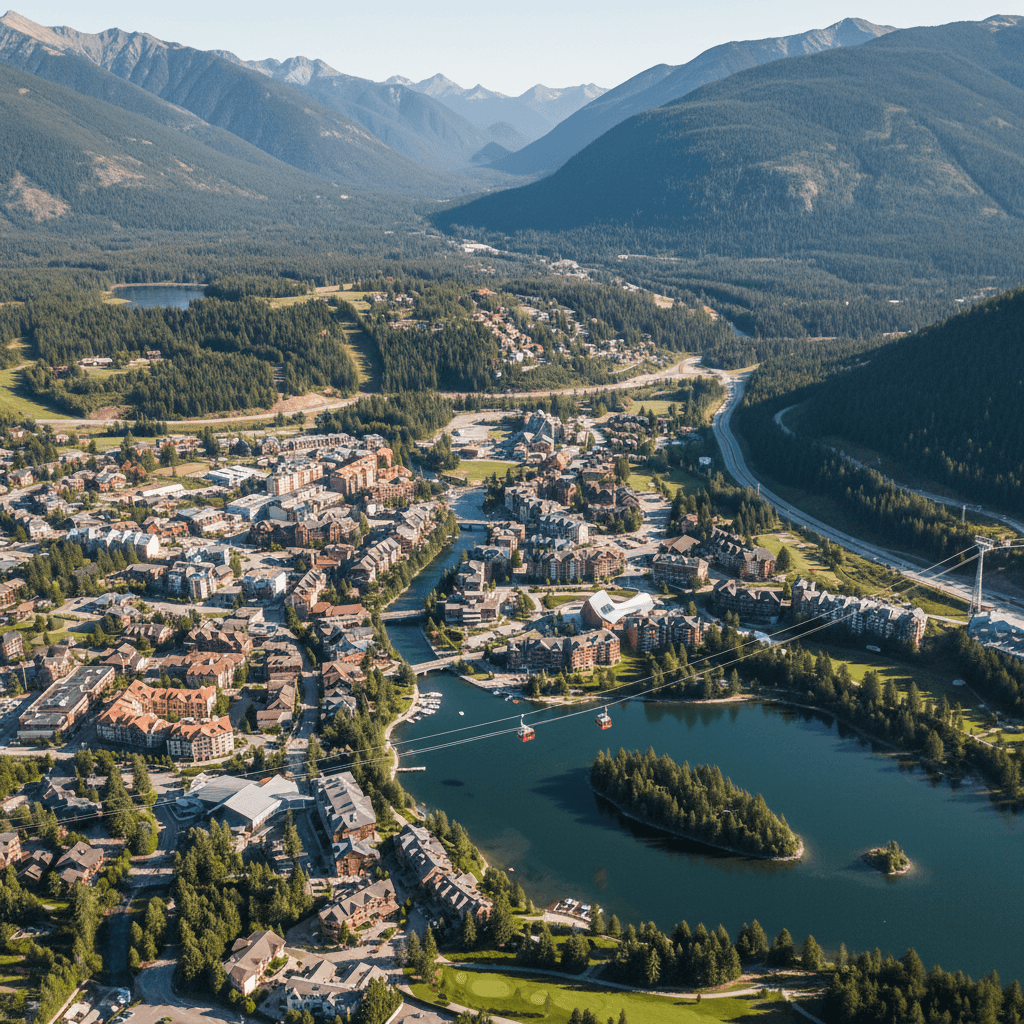
Whistler
🇨🇦 Canada
Whistler feels like a resort town that forgot to clock out, then settled into a slower mountain rhythm once the skis got packed away. In winter, you get clacking boot buckles, cold air that bites your cheeks and bars spilling après chatter into the snow, while summer flips the whole place into bikes, trail dust, lake swims and that dry pine smell on warm afternoons.
It’s gorgeous and pricey. That’s the blunt truth. A solo monthly budget lands around $2,470 CAD with rent, but that number climbs fast if you want a place in Whistler Village, where studios and one-bedrooms often start around $2,800 CAD and can run much higher, honestly, once peak-season demand kicks in.
Most nomads split their time between the polished center and the more practical edges. Village is the easy choice if you want to walk to the lifts, restaurants and nightlife, though it’s noisy and expensive; Function Junction is the value pick for people who want bike access, cafes and slightly less tourist chaos, while Creekside gives you a quieter, more residential feel, which, surprisingly, some long-term remote workers prefer over the flashier core.
Best-fit areas
- Whistler Village: Best for short stays, social energy and zero-fuss lift access.
- Whistler Creekside: Quieter, residential and still close to the mountain.
- Function Junction: Better value, bikeable and easier on the wallet.
- Blackcomb Benchlands: Great views, higher-end chalets and a steeper price tag.
Work-wise, Whistler is solid. WiFi is generally reliable, 50Mbps-plus plans are common and spots like The Network Hub and Coworking Whistler Village make it easy to plug in, print and escape the cabin fever, though coworking rates can sting at more than $50 a day.
The social scene is small but active, so people actually run into each other again and again at Dusty’s, Fresh St. Market, on the Valley Trail or at a coworking desk. That can be great if you want community and annoying if you’re trying to disappear, because word travels fast in a town this small.
Whistler’s biggest downside is the same thing that makes it famous, the mountain economy is built for visitors, so housing gets scarce, meals aren’t cheap and the town swells with crowds in ski season and summer. Still, if you want alpine air, strong infrastructure and a place where your lunch break can end on a trail instead of in traffic, it’s hard to beat.
Whistler is pricey, full stop. A solo person usually lands around $2,470 CAD a month with rent included and that number climbs fast once you start paying resort prices for groceries, dinners and the occasional lift-side coffee that somehow costs more than lunch elsewhere. The mountain air smells clean, the patios smell like fries and sunscreen and your wallet gets lighter in a hurry.
For housing, the village is the pain point, honestly. A studio or one-bedroom in Whistler Village can start around $2,800 CAD and shoot up to $6,500 CAD if it’s a nice spot or peak season is distorting everything, while places in Pemberton or Squamish are cheaper but mean a commute and less of that easy, walk-out-the-door lifestyle.
Typical monthly budget
- Budget: about $2,500 CAD, if you’re scrappy and skip too many nice dinners.
- Mid-range: roughly $4,000 CAD, which feels more realistic for most nomads.
- Comfortable: $6,000 CAD and up, especially if you want privacy, good views and zero roommate drama.
Where people actually live
- Whistler Village: Walkable, loud and expensive, with the gondolas, bars and late-night chatter right outside.
- Whistler Creekside: Quieter, more residential and still handy for the lifts.
- Function Junction: Better value, a bit industrial, with bike access and cafés that feel more useful than cute.
- Cheakamus Crossing: Newer housing, calmer streets and a more local feel, though it’s a bike or bus ride to the action.
Food prices are no joke either. A fast meal can run about $11 CAD, lunch is often around $20 CAD and two people at a mid-range or nicer place can easily hit $65 CAD or more, which, weirdly, doesn’t always get you better quality, just a better view of the mountains.
Getting around won’t save you much, though transit is manageable. BC Transit fares are about $1.82 a ride or $37 a month for a pass and the Valley Trail makes biking a smart move if you can handle wet roads, cold mornings and the occasional gear-grinding climb. Coworking also adds up, with hot desks starting around $50 a day, so many nomads just split time between cafés, home WiFi and a paid desk when they need a proper screen setup.
Internet is, thankfully, decent. Most places can handle remote work without drama and Telus or Bell plans start around $29 CAD for prepaid data, which helps if you’re living in a rental with spotty management or sharing a place where someone’s always streaming hockey in the next room.
Whistler looks small on a map, then the rent hits you. It’s a resort town first, a normal town second and that split shows up in the neighborhoods, the noise and the price of a grocery run when the wind smells like pine and wet ski boots.
Solo Travelers
- Whistler Village: Best for a short stay, walk everywhere, hear bars thumping late and pay the most, with studios often starting around $2,800.
- Function Junction: Better value for longer stays, with condos, bike access and cafe stops, though the industrial feel can be grim on gray days.
If you want nightlife, stay in the Village. If you want sleep, skip it. The tradeoff is blunt and honestly, most solo nomads get sick of the price tag before they get sick of the crowds. Function Junction works well if you’re working remotely, biking the Valley Trail and don’t mind bussing in for dinner or a pint.
Nomads
- Whistler Creekside: Quieter than the core, with gondola access and a more residential feel.
- Function Junction: Best for budget-minded remote workers, with easier access to cafes and some of the town’s more practical rentals.
- Whistler Village: Handy for coworking, but loud, pricey and full of suitcase wheels on pavement at 7 a.m.
The Network Hub and Coworking Whistler Village both make sense if you want a desk, decent WiFi and a quick slide to the lifts after work. Internet is solid resort-wide, which, surprisingly, takes a lot of stress off remote work, though you’ll still pay for it in rent, coffee and the occasional overpriced sandwich.
Expats
- Blackcomb Benchlands: Best if you want mountain views, lift access and a quieter home base.
- Cheakamus Crossing: Good for newer housing, employee homes and a more settled feel.
Expats usually like the Benchlands or Cheakamus because they feel more like actual neighborhoods, not a party strip. Blackcomb is steep and expensive, so bring good boots and patience, while Cheakamus is farther out but easier to live in day to day, with less noise and less tourist churn in your face.
Families
- White Gold: Handy for parks, lakes and a calmer community vibe.
- Cheakamus Crossing: Popular for newer homes and roomier setups.
- Blackcomb Benchlands: Works if you want views and don’t mind paying for them.
Families often prefer White Gold because it feels less frantic and the streets aren’t packed with après crowds. That said, school-friendly areas still aren’t cheap, nowhere in Whistler really is and a monthly budget around $2,470 CAD per person can climb fast once you add rent, transit and a couple of mid-range dinners.
Whistler’s internet is better than most mountain towns, honestly and that matters when your laptop is paying the rent. Resort-wide WiFi is usually stable enough for video calls, the signal in the Village is decent in cafes and hotels and you’ll find plenty of places where the espresso machine hisses in the background while people work quietly.
It’s not cheap. A decent home connection runs about $85+ CAD a month with major providers like Telus or Bell and if you’re trying to keep costs down, the real pain isn’t bandwidth, it’s housing, because studio rents in Whistler Village can start around $2,800 CAD and climb fast when the snow is good.
Best Coworking Picks
- The Network Hub: Hot desks, printing and a proper office feel, which is fine for a serious workday when you need to stop being distracted by ski ads.
- Coworking Whistler Village: Handy if you want to work near the gondolas and grab lunch without getting in a car, though it can feel a bit pricey if you’re staying longer than a few days.
- Cafes in Whistler Village: Good backup option, with strong signals and a steady stream of people typing away, but don’t expect endless table time if it’s busy.
Most nomads end up splitting time between a coworking space and cafes, because Whistler’s rhythm changes fast and the Village can go from calm to noisy in minutes when lift traffic, delivery trucks and après crowds kick in. Function Junction is a smarter base if you want slightly cheaper rent and easier access to bike trails, though you’ll trade that for a more industrial feel, which, surprisingly, some people like.
Connectivity and Data
- Local SIMs: Telus and Bell offer prepaid mobile data plans starting around $29 CAD, though these typically offer limited data; home internet plans start around $85+ CAD.
- eSIMs: Airalo and Roamless work well for short stays, especially if you land late and want data before you even find your bag.
- Transit apps: Umo helps if you’re bouncing between neighborhoods and it keeps life easier when the weather turns wet and cold.
If you’re staying a while, get your setup sorted early, because scrambling for signal after a long ski day is annoying and the mountain air feels even colder when your hotspot dies. For most remote workers, Whistler’s internet isn’t the problem, the price of everything around it's and that’s the part that bites.
Whistler feels safe in the day and mostly calm at night, but don’t get lazy with your gear. The big problem isn’t street violence, it’s theft and fraud around tourist-heavy spots, especially bikes, skis, helmets and stuff left in cars, which is annoying because the town looks so relaxed you start trusting it too fast.
There’s no single sketchy neighborhood to avoid. Village crowds can get loud, boots clack on wet sidewalks, music spills out of patios and that’s where people also get careless, so if you’re staying around Whistler Village, Creekside or Function Junction, keep your doors locked and your valuables out of sight.
Bottom line: Whistler’s low on violent crime, but petty theft happens enough that you should act like a regular resort town, not a sleepy mountain hamlet.
Health care in Whistler
The main facility is Whistler Health Care Centre on Lorimer Road, which handles 24/7 emergencies. For urgent care, Whistler 360 Health operates 8:30 AM - 5:00 PM. For a mountain town, the care is solid, though serious cases still get sent to Vancouver, so if you’ve got anything complex, weirdly, you’ll probably end up on a transfer.
- Emergency: Call 911 for urgent situations.
- Urgent care: Open roughly 8:30 AM - 5:00 PM.
- On site: Labs, pharmacy and basic walk-in support.
- Backup plan: Expect referrals or transfers for specialists and major treatment.
Pharmacies are handy in the village and you can usually sort out prescriptions without much drama, though if you’re paying out of pocket, the bill lands first and the paperwork comes later. Travelers without good coverage should budget for that, honestly, because resort-town medicine isn’t cheap.
What nomads should do
- Lock up gear: Use proper bike and ski locks, not a flimsy cable.
- Clear your car: Don’t leave phones, bags or cameras visible.
- Carry insurance: Bring travel or private health coverage that actually pays out.
- Save the numbers: Keep 911 and your insurer handy.
If you’re working remotely and biking the Valley Trail, the routine is simple, check your pockets, lock your stuff, then enjoy the quiet. The air smells like pine and brake dust near the lifts, snow crunches underfoot in winter and the whole place feels safe enough, just don’t let that mountain calm make you sloppy.
Whistler is easy to move around if you stay near the center, annoying if you don’t. The Village is built for walking, with lifts, bars, groceries and cafes all packed close together, so a lot of people never bother with a car, which, frankly, is the smart move when parking gets tight and expensive.
BC Transit covers the main neighborhoods and the Umo app is how most people pay, with single rides around $1.82 and monthly passes about $37. Buses link Whistler Village, Creekside, Function Junction and Cheakamus Crossing, though service can feel thin late at night, so don’t assume you’ll be fine after dinner and a few beers.
For day to day life, bikes are the sweet spot. The Valley Trail network makes the town feel smaller than it's and in summer you’ll hear tires on gravel, chain rattle and the little hiss of brake pads on wet pavement, then in winter you’re dealing with slush, icy corners and cold air that stings your cheeks.
Whistler Village
- Best for: Short stays, no-car living
- Getting around: Walk everywhere, easy bus access
- Downside: Crowded, noisy and parking is a pain
Function Junction
- Best for: Nomads on a budget
- Getting around: Bike paths and bus links
- Downside: More industrial, less charming
Creekside and Cheakamus Crossing
- Best for: Quieter base with local feel
- Getting around: Gondola access in Creekside, bike ride or bus to Village from Cheakamus
- Downside: You’re farther from the nightlife
Ride-hailing exists through local operators like Whistler Taxi and Resort Cabs and that helps when buses are done for the night or you’re carrying skis, groceries or a bike helmet that’s still wet from rain. It’s not cheap, though and neither is living here, so most long-stay nomads try to cluster their errands and cut down on trips.
Airport transfers from YVR are straightforward, usually on shuttle services that take about 2.5 hours if traffic behaves and booking ahead matters because winter weekends get messy fast. Honestly, if you’re staying more than a few days, rent a bike, download the transit app and skip the car unless you’re doing regular runs to Squamish or Pemberton.
English runs the show in Whistler, so you won’t need much beyond normal politeness and a working phone. Staff in hotels, cafes and on the lifts usually speak it fluently, French shows up now and then and you’ll hear a few Indigenous languages in community and cultural settings. People keep it casual here, honestly, so a quick “hi,” “thanks,” and maybe a relaxed “eh” gets you a long way.
That said, communication isn’t always perfectly smooth, especially in peak season when every counter has a line and the air smells like wet ski gear, espresso and cold pine. Delivery delays, crowded buses and noisy après spots can make simple conversations feel rushed and if you’re asking about housing, prices or work permits, you’ll want to be direct because people don’t usually dance around the answer. Weirdly, that bluntness is helpful, it saves time.
What to expect
- Main language: English everywhere you’ll actually need it.
- French: Common with some staff, especially in tourism-facing jobs.
- Indigenous languages: Present in local cultural spaces, but not part of daily errands.
- Best approach: Keep it polite, clear and brief.
Practical communication tips
- Use Google Translate: Handy for forms, rental messages and the odd awkward text.
- Ask directly about costs: Rent, deposits and utility rules can get muddy fast.
- Confirm details twice: Shuttle times, bus routes and booking policies change and people assume you’ve checked the app.
- Know the local vibe: Friendly, but efficient, nobody wants a five-minute story at the café register.
For digital nomads, the real win is that you can work, book, shop and get around without language friction. Coworking spaces, cafes in Whistler Village and transit staff are used to outsiders, so asking about WiFi, power outlets or the Umo app won’t get you strange looks, just keep it short and don’t expect a deep explanation if they’re slammed.
If you’re trying to settle in, the bigger issue isn’t language, it’s getting straight answers about housing and seasonal pricing. People here can be friendly, but when a studio runs into the thousands and the village is packed with visitors, nobody has patience for vague questions, so be specific, stay calm and you’ll get much better help.
Whistler’s weather drives everything here and it changes the whole feel of town fast. Winter is the obvious money season for skiers, with reliable snow and cold mornings that bite your cheeks the second you step outside, while summer brings warm, dry days that smell like pine, dust and sunscreen on the Valley Trail.
Best time to visit: December to March for skiing, July to August for hiking and biking. November’s messy, with rain, slush and that gray shoulder-season gloom that makes even the Village feel sleepy and a little overpriced.
Winter, December to March
- Weather: Highs hover around 1°C in January, lows dip to about -5°C and the mountain stays snowy.
- Best for: Skiers, snowboarders, après crowds, people who want the full resort energy.
- Downside: It’s packed, expensive and the sidewalks can turn into crunchy ice patches by evening.
If you want Whistler at its loudest, snowiest and most expensive, this is it. Lift lines, clinking glasses at Dusty’s, wet gloves and the scrape of ski boots on tile are part of the deal, honestly and you’ll pay for the privilege in rent, food and just about everything else.
Summer, July to August
- Weather: July is the warmest month, with highs around 24°C and dry afternoons.
- Best for: Hiking, mountain biking, patio work sessions, lake days.
- Downside: It still gets busy and the sun can be harsher than you expect at elevation.
Summer feels cleaner and calmer, with less noise in the mornings and more time spent outside than in cafes. The air is dry, the trails are dusty and weirdly, that’s when a lot of nomads like it most because you can work from the Village in the morning, then head straight to the lake or the trails after lunch.
Shoulder Seasons
- March to May: Unpredictable, with spring snow, rain and mushy trail conditions.
- October to November: Rainy, gray and often the least pleasant stretch of the year.
- Best for budgets: Easier than peak season, though the weather can be annoying and rentals still aren’t cheap.
Spring can be sloppy but decent if you want quieter streets and lower crowd levels, though you’ll get drizzle, melting snow and muddy boots that leave grit on every floor. November is the one I’d skip if you can, because it’s that awkward mix of rain and early snow that makes everything feel damp, cold and half-open.
Whistler is easy to get around, hard on the wallet. Most nomads love the scenery and the solid internet, then get a rude shock when they start pricing rent, coffee and dinner, because this place is a resort first and a bargain nowhere.
Budget: expect about $2,470 CAD a month for one person if you’re being careful and that includes rent. Studio and one-bedroom places in Whistler Village often start around $2,800 CAD and climb fast, while outskirts like Pemberton and Squamish can be cheaper, though the commute gets old, honestly, if you’re doing it every day.
Where to Stay
- Whistler Village: Best for short stays, lift access, restaurants and nightlife, but it’s loud and pricey.
- Whistler Creekside: Quieter, more residential, still close to the gondola and a better bet if you hate late-night bar noise.
- Function Junction: Popular with nomads who want a little more value, with bike trails, cafes and a grittier, more industrial feel.
- Cheakamus Crossing: Good for longer stays and a calmer pace, though you’ll bike or bus to the main village.
Internet is solid, which, surprisingly, isn’t something you have to worry about much here. Telus and Bell prepaid SIMs are easy to grab, airport kiosks usually have them and if you need a desk with actual people around, The Network Hub and Coworking Whistler Village are the main names to know, though they’re not cheap either.
Getting Around
- Transit: Use the Umo app for BC Transit buses, fares are about $1.82 per ride or $37 for a monthly pass.
- Bike: The Valley Trail network makes cycling practical most of the year and it’s honestly the nicest way to avoid parking drama.
- Ride-hailing: Whistler Taxi and Resort Cabs are the usual backup when it’s cold, wet or you’ve had one too many après drinks.
- Airport transfer: Shuttles from YVR take about 2.5 hours, so don’t book a tight connection.
Food is good but pricey and the smell of fries, cedar smoke and damp ski gear hangs around Village patios after dark. Dusty’s is the classic après stop, Bearfoot Bistro is the splurge and Fresh St. Market is where you go when you’re tired of paying $20 for lunch every single day.
Daily life is pretty simple if you’ve got your basics sorted. Open a banking app with RBC or TD, use Wise if you want cleaner CAD transfers, tip 15 to 20 percent, take your boots off indoors and don’t leave skis, bikes or laptops unattended, because petty theft rises when the town fills up with tourists. For apartment hunting, check Whistler real estate sites, Facebook Marketplace and Zillow, then move fast when something decent appears, because good listings vanish fast.
Useful Side Trips
- Squamish: About 45 minutes away, good for errands, cheaper meals and a reset from resort prices.
- Pemberton: Better for farms, quieter days and a more grounded feel.
Whistler runs on seasonal rhythms, so budget for spikes, plan ahead and don’t assume a summer sublet will stay reasonable. It won’t.
Need visa and immigration info for Canada?
🇨🇦 View Canada Country GuideEasy Landing
Settle in, no stress