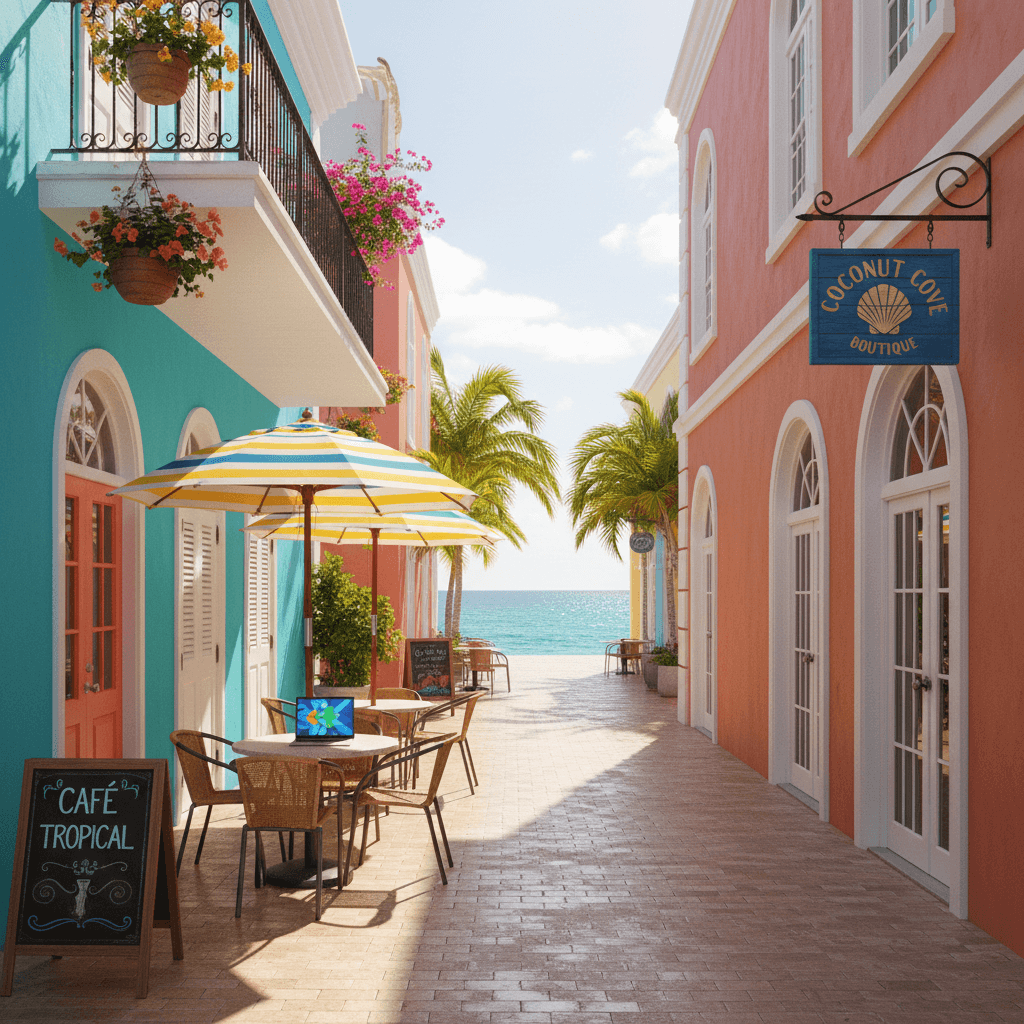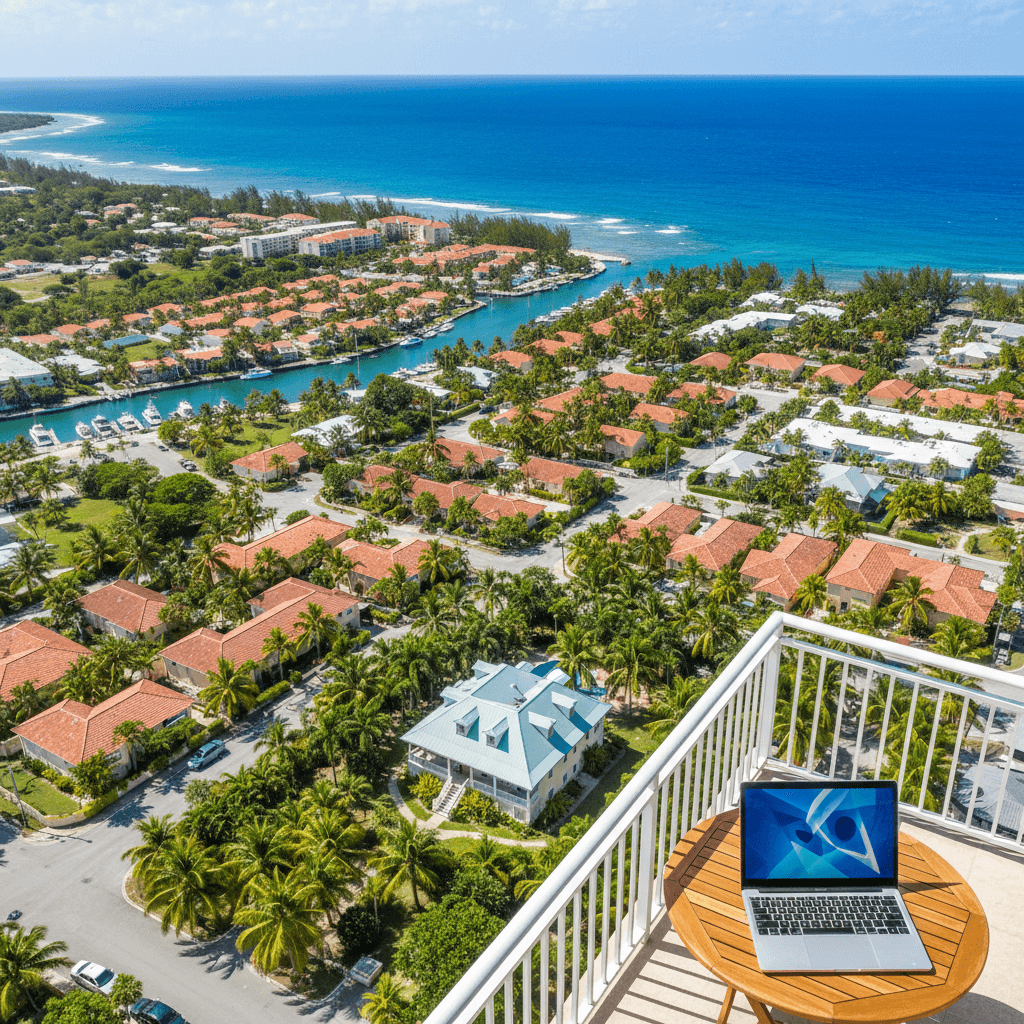
West End
🇰🇾 Cayman Islands
Grand Cayman doesn't feel like the Caribbean you've seen in travel blogs. It's cleaner, quieter and frankly more expensive than almost anywhere else in the region and the vibe reflects that. There's no chaos here, no honking tuk-tuks or market stalls spilling onto cracked sidewalks. What you get instead is warm salt air, manicured streets and a pace of life that, turns out, is genuinely slow without being sleepy.
The west side of the island is where almost everything happens. Seven Mile Beach draws the high-budget crowd with its powder-white sand and the kind of sunsets that make you briefly forget what your laptop looks like. Camana Bay is the social hub, a planned waterfront development with restaurants, shops and enough foot traffic that you won't feel isolated if you're working solo. Most nomads and expats gravitate toward South Sound or the Seven Mile corridor because the infrastructure is solid and you're not adding an hour of commute to your day.
The island runs on English, has no income tax and the crime rate is, honestly, negligible compared to most Caribbean destinations. That combination pulls in a steady stream of finance professionals, remote workers and long-term expats who've traded city stress for trade winds. You'll meet them at Camana Bay on a Friday evening, cold Caybrew in hand, debating whether the move was worth it.
It always was. Mostly.
The frustrations are real and they compound fast. Cost of living is punishing, you'll need a car because public transit is limited and after the honeymoon phase wears off, the smallness of the island starts to press in. There are only so many restaurants, only so many beaches and the internet averages around 16 Mbps, which is workable but won't win any awards.
What makes Grand Cayman different from other nomad spots isn't the beach or the tax situation. It's the strange combination of Caribbean ease and first-world reliability. Things work here. The hospitals are world-class, the tap water is drinkable and nobody's going to steal your bag at a cafe. For nomads who've done their time in chaotic, cheap cities, that reliability isn't a small thing, it's the whole point.
Grand Cayman is, honestly, one of the most expensive places you can choose to live in the Caribbean. Not cheap. A single person spending carefully can expect to burn through around $3,500 to $4,500 USD per month all-in and that's before you factor in a car, which you'll almost certainly need.
Rent is where the sticker shock hits hardest. Most nomads land in South Sound or somewhere along the Seven Mile Beach corridor and the price gap between those two choices is significant, South Sound runs closer to $1,950 to $2,800 for a one-bedroom while Seven Mile Beach will quietly drain $3,000 to $6,500 out of your account every month. West Bay is cheaper on paper at $1,500 to $2,200, but expats who've lived there tend to warn newcomers off; the commute is annoying and the area has a higher crime rate than it looks on a map.
Groceries are, turns out, a genuine frustration. Almost everything is imported, so you're paying import duties on top of already inflated prices. A dozen eggs runs $7 to $10 USD, a week of groceries for one person lands around $120 to $180 and that's cooking at home most nights. Eating out at a mid-range spot costs $25 to $42 per lunch, it adds up fast if you're not disciplined about it.
- Electricity (2-bed): $300 to $540 USD per month, the tropical heat keeps your AC running constantly
- Internet: around $100-130 USD per month for home broadband
- Gas: roughly $5.50 to $6.00 USD per imperial gallon
- Coworking (Regus, George Town): pricing isn't listed publicly; you'll need to contact them directly
There's one genuine financial upside here and it's a big one. The Cayman Islands has no income tax, no capital gains tax and no payroll tax. If you're earning remotely in a higher bracket, that alone can offset a lot of the lifestyle cost, which is frankly why so many finance and tech workers end up staying far longer than they planned.
Budget tier reality check: $1,800 to $2,400 USD monthly covers basics if you're cooking constantly and skipping activities. Most people, weirdly, find that's not sustainable for long. The mid-range sweet spot sits around $3,000 to $4,200 excluding rent.
Grand Cayman's west side is where almost everyone ends up and honestly, that's not a bad thing. The neighborhoods here are walkable, well-lit and close enough to each other that you can test a few before committing to a lease. Each area has a distinct personality, though, so it's worth knowing which one fits your situation before you sign anything.
For Digital Nomads
Camana Bay is the obvious starting point. It's a planned mixed-use development with coworking options, decent restaurants and a social calendar that actually gets people out of their apartments. The air smells like salt and fresh coffee most mornings, the WiFi at cafes is reliable enough for calls and you'll run into other nomads constantly. Rent here runs higher than you'd expect, so most people use it as a base for socializing rather than a permanent address.
South Sound is where the smarter money goes. Quieter, more residential and genuinely more affordable than the beachfront corridor, with one-bedrooms landing around $1,950 to $2,800 a month. Expats recommend it constantly and the community there's established enough that you won't feel like you're the only foreigner figuring things out.
For Expats and Long-Term Stays
South Sound works here too, it's practically the default expat neighborhood at this point. Snug Harbor is another solid pick; safe, quiet and close enough to George Town that errands don't turn into a half-day ordeal. George Town itself is convenient for work and services, though certain inland pockets near the airport feel noticeably less comfortable after dark, don't wander there without purpose.
For Families
Prospect Point and Grand Harbour are the go-to choices. Both are planned communities with the kind of infrastructure families actually need, good roads, nearby schools and neighbors who are, turns out, mostly other families in the same situation. Calm. Safe. A little suburban, but that's the point.
For Solo Travelers
Seven Mile Beach is frankly the easiest entry point. Tourist infrastructure is thick here, it's simple to meet people and you're never more than a short walk from something to do. It's expensive, no question, but for a short stay it's worth not having to think too hard about logistics.
Skip West Bay. Lower rents, yes, but the tradeoff isn't worth it.
West End is quiet. Really quiet. It's a small residential pocket without the coworking infrastructure you'd find in George Town or Camana Bay, so if reliable internet and a proper work setup are non-negotiable for you, you'll want to plan around that reality rather than hope for the best.
The island-wide average WiFi speed sits around 100-200 Mbps, which is more than enough for video calls and heavy file uploads. Most accommodations in West End offer basic broadband, it's rarely business-grade though, so ask your host for specifics before you book.
Coworking Options (You'll Need to Travel)
There's no dedicated coworking space in West End itself. The nearest options are in George Town, about a 20-minute drive depending on traffic.
- Regus (George Town): The main professional option on the island. Hot desks, private offices, meeting rooms and business-grade WiFi. Pricing isn't listed publicly, you'll need to contact them directly for a quote.
- Ready Spaces: Private offices from 90 square feet, fully furnished, 24/7 access and solid WiFi. A better fit if you want a dedicated space rather than a hot desk.
- Cayman Enterprise City: Geared toward tech founders and growth-stage teams rather than solo nomads passing through. Worth knowing about if that's your situation.
Cafe Working
Camana Bay is, turns out, the most practical spot for cafe working on the island. It's a modern mixed-use development with decent WiFi at several restaurants and cafes and the outdoor seating is genuinely pleasant when the trade winds are blowing. George Town has options too, though the vibe is more corporate lunch crowd than laptop-open-all-afternoon.
SIM Cards and Mobile Data
Two providers cover the island: Flow and Digicel. Both offer prepaid SIMs and eSIM options through their apps, no contract required. You can pick up a physical SIM at supermarkets, gas stations or their retail stores, it takes maybe 10 minutes. Local data rates are reasonable, international roaming on your home plan almost certainly isn't, so swap the SIM before you start working.
Internet here costs around $100-130 USD per month for a home connection. Not cheap, but nothing in the Cayman Islands is.
Grand Cayman is, honestly, one of the safest places you can land in the Caribbean. The U.S. State Department gives it a Level 1 travel advisory, the lowest risk rating possible and violent crime is genuinely rare. Most expats and solo travelers say they feel comfortable walking at night, which isn't something you can say about most island destinations in this region.
That said, petty theft does happen. Keep an eye on your bag near busy tourist spots along Seven Mile Beach and don't leave valuables in a parked car. Certain bars in inland George Town and the streets near the airport get uncomfortable after dark, so that's where you stay alert or skip entirely.
Healthcare is where Grand Cayman genuinely pulls ahead of almost every other Caribbean island. There are three hospitals worth knowing:
- Health City Cayman Islands (East End): JCI-accredited, tertiary-level care with cardiology, neurosurgery, oncology and orthopedics. People fly in from across the region specifically for treatment here, which tells you something.
- Cayman Islands Hospital (George Town): The main public hospital, centrally located, handles emergencies and general care. Wait times can be long, expats recommend going private when possible.
- Doctors Hospital Cayman (George Town, formerly Chrissie Tomlinson Memorial Hospital): Private facility, faster service, popular with the expat community for non-emergency care and specialist visits.
Costs are high. A GP visit at a private clinic runs CI$100 to CI$180 (roughly USD $120 to $215) and specialist consultations go higher. Travel insurance with solid medical coverage isn't optional here, it's the only sensible approach given what out-of-pocket care costs.
Pharmacies are well-stocked and turns out you can get most common medications without much hassle. Foster's Food Fair locations carry basic pharmacy supplies and there are dedicated pharmacies in George Town and Camana Bay for anything more specific.
One thing that catches people off guard: the sun here is brutal. The UV index regularly hits 11 or 12 between 10am and 3pm and you'll feel it fast, especially on the water. Sunscreen, a hat and serious hydration aren't suggestions. Dehydration and heat exhaustion send more tourists to the clinic than anything else on this island.
You'll need a car. That's the honest reality of getting around Grand Cayman and most expats figure it out within the first week. Public transport exists, taxis exist, but the island's layout makes a rental or personal vehicle the only practical option if you're actually trying to live and work here.
Driving
Grand Cayman drives on the left, British-style, which trips up Americans for the first few days. Roads are, honestly, well-maintained by Caribbean standards, though traffic on West Bay Road during morning rush hour can genuinely test your patience, cars backed up with the AC blasting and nowhere to go. Gas runs around CI$5.75 to CI$6.00 per imperial gallon, so budget accordingly.
Rental cars are widely available and most nomads who stay longer than two weeks just get one. Short-term rentals start around CI$50 to CI$80 per day. You can drive on your home country license for up to six months, no local permit needed.
Taxis
Taxis are metered and regulated, which is good, they're also expensive, which is less good. A ride from George Town to Seven Mile Beach runs roughly CI$15 to CI$25 depending on traffic. Uber and Lyft don't operate here, so don't bother downloading them. Most hotels and restaurants can call a cab or you can flag one near the cruise ship terminal in George Town.
Getting Between Areas
The CITA bus system connects George Town to most residential areas, fares sit around CI$2.50 per ride. It's, turns out, more reliable than people expect, but the routes don't run late and stops can be sparse in quieter neighborhoods like South Sound or Camana Bay. For anything after 9 PM, you're calling a taxi or driving yourself.
Getting to the Island
Owen Roberts International Airport in George Town handles direct flights from Miami, New York, Toronto and London. Flight time from Miami is about 80 minutes, so weekend trips back to the US are genuinely easy, which softens the isolation a bit. Most major carriers fly in, fares are reasonable if you book ahead and the airport is small enough that arrivals take maybe 20 minutes from touchdown to taxi.
Skip the cruise ship days if you can. George Town gets loud and crowded, the streets smell like sunscreen and diesel and traffic slows to a crawl.
English is the official language and it's spoken everywhere without exception. No phrasebook needed, no translation apps running in the background, no miming your order at a restaurant. That part's easy.
What takes adjustment is the accent. Caymanians speak a distinct Caribbean-inflected English, turns out, that blends British colonial patterns with a lilting rhythm that can catch you off guard in fast conversation. Most locals will slow down for visitors without being asked, the culture here is genuinely warm toward newcomers, though you'll tune in faster than you expect.
The expat community is large and overwhelmingly English-speaking, drawn from the UK, Canada, the US and Jamaica. Spanish speakers do have a foothold here, particularly among the Honduran and Nicaraguan expat communities concentrated in West Bay, so basic Spanish occasionally comes in handy at smaller shops and food spots in that area.
For communication infrastructure, Flow and Digicel are the two main carriers. Both sell prepaid SIM cards at supermarkets, gas stations and their own stores and both offer eSIM options through their apps if you'd rather not swap physical cards. Local rates are, honestly, reasonable compared to what you'd pay roaming on a home plan. Pick one up within your first day or two.
WiFi averages around 100-200 Mbps island-wide, which is fine for calls and standard remote work. Coworking spaces like Regus in George Town and the facilities at Cayman Enterprise City run faster dedicated lines, so if bandwidth is genuinely critical to your workflow, base yourself there rather than relying on cafe connections.
Speaking of cafes: the working-from-a-laptop culture exists, it's just quieter than you'd find in a typical digital nomad hub. Nobody's going to kick you out, but don't expect the buzzing co-working-cafe atmosphere of, say, Lisbon or Chiang Mai. Grand Cayman moves at its own pace.
One practical note: Uber doesn't operate here. Taxis are the default, weirdly expensive compared to most places and worth booking through your accommodation rather than flagging down on the street. Download the local taxi apps or ask your host for a reliable number before you need one urgently.
Grand Cayman sits in the northwestern Caribbean, which means it gets two distinct seasons and honestly, the difference between them matters more than most travel guides let on. The dry season runs roughly November through April, that's your sweet spot: temperatures hover around 75-82°F, trade winds keep the humidity from being oppressive and you'll get that postcard-blue sky almost every day. Rain is rare. Evenings are genuinely pleasant.
Summer is a different story. May through October brings heat that clings to you the moment you step outside, humidity that turns a five-minute walk into a sweaty ordeal and afternoon downpours that arrive without much warning. Temperatures push into the high 80s and low 90s. It's not unbearable, but it's not comfortable either.
Then there's hurricane season, which overlaps almost exactly with the wet season, running June through November. Grand Cayman has taken direct hits before, so this isn't abstract risk. Most years pass without a major storm, but September and October are, frankly, when you'd least want to be here if you're on a tight schedule or working with deadlines that can't move.
Peak season (December through April) is when prices spike hard. Flights cost more, accommodations book out fast and Seven Mile Beach gets crowded enough that you'll feel it. Book at least two to three months ahead if you're visiting between Christmas and Easter.
The shoulder months, May and November, are, turns out, the quiet insider pick. Prices drop noticeably, crowds thin out and the weather is still manageable before the heat really sets in or after it starts to ease. Expats who've been here a few years tend to plan their trips home or their guests' visits around these windows.
- Best overall months: December, January, February, March
- Best value months: May, November
- Avoid if possible: September, October (peak hurricane risk, heaviest rain)
- Average dry season temp: 75-82°F (24-28°C)
- Average wet season temp: 86-92°F (30-33°C)
If you're working remotely and have flexibility, aim for January through March. The weather's ideal, the island's buzzing without being chaotic and you won't spend half your afternoon waiting out a rainstorm.
Grand Cayman isn't cheap. A single person spending carefully will still burn through CI$1,500 to $2,000 a month before rent and rent itself starts around CI$1,500 for a basic one-bedroom away from the beach. Budget accordingly, because the sticker shock is real and it doesn't get easier after the first month.
Currency is the Cayman Islands Dollar, which is, honestly, pegged at CI$1 to roughly USD$1.20. Most places accept USD, credit cards are widely used and ATMs are easy to find in George Town and Camana Bay. Don't bother hunting for a currency exchange, just use your card and check the conversion rate beforehand.
Getting around requires a car. Taxis exist but they're expensive and Uber isn't here, so most expats and longer-stay travelers rent a vehicle or arrange one through their accommodation. Remember: traffic moves on the left side of the road, which catches a surprising number of visitors off guard on day one.
SIM Cards and Internet
- Providers: Flow and Digicel both offer prepaid SIMs and eSIMs, available at their stores, most supermarkets and gas stations
- Average WiFi speed: Around 16 Mbps island-wide, which handles video calls fine but won't win any awards
- Coworking: Regus operates out of George Town; Cayman Enterprise City's Launch Labs is worth a look if you're founder-adjacent
The island is, turns out, one of the safest in the entire Caribbean. The U.S. State Department gives it a Level 1 travel advisory, violent crime is rare and solo travelers consistently say they feel comfortable at night. That said, a few George Town bars and the streets near the airport get sketchy after dark, so use common sense.
Healthcare is genuinely excellent. Health City Cayman Islands on the east end is JCI-accredited and handles serious cases well, the kind of facility you'd actually want if something went wrong. Travel insurance is still strongly recommended because treatment costs, even with good care nearby, aren't subsidized for visitors.
One last thing: the Cayman Islands runs on island time, frankly. Banks close early, some government offices keep frustratingly short hours and if you need anything bureaucratic sorted, build in extra days. Fighting it won't help, you're better off just planning around it.
Need visa and immigration info for Cayman Islands?
🇰🇾 View Cayman Islands Country GuideOff the Radar
Pioneer territory