Wellington
🇳🇿 New Zealand
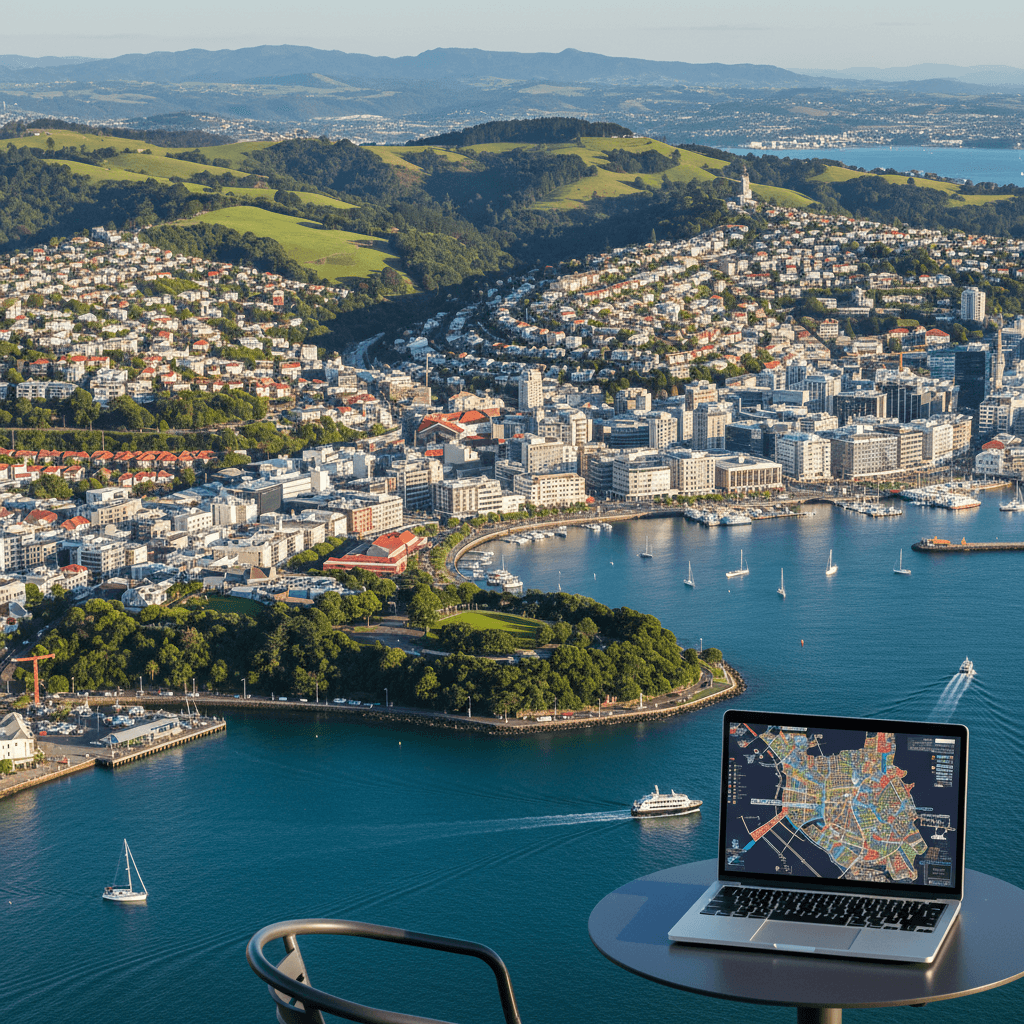
Wellington feels small until you start walking it. Then the hills hit, the wind slaps the harbour and you realize this place runs on cafes, politics, indie gigs and a lot of coffee. It’s compact, walkable and weirdly easy to settle into, especially if you like a city that feels more lived-in than polished.
The nomad scene is solid, but it isn’t cheap. A single person usually lands somewhere around NZD 3,000 to 4,000 a month once rent, food, transport and the odd pint are in the mix and honestly that price can sting if you’re used to Southeast Asia or parts of Europe. Still, the trade-off is real, reliable buses, plenty of coworking options, fast internet and enough community events that you won’t be stuck working alone forever.
Te Aro is where most nomads end up. It’s busy, walkable and packed with Cuba Street spots, Ghuznee Street restaurants and bars that spill noise onto the pavement late into the night, so if you’re a light sleeper, bring earplugs. Kelburn feels calmer and greener, with Botanic Gardens access and cable car views, while Oriental Bay is pricier but great if you want waterfront walks and a more polished daily routine.
Day to day, the city’s vibe is practical and a little scrappy, which, surprisingly, makes it easier to live in. You can work from cafes, book a desk at Urban Hub or Regus, then head out for a windy walk along the waterfront where the salt smell mixes with takeaway chips and wet concrete after rain. The weather can be irritating, though, especially in winter when the cold seems to come sideways.
What to expect
- Rent: Around NZD 2,050 to 2,100 for a 1BR, with central places costing more.
- Food: Cheap meals start near NZD 25, a decent dinner for two can hit NZD 120.
- Work: Coworking starts around NZD 319 a month, day passes often land at NZD 55 to 69.
- Transport: Buses and trains are reliable and a monthly pass is roughly NZD 181.
Safety is generally fine, but Te Aro and Courtenay Place can get messy at night, so don’t wander half-distracted after a few drinks. The city feels friendly in a low-key way, with plenty of people saying kia ora, dogs in tote bags and that constant Wellington wind rattling everything from tram-stop signs to scooter wheels.
Wellington isn’t cheap. A single person can get by on about NZD 1,752 a month before rent, but once you add a one-bedroom place, the bill jumps fast and a lot of nomads end up closer to NZD 3,000 to 4,000 all in, depending on how fancy they get with cafés, bars and rent.
For housing, expect roughly NZD 2,096 for a one-bedroom in the city centre or NZD 2,049 outside it, which, surprisingly, doesn’t buy you a massive saving. The difference is often more about commute and noise than money, so if you hate traffic but don’t mind paying for convenience, Te Aro and the CBD make sense, though your wallet will feel it. Frankly, a “cheap” Wellington apartment usually just means slightly less painful.
Daily life adds up in small, annoying chunks, like a bus pass at about NZD 181, mobile plans around NZD 53 and a simple meal out at roughly NZD 25. A mid-range dinner for two lands near NZD 120 and once you start ordering craft beer in Cuba Street or eating out on Ghuznee, the total climbs faster than you’d expect.
Typical Monthly Budgets
- Budget: Around NZD 3,000, usually outside the centre, with home cooking, public transport and working from cafés.
- Mid-range: Around NZD 3,500, with a city 1BR, mixed dining and a monthly transport pass.
- Comfortable: NZD 4,000+, especially if you want centre rent, better restaurants and gym memberships.
Coworking isn’t bargain-bin either, with dedicated desks starting around NZD 319 a month and places like Regus, Servcorp and Urban Hub charging more for the convenience. The upside is that the internet’s solid, usually 45 to 169 Mbps and cafés around Te Aro often double as decent work spots, though the espresso machine hiss and clatter can get old after a few hours.
What Feels Expensive
- Rent: The biggest hit, especially near the waterfront or in Kelburn.
- Eating out: Cheap meals still cost real money and dinner for two isn’t casual.
- Coworking: Good quality, but the monthly price bites.
Most nomads trim costs by cooking at home, using Metlink instead of ride-hailing and choosing Newtown or outer suburbs over the CBD. If you want walkability, cafés and a social scene, Te Aro is worth the premium, but if you’re watching spending, the city punishes laziness fast. The trade-off is real and honestly, that’s Wellington in one line.
Wellington’s neighborhoods are compact, but they don’t feel interchangeable. The right pick depends on how much noise you can live with, how often you want to walk and whether you’d rather be near cafés, schools or the waterfront. Not cheap. Also windy.
Nomads
Te Aro is the obvious base if you want cafés, bars, coworking and the CBD within a 10-minute walk and honestly, most remote workers end up here for that exact reason. You’ll hear clinking glasses on Cuba Street, smell coffee and frying oil by lunchtime and deal with more foot traffic than peace, so don’t expect a sleepy neighborhood.
- Best for: Social nomads, café workers, short stays
- Rent: Around city-center prices, often the priciest part of a nomad-friendly stay
- Downside: Petty theft and a noisier nightlife scene after dark
Newtown is the better call if you want diversity, cheaper food and an easy bus ride into town, plus there’s a proper local feel here that Te Aro doesn’t always have. The streets can be scrappy, but the food scene, turns out, is strong and the daytime energy is solid without the late-night mess.
Expats
Kelburn suits people who want quieter streets, older houses and easy access to the Botanic Gardens and cable car, though your wallet will feel it. It’s got that calm, student-adjacent vibe, with leafy walks, less traffic noise and a cooler breeze that comes straight off the hills.
- Best for: Long-term stays, academics, remote workers who like quiet
- Rent: Higher than average, especially for decent homes
- Why it works: Safe, scenic and close to central Wellington
Miramar works well if you want more space, beaches and a suburban pace and frankly, a lot of expats prefer that over inner-city buzz. Public transport isn’t as slick here, so you’ll want a car or a very patient attitude.
Families
Kelburn and Miramar are the safest bets for families, because they give you parks, schools and a calmer daily rhythm without trapping you far from the city. Kelburn is more central and walkable, Miramar is roomier, with salt air, wider streets and weekend beach trips that actually feel easy.
- Kelburn: Great for views, schools and park access
- Miramar: Better for beaches, space and a quieter suburban feel
- Trade-off: Miramar’s public transport is thinner
Solo Travelers
Oriental Bay and the Waterfront are the easiest solo picks if you want safety, scenery and a central base for walking everywhere. The harbor air smells clean after rain, the paths are busy without feeling chaotic and you can get from a swim to dinner without needing a bus.
Skip Courtenay Place and parts of Aro Valley late at night if you want fewer hassles, because the petty crime spikes when the bars empty out. That’s the real trade-off in Wellington, great neighborhoods by day, then a few streets get rough around the edges after dark.
Wellington’s internet is, honestly, good enough for real work, with typical speeds sitting around 45 to 169 Mbps and cafes that usually hold up unless the place is slammed at lunch. The bigger issue isn’t the connection, it’s the weather and the price, because a good laptop day can turn into a cold, windy slog fast and a decent seat in the city doesn’t come cheap.
Best coworking options: If you want a proper desk, Regus runs about NZD 465 to 725 a month, Servcorp has hot desks from around NZD 200 and Urban Hub is another solid pick for people who want a quieter, more polished setup. Day passes usually land around NZD 55 to 69, which is steep, though it makes sense if you’re only in town for a week or two and don’t want to gamble on cafe Wi-Fi.
Where nomads actually work
- Te Aro: Best all-round bet, close to Cuba Street, Ghuznee Street and the CBD, so you can grab coffee, work, then wander out for dinner without fuss.
- Newtown: More local, a bit grittier and often cheaper, with good cafes and easy bus access, though parking and noise can be annoying.
- Oriental Bay: Great if you want sea views and a calmer feel, but rents are higher and you’ll pay for the scenery.
Cafe culture is strong, weirdly strong for a city this compact and plenty of nomads post up with a flat white and a charger for half the afternoon. The trick is to avoid the busiest lunch rush, because the clatter of cups, milk steam and chair scraping gets old fast and some places get impatient if you’re nursing one coffee for four hours.
Mobile data: Spark, 2degrees and One NZ all do the job, with plans roughly NZD 30 to 80 a month for 10GB and up. If you’re bouncing around town, that backup matters, because the wind can knock your plans sideways and you won’t want to be stuck hunting for a hotspot outside a bakery in Courtenay Place.
Most nomads end up in Te Aro or Newtown, then branch out once they know the rhythm of the city, which is pretty sensible. Don’t bother with a cheap place that’s miles from everything, you’ll burn time on buses and the savings usually vanish anyway.
Wellington feels safe in the center, but don’t get lazy, especially after dark in Te Aro and around Courtenay Place. Pickpocketing and petty theft happen, mostly when bars spill out and the streets get loud, with taxis honking and people cutting through the wind, so keep your phone zipped away and don’t wander the quieter blocks late.
Most nomads treat the city as low-drama, honestly, because it’s small, walkable and well lit in the core, but the rough edges show up fast if you’re alone at 1 a.m. on Manners or Cuba Street. That’s the real deal, not fear-mongering.
Where to stay safer
- Oriental Bay: Scenic, central and calmer at night, though rents bite.
- Waterfront: Good for solo travelers, easy walks, fewer sketchy late-night moments.
- Kelburn: Quiet, student-heavy and feels safer, weirdly, than busier nightlife areas.
- Te Aro: Convenient for cafes and coworking, but you’ll want street smarts after dark.
If you’re a light sleeper, skip the loudest blocks near bars, because the late-night noise and weekend foot traffic can be grim, especially when the wind is rattling windows and carrying the smell of fry grease down the street. Newtown is fine for day-to-day life, but the city centre still wins for convenience.
Emergency number: 111 for police, fire or ambulance. Keep that saved, because if something goes sideways, you won’t want to be fumbling around on a cold sidewalk with patchy phone signal and a crowd watching.
Healthcare basics
- Main hospital: Wellington Hospital in Newtown, generally well regarded.
- Pharmacies: Easy to find across the inner city, so prescriptions and basic meds aren’t a headache.
- Access: Routine care is straightforward, but after-hours visits can still feel slow and expensive by local standards.
The healthcare system works, though it can feel bureaucratic if you’re used to instant private-clinic service. For everyday stuff, pharmacies sort most minor problems and for anything serious, Wellington Hospital is where you go, with the usual fluorescent lights, waiting-room chatter and that faint disinfectant smell.
Carry travel insurance if you’re here on a short stay, because even a simple clinic visit can annoy you financially. Frankly, the city is safer than many places this size, but don’t confuse “safe” with “carefree,” because a careless night out in Te Aro can still end with a stolen wallet and a very stupid lesson.
Wellington’s core is compact, so most days you can just walk. Te Aro, the Waterfront and the CBD are stitched together by footpaths, bike lanes and buses and the hillier suburbs make you earn your coffee, honestly, with a steady climb and a bit of wind in your face.
Metlink is the main public transport system and it’s pretty decent by New Zealand standards. A single ride usually lands around NZD 5, while a monthly pass is about NZD 181, so if you’re here longer than a week or two, the pass starts making sense fast, especially if you’re bouncing between Te Aro, Newtown and Kelburn.
Best ways to move around
- Walking: Best for the CBD, Te Aro and the Waterfront, though those hills can be rude after rain.
- Buses and trains: Reliable for most commutes, with frequent services into central Wellington and out to the suburbs.
- Ferries: Useful if you’re heading across the harbour, but they’re more of a commuter move than a daily habit for most nomads.
- Airport Express: About 30 minutes to the city, with buses every 10 to 20 minutes, so it’s usually the least annoying airport run.
Ride-hailing works fine, with Uber and Ola both available, though prices jump when the weather turns ugly or everyone leaves Courtenay Place at once. Bikes and scooters are easy to grab through the Uber app and there are enough cycle lanes that biking feels normal, even if the wind, weirdly, can shove you sideways on exposed roads.
Traffic isn’t brutal, but parking can be a headache and the narrow streets get busy at peak times. The real issue is the weather, because Wellington’s famous wind doesn’t just blow, it whistles through bus stops, rattles loose signs and makes a simple crossing feel oddly dramatic.
Where the movement feels easiest
- Te Aro: Walkable, central and the easiest place to live without a car.
- Newtown: Good bus links and a practical base for longer stays.
- Kelburn: Handy for the cable car and views, but you’ll pay for the elevation.
- Miramar: Fine if you drive, less fun if you rely on buses alone.
If you’re staying a while, download the Metlink app, it saves you from standing at a stop wondering whether the next bus has vanished into the wind. For day-to-day life, most nomads find Wellington easy enough, just plan around hills, rain and that stubborn little city habit of making a short trip feel bigger than it should be.
Wellington is English-first, so you won’t struggle to get by, but the city has its own rhythm and a few local habits worth picking up fast. “Kia ora” gets used constantly, as a hello, thanks or just a friendly little nod and people do appreciate it when you use it instead of marching in with tourist-energy English.
The accent can be a trip at first. Some locals speak quickly, mumble a bit and swallow vowels, so the first few café orders can feel weirdly like a listening test, but once your ear adjusts, it's fine, honestly.
- Everyday language: English is the default in shops, coworking spaces, banks and apartments.
- Useful Māori phrases: kia ora means hello or thanks, tēnā koe is more formal and it never hurts to learn a few basics.
- Translation help: Google Translate is handy for menus, forms and the occasional voice note you can't quite decode.
Communication here is generally straightforward, though Kiwis can be quite indirect when they want to soften a no. If someone says “yeah, nah,” they usually mean no and if a landlord says they’ll “come back to you,” don’t sit by the phone waiting.
For practical life admin, most nomads use the usual apps and keep things moving through text or email. Banking apps like ANZ goMoney, ASB Mobile, BNZ and Westpac all work well for everyday use and SIMs from Spark, 2degrees or One NZ are easy to grab at the airport or in town, which, surprisingly, beats a lot of bigger cities for simplicity.
- Language vibe: Friendly, informal, sometimes dryly funny and usually low-drama.
- Best communication style: Be polite, be clear and don’t overcomplicate things.
- Tech tools: Google Translate, banking apps and a local SIM make life much easier.
Most people won’t mind an accent, a typo or a basic grammar slip, but they do notice pushiness. Ask directly, keep it brief and use “cheers” naturally if you want to sound less like a brochure and more like someone who lives here, even if the southerly wind is biting your face off outside.
One last thing, body language matters. A smile, eye contact and a calm tone go further than loud confidence and if you’re heading into a café, coworking space or flat viewing, a simple “kia ora” still opens doors better than trying too hard.
Wellington’s weather has a personality and honestly, it can be a bit much. The wind cuts hard off the harbor, rain comes sideways and even on a bright day you’ll feel that cool, salty bite the second you step out near the waterfront. Mild year-round, sure, but don’t pack like you’re heading somewhere tropical.
Best time to visit? January and February. That’s when the city feels easiest, with average highs around 19°C, longer daylight and fewer wet days, so you can actually enjoy the cable car, waterfront walks and Mount Victoria without getting slapped by cold spray or soaked halfway through lunch. June through August is the rough patch, wetter, darker and just plain grayer.
Season-by-season feel
- Summer, Dec to Feb: Warmest and driest stretch, good for beaches, outdoor dining and day trips, though the sun can still vanish behind a squall fast.
- Autumn, Mar to May: My pick for balance, cooler but still pleasant, with fewer crowds and that crisp, clean air that makes Cuba Street feel sharper.
- Winter, Jun to Aug: Cheap-ish by local standards, but wet, windy and a little gloomy, with more rainy days and cold mornings that sneak through old windows.
- Spring, Sep to Nov: Unpredictable, which, surprisingly, some nomads love, because you’ll get sunny spells, blossom and then a gust that nearly steals your coffee.
If you’re working remotely, spring and autumn are the sweet spot. Cafes around Te Aro, Ghuznee Street and Cuba Street stay busy but not crushed and you’ll still get enough dry weather to walk between meetings without arriving damp and annoyed.
What to pack
- Windbreaker: Non-negotiable, the city’s breeze can feel mean.
- Layered clothing: A tee, sweater and shell jacket works better than one heavy coat.
- Waterproof shoes: Pavements get slick and puddles linger.
- Compact umbrella: Handy, though strong gusts will test it, frankly.
Don’t expect beach weather to last. Wellington can flip from sunshine to drizzle in minutes and the sound of wind rattling windows at night is part of the deal, along with the smell of wet pavement after a sudden shower. If you want the city at its best, come for late summer or autumn, then plan around the weather instead of pretending you can beat it.
Wellington is compact, walkable and weirdly easy to settle into, but the price tag bites. A single person usually spends about NZD 3,000 to 4,000 a month once rent, food and getting around are in the mix and yes, that’s before you start ordering craft beer on Cuba Street.
Rent is the big shock. A one-bedroom runs about NZD 2,096 in the city centre or NZD 2,049 outside it, so most nomads either share, choose a smaller place or accept that their budget’s taking a hit, honestly, the view over the harbour doesn’t make the bill smaller.
- Budget: Around NZD 3,000 monthly, usually outside the centre, with home cooking and more cafe laptop sessions than proper coworking.
- Mid-range: About NZD 3,500, which gets you a central one-bed, some dining out and a monthly transport pass.
- Comfortable: NZD 4,000 plus, if you want centre rent, regular meals out and gym or fitness costs without counting every dollar.
Food is pricey for a city this small. Cheap meals still sit around NZD 25 and a decent dinner for two can hit NZD 120, so people who stay longer usually cook at home, then use cafes for work, coffee and people-watching.
Getting around is straightforward, which, surprisingly, matters a lot here because the core is so hilly. Metlink buses, trains and ferries are reliable, a one-way ride is about NZD 5 and a monthly pass costs around NZD 181, so you can skip car ownership unless you really need it.
- Internet: Speeds are usually solid, around 45 to 169 Mbps and cafes plus coworking spaces handle remote work well.
- Coworking: Dedicated desks start around NZD 319 a month, with spaces like Regus, Servcorp and Urban Hub on the list.
- Mobile: Spark, 2degrees and One NZ all sell SIM plans, often NZD 30 to 80 for 10GB plus.
For neighborhoods, Te Aro is the usual nomad pick because you can walk to cafes, bars and the CBD, though petty theft and noisy nights around Courtenay Place can get annoying. Kelburn feels calmer and greener, with the Botanic Gardens and cable car nearby, while Oriental Bay is the polished waterfront choice if you don’t mind paying more.
Safety is generally fine in the daytime, still, don’t drift through Manners or Cuba late at night if you can help it. The wind is no joke either, it comes hard off the harbour and can slap rain sideways into your face, so bring a shell jacket and a charger that actually stays put on your desk.
For everyday life, use Trade Me and Facebook Marketplace for apartments, ANZ goMoney, ASB Mobile, BNZ or Westpac for banking and keep “kia ora” handy because people use it all the time. Remove shoes indoors when asked, be tidy and if you’re up for a day off, take the cable car to Kelburn or hike Mount Victoria, both are easy wins, frankly.
Need visa and immigration info for New Zealand?
🇳🇿 View New Zealand Country GuideEasy Landing
Settle in, no stress
Monthly Budget Estimates
More cities in New Zealand
Wanaka
🇳🇿 New Zealand
Tauranga
🇳🇿 New Zealand
Christchurch
🇳🇿 New Zealand