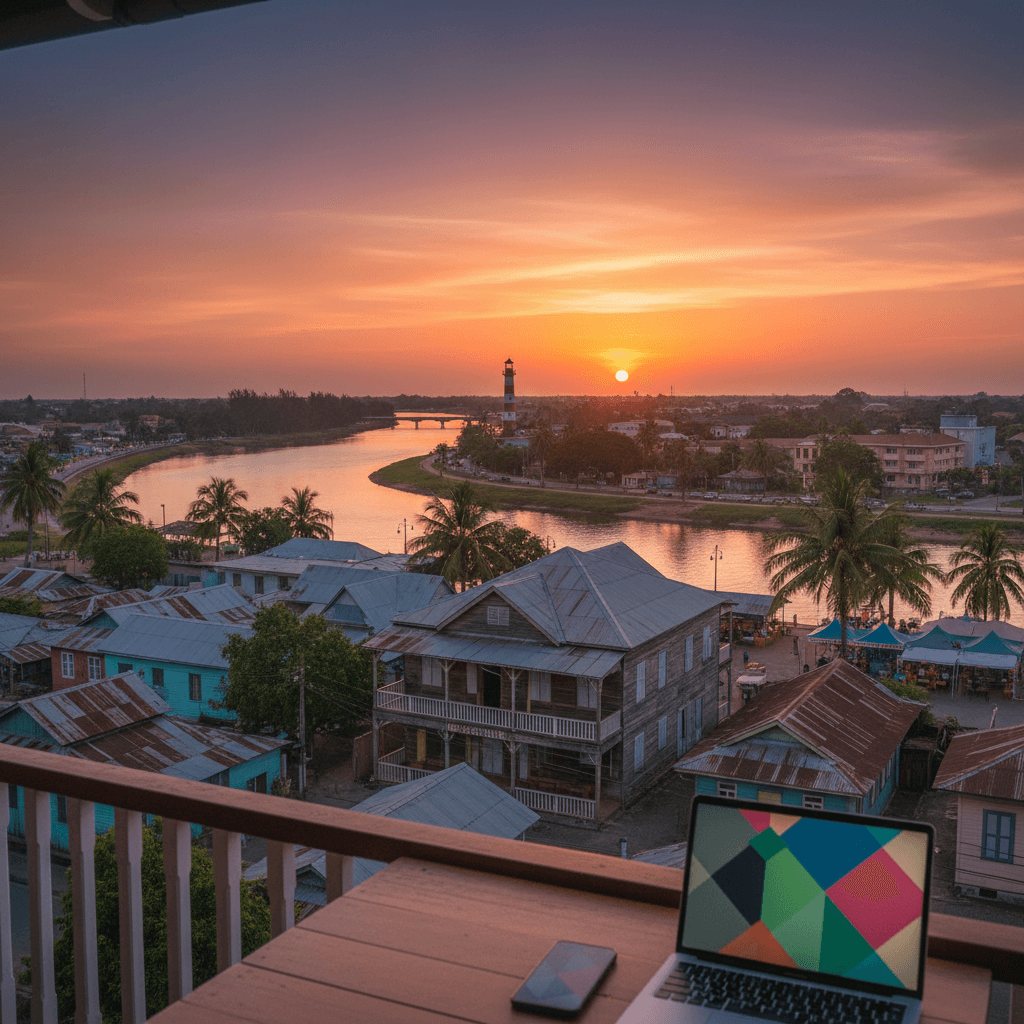
Wanica
🇸🇷 Suriname
The Quiet Side of Suriname
If Paramaribo is the loud, energetic heart of Suriname, Wanica is its steady, rhythmic pulse. Centered around the town of Lelydorp, this district is where the urban sprawl of the capital dissolves into tropical greenery and backyard farms. It is a place for the nomad who wants to disappear into a local rhythm rather than a tourist crowd. You won't find sleek glass coworking spaces here; instead, you'll find roadside stands selling fresh pom and roti, and neighbors who actually have the time to say hello.
The vibe is unapologetically rural and diverse. You are living in a cultural crossroads where Javanese, Indian, Creole, and Indigenous traditions overlap daily. Life moves at a "Suriname slow" pace. It’s the kind of place where the humidity sits heavy on your skin and the sound of tropical birds often drowns out the noise of traffic. For many, the appeal lies in this authenticity. It’s raw, unpolished, and significantly more affordable than the capital just 20km away.
What to Expect as a Nomad
Wanica is a frontier for remote work. You are trading high-speed infrastructure for a low cost of living and deep cultural immersion. Most nomads who land here are looking for a base that feels like a home rather than a transit hub. The community is small, often consisting of a few hundred seasonal workers and expats who prefer the quiet of Lelydorp over the late-night noise of Paramaribo.
- The Draw: Monthly expenses sit around $1,794, making it a budget friendly sanctuary. The time zone is perfectly aligned for those working with North American or European clients.
- The Friction: Internet speeds average 25-40 Mbps download. While it's fine for emails and basic tasks, heavy video editors or gamers might struggle. Most people rely on Airalo eSIMs for 5GB of backup data to stay connected during local outages.
- The Lifestyle: It’s a "do-it-yourself" destination. You’ll be shopping at local markets and cooking in communal kitchens rather than ordering through apps.
The Cost of Slow Living
Your dollar stretches remarkably far here, especially if you avoid the "expat bubble" prices of the city center. While the infrastructure is basic, the quality of life per dollar spent is high for those who enjoy a simple, outdoor-oriented lifestyle.
- Budget Tier ($1,200 to $1,600): This covers a room in a shared house or a modest local apartment, eating primarily at street stalls, and using the local bus system.
- Mid-Range Tier ($1,800 to $2,500): This gets you a private 1BR apartment (usually $300 to $600), a mix of home cooking and mid-range dining, and perhaps a scooter rental for $50 a month.
- Comfort Tier ($3,000+): At this level, you’re looking at a private villa with air conditioning, frequent trips into Paramaribo for upscale dining, and private car transport.
Settling In: Lelydorp and Beyond
Most nomads gravitate toward Lelydorp. It serves as the district’s hub and offers the best access to essential services like pharmacies and small grocery stores. It’s quiet, safe, and feels worlds away from the traffic jams of the capital. If you need more action, the outskirts of Wanica near the Paramaribo border provide a middle ground, though you’ll deal with more congestion and less walkability.
Navigating the area requires a bit of patience. Public buses are cheap, often around $1 per ride, but they operate on their own schedules. Most long term residents recommend renting a scooter or a car to maintain your sanity. While Dutch is the official language, you’ll hear a melodic mix of Sranan Tongo and Hindi in the streets. Learning a few phrases like "Boni" for hello will instantly open doors with the locals.
The weather is a constant factor. Expect a steady 29°C that often feels like 37°C due to the intense humidity. The best time to visit is during the drier windows from February to April or September to November. During the peak rainy season from May to August, the tropical downpours are spectacular but can make getting around the unpaved parts of Wanica a bit of a muddy adventure.
The Bottom Line
Wanica is where you go when you want your dollar to stretch until it snaps. While Paramaribo takes a bigger bite out of your budget, Lelydorp and its surroundings offer a rural discount that's hard to beat in South America. Most digital nomads find they can live comfortably here for around $1,794 per month, though budget travelers often get by on as little as $1,200 if they stick to local guesthouses and street food.
Monthly Budget Tiers
- The Budget Nomad ($1,200 to $1,600): This covers a room in a shared house or a modest local guesthouse, plenty of roti and pom from street stalls, and getting around via the local bus system.
- The Mid-Range Professional ($1,800 to $2,500): You'll snag a private 1-bedroom apartment, eat out at a mix of local spots and the occasional nice restaurant in the capital, and likely rent a scooter to get around.
- The Upgraded Lifestyle ($3,000+): This buys you a private villa with air conditioning, frequent trips into Paramaribo for upscale dining, and a private car rental.
Housing and Accommodation
Rent is your biggest saving in Wanica. In Lelydorp, a decent studio or 1-bedroom apartment typically runs between $300 and $600 per month. If you were staying in the heart of Paramaribo, you'd easily pay double that for the same square footage. Expats recommend using Airbnb for short-term landing pads, then scouting local Facebook groups or Travala for long-term guesthouses that offer better monthly rates.
Food and Dining
Eating like a local isn't just an "experience" here; it's a financial strategy. The fusion of Javanese, Indian, and Creole flavors means the food is incredible and cheap.
- Street Food: You can grab a filling meal of roti or pom for $3 to $5.
- Mid-range Sit-down: A nice meal in a local Lelydorp restaurant will cost between $8 and $12.
- Upscale Dining: For high-end fusion or international plates, you'll likely head into the capital where prices start at $15 and go up.
Connectivity and Workspace
This is where you'll need to plan ahead. Internet (60 Mbps unlimited) around $30/month is available, though speeds can vary depending on your specific location. Since Lelydorp lacks dedicated coworking spaces, many nomads factor in the cost of a desk in Paramaribo, which runs about $100 to $200 per month. For backup data, grab an eSIM from Airalo; a 5GB pack costs roughly $44.57 and saves you the hassle of hunting down a physical SIM card at the airport.
Transportation
Public buses are the cheapest way to move, costing about $1 per ride, but they're slow and don't run on a strict schedule. Most long-term residents choose to rent a scooter or a small car for $20 to $50 a month to maintain their sanity. If you're coming from Johan Adolf Pengel Airport, expect to pay a surcharge for a guesthouse shuttle, but it's usually worth it for the 30 minute door-to-door service.
Daily Essentials
- Local Beer: $2 to $3
- Coffee: $3 to $4 (mostly in the capital)
- Gym Membership: $30 to $50 per month
- Gallon of Milk: $1.50
Lelydorp: The Nomad Heartland
If you're heading to Wanica, you're almost certainly aiming for Lelydorp. It's the district capital and the only real spot where a remote worker can set up shop with any sense of normalcy. It's about a 20 to 30 minute drive from Paramaribo, but the vibe is worlds apart. It's quiet, rural, and revolves around a slow, tropical rhythm that suits those who are tired of the capital's traffic.
Most nomads aim for the center of town near the main markets. You'll have access to the best roti and pom in the country here, and the cost of living is a major draw. Expect to pay between $300 and $600 for a decent one bedroom apartment or a small house. While you won't find dedicated coworking spaces, the local guesthouses often have communal kitchens and decent enough porches to work from.
- Rent: $300 to $600 per month
- Internet: Averages 17 Mbps; reliable enough for emails, but grab an Airalo eSIM (around $45 for 5GB) for back up during video calls.
- Best for: Deep work, budget living, and authentic Surinamese immersion.
The Paramaribo Fringe: For Expats and Long-Stayers
The northern edge of Wanica bleeds into the outskirts of Paramaribo. This is where many expats choose to live because it offers a middle ground. You get the lower prices of Wanica but you're close enough to the capital to hit the upscale Indian and Javanese restaurants when the local street food wears thin. It's less walkable than Lelydorp, so you'll definitely want to budget $20 to $50 a month for a scooter or frequent taxis.
Living here means you're closer to the better healthcare facilities and the few coworking spots in the city, which usually cost between $100 and $200 a month. It's a strategic choice if you need to be in the city for meetings but want a backyard with fruit trees and a quieter night's sleep.
- Rent: $400 to $700 per month
- Transport: Stick to taxis or private cars; the local bus system is cheap at $1 but notoriously difficult to master.
- Best for: Career professionals and those who need frequent access to city amenities.
Rural Wanica: For Families and Nature Lovers
For families, the appeal of Wanica lies in the space. Unlike the cramped quarters of central Paramaribo, the rural pockets of the district offer large plots of land and private villas. You can find sprawling properties for $3,000 or more that feel like private resorts. These areas are incredibly safe and quiet, though you'll be entirely dependent on a car for school runs or grocery trips.
The local markets are a highlight for families, offering fresh tropical produce at a fraction of the price you'll see in the city. Just keep in mind that English proficiency drops off quickly once you leave the main hubs, so learning a few phrases in Dutch or Sranan Tongo is a must for navigating daily life with neighbors.
- Rent: $1,000 to $3,000+ for large villas
- Safety: Very high, though unlit roads at night require caution.
- Best for: Families seeking privacy and travelers who want a "nature retreat" home base.
Lelydorp Center: Solo Travelers
Solo travelers usually find Lelydorp the most welcoming because of its community feel. It's easy to meet people at the local markets or through guesthouse kitchens. The lifestyle here is built for the budget conscious; you can get a solid mid range meal for $8 to $12, or survive happily on $3 to $5 street food. It’s a great place to disappear for a few months, focus on a project, and soak up a culture that hasn't been polished for tourists yet.
- Daily Food Budget: $15 to $25 for a mix of street eats and cafes.
- Atmosphere: Low-key, friendly, and very humid (prepare for 29°C days).
- Best for: Solo adventurers and backpackers looking for a long term base.
The Connectivity Reality Check
If you're planning to base yourself in Wanica, particularly around Lelydorp, you need to manage your expectations regarding speeds. The local average sits around 17 Mbps. While that's fine for answering emails or light browsing, it becomes a struggle for heavy video conferencing or uploading 4K footage. Most nomads find that the fixed line connections in guesthouses can be temperamental during heavy tropical downpours.
To stay sane, don't rely solely on your accommodation's Wi-Fi. Expats consistently recommend setting up an eSIM before you even touch down at Johan Adolf Pengel Airport. The Airalo app is the go-to choice here; you can grab 5GB for 30 days for around $20-30. It’s a bit pricey compared to other regions, but having that backup data is the only way to ensure you don't drop out of a client meeting when the local router decides to take a nap.
Coworking and Work-Friendly Spaces
You won't find any dedicated coworking spaces within the Wanica district itself. The infrastructure just isn't there yet. If you need a professional environment with ergonomic chairs and guaranteed high-speed backup power, you'll have to make the 20 to 30 minute commute into Paramaribo.
In the capital, the coworking scene is small but growing. Expect to pay between $5 and $10 for a day pass, or around $100 to $200 for a monthly membership. These hubs are where you'll actually meet the few hundred other nomads currently drifting through Suriname. In Lelydorp, your "office" will likely be your own dining table or a shaded spot in a guesthouse garden.
The Cafe Culture Gap
Lelydorp is fantastic for authentic roti and local immersion, but it lacks the "laptop cafe" culture found in Bali or Medellin. Most local eateries are open-air and designed for quick, delicious meals rather than four-hour coding sessions. If you try to work from a local warung, you might find the noise levels and lack of power outlets challenging.
When the four walls of your Airbnb start closing in, travelers often head to the more atmospheric cafes in Paramaribo's center or near the Palm Garden. These spots are more accustomed to people lingering over a coffee with a laptop. If you stay in Wanica, prioritize booking a place via Airbnb or Travala that specifically mentions a dedicated workspace or high-speed internet in the reviews.
Power and Reliability Tips
- Invest in a Power Bank: While not constant, minor power fluctuations can happen. A solid power bank keeps your phone and eSIM hotspot running.
- Test the Speed Early: As soon as you check into your Lelydorp guesthouse, run a speed test. If it's below 10 Mbps, head to a local shop to grab a physical Telesur or Digicel SIM as a secondary backup.
- Sync with the Time Zone: One major perk of working here is the time zone. It aligns beautifully with both North American and European business hours, making those 17 Mbps video calls a little less painful when they happen during off-peak local hours.
Staying Safe in Wanica
Wanica, and specifically the hub of Lelydorp, generally feels much slower and safer than the denser streets of Paramaribo. You'll find a community where neighbors know each other and the pace of life doesn't leave much room for chaos. However, don't let the rural charm make you complacent. Petty theft can happen anywhere, and most expats recommend keeping a low profile when it comes to expensive gear like MacBooks or high end cameras.
Walking around Lelydorp during the day is perfectly fine, but once the sun sets, the lack of street lighting becomes a real issue. The roads often lack proper sidewalks, and visibility is poor for drivers. If you're heading out for dinner or a late night drink, skip the walk and call a local taxi. Most nomads avoid the urban edges bordering Paramaribo after dark, as these areas can be more prone to opportunistic crime. If you're staying in a guesthouse, ensure it has secure gates and decent outdoor lighting.
- Police (Emergency): Dial 112
- Ambulance: Dial 115
- Night Safety: Use trusted taxi services rather than walking unlit roads.
- Valuables: Keep tech and jewelry out of sight in public markets.
Healthcare and Medical Services
Healthcare in Wanica is functional for minor issues but limited for anything serious. Lelydorp has several well stocked pharmacies (locally called "apotheeks") where you can find basic over the counter meds and first aid supplies. For a standard consultation, you'll find local clinics that handle routine checkups and common tropical ailments.
If you require specialized care or emergency surgery, you'll need to make the 20 to 30 minute drive into Paramaribo. The capital houses the country's better equipped hospitals, though the quality is best described as moderate by international standards. Expats often suggest bringing a personal supply of specific prescription medications, as imports can be inconsistent and brands you recognize might not be on the shelf.
Before you arrive, make sure your routine vaccinations are up to date. Since you're in a tropical district with plenty of standing water and foliage, mosquito borne illnesses are the primary health concern. Stock up on high quality repellent and consider a mosquito net if your accommodation isn't fully screened. Most long term travelers here also opt for comprehensive travel insurance that includes medical evacuation to a neighboring country or the US for major emergencies.
Practical Health Tips
- Water: Stick to bottled or filtered water for drinking; tap water is generally avoided by visitors.
- Pharmacies: Look for the "Apotheek" signs in central Lelydorp for basic needs.
- Hospitals: Head to Paramaribo for any diagnostic tests or specialized treatment.
- Insurance: Ensure your policy covers medical repatriation, as local facilities have limits.
Emergency Contacts and Apps
Since English isn't the primary language in Wanica, communication during a medical emergency can be tricky. Having the Google Translate app with Dutch and Sranan Tongo downloaded for offline use is a lifesaver. Most doctors in the larger Paramaribo hospitals speak decent English, but the support staff in rural Wanica clinics might not. Keep a physical note of your blood type and any allergies in Dutch in your wallet just in case.
The Reality of Local Transport
Moving through Wanica requires a bit of patience and a willingness to embrace the local rhythm. You won't find a grid of subway lines or a fleet of sleek electric buses here. Instead, the district relies on a network of small public buses. They are incredibly cheap, usually costing around $1 per ride, but they operate on a fragmented schedule that can be a headache for newcomers. If you aren't in a rush and want to save cash, they'll get you there eventually, but they aren't built for a tight meeting schedule.
Most expats and long term nomads in Lelydorp eventually realize that having your own wheels is the only way to maintain your sanity. The walkability in rural Wanica is low, and the tropical heat, which often feels like 37°C, makes a ten minute stroll feel like a marathon. Most people opt for scooters or car rentals to bridge the gap between their guesthouses and the local markets.
Navigating the Roads
If you decide to drive, be prepared for a mix of paved main roads and dusty side streets. Traffic jams are a daily reality, especially during the morning and afternoon rushes when commuters are heading to or from Paramaribo. It is a 20 to 30 minute drive into the capital under ideal conditions, but that time can easily double during peak hours. If you're staying in the outskirts of Lelydorp, factor this extra time into your day if you have a coworking desk booked in the city.
- Scooter Rentals: Expect to pay between $50 and $100 per month. This is the most popular choice for solo travelers who want flexibility without the price tag of a car.
- Car Rentals: Prices vary, but having a vehicle with air conditioning is a massive luxury in this humidity.
- Taxis: There are no major ride hailing apps like Uber operating here yet. You will need to rely on trusted local taxi companies. Most nomads recommend getting a few reliable drivers' numbers saved in your phone early on.
Arrival and Airport Transfers
Your journey into Wanica will likely start at Johan Adolf Pengel International Airport (PBM). Since the airport is actually quite a distance from the city center, Lelydorp is one of the more convenient places to stay upon arrival, sitting about 30 minutes away by car. Most guesthouses and hotels on platforms like Travala or Airbnb offer airport shuttles for a small surcharge. These run 24 hours a day, which is a lifesaver if your flight lands in the middle of the night.
For those who prefer to handle it themselves, you can find taxis waiting outside the terminal. Just be sure to agree on the price before you pull away from the curb. If you have an eSIM set up via an app like Airalo before you land, you can use data to check current rates and ensure you aren't overpaying for the short trip to your accommodation.
Biking and Walking
While the central hub of Lelydorp is small enough to explore on foot, the lack of consistent sidewalks and the aggressive sun make it less than ideal for daily errands. Biking is an option for the brave, as the terrain is mostly flat, but you will be sharing the road with drivers who aren't always looking out for cyclists. If you do bike, stick to the early morning or late afternoon when the temperature drops slightly and the light is better for visibility.
The Linguistic Landscape
In Wanica, and specifically around Lelydorp, you'll find yourself at a unique linguistic crossroads. Dutch is the official language, used for all government business, signage, and formal education. If you've spent time in the Netherlands, you'll recognize the vocabulary, though the accent here has a distinct, softer Caribbean lilt. While you can get by with Dutch in shops and offices, the real heartbeat of the district is Sranan Tongo.
Sranan Tongo is the English based creole that serves as the true lingua franca of Suriname. It's what you'll hear at the Lelydorp market and between neighbors on their porches. Because Wanica has a massive Hindustani and Javanese population, you'll also frequently hear Sarnami Hindoestani and Surinamese Javanese. It’s common to hear a local switch between three different languages in a single conversation without missing a beat.
Is English Enough?
English proficiency is a bit of a mixed bag. In the capital of Paramaribo, most young people and professionals speak it fluently. Out in Wanica, that proficiency drops. You'll find that staff at larger guesthouses or younger residents usually speak decent English, but the auntie selling you pom at a roadside stand likely won't. Most nomads find that while they can survive on English alone, it creates a bit of a "bubble" effect.
To really integrate, you'll want to lean on Google Translate. Download the Dutch file for offline use before you head out, as the 17 Mbps average internet speed in the district can make live translating a frustrating experience. For Sranan Tongo, there isn't a great dedicated translation app yet, so you'll have to learn the old fashioned way: by listening and asking.
Key Phrases for Your Pocket
Starting a conversation in Sranan Tongo, even if you follow it up with English, goes a long way in building rapport with locals. It shows you aren't just passing through. Here are a few basics to get you started:
- Fa waka? (How are you? / What's up?)
- Boni (Hello / Good)
- Tangi (Thanks)
- Sribi bun (Goodnight / Sleep well)
- Mi no ferstan (I don't understand)
- Omeni a e kosta? (How much does it cost?)
Staying Connected Digitally
Communication isn't just about what you say; it's about staying online. Since Wanica's infrastructure is a bit behind the curve, don't rely solely on your guesthouse Wi-Fi. Expats consistently recommend getting a local SIM or an eSIM immediately. The Airalo eSIM app is the most seamless way to handle this. You can grab 5GB for 30 days for around $20-30, which saves you the headache of hunting down a physical starter kit in Lelydorp where English speaking tech support is hit or miss.
If you're planning to stay for several months, a physical SIM from Telesur or Digicel is usually more cost effective for local calling. Just keep in mind that outside the main strip of Lelydorp, signal strength can fluctuate, especially during the heavy tropical downpours between May and August.
Social Etiquette and Communication Styles
Communication in Wanica is generally indirect and very polite. It’s considered rude to jump straight into a business transaction or a request without a proper greeting. Always start with a "Good morning" or "Good afternoon" before asking for prices or directions. Because the community is tightly knit, word travels fast; being the "loud foreigner" will get you noticed quickly, and not necessarily in a good way. Keep your tone relaxed, match the slower pace of life, and you'll find the residents of Wanica to be some of the most welcoming people in South America.
Embracing the Tropical Rhythm
Living in Wanica means making peace with the heat. You're looking at a steady average of 29°C (84°F) year-round, but the humidity is the real story here. It often feels closer to 37°C (99°F), especially during the midday sun in Lelydorp. If you're planning to get deep work done, an AC unit isn't just a luxury; it's a requirement for staying focused.
Suriname follows a distinct tropical cycle of wet and dry seasons. Most nomads find the transition periods most comfortable, as the air clears after a downpour without the relentless rain of the peak monsoon months. You'll want to pack light, breathable fabrics and always keep a sturdy umbrella in your bag, as rain can go from zero to a deluge in minutes.
The Best Windows for Your Stay
The sweet spots for visiting Wanica are February through April and September through November. These are the drier months when the humidity feels slightly more manageable and the roads in more rural parts of the district aren't turned into muddy tracks.
The September to November window is particularly popular for those who want to explore the nature surrounding Wanica. The skies are generally clear, making it the prime time for weekend trips to nearby parks or the markets in Paramaribo without getting soaked. During these months, you can expect more predictable outdoor conditions for evening strolls through Lelydorp to grab some local roti or pom.
When to Brace for Rain
The heavy hitters are May through August. This is the primary rainy season, and it doesn't just drizzle; it pours. June and July are typically the wettest months of the year. If you're based in Lelydorp during this time, be prepared for potential power flickers and slower-than-usual internet, as the 17 Mbps average speeds can take a hit during intense storms.
There is also a minor rainy season in December and January. While it’s not as intense as the mid-year deluge, it can still put a damper on outdoor plans. Travelers often say that if you’re coming during these wet months, you should prioritize finding a guesthouse with a large covered porch or a solid communal kitchen area to avoid feeling cooped up.
Seasonal Planning Checklist
- September – November: Peak dry season. Best for hiking and exploring. Expect higher temperatures but clearer skies.
- February – April: The short dry season. A great balance of manageable weather and active local markets.
- May – August: Peak rain. Great for hunkering down on a project, but bad for mobility. Expect daily heavy downpours.
- December – January: Short rainy season. Lush green landscapes, but keep your tech protected from the moisture.
Expats recommend checking the local forecast via apps, but mostly just learning to read the clouds. In Wanica, the weather dictates the pace of life. When the rain starts, the town slows down, providing the perfect excuse to step away from the laptop and enjoy a coffee while the storm passes.
Connectivity and the Digital Setup
Internet speeds in Wanica average around 17 Mbps, which is plenty for emails and Slack but might struggle with heavy 4K video editing or back to back Zoom calls. Most nomads skip the physical SIM card queues at Johan Adolf Pengel Airport and download the Airalo eSIM app before landing. A 5GB plan for 30 days costs about $44.57 and provides a reliable backup when the local Wi-Fi gets patchy.
Lelydorp doesn't have dedicated coworking spaces yet. If you need a professional environment or high speed fiber, you'll need to commute 20 to 30 minutes into Paramaribo. Expect to pay between $5 and $10 for a day pass or up to $200 for a monthly hot desk. For casual work sessions in Wanica, look for guesthouses with communal kitchens or quiet cafes, though the "laptop cafe" culture hasn't fully taken root here.
Money and Budgeting
Wanica is significantly cheaper than the capital, making it a favorite for those on a longer burn. A solo traveler can live comfortably on $1,800 to $2,500 per month, while budget conscious nomads can scrape by on $1,200 if they stick to shared housing and local markets.
- Studio Rent: $300 to $600 per month in Lelydorp.
- Local Meal: $3 to $5 for a plate of pom or roti.
- Mid-range Dinner: $8 to $12 per person.
- Transport: $20 to $50 monthly for taxis or scooter fuel.
Banking infrastructure is limited in the rural stretches. Always carry cash for market stalls and small eateries. While international cards work at larger establishments in Paramaribo, Lelydorp runs on local currency and emerging fintech apps for expats.
Getting Around
Public buses are the cheapest way to travel, costing roughly $1 per ride, but they are notoriously slow and the routes can be confusing for newcomers. Most long term residents prefer renting a scooter or a small car for $50 to $100 a month to avoid the midday heat. Walking is doable within the center of Lelydorp, but the humidity usually makes anything longer than ten minutes a sweat soaked ordeal. For airport transfers, book a shuttle through your guesthouse; they run 24 hours and usually charge a small surcharge for the 30 minute drive.
Safety and Health
Lelydorp generally feels safer and more relaxed than the busier streets of Paramaribo. However, it's smart to avoid unlit rural roads after dark. Healthcare is basic in Wanica, consisting mostly of local pharmacies and small clinics. For anything serious, you'll want to head to the better equipped hospitals in the capital. If you take specific maintenance medications, bring a full supply with you as importing specific brands can be a headache.
Language and Culture
Dutch is the official language and Sranan Tongo is the heartbeat of the street. While you can get by with English in tourist spots, it's less common in rural Wanica. Download the Google Translate offline pack for Dutch to help with menus and signs. Learning a few phrases like "Boni" (hello) and "Tangi" (thanks) goes a long way with the locals. Respect the diverse heritage here; the mix of Javanese, Indian, and Creole influences means public holidays and customs are varied and deeply held.
Weather Windows
The tropical climate means it's almost always 29°C, but the humidity can make it feel like 37°C. The heavy rains arrive between May and August, which can turn unpaved roads into mud tracks. The best times to visit are the drier windows from February to April or September to November. Pack lightweight, breathable fabrics and a high quality umbrella that can withstand a sudden downpour.
Need visa and immigration info for Suriname?
🇸🇷 View Suriname Country GuideWild Card
Expect the unexpected