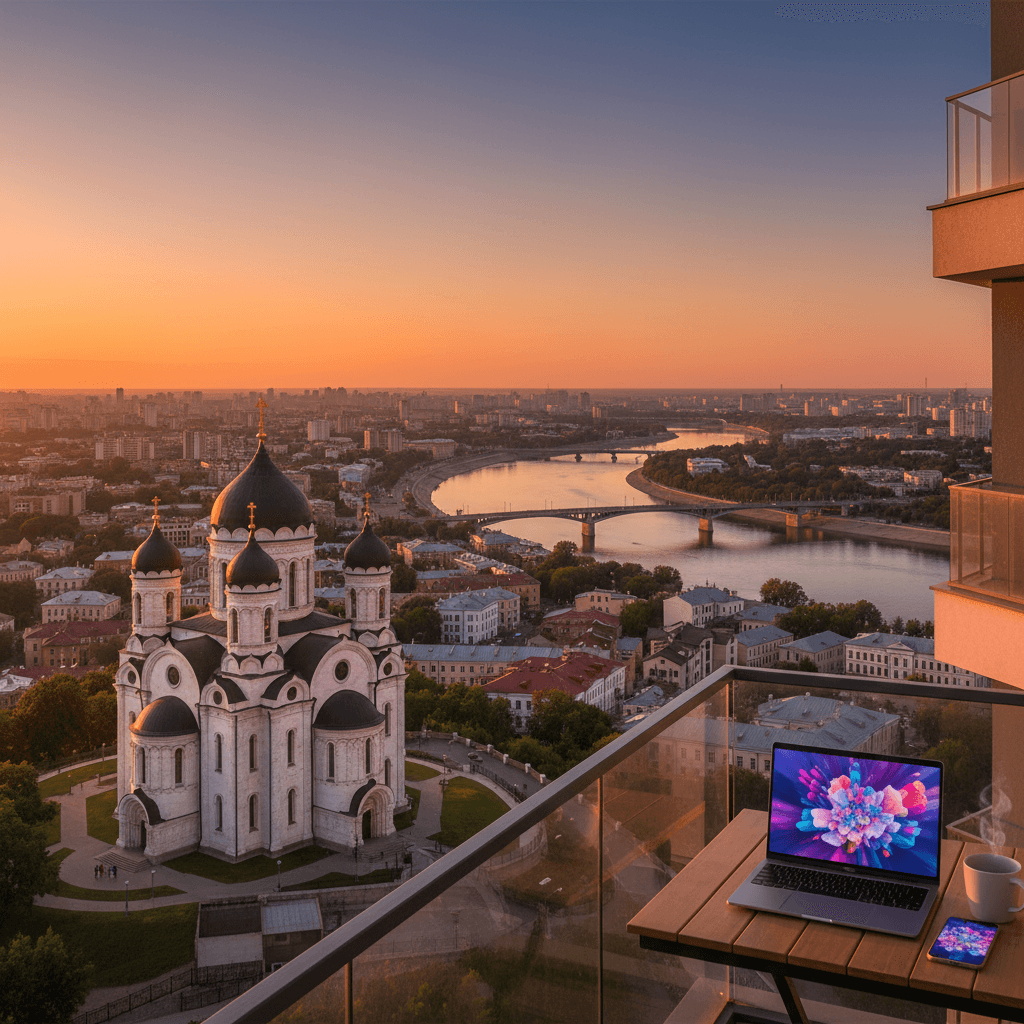
Voronezh
🇷🇺 Russia
The Russian Heartland Undiscovered
Voronezh is a city that feels like a well kept secret, tucked away about 500 kilometers south of Moscow. It doesn't have the frantic, high stakes energy of the capital or the museum like polish of Saint Petersburg. Instead, it offers a raw, authentic look at modern Russian life. It is a place where massive Soviet apartment blocks stand right next to sleek, glass fronted shopping centers and 18th century churches. For a nomad, the vibe is gritty but oddly welcoming once you break the ice with the locals.
The city sits on the banks of the Voronezh Reservoir, which locals jokingly call the Voronezh Sea. This massive body of water defines the geography and the social life of the city. You'll find people walking the Petrovskaya Embankment at sunset, and in the winter, you might see brave souls ice fishing in the middle of the urban landscape. It is a city of students and engineers, thanks to its history as a hub for the aerospace and tech industries. This gives the place a youthful, intellectual undercurrent that balances out its industrial exterior.
A Time Travel Aesthetic
Living here feels like stepping into a different era while keeping one foot firmly in the digital age. You can spend your morning working from a high speed fiber connection in a minimalist cafe and your afternoon wandering past the monument to the Tu-144 supersonic jet. The architecture is a heavy mix of Stalinist Empire style and functionalist concrete, which provides a dramatic backdrop for your daily routine. It isn't traditionally pretty in a postcard sense, but it is visually striking and deeply atmospheric.
The pace of life is significantly slower than in the Tier 1 Russian cities. People take their time in the parks, and the service in restaurants is polite but rarely rushed. There is a sense of pride among the residents here; they know they aren't in the global spotlight, and they seem to prefer it that way. You won't find many English signs or a massive expat community, so being here requires a bit of grit and a translation app constantly at the ready.
The Nomad Experience
Most nomads who find their way to Voronezh are looking for two things: extreme affordability and total immersion. Your USD or EUR goes incredibly far here, allowing for a lifestyle that would cost four times as much in Western Europe. You can snag a high end dinner for under $20 or a month of gym access for less than $30. It is the kind of place where you can live like royalty on a modest freelance budget.
The social scene revolves around the Prospekt Revolyutsii, the main artery of the city. This is where the best coffee shops, bars, and bookstores are clustered. On Friday nights, the street comes alive with musicians and crowds, giving you a taste of the local energy. While the internet in private apartments is generally excellent, often reaching 100 Mbps or more, the dedicated coworking scene is still catching up. You'll likely find yourself working from laptop friendly spots like Perfetto Caffe or the modern library spaces.
- The "Student City" Energy: With over 30 higher education institutions, the city feels young and energetic despite its age.
- The Naval History: Peter the Great built the first Russian fleet here, and that history is visible in the ship replicas docked along the water.
- Affordability: It remains one of the most budget friendly urban centers in European Russia for long term stays.
- The Kittens of Lizyukov Street: A famous local cartoon statue that sums up the city's quirky, unassuming charm.
Ultimately, Voronezh isn't for the nomad who wants a pre packaged experience with a ready made community. It is for the traveler who wants to see Russia without the filters. It is a city that demands you learn a few phrases of the language and navigate the trolleybus system on your own. The reward is a deep sense of place and a lifestyle that is both incredibly cheap and culturally rich.
The Local Economy
Voronezh is where your budget finally gets some breathing room. While Moscow and Saint Petersburg prices have climbed closer to European standards, Voronezh remains stubbornly affordable. It serves as a major educational and industrial hub, meaning there is a high density of students and young professionals who keep the cost of dining and entertainment low. You can live a high-quality lifestyle here for a fraction of what you would spend in a capital city.
Most nomads find that their biggest savings come from housing and local services. A comfortable lifestyle here, including a modern apartment and frequent dining out, typically costs between $800 and $1,100 per month. If you are frugal, you can easily get by on $650. The ruble exchange rate fluctuates, so it is smart to keep your funds in a stable currency and exchange only what you need for weekly expenses.
Monthly Budget Breakdown
- One-bedroom apartment (City Center): $200 to $300
- One-bedroom apartment (Outside Center): $220 to $300
- Utilities (Electricity, Heating, Water): $60 to $90
- High-speed Fiber Internet: $8 to $12
- Monthly Coworking Membership: $80 to $120
- Local Transport Pass: $15 to $20
- Mid-range Dinner for Two: $25 to $40
Housing and Neighborhoods
The Tsentralny District is the primary choice for most expats. It is the heart of the city where you will find the best infrastructure and the most English speakers. Renting a renovated, "Euro-remont" style apartment here will cost you around $450. If you want something more modern, look near the Prospekt Revolyutsii area where newer developments offer 24/7 security and underground parking.
For those who prefer a quieter vibe, the Leninsky District offers a good balance. It is close enough to the center to be convenient but far enough away to avoid the weekend crowds. Prices here drop by about 20% compared to the absolute center. Avoid the industrial outskirts like the Levoberezhny District unless you are on a very tight budget, as the commute and lack of amenities usually aren't worth the savings.
Food and Dining
Groceries are incredibly cheap if you shop like a local. Stores like Magnit and Pyaterochka are everywhere, but the Tsentralny Rynok (Central Market) is where you should go for fresh produce, local cheeses, and honey. A weekly grocery haul for one person usually totals about $35 to $50.
Eating out is a highlight because the quality-to-price ratio is excellent. A business lunch at a decent cafe like Mesthome or Just Coffee typically costs around $5 to $8. A pint of local craft beer will set you back about $3, and a high-end cocktail at a place like BKWSK is rarely more than $7. Tipping is standard at 10%, though it is usually done in cash or via a QR code system linked to the waiter's bank account.
Transport and Tech
Public transport relies on a mix of buses and "marshrutkas" (mini-buses). A single ride is roughly $0.30 if you pay by card and slightly more if you pay cash. Most nomads rely on ride-sharing apps like Yandex Go. A ten-minute cross-town trip usually costs under $4, making it the most efficient way to get around during the cold winter months.
Internet is one area where Voronezh punches above its weight. You can get 100 Mbps fiber for about $10 a month. Mobile data is equally cheap; a generous 30GB plan with unlimited social media usually costs less than $7. Coworking spaces like Saburov or Quantorium provide reliable backup if your home connection flickers, with daily rates starting around $10.
For the Remote Professional
If you're coming to Voronezh to work, you'll want to stay in the Tsentralny District. This is the heart of the city where the Soviet architecture is most impressive and the infrastructure is most reliable. Most nomads congregate around Prospekt Revolyutsii because it's the main artery for cafes and social life. You can find verified spaces like Coworking in Voronezh on Korolenko. Expect to pay around 600-1000 rubles for a day pass at available spaces.
- Rent: 20,000 to 30,000 rubles for a modern studio.
- Vibe: Fast paced, walkable, and the best chance of finding English speakers.
- Internet: Typical speeds hit 70 to 100 Mbps in modern apartment blocks.
For Long-Term Expats
The Leninsky District offers a slightly more residential feel without sacrificing proximity to the center. It's home to many of the city's universities, so there's a younger, more academic energy. Expats often prefer this area because the grocery stores are larger and the apartment layouts tend to be more spacious than the cramped historical flats on the main drag. You'll find plenty of local markets where 1,500 rubles gets you a massive haul of fresh produce and local dairy.
- Rent: 30,000 to 45,000 rubles for a one bedroom.
- Vibe: Balanced, green, and authentic.
- Top Spot: The area near Koltsovsky Square is great for evening strolls.
For Families
The Kominternovsky District is the most popular choice for families. It's further North and functions like a city within a city. It's packed with shopping malls like Grad and Moskovsky Prospekt, which are lifesavers during the biting winter months. The parks here are better maintained for kids, and the noise levels are significantly lower than downtown. It's a bit of a commute to the city center, usually 25 to 40 minutes by bus or taxi, but the suburban comfort makes up for it.
- Rent: 25,000 to 40,000 rubles for a two bedroom apartment.
- Vibe: Quiet, safe, and heavy on amenities.
- Transport: A Yandex Go ride to the center will cost you about 300 to 500 rubles.
For Solo Travelers
If you're only here for a month and want to soak up the "time travel" atmosphere, stick to the Pravoberezhny area near the Voronezh Reservoir. Living near the waterfront gives you access to the Admiralteyskaya Embankment, which is the best spot for people watching and photography. Solo travelers usually enjoy the proximity to Gormon for a late night drink or Barak O'Mama for a social dinner. It's the most scenic part of the city, especially when the Soviet monuments are lit up at night.
- Rent: 2,500 to 4,000 rubles per night for decent short term rentals.
- Vibe: Scenic, historic, and slightly gritty in a charming way.
- Safety: Generally high, though it's smart to stick to lit paths along the water after dark.
The Connectivity Landscape
While Voronezh doesn't have the hyper-speed infrastructure of Moscow, it's surprisingly capable for anyone working remotely. You'll find that fiber optic connections are the standard in most modern apartment rentals, especially in the Tsentralny district. Most nomads find that a standard home setup delivers between 50 Mbps and 100 Mbps for about $8 to $12 per month. It's affordable, but you should always ask your landlord for a speed test before signing anything, as older Soviet era buildings can have aging internal wiring that bottlenecks the signal.
Mobile data is where Russia really shines. You can grab a local SIM card from providers like MTS or Megafon at the Chizhov Gallery mall. A plan with 50GB of data or even unlimited social media usage usually costs under $10. 5G hasn't rolled out here yet, but the 4G/LTE coverage is consistent enough that you can use your phone as a hotspot in a pinch while sitting in Petrovsky Square.
Top Coworking Spots
The coworking scene in Voronezh is small but professional. You won't find dozens of options, but the ones available are high quality and much cheaper than what you'd pay in Western Europe. Most spaces attract local IT professionals and freelancers, so it's a great way to meet the local tech crowd.
Praktik
- Vibe: A well-known network that provides a professional and sleek environment. It is popular with digital nomads for its reliable infrastructure and modern design, offering a consistent experience for those used to international coworking standards.
The Laptop Cafe Culture
If you prefer the hum of a coffee shop, Voronezh has a thriving cafe culture. Unlike Moscow, where some places might give you the side eye for staying too long, many cafes here are welcoming to laptop users as long as it's not during the peak lunch rush. Perfetto Caffe on Prospekt Revolyutsii is a favorite for nomads. The Wi-Fi is reliable, the espresso is solid, and there are enough power outlets near the back tables.
Another great shout is Bakery No. 1. It's often filled with students from the local universities, so you'll blend right in. Just keep in mind that English proficiency varies wildly. While the younger baristas usually speak some English, having a translation app like Yandex Translate ready on your phone will save you a lot of trouble when asking for the Wi-Fi password.
Practical Tips for Staying Online
Public Wi-Fi is available in many parks and malls, but it usually requires a Russian phone number to authenticate via SMS. This is why getting that local SIM card on your first day is your top priority. Expats recommend using a secondary router or a high quality travel VPN, as certain international sites and services are restricted. Make sure your VPN is installed and tested before you cross the border, as some VPN provider websites are blocked within the country.
Power outages are rare in the city center, but they can happen during heavy summer storms. Most serious remote workers keep a small power bank charged just in case. If the internet at your apartment ever flakes out, the Amaks Park Hotel has a reliable business center that you can use for a small fee even if you aren't staying there as a guest.
General Safety and Street Smartness
Voronezh is generally a peaceful city where you can walk around the central districts like Tsentralny or Leninsky late at night without much worry. It lacks the frantic energy of Moscow, which usually translates to a lower rate of petty street crime. Most nomads find that the biggest risk isn't theft, but rather the uneven sidewalks and the aggressive driving habits common throughout the region. Keep your eyes on the road when crossing Plekhanovskaya Street even if you have the green light.
You should keep your passport or a high quality color copy on you at all times. Police checks aren't as common as they used to be, but they still happen, especially near major transit hubs like Voronezh-1 railway station. If you are stopped, stay polite and show your registration documents. Most expats recommend keeping a digital scan of your visa and migration card on your phone as a backup.
Avoid the industrial outskirts like Mashmet or parts of the Levoberezhny district after dark. These areas don't have much to offer travelers anyway, and they can feel a bit rougher around the edges. Stick to the well lit areas around Prospekt Revolyutsii where there are plenty of people and open businesses until late.
Healthcare Facilities and Pharmacies
If you get sick, you'll find that private clinics are the way to go. Public hospitals often suffer from long wait times and a lack of English speaking staff. For a standard consultation, Olimp Zdorovya on Teatralnaya Street is a top choice for expats. They have modern equipment and a more Western style of service. A typical visit to a specialist here will set you back about 2,500 to 4,000 rubles.
Other reliable private options include:
- Sowas: Good for quick diagnostics and blood tests.
- Medekspert: Known for having several branches across the city, making it easy to find a clinic near your apartment.
- Era: The go to spot if you need emergency dental work.
Pharmacies, or Apteka, are everywhere. Look for the green crosses. Many are open 24/7, particularly the Farmiya or Zdorovyy Gorod chains. You can buy many medications over the counter that would require a prescription in the US or UK, but always check the local name of the active ingredient. Most pharmacists won't speak English, so have a translation app ready on your phone.
Emergency Contacts and Apps
The universal emergency number in Russia is 112. You can dial this from any phone, even without a SIM card, and they usually have English speakers available in larger cities like Voronezh. For specific services, you can use these direct numbers:
- 101: Fire Department
- 102: Police
- 103: Ambulance
Download the Yandex Go app for more than just rides. It has a built in function to share your route with friends, which provides an extra layer of security when taking taxis late at night. For medical translations, DeepL tends to handle technical Russian terms better than other basic translation tools.
Water and Environmental Health
Don't drink the tap water in Voronezh. While it is technically treated, the aging pipe infrastructure means it often carries a metallic taste or sediment. Most locals use a Barrier or Aquaphor filter pitcher, but for long term stays, it is better to order 19 liter jugs delivered to your door. Brands like Vkusnyy Kray are cheap and reliable, usually costing around 200 to 300 rubles per bottle.
Winter brings its own health hazards. The air can get very dry indoors due to the central heating systems, so buying a cheap humidifier is a smart move. Also, be wary of "black ice" on the sidewalks from December through March. A good pair of boots with solid grip is a mandatory safety investment for a Voronezh winter.
The Layout and Logic
Voronezh is a city split in two by its massive reservoir, and your experience here depends entirely on which side of the water you land on. The Right Bank is the historic and commercial heart where most nomads spend their time. It's walkable, dense, and feels like a proper European city. The Left Bank is more industrial and residential; while it's cheaper, you'll spend half your life stuck in traffic on the bridges if you live there and work in the center.
Most travelers find that the city center, specifically the area around Prospekt Revolyutsii, is best explored on foot. The sidewalks are wide, and the Soviet-era planning means everything is laid out in a logical grid. However, once you need to cross into the northern districts or the suburbs, you'll be relying on a mix of buses, private minibuses, and taxis.
Public Transit: Buses and Marshrutkas
The backbone of the city is the bus system. You'll see large white buses and the smaller, more nimble Gazelle vans known as marshrutkas. These are efficient but can get incredibly crowded during the morning and evening rush hours. Most locals use the Gortrans app or Yandex Maps to track bus arrivals in real time, which is a lifesaver when it's -15°C outside.
- Standard Fare: 28 RUB if you pay by card or phone, 30 RUB if you pay in cash.
- Payment: Almost all buses now have contactless terminals. Just tap your card or phone on the reader near the driver or conductor.
- Operating Hours: Most routes run from 6:00 AM to about 11:00 PM. After midnight, your only real option is a taxi.
Taxis and Ride-Hailing
For most expats and digital nomads, Yandex Go is the go-to app. It's the Russian equivalent of Uber and works seamlessly. You can link your local bank card or pay the driver in cash. The service is incredibly cheap by Western standards, and the wait time in the city center is rarely more than 3 to 5 minutes.
A typical 15-minute ride across town will set you back about 200 to 300 RUB. If you want a bit more comfort, the "Economy" class cars can be a bit hit-or-miss, so many nomads recommend selecting "Comfort" or "Comfort+" for a few extra dollars. It usually gets you a newer Kia or Hyundai with a driver who actually uses the seatbelts.
Cycling and Scooters
Voronezh has embraced the electric scooter craze. During the warmer months from May to September, you'll see Whoosh and Urent scooters parked on almost every corner. You just download the app, scan the QR code, and you're off. It's a fun way to cruise along the Petrovskaya Embankment, but be careful on the main roads as dedicated bike lanes are still a rarity here.
Biking is a bit more of a challenge. While the city is relatively flat, the lack of infrastructure means you're often fighting for space with pedestrians on the sidewalk or dodging cars on the shoulder. If you're a serious cyclist, stick to the parks like Alye Parusa or the forest trails near the Olympik sports complex on the northern edge of the city.
Regional Connections
If you're looking to head to Moscow for the weekend, you have two main choices. The Voronezh-1 railway station is right in the center and serves the high-speed Dvukhetazhny (double-decker) trains. These take about 6 hours and 20 minutes to reach Moscow and are surprisingly comfortable. Tickets usually cost between 1,200 and 2,500 RUB depending on how far in advance you book.
For those on a tighter budget, long-distance buses leave from the Central Bus Station on Moskovsky Prospekt. They're cheaper, but the 7 to 8 hour journey can be grueling if there's heavy traffic on the M4 highway. Most seasoned travelers stick to the train for the reliability and the extra legroom.
Getting by in Voronezh requires a bit more legwork than you might be used to in Moscow or Saint Petersburg. While the city is a major educational hub with over 100,000 students, English proficiency remains relatively low among the general population. You will find English speakers in the hip cafes along Prospekt Revolyutsii, but your local grocery store clerk or bus driver almost certainly won't speak a word of it.
The Language Barrier
Most nomads find that a basic grasp of the Cyrillic alphabet is a survival requirement here. Being able to read signs for Apteka (Pharmacy) or Produkty (Groceries) makes a world of difference. While younger locals in spots like Perfetto Caffe often have a decent command of English, you should expect to use translation apps for most daily interactions. It is a good idea to download the Russian language pack for offline use before you arrive.
Expats recommend using Yandex Translate over Google Translate for this region. It tends to handle Russian grammar and local idioms much more accurately. The image translation feature is particularly helpful when you are staring at a menu at Garmoshka or trying to understand your utility bill.
Digital Communication and Apps
In Voronezh, your phone is your lifeline. Telegram is the undisputed king of communication. Whether you are joining a local expat group, booking a haircut, or checking the latest updates from a coworking space like Saburov, it happens on Telegram. Keep in mind that WhatsApp is still used, but it is secondary for business and community coordination.
- Yandex Go: This is the only app you need for transport. It handles taxis and provides real time tracking for the city buses. You can link a local card or pay in cash.
- 2GIS: Travelers often say this map app is superior to Google Maps for Russian cities. It shows exactly which door to enter for a specific office and even tracks the location of public buses in real time.
- Dostavista: If you need something moved or delivered across the city quickly, this is the go to courier service.
Connectivity and SIM Cards
Internet speeds in Voronezh are surprisingly high and very affordable. You can get a local SIM card with 50GB of data or more for around 600 to 800 rubles per month. The major providers are MTS, Megafon, and Beeline. Most nomads prefer Megafon for its consistent coverage across the Voronezh Oblast.
You will need your passport to register a SIM card at any official kiosk. These are located in almost every shopping center, such as Chizhov Gallery or Grad. Public Wi-Fi is available in most cafes, but be aware that Russian law requires a one time SMS authentication using a Russian phone number to access these networks.
Common Phrases for Daily Life
Learning a few polite phrases goes a long way with the locals. Voronezh residents can seem reserved at first, but they usually open up if they see you are trying. Start with these basics:
- Zdravstvuyte: Hello (Formal)
- Spasibo: Thank you
- Ya ne govoryu po-russki: I do not speak Russian
- Oplata kartoy: Payment by card
- Schet, pozhaluysta: The bill, please
If you plan to stay for more than a month, consider hiring a tutor through a platform like Profi.ru. Local rates for Russian lessons are quite low, often around 800 to 1,200 rubles per hour, and it will significantly improve your quality of life in the city.
The Seasonal Cycle
Voronezh experiences a classic four season climate that defines the rhythm of the city. If you are coming from a tropical hub, the winter might feel like a shock, but the local infrastructure is built to handle it. The transition between seasons is relatively quick, so you will want to pack for specific windows rather than a general middle ground.
The city sits in a humid continental zone. This means summers are genuinely hot, often hitting 25°C to 30°C in July, while winters can drop well below freezing. Humidity stays moderate throughout the year, so the heat rarely feels suffocating, and the cold feels crisp rather than damp.
The Golden Window: May to September
Most nomads agree that May, June, and September are the peak months for a stay. During May, the city shakes off the last of the slush and the greenery along the Voronezh Reservoir comes alive. Temperatures usually sit around a comfortable 19°C, which is perfect for walking between cafes in the center.
July and August are the hottest months. Expect highs of 27°C and plenty of sun. This is when the Petrovskaya Naberezhnaya (the waterfront) fills up with locals. If you don't mind the heat, it is the best time for outdoor social events, though you will want to ensure your apartment rental has functioning air conditioning, as older Soviet era buildings can turn into ovens during a heatwave.
September offers a mellow transition. The crowds thin out, the air cools to about 17°C, and the autumn colors in Koltsovsky Square are stunning. It is arguably the most productive month for remote work because the distractions of summer festivals fade away but the weather still allows for evening strolls.
Surviving the Voronezh Winter
Winter arrives in earnest by late November and sticks around until March. January is the coldest month, with average lows of -9°C, though it is not uncommon for the mercury to hit -20°C during a cold snap. You will see plenty of snow, which the city clears fairly efficiently from main roads like Revolution Avenue, but side streets can get icy.
Expats living here often suggest investing in a heavy down coat and boots with solid grip. The "time travel" feel of the Soviet architecture is amplified when it is covered in a thick layer of white, making for some great photography. However, the short daylight hours in December and January can be a drag on your energy levels if you aren't used to northern latitudes.
Quick Seasonal Breakdown
- Spring (April to May): Rapid warming. April is messy with melting snow, but May is beautiful and mild. Expect 10°C to 19°C.
- Summer (June to August): Hot and sunny. Great for the beach areas and parks. Highs of 25°C to 30°C.
- Autumn (September to October): Crisp and colorful. September is perfect; October starts getting chilly and rainy. 5°C to 17°C.
- Winter (November to March): Cold, snowy, and dark. Indoor life thrives in banyas and coffee shops. Lows of -5°C to -15°C.
When to Book
If you want the best balance of price and lifestyle, aim for a three month stay starting in mid August. You get the tail end of the summer heat, the full beauty of the Russian autumn, and you can depart before the harshest winter temperatures arrive in December. If you are a fan of winter sports or want to experience a traditional Russian Christmas in January, make sure your accommodation has modern heating and triple glazed windows to keep the utility bills manageable.
Currency and Payments
Russia operates on the Ruble (RUB). While the country is highly digitized, international sanctions mean your Western Visa, Mastercard, or Amex cards won't work at local terminals or ATMs. You'll need to bring USD or Euros in cash to exchange at local banks like Sberbank or Tinkoff once you arrive. Most nomads find that carrying a mix of cash and a local Mir card, which you can set up relatively easily with a passport, is the only way to function.
The cost of living here is significantly lower than in Moscow. A decent one-bedroom apartment in the city center will run you about 25,000 to 35,000 RUB per month. Expect to pay around 600 to 900 RUB for a mid range dinner for two. If you're budget conscious, the local Stolovayas (canteens) offer hearty Slavic meals for under 300 RUB.
Connectivity and Workspace
Don't expect the lightning speeds of Saint Petersburg, but Voronezh holds its own. Most apartments come with fiber optic connections reaching 50 to 100 Mbps. For mobile data, grab a SIM card from MTS or Beeline at the Galereya Chizhova shopping mall. A plan with 50GB of data usually costs less than 700 RUB.
Coworking isn't as widespread as in the capitals, but there are solid spots to get work done. Sabotage is a popular choice among the local tech crowd, offering daily rates around 600 RUB or monthly memberships for 8,000 RUB. If you prefer a cafe vibe, Perfetto Caffe on Revolyutsii Avenue is nomad friendly with reliable Wi-Fi and plenty of outlets.
Getting Around
The city doesn't have a metro system, so you'll rely on buses, "marshrutkas" (fixed route minivans), and taxis. Download the Yandex Go app immediately. It's the local equivalent of Uber and it's incredibly cheap. A ten minute cross town trip rarely exceeds 250 RUB.
Public transport costs a flat rate of about 28 to 30 RUB. While the buses are frequent, they get incredibly crowded during rush hour. Most expats recommend sticking to taxis or walking if you're staying near the Prospekt Revolyutsii area, as the city center is surprisingly walkable.
Language and Social Life
English proficiency is quite low compared to Moscow. You'll struggle in grocery stores and pharmacies without at least a basic grasp of the Cyrillic alphabet and a few key phrases. Yandex Translate has a great offline mode that will become your best friend for reading menus and signs.
To meet people, look for language exchange groups on VK (the local Facebook). The English Speaking Club Voronezh often meets in local cafes and is a great bridge to the local community. Locals can be reserved at first, but once you've shared a drink at a spot like BKWSK, they are famously hospitable.
Weather and Timing
Voronezh has four distinct seasons. If you hate the cold, avoid December through February, when temperatures regularly dip to -10°C (14°F). The city is at its best from May to September. Summers are warm and pleasant, hovering around 25°C (77°F), making it perfect for weekend trips to the nearby Kudykina Gora safari park or lounging by the Voronezh Reservoir.
Safety and Local Norms
The city is generally safe for foreigners, even at night in the center. However, it's wise to avoid the industrial outskirts like the Levoberezhny District after dark. Stick to well lit main streets. Always carry a digital copy of your passport and your registration papers, as random document checks by police can happen, though they've become less common for tourists recently.
- Emergency Number: Dial 112 for all services.
- Water: Don't drink the tap water; buy 5 liter jugs at the supermarket or use a high quality filter.
- Apps to Download: Yandex Go (Transport), 2GIS (Maps), and Telegram (Communication).
Need visa and immigration info for Russia?
🇷🇺 View Russia Country GuideEasy Landing
Settle in, no stress