Vladivostok
🇷🇺 Russia
The San Francisco of the East
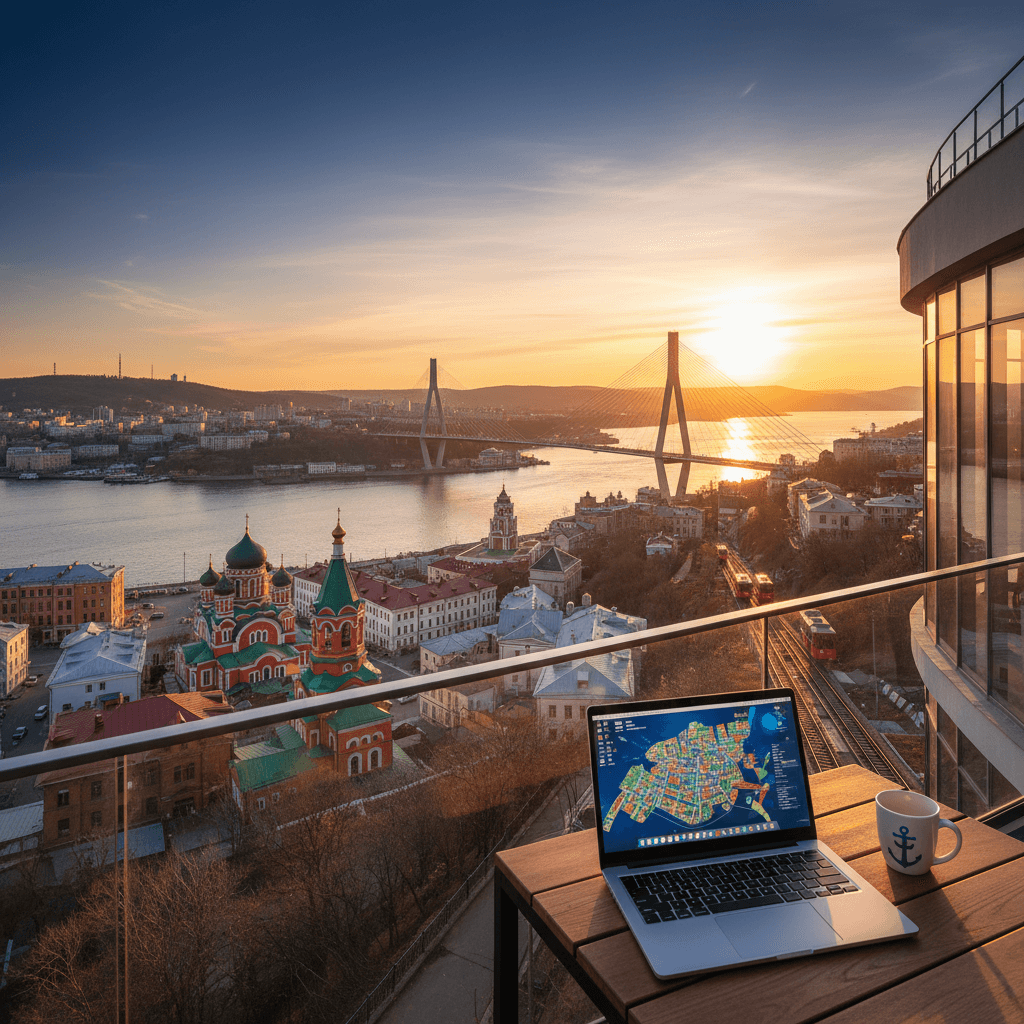
Imagine a city where the steep, foggy hills of California meet the stoic architecture of the Russian Far East. Vladivostok is a geographical anomaly. It is closer to Tokyo than it is to Moscow, yet it feels unmistakably Russian. For nomads, the appeal lies in this friction between East and West. You are looking out over the Sea of Japan while eating world class king crab and drinking strong tea in a renovated 19th century merchant building.
The pace here is noticeably slower than the frantic grind of Moscow. People prioritize the outdoors, likely because nature is inseparable from the city limits. You can finish a video call in a cafe on Svetlanskaya Street and be hiking along the rugged cliffs of Russky Island thirty minutes later. It is a city of bridges, most notably the cable-stayed bridge with the world's longest span, which dominates the skyline and connects the urban center to wild, rocky beaches.
The Cost of Living
Living here is moderately affordable, especially if you are earning in dollars or euros. A solo nomad can live comfortably on $2,000 to $2,500 a month, though you can scrape by on $1,200 if you opt for shared housing and stick to the local markets. Most nomads find that the quality of life per dollar is high, particularly regarding fresh seafood and high speed internet.
- Rent: A studio or one bedroom in the city center or near the waterfront usually runs between RUB 30,000 and 50,000 ($300 to $500).
- Dining: A quick lunch at a local cafe or street food stall costs about $5 to $8. A mid range dinner with drinks will set you back $15, while high end seafood spots on the harbor start around $20.
- Transport: A weekly Vladivostok City Card for unlimited buses is RUB 1,200. Short rides via the Yandex Go app usually cost less than $3.
Where to Plant Your Flag
The city's layout is compact, but the hills make your choice of neighborhood vital for your daily steps. Most remote workers gravitate toward the central waterfront for convenience and views.
Svetlanskaya & Waterfront
- The Vibe: The historic heart of the city. It is pedestrian friendly, filled with renovated facades, and home to the best coffee shops.
- Pros: You won't need a car. Everything is walkable, and the harbor views are constant.
- Cons: It is the most expensive area for rent and can get loud with tourists during the summer.
Sportivnaya Harbor
- The Vibe: A mix of family energy and expat life. It is famous for its promenade and fresh seafood markets.
- Pros: Easy access to Sportivnaya Market for cheap, fresh produce and the famous Vladivostok crab.
- Cons: It gets incredibly crowded on weekends when the whole city descends on the promenade.
Eagle’s Nest Hill
- The Vibe: High altitude living with the best panoramas in the city.
- Pros: You can take the RUB 20 funicular to get home. It feels quiet and residential despite being central.
- Cons: The hills are brutal. If you aren't in peak hiking shape, you'll be relying on taxis.
Digital Infrastructure & Social Life
The internet is surprisingly robust. You'll get average speeds of 10 Mbps, which is more than enough for seamless video calls. While dedicated coworking spaces are still a bit thin on the ground compared to Bali or Lisbon, the cafe culture is strong. You will see plenty of locals with laptops in the spots along the promenades.
The biggest hurdle is the social bubble. The expat community is small, and English isn't widely spoken once you leave the tourist track. You'll need Yandex Translate and a bit of patience. However, the isolation is part of the charm. There is a sense of being at the edge of the world here that fosters a unique bond among the few nomads who make the trek. If you enjoy hiking, the local "fortress tours" and coastal treks are the best way to meet people without needing fluent Russian skills.
Before you arrive, download Yandex Go for taxis and Ostrovok for booking local apartments. You will also need a local SIM from MTS or Beeline, which requires biometric registration. Don't expect to do this at the airport; head to a flagship store in the city center instead.
A Slice of the Pacific on a Budget
Living in Vladivostok feels like a strange, beautiful hybrid. Local nomads often call it the San Francisco of the East because of the dramatic hills and constant ocean breeze, but the price tag is nowhere near Californian levels. While it is more expensive than rural Siberia, your dollar or euro stretches significantly further here than in Moscow or St. Petersburg.
For a solo nomad, a comfortable lifestyle typically lands between $2,000 and $2,500 per month. This covers a renovated apartment in the center, dining out frequently, and plenty of weekend trips to the islands. If you are watching your wallet, you can scrape by on $1,200 by sharing a flat and sticking to the legendary seafood markets, but you will miss out on the city's evolving cafe culture.
Housing and Neighborhoods
Rent is your biggest variable. Most travelers gravitate toward the historic center or the waterfront because the city's hills make commuting on foot a serious workout. Expect to pay between 30,000 and 50,000 RUB ($300 to $500) for a solid one bedroom apartment near Svetlanskaya Street.
- Svetlanskaya Street: This is the heart of the action. It is walkable, packed with cafes, and offers immediate access to the harbor. It is the priciest area for rent, but you save on transport.
- Sportivnaya Harbor: Ideal if you want to be near the energy of the promenade. It is great for fresh seafood access and evening walks, though it gets loud on summer weekends.
- Eagle’s Nest Hill: You will get the best views in the city here. It is central, but the steep incline means you will likely rely on the 20 RUB funicular or taxis to get home.
- Russky Island: A bit of an outlier reached via the massive cable stayed bridge. It offers a vacation vibe with cheaper rentals, but you will feel isolated without a car or a dedicated taxi budget.
Dining and Groceries
The food scene is a major perk of living here. You are closer to Tokyo than Moscow, and the seafood reflects that. You can grab a quick meal at a local cafe or street food stall for 500 to 800 RUB ($5 to $8). A mid range dinner at a nice spot in the harbor usually runs about 1,500 RUB ($15).
If you prefer cooking, head to the Sportivnaya Market. You can find incredible local produce and fresh catches for a fraction of restaurant prices. Most nomads find that a $10 daily budget for groceries covers the basics and then some.
Connectivity and Transport
The internet is surprisingly robust. With average speeds around 10 Mbps, video calls and large uploads rarely glitch. While dedicated coworking spaces are still a bit thin on the ground, the cafe culture along the promenades is welcoming to laptops. Just make sure you have a Russian SIM card from providers like MTS or Beeline for cheap data. You will need to handle biometric registration in person once you arrive, as it is rarely an instant process at the airport.
Getting around is cheap if you use the right tools. Download the Yandex GO app immediately; it is the lifeline for taxis, which usually cost between 150 and 200 RUB per kilometer. For public transit, pick up a Vladivostok City Card for 1,200 RUB per week to get unlimited bus and tram rides.
Practical Expenses at a Glance
- Coffee: 150 to 250 RUB
- Beer: 200 to 400 RUB
- Gym Membership: 2,500 to 4,000 RUB per month
- Funicular Ride: 20 RUB
- Fortress AR Tour: 500 RUB
One thing to keep in mind is the geographic isolation. While daily life is affordable, leaving the region can be pricey. You are paying for a unique, nature focused lifestyle that feels like a permanent seaside escape, provided you don't mind the occasional language barrier and the steep climb back to your apartment.
Vladivostok is often called the San Francisco of the East, and you'll see why the moment you hit the hills. It has that same salty air, steep inclines, and dramatic bridges, but with a distinct Russian Pacific edge. The city is compact, meaning your choice of neighborhood dictates whether you're living the high-energy harbor life or a quiet, forest-adjacent existence on the islands.
For Digital Nomads: Svetlanskaya and the Waterfront
If you want to be where the action is, Svetlanskaya Street and the renovated Waterfront Promenade are the places to plant your flag. This is the historic heart of the city, filled with grand facades and the best cafe culture in the Russian Far East. Most nomads gravitate here because it's the most walkable part of town, and you're never more than a few minutes from a view of the Golden Horn Bay.
- Rent: Expect to pay between 30,000 and 50,000 RUB ($300 to $500) for a modern studio or one bedroom apartment.
- Connectivity: Internet is rock solid at 10 Mbps or higher, which is plenty for video calls. While dedicated coworking spaces are few and far between, the cafes along the promenade are work-friendly.
- The Vibe: It's urban and energetic. You'll use the Yandex Go app for everything from taxis to food delivery.
For Solo Travelers: Eagle’s Nest Hill
Solo travelers looking for a mix of adventure and central access usually land near Eagle’s Nest Hill. It's famous for the funicular, which costs just 20 RUB and saves your calves from the brutal incline. Living here means you get the best panoramic views of the world's tallest cable-stayed bridge right from your window.
The social scene for solos revolves around hiking and the Vladivostok Fortress. You can grab an AR tour of the fortifications for 500 RUB, which is a great way to meet people without needing fluent Russian. It's a bit quieter than the waterfront but still close enough to the bars on Svetlanskaya to keep things interesting.
For Expats and Foodies: Sportivnaya Harbor
Expats who plan on staying a while often choose the area around Sportivnaya Harbor. It strikes a balance between tourist convenience and local utility. The big draw here is the Sportivnaya Market, where you can find world-class seafood and fresh produce at prices that make the $10 a day food budget a reality. Street food here usually runs between 500 and 800 RUB ($5 to $8).
- Daily Life: It's less "vacation" and more "livable." You're near parks and the city's best seafood restaurants, where a mid-range dinner costs about 1,000 to 1,500 RUB ($10 to $15).
- Transport: It's well-connected by the bus network. An unlimited City Card costs 1,200 RUB per week and covers all your local transit needs.
For Nature Seekers: Russky Island
If the city feels too cramped, Russky Island is the escape hatch. Connected by the massive bridge, it feels worlds away from the mainland. You'll find rugged cliffs, hidden beaches, and "vacation style" rentals that are often cheaper than the city center. It's perfect if you only need to head into town once or twice a week.
Be aware that you'll be more dependent on the ferry or longer Yandex.Taxi rides, which can cost 150 to 200 RUB per kilometer. It's the best spot for those who want their morning coffee overlooking the Sea of Japan rather than a busy street. Just make sure you've sorted your Russian SIM card (MTS or Beeline are the go-to choices) before you head out there, as you'll need the data for navigation on the trails.
The Connectivity Reality
You might expect a city sitting on the edge of the Russian Far East to feel disconnected, but Vladivostok's digital infrastructure is surprisingly robust. Most nomads find the internet speeds here more than sufficient for heavy lifting. Average speeds hover around 30-35 Mbps for broadband, and while that doesn't sound like fiber optic heaven, it's remarkably reliable for video calls, large file uploads, and streaming. You won't struggle with stability in the central districts.
The local cafe culture has embraced the remote work movement, especially along the renovated harbor promenades. If you're staying near Svetlanskaya Street, you'll find plenty of spots where popping open a laptop is perfectly acceptable. Travelers often say the "San Francisco of the East" vibe extends to the work-from-anywhere mentality, even if the formal infrastructure is still catching up to Moscow's standards.
Coworking and Shared Spaces
Dedicated coworking spaces are a bit of a rarity here compared to western Russia. You won't find a massive selection of international chains, but the local spots that do exist are integrated into the city's moderate cost of living. Most nomads bundle their workspace needs into their monthly budget, which typically sits around $2,146 for a comfortable mid-range lifestyle.
Because formal offices are limited, the community tends to be tight-knit. Since the expat circle is small, you'll likely run into the same digital nomads at the waterfront cafes or the Sportivnaya Harbor area. It's a DIY scene; you'll need to be comfortable setting up shop in a bistro or a library-style environment rather than a high-tech hub with a dedicated community manager.
Mobile Data and Essential Apps
Getting online the moment you land isn't as simple as grabbing a SIM at the airport. Russia has strict biometric registration laws, so plan to head into the city center to a physical shop to get sorted. Expats recommend providers like MTS or Beeline for the best data packages. The prices are incredibly low by Western standards, often just a few dollars for massive data buckets.
To survive and work efficiently, you'll need a specific toolkit of apps on your phone:
- Yandex GO: This is your lifeline for everything. It handles taxi hailing (expect 150 to 200 RUB per kilometer), food delivery, and even some logistics.
- VPN: A high-quality VPN is non-negotiable. Many Western sites and communication tools like WhatsApp or Telegram calls can be restricted or glitchy without one.
- Yandex Translate: English proficiency is low here, and you'll need this for communicating with landlords or reading menus.
The Logistics of Working in the Far East
One thing to keep in mind is the time zone. Being closer to Tokyo than Moscow means your 9-to-5 might look very different if your clients are in Europe or the US. Many nomads here take advantage of the 6-hour time difference with Moscow to spend their mornings hiking the cliffs of Russky Island or riding the funicular for 20 RUB to catch the view from Eagle's Nest Hill before starting their workday in the late afternoon.
While the city feels isolated geographically, the "vacation" feel of the waterfront keeps burnout at bay. Just remember that banking can be tricky. Most nomads use Ostrovok.ru for booking their housing since foreign cards are often rejected on local platforms. Carrying some cash for smaller cafes and the Sportivnaya Market is a smart move, even if the city is becoming increasingly digital.
Staying Safe in the San Francisco of the East
Vladivostok feels remarkably secure for a city that served as a closed naval port for decades. The heavy military and Pacific Fleet presence contributes to an atmosphere of order, and most nomads find they can walk through the central districts like Svetlanskaya Street well after dark without a second thought. It is a city of hills and harbors, and while it lacks the frantic pace of Moscow, the standard rules for any major port city apply. Stick to the renovated waterfronts and the well lit promenades where the crowds are, and you will likely have a trouble free stay.
Solo travelers often mention that the biggest safety "risk" is actually the terrain. The city is famous for its steep inclines and the Eagle's Nest Hill area can be a literal workout. In the winter, these hills become slick with ice and snow. If you are visiting between December and February, invest in boots with serious grip. Locals are used to the verticality, but newcomers often find the combination of wind and ice a bit treacherous.
- Emergency Services: Dial 112 for all emergencies. Dispatchers may not speak fluent English, so having a translation app ready is smart.
- Waterfront Safety: Stick to the Sportivnaya Harbor promenade at night. It is the heart of the social scene and stays populated late into the evening.
- Scams: These are rare, but always use the Yandex Go app for taxis rather than hailing cars on the street to ensure you are paying the fair local rate of about 150 to 200 RUB per kilometer.
Healthcare and Medical Services
Medical facilities in Vladivostok are standard for a Russian regional capital. You will find plenty of 24 hour pharmacies, known as Apteka, dotted along the main roads. Most basic medications are available over the counter, though the packaging will be in Russian. If you have specific prescriptions, bring an ample supply and a copy of the doctor's note, as finding exact matches for Western brands can be a headache.
For more serious issues, private clinics are the preferred choice for expats and nomads. They generally offer a higher standard of service and shorter wait times than the state hospitals. While healthcare is relatively affordable, you should never arrive without comprehensive travel insurance that covers medical evacuation, given the city's geographic isolation from other major hubs.
- Language Barrier: Do not expect doctors or nurses to speak English. Use Yandex Translate to communicate symptoms if you do not have a Russian speaking friend to accompany you.
- Payment: Private clinics usually require payment upfront. Since many foreign bank cards have limitations here, ensure you have access to local currency or use platforms like Ostrovok for pre paid arrangements where possible.
- Water Quality: It is best to stick to bottled or filtered water for drinking, though tap water is generally fine for brushing your teeth and cooking.
Practical Tips for a Smooth Stay
Digital security is just as important as physical safety here. Most nomads use a VPN to access familiar Western social media tools and communication apps like WhatsApp or Telegram, which can sometimes face connectivity hurdles. For your phone, skip the airport kiosks and head to a branded MTS or Beeline shop in the city center. You will need your passport for the biometric registration, but the data plans are incredibly cheap compared to US or European standards.
If you are planning to explore Russky Island or the more remote hiking trails, let someone know your route. The coastal weather can change fast, and the fog rolls in off the Pacific with little warning. Staying connected with a local SIM ensures you can always call a Yandex.Taxi to get back to the warmth of a cafe on Svetlanskaya if the weather turns sour.
The San Francisco of the East
Vladivostok is a city defined by its verticality. Between the steep inclines of the Golden Horn Bay and the sprawling bridges, you will find a place that feels more like a Pacific outpost than a typical Russian hub. Because the city is built on hills, your primary mode of transport will often be your own two feet, especially if you stick to the renovated center around Svetlanskaya Street. It is highly walkable, though your calves will certainly feel the workout after a day of exploring the harbor promenades.
For those days when the hills feel a bit too daunting, the local funicular is a lifesaver. For just RUB 20, it hauls you up to Eagle’s Nest Hill, saving you a grueling climb and rewarding you with the best panoramic view of the cable stayed bridge. It is a quirky, historic way to get around that locals still use for their daily commute.
Mastering the Yandex Ecosystem
If you are coming from Western Europe or the Americas, forget Uber or Lyft. In Vladivostok, the Yandex Go app is your lifeline. It is the gold standard for ride hailing here, and it is incredibly affordable. A typical trip costs around 15 RUB per kilometer, making it the most convenient way to get home after a late dinner at the Sportivnaya Harbor.
The app is also vital because English proficiency among drivers is generally low. By using the app, you bypass the language barrier entirely since your destination and payment are handled digitally. Just keep in mind that while the app is seamless, you will want a local SIM from MTS or Beeline to ensure you have a stable connection while waiting on a street corner.
Buses, Trams, and the City Card
The public transit system is robust, consisting mostly of a dense network of buses and a few remaining tram lines. While it can get crowded during the morning rush, it is the most budget friendly way to see the outer edges of the city. Most nomads who stay for more than a week pick up a Vladivostok City Card. It costs RUB 1,200 for a week of unlimited travel and covers both transport and entry to several local museums.
- Buses: These go everywhere, including the long haul out to Russky Island.
- Trams: Limited routes but great for a slow, scenic look at the older neighborhoods.
- Electric Trains: Useful if you are planning a day trip to the suburban beaches or trekking spots further up the coast.
Getting to Russky Island
Russky Island used to be a closed military zone, but it is now the city's favorite backyard. You have two main ways to get there. The most common is taking a bus or taxi across the record breaking Russky Bridge. It is a 30 to 45 minute trip from the center depending on traffic. If you aren't in a hurry, the ferry is a much more atmospheric choice. It is cheap, offers incredible views of the naval fleet, and lets you feel the salt air of the Sea of Japan.
Airport Transfers
When you land at Knevichi Airport, don't get cornered by the private drivers in the arrivals hall. They will almost always overcharge you. Instead, pull up Yandex Go. The ride into the city center takes about 30 to 45 minutes and is a straightforward shot down the highway.
The Language Barrier
In Vladivostok, Russian is the undisputed king. Unlike Moscow or St. Petersburg where you might find a decent pocket of English speakers in the service industry, the "San Francisco of the East" remains firmly rooted in its native tongue. Outside of high end hotel lobbies or the most popular tourist spots on Svetlanskaya Street, English proficiency is generally low. You'll find that most locals are friendly but might freeze up if you approach them with a complex question in English.
Nomads here quickly realize that getting by requires a mix of technology and a few memorized basics. You'll want to get comfortable with Yandex Translate immediately. It tends to handle Russian nuances better than other apps and is a lifesaver when you're trying to figure out if a dish at the Sportivnaya Market contains cilantro or something more adventurous. If you don't speak the language, your social circle might feel a bit tight, as the expat community is relatively small compared to western Russia.
Digital Communication and Apps
Staying connected is easy, but it requires some setup. You can't just walk out of the airport and expect an instant SIM card; foreigners need biometric registration, so it's best to head to an MTS or Beeline shop in the city center once you've settled in. Data is incredibly cheap, and the 20-35 Mbps average speeds are plenty for video calls or uploading files from a cafe overlooking the harbor.
The digital ecosystem in Russia is its own beast. You'll need the Yandex GO app for almost everything, from hailing taxis to ordering food. It's the local "everything app" and works seamlessly even if your Russian is non existent. Just keep in mind that certain Western tools like WhatsApp or Telegram calls can be spotty or restricted, so most long term travelers keep a reliable VPN ready to go.
Essential Phrases for Your Pocket
While you won't become fluent overnight, showing a little effort goes a long way with the locals. Most people will appreciate a simple "Privet" instead of "Hello." Here are the heavy hitters you'll use daily:
- Privet (Hello, informal): Use this for baristas and shopkeepers.
- Spasibo (Thank you): You'll say this a dozen times a day.
- Skol'ko? (How much?): Vital for the markets where prices aren't always tagged.
- Ya ne ponimayu (I don't understand): Your default setting for the first week.
- Gde...? (Where is...?): Perfect for finding those elusive Eagle’s Nest Hill trailheads.
Navigation and Signs
Most street signs in the renovated center and near the Waterfront Promenade have Cyrillic and Latin characters, making navigation on foot fairly straightforward. However, as you head toward the Vladivostok Fortress or deeper into residential areas, the English disappears. If you're taking the bus or the funicular, which costs about RUB 20, don't expect the drivers to speak English. Have your destination pulled up on your phone to point at if things get confusing. Most nomads find that a smile and a bit of pantomime, backed up by a translation app, solves 99% of communication hurdles here.
The Maritime Rhythm
Vladivostok doesn't follow the same rules as Moscow. Because it’s a maritime city tucked into the Golden Horn Bay, the weather is dictated by the Pacific. You get a temperate monsoon climate that feels surprisingly fresh, though it can be temperamental. Nomads who thrive here usually embrace the "San Francisco of the East" energy, where a foggy morning can turn into a brilliant, sunny afternoon on a hillside overlooking the world's tallest cable stayed bridge.
The best window to visit is June through September. During these months, the city sheds its icy exterior and moves outdoors. You'll find the promenades along Svetlanskaya Street packed with people, and the ferry to Russky Island becomes the most popular commute in town. While July and August bring the most warmth, they also carry the risk of the monsoon influence, meaning you might run into some heavy rain. Still, the average highs stay around 20°C (68°F), which is perfect for hiking the fortress trails without breaking a sweat.
The Four Seasons of the Far East
- Spring (March to May): Winter lingers here. While April sees highs reach 10°C (50°F), the wind off the water keeps things chilly. It’s a quiet time for the city, but great if you want lower rent prices before the summer rush.
- Summer (June to August): This is peak season. The city feels like a resort. Expect temperatures between 15°C and 25°C. It’s the best time for seafood markets and beach working sessions, though you’ll want to book your Svetlanskaya studio early as prices inflate.
- Autumn (September to October): Many locals argue September is the real "best" month. The monsoon rains taper off, the air is crisp, and the hills turn deep shades of orange and red. Highs in October hover around 12°C (54°F).
- Winter (November to February): It’s brutal but beautiful. Temperatures in January frequently drop to -12°C (10°F), and the sea winds make it feel much colder. Unless you’re a fan of ice fishing or dramatic, frozen harbor views, this is the time most nomads head south.
When to Time Your Move
If you’re planning a 90 day stint, aim for August through October. You get the tail end of the swimming season and the entirety of the stunning autumn foliage. This timing also avoids the peak summer tourist crowds at Sportivnaya Harbor while keeping you clear of the deep freeze that starts in late November.
For those on a budget, arriving in late May allows you to lock in a medium term rental before the "vacation" premiums kick in for July. Most travelers find that the city’s infrastructure, from the Yandex.Taxi reliability to the strong 10 Mbps internet, holds up well regardless of the season, but your social life will definitely be more active when the sun is out.
Practical Climate Survival
Layers are your best friend here. Even in the height of summer, the evening breeze off the Pacific can be piercing. If you’re heading to Eagle’s Nest Hill for the sunset views, bring a windbreaker. Most nomads recommend downloading the Yandex Weather app, it tends to be more accurate for the specific microclimates created by the city's steep hills and harbor inlets than standard western weather apps.
Remember that the city’s pace changes with the thermometer. In the winter, life retreats to the cozy, underground cafes and the renovated interiors of historic buildings. In the summer, the city effectively doubles in size as everyone moves to the waterfront. Pack accordingly; your heavy boots will be essential for February, but you’ll want nothing but light sneakers for the endless stairs and hills of Svetlanskaya in August.
Living the Pacific Life
Vladivostok has a rhythm that feels more like a coastal retreat than a Russian industrial hub. Nomads often call it the San Francisco of the East because of the steep hills and the way the fog rolls off the Golden Horn Bay. It is a place where you can spend your morning on a video call and your afternoon hiking along the cliffs of Russky Island. The pace is slower than Moscow, and the proximity to Asia adds a unique flavor to everything from the street food to the car culture.
Cost of Living Breakdown
While cheaper than Moscow or St. Petersburg, Vladivostok is not a bargain-basement destination. The coastal location and imports keep prices moderate. Most nomads find that $2,146 a month covers a comfortable lifestyle, though you can get by on $1,200 if you opt for shared housing and stick to local markets.
- Rent: Expect to pay between RUB 30,000 and 50,000 ($300 to $500) for a decent studio or one-bedroom apartment in the center.
- Food: A quick meal at a local cafe or a street food stall at Sportivnaya Market will run you RUB 500 to 800 ($5 to $8). Mid-range dinners usually land around RUB 1,500 ($15).
- Transportation: A weekly Vladivostok City Card costs RUB 1,200 and covers unlimited public transit. Short rides via Yandex.Taxi usually cost about RUB 150 to 200 per kilometer.
Where to Set Up Base
Choosing the right neighborhood is about balancing views with convenience. The city is vertical, so your legs will get a workout regardless of where you stay.
Svetlanskaya Street and Waterfront
This is the heart of the action. It is pedestrian-friendly and packed with renovated historical buildings and cafes. You'll pay a premium for rent here, but you'll be within walking distance of the best coffee shops and harbor views.
Sportivnaya Harbor
Expats often gravitate here for the easy access to fresh seafood markets and the lively promenade. It gets crowded on weekends, but it offers the best "vacation" vibe in the city.
Eagle’s Nest Hill
If you want the best views in the city, this is it. It is perfect for solo travelers who don't mind a hike. You can take the funicular for RUB 20 when your legs give out. It is central but feels slightly removed from the tourist noise.
Connectivity and Work
Internet reliability is a major plus here. Speeds average around 10 Mbps, which is plenty for stable video calls. While dedicated coworking spaces aren't as common as they are in Europe, the cafe culture along the promenades is welcoming to laptops. Use the Yandex GO app for almost everything, from taxis to food delivery. For mobile data, pick up a local SIM from MTS or Beeline. Just keep in mind that you'll need to go through a biometric registration process at a physical shop, as it isn't always possible to do this instantly at the airport.
Practical Logistics
English isn't widely spoken once you leave the main tourist kiosks, so downloading Yandex Translate is a lifesaver. You will also need a VPN to access certain Western social media sites and communication tools. For banking, most foreign cards won't work at local shops, but you can use Ostrovok.ru to book and pay for accommodation with international cards.
The weather is a mixed bag. June through September is the sweet spot, offering mild temperatures and dry days. Winters are brutal, with biting winds coming off the water from December through February. If you're visiting during the summer, head to the Vladivostok Fortress for an augmented reality tour for RUB 500, or take the ferry to Russky Island to see the world's tallest cable-stayed bridge. It is the best way to see the city's scale without spending much.
Need visa and immigration info for Russia?
🇷🇺 View Russia Country GuideOff the Radar
Pioneer territory
Monthly Budget Estimates
More cities in Russia
Chelyabinsk
🇷🇺 Russia
Krasnoyarsk
🇷🇺 Russia
Kazan
🇷🇺 Russia