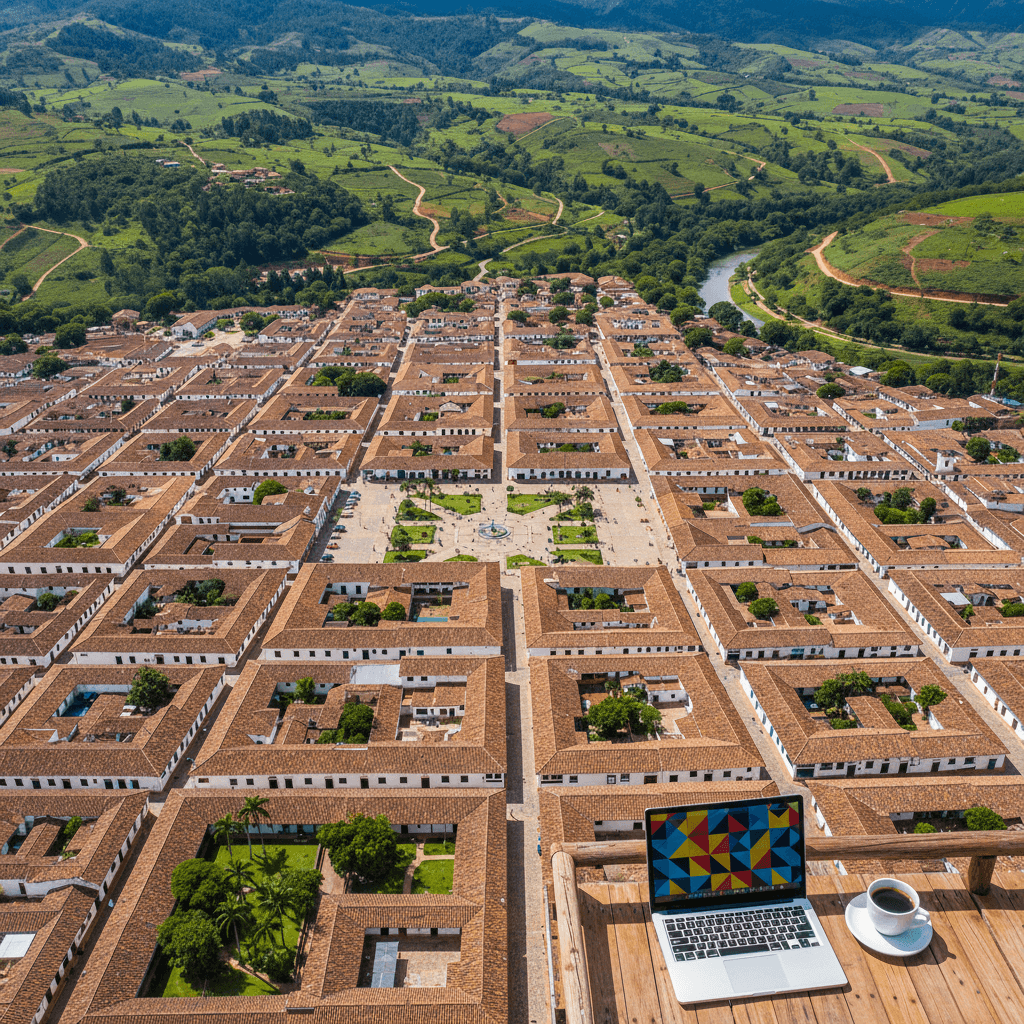
Villa de Leyva
🇨🇴 Colombia
A High-Altitude Step Back in Time
Stepping into Villa de Leyva feels like a deliberate exhale. While Medellín pulses with reggaeton and Bogotá hums with frantic energy, this colonial outpost in the Boyacá highlands operates on a different clock. It is famous for the Plaza Mayor, a massive expanse of uneven cobblestones that is one of the largest town squares in South America. Most nomads find that the town's beauty isn't just in the architecture, but in the silence that settles over the white-washed streets once the weekend tourists head back to the capital.
The vibe here is decidedly bohemian and intellectual. You'll see artists sketching in the shadows of bougainvillea-draped balconies and writers tucked away in courtyards. It’s a place for deep work, creative resets, and long walks under a sky that feels remarkably close. The aesthetic is strictly preserved; every building is white with green or brown wooden trim, creating a visual consistency that makes the town feel like a film set. In fact, it often is, as Colombian telenovela crews frequently use these streets as a backdrop for period dramas.
The Nomad Experience: Focus and Fresh Air
If you're looking for a 24/7 party or a high-speed tech hub, you'll be disappointed. Villa de Leyva is for the digital nomad who wants to swap city smog for Andean air and replace neon lights with stars. Expats recommend it as a "decompression" destination. It’s where you go to finish that manuscript or finally clear your inbox without the distractions of a major metropolitan center.
The community here is smaller and more intimate than in the "Big Three" of Colombia. You won't find thousands of nomads, but you will find a dedicated group of remote workers at the Selina Villa de Leyva. This spot is a favorite because, unlike many other locations in the chain, you can often use the coworking space for free if you're a guest. The café culture is another huge draw. There are dozens of small, family-run coffee shops where the internet is stable enough for Zoom calls, provided you aren't doing heavy video editing.
What to Expect on the Ground
- The Pace: Everything moves slower. Service in restaurants is relaxed, and the midday sun often prompts a quiet siesta period.
- The Terrain: Those historic cobblestones are no joke. Leave the heels or flimsy sandals at home; you'll need sturdy shoes to navigate the plaza without twisting an ankle.
- The Weather: It’s a land of "eternal spring" but with a crisp edge. Days are sunny and warm, perfect for hiking to the Pozos Azules, but temperatures drop significantly at night. You'll want a good ruana (a local poncho) or a heavy sweater once the sun dips behind the mountains.
- Connection: While the town feels remote, you aren't off the grid. Most cafes and rentals offer speeds around 10 to 20 Mbps, though some modern spots can hit 100 Mbps. It's enough for most, but heavy users should always have a Claro or Movistar SIM card as a backup.
Cost of Living Breakdown
Villa de Leyva is incredibly affordable, especially if you're earning in USD or Euros. It’s a place where you can live a high-quality life on a modest budget.
- Monthly Rent (1BR/Studio): $250 to $500. Toward the $500 mark, you’re looking at a premium colonial home with a courtyard.
- Food & Groceries: $200 to $350. Eating out at local spots is cheap, but the town also has upscale Italian and French bistros that will run you more.
- Utilities & Internet: $50 to $100. This is usually included if you’re booking through Airbnb or a nomad-specific rental.
- Leisure: $100 to $250. This covers wine tastings at local vineyards, trips to the Fossil Museum, and weekend hikes.
- Total Monthly Budget: Most nomads spend between $600 and $1,200 total.
The Trade-off
The main challenge is the lack of "big city" infrastructure. There's no Uber Eats at 2:00 AM, and the nightlife is limited to a few cozy bars and wine spots. Getting here is also a bit of a trek, usually requiring a 3 to 4-hour bus or private car ride from Bogotá. However, for those who value peace, safety, and a stunning mountain backdrop, the journey is a small price to pay for a workspace that feels centuries away from the grind.
The Price of Colonial Charm
Villa de Leyva isn't just a break from the noise of Bogota; it's a massive break for your bank account. While it's a premier weekend destination for wealthy Colombians, the cost of living for a long term stay remains remarkably low. You can live a comfortable, middle class lifestyle here for about $900 USD a month, though frugal travelers have been known to squeeze by on $600 USD if they stick to local markets and modest rooms.
The town doesn't have the high rise luxury apartments of Medellin, so your money goes toward character rather than glass and steel. You're paying for thick adobe walls, hand carved wooden doors, and views of the Iguaque mountains.
Monthly Budget Breakdown
- Housing (Studio or 1BR): Expect to pay between $250 and $500. The lower end gets you a simple room in a shared house or a small apartment further from the plaza, while $500 secures a high end, colonial style flat with modern amenities.
- Groceries and Dining: A monthly budget of $200 to $350 is plenty. This covers a mix of cooking at home with fresh produce from the local markets and eating out at the town's surprisingly diverse restaurants.
- Utilities and Connectivity: Budget roughly $50 to $100. This includes electricity, water, and a decent home internet connection, though speeds won't rival what you'll find in the capital.
- Leisure and Exploration: Set aside $100 to $250 for weekend trips to Pozos Azules, wine tastings at local vineyards, and the occasional taxi or Uber.
Housing and Neighborhoods
The town is so compact that traditional neighborhood boundaries don't matter as much as they do in a big city. Most nomads want to be within a ten minute walk of the Plaza Mayor. This is the heart of the action where you'll find the best cafes and the parish church. Living right on the square can be noisy during festivals, so many expats prefer the quiet side streets just a few blocks away.
If you're looking for a turnkey solution, Selina Villa de Leyva is the go to. It's one of the few spots where guests can use the coworking space for free. It's a great way to bypass the search for a traditional lease, which can be tricky without local references.
Food and Daily Expenses
Eating out is one of the highlights here. You can find a traditional "menu del dia" for a few dollars, or spend $15 to $25 on a high quality meal at an international bistro. Because Villa de Leyva is a tourist hub, there's a higher density of quality Italian, French, and fusion restaurants than you'd expect for a town of this size.
For groceries, skip the small convenience stores for your main haul and head to the local markets. The prices for organic, highland produce are incredibly low. You'll find that your "Food" budget goes a lot further here than in almost any North American or European city.
The "Digital Nomad" Premium
While the base costs are low, there are a few areas where you might spend more. Because the town's infrastructure is older, you might find yourself spending time at local cafes to ensure you have a rock solid Wi-Fi connection and a comfortable chair. Additionally, while Uber is available for getting to nearby sights like the Fossil Museum, those short trips can add up if you aren't keen on walking the cobblestones every day.
Overall, Villa de Leyva offers a rare trade off. You get the safety and aesthetic of a high end European village at a fraction of the price. It's a budget friendly sanctuary for those who value peace over nightlife.
The Central Hub: Plaza Mayor and Surroundings
For most nomads and short term visitors, staying within a few blocks of Plaza Mayor is the standard move. This isn't a city of sprawling suburbs; it's a compact colonial core where the action radiates from the massive cobbled square. Living here means you're seconds away from the best coffee shops and the town's architectural highlights. Most apartments in this area are converted colonial homes with thick stone walls and interior courtyards.
- The Vibe: Historical, walkable, and very photogenic. You'll hear the clip-clop of horses on cobblestones and see bougainvillea spilling over white balconies.
- Best for: Digital nomads who want to be steps away from Selina Villa de Leyva and the main café scene.
- Monthly Rent: Expect to pay between $375 and $500 for a decent one bedroom or studio in a renovated building.
The Quiet Fringe: North and East Perimeters
If the weekend crowds in the plaza get a bit too loud for your focus, look toward the northern edge of town. This area feels more like a residential neighborhood and less like a tourist circuit. It's still only a 10 minute walk to the center, but you get more peace and often better views of the surrounding Andean peaks. Expats who stay for several months often prefer these outskirts because the houses tend to be slightly more modern and have more natural light than the traditional colonial structures.
- The Vibe: Peaceful, residential, and authentic. It feels like a real Colombian mountain town rather than a film set.
- Best for: Expats and long term remote workers who prioritize a quiet environment for deep work.
- Monthly Rent: Prices can be slightly lower here, ranging from $250 to $400 depending on the amenities.
The Rural Outskirts: Veredas and Country Living
Families and solo travelers looking for a retreat often head to the veredas (rural districts) just outside the town limits. Areas near the Pozos Azules or the Fossil Museum offer finca-style living. You'll have plenty of space, fresh mountain air, and easy access to hiking and biking trails. The trade-off is that you'll likely need to rely on Uber or local taxis to get into town for groceries or social events.
- The Vibe: Rustic and expansive. It's all about the landscape and the "slow life" philosophy.
- Best for: Families who need a yard and travelers who want to be close to nature and archaeological sites like El Infiernito.
- Note on Connectivity: If you're working from here, double check the Wi-Fi. While the town center is getting better, rural speeds can be spotty, so having a local SIM from Claro or Tigo as a backup is mandatory.
Budget Breakdown by Lifestyle
Villa de Leyva is remarkably affordable compared to Bogotá or Medellín, though the lack of high rise apartments means you're mostly choosing between colonial rooms or small houses. Here is what you should budget for a month in town:
- The Budget Nomad: Stick to the fringes of the town center. Rent: $250. Food: $200 (cooking at home and eating at local markets). Total: ~$600.
- The Mid-Range Professional: A comfortable apartment near the plaza and frequenting work-friendly cafés. Rent: $375. Food: $275. Leisure: $175. Total: ~$900.
- The High-End Retreat: A premium colonial house or a finca on the outskirts with all the trimmings. Rent: $500+. Total: $1,200+.
Most travelers find that December through March is the prime time to secure a spot, as the dry weather makes the walkability of these neighborhoods much more enjoyable. If you're coming during the rainy months of July and August, prioritize a place in the town center so you aren't stuck trekking through mud on the unpaved outskirts.
Connectivity Expectations
If you're coming straight from a high speed hub like Bogotá or Medellín, you'll notice a slight dip in performance here. Villa de Leyva's infrastructure is reliable enough for daily Zoom calls and heavy document uploads, but it isn't the place for high stakes competitive gaming or massive video rendering. Most local networks hover around 50-100 Mbps, test before committing, which serves the average nomad just fine.
The town's thick colonial walls are the biggest enemy of a good signal. When you're scouting an Airbnb, always ask for a speed test screenshot from the specific room where you'll be working. Stone walls and terracotta tiles can turn a high speed connection into a crawl two rooms away. Most expats stick with Claro, Movistar, or Tigo for their mobile backups. Coverage is surprisingly strong in the town center, and having a local SIM or an eSIM is a smart move for those days when the town's power grid decides to take a siesta during a thunderstorm.
Coworking Spaces
The coworking scene in Villa de Leyva is small but high quality. Unlike larger cities where you have dozens of windowless offices to choose from, the options here lean into the town's aesthetic.
- Selina Villa de Leyva: This is the undisputed hub for the remote work crowd. It’s a beautifully preserved colonial building that balances social vibes with productivity. A major perk here is the policy for guests; if you're staying at the hotel, you usually don't have to pay the extra daily fee to use the dedicated desks. It’s the most reliable spot for high speed WiFi and meeting other travelers.
- Local Guesthouses: Many nomads skip the formal offices and work from the courtyards of boutique hotels. Because the town is so quiet, these spaces often function as unofficial quiet zones during the day.
The Café Office Culture
Villa de Leyva has a deep seated café culture that feels more like Europe than South America. You won't feel rushed here. Most owners are happy to let you linger over a tinto or a craft coffee for a few hours as long as you're ordering the occasional pastry. It’s a very "laptop friendly" town, though you should always bring a pair of noise canceling headphones to block out the occasional construction noise or church bells.
The area around Plaza Mayor is packed with options, but the best spots are often tucked a block or two away in the side streets. These smaller joints tend to have more stable power outlets and less foot traffic. If you're planning a long session, look for places with "WiFi" signs clearly displayed, as some of the more traditional bakeries are strictly analog.
Remote Work Logistics
While the digital nomad infrastructure is less developed than in the "paisa" capital, the essentials are all there. If you're staying for a month or more, here is what you can expect to pay for your digital setup:
- Internet & Utilities: Budget between $50 and $100 per month depending on how much you rely on mobile data backups.
- Coworking Pass: If you aren't staying at Selina, expect to pay standard Colombian rates for a day pass, though many prefer the "buy a coffee" model at local cafés.
- Mobile Data: Local SIM cards are cheap and easy to top up at any "tienda" or pharmacy in town.
The general consensus among the nomad community is that Villa de Leyva is a "deep work" destination. It’s where you go to finish that book, code that new feature, or finally clear your inbox without the distractions of a major city. Just make sure your laptop battery is in good health, as the occasional mountain power flicker is part of the charm.
Safety Overview
Villa de Leyva is widely considered one of the safest destinations in Colombia. Because it is a small, heritage-protected town with a economy built on tourism and agriculture, you won't find the same level of street crime or "no go" zones common in Bogotá or Cali. Locals are generally conservative, polite, and protective of their town's peaceful reputation. Most nomads feel comfortable walking home from the Plaza Mayor alone at night, which is a rare luxury in many South American hubs.
That said, standard travel common sense applies. The biggest "danger" here is often the uneven cobblestone streets. They are beautiful but notoriously difficult to walk on, especially after a rainstorm when they become slick. It is easy to twist an ankle if you aren't wearing sturdy shoes. While violent crime is very rare, opportunistic petty theft can happen during major festivals like the Festival of Lights in December when the town is packed with thousands of visitors. Keep your phone in your pocket and don't leave your laptop unattended in a café.
Healthcare Facilities
For minor ailments or basic medical needs, the Hospital San Francisco is the primary facility in town. It is a public hospital that can handle emergencies, basic consultations, and stabilize patients. However, it is not a high-tech facility. For specialized care, major surgeries, or advanced diagnostics, most expats and locals head to Tunja, which is about an hour's drive away, or back to Bogotá for world-class private clinics.
If you need a doctor for a non-emergency, many nomads recommend asking your accommodation or the staff at Selina for a local "médico" recommendation. Many doctors in the region are used to treating international travelers and can provide house calls for a reasonable fee, often around $30 to $50 USD.
Pharmacies and Medication
You'll find several "droguerías" (pharmacies) scattered around the town center, particularly near the Plaza de Mercado. Pharmacies in Colombia are incredibly useful; the pharmacists are often trained to give injections, treat minor wounds, and suggest over-the-counter remedies for stomach issues or altitude sickness.
- Availability: Most common medications for blood pressure, asthma, and antibiotics are available without a prescription, though it's always better to have one.
- Hours: Most pharmacies close by 8:00 PM or 9:00 PM, so don't wait until late at night if you feel a cold coming on.
Emergency Contacts
It's smart to keep a few local numbers saved in your phone. Colombia uses a centralized emergency system, but for specific needs in a small town, direct lines are often faster.
- General Emergencies: 123
- National Police: 112
- Hospital San Francisco: +57 (608) 732 0233
- Tourist Police: Often found patrolling the Plaza Mayor and are very helpful with directions or safety tips.
Water and Altitude
Villa de Leyva sits at about 2,100 meters (6,900 feet). While not as high as Bogotá, you might still feel the altitude if you're coming from the coast. Stay hydrated and take it easy on the aguardiente during your first couple of nights. While many locals drink the tap water, most nomads stick to filtered or bottled water to avoid any risk of "traveler’s tummy," especially since the town's plumbing infrastructure is quite old.
Foot Power and Cobblestones
Villa de Leyva is a town designed for walking, though your ankles might disagree at first. The streets are paved with massive, uneven colonial cobblestones that make high heels or flimsy sandals a nightmare. Most nomads find that a sturdy pair of sneakers is the only way to get around the historic center. The town is compact enough that you can cross the entire central grid in about 15 to 20 minutes.
The Plaza Mayor acts as the North Star for navigation. Since it's one of the largest paved squares in South America, you can use it as your primary landmark. If you're staying near the plaza or the Selina area, you won't need wheels for your daily coffee runs or grocery trips. Just watch your step after it rains, as those stones can get surprisingly slick.
Ride-Hailing and Taxis
While the town is walkable, you'll want a vehicle for grocery hauls or reaching the outskirts. Uber does operate here, which is a relief for those who prefer the transparency of an app. It's particularly useful for getting to your accommodation if you're carrying heavy luggage, as dragging a suitcase over the cobblestones is a battle you will lose.
Local taxis are also plentiful and generally affordable. You can usually find them idling near the main square or the bus terminal. Expect to pay a flat rate for most trips within the town limits, usually around $2 to $4 USD (8,000 to 15,000 COP). Always confirm the price with the driver before you hop in, as meters aren't the standard here.
Reaching Villa de Leyva
Getting here is the tricky part. Most travelers arrive from Bogotá, which is about a 3 to 4 hour drive depending on the legendary Colombian traffic. You have a few main options for the trek:
- Direct Buses: Companies like Los Libertadores, Flota Valle de Tenza, or Omega run from Bogotá’s Terminal Salitre. It’s the most budget-friendly route, costing roughly $8 to $12 USD.
- Private Shuttles: If you're traveling with a group or have a "nomad budget," a private car from Bogotá is the most comfortable choice. It'll run you anywhere from $80 to $120 USD but saves you the hassle of navigating the bus terminals.
- Shared Collectivos: These smaller vans are faster than the big buses but can feel a bit cramped. They often depart once they’re full.
Exploring the Outskirts
Many of the best nomad activities, like visiting the Pozos Azules or the Fossil Museum, are located just outside the main town. While you can hike to some, most expats recommend renting a mountain bike for the day. It’s a great way to see the desert-like landscape of the Boyacá highlands at your own pace.
For destinations further afield like El Infiernito, you can hire a taxi driver for a half-day tour. Negotiate a daily rate upfront. If you're feeling adventurous, local "busetas" (small buses) run to neighboring villages like Sáchica or Raquira from the main terminal for just a couple of dollars.
The Language Landscape
In Villa de Leyva, Spanish is the undisputed king of the streets. Unlike the high-energy, slang-heavy "Paisa" accent you'll hear in Medellín, the local Boyacense accent is generally clearer, slower, and more formal. Locals often use "usted" even among friends, which can feel a bit traditional but makes it easier for learners to follow the conversation.
Don't expect a high level of English proficiency once you step off the main plaza. While staff at boutique hotels, high-end restaurants, and the Selina coworking space usually speak enough English to get by, the lady running the local panadería or the driver taking you to Pozos Azules likely won't. Most nomads find that a "survival level" of Spanish is necessary here to truly enjoy the town's slower pace.
Communication for Remote Work
If you're worried about staying connected, the infrastructure is surprisingly reliable for a colonial mountain town. Most nomads opt for a local SIM card immediately upon arrival in Colombia. The big three providers are Claro, Movistar, and Tigo. Claro generally has the widest coverage in rural Boyacá, which is helpful if you plan on hiking into the highlands.
For those who want to skip the hassle of finding a physical store, eSIMs are the way to go. You can set them up before you even land in Bogotá, ensuring you have data for the drive up to the mountains. Just keep in mind that while 4G is standard in the town center, signal can drop quickly once you get behind the thick stone walls of older colonial buildings.
Social Etiquette and Key Phrases
The culture in Villa de Leyva is polite and slightly reserved. A simple "Buenas" or "Buen día" goes a long way when entering a shop or café. Since it's a popular spot for weekenders from Bogotá, the town is used to outsiders, but showing an effort to speak the local language earns you a lot of respect.
- "¿A cómo es?": A common way to ask for the price at the local Saturday market.
- "Qué pena": You'll hear this constantly. It's the go-to phrase for "I'm sorry" or "Excuse me."
- "Vecino/Vecina": Literally meaning "neighbor," it's a friendly way to address shopkeepers or stall owners.
Digital Nomad Connectivity
While the town feels like it's stuck in the 16th century, the digital life is modern. Most cafés are "nomad friendly" and won't mind if you linger over a coffee with your laptop, provided you keep ordering. The Selina Villa de Leyva acts as the unofficial hub for English speakers and remote workers, making it the easiest place to find a community if your Spanish is still a work in progress.
If you're planning on staying for a month or more, expats recommend joining local Facebook groups or WhatsApp communities. While many of these operate in Spanish, they are the best way to find out about local events, festivals, or changes in internet service providers. For those serious about improving their language skills, look for informal exchanges at the town's many bohemian coffee shops; the locals are often as curious about your story as you are about theirs.
The High-Desert Microclimate
Villa de Leyva sits in a unique high-altitude valley that feels noticeably different from the humid jungles or the chilly, cloud-shrouded peaks of the nearby Andes. It's often called a high-desert climate. You'll get plenty of intense equatorial sun during the day, but the air stays crisp and dry. Most nomads find the weather here incredibly consistent, though the temperature swings between lunch and dinner can catch you off guard.
Daytime highs usually hover around 20°C to 23°C (68°F to 74°F). It’s perfect t-shirt weather for working from a café patio. However, once the sun dips behind the mountains, the temperature drops fast. Evenings regularly hit 10°C (50°F) or lower. Since many colonial buildings aren't equipped with central heating, you'll want to pack a solid fleece or a light down jacket for late-night walks across the plaza.
When to Plan Your Stay
The sweet spot for a long-term stay is between December and March. This is the primary dry season. The skies stay a brilliant blue, which is ideal if you're planning to spend your weekends hiking to the Blue Wells or exploring the Muisca ruins at El Infiernito. It's also the peak of the social calendar, so expect the town to feel a bit more alive with local events.
If you're looking for a quieter, more contemplative vibe for deep work, consider the shoulder seasons. Just be aware that July and August tend to see more frequent rainfall. These aren't usually day-long washouts, but rather heavy afternoon showers that clear up by evening. It’s the perfect excuse to hunker down at Selina or a local coffee shop and knock out your task list.
Seasonal Highlights and Festivals
Villa de Leyva is famous for its festivals, which can drastically change the "vibe" of your stay. If you’re here in August, you’ll witness the Wind and Kite Festival. The massive Plaza Mayor fills with professional kite flyers and families, taking advantage of the heavy winds that whip through the valley during this month.
The most iconic time to visit, however, is December. On the night of December 7th, the town celebrates the Night of the Guacamayas and the Festival of Lights. The cobblestone streets are illuminated by thousands of candles and world-class fireworks displays. While it’s a magical experience, keep in mind that prices for short-term rentals spike and the town gets very crowded. If you want a peaceful nomad experience, you might prefer the tranquility of January or February instead.
Packing Essentials for the Boyacá Highlands
- Sun Protection: The sun at this altitude is deceptive. Even if it feels cool, you'll burn quickly. Bring a high-SPF sunscreen and a hat for outdoor work sessions.
- Layering: Think of your wardrobe in layers. A light linen shirt for the 2:00 PM sun and a heavy sweater or jacket for the 8:00 PM chill.
- Sturdy Shoes: This isn't the place for heels or thin sandals. The colonial cobblestones are beautiful but notoriously uneven and slippery when it rains.
- Moisturizer: The dry mountain air can be tough on your skin if you're used to the humidity of Medellín or the coast.
Most travelers agree that while the dry season is objectively the "best" time for weather, Villa de Leyva’s moody, misty afternoons in the rainy season have a charm of their own. As long as you have a warm jacket and a good pair of walking shoes, there isn't really a bad month to be here.
Connectivity and Digital Setup
While Villa de Leyva feels like a step back in time, your work life doesn't have to. Most nomads find the internet speeds sufficient for video calls and standard remote work, though it isn't as lightning fast as Medellín. You can generally expect speeds around 100 Mbps in the town center, but it's always smart to have a backup.
For your phone, skip the hassle of finding a physical shop and grab an eSIM online before you arrive. If you prefer a local physical SIM, Claro, Movistar, and Tigo have the best coverage in the Boyacá highlands. Having a local number is particularly helpful for using ride-hailing apps or contacting local guesthouses.
If you need a dedicated workspace, Selina Villa de Leyva is the go-to spot. A major perk here is that guests usually get access to the coworking space without an extra fee, which is a rarity for the brand. If you prefer a change of scenery, the town has a thriving café culture. Just remember to pack noise-canceling headphones, as the echoes of the cobblestone streets and local chatter can get lively during the day.
Visas and Paperwork
Colombia has become much more nomad friendly with its Digital Nomad Visa (Type V). The application fee is approximately $233 USD, and you can handle the whole process through the official government portal. If the bureaucracy feels overwhelming, expats often recommend hiring a visa agency in Bogotá or Medellín to navigate the paperwork for you.
Before you leave, make sure you have digital backups of your passport, insurance, and contracts stored in a secure cloud drive. It's a simple step that saves a massive headache if you lose your physical files while exploring the countryside.
Money and Budgeting
Your dollar goes a long way here. Villa de Leyva is comfortably affordable, especially if you move away from the high-end boutique hotels near the main plaza. Here is what you can expect for monthly expenses:
- Rent (Studio/1BR): Between $250 and $500
- Food and Groceries: Between $200 and $350
- Utilities and Internet: Between $50 and $100
- Leisure and Trips: Between $100 and $250
Total monthly costs usually land between $600 and $1,200. While Uber is available for getting around or reaching nearby trailheads, the town itself is incredibly compact. You'll spend most of your time walking, so your transportation budget will likely be minimal.
Timing Your Stay
The best window for clear skies and outdoor adventures is from December through March. This is the dry season, which is perfect for hiking the Andean trails or visiting the Pozos Azules. If you visit in July or August, prepare for more frequent rain. Regardless of when you come, the high altitude means nights can get chilly, so bring a solid jacket for those evening walks across the Plaza Mayor.
Quick Local Tips
- Getting there: It is not a straight shot from the airport. Plan for a few hours of travel from Bogotá by bus or private car.
- Language: While people in the tourism industry speak some English, knowing basic Spanish phrases will change your experience for the better when dealing with local vendors.
- Weekend crowds: The town gets busy with visitors from Bogotá on weekends. If you want a quiet work environment, try to schedule your deep work for Monday through Thursday.
Need visa and immigration info for Colombia?
🇨🇴 View Colombia Country GuideEasy Landing
Settle in, no stress