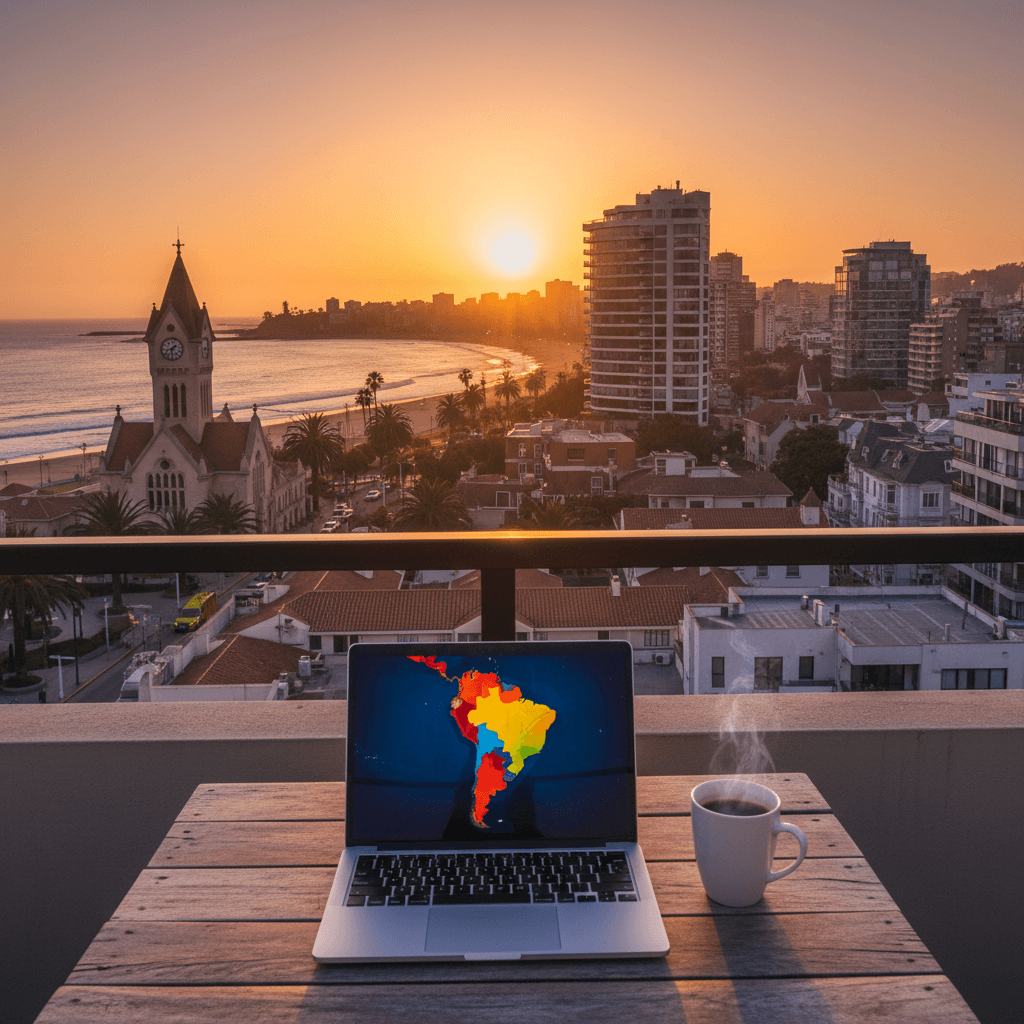
Viña del Mar
🇨🇱 Chile
Viña del Mar is Chile's polished answer to the rugged, graffiti-streaked hills of neighboring Valparaíso. Known as the "Garden City," it feels more like a manicured Mediterranean resort than a typical Latin American capital. You'll find a landscape defined by wide, tree-lined boulevards, meticulously kept parks, and a high-rise skyline that hugs the Pacific coastline. It's the kind of place where you can spend your morning attending a professional meeting via high-speed fiber optic internet (typically 300+ Mbps) and your afternoon watching surfers tackle the breaks at Reñaca.
The vibe here is distinctly refined and outdoorsy. Unlike the frantic energy of Santiago, life in Viña moves at a pace dictated by the ocean breeze. You'll see locals jogging along the coastal paths, families gathering for free Zumba sessions at Playa del Deporte, and professionals working from beachfront cafes. It's a city that prioritizes wellness and urban aesthetics, making it a favorite for nomads who want the amenities of a modern city without the grit of a major metro area.
The Nomad Reality
While the infrastructure is top-tier, Viña isn't your typical nomad "hub" like Medellín or Lisbon. The community is small and largely domestic or European, meaning you won't find a massive trail of digital nomads to fall in with immediately. It can feel a bit lonely for solo travelers, but it's a paradise for couples or families who value safety and high-speed connectivity over a party-centric social scene. One thing to keep in mind: the Humboldt Current keeps the water icy year-round. You'll enjoy the view and the surf, but casual swimming is a chilly endeavor.
Cost of Living Breakdown
Expect to pay a premium for the coastal views. While it's cheaper than Santiago, it is significantly more expensive than inland Chilean towns. Most nomads find a comfortable lifestyle requires between $1,200 and $2,300 per month depending on their proximity to the sand.
- Rent (Studio/1BR): Budget around $800 to $1,200 for central areas like Avenida Libertad. If you want a beachfront balcony in Reñaca, expect to pay $1,300 or more.
- Daily Meals: A quick lunch of empanadas or a "completo" (a loaded Chilean hot dog) costs about $3 to $5. A mid-range dinner at a seafood spot on the promenade usually runs $15 to $25.
- Transportation: Public buses (micros) are efficient at $0.50 to $1 per ride. Uber is the safest bet for night trips, usually costing between $3 and $7 within the city.
- Coworking: A monthly desk at Ignis Cowork costs roughly $150 to $250, while a day pass is about $15.
Where to Plant Your Roots
Choosing a neighborhood in Viña depends on whether you want urban convenience or a vacation atmosphere. The city is remarkably walkable, but each pocket has its own personality.
- City Center / Playa Caleta Abarca: This is the heart of the action. It's perfect for nomads who want to be steps away from the Reloj de Flores and walkable to the main coworking spaces. It gets crowded during the summer festival season, but it's the most "connected" part of town.
- Reñaca: Located just north of the center, this is the upscale, trendy sector. It's where you'll find the best surf, the most expensive real estate, and a high concentration of expats. It feels like a permanent holiday, though it's less "authentic" than the city center.
- Avenida Libertad: This is the professional corridor. It's packed with banks, cafes, and shops. If you need to be near Ignis Cowork and want a more "metropolitan" feel with plenty of green spaces, this is the spot.
The Social and Cultural Pulse
Socializing in Viña often revolves around physical activity or the city's massive events. The Viña del Mar International Song Festival in February turns the city into a global stage, centered at the Quinta Vergara Amphitheater. For daily life, the "Spanish barrier" is real. English proficiency is low, so learning basic phrases is a requirement rather than a suggestion. Most travelers find their tribe at Playa del Deporte through volleyball or by joining local surf schools in Con Con. It's a city that rewards those who show up, put on their sneakers, and lean into the coastal lifestyle.
The Price of the Garden City
Living in Viña del Mar feels like a strategic middle ground. It is more expensive than the bohemian hills of Valparaíso but generally more affordable than the upscale districts of Santiago. For a digital nomad, a realistic monthly budget sits between $1,210 on the leaner side and $2,342 for a high end lifestyle. Most of that variance comes down to how close you want to be to the Pacific breeze.
The city operates on a "beachfront premium" logic. If you are looking for a sleek studio in Reñaca or Caleta Abarca, expect to pay $1,300 or more. Moving inland toward the Avenida Libertad corridor or the city center drops those prices to a more manageable $800 to $1,200 range. If you are really pinching pennies, the outskirts near Valparaíso offer rentals for $500 to $700, though you will trade away some of Viña's polished safety and convenience.
Breaking Down the Monthly Spend
Prices here are stable, but it helps to categorize your lifestyle to avoid surprises at the end of the month. Here is how the costs typically shake out:
Budget Tier (Under $1,200/mo)
- Rent: $500 to $700 for modest apartments in inland Viña or the Valparaíso border.
- Food: Sticking to street food like completos and empanadas for $3 to $5, plus local markets.
- Transport: Using the efficient public micros and buses at roughly $0.50 per ride.
- Workspace: Working from cafes for the price of a $3 coffee.
Mid-Range Tier ($1,200 to $2,000/mo)
- Rent: $800 to $1,200 for a central one bedroom near the shops and green spaces of the city center.
- Food: A mix of home cooking and dinners at beach promenade restaurants for $15 to $25 per person.
- Transport: Frequent Uber rides at $3 to $7 each and occasional bike rentals.
- Workspace: A dedicated desk at Ignis Cowork for about $150 to $250 monthly.
Comfortable Tier (Over $2,000/mo)
- Rent: $1,300+ for modern high rises in Reñaca with ocean views.
- Food: Regular upscale dining with Chilean wine pairings, averaging $40+ per meal.
- Transport: Daily scooter rentals at $20 or private taxis for regional trips.
- Workspace: Private office setups and premium coworking memberships.
Connectivity and Daily Essentials
One area where you get incredible value is the internet. Chile has some of the fastest fiber in Latin America, often hitting speeds near 390 Mbps. While the power grid can occasionally flicker during winter storms, the digital infrastructure is top tier. A local SIM from Entel or WOM will only set you back about $15 a month for plenty of data. If you prefer things ready before you land, Holafly eSIMs are the go to choice for nomads, even if they cost a bit more for the convenience.
Groceries are reasonable if you shop like a local. Fresh seafood is a steal at the markets, but imported goods will spike your bill. For getting around, the city is surprisingly walkable. Many nomads find they rarely need a car because the coastal paths are perfect for walking or cycling between Playa del Deporte and the city center. If you do head to the airport in Santiago, a comfortable bus costs about $10, while an Uber for the 90 minute trip usually runs between $50 and $70.
Socially, the "cost" is more about effort than money. The nomad scene is smaller than in Medellín or Buenos Aires. You will likely spend your social budget on surfing lessons in Con Con or joining local sports groups at the outdoor gyms to meet people. It is a city that rewards those who speak a little Spanish and enjoy a slower, coastal pace of life.
Solo Travelers and Social Nomads
If you want to be where the action is, Playa Caleta Abarca and the surrounding City Center are your best bets. This area feels like the pulse of Viña, putting you within walking distance of the iconic Reloj de Flores and the main beach promenade. It is the most walkable part of the city, which helps when you are trying to find your footing without a car.
- Rent: Expect to pay between $800 and $1,200 for a decent one bedroom apartment near the center.
- Vibe: Lively and tourist friendly, though you should keep your wits about you near Plaza Vergara after the sun goes down.
- Connectivity: You are close to most transit hubs and the best coffee shops for a quick email session.
Digital Nomads and Remote Professionals
For those who need a reliable office setup and a bit more polish, Avenida Libertad and Central Viña are the professional heart of the city. This is where you will find Ignis Cowork, the primary hub for remote workers in the region. The streets are lined with boutiques and banks, offering a more "metropolitan" feel than the sandy boardwalks just a few blocks away.
- Rent: Mid range studios typically go for $800 to $1,100 per month.
- Coworking: Ignis Cowork offers day passes for about $15 or monthly desks for $150 to $250.
- Pros: Excellent infrastructure and proximity to high speed internet hubs; the 391 Mbps download speeds here are some of the best in South America.
- Cons: You will deal with more traffic noise and urban grit compared to the beachfront.
Active Lifestyles and Outdoor Enthusiasts
If your morning routine involves a workout or a surf session, look at Playa del Deporte. This neighborhood is famous for its outdoor gyms and free community classes like Zumba and volleyball. It is the easiest place to make local friends because everyone is outside. It serves as a bridge between the central city and the more exclusive northern beaches.
- Costs: Similar to the city center, with meals at local spots costing around $10 to $15.
- Activities: Easy access to bike paths and coastal running trails that stretch all the way to Reñaca.
- Practicality: It is great for networking with locals, though the Pacific wind can get biting in the winter months of June through August.
Expats and Families
Reñaca is the upscale choice for those who want a quieter, safer, and more residential atmosphere. It is technically a few minutes north of Viña proper, sitting on steep hills that overlook the ocean. Long term expats often choose this area for its serenity and high end dining scene. It feels more like a Mediterranean resort town than a South American city.
- Rent: You are looking at a premium here, with comfortable apartments starting at $1,300 and going much higher for ocean views.
- Lifestyle: Very safe and family oriented with great seafood restaurants along the shore.
- Trade offs: It is less "local" and more expensive; you will likely spend $3 to $7 on an Uber every time you want to head into central Viña for errands.
- Surfing: This is the local hotspot for catching waves, though the water remains cold year round due to the Humboldt Current.
Budget Conscious Travelers
For those trying to keep their monthly spend under $1,200, the inland neighborhoods or the outskirts toward Valparaíso are the only way to find lower rents. You can find older apartments for $500 to $700 if you are willing to commute via the "micros" or public buses, which cost less than $1 per ride. You will sacrifice the immediate beach access, but you will be closer to the authentic Chilean markets and cheaper street food stalls where empanadas sell for just a few dollars.
If there is one thing that sets Viña del Mar apart from other South American coastal hubs, it is the sheer speed of the fiber optics. While you might expect a relaxed beach town to have sluggish connectivity, Viña actually boasts some of the fastest internet in Latin America. With download speeds frequently hitting 300+ Mbps and uploads averaging 250+ Mbps, it is a powerhouse for anyone handling 4K video uploads or constant Zoom calls.
Coworking Spaces and Infrastructure
While the digital nomad community here is smaller and more fragmented than in Santiago, the infrastructure is professional and reliable. Ignis Cowork, located at Avenida Libertad 919, is the primary anchor for remote workers. It is a polished space that feels more like a corporate boutique than a backpacker hangout. You will find standing desks, ergonomic chairs, and reliable climate control, which is a lifesaver during the humid summer months or the damp Pacific winters.
- Day Pass: Approximately $15
- Monthly Membership: Ranges from $150 to $250
- Amenities: High speed WiFi, lounge areas, and heating (vital for those chilly coastal mornings)
One quirk of the local infrastructure is the power grid. While the internet is blazing fast, the electricity can be occasionally temperamental during heavy winter storms. Most professional nomads recommend keeping your laptop fully charged or carrying a power bank just in case of a brief flicker in service.
Cafe Culture and Remote Work
Viña does not have a massive "laptop cafe" scene like Medellin or Mexico City, but the beach promenades offer plenty of opportunities for casual work. You will find nomads set up along the Avenida Marina or near the Quinta Vergara park. While you won't find many dedicated coliving spaces yet, the local library system and public parks like those near Avenida Libertad provide quiet corners for those who prefer a change of scenery from their apartment.
For a day of "work from cafe," expect to spend between $2 and $5 for a quality coffee. Most establishments are happy to let you linger for a few hours, though it is always polite to order a second round or a snack if you are occupying a table during the busy lunch rush.
Staying Connected: SIM Cards and Data
Getting online the moment you land is straightforward. Many travelers now opt for a Holafly eSIM before they even arrive, which typically costs between $12.90 and $40+ depending on plan duration and data needs. It is the easiest way to skip the lines at the airport and have maps ready for your ride into the city.
If you prefer a local physical SIM, head to an Entel or WOM shop in the city center. You can usually snag a prepaid data plan for roughly $5 to $15 per month (typically 1-1.5GB data). Entel generally offers the most consistent coverage if you plan on taking day trips into the nearby hills or down the coast toward Con Con.
Digital Nomad Reality Check
The main trade off in Viña is the social aspect. Solo travelers often find it harder to build an immediate community here compared to the bohemian, gritty energy of neighboring Valparaíso. Viña attracts a more professional, family oriented crowd and affluent locals. To find your tribe, look toward Playa del Deporte. It is a hub for outdoor gyms and volleyball, where the active nomad crowd tends to congregate after clocking out for the day.
If you are looking for a base that offers a high quality of life, insane internet speeds, and a polished urban environment, Viña del Mar hits the mark. Just be prepared to put in a little extra effort to find your social circle.
While Viña del Mar is generally considered the safer, more polished sibling to neighboring Valparaíso, it still requires a level of urban awareness common to South American coastal hubs. Most nomads feel comfortable walking the beach promenades and central avenues during the day, but the vibe shifts once the sun goes down. You'll find the city is well policed, especially during the high season and the International Song Festival, yet petty theft like bag snatching can occur in crowded tourist spots.
Staying Safe on the Ground
Expats generally recommend sticking to well lit areas after dark. Plaza Vergara is a central landmark that's great for people watching by day, but most locals advise avoiding it late at night when the crowds thin out. If you are heading out for drinks or a late dinner, Uber is the gold standard for getting home safely. It's reliable, affordable at $3 to $7 per trip, and avoids the occasional price haggling you might encounter with street taxis.
- Pickpockets: Keep your phone and wallet secure at Playa Caleta Abarca and around the Reloj de Flores, as these are prime spots for opportunistic theft.
- Home Security: If you are renting a ground floor apartment, ensure windows are locked. Most modern buildings in Reñaca or Avenida Libertad have 24 hour doormen (conserjes), which adds a significant layer of security.
- Natural Elements: The Humboldt Current makes the Pacific Ocean here incredibly cold and prone to dangerous rip currents. Unless you are at a designated surfing beach like Playa la Boca with a wetsuit, it's best to stay on the sand.
Healthcare & Medical Services
The quality of healthcare in Viña del Mar is high, with several private clinics providing care that meets international standards. Many doctors in the private system speak some English, though having a translation app or a basic grasp of Spanish medical terms will make your visit much smoother. For routine issues, pharmacies like Farmacias Ahumada or Cruz Verde are ubiquitous and often have pharmacists who can give basic medical advice.
For more serious matters, the city has well equipped facilities. Expats often favor the private clinics located near the city center and the beachfront for their efficiency and modern equipment. If you have international travel insurance, these private centers are your best bet for quick service.
Emergency Contacts
It is helpful to program these numbers into your phone as soon as you arrive. Chile uses a simple three digit system for emergencies:
- Ambulance (SAMU): 131
- Police (Carabineros): 133
- Fire Department (Bomberos): 132
Practical Health Tips for Nomads
Tap water in Viña del Mar is technically safe to drink, but it has a high mineral content that might upset your stomach if you aren't used to it. Most long term travelers stick to bottled or filtered water for drinking. Also, keep in mind that while the coastal air is fresh, the sun at this latitude is exceptionally strong. Even on overcast days, the UV index can be high, so high SPF sunscreen is a daily requirement if you're working from a terrace or walking the coastal paths.
Lastly, while the internet is blazing fast, the power grid can occasionally be finicky during winter storms. Most professional nomads keep their devices charged and have a backup power bank, just in case a localized outage interrupts a Zoom call. If you need a guaranteed stable environment, Ignis Cowork on Avenida Libertad is the most reliable spot in town for both power and connectivity.
Getting Around the Garden City
Viña del Mar is a rare breed of South American city where you can actually rely on your own two feet. The layout is remarkably flat and coastal, meaning you can walk from the flower clock at Caleta Abarca all the way to the northern reaches of Reñaca along well maintained seaside paths. Most nomads find the combination of ocean breezes and wide sidewalks makes the daily commute to a cafe or coworking space the best part of their day.
For longer distances, the local bus system, known as micros, is your most efficient friend. These colorful buses zip through the city and connect you to neighboring Valparaíso for about $0.50 to $1 per ride. They are frequent and cover almost every corner of the metro area, though they can be a bit of a wild ride if you aren't used to spirited Chilean driving. If you're heading to Valparaíso, the Metro Valparaíso (Merval) train is a smoother, more scenic alternative that runs right along the coast.
Ride-Hailing and Taxis
Uber is the dominant force here and is widely considered the safest and most convenient way to get home after dark. A typical trip across town will set you back between $3 and $7. While traditional taxis exist, they don't offer the transparent pricing of apps, so most expats stick to Uber. It is particularly useful for trips up the steep hills or for getting to the upscale dining spots in Reñaca when you don't want to deal with parking.
Cycling and Coastal Cruising
The city has invested heavily in bike lanes, especially along the waterfront. You can rent a bicycle for around $10 a day, which is perfect for exploring the stretch between Playa del Deporte and the dunes of Con Con. On weekends, you'll see the promenade filled with people on rollerblades and electric scooters. Scooter rentals usually run about $20 a day and are a fun way to bypass the afternoon traffic on Avenida Libertad.
Regional Connections
Getting in and out of Viña is straightforward. Since the city doesn't have its own commercial airport, you'll likely fly into Arturo Merino Benítez in Santiago. From there, you have a few choices:
- Public Bus: Frequent departures from Pajaritos or Estación Central in Santiago cost $10 to $15 and take about 90 minutes to 2 hours.
- Private Transfer/Uber: A direct ride from the airport to your door in Viña costs between $50 and $70.
- Car Rentals: Available at the airport, though most nomads find a car is more of a headache than a help due to city parking constraints.
Practical Transit Tips
- Payment: Keep small change or low denomination bills for the micros, as drivers rarely have change for large notes.
- Safety: While the city is generally safe, stick to Uber instead of walking through Plaza Vergara late at night.
- Peak Hours: Traffic on the coastal road between Viña and Reñaca can crawl during the summer months of January and February; the Merval train is your best bet to skip the gridlock.
The Language Gap
If you are planning to rely on English in Viña del Mar, you will likely find yourself hitting a wall rather quickly. While the city is a polished resort destination, English proficiency remains low once you step away from high end hotel reception desks or the most tourist heavy spots in Reñaca. This isn't a nomad hub like Medellín or Mexico City where English is common in every cafe; here, the local language is the only real currency for social integration.
Most nomads find that while they can survive with hand gestures and translation apps, their social lives stay limited to other foreigners unless they speak Spanish. Beyond the basic "Hola" and "Gracias," you will need to get comfortable with the local Chilean variant. It is famously fast, drops the "s" at the end of words, and is packed with "chilenismos" like "po" (added to the end of almost every sentence) or "cachai" (you know?).
Essential Tools for Communication
To keep things moving, travelers recommend keeping these tools on your home screen. Since the internet is incredibly fast, often hitting speeds of 300+ Mbps, you won't have trouble using cloud based translation features.
- Google Translate: Download the Spanish offline pack immediately. It is a lifesaver for reading menus and labels at the grocery store.
- WhatsApp: This is the primary way everyone communicates in Chile. You will use it for everything from booking a surf lesson at Playa la Boca to messaging your landlord or coordinating a desk at Ignis Cowork.
- Duolingo or Babbel: Even thirty minutes a day before you arrive will make a massive difference in your confidence at the local feria or when ordering a completo.
Connecting with the Community
The expat and nomad community in Viña is relatively small, which can make solo travel feel a bit isolating at first. You won't find the massive, pre organized nomad meetups that define places like Lisbon. Instead, social connections happen organically through shared activities.
Expats often suggest heading to Playa del Deporte. It is a natural social hub where you can join free Zumba classes or jump into a volleyball game. These active settings are much more effective for making friends than traditional networking events. If you are looking for more structured interaction, keep an eye out for Santiago Speaks ad hoc meetups, which sometimes spill over into Viña, or join local surfing groups in Con Con.
Local Customs and Etiquette
Chileans are generally warm but appreciate traditional manners. A simple "Hola, buenas tardes" when entering a shop goes a long way. When dining out, a 10% tip is the standard expectation, and you will find the service culture is polite but never rushed. During the Viña del Mar International Song Festival in February, the city transforms into a high energy party, and being able to navigate the crowds with a few polite Spanish phrases will make your experience much smoother.
If you are staying for a few months, consider hiring a local tutor. It is an affordable way to support the local economy while breaking down the barriers that keep most nomads in a "tourist bubble." Most professionals in the Avenida Libertad area will appreciate the effort, even if your Spanish is still a work in progress.
The Mediterranean of the Pacific
Viña del Mar earns its "Garden City" nickname with a climate that feels remarkably like the French Riviera, though with a crisp Pacific edge. You can expect mild, spring like temperatures year round, rarely swinging into extreme heat or biting cold. The average temperature sits comfortably around 17°C (63°F), making it a dream for nomads who want to escape the humidity of the tropics or the harsh winters of the north.
The city operates on a distinct seasonal rhythm. Summer runs from December to March, bringing the most reliable beach weather. During these months, highs hover around 24°C to 25°C (75°F to 77°F). It is bright, dry, and lively, though you will be sharing the sand with half of Santiago. If you are here during the third week of February, prepare for the chaos and energy of the International Song Festival at the Quinta Vergara Amphitheater, which draws massive crowds and sends rental prices soaring.
Seasonal Breakdown
- Peak Summer (January to February): Highs of 25°C. This is the best time for surfing at Playa la Boca in Con Con or joining the free Zumba classes at Playa del Deporte. Expect the city to be at its most expensive and crowded.
- Shoulder Season (March to April & October to November): Highs between 19°C and 23°C. Many digital nomads prefer this window. The weather is still warm enough for outdoor gyms and coastal walks, but the tourist crowds have thinned out and apartment rates become more negotiable.
- Winter (June to August): Highs of 15°C to 16°C and lows around 8°C (46°F). This is the "wet" season, though with only about 0.8mm of average rainfall, it is more about gray skies and damp sea mist than torrential downpours.
The Humboldt Factor
One thing that catches newcomers off guard is the water temperature. Even in the height of January, the Humboldt Current keeps the Pacific Ocean bracingly cold. You will see plenty of people sunbathing on the sand at Reñaca, but very few actually swimming without a thick wetsuit. The ocean acts as a natural air conditioner; even on a sunny day, a brisk sea breeze usually kicks in by late afternoon, so you will always want a light jacket or hoodie once the sun goes down.
If you are planning your stay around productivity, the winter months can feel a bit isolating. The city is much quieter, and the lack of central heating in many older Chilean apartments can make those 9°C nights feel colder than they are. Most experienced expats recommend looking for modern builds near Avenida Libertad that offer better insulation or AC units with heating functions if you plan to stay through July.
When to Visit
For the quintessential Viña experience, aim for November to March. You get the best of the outdoor lifestyle, the most social activity at the beach bars, and perfectly clear days for taking the "micro" bus up the coast to the dunes of Con Con. If you prefer a slower pace and want to snag a deal on a beachfront studio in Reñaca, October and April offer a great balance of pleasant weather and lower costs.
Making the Move to the Garden City
Viña del Mar is the polished, organized sibling to Valparaíso’s chaotic charm. It’s where you go when you want the Pacific breeze without the grit. Most nomads find the transition easy because the infrastructure is surprisingly modern, but you’ll need to adjust your expectations regarding the social scene. It’s a quiet, professional town where the "digital nomad community" is more of a loose collection of remote workers than a structured hub.
Cost of Living Breakdown
Expect to pay a premium for those ocean views. While it’s cheaper than Santiago, Viña is one of Chile’s pricier coastal spots. For a mid-range lifestyle, budget between $1,200 and $2,000 per month.
- Housing: A central studio near Avenida Libertad runs $800 to $1,200. If you want to wake up to the waves in Reñaca, expect to pay $1,300 or more.
- Food and Drink: You can grab a "completo" (the famous Chilean loaded hot dog) for $4, but a nice seafood dinner on the promenade will set you back $20 to $25.
- Transportation: Public "micros" are cheap at under $1 per ride. Uber is the gold standard for safety and convenience, usually costing $4 to $7 for cross-town trips.
Where to Set Up Shop
Each neighborhood has a distinct personality, so choose based on your daily workflow. Professionals usually gravitate toward Avenida Libertad. It’s the city’s backbone, home to Ignis Cowork and the best banks and pharmacies. You’ll trade beach views for convenience and better heating in the winter.
If you’re here for the lifestyle, Reñaca is the upscale choice. It’s safer and feels like a true resort, though the commute into central Viña can be a headache during the summer rush. For solo travelers wanting to be near the action, Playa Caleta Abarca puts you right by the Flower Clock and the main promenade, though it gets noisy during the International Song Festival in February.
Connectivity and Workspace
The internet here is world-class. You’ll frequently see speeds hitting 300+ Mbps, which is plenty for 4K video calls. Ignis Cowork on Avenida Libertad is the primary spot for serious work, offering day passes for about $15. While there aren't many dedicated "laptop cafes," the beachside spots are fine for an hour or two of emails if you have a hotspot.
Power reliability can be a minor hiccup during winter storms, so keep your devices charged. For mobile data, grab an Entel or WOM SIM card for about $15 a month, or set up a Holafly eSIM before you land to skip the paperwork.
Safety and Logistics
Viña is generally safe, especially compared to its neighbors, but don't get too comfortable. Expats recommend avoiding Plaza Vergara after dark. Use Uber instead of hailing random taxis late at night. For healthcare, the local clinics near the beaches are high quality and easy to navigate for routine issues.
The language barrier is real. Outside of major hotels, English proficiency is low. You’ll need basic Spanish for everything from ordering "reineta" (a local fish) to negotiating a rental deposit. Locals are friendly but keep to their own circles, so joining a surf school at Playa la Boca or attending free Zumba classes at Playa del Deporte is your best bet for meeting people.
When to Go
The Mediterranean climate is beautiful but deceptive. December to March is prime beach weather with highs of 25°C. However, the Humboldt Current keeps the water freezing year-round, so don't expect to go for a casual swim without a wetsuit. Avoid June through August if you hate the cold; the damp sea air makes the 9°C nights feel much chillier, and many older apartments lack central heating.
Need visa and immigration info for Chile?
🇨🇱 View Chile Country GuideEasy Landing
Settle in, no stress