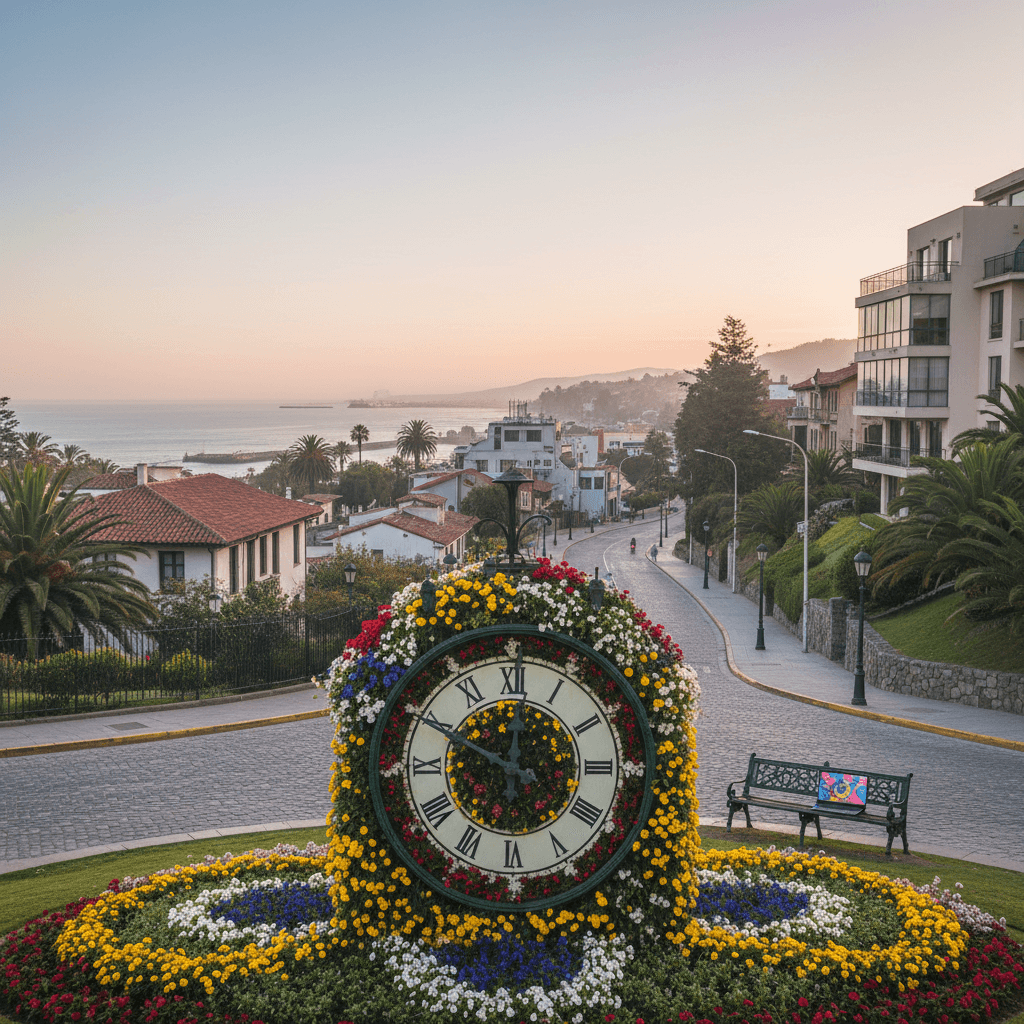
Viña del Mar
🇨🇱 Chile
The Garden City State of Mind
If Valparaíso is the messy, paint-splattered art studio of the Chilean coast, Viña del Mar is the sleek, light-filled sunroom next door. Known as the "Garden City," Viña trades the steep hills and chaotic graffiti of its neighbor for manicured parks, wide boulevards, and a sophisticated Pacific rhythm. It feels orderly and intentional, yet it retains a distinct coastal chill that keeps it from feeling stuffy. You're here for the crisp ocean air, the sound of rollerblades on the pavement, and a lifestyle that prioritizes being outside.
The emotional pull of Viña is its balance. You get the polish of a modern city with the soul of a beach town. Most nomads find the pace significantly slower than Santiago, which is only 90 minutes away. It's the kind of place where your morning starts with a coffee at La Farine and ends with a volleyball game at Playa del Deporte. There's a quiet confidence to the city, especially during the summer months from December to March when the parks are in full bloom and the coastal breeze cuts through the heat.
The Nomad Reality Check
Viña is currently an emerging tech hub, and for digital nomads, the technical infrastructure is solid. Viña del Mar has reliable internet infrastructure with average speeds around 21 Mbps, and fiber home connections typically offering 50-100 Mbps. It's a reliable setup for anyone handling video files or back-to-back calls. However, the social scene is still catching up. The expat and nomad community is small, meaning you'll need to be proactive. If you're a solo traveler, expect to put in some legwork on Facebook groups or at the beach to build a circle. Families and couples tend to have an easier time integrating into the local rhythm.
Living here isn't bottom-dollar cheap, but it's manageable. A mid-range monthly budget sits around $1,806. This covers a comfortable 1-bedroom apartment (averaging $993), regular café meals, and plenty of Ubers. If you're on a tighter budget, you can swing it for $1,200 to $1,500 by sharing a flat and sticking to the local "micros" (buses) and street food like $3 empanadas. Just keep in mind that while the Pacific looks inviting, the Humboldt Current keeps the water icy year-round. It's a view beach, not a swimming beach.
Where to Plant Your Laptop
Choosing a neighborhood determines your daily vibe. Most remote workers gravitate toward a few specific pockets:
- Avenida Libertad & Central Viña: This is the urban heart. It's walkable, packed with cafés, and home to Ignis Cowork. It's the best spot if you want to be steps away from a desk and a good espresso. Just stay alert at night around Plaza Vergara, as petty theft can happen in crowded transit hubs.
- Playa del Deporte: Perfect for the active nomad. You'll find outdoor gyms, high-energy Zumba classes, and a constant stream of locals playing sports. It’s the easiest place to make Spanish-speaking friends if you have a volleyball in hand.
- Reñaca: Further north, this area is all about the views. It’s more expensive and touristy, but the beachfront cycleways and sunset spots are hard to beat. It’s the go-to for a more relaxed, vacation-style stay.
- Con Con Dunes: A bit further out, this is for the solo adventurer. The massive sand dunes are perfect for sandboarding, and the area feels less "city" and more "nature." You'll definitely need an Uber or a bike to get into the center from here.
Safety and Practicalities
Viña is generally safe during the day, but you need to keep your wits about you. Locals and expats alike advise against leaving laptops unattended in cafés, even for a minute. While violent crime is low, "snatch and grab" theft is the main concern. Stick to Uber or Cabify after dark rather than wandering into poorly lit areas or taking the buses late at night. For healthcare, you're in good hands; private clinics here are excellent and comparable to what you'd find in Santiago.
Finally, don't ignore the language barrier. English proficiency isn't high outside of the tech and tourism bubbles. Learning basic Chilean Spanish isn't just a courtesy; it's your ticket into the social life of the city. Whether you're ordering a glass of local wine at Cobrizo or asking for the Wi-Fi password at Cafetería Natural Bohío, a little Spanish goes a long way in turning this "Garden City" into a home.
The Price of Living in the Garden City
Viña del Mar strikes a balance between coastal relaxation and urban polish. It's often described as the more orderly, sophisticated sibling to nearby Valparaíso. For digital nomads, this means a higher standard of living and better infrastructure, though you'll pay a slight premium for the manicured parks and Pacific views. Monthly expenses for a solo nomad typically hover around $1,806, placing it firmly in the mid-range for South American hubs.
Monthly Budget Tiers
- The Budget Nomad ($1,200 to $1,500): You're likely sharing an apartment further from the shore, sticking to the local "micro" buses, and sourcing most meals from street vendors where empanadas go for $2 to $4.
- The Mid-Range Professional ($1,800): This covers a private one-bedroom or studio, frequent visits to cafes like La Farine, and regular Ubers. This is the sweet spot for most remote workers in the city.
- The Elevated Lifestyle ($2,500+): Expect a beachfront balcony in Reñaca, dinners at upscale spots like Cobrizo, a premium gym membership, and zero hesitation on weekend trips.
Housing and Neighborhoods
Rent is your biggest variable. A furnished short-term rental for a nomad averages about $993, but prices fluctuate wildly based on your proximity to the sand. Most expats recommend looking for places in Central Viña or along Avenida Libertad for the best walkability and access to coworking spaces.
Playa del Deporte
- Best For: Active solos and fitness enthusiasts.
- The Vibe: High energy with free Zumba classes and volleyball courts.
- The Cost: Mid-range, but weekends get crowded and loud.
Avenida Libertad & Central Viña
- Best For: Urban dwellers and focused workers.
- The Vibe: Walkable streets lined with cafes and the Ignis Cowork hub.
- The Cost: Moderate; very convenient for those without a car.
Reñaca & Concón
- Best For: Families, couples, or surfers.
- The Vibe: Relaxed, vacation-style living with stunning sunset dunes.
- The Cost: Higher rents and a greater need for transport into the city center.
Connectivity and Workspace
The internet in Viña is a major draw. With speeds often clocking in at 21 Mbps, it's one of the most reliable spots in the region for heavy video editing or 4K streaming. A home connection usually costs between $25 and $35 per month for 50 to 100 Mbps.
When you need a professional environment, Ignis Cowork on Avenida Libertad is the go-to spot. A day pass runs between $10 and $20, while a dedicated monthly desk costs $150 to $300. For a more casual vibe, Cafetería Natural Bohío and La Flor de Chile are laptop-friendly, though locals advise never leaving your gear unattended, even for a quick bathroom break.
Food and Daily Expenses
Groceries will set you back about $288 a month if you're shopping for basics like eggs, fresh fruit, and Chilean wine at local markets. Dining out is a mix of affordable and splurge-worthy. A mid-range cafe meal is usually $10 to $15, while a high-end dinner at a place like Cobrizo can reach $40. For transport, most nomads spend around $250 monthly, which usually bundles in their utilities and a gym membership too. Uber and Cabify are the preferred ways to get around after dark, as they're safer and more reliable than the local buses.
Practical Logistics
Setting up your phone is straightforward. Providers like Entel and WOM offer physical SIM cards with 20GB to 50GB of data for $10 to $20. If you prefer to skip the store, a Holafly eSIM is a popular choice for instant unlimited data. For banking, most expats use Wise or Revolut to manage transfers and hit up BancoEstado ATMs for local cash. While the city feels safe during the day, keep your wits about you at night, particularly around Plaza Vergara, and stick to ride-hailing apps rather than walking solo late at night.
For Active Nomads: Playa del Deporte
If your morning routine involves a laptop and your afternoon requires a surfboard or a volleyball court, this is your base. Playa del Deporte is the heart of the city's fitness culture. It's packed with outdoor gyms and free Zumba classes, making it one of the easiest places to meet locals without trying too hard. The vibe here is energetic and unpretentious.
- The Vibe: High energy, sports-focused, and social.
- The Draw: Huge pedestrian paths perfect for biking or rollerblading and easy access to the sand.
- The Trade-off: It gets incredibly crowded on weekends, and the Pacific water is famously cold, so don't expect a tropical swim.
- Budget: Expect to pay around $993 for a furnished studio or 1BR in this general coastal strip.
For Career-Focused Expats: Avenida Libertad and Central Viña
Most long-term expats settle near Avenida Libertad because it feels like a real city rather than a resort town. This is the professional hub where you'll find Ignis Cowork, which offers dedicated desks for $150 to $300 a month. You're within walking distance of the best cafes like La Farine and Cafetería Natural Bohío, both of which are laptop-friendly if you need a change of scenery.
Living here means you're close to the urban amenities that make life easy. You've got reliable fiber internet with home connections typically offering 50-100 Mbps, which is some of the fastest you'll find in South America. However, keep your wits about you at night. While it's safe during the day, petty theft is a reality, and locals recommend avoiding Plaza Vergara after dark. Use Uber or Cabify to get home if it's late.
For Families and Couples: Playa Reñaca
Reñaca is the upscale, relaxed alternative to the city center. It's popular with families and couples because it feels more like a self-contained village. The streets are cleaner, the air is saltier, and the cycleways are excellent for weekend rides. It's a bit more expensive than the center, but the peace and quiet are worth the premium for many.
- Dining: You're near top-tier spots like Cobrizo for a nice dinner or La Flor de Chile for traditional plates.
- Costs: Rent here sits at the higher end of the $1,800 mid-range nomad budget, often pushing toward $2,500 for beachfront properties.
- Logistics: It's a bit further from the main coworking spots, so you'll want a solid home office setup.
For Solo Adventurers: Concón Dunes Area
If you find the "Garden City" a bit too manicured, head north to the dunes of Concón. This area is perfect for solo travelers who want a bit of grit and adventure. You can spend your sunsets sandboarding down massive dunes or eating fresh empanadas for $2 to $4 from local street vendors. It's less "polished" than Viña, which is exactly why some people love it.
The social scene here is smaller, so you might find it a bit harder to build a community compared to the sports-heavy Playa del Deporte. You'll definitely need Uber to get into the city center, as public buses (locally called micros) can be a bit of a gamble at night. It's the best spot for those who value a view over a commute.
Practical Neighborhood Tips
- Internet: Home connections are reliable and cheap, usually costing $25 to $35 per month for 100 Mbps.
- Safety: Daytime safety is rated very high at 83/100, but always stay vigilant with your gear in cafes. Never leave your laptop unattended.
- Transportation: Walking is great for short distances, but for anything else, stick to Uber. A monthly transport and utility budget usually totals around $253.
- Socializing: Since the expat community is small, join the Santiago Speaks meetups or head to Glasgow Pub to find fellow English speakers.
Connectivity in the Garden City
If you're worried about bandwidth, Viña del Mar is going to surprise you. Chile consistently ranks among the world leaders for fixed broadband speeds, and Viña is no exception. Most nomads find the internet here feels faster and more reliable than in many North American or European hubs. You can expect average speeds around 21 Mbps, while those in apartments with dedicated fiber home connections often enjoy 50 to 100 Mbps, making it a dream for video editors or anyone who spends their day on 4K calls.
The local power grid is stable, so you won't deal with the frequent outages common in other South American beach towns. For your mobile setup, 5G is widespread across the city. Most expats recommend grabbing a physical SIM from Entel or WOM for the best local rates, usually around $10 to $20 for a generous data bucket. If you want to skip the store visit, a Holafly eSIM works perfectly the moment you land, though it's a bit pricier than local prepaid plans.
Coworking Spaces
The coworking scene in Viña is smaller than in Santiago, but what it lacks in quantity, it makes up for in quality. The primary hub for the remote community is Ignis Cowork on Avenida Libertad. It’s a professional, well-equipped space that avoids the "party hostel" vibe. You'll find ergonomic seating, standing desks, and reliable heating for those chilly Humboldt Current winters.
- Day Pass: Expect to pay between $10 and $20.
- Monthly Dedicated Desk: Rates typically range from $150 to $300 depending on the level of access.
- Amenities: High speed Wi-Fi, air conditioning, lounge areas, and private meeting rooms.
Laptop-Friendly Cafés
If you prefer a change of scenery, Viña has a sophisticated café culture where working for a few hours is generally accepted. Just remember the golden rule of the Chilean coast: never leave your gear unattended. Even in nice neighborhoods, petty theft happens quickly.
La Farine is a favorite for its French pastries and steady Wi-Fi. It’s often filled with locals and nomads tucked into corners with their laptops. For a more relaxed, bohemian atmosphere, Cafetería Natural Bohío provides a great backdrop for deep work. If you're looking for a classic local spot with plenty of character, La Flor de Chile is a reliable choice, especially if you want to transition straight from emails to a traditional Chilean lunch.
Digital Nomad Infrastructure
Living here as a solo nomad can feel a bit quiet compared to the social whirlwind of Valparaíso, but the infrastructure makes day to day life easy. Most nomads choose their neighborhood based on how they want to spend their breaks. If you're into fitness, Playa del Deporte is the place to be for outdoor gyms and beach volleyball. If you want to be within walking distance of the best coffee shops and Ignis Cowork, stick to Central Viña or Avenida Libertad.
- Home Internet Costs: If you're renting long term, a private fiber line costs about $25 to $35 per month for 50 to 100 Mbps.
- Digital Nomad Visa: Chile has modernized its visa process. You can apply through the official portal 3 to 6 months before you plan to arrive, though many nomads still enter on a 90 day tourist visa to test the waters.
- Gear Safety: Use a privacy screen in public and keep your laptop bag strapped to your chair or leg. Most travelers suggest using Uber or Cabify when moving between work spots at night to keep your equipment safe.
Staying Safe in the Garden City
Viña del Mar is generally more orderly and polished than its neighbor Valparaíso, but it still requires a level of urban awareness. During the day, the city feels incredibly secure with a safety rating of 83/100. You'll see locals and nomads alike enjoying the coastal paths and plazas without much worry. However, the vibe changes slightly after dark, particularly in areas like Plaza Vergara or when using the local micros (small buses).
Petty theft is the most common headache for expats. While violent crime remains low, "opportunity theft" is real. If you're working from a laptop at La Farine or Cafetería Natural Bohío, never leave your gear unattended, even for a quick bathroom break. Most seasoned nomads in Viña recommend using Uber or Cabify for late-night travel rather than walking solo or taking public transit, as these apps provide a reliable paper trail and safer door-to-door service.
- Emergency Numbers: Dial 133 for Police (Carabineros), 131 for an ambulance, and 132 for the fire department.
- Night Safety: Stay vigilant in Central Viña after 9:00 PM. Avoid poorly lit streets and stick to well-trafficked areas like Avenida Libertad.
- Solo Travel: Solo women travelers often feel comfortable during the day but prefer ride-hailing apps over walking alone at night to avoid unwanted attention.
Healthcare and Medical Services
One of the perks of living in Viña del Mar is the access to high-quality healthcare that rivals the standards in Santiago. The city is home to several private clinics and modern hospitals equipped to handle everything from routine checkups to emergencies. Most expats opt for private care, as the facilities are top-tier and wait times are significantly shorter than in the public system.
Pharmacies are everywhere. Look for big names like Farmacias Ahumada or Cruz Verde, which are usually found on every few blocks in the city center. Many common medications are available over the counter, but for specialized prescriptions, you'll need a local doctor's note. If you're planning a long-term stay, it's worth looking into private health insurance or a global nomad policy, as out-of-pocket costs at private clinics can add up quickly.
Environmental Awareness
While the Pacific Ocean is a major draw, the Humboldt Current makes the water surprisingly cold year-round. It's great for a refreshing dip or surfing, but it's not the tropical swimming experience some expect. Additionally, Chile is a seismic country. Modern buildings in Viña are constructed to strict earthquake codes, but it's smart to familiarize yourself with the evacuation routes if you're staying in a high-rise near the beach, just in case of a tsunami warning.
For daily health, the air quality is generally excellent thanks to the ocean breeze, making it a great escape from the winter smog that sometimes settles over Santiago. Just remember to pack high-SPF sunscreen; the coastal sun is stronger than it feels, even on breezy afternoons at Playa del Deporte.
The Geography of the Garden City
Viña del Mar is remarkably easy to navigate once you understand its layout. The city is flatter and more organized than its neighbor Valparaíso, making it a dream for those who prefer walking over climbing steep hills. Most nomad life centers around the grid between Avenida Libertad and the coastline, where you can find almost everything you need within a twenty minute stroll.
Public Transport and Micros
The local buses, known as micros, are the backbone of the city's transit system. They are frequent and cover nearly every corner of Viña and the surrounding coastal towns. During the day, they are a reliable way to get around for just a few dollars, but most expats suggest avoiding them late at night. If you're heading to Valparaíso, the Merval metro is a cleaner, more modern alternative that runs along the coast, offering great ocean views for a small fare.
Ride-Hailing and Safety
For late night trips or getting home with groceries, Uber and Cabify are the gold standard here. They are widely available, affordable, and generally considered much safer than hailing a random taxi on the street or walking through Plaza Vergara after dark. Expect to pay around $5 to $10 for most trips within the city limits. It's the preferred way to travel for solo travelers and those carrying expensive tech gear like laptops.
Life on Two Wheels
The coastal path is the city's pride and joy. There is a dedicated pedestrian and bike lane that stretches from Playa del Deporte all the way toward Reñaca. Many nomads choose to buy a used bike or rent one for about $10 to $20 a day to commute between their apartment and the beach. It’s not just practical; it’s the best way to soak in the Pacific breeze and avoid the afternoon traffic jams that can clog the main avenues during the high season.
Getting to and from Santiago
Most travelers arrive via Arturo Merino Benítez International Airport in Santiago. You have two main options to reach Viña del Mar:
- The Budget Route: Take a shuttle from the airport to the Pajaritos bus terminal in Santiago, then hop on a Pullman or TurBus. The ride takes about 90 minutes and costs roughly $10.
- The Direct Route: An Uber or private transfer directly from the airport to your door in Viña will cost between $50 and $70. It's a worthy investment if you're arriving with heavy luggage or after a long flight.
Navigation Tips for Nomads
- Download Offline Maps: While 4G and 5G coverage is excellent, having Google Maps offline helps when you're exploring the Con Con dunes or the winding streets of the upper hills.
- Pedestrian Awareness: Drivers in Viña are generally more respectful of crosswalks than in Santiago, but always keep an eye out for the fast moving micros.
- Gear Safety: If you're walking between cafés like La Farine or Ignis Cowork, keep your laptop bag zipped and close to your body. Petty theft is the most common issue, so staying alert is key.
Getting by with Chilean Spanish
If you're planning to stay in the Garden City for more than a week, you'll need to brush up on your Spanish. English proficiency is generally low here, even in a sophisticated coastal hub like Viña. While you can get by with hand gestures and Google Translate at the local ferias (markets), integrating into the local social scene requires some effort. Most nomads find that locals are patient, but the "Chilean Spanish" variant is famously fast and full of unique slang, so don't be discouraged if your high school Spanish feels a bit rusty at first.
Expats recommend learning a few local "Chileanisms" to break the ice. You'll hear "bacán" for cool and "po" added to the end of almost every sentence. For day to day survival, keep these basics in your back pocket:
- "¿Cuánto cuesta?" (How much does it cost?)
- "¿La cuenta, por favor?" (The check, please)
- "¿Cuál es la contraseña del Wi-Fi?" (What is the Wi-Fi password?)
- "¿Dónde está el baño?" (Where is the bathroom?)
Staying Connected
Viña del Mar is a powerhouse when it comes to digital infrastructure. It's actually one of the best spots in South America for heavy data users, boasting average download speeds of 362 Mbps and uploads around 314 Mbps. Whether you're uploading 4K video or running back to back Zoom calls, the fiber optic network is exceptionally reliable. Most apartments come with 50 to 100 Mbps lines for about $25 to $35 USD a month.
For your mobile needs, don't rely on international roaming. It's too expensive and often throttled. Instead, grab a local SIM or an eSIM as soon as you arrive. Entel and WOM are the two most popular providers with the best coverage in the Valparaíso region. You can usually snag a 20GB to 50GB data plan for between $10 and $20 USD. If you want to skip the store visit, many nomads use Holafly for an unlimited eSIM, though it costs a bit more for the convenience of instant activation.
Remote Work Hotspots
While the nomad community is smaller than the one in Santiago, the infrastructure is surprisingly mature. If you need a professional environment to escape the distractions of your Airbnb, Ignis Cowork on Avenida Libertad is the go to spot. It provides standing desks, reliable heating for those chilly Humboldt Current winters, and a lounge area for networking. Expect to pay about $10 to $20 USD for a day pass, or between $150 and $300 USD for a dedicated monthly desk.
For a more casual "laptop and latte" vibe, several local spots are welcoming to remote workers, provided you aren't camping out for six hours on a single espresso. Travelers often recommend these spots for their Wi-Fi and atmosphere:
- La Farine: Great for a morning session with excellent pastries.
- Cafetería Natural Bohío: A quieter atmosphere perfect for focusing.
- La Flor de Chile: A classic spot with a reliable connection and a local feel.
A quick safety tip from the local expat community: be vigilant with your gear. While Viña feels safe during the day, never leave your laptop or phone unattended on a cafe table, even for a minute. Petty theft is the most common issue nomads face here, especially in busier areas like Central Viña or near Plaza Vergara.
Mediterranean Charm and the Pacific Chill
Viña del Mar enjoys a classic Mediterranean climate that keeps things comfortable for most of the year. Because it sits right on the coast, the Pacific Ocean acts as a natural thermostat, preventing the sweltering heat waves you might find inland in Santiago. You can expect mild summers and cool, damp winters, with a steady sea breeze that keeps the air fresh.
During the peak summer months from December to February, daytime highs hover between 20°C and 28°C. It is the most popular time for a reason. The skies are almost always clear, and the city feels alive with energy. However, don't let the sunshine fool you into thinking the water is tropical. The Humboldt Current keeps the ocean bracingly cold year round, so while the beaches like Playa del Deporte are packed with people sunbathing and playing volleyball, very few actually stay in the water for long.
The Best Time for Nomads
If you want the perfect balance of weather and social life, aim for late spring (October to November) or early autumn (March to April). During these shoulder seasons, the crowds thin out, but the weather remains pleasant enough for outdoor work sessions at Cafetería Natural Bohío or long bike rides along the coastal paths.
The Viña del Mar International Song Festival takes place in February. It is a massive deal locally and draws crowds from across Latin America. If you enjoy a festive atmosphere and live music, it is a great time to be in town. If you prefer a quiet environment for deep work, you might want to avoid the city during this peak festival window as prices for short term rentals often spike.
Winter Realities: May to August
Winter in the "Garden City" is a different beast. From May to September, the rainy season kicks in. It is rarely freezing, with highs usually between 10°C and 16°C, but the humidity can make it feel much colder than the thermometer suggests. Many older apartments in Viña lack central heating, so you will likely find yourself relying on space heaters or thick wool sweaters.
Most nomads find the winters a bit gloomy. The coastal fog can settle in for days, and the streets are much quieter. On the plus side, this is when you will find the best deals on housing in neighborhoods like Reñaca, and the coworking space at Ignis Cowork becomes a cozy hub for the small expat community to ride out the rain together.
Seasonal Checklist
- Summer (December to February): Best for outdoor sports, festivals, and networking. Expect highs of 28°C.
- Autumn (March to May): Crisp mornings and beautiful sunsets over the Con Con Dunes. Ideal for those who hate crowds.
- Winter (June to August): The wettest months. Bring a waterproof jacket and ensure your Airbnb has a reliable heater.
- Spring (September to November): The city gardens begin to bloom, and the weather stabilizes. A great time for hiking in the National Botanical Garden.
Regardless of when you visit, always pack a solid "hoodie and windbreaker" combo. Even in the height of summer, the temperature drops significantly the moment the sun dips below the horizon. The locals call it the camanchaca, a thick sea mist that can roll in quickly, turning a warm afternoon into a chilly evening in minutes.
Getting Settled and Staying Connected
Viña del Mar is a digital nomad's dream for one specific reason: the internet speeds are some of the best in South America. You can expect average speeds around 314 Mbps upload and 362 Mbps download, which makes it a top choice if your job involves heavy 4K video uploads or constant Zoom calls. While the power grid is reliable, you should always keep your gear close. Expats recommend being vigilant with laptops in public spaces; never leave your MacBook unattended while you grab a second latte.
For a dedicated workspace, head to Ignis Cowork on Avenida Libertad. It is the local hub for remote workers, offering standing desks and heating (which you will appreciate in the winter) for about $150 to $300 USD monthly. If you prefer a cafe vibe, La Farine and Cafetería Natural Bohío are laptop friendly and serve excellent coffee. For connectivity, grab an eSIM from Holafly or a physical SIM from Entel or WOM for roughly $10 to $20 USD to cover your data needs while you are out and about.
The Monthly Budget
Living here is a mid-range investment. A solo nomad should plan for a monthly spend of about $1,800 USD. This covers a comfortable lifestyle without much penny pinching. Here is how the costs usually break down:
- Rent: A furnished studio or one bedroom in a decent area averages $993 USD. Prices climb quickly if you want a balcony overlooking the Pacific.
- Food and Dining: Budget around $1,000 USD for a mix of groceries and eating out. A mid-range meal at a spot like Cobrizo will run you $25 to $40 USD, while a quick empanada on the street is only $2 to $4 USD.
- Transport and Utilities: Expect to spend about $250 USD on your phone plan, home internet, gym membership, and regular Uber rides.
Choosing Your Neighborhood
The city is more orderly than Valparaíso, but each pocket has a different energy. Most nomads find that their social life depends heavily on where they plant stakes.
Playa del Deporte
- Best For: Solo travelers and active types.
- The Vibe: This is the heart of the city's outdoor culture. You will find free Zumba classes, volleyball courts, and a long pedestrian path perfect for rollerblading.
- The Trade-off: It gets incredibly crowded on weekends, and the Humboldt Current means the water is usually too cold for a casual swim.
Avenida Libertad and Central Viña
- Best For: Long term stays and urbanites.
- The Vibe: Walkable streets lined with cafes, shops, and the Ignis coworking space. It feels like a proper city.
- The Trade-off: Stick to Ubers at night and avoid Plaza Vergara after dark, as petty theft can be an issue in the central core.
Reñaca
- Best For: Families and couples.
- The Vibe: Sophisticated beachfront living with great cycleways and a more relaxed pace.
- The Trade-off: You will pay a premium for rent, and it feels more touristy during the peak summer months.
Safety and Logistics
Viña is generally safe during the day, with safety ratings reaching 83/100. However, the city changes a bit at night. Most locals and expats suggest using Uber or Cabify rather than walking alone or taking the local buses (micros) after the sun goes down. If you need medical care, the private clinics here are high quality and comparable to what you would find in Santiago.
Getting here from the airport in Santiago takes about 90 minutes. A bus is a budget friendly $10 USD, but if you have a lot of luggage, an Uber for $50 to $70 USD is the smoother move. Once you are settled, make sure to visit the National Botanical Garden on a weekend for the food trucks, or head to the Con Con dunes for sandboarding at sunset. Just remember that while the city is modern, Spanish is still the primary currency for social integration. Learning a few Chilean phrases will go a long way in making friends at the Glasgow Pub or during a beach volleyball game.
Need visa and immigration info for Chile?
🇨🇱 View Chile Country GuideEasy Landing
Settle in, no stress