Valparaíso
🇨🇱 Chile
A Masterclass in Urban Grit and Creative Soul
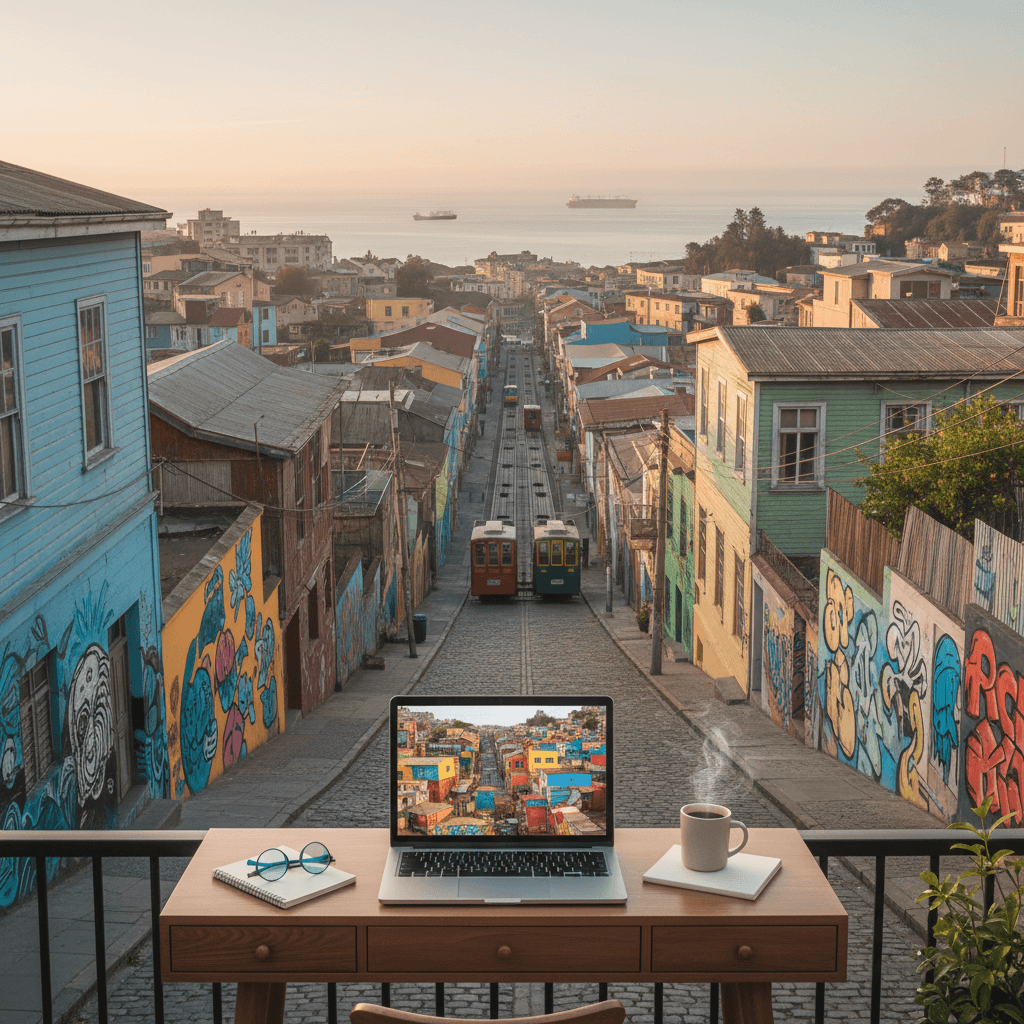
Valparaíso isn't for the nomad looking for a polished, sterile tech hub. It's a steep, sprawling amphitheater of crumbling mansions, world class street art, and salt air. While Santiago is the buttoned up professional sibling, "Valpo" is the eccentric artist who stays up too late drinking Carménère and painting murals on corrugated metal. It’s a place that demands you trade your high heels for sturdy walking shoes and your expectations of efficiency for a deep appreciation of the bohemian.
The city’s identity is tied to its 45 cerros (hills). Life happens on these heights, connected by rickety Victorian funiculars that still clatter up the slopes for a few hundred pesos. Most nomads gravitate toward Cerro Alegre and Cerro Concepción, where the vibe is distinctly creative. You’ll spend your mornings working from a cafe overlooking the Pacific and your evenings wandering through labyrinthine alleys that feel like an open air museum. It’s less about "checking boxes" and more about the sensory overload of colors and the sound of harbor horns in the distance.
The Living Experience
The cost of entry here is one of the lowest for a coastal city with this much character. You can comfortably navigate a month on $1,200 to $1,600, though budget conscious travelers often get by on $800 if they lean into the local lifestyle. It’s a place where you can find a $5 plate of fresh seafood at the market or drop $30 on a high end dinner in a restored palace.
Digital infrastructure is surprisingly solid for a city that looks like it’s frozen in 1920. Fiber optic internet is common in the main tourist cerros, and mobile data through Entel or Movistar is cheap and reliable. When the "work from home" walls start closing in, Paralelo Coworking downtown provides a professional anchor for about $90 a month.
Neighborhood Breakdown
Cerro Alegre & Cerro Concepción
- Vibe: The heart of the nomad scene. Expect boutique hotels, artisanal coffee, and endless murals.
- Rent: $400 to $800 for a decent apartment.
- Pros: Highly walkable within the neighborhood, safest daytime environment, and the best social scene.
- Cons: Can feel touristy; those steep stairs are a daily workout.
El Plan (Downtown)
- Vibe: Gritty, functional, and chaotic. This is where the business happens around Plaza Sotomayor.
- Rent: Lower than the hills, often under $400 for basic studios.
- Pros: Close to the port, banks, and major transport links.
- Cons: Lacks the charm of the hills and requires extra caution after dark.
Viña del Mar
- Vibe: The manicured neighbor. Just a short train or bus ride away, it feels like a different world with modern high rises and sandy beaches.
- Pros: Better infrastructure, safer at night, and more traditional amenities.
- Cons: More expensive and lacks Valparaíso’s unique artistic soul.
Practical Realities
Safety is a frequent topic of conversation among expats. While the main tourist areas are generally fine during the day, Valpo has an edge. Locals and seasoned nomads recommend using apps like Uber or inDrive after the sun goes down, especially if you’re moving between the hills and the flatlands. Avoid walking alone on isolated staircases at night; the city’s maze like geography makes it easy to take a wrong turn into a quiet spot.
The weather is classic Mediterranean. From December to March, you’ll enjoy dry, sunny days with temperatures hovering between 22°C and 26°C. Winters are damp and gray, so if you’re visiting between June and August, make sure your rental has a reliable heater, as many older buildings lack central heating. Most people find the sweet spot is arriving in late spring to catch the city as it wakes up for the summer festival season.
Ultimately, Valparaíso is for the traveler who finds beauty in decay. It’s a city that asks you to slow down, climb the stairs, and embrace a bit of urban grit in exchange for some of the most inspiring views in South America.
The Monthly Bottom Line
Valparaíso is one of those rare places where your dollar stretches surprisingly far without sacrificing that coastal, bohemian lifestyle. Most nomads find they can live comfortably here on a budget of $800 to $1,600 per month. It's significantly cheaper than Santiago and a fraction of the cost of North American or European hubs, making it a favorite for those who want to focus on their creative projects without the financial stress.
Accommodation by Neighborhood
Your biggest variable will be rent, and in Valparaíso, you're paying for the view and the vibe. The hills, or cerros, are where most expats and nomads gravitate, though prices fluctuate based on how many "stairs" you have to climb to get home.
- Cerro Alegre and Cerro Concepción: These are the most sought after spots. Expect to pay between $400 and $800 for a decent studio or one bedroom apartment. You're paying for the proximity to cafes, street art, and a safer evening environment.
- Downtown (El Plan): If you prefer to be near the action of Plaza Sotomayor and don't mind a bit of urban grit, you can find places for less than $400. It's convenient for groceries and transport, but it gets quiet and a little sketchy after dark.
- Viña del Mar: Just a short ride away, this sister city is more polished and modern. It's popular with families and those with a higher budget, as modern high-rise living here usually starts at $900 and goes up quickly.
Eating and Drinking
The food scene is a mix of gritty port side diners and upscale hilltop bistros. If you eat like a local, you'll save a fortune. Look for the "menú del día" at lunch, which usually includes a starter, main, and drink for a fixed price.
- Budget Meals: Street food like empanadas or a choripán will run you about $5 to $10. It's filling, delicious, and found on almost every corner.
- Mid-range Dining: A nice dinner in Cerro Alegre with a glass of Chilean wine typically costs around $15 to $20.
- Groceries: If you're cooking at home, expect to spend about $200 to $300 a month. Fresh produce from local markets is incredibly cheap, while imported goods at the supermarket carry a premium.
Transport and Connectivity
Getting around is cheap, provided you have sturdy legs for the hills. The iconic funiculars are a fun, nostalgic way to skip the stairs for just a few cents.
- Public Transit: Local buses and micros cost between $1 and $3 per ride. They're frequent but can be a bit of a wild ride.
- Ride-hailing: Apps like Uber and inDrive are widely used and safer for late-night trips. A cross-town ride rarely exceeds $5 to $10.
- Internet: A solid mobile data plan from Entel or Movistar costs about $15 to $25 a month. For a dedicated workspace, Paralelo Coworking downtown offers monthly memberships for around $95.
Lifestyle Tiers
To help you plan your move, here is how those monthly budgets actually look on the ground:
- The Scrappy Nomad ($800): You're likely sharing a house with others in a less touristy cerro or living downtown. You eat mostly street food and cook at home, using public libraries or cafes for Wi-Fi.
- The Balanced Professional ($1,200): This covers a private one bedroom apartment in a good area, regular meals out at mid-range spots, a coworking membership, and plenty of weekend trips to nearby beaches.
- The High-Life ($1,600+): You'll have a premium apartment with an ocean view in Cerro Alegre, dine at the best restaurants in the city, and use private transport or ride-hailing apps exclusively.
For Digital Nomads: Cerro Alegre and Cerro Concepción
If you're coming to Valparaíso for that iconic, postcard-perfect experience, these two hills are where you'll likely land. They function almost as a single neighborhood, connected by winding alleys and steep staircases. It's the creative heart of the city, packed with street art that changes weekly and a high density of cafes where you can actually get work done.
Most nomads aim for these hills because they feel like a village within the city. You'll find a social scene that revolves around craft beer bars and galleries. While the hills are steep, the funiculars (historic elevators) make the commute to the flat part of the city much easier for a few hundred pesos.
- Rent: Expect to pay between $400 and $800 for a decent studio or one-bedroom apartment.
- Vibe: Bohemian, artistic, and social. It's the best spot for networking with other remote workers.
- Safety: Generally safe during the day, though locals advise against walking alone on isolated staircases after dark. Use apps like Uber or inDrive for late-night trips.
- Coworking: You're a quick bus or rideshare away from coworking spaces in the downtown area, which cost about $250 to $300 a month.
For Long-Term Expats: Viña del Mar
Many expats who plan to stay for a year or more eventually migrate toward Viña del Mar, Valpo's polished neighbor just up the coast. It lacks the gritty, artistic soul of the hills, but it makes up for it with modern infrastructure, better grocery stores, and paved roads that don't require a mountain climber's stamina.
The Reñaca area is a favorite for those who want a beach lifestyle while staying close to the urban action. It's more predictable and quieter at night, which suits professionals who need a reliable environment for early morning Zoom calls. You'll still be only 15 to 20 minutes away from the Valparaíso arts scene by train or bus.
- Rent: Prices are higher here, often starting at $800 and climbing quickly for ocean views.
- Pros: Excellent malls, modern hospitals, and much better walkability than the hills.
- Cons: It feels more like a standard resort city and lacks the unique "Valpo" character.
For Solo Travelers on a Budget: Downtown and Plaza Sotomayor
The "Plan," or the flat part of the city near the port, is where the grit meets the sea. If you're looking to keep your monthly burn under $800, this is your best bet. It's the logistical hub of the city, meaning you're steps away from the main markets, the Metro Valparaíso, and the cheapest street food in town.
Living near Plaza Sotomayor puts you in the middle of the maritime history. You'll find plenty of public WiFi spots and cheap "menús del día" for about $5 to $10. It's not as pretty as the hills, and it gets quite lonely and industrial at night, but for a short-term budget stay, it's incredibly convenient.
- Rent: Shared housing or basic apartments can be found for under $400.
- Food: Access to the Mercado Cardonal for fresh, dirt-cheap produce.
- Warning: This area requires more street smarts. Keep your phone tucked away and avoid walking these streets late at night.
For Families: Reñaca and Concón
Families rarely settle in the heart of Valparaíso due to the narrow sidewalks and the noise of the nightlife. Instead, they head north to Concón or the residential pockets of Viña del Mar. These areas offer gated apartment complexes with playgrounds and better proximity to international schools.
Concón is famous for its sand dunes and seafood restaurants. It's much calmer and offers a higher standard of safety for kids. You'll need a car or a reliable budget for inDrive to get around comfortably, as public transport is less frequent out here.
- Cost: Monthly expenses for a family of three usually land around $1,800 to $2,200.
- Lifestyle: Weekend beach trips, surfing lessons, and quiet evenings.
- Connectivity: Internet speeds are generally more stable in these newer builds, often reaching 28 Mbps or higher.
Internet Speeds and Connectivity
Valparaíso offers a stable digital infrastructure, though it lacks the blazing speeds you might find in Santiago. Most nomads report average download speeds between 50 and 300 Mbps. While this is plenty for video calls and standard remote work, you should always check the router placement if you are booking an Airbnb in the older buildings of Cerro Alegre or Cerro Concepción, as thick historic walls can be notorious WiFi killers.
For a reliable backup, the local mobile coverage is excellent. You can pick up a SIM card from providers like Entel or Movistar at most street kiosks or downtown shops. A data plan typically costs between $10 and $20 USD per month. Many remote workers use their phones as hotspots when the cafe WiFi gets crowded, and 4G signals remain strong even as you climb the hills.
Coworking Spaces
The coworking scene in Valparaíso is intimate rather than expansive. If you need a dedicated desk and a professional environment to escape the distractions of a shared house, there is one primary player in town.
- Paralelo Coworking: Located downtown near the port area, this is the go-to hub for the city's digital community. It is professional, has the most reliable high speed lines in the city, and hosts occasional networking events. Monthly plans hover around $250 to $300 USD. If you are staying up in the hills, you will likely need to take a bus or a "micro" down to the flat part of the city to get here.
Laptop-Friendly Cafes
If you prefer the "cafe office" lifestyle, Valparaíso shines. The city's bohemian spirit means many owners don't mind if you linger over a coffee for a few hours. The best spots are concentrated in the hills where the views provide some serious inspiration.
- Cerro Alegre and Concepción: This area is packed with small, independent cafes. Most have free WiFi, though outlets can be scarce in the smaller heritage buildings. It is the best area for meeting other nomads naturally.
- Plaza Sotomayor: The downtown area near the plaza has more traditional cafes and larger spaces. These are often better for a quick hour of emails between meetings, though they lack the aesthetic charm of the hilltop spots.
Practical Tech Tips
Power outages aren't frequent, but they happen occasionally during the winter rainy season from May to September. It is smart to keep your devices charged and have a power bank handy. Most cafes and coworking spaces use the standard Type C or Type L Italian style plugs, so bring an adapter if your gear is from North America.
Digital nomads here often suggest joining local Facebook groups or WhatsApp chats for the Valparaíso expat community. These groups are the fastest way to find out which cafes have upgraded their routers or if there are any pop-up co-living events happening in the cerros. While the city feels relaxed, always keep your laptop bag tucked under the table or looped around your chair leg when working in public spaces downtown.
Keeping Your Wits in the Jewel of the Pacific
Valparaíso has a gritty, bohemian soul that nomads fall in love with, but it demands a higher level of situational awareness than Santiago or the neighboring Viña del Mar. Most long term residents describe the city as generally safe if you follow a few unwritten rules. The artistic hills of Cerro Alegre and Cerro Concepción are the safest bets during the day, where you can wander between murals and cafes with your laptop without much worry.
When the sun goes down, the vibe shifts. Expats and locals alike suggest avoiding the downtown area near Plaza Sotomayor and the port after dark, as these spots can get sketchy. One specific quirk of Valpo is the "staircase rule." While the winding stairs are iconic, they can be isolated. Stick to the funiculars or well lit main streets at night; if you're heading home late, just call an Uber or inDrive. It's a small price to pay for peace of mind.
Pickpocketing is the most common headache for travelers, particularly in crowded markets or on the "micros" (local buses). Keep your phone tucked away and don't hang your bag on the back of your chair at outdoor cafes. If you want a more predictable, suburban feel for your home base, many nomads choose to live in Viña del Mar and commute into Valparaíso for the arts scene. Viña offers a more polished environment with lower crime rates, though you'll lose some of that authentic Valpo character.
Healthcare and Medical Services
While Valparaíso is the cultural capital, its healthcare infrastructure is a bit more limited than what you will find in Santiago. Most expats rely on private clinics for anything beyond a basic checkup. For major emergencies or specialized procedures, a 90 minute drive to the capital is often the standard move.
- Emergency Numbers: Dial 131 for an ambulance or 133 for the Carabineros (police).
- Pharmacies: You'll find chains like Cruz Verde or Farmacias Ahumada on almost every major corner downtown. They are well stocked, and many common medications are available over the counter.
- Water and Food: The tap water is technically safe to drink, though many nomads prefer bottled or filtered water because the mineral content can be tough on the stomach at first. Food quality is high, and the seafood is some of the freshest you'll ever eat.
Safety by Neighborhood
The safety profile of the city changes block by block. Here is how the most popular nomad hubs stack up:
Cerro Alegre and Concepción
- Risk Level: Low by day, moderate by night.
- Advice: These are the most "tourist friendly" zones. You will see plenty of other nomads here. Stick to the main plazas after 10:00 PM.
El Plan (Downtown)
- Risk Level: Moderate.
- Advice: Great for banking and errands during business hours. Avoid wandering here late at night, especially near the port or the bus terminal.
Viña del Mar
- Risk Level: Low.
- Advice: The safest area in the region. It feels like a standard coastal resort town. Ideal for families or those who want to walk around at night without looking over their shoulder.
Overall, the community spirit in Valparaíso is strong. If you stay alert and respect the local rhythm, you'll find the city's rough edges are just part of its charm. Most nomads find that once they know which streets to avoid, they feel perfectly comfortable making this colorful maze their home.
The Vertical Reality
Valparaíso isn't a city you walk through; it's a city you climb. The geography is defined by 45 steep hills, or cerros, that drop sharply into the Pacific. While the lower flat area, known as El Plan, is where you'll find the banks and major shops, most nomads spend their time in the heights. This verticality means your primary mode of transport often involves centuries old technology: the funiculars.
These ascensores are the soul of the city. There are about 15 currently in operation, and they save you from the grueling staircases that connect the waterfront to neighborhoods like Cerro Alegre and Cerro Concepción. A ride usually costs around $100 to $300 CLP (roughly $0.15 to $0.40 USD). They aren't just for tourists; they're the daily commute for everyone living on the hills.
Micros and Colectivos
For longer distances, you'll rely on micros (colorful local buses). They are fast, somewhat erratic, and incredibly cheap, with fares typically between $300 and $600 CLP. If you're heading from the hills down to Plaza Sotomayor or over to the neighboring city of Viña del Mar, these are your best bet. Just be ready for a bumpy ride; the drivers are known for their spirited pace through the winding streets.
If you want something more direct than a bus but cheaper than a private car, look for colectivos. These look like standard black sedans with signs on the roof indicating their route. They follow fixed paths like buses but offer a much more comfortable, shared taxi experience. They're a favorite for expats living in the quieter residential parts of the cerros.
Ride-Hailing and Safety
While the city has a gritty charm, walkability is limited at night. Most nomads and solo travelers avoid the long, isolated staircases after dark. Apps like Uber and inDrive are widely used and highly recommended for getting home after a night out in Cerro Alegre. A typical ride across town will set you back $3 to $8 USD.
If you're coming in from Santiago, the journey takes about 90 minutes to two hours. A private transfer or a high end rideshare usually costs between $50 and $100 USD. Most budget conscious travelers opt for the frequent Pullman or Turbus coaches from Santiago's Pajaritos station, which are reliable and cost less than $10 USD.
Two Wheels and Two Feet
Biking in Valparaíso is a specialized sport rather than a commuting method. Unless you have world class quads and a death wish for the cobblestones, you won't see many people on bicycles or scooters outside of the flat coastal road leading toward Viña del Mar. In that specific corridor, things flatten out and become much more bike friendly.
For daily life, you'll be doing a lot of walking. Comfortable shoes with good grip are a requirement, not a suggestion. The sidewalks can be uneven, and the "shortcuts" between hills often involve hundreds of steps. It's a built in workout that most locals take in stride, but it's something to consider when choosing your apartment location. If you're based near Paralelo Coworking downtown, you'll likely take a micro or an ascensor up to your hill at the end of the day rather than trekking it on foot.
Summary of Costs
- Ascensor (Funicular) ride: $0.15 to $0.40 USD
- Micro (Local bus) fare: $0.40 to $0.70 USD
- Short Uber/inDrive trip: $3.00 to $5.00 USD
- Bus from Santiago: $7.00 to $12.00 USD
- Monthly transport budget: $40.00 to $70.00 USD
The Chilean Twist on Spanish
In Valparaíso, you aren't just learning Spanish; you're learning Chileno. Chilean Spanish is famous for its speed, unique slang, and the habit of dropping the "s" at the end of words. It can be a bit of a shock even for those with a decent grasp of the language, but the locals here are incredibly warm and patient with those trying to learn.
Most nomads find that while English proficiency is moderate to high in the tourist hubs of Cerro Alegre and Cerro Concepción, it drops off quickly once you head downtown or into the local mercados. If you're planning to stay for more than a month, picking up the basics is non-negotiable for a smooth experience.
Navigating Daily Interactions
You'll find that communication in Valpo is as much about vibe as it is about vocabulary. People here are expressive and friendly. Use "Hola" and "Gracias" liberally, and don't be surprised if a simple transaction at a kiosk turns into a five minute chat about the weather. Travelers often say that showing a little effort goes a long way in building rapport with the shopkeepers in the cerros.
For the digital nomad crowd, Google Translate is your best friend for complex situations like signing a lease or explaining a technical issue at a coworking space. However, for daily life, a few local "Chilenismos" will help you blend in:
- Cachai?: Used like "You know?" or "Do you understand?". You'll hear this at the end of almost every sentence.
- Bacán: Something cool or awesome. Use this when your barista nails your flat white.
- Po: A filler word added to the end of "Sí" or "No" for emphasis.
- Al tiro: Means "right away" or "immediately," though in Valpo's relaxed pace, it might still take a few minutes.
Digital Communication and Tech
Staying connected is relatively cheap and straightforward. Most expats recommend grabbing a local SIM card immediately rather than relying on international roaming. You can find these at small kiosks or "tabaquerías" throughout the city.
- Top Providers: Entel and Movistar are the heavy hitters. Entel generally has the best coverage if you plan on taking weekend trips to more remote coastal spots.
- Cost: Expect to pay between $5 to $15 USD per month for a solid data plan.
- Connectivity: Mobile coverage is strong across the city, though the thick walls of older buildings in the historic districts can sometimes eat your signal.
Professional Communication
If you're working out of Paralelo Coworking or hanging out in the cafes near Plaza Sotomayor, you'll find a higher concentration of English speakers. Many local entrepreneurs and creatives speak enough English to collaborate on projects. That said, if you're looking to join local meetups or community events, having a B1 level of Spanish will significantly enrich your social life.
For administrative tasks or medical needs, WhatsApp is the primary mode of communication. From booking a hair appointment to messaging your landlord, everything happens over the app. Make sure your local number is linked to your account as soon as you arrive.
The Mediterranean Sweet Spot
Valparaíso enjoys a classic Mediterranean climate that keeps things relatively mild throughout the year. You won't deal with the sweltering humidity of the tropics or the bone chilling winters of the far south. Most days feel like they are hovering between 19°C and 26°C (66°F to 79°F), which is perfect for tackling those steep hills without breaking too much of a sweat.
The city has a distinct rhythm dictated by the Pacific. Even on the sunniest days, a cool coastal breeze usually kicks in by late afternoon. It keeps the air fresh, though it means you'll always want a light jacket or a hoodie in your bag once the sun dips behind the horizon.
Summer: Peak Nomad Season (December to March)
If you want the full Valpo experience, aim for the window between December and March. This is the dry season, and it's when the city truly comes alive. The sky stays a crisp blue, and the temperature sits comfortably around 22°C to 26°C. You won't see much rain at all during these months, making it the prime time for outdoor coworking on cafe terraces in Cerro Alegre or weekend trips to the beaches in Viña del Mar.
This is also the high season for tourism. While the energy is infectious, expect slightly higher prices for short term rentals and more crowds at popular spots like Plaza Sotomayor. If you are planning to stay through New Year's Eve, book your accommodation months in advance; the fireworks display over the bay is legendary and draws people from all over the continent.
Winter: The Quiet, Rainy Stretch (June to August)
Winter in Valparaíso is a different beast. From June through August, the city gets much quieter and significantly wetter. Temperatures drop to between 10°C and 15°C. While it rarely gets freezing, the humidity from the ocean can make the cold feel like it's seeping into your bones, especially since many older buildings in the hills lack central heating.
Expats who stay year round often find this period a bit gloomy. The colorful street art looks a little muted under gray skies, and the steep stairs can get slippery. However, if you're on a budget, this is when you'll find the best deals on housing. Just make sure your apartment has a reliable heater or a "estufa" to keep the dampness at bay.
The Shoulder Seasons
Spring (September to November) and Autumn (April to May) are the real insider picks. In the spring, the flowers start blooming across the cerros and the air starts to warm up, though you should still expect the occasional rain shower. September is particularly lively because of the Fiestas Patrias celebrations, though the city can get quite rowdy during that week.
Autumn is beautiful for its stable weather and thinning crowds. It’s the best time for digital nomads who want a focused work environment without the summer distractions. You'll still get plenty of sunny afternoons to enjoy a glass of Chilean wine on a balcony before the winter rains arrive in late May.
What to Pack
- Layers: The temperature fluctuates significantly between sun and shade. A light windbreaker or denim jacket is a local staple.
- Sturdy Shoes: Between the hills and the rain, you need footwear with good grip. Leave the flimsy flip flops for the beach in Reñaca.
- Sun Protection: The sun at this latitude is stronger than it feels. High SPF sunscreen is a must even when it's breezy.
- Moisture Control: If you're visiting in winter, a small dehumidifier for your room can be a lifesaver for your clothes and electronics.
When to Visit: A Quick Summary
- Best for Socializing: December to February. Expect dry heat and lots of events.
- Best for Budget: June to August. It's the rainiest period, but rent prices are at their lowest.
- Best for Work/Life Balance: March to May or October to November. Mild weather and fewer tourists.
- Avoid if you hate rain: July is historically the wettest month of the year.
Connectivity and Tech Setup
Expect fast internet speeds averaging 200 to 300 Mbps. While it's not fiber optic speed across the board, it's more than enough for Zoom calls and standard remote work. Most nomads find that the cafe culture in Plaza Sotomayor or the hills of Cerro Alegre is welcoming to laptops, though you should always ask before settling in for a four hour session.
For a dedicated workspace, head to Paralelo Coworking in the downtown area. It's the local hub for the digital community, with plans starting around €90 per month. If you're staying up in the hills, you'll likely need to catch a bus or a ride-hailing app to get down there, as the walk back up is a workout you might not want after a long day of meetings.
For mobile data, grab a SIM card from Entel or Movistar at a local kiosk. A plan with plenty of data usually runs between $5 to $15 USD. Coverage is generally strong throughout the city and even extends well into the neighboring beaches of Viña del Mar.
Money and Budgeting
Valparaíso is one of the more affordable coastal spots in South America. You can live quite comfortably on $1,200 to $1,600 USD a month, though budget travelers often make it work on $800 by sticking to shared housing and street food. Credit cards are widely accepted in shops and restaurants, but it's smart to keep a few Chilean Pesos for the funiculars and local markets.
- Studio Apartment: Expect to pay $400 to $800 USD in popular areas like Cerro Concepción.
- Daily Meals: A quick street food lunch costs $5 to $10, while a nice dinner in the cerros will be closer to $30.
- Transport: Local buses and funiculars are cheap, usually under $1 or $2 per ride.
Navigation and Safety
The city's geography is its charm and its biggest challenge. The hills (cerros) are steep, and while the funiculars are iconic, they don't go everywhere. Most expats recommend using apps like Uber or inDrive, especially at night or if you're carrying groceries. It's a safer and more reliable alternative to wandering the stairs after dark.
Safety here is mostly about common sense. Cerro Alegre and Cerro Concepción are generally safe during the day, but travelers often say to avoid isolated stairways or poorly lit alleys at night. If you're heading downtown to Plaza Sotomayor, keep an eye on your belongings, as pickpocketing can happen in crowded urban areas.
Visas and Logistics
Most visitors enter on a 90-day tourist visa, extendable once for another 90 days (total 180). For longer stays, apply for Temporary Residency showing foreign income proof. For banking, many nomads use Wise or Revolut to avoid the high exchange fees at local ATMs.
If you need medical care, pharmacies are on almost every corner downtown. For emergencies, the number for an ambulance is 131 and the police is 133. While the city's infrastructure can feel a bit gritty, the healthcare quality is generally high, though major procedures might require a trip to nearby Santiago.
Climate and Timing
The best time to be here is during the southern summer from December to March. The weather is dry and mild, with temperatures hovering between 22°C and 26°C. Winter, specifically June through August, gets much chillier and rainier. If you're visiting then, make sure your apartment has a reliable heater, as many older buildings in the hills lack central heating.
Need visa and immigration info for Chile?
🇨🇱 View Chile Country GuideHidden Gem
Worth the effort