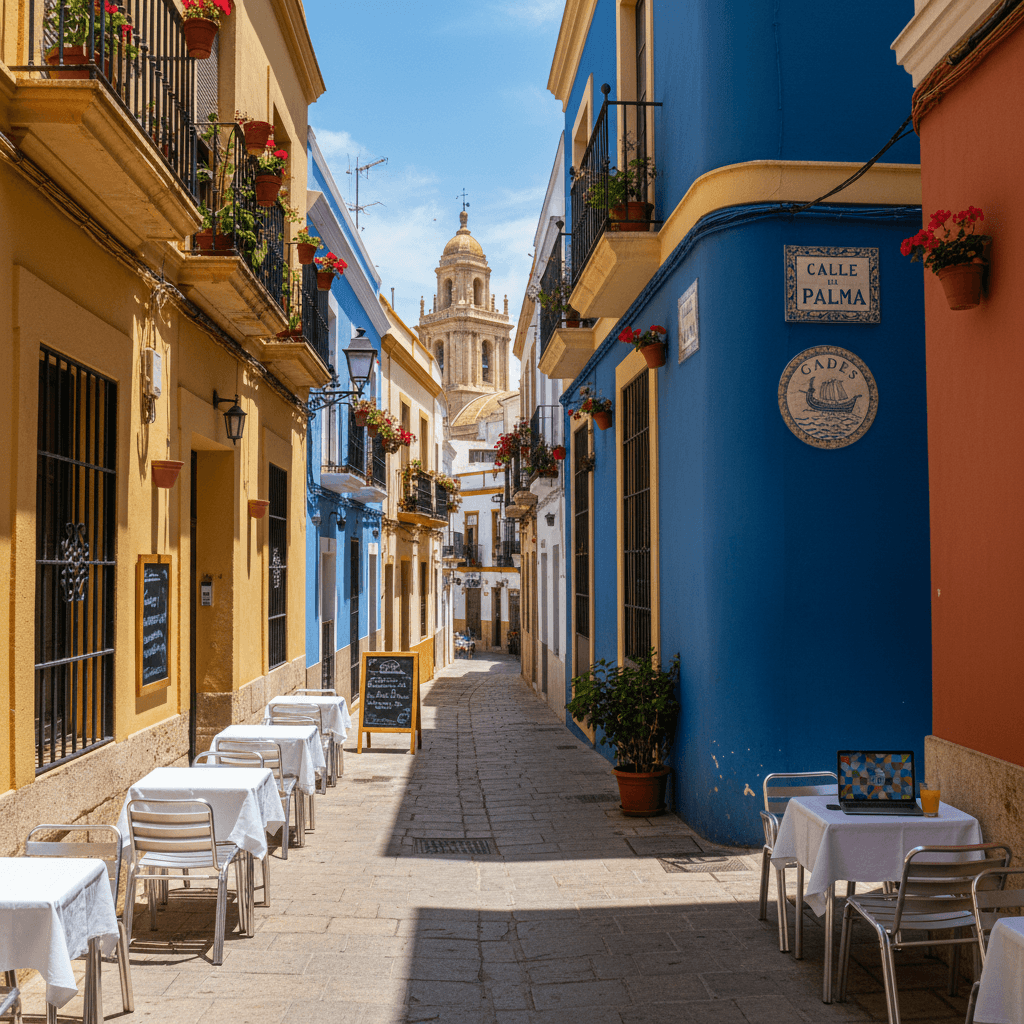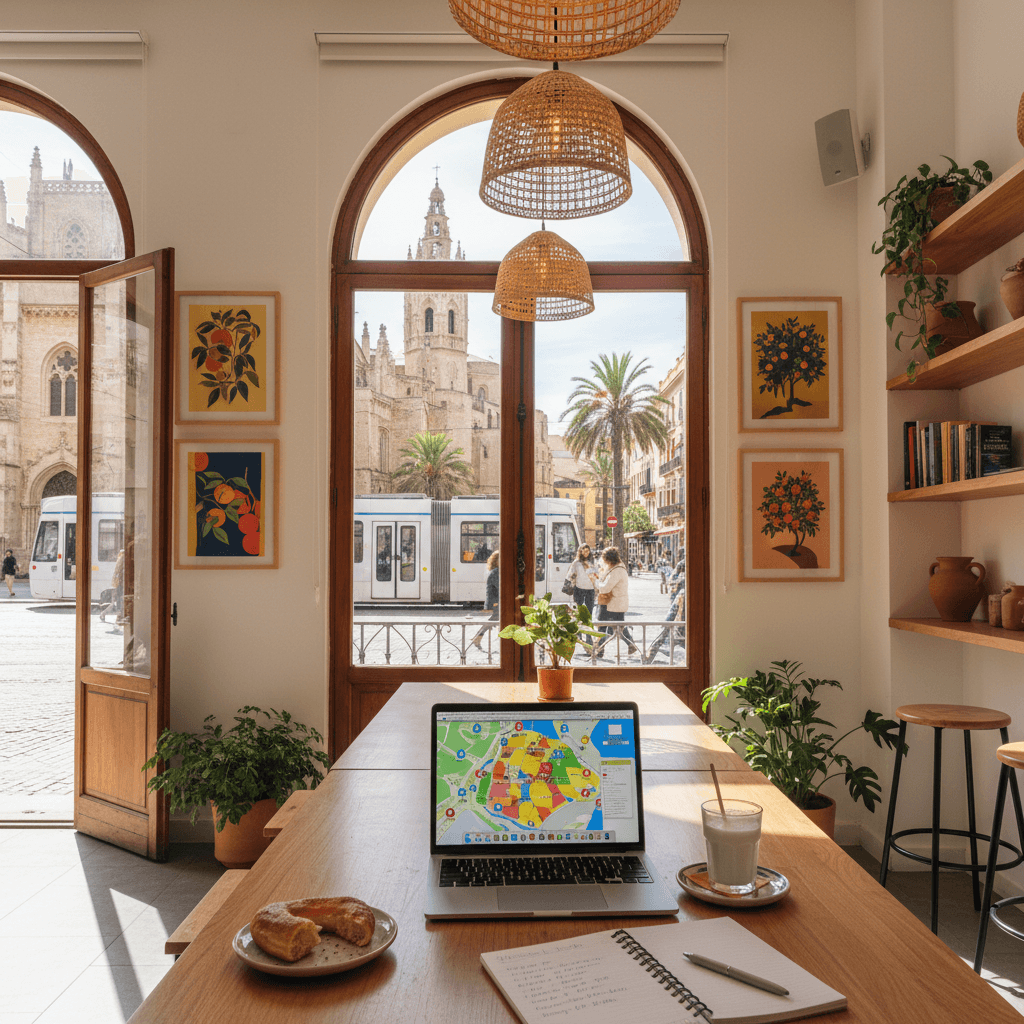
Valencia
🇪🇸 Spain
Valencia feels softer than Madrid and less frantic than Barcelona, which is exactly why a lot of nomads stick around. The city moves at a Mediterranean pace, with bike bells, espresso machines and the salt smell drifting in from the beach, then Las Fallas hits and the whole place starts cracking, glowing and shaking with fireworks. It’s relaxed, but never dull.
It’s also cheaper than the big-name Spanish cities. Not cheap, though. A solo budget usually lands around €700 to €900 a month before rent, while a more comfortable setup pushes past €1,200 once you add nicer dinners, gyms and the occasional weekend blowout and honestly, rents have crept up enough that people coming from three years ago complain first and unpack later.
Where nomads actually settle
Ruzafa: Best for cafés, coworking and meeting people fast. Expect €1,100 to €1,500 for a furnished 1BR, plus noise from bars and scooters late at night.
El Carmen: Best for old-stone charm and central living. The alleys get crowded, some corners feel sketchy after dark and 1BRs usually run €850 to €1,100.
Benimaclet: Best for a calmer, more local feel. Rent is kinder at €650 to €850, though the area’s a bit plainer and the amenities are more basic.
The coworking scene, turns out, is solid. Flying Bean and Garage Coworking are popular picks, with speeds over 300 Mbps in good spaces and flexible desks from about €110 to €200 a month, so if your WiFi needs are serious, you won’t be stuck hunting café tables forever.
Outside work, Valencia is easy to live in. The center is walkable, Valenbisi bikes are everywhere and the metro to the airport costs almost nothing, which, surprisingly, still feels like a small victory every time you roll a suitcase through town. Summer can be brutally hot, winter is mild and the rain mostly arrives in the shoulder seasons, so the city often smells like warm pavement, sunscreen and wet stone all in the same week.
Safety is decent, but not magical. Pickpockets work the crowds, especially around busy bars and touristy streets and El Carmen gets quieter and a bit more awkward after midnight. Still, most people feel fine day to day and the healthcare setup is strong enough that locals don’t fuss when something actually goes wrong.
Socially, Valencia is friendly without trying too hard. People meet through expat groups, Meetup events and the usual Ruzafa bars, then end up staying for the paella, the bike lanes and the fact that you can still hear your own thoughts here, which is rare in a city this size.
Valencia isn't cheap anymore, but it still feels saner than Barcelona. A single person can live on about €700 to €900 a month before rent if they keep groceries basic, use public transport and don't turn every dinner into a tapas crawl. That's the real number.
Rent is where things bite. In Ruzafa, a one-bedroom often runs €900 to €1,200 and the area can feel loud at night with scooter engines, bar chatter and chairs scraping pavement until late; Benimaclet sits around €800 to €1,100, while El Carmen sits around €850 to €1,100 and comes with narrow streets, old stone walls and the occasional pickpocket problem if you're careless.
Typical Monthly Costs
Rent: €800 to €1,200 for a 1BR, depending on the neighborhood
Groceries: About €300 for one person
Transport: Around €30 for a monthly pass
Coworking: Roughly €110 to €200, with places like Garage Coworking and Flying Bean sitting in that range
Meal out: €15 for a cheap lunch, €60 for two at a mid-range spot
Meals are reasonable if you avoid the tourist menus near the beach, honestly and buy produce at local markets instead of convenience stores. A proper lunch menú del día can still feel fair, but a night out in Ruzafa adds up fast once you throw in wine, dessert and a taxi home after the last tram.
Co-working is decent value and the internet usually holds up. Citywide speeds average 200-300 Mbps, while dedicated desks in stronger spaces can push well past 300 Mbps, which, surprisingly, matters when your calls cut out less than your neighbors' balcony smoking breaks; cafes have free WiFi too, though I wouldn't trust them for a long client meeting without a backup hotspot.
Budget By Lifestyle
Budget: €700 to €900, cooking most meals and keeping nights out light
Mid-range: €900 to €1,200, with restaurants, a gym and the odd Cabify ride
Comfortable: €1,200+, with better apartments, more social spending and fewer compromises
Benimaclet is the smart pick if you're watching costs, because it feels more local and less polished, with quieter streets and fewer café options, but the tradeoff is real and a bit dull if you want nightlife. Ruzafa is the obvious nomad magnet, though it's getting crowded and pricey and El Carmen suits people who want history, character and don't mind dodging scooters and the occasional dodgy alley after dark.
Valencia’s best neighborhoods are pretty clear once you spend a week here. Ruzafa gets the most attention, Benimaclet feels easier on the wallet and El Carmen still pulls in people who want old stone streets, late drinks and a central base. Not cheap. Still manageable.
Nomads
Pick Ruzafa if you want cafes, coworking and people who actually talk to strangers, because that’s where the nomad crowd keeps circling back, even if the area feels a bit saturated and the rents around €1,100 to €1,500 for a furnished one-bedroom. The streets are walkable, the evenings smell like espresso, fried croquetas and exhaust from scooters and the downside is obvious, it gets noisy fast.
Rent: €1,100 to €1,500 for a furnished 1BR
Best for: Networking, coffee shops, nightlife
Downside: Loud, busy, pricier
Honestly, if you need quiet for calls, Ruzafa can wear you down. Garage Coworking and Flying Bean are the kind of places people actually stay in and the citywide internet speeds are decent enough that you won’t spend your life hunting for a hotspot, which, surprisingly, still matters on sticky summer afternoons.
Expats
Benimaclet is the practical choice, especially if you want a local feel without paying central Valencia prices, with €800 to €1,100 for a furnished 1BR. It’s calmer, a little rougher around the edges and less polished than Ruzafa, but that’s part of the appeal, you hear kids playing, bikes rattling over pavement and neighbors chatting across balconies.
Rent: €800 to €1,100 for a furnished 1BR
Best for: Longer stays, budget-minded expats
Downside: Fewer amenities
Families and settled expats usually like Benimaclet because it doesn’t feel like a short-term rental machine. The tradeoff is simple, you’ll do more planning for errands and nights out and the neighborhood won’t hand you the same polished cafe scene you get in the center.
Families
For families, Benimaclet still makes the most sense, though some parents prefer the outskirts if they want more space and less weekend noise. You’re better off avoiding the party-heavy pockets of central Valencia, because late music, delivery scooters and constant foot traffic get old fast when you’re trying to get kids asleep.
Rent: Lower than central neighborhoods
Best for: Space, local life, calmer streets
Downside: Basic infrastructure in parts
Solo Travelers
El Carmen is the one for solo travelers who want history and easy access to the center, with €1,000 to €1,400 for a furnished 1BR. It’s atmospheric, a little scruffy and full of narrow lanes that echo at night, though you should stay alert in quiet alleys after dark because pickpockets and opportunists know exactly where tourists drift.
Rent: €1,000 to €1,400 for a furnished 1BR
Best for: Bohemian energy, central location
Downside: Crowded streets, safety issues in dim alleys
If you want easy nights out, El Carmen works, if you want sleep, maybe not. Ruzafa is better for meeting people, El Carmen is better for wandering and neither beats the beach for clearing your head after a long week of heat, honking traffic and too many tapas.
Valencia’s internet is solid, not fancy. Citywide speeds average 200-300 Mbps and in proper coworking spaces you’ll often see 300 Mbps or better, so video calls usually hold up unless your building’s router is ancient or the fiber’s having a bad day.
The bigger issue is consistency at home, especially in older flats with thin walls, weirdly patchy WiFi and the kind of echoey stairwells that make every scooter outside sound louder than it should. Most nomads keep a backup SIM or hotspot anyway, because a dead connection at 5:55 p.m. is the sort of nonsense that ruins a workday.
Coworking Spaces
Flying Bean: About €135 a month for unlimited access, good if you want a quieter setup and reliable speed.
Garage Coworking: Roughly €110 to €150 for a flex desk or €160 to €199 for a dedicated desk and the community is strong without feeling fake.
General range: Expect €110 to €200 a month across the city, depending on whether you want open seating, a fixed desk or extra meeting room access.
Flying Bean feels polished and calm, while Garage has more of that productive hum, keyboard taps, low voices, coffee grinding, the occasional chair scrape. Honestly, both are better bets than trying to work all day from a packed cafe near Ruzafa on a rainy Tuesday.
Working From Cafes
WiFi: Common and free in many cafes, though the speed can dip when the lunch crowd rolls in.
Best habit: Carry a hotspot or eSIM, because cafe internet in Valencia can be fine, then suddenly annoying.
Vibe: Good for a few hours, bad for all-day calls if you need total quiet.
Ruzafa has the most obvious laptop-friendly coffee shops and that comes with noise, chatter, plates clinking, espresso machines hissing, plus the occasional burst of street traffic that sneaks through an open window. If you need focus, book a coworking pass, don’t gamble on a cafe table.
SIMs and Backup Internet
Tourist plans: Movistar, Orange and Vodafone all sell unlimited data options for roughly €15 to €30.
Quick setup: Holafly eSIMs are handy if you want to land and get online fast.
Airport option: Local SIMs are easy to buy, passport in hand, which, surprisingly, still catches some people off guard.
If you’re staying longer than a couple of weeks, get a local SIM and keep it as backup even if your apartment internet looks decent on paper. The streets are bike-friendly, the cafes are easy and the coworking scene, turns out, is one of Valencia’s better selling points, just don’t expect every old building to behave like a modern office.
Valencia feels safe in the way a lot of Spanish cities do, relaxed in the center, loud at night and usually easy to read if you’ve lived anywhere urban before. Pickpockets are the main headache, especially in crowded squares, on packed trams and around touristy parts of El Carmen, where narrow streets can go quiet fast after dinner.
Don’t be careless. Keep your phone zipped away on the beach, at Las Fallas and in busy nightlife strips, because the usual distraction scams work here, honestly, just like they do in Barcelona and Madrid.
Where to Be Cautious
El Carmen: Great for atmosphere, but some alleyways feel sketchier after dark, especially when the bars empty out and the echo of footsteps gets louder than the chatter.
Ruzafa: Generally fine, though the crowds, bars and late-night noise create the perfect setup for opportunistic theft, so keep an eye on your bag.
Beaches and festivals: Summer crowds, sandy hands, street noise and flashing phones make it easier for thieves to work unnoticed, weirdly enough.
For day-to-day life, most nomads don’t run into serious trouble, they run into small annoyances, a hand near the backpack on the metro, a phone left on a café table, a wallet stuffed in a back pocket. Stay alert and Valencia stays pretty easy to live in.
Healthcare
The healthcare setup is solid. Hospital Universitari i Politècnic La Fe is one of the city’s best-known hospitals, pharmacies are everywhere and if something’s urgent you call 112, which gets you the emergency line across Spain.
English is patchy outside hotels and tourist spots, so keep Google Translate on your phone and bring your passport or insurance details when you visit a clinic. Private care moves faster, public care is good but can be slow and frankly, paperwork can be annoying if you’re not prepared.
Practical Safety Habits
Use a crossbody bag: It’s harder to grab and Valencia’s crowded sidewalks make easy targets out of open totes.
Don’t flash cash or devices: Cafés, trams and terraces are relaxed, but they’re not blind.
Learn the emergency number: 112 works for medical, fire and police help.
Trust your gut: If a street feels empty, poorly lit and weirdly silent, take the longer route.
Most days, that’s the whole story, low violence, decent hospitals and a few very ordinary urban risks. Stay aware, keep your stuff close and you’ll probably forget about safety after a week, which is usually the best sign.
Valencia is easy to live in and honestly that’s half the appeal. The center is flat, the air smells like orange blossom and scooter exhaust in equal measure and you can cross a lot of the city without needing a car, which makes day-to-day life feel calmer than in Madrid or Barcelona.
Walking works best in the old center, Ruzafa and much of El Carmen, though the cobbles can chew up flimsy shoes and the narrow streets get noisy at night. If you’re staying central, you’ll probably just walk, because the city’s compact and the short distances save time.
For anything farther out, the metro, bus and tram are the straightforward choice and a monthly pass runs about €30. Single rides are cheap too, usually around €2, so you don’t need to overthink it unless you’re commuting every day. Moovit helps when the bus stops are crowded and the signs are a little confusing.
Best ways to get around
Walk: Best for Ruzafa, El Carmen and the central grid, though summer heat can be brutal.
Metro and bus: Good for longer hops, airport runs and rainy days, with simple pricing and decent coverage.
Valenbisi: Great if you like bikes, with affordable short-term subscriptions available and the first 30 minutes of each ride free.
Ride-hailing: Cabify and Free Now are handy late at night or when you’re carrying groceries.
The bike system is a strong move here, weirdly better than in a lot of bigger Spanish cities, because the streets are flat and the weather cooperates most of the year. Still, don’t assume every cycle lane feels safe, some stretches get cramped with pedestrians, scooters and the occasional impatient driver.
Airport access is easy enough, with metro connections that usually cost around €2 to €5 depending on where you start. If you land late, a taxi or Cabify is the less annoying option, because dragging bags through a transfer isn’t fun after a flight.
My take, skip taxis for daily life unless you really need them. The city works best when you mix walking, transit and bikes and that combination keeps costs down while letting you hear the place, the tram bell, café chatter and the constant hum of scooters on hot afternoons.
Valencia is easy to get by in, honestly, but it isn’t an all-English city and that catches some nomads off guard the first week. In touristy parts of Ruzafa, El Carmen and around the beach, staff usually switch to English fast, though in smaller cafés, post offices and apartment viewings you’ll hear Spanish first, Valencian second and the occasional shrug if you ask too quickly.
The rhythm matters here. People speak a bit slower than in Madrid, they’ll usually try to help and if you walk in with a smile and a basic greeting, you’ll get much better treatment, which, surprisingly, can save you time at the bakery, the pharmacy or when you’re trying to sort a SIM card.
What to expect day to day
Tourist zones: English is common in hotels, coworking spaces and many cafés.
Everyday errands: Spanish is the default and Valencian pops up on signs, menus and notices.
Apartment hunting: Don’t assume the agent speaks English well, bring patience and a translation app.
Social life: Expats and nomads mix easily, but the local crowd usually stays in Spanish.
Use a few basics and you’ll be fine. Hola, gracias, por favor and ¿Habla inglés? go a long way, especially when the shop is busy, the air smells like coffee and frying oil and everyone’s trying to move fast without sounding rude.
Google Translate is the one app I’d keep on your home screen and if you’re staying longer, set it up with offline Spanish before you need it. For voice messages, contracts or utility bills, it’s better than pretending you understood the paperwork, because the fine print can be maddening and landlords won’t slow down for you.
Language tips that actually help
Learn the basics: Greetings, numbers, directions and food words first.
Use translation apps: Google Translate handles menus, forms and quick chats well.
Ask slowly: “¿Puede hablar más despacio?” works better than repeating yourself louder.
Expect bilingual signage: Valencian and Spanish show up everywhere, often side by side.
Don’t worry about sounding perfect. Locals care more that you make the effort and the city’s relaxed pace means people usually give you room to fumble through a sentence, then step in with a cleaner version if needed.
The real trick is staying calm when the language switch happens mid-conversation, because it will happen and honestly that’s just part of life here. Once you get used to it, Valencia feels manageable, friendly and a lot less intimidating than the paperwork would suggest.
Valencia’s weather is one of the main reasons nomads stay longer than they planned. The city gets hot, dry summers, mild winters and a lot of blue-sky days, so you can work from a terrace in February and still end up sweating through your shirt in July. Not subtle.
Summer, honestly, can be rough. June through August often sits around 28 to 32°C and the heat hangs in the air with car exhaust, salt from the beach and the smell of hot pavement, so afternoons can feel sluggish unless you’re near the sea or hiding in a good coworking space.
Winter is easy by European standards. Daytime temps usually hover around 15 to 18°C, which means a light jacket, chilly tile floors in older apartments and plenty of outdoor café time without the misery you’d get farther north.
The sweet spot is May to October, especially if you want long evenings, beach time and a city that still feels manageable. January and February are the least appealing months, because they’re cooler, a bit greyer and there’s less of that easy outdoor energy that makes Valencia work so well.
Best times to go
March: Great for Las Fallas, but the city gets loud, crowded and booked up fast.
May to June: Warm, bright and comfortable, with fewer tourist headaches than peak summer.
September to October: Still warm enough for the beach, though autumn rain starts creeping in.
January to February: Cheaper and quieter, but cooler and a bit flat for social energy.
Rain falls mostly in autumn and the annual total is about 470 mm, so don’t assume Valencia is dry all year just because the skies look kind most mornings. October can bring a handful of wet days and when it does, the streets smell like rain on stone and orange peels, which, surprisingly, is one of the nicer moods the city gets.
If you’re planning around crowds, skip the worst of July and August unless you love packed beaches and slower service. For most nomads, late spring and early autumn are the best compromise, warmer than you need but not punishing, lively without feeling like you’ve wandered into a tourist funnel.
Bring layers anyway. The sea breeze can turn sharp at night, AC indoors can be aggressive and Valencia’s weather changes just enough to annoy you if you pack for only one temperature.
Valencia is easy to settle into, but don’t mistake easy for effortless. The city runs on late lunches, tiled apartments that stay cool underfoot and a pace that feels calmer than Madrid or Barcelona, though summer tourists and rent hikes can still make people mutter under their breath.
For a single person, a realistic monthly budget, excluding rent, starts around €700 to €900 if you cook at home and keep nights out modest. Mid-range living pushes that to €900 to €1,200 and if you want nicer dinners, more coworking and the odd cab home after Ruzafa gets loud, you’ll climb higher, honestly faster than you’d think.
Ruzafa: Trendy, walkable, full of cafes and coworking, but noisy and not cheap, with 1BRs often around €900 to €1,200.
El Carmen: Central and atmospheric, with narrow streets and old stone walls, though pickpockets do work the alleys at night, so keep your bag close.
Benimaclet: Better value, around €650 to €850 for a 1BR, more local and calmer, though the amenities are a bit basic.
Internet won’t be your problem here. Citywide speeds are decent and coworking spots like Flying Bean and Garage Coworking are reliable if your building WiFi turns out to be flaky, which happens more than landlords admit. Cafes usually have free WiFi too, but for calls and uploads, a backup hotspot is smart, because a dropped video meeting in the middle of espresso machine hiss is annoying.
Getting connected is straightforward. Buy a local SIM at the airport or shop with your passport or just grab an eSIM before you land if you don’t want to waste your first hour in a queue.
Transport: A monthly pass runs about €30, single rides are around €2 and Valenbisi bikes are cheap, practical and weirdly fun in the flat center.
Safety: Valencia is fairly safe, though El Carmen after dark needs common sense and crowded areas are where pickpockets quietly work.
Healthcare: Pharmacies are everywhere, hospitals are solid and emergency number 112 is the one to save.
Use Idealista for apartments, Wise for banking and Moovit if you don’t want to guess bus routes while sweating in the tram stop. Dinner starts late, usually 9pm or 10pm and yes, the siesta still exists in practice, so don’t expect every errand to fit a Northern European timetable.
For weekend escapes, Sagunto and Gandia are easy, low-drama day trips. Not expensive. Not hard. Just be ready for the rent market, because Valencia’s nomad scene is growing and locals know it.
Frequently asked questions
How much does it cost to live in Valencia as a digital nomad?
Which Valencia neighborhood is best for digital nomads?
How much is rent in Valencia for a one-bedroom apartment?
Is the internet good enough for remote work in Valencia?
How much do coworking spaces cost in Valencia?
Is Valencia safe for digital nomads?
Need visa and immigration info for Spain?
🇪🇸 View Spain Country GuideNomad Haven
Your home away from home
Monthly Budget Estimates
More cities in Spain
Bilbao
🇪🇸 Spain
San Sebastián
🇪🇸 Spain
Coruña
🇪🇸 Spain