Valdivia
🇨🇱 Chile
The City of Rivers and Rain
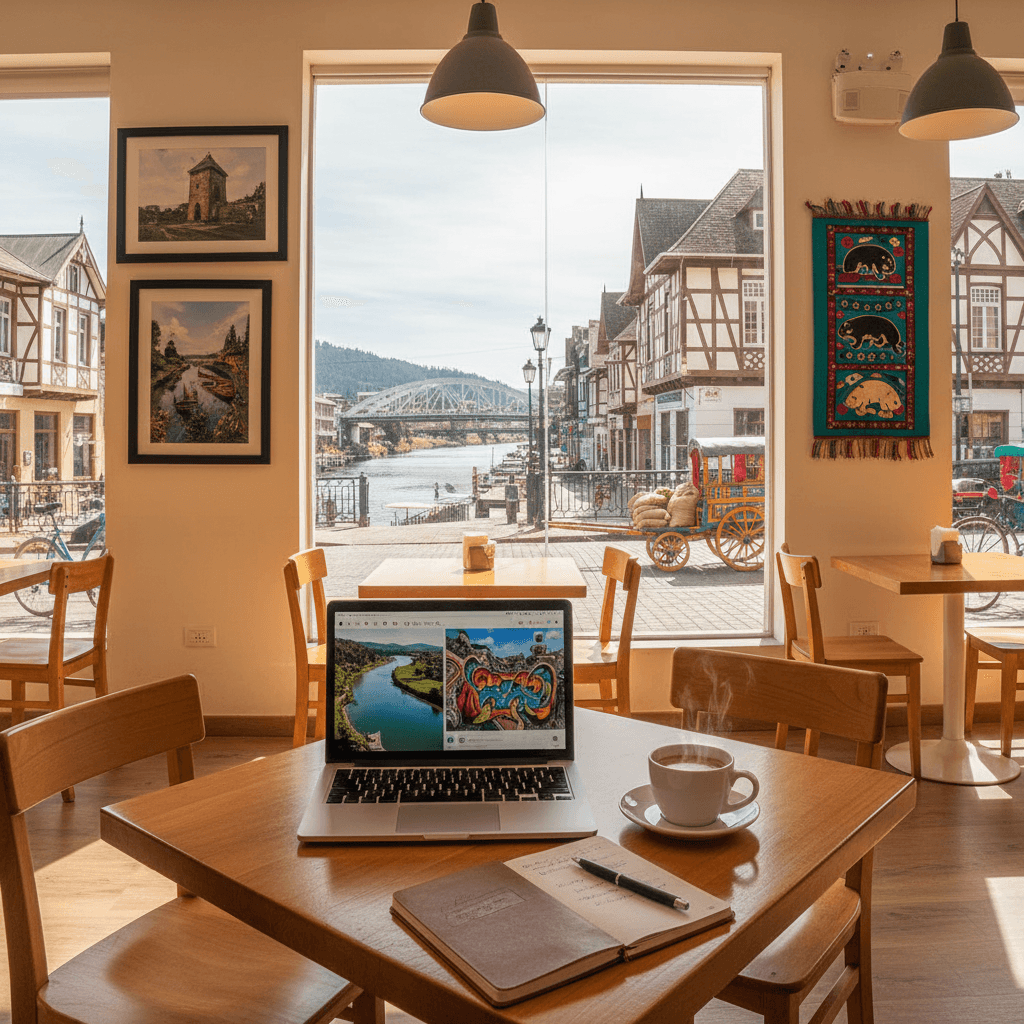
Valdivia isn't your typical South American metropolis. While Santiago is all about the mountain-framed hustle, Valdivia feels like a secret garden tucked away in the Chilean Lake District. It is a place where the air smells like fresh river water and craft beer, and where the local traffic report might include a group of sea lions lounging on the docks of the Mercado Fluvial. For nomads who find the chaos of Medellin or Buenos Aires a bit much, this city offers a refreshing, slow-paced alternative.
The vibe here is a curious mix of German heritage and youthful, university-driven energy. You'll see wood-shingled architecture that looks like it was plucked from the Black Forest, but the streets are filled with students from the Universidad Austral de Chile. This balance keeps the city feeling grounded but never boring. It is the kind of place where you can spend your morning on a Zoom call and your afternoon kayaking through the Calle-Calle and Cau-Cau rivers.
Life on the Water
What really sets Valdivia apart is its relationship with the water. The city is built on an archipelago of sorts, and the river isn't just a backdrop; it's the main artery of life. Most nomads find themselves gravitating toward Isla Teja, a neighborhood that feels like an island sanctuary. It's green, tranquil, and home to some of the city's best parks and riverside cafes. If you want to be where the action is, the Centro is walkable and puts you right next to the museums and the iconic fish market.
Expats often mention that the city feels incredibly safe compared to other regional hubs. You can walk the core areas at night without looking over your shoulder, which adds to that relaxed, "at home" feeling. The community is tight-knit, so don't be surprised if the barista at your favorite cafe remembers your name and your coffee order by the third day.
The Digital Nomad Reality
While the lifestyle is high-quality, you have to be okay with the rain. Valdivia is part of the Valdivian temperate rainforest, and it earns that title. Winters from June to August are wet and gray, with temperatures hovering around 12°C (54°F). If you aren't a fan of moody, Pacific Northwest-style weather, you'll want to visit during the peak summer months of December through February, when the sun stays out late and the city truly comes alive.
The infrastructure is solid for remote work. Internet speeds average around 47 Mbps, and mobile data through Entel or WOM is reliable and cheap. You won't find a dozen massive coworking chains here, but the cafe culture is strong. Places like Airesbuenos act as informal hubs where you'll likely run into other travelers and remote workers over a slice of Kuchen.
Cost of Living Breakdown
- Housing: A mid-range 1BR apartment in Isla Teja or Centro typically runs between $500 and $700 per month. If you're looking for something more upscale or riverside, expect to pay closer to $900.
- Food and Dining: You can grab street food like anticuchos or fresh salmon at the Mercado Fluvial for about $3 to $5. A nice sit-down dinner at a riverside restaurant will cost around $10 to $20.
- Transportation: The city is highly walkable, but local buses are only about $0.50 per ride. Unique to Valdivia, river taxis are a scenic way to get around for a few dollars.
- Total Monthly Budget: Most mid-range nomads live very comfortably on $1,200 per month, which is significantly more affordable than Santiago.
Living here means embracing the "Tranquilo" lifestyle. It's about finishing your work day and taking a $10 taxi out to the coastal forts in Niebla to watch the sunset over the Pacific. It's a city for those who want to be surrounded by nature without sacrificing the comforts of a modern, educated community.
The Bottom Line
Valdivia hits a sweet spot for nomads who want the Chilean lifestyle without the steep price tag of Santiago. It is a city where your money stretches significantly further, especially if you lean into the local rhythm. Most mid-range nomads find that a monthly budget of $1,200 covers a comfortable lifestyle, including a nice apartment in a prime area and plenty of weekend trips. If you are living like a local, you can get by on $600, but that usually means shared housing and fewer nights out at the craft breweries.
The local currency is the Chilean Peso (CLP). While cards are accepted at most supermarkets and restaurants, you will want cash for the smaller markets and river taxis. Apps like Wise and Revolut work well here, and ATMs are easy to find in the Centro district.
Monthly Budget Breakdown
- Budget Tier: Approximately $600 to $800 per month. This covers a basic studio in neighborhoods like Las Ánimas, cooking most meals at home, and using the public bus system.
- Mid-Range: Approximately $1,200 to $1,500 per month. This is the standard for most remote workers, allowing for a modern 1BR in Isla Teja, frequent dining out, and a dedicated coworking membership.
- Comfortable: $2,000+ per month. At this level, you are looking at high-end riverside apartments, private transport or frequent Ubers, and upscale dining at the city's best fusion restaurants.
Housing and Rent
Rent is your biggest variable. If you are looking for short-term stays, Airbnb is the easiest route, though you will pay a premium. For stays longer than three months, locals recommend checking Yapo.cl or PortalInmobiliario. Prices vary wildly depending on which side of the river you land on.
Centro and Isla Teja
- Studio/1BR Rent: Expect to pay between $400 and $600 for a modern space.
- Vibe: You are paying for proximity. Isla Teja is the university hub with a relaxed, green feel, while Centro puts you steps away from the main services and the Mercado Fluvial.
Outskirts (Las Ánimas or Niebla)
- Studio/1BR Rent: Prices drop to the $300 to $400 range.
- Vibe: More authentic and quiet. Niebla is coastal and beautiful, but the commute into the city center adds up in both time and transport costs.
Food and Dining
Valdivia is a seafood lover's paradise. The Mercado Fluvial is the heart of the city's food scene. You can grab fresh fish or anticuchos (meat skewers) for about $3 to $5. It is the best place to stock up on groceries if you want to cook at home, as the quality of the produce and catch-of-the-day is far superior to the supermarkets.
- Cheap Eats: A quick lunch at a local picada or street stall costs roughly $3 to $6.
- Mid-Range Dining: A nice dinner with a couple of local craft beers will run you about $15 to $20 per person.
- Groceries: A typical weekly shop for one person averages $40 to $60 depending on how much imported stuff you buy.
Transport and Connectivity
The city is highly walkable, especially if you live in Centro. However, the river taxis are a unique part of the commute here and are surprisingly affordable. For longer distances, Uber and inDrive are the go-to apps for nomads.
- Monthly Transport: A mix of buses and occasional rideshares usually totals around $50.
- Internet: Most apartments come with reliable fiber. If you need a coworking space, expect to pay $5 to $10 for a day pass or around $150 for a monthly desk.
- Mobile Data: A prepaid SIM from Entel or WOM is cheap. You can get a solid data package (20GB+) for about $10.
For Nomads and Remote Workers: Isla Teja
If you're looking for the sweet spot between a productive workspace and a nature retreat, Isla Teja is where you'll end up. This island neighborhood is connected to the city center by the Calle-Calle bridge and feels like its own ecosystem. It's home to the Universidad Austral de Chile, which gives the area a youthful, intellectual energy that translates into great cafe culture.
- The Vibe: Academic, green, and tranquil with plenty of riverside paths.
- Rent: Expect to pay between $400 and $600 for a solid one-bedroom apartment.
- Work Centers: While formal coworking spaces are still emerging, nomads frequent the cafes near the university. You'll find reliable 47 Mbps speeds and plenty of laptop-friendly tables.
- Pros: You're steps away from the Botanical Garden and Saval Park, perfect for clearing your head between Zoom calls.
- Cons: It can feel a bit isolated if you don't like walking or cycling across the bridge to the main shops.
For Solo Travelers and First-Timers: Centro
Staying in the Centro is the best way to get your bearings quickly. This is the heart of Valdivia's German heritage, where you can see the colonial architecture mixed with modern services. Everything you need is within a ten minute walk, from the major banks and pharmacies to the iconic Mercado Fluvial where the sea lions hang out.
Most solo travelers prefer this area because it's the safest and most active part of town at night. You'll find the best concentration of bars and restaurants here. It's also the hub for the local bus system and the unique river taxis that zip across the water for just a few dollars.
- Rent: Prices are slightly higher due to demand, ranging from $300 to $900 depending on the building's age.
- Highlights: Easy access to the Mercado Fluvial for $3 street food and fresh salmon.
- Social Scene: This is where you'll find the most expat meetups at local craft beer bars.
For Families and Long-Term Expats: Las Ánimas
For those planning to stay six months or longer, Las Ánimas offers a more residential, authentic Chilean experience. This neighborhood stretches along the river and provides much more space for the money. It's quieter than the Centro and feels more like a community than a tourist destination.
Families often choose this area because of the direct river access and the abundance of larger houses with yards. You'll need to rely more on apps like Uber or inDrive to get around, but the peace and quiet are a fair trade. It’s a great spot if you want to integrate into local life and practice your Spanish with neighbors.
- Rent: Generally lower than the island; you can find larger family homes for $600 to $800.
- Transport: A $10 taxi ride gets you to the city center, or you can use the reliable local bus pass for about $50 a month.
- The Draw: Privacy, scenic river views, and a break from the university crowds.
For Nature Lovers and Weekend Escapes: Niebla and Punta
While technically on the outskirts, these coastal spots are perfect for travelers who want the beach within reach. Niebla is famous for its Spanish forts and incredible seafood markets. It is about a 20 to 30 minute bus or boat ride from the city center, making it a viable option for those who don't mind a commute in exchange for ocean air.
- Best For: Day trips or short-term stays during the summer months of December to February.
- Activities: Exploring the ruins of the Castillo de la Pura y Limpia Concepción or eating anticuchos at the coastal fairs.
- Note: Services like high-speed internet can be more spotty here than in the city core, so check with your host before booking a "workation" stay.
Connectivity and Speed
Valdivia might feel like a quiet riverside escape, but its infrastructure is surprisingly robust. The city serves as a major university hub, which means high speed internet is the standard, not the exception. You can expect average fixed line speeds around 47 Mbps, though many modern apartments in Isla Teja or Centro now offer fiber optic connections that clock in much higher.
Mobile data is equally reliable. If you're coming for more than a week, skip the roaming charges and grab a local SIM. Entel generally offers the best coverage if you plan on heading out to the temperate rainforests or coastal forts, while Claro and WOM provide competitive data packages in the city. A prepaid plan with 20GB+ of data typically costs around CLP 15,000 (~$16 USD). For those who want to hit the ground running, Holafly eSIMs work well here, though they're pricier than local physical cards.
The Coworking Scene
The coworking culture in Valdivia is growing, fueled by a young, entrepreneurial crowd from the Universidad Austral de Chile. While it doesn't have the massive "nomad hubs" you'll find in Santiago, the spaces here are intimate and community focused. Expect to pay between $5 and $10 USD for a day pass, or around $150 USD for a monthly hot desk.
- Nube Cowork: Located near the city center, this is often the go-to spot for remote workers. It has a professional atmosphere, ergonomic chairs, and reliable backup power, which is helpful during the winter rainstorms.
- Isla Teja Hubs: Several smaller, boutique shared offices operate on the island. These are popular with expats who want to walk from their riverside apartments to a desk in under ten minutes.
- University Libraries: If you just need a quiet place for deep work and don't have calls, the university areas offer plenty of scholarly corners with decent public Wi-Fi.
Cafe Culture and "Work-from-Anywhere"
If you prefer the hum of a milk steamer to a quiet office, Valdivia's cafe scene is exceptional. The German influence means the coffee and pastry game is strong. Most cafes are nomad friendly, provided you aren't camping out for six hours on a single espresso during the lunch rush.
- Cafe Haussmann: A local legend. While it's famous for crudos, it's a great spot to catch up on emails in a historic setting.
- The Riverside Strip: Many spots along the Calle-Calle river offer outdoor seating. During the dry summer months from December to February, there's no better "office" than a table overlooking the water.
- Cassis: Located in the heart of the city, it's large, has plenty of power outlets, and offers reliable Wi-Fi. It can get loud, so bring your noise-canceling headphones.
Practical Tech Tips
Power outages are rare but can happen during the heavy rainy season in June and July. Most nomads recommend keeping a power bank charged and using your phone as a hotspot if the local Wi-Fi flinches. If you're looking for gear or repairs, the shops in Centro carry most major brands, though prices for hardware are generally higher than in North America or Europe due to import taxes. For payments, Wise and Revolut are widely accepted at almost every cafe and workspace, so you won't need to carry much cash.
Staying Safe in the City of Rivers
Valdivia is consistently ranked as one of the safest cities in Chile, and you'll feel that peace of mind the moment you step onto the riverfront. The vibe here is academic and community focused, which keeps the energy grounded. While Santiago might have its pockets of tension, Valdivia feels more like a large town where people still look out for one another. Most nomads find they can walk through Centro or Isla Teja at night without a second thought.
That said, don't let the relaxed atmosphere make you careless. Petty theft exists in any city, so keep an eye on your laptop if you're working at a riverside cafe. Locals suggest avoiding the more isolated outskirts like certain parts of Las Ánimas after dark, simply because the streets get quiet and poorly lit. If you're out late at a university bar, just use Uber or inDrive to get back to your apartment; it's cheap and reliable.
If you run into trouble, memorize these three numbers. They are your lifeline in Chile:
- 131 for an Ambulance
- 132 for the Fire Department
- 133 for the Police (Carabineros)
Healthcare Quality and Access
The healthcare in Valdivia is excellent for a city of its size, largely thanks to the presence of the Universidad Austral de Chile. For minor issues, you'll find a farmacia on nearly every corner in the city center. Many pharmacists can give basic medical advice and provide over the counter remedies for common travel bugs.
For more serious needs, you have two main paths. The Hospital Base Valdivia is the primary public facility. It's high quality but can be crowded, leading to long wait times for non emergencies. Expats usually recommend the private clinics, known as clínicas, for faster service and more modern amenities. These private facilities are accustomed to international insurance and often have staff members who speak a bit of English, though having a translation app like Google Translate ready is always a smart move.
Practical Tips for Nomads
Health and safety isn't just about hospitals and crime. Here are a few things to keep in your back pocket:
- Tap Water: The tap water in Valdivia is generally safe to drink, though it has a high mineral content. If you have a sensitive stomach, stick to bottled water for the first few days while you adjust.
- Sun Protection: The ozone layer is thinner over southern Chile. Even on cloudy days in the Los Ríos Region, the UV index can be surprisingly high. Wear sunscreen if you're spending the afternoon on a river boat.
- Pharmacy Apps: If you need medication delivered, apps like Cornershop or Rappi can often bring pharmacy items directly to your door.
- Insurance: Most digital nomads here use SafetyWing or World Nomads. Make sure your policy covers "repatriation" and "emergency medical," as private clinic bills can add up quickly if you're paying out of pocket.
Overall, your biggest safety concern in Valdivia will likely be the rain. The sidewalks can get incredibly slick during the winter months from June to August. Invest in a good pair of boots with solid grip, and you'll fit right in with the locals navigating the wet, beautiful streets of the south.
The River City Layout
Valdivia is one of Chile's most walkable urban centers. The city is defined by the confluence of the Calle-Calle, Valdivia, and Cau-Cau rivers, which means your daily commute often involves crossing a bridge or hopping on a boat. Most nomads settle in Centro or Isla Teja, where you can reach almost everything on foot within 15 to 20 minutes.
The sidewalk infrastructure is generally good, though the frequent rain can make things slippery. If you're staying in Isla Teja, you'll find the walk across the bridge into the city center provides some of the best views of the local sea lion colony lounging near the Mercado Fluvial.
Public Transit and Micros
For longer distances or when the Valdivian rain sets in, the local buses, known as micros, are the backbone of the city. These are color-coded and numbered based on their routes. They're frequent, reliable, and incredibly affordable. You can expect to pay around CLP 500 to 600 (less than US$1) per ride. You'll need cash for these, as they don't typically use the tap cards found in Santiago.
- Lines 1, 4, and 5: These are the workhorses that connect the residential outskirts to the downtown core.
- Line 20: This is the one you'll want for trips out to the coastal area of Niebla. It's a scenic 30-minute ride that costs roughly CLP 900.
The Solar River Taxis
One of the coolest ways to get around is the Transporte Fluvial Sustentable (TFS). These are solar-powered river taxis that act like a water-bound bus system. They have specific "stations" or docks along the riverbanks, connecting the university areas, the city center, and residential spots like Las Ánimas.
It's a quiet, eco-friendly way to skip the bridge traffic during peak hours. A single trip usually costs around CLP 1,000 (US$1.10). Expats often use these not just for the novelty, but because they're a legitimate shortcut when the main bridges get congested.
Ride-Hailing and Taxis
Traditional black-and-yellow taxis roam the streets, but most nomads prefer using Uber or inDrive. Uber is reliable in the city center and Isla Teja, while inDrive is often used for longer trips where you want to negotiate the fare upfront. A typical ride across town will set you back about CLP 3,000 to 5,000 (US$3 to US$5).
If you're heading to the Pichoy Airport (ZOS), which is about 30 minutes north of the city, a private transfer or taxi will cost roughly CLP 10,000 to 12,000 (US$10 to US$13). There are also shared shuttle vans (transfers) that are slightly cheaper if you book in advance.
Cycling Culture
Valdivia is leaning hard into becoming a bike-friendly city. There are dedicated cycle paths along the river and through the university campus on Isla Teja. It's a great way to get around during the dry summer months from December to February. You can find basic bike rentals near the main plazas or riverside parks for about CLP 10,000 per day. Just be sure to have a high-quality waterproof jacket if you plan on cycling outside of the peak summer season.
Summary of Typical Costs
- Micro (Local Bus): CLP 600 (US$0.65)
- Solar River Taxi: CLP 1,000 (US$1.10)
- Short Uber/Taxi Ride: CLP 4,000 (US$4.30)
- Monthly Transport Budget: Nomads usually spend US$30 to US$50 if they live centrally, or up to US$100 if they rely heavily on private rides.
While Valdivia is a university town with a global outlook, don't expect everyone to be fluent in English. Spanish is the undisputed king here. Because of the Universidad Austral de Chile and the city's status as a regional tourism hub, you'll find a moderate level of English among younger students, academics, and staff at high end hotels or tour agencies. However, for daily life at the Mercado Fluvial or when chatting with a bus driver, a solid grasp of Spanish goes a long way.
The Local Flavor: "Chileno"
Chilean Spanish is famous for being fast, dropping the "s" at the end of words, and using a unique set of slang called chilenismos. In Valdivia, the pace of speech is slightly more relaxed than in Santiago, but the vocabulary remains the same. You'll hear "cachai?" (you know? / you get it?) at the end of every other sentence. If someone calls you "po", it's just an emphasis particle added to "sí" or "no". Most nomads find that locals are incredibly patient and warm, often going out of their way to understand you if you're making an effort.
Digital Communication and Apps
Connectivity is rarely an issue in the city center or Isla Teja. To stay in touch and navigate the local scene, most expats and nomads rely on a few specific tools:
- WhatsApp: This is the lifeblood of communication in Chile. You'll use it for everything from booking a river tour to chatting with your landlord or ordering delivery.
- Google Translate: The camera feature is a lifesaver for reading menus at traditional spots or deciphering signs at the Niebla forts.
- Uber and inDrive: While you can hail a cab, these apps are the standard for getting around without needing to explain your destination in complex Spanish.
- Language Exchange Groups: Keep an eye on Facebook groups or InterNations. There are semi regular meetups at cafes near the river where locals want to practice their English in exchange for teaching you Spanish.
Key Phrases for Your First Week
You don't need to be fluent to get a smile, but knowing these basics helps you move through the city with more confidence:
- "¿Cuánto cuesta?" (How much does it cost?): Use this at the market when eyeing fresh salmon or anticuchos.
- "¿Dónde está el baño?" (Where is the bathroom?): Self explanatory but vital.
- "La cuenta, por favor" (The check, please): Standard for finishing up at a riverside cafe.
- "Permiso": Use this when trying to get past someone on a crowded bus or in a tight shop.
Survival Tips for Work and Life
If you're planning on a long term stay, consider enrolling in a short course at one of the local language schools or hiring a private tutor from the university. For remote workers, the 47 Mbps average internet speed means you can easily hop on Zoom calls, but it's polite to mention your Spanish level if you're dealing with local service providers. Most nomads recommend getting a local SIM from Entel or Claro immediately. It costs around CLP 15,000 for 20GB+ data plans (~$16 USD), which ensures you always have a translation app and map handy when exploring the deeper parts of the Los Ríos Region.
The Rain and the Sun
Valdivia shares a kindred spirit with places like Seattle or the west coast of New Zealand. It is green, lush, and incredibly wet for a good portion of the year. Locals often joke that if you don't like the rain, you shouldn't be in Valdivia, but that moisture is exactly what keeps the surrounding Valdivian temperate rainforest so spectacular. The city experiences a temperate oceanic climate where the seasons are distinct, and your experience here will change dramatically depending on when you land.
Summer: The Golden Window (December to February)
This is the undisputed prime time for nomads and travelers. During these months, the city sheds its grey coat and comes alive. Temperatures usually hover between 25°C and 30°C (77°F to 86°F), making it perfect for kayaking the Calle-Calle river or taking the bus out to the beaches in Niebla. The days are long, the air is dry, and the riverfront is packed with people enjoying artisanal beers and fresh seafood.
- Peak Vibe: January and February are the busiest months. You will find outdoor markets, live music, and the famous Noche Valdiviana at the end of February, which features a massive boat parade and fireworks.
- Nomad Tip: This is the best time for "work-from-anywhere" sessions on a riverside patio in Isla Teja. However, because it is peak tourist season, short-term rental prices can spike and availability at popular spots like Airesbuenos Hostel might be tight.
Autumn and Spring: The Shoulder Seasons
March and April (Autumn) or October and November (Spring) offer a middle ground. In the fall, the city starts to cool down, and the university students return, bringing a surge of energy to the local cafes and bars. Spring is beautiful as the rainforest begins to bloom, though you should still expect frequent showers. Temperatures generally range from 15°C to 20°C (59°F to 68°F).
- What to expect: These months are great for those who prefer a quieter pace. You will get enough clear days to enjoy the botanical gardens at the Universidad Austral, but you will definitely need a solid waterproof jacket.
Winter: The Rainy Season (June to August)
If you are planning to stay through the winter, prepare for a very different city. Valdivia is one of the rainiest cities in Chile. Highs rarely climb above 12°C (54°F), and the rain can be persistent and heavy for days at a time. It is a cozy, "indoors" kind of season where the smell of woodsmoke fills the air and the city retreats into its cafes and wood-clad German houses.
- The Reality: Many expats find the winter a bit isolating if they aren't prepared for the gloom. However, it is the most authentic time to experience the local culture. It is also the cheapest time to secure a long-term rental in the Centro area.
- Essential Gear: A high-quality raincoat is not optional; it is a survival tool. Most locals also invest in good waterproof boots to navigate the puddles on the way to the Mercado Fluvial.
The Verdict: When Should You Go?
For most digital nomads, the sweet spot is December through March. This window gives you the best weather for exploring the Los Rios region and allows you to participate in the height of the city's social calendar. If you enjoy a moody, Pacific Northwest aesthetic and don't mind working from a cozy cafe while it pours outside, the shoulder seasons of April or November offer lower prices and fewer crowds while still being manageable.
Connectivity and Tech Setup
You won't struggle to stay online here. Most nomads find the average speeds of 47 Mbps more than enough for video calls and heavy uploads. While the city is small, the fiber optic infrastructure is surprisingly robust.
For your phone, skip the international roaming. Grab a local SIM card from Entel or WOM at a mall or corner kiosk. You can usually get 20GB of data for around 10,000 CLP (about $10 USD). If you prefer to have data the moment you land, an eSIM through Holafly works well, though it's pricier than local options.
Coworking is still a growing scene, but you'll find desks for roughly $5 to $10 USD per day. Many remote workers skip the formal offices and head to the cafes in Isla Teja or Centro. The university energy means laptop culture is accepted, and you'll rarely be the only one working over a coffee.
Money and Budgeting
Valdivia is significantly more affordable than Santiago, making it a favorite for those trying to stretch a budget without sacrificing quality of life. A mid-range nomad lifestyle typically costs around $1,200 USD per month. If you're frugal, you can get by on $800 USD, while $1,800 USD buys a very comfortable life in a premium riverside apartment.
- Studio Apartment (Centro/Isla Teja): Expect to pay between $400 and $600 USD.
- Daily Meals: Street food like anticuchos or fresh fish at Mercado Fluvial costs about $3 to $5 USD. A nice sit-down dinner with wine is closer to $20 USD.
- Transport: Monthly bus passes are around $50 USD, but the city is so compact you might rarely use one.
Cards are accepted almost everywhere, from supermarkets to small boutiques. Still, keep some cash for the Mercado Fluvial and smaller vegetable stalls. ATMs are plentiful in the city center. Expats often use Wise or Revolut to handle transfers and avoid high bank fees.
Getting Around
The city center is incredibly walkable, but the real charm is the water. Valdivia uses river taxis and boats to connect different sectors, which is a unique way to commute. For longer distances, local buses are cheap and reliable.
If you're out late or it's raining, use Uber or inDrive. Both apps are active and safe. If you're heading to the airport (ZOS), a taxi or shuttle takes about 30 minutes and costs roughly $10 USD.
Safety and Health
Valdivia is widely considered one of the safest cities in Chile. You can walk through Centro or Isla Teja at night with little worry, though it's always smart to stay aware of your surroundings in less lit areas. The locals are warm and generally helpful if you look lost.
For medical needs, Hospital Base Valdivia handles public care, but most expats prefer the private clinics for faster service. Pharmacies are on almost every corner in the downtown area. In an emergency, dial 131 for an ambulance or 133 for the police.
Timing Your Stay
The weather dictates the vibe here. December to February is peak summer, with temperatures hitting 25°C to 30°C. This is when the city is most alive, with outdoor markets and river activities at their height. It's the best time for hiking and visiting the Niebla forts.
Winter, specifically June through August, is the rainy season. It gets grey and damp, with highs rarely crossing 15°C. If you don't mind the rain and prefer a quiet, cozy atmosphere for deep work, winter can be peaceful, but most nomads aim for the sunnier months.
Daily Life and Etiquette
Spanish is the primary language. While you'll find English speakers in university circles and tourist spots, learning basic phrases for shopping and dining will make your life much easier. Use apps like Duolingo or Google Translate to fill the gaps.
Punctuality is appreciated but slightly relaxed compared to North American standards. When dining out, a 10% tip is the standard expectation. For housing, check Yapo.cl or PortalInmobiliario for long-term stays, or start with an Airbnb like Airesbuenos Hostel to get your bearings before signing a lease.
Need visa and immigration info for Chile?
🇨🇱 View Chile Country GuideHidden Gem
Worth the effort