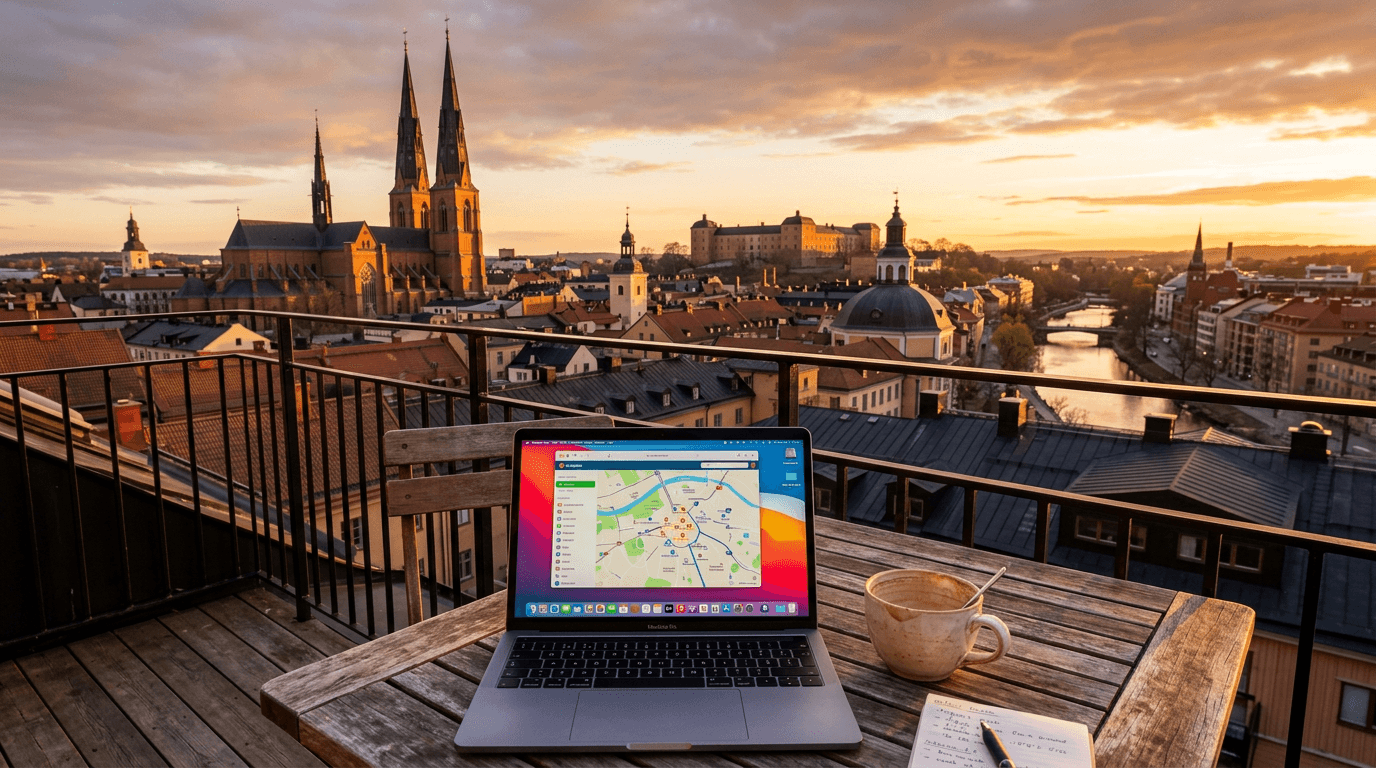
Uppsala
🇸🇪 Sweden
Uppsala feels like a university town that grew up around a cathedral, a river and a train line to Stockholm. The center is compact, flat and easy to read, with cyclists slipping past old brick facades, the Fyrisån moving quietly through town and student nations setting the rhythm after dark. It’s orderly in a very Swedish way, which means low stress, good infrastructure and not much tolerance for chaos.
For digital nomads and expats, that calm is the appeal. You can walk or bike almost anywhere, trains to Stockholm are quick and Arlanda is close enough that flying in and out doesn’t feel like a project. The downside is equally clear. Uppsala is expensive, the rental market is tight, winter gets dark fast and the social scene can feel reserved unless you actively tap into student circles, coworking spaces or expat meetups.
The city’s mood changes with the seasons. In winter, streets can feel hushed under wet snow and the cold bites through your gloves at the station platform. In spring and summer, people spill onto cafe terraces, bikes clatter over cobblestones and the river paths fill with runners and students carrying takeaway coffee. It still won’t give you Berlin energy or Stockholm variety, but that’s part of the tradeoff.
What to expect on a day-to-day basis
- Best fit: Nomads who want a safe, well-run base with easy access to Stockholm and plenty of cafes for working.
- Not ideal for: People chasing a wild nightlife scene or cheap housing. Uppsala can feel sleepy if you don’t plug in.
- Daily rhythm: Early office hours, plenty of bikes, punctual buses and a social life that usually happens in smaller groups.
- Good habits: Learn the UL app, rent or buy a decent bike and line up housing early, because last-minute searching is miserable here.
Prices are the biggest friction point. A room in a shared flat can land around 5,000 to 8,000 SEK, a small studio or 1BR outside the center often runs 9,000 to 11,000 SEK and central one‑bedrooms commonly sit around 12,000 to 15,000+ SEK. If you want a lower-stress landing spot, look at Luthagen, Fålhagen or Kungsängen before you default to the center.
Uppsala works best for people who value stability over spectacle. It’s quiet, practical and a little guarded, but once you settle in, the mix of cafes, student life, river walks and fast trains gives it a lived-in charm that’s hard to fake.
Uppsala isn't cheap and housing is the part that hurts most. Recent estimates suggest a single person’s monthly costs, not counting rent, are around 19,500 SEK and a family of four around 39,000 SEK, though these are based on limited sample data and should be treated as rough benchmarks, not exact budgets, so your actual budget rises fast once you add a lease, groceries and transport.
Rent is the big headache. Studios and one-bedrooms are hard to find, especially if you’re not already in the student system. Shared corridor rooms can dip to 5,000 to 8,000 SEK, but decent small apartments outside the center usually run 9,000 to 11,000 SEK and central one-bedrooms often hit 12,000 to 15,000+ SEK. The market moves slowly, then suddenly and good listings can disappear before lunch.
What your money covers
- Groceries: 2,500 to 3,500 SEK a month if you cook most meals.
- Lunch out: 120 to 150 SEK for dagens lunch, Thai or kebab.
- Dinner: 220 to 350 SEK for a normal sit-down meal with a drink.
- Transport: 35 to 40 SEK for a single UL bus ticket or about 800 to 1,000 SEK for a monthly pass.
The city is small enough that most people bike. That keeps costs down and saves you from waiting in a cold wind tunnel at the station when the buses are running late and the sidewalks are slick with slush.
Monthly budget ranges
- Budget: 15,000 to 19,000 SEK, with a room in a shared flat, home cooking and a bike.
- Mid-range: 21,000 to 26,000 SEK, with a studio outside the center, some coworking and weekly meals out.
- Comfortable: 27,000 to 33,000+ SEK, with a central one-bedroom, regular dining out and a transit pass.
Coworking isn’t outrageous by Swedish standards, but it adds up if you’re staying a while. Hot desks typically start around 2,000 to 3,700 SEK at many spaces, while more established setups can charge around 3,700 SEK or more for fixed desks and higher for premium locations. Home internet runs about 60 USD a month and utilities for an 85 m² apartment are roughly 134 USD.
For most nomads, the smartest move is simple: keep your housing modest, bike everywhere and don’t spend every evening eating out in Centrum. Uppsala works best for people who want calm streets, short commutes and easy Stockholm access, not for anyone expecting cheap rent or a big-city social scene.
Uppsala is small enough that you can get across town on a bike in 20 minutes, but the neighborhood you pick still changes the feel a lot. Most nomads want to be close to the station, cafes and the river, while expats with longer stays usually trade a little centrality for quieter streets and lower rents. Families tend to do better in the flatter, greener districts east and south of the center.
For nomads
Centrum is the easiest base if you want to land fast. You’re near the station, Stora Torget, Svartbäcksgatan and plenty of coffee shops, so you can walk to breakfast, work and dinner without thinking about transport. The downside is obvious, higher rents and more weekend noise near the bars.
Kungsängen and Industristaden suit people who want modern apartments and quick station access without being in the thick of the old center. The area feels a bit new-build and concrete at times, but it’s practical and the river paths are close when you need a break from screens and bad posture.
- Rent: about 12,000 to 16,000 SEK for a central 1BR
- Coworking: hot desks often start around 2,000 to 3,700 SEK a month, with higher prices at the most central or full-service spaces.
- Best for: short stays, remote workers, people arriving by train
For expats
Luthagen is the safe bet for longer stays. It’s leafy, calm and still close enough to bike into the center without turning your commute into a chore. You’ll hear more kids, bicycles and summer bird noise than nightlife, which is either a relief or a drag depending on your mood.
Fålhagen works well if you want a quieter residential feel with decent access to shops and the station. It’s less scenic than the center, but many expats prefer the lower-key streets and easier parking. Gränby can make sense if budget matters more than charm, though it’s more practical than pretty.
- Rent: about 9,000 to 11,000 SEK outside the center
- Food: groceries usually run 2,500 to 3,500 SEK a month
- Best for: longer leases, quieter routines, older professionals
For families
Årsta and parts of Fålhagen are the names that come up again and again in family chats. They’re more residential, with parks, schools and easier stroller life than the tighter central streets. You’ll still be close enough for a bike ride or bus into town, but the pace drops off once you’re home.
The tradeoff is that evenings can feel very quiet. If you want restaurant clusters and late drinks outside your door, these aren’t your places.
For solo travelers
If you’re only in Uppsala for a few days, stay in Centrum. It cuts the friction, especially in winter when the dark hits early and the sidewalks turn slick. You’ll be able to pop out for a dagens lunch, catch a train to Stockholm and get back without ever feeling stranded.
Flogsta is cheaper and social, but it’s a student world with shared kitchens, thin walls and a lot of noise during term time. Great if you want that scene, annoying if you want sleep.
Uppsala’s internet is boring in the best way. Speeds are generally solid, mobile coverage is strong and the city’s size means you’re rarely far from a cafe, library or coworking desk if your apartment’s Wi-Fi starts acting up. The annoying part is price, not quality. Monthly broadband can run around 60 USD and older rentals sometimes come with dated routers or landlord-managed connections that feel sluggish at peak hours.
Most nomads get by fine with a normal home setup plus a mobile backup, especially because the city is so walkable and bikeable. If you’re staying a few months, ask about fiber before you sign anything, because a cheap room with bad internet gets old fast when the wind is howling outside and the sun disappears by mid-afternoon in winter.
Coworking spaces
Uppsala’s coworking scene is smaller than Stockholm’s, but it works. You won’t find a huge stack of flashy options, though the spaces that do exist are clean, practical and geared toward people who actually need to get work done. Hot desks usually start around 2,000 to 3,700 SEK a month at many spaces, with some premium options higher, while fixed desks and private offices cost more.
- Workaround: A straightforward pick for hot desks, fixed desks and private offices, with monthly prices that start low by Swedish standards.
- Coworker-listed spaces: Good for checking current openings and price ranges if you want the cheapest desk you can find.
- Uppsala City Library: Not a coworking space, but a useful backup for quiet laptop hours, especially when cafes are crowded.
Best areas for working remotely
- Centrum: Best if you want cafes, the station and quick train access to Stockholm all within a short walk. Rents are high, though.
- Luthagen: Calm, leafy and easy to bike from, with enough everyday services that you won’t feel stranded.
- Kungsängen: Modern apartments, river paths nearby and a practical base if you split time between home and a coworking desk.
Cafes can work for a few hours, but they’re not all laptop-friendly. Some get busy with students, some close early and many are too small for long stretches of remote work, so it pays to test a spot before you settle in with your charger. A good pair of headphones helps too, because the city is quiet enough that the sound of cups clinking and bikes rattling past the windows stands out.
If you’re planning a longer stay, think in layers: home internet, a coworking membership and a backup SIM. That setup keeps Uppsala livable even when the rent is painful and the dark season makes you want to stay indoors all day.
Uppsala feels safe in the way many Swedish cities do, calm, orderly and easy to read. The center is compact, streets are well lit, bikes outnumber cars in a lot of areas and you can usually walk home late without much drama. The main annoyance is less crime and more winter reality, dark sidewalks, icy slush and the odd drunk student spilling out of the nations on a Friday night.
Most nomads and expats stick to Centrum, Luthagen, Kungsängen and Fålhagen and those areas are generally the easiest for staying comfortable after dark. Flogsta can get loud around semester time and the station area can feel scruffier late at night, but neither is what you’d call dangerous. Keep your wits about you around bikes, especially when paths are wet and headlights are bad.
Common sense safety
- Bike theft: Lock it properly, because unlocked bikes vanish fast in student-heavy parts of town.
- Winter slips: Sidewalk ice is the real menace, especially after freezing rain and before the grit trucks come through.
- Night transport: Late buses are fine, but many people just bike or walk, so wear something visible.
- Quiet streets: Sundays and summer evenings can feel almost empty, which some people love and others find a bit eerie.
Healthcare is solid and easy to access by Swedish standards. Primary care clinics, pharmacies and dentists are spread around town and the system runs with plenty of paperwork but usually very little chaos. If you need something urgent, Uppsala University Hospital is the main stop and it handles serious care well.
For routine issues, book early through the regional system and expect a slower pace than you might get in Southern Europe or the U.S. Pharmacies are straightforward, English is widely understood and staff usually give clear instructions, though you may have to wait longer for non-urgent appointments than you’d like. The bureaucracy can be irritating, but it isn’t messy.
Healthcare basics
- Routine care: Use a local clinic for colds, prescriptions and referrals.
- Emergency care: Call 112 for true emergencies, then head to the hospital if told to do so.
- Pharmacies: Easy to find in the center and near larger shopping areas.
- Insurance: Bring coverage that actually works in Sweden, especially if you’re not in the system yet.
The practical takeaway is simple, Uppsala is a very manageable place to live if you’re happy with cold weather, a quiet social rhythm and a city that mostly respects your space. Pack good boots, keep your bike locked and don’t expect instant medical appointments just because the system looks efficient from the outside.
Uppsala is compact enough that most people don’t bother with a car. The center, the station, the cathedral, Fyrisån and the main cafe streets are easy to cover on foot and the city’s bike lanes are good enough that locals treat cycling like a default setting, not a hobby. In winter, though, the same routes turn into cold, slippery corridors with slush underfoot and a wind that cuts across open streets.
Walking: Best for Centrum, Luthagen, Kungsängen and the riverfront. Distances are short, sidewalks are well kept and you’ll see plenty of people out with dogs, takeaway coffee and grocery bags year-round. Once the snow piles up, walking gets slower and a lot less pleasant, especially after dark.
Biking: This is the real Uppsala move. A used bike usually runs about 1,000 to 2,500 SEK and many nomads find that’s the cheapest way to live here after housing. You’ll want lights, a solid lock and winter tires if you’re staying through the dark months, because the streets can be icy and the bike racks fill with salt-crusted frames by November.
UL runs the buses and they’re generally punctual, clean and easy to figure out through the app. A single city ticket usually costs around 35 to 40 SEK when bought ahead, while a monthly pass is often 800 to 1,000 SEK depending on the zone. Handy for rainy days, but if you’re commuting daily, the bill adds up fast.
- Best for daily life: bike plus walking
- Best for bad weather: UL buses
- Best for Stockholm trips: the train from Uppsala Centralstation
- Best for airport access: Arlanda connections via rail and coach
The train is where Uppsala really punches above its size. Stockholm is close enough for day trips, client meetings or a change of scene and Arlanda Airport is easy enough to reach without a stressful transfer chain. That’s a big reason digital nomads stick around, even if the local nightlife is quiet and winter darkness can feel heavy.
For rideshares and taxi-style trips, people usually lean on the usual Swedish apps when the weather turns ugly or they’re hauling luggage. You won’t need them often, but they’re useful after a late train, in a snowstorm or when you’ve been caught in one of those cold, damp evenings that make every pavement sound squeaky under your shoes.
English gets you far in Uppsala. University staff, cafe workers and most younger locals switch without fuss and you’ll hear a lot of Swedish mixed with English in the same conversation, especially around the station, student nations and coworking spaces. Day-to-day life is pretty manageable if your Swedish is weak, but the city still feels more comfortable when you can read signs, apps and housing ads on your own.
The written stuff is where beginners stumble. Rental listings, utility accounts, tax letters and some doctor’s paperwork still show up in Swedish and the tone can be blunt, all tiny print and legal phrasing. The good news is that Uppsala is full of people who’ll help translate a confusing email or explain a form over coffee. The bad news is that official systems can be slow and you may spend more time than you’d like on BankID, QR codes and password resets.
For phone and internet, setup is usually painless if you already have a Swedish ID number and bank account. Most nomads use apps like Swish for payments, SL or UL for transit and housing platforms such as Blocket Bostad or Qasa to scan listings. If you’re arriving without Swedish, keep Google Translate on your phone and ask landlords or agents to reply in simple English. Many do.
Socially, don’t expect Swedish strangers to chat your ear off on buses or in queues. People are polite, quiet and pretty reserved in public, so silence isn’t rudeness. Once you’re introduced through work, a nation pub or a language exchange, though, conversations usually warm up fast.
What makes communication easy
- English is widely spoken: Most service staff, students and professionals handle it well.
- Tech is simple: BankID, Swish and transit apps are part of daily life.
- City size helps: Short distances mean fewer missed connections and fewer awkward logistics.
What still trips people up
- Housing admin: Contracts and move-in rules often arrive in Swedish.
- Reserved communication: People are friendly, but rarely chatty with strangers.
- Winter darkness: Short days can make everything feel quieter and a bit flatter.
If you’re staying more than a few months, learn basic Swedish greetings and the phrases tied to housing, delivery and appointments. It won’t make you fluent, but it does smooth over a lot of friction and in Uppsala that small effort goes a long way.
Uppsala is at its best from late May through September, when the light hangs around, the terraces fill up and the whole city feels less hushed. Summer days can be warm without getting punishing and the bike paths, river walks and parks actually get used instead of just passing by under gray skies.
June is usually the sweet spot. The streets around Fyrisån smell like cut grass and coffee, students spill out of the nations and you can get a long evening after work without feeling rushed home by cold or darkness. August can be pleasant too, though it often comes with a bit more rain and a slower post-holiday rhythm.
Best times by travel style
- For weather: Late May to mid-September. Best for walking, biking and sitting outside without a jacket glued to your chair.
- For lower stress: February to April. Fewer tourists, but also fewer reasons to stay out late.
- For social life: Autumn term, especially September and October, when student nations wake back up and the city gets its energy back.
Winter is the part that catches people off guard. November through March is dark, cold and a little relentless, with short days, wet sidewalks and the kind of wind that finds every gap in your coat. It’s not only the temperature, it’s the gray light and the damp tile floors in older apartments that make everything feel colder than the thermometer says.
If you’re coming for a long stay, avoid planning your arrival in deep winter unless you already know you can handle it. January and February are the toughest months for most nomads, especially if you’re new to Sweden and still sorting out housing, routines and a social circle. The city works fine. Your mood might not.
What to expect month to month
- Winter: Low daylight, high comfort food demand and a quieter social scene. Good for focused work, bad for spontaneity.
- Spring: Slushy sidewalks, muddy bike lanes and a slow return of outdoor life. March can feel endless.
- Summer: The easiest time to settle in, meet people and see the city on foot.
- Fall: Crisp air, busy campuses and a practical reset after summer travel. It’s one of the better times to arrive.
For digital nomads, the safest bet is June through early September if you want the city at its most livable. If you’d rather find housing with less competition and don’t mind the dark, October can be a smart compromise. Skip the worst of winter unless you’re chasing quiet and can handle a lot of indoor time, strong coffee and the soft grind of snow under boots.
Uppsala is easy to live in, but not cheap. The city is compact, safe and set up for bikes and buses, so most day-to-day friction is low, yet housing rents, winter darkness and a quieter social scene can still wear you down if you’re expecting Stockholm energy on a smaller budget.
For practical life, the biggest win is how little you need a car. The center, Luthagen, Kungsängen and much of Fålhagen are walkable and a used bike usually does the job for most errands. Streets are calm, the river paths are pleasant for slow rides and the only real annoyance is winter, when slush, black ice and a biting wind make every trip feel longer.
What your monthly budget looks like
- Shared room or corridor room: 5,000 to 8,000 SEK rent
- Studio or small 1BR outside the center: 9,000 to 11,000 SEK rent
- Central 1BR: 12,000 to 15,000+ SEK rent
- Groceries: 2,500 to 3,500 SEK if you cook most meals
- Lunch out: 120 to 150 SEK for dagens lunch, Thai or kebab
- Coworking: about 1,450 to 3,700 SEK depending on access
For many nomads, the sweet spot is a room in a shared flat or a modest studio outside the center, then coffee shops and a coworking day pass when you need better focus. Central places around Stora Torget and the station are convenient, but the rents can feel brutal for what you get.
UL buses are reliable, though daily rides add up fast. A bike is usually the smarter move and apps like UL make trip planning easy; for trains, the station gives you quick access to Stockholm and Arlanda, which is one reason Uppsala works so well for short and medium stays.
Where nomads usually stay
- Centrum: best for first-timers, cafes and rail access, but priciest and noisier on weekends
- Luthagen: calmer, leafy and still close enough to bike everywhere
- Kungsängen: modern apartments near the station, less charm but very practical
- Flogsta: cheaper and social, though corridor life and late-night noise aren’t for everyone
Practical advice is simple, book housing early, especially if you’re arriving for a semester start or summer sublet season. If you’re staying a few months, check student housing boards, local Facebook groups and Swedish rental sites, because the market moves in strange bursts and the good deals disappear fast.
One last thing, bring a proper winter coat and a low tolerance for gloomy afternoons. The city is excellent for focused work, quiet routines and easy movement, but it does best when you’re comfortable with cold mornings, dark evenings and a social life that takes effort to build.
Frequently asked questions
How expensive is rent in Uppsala for digital nomads?
What are the best neighborhoods in Uppsala for remote workers?
Is Uppsala a good city for digital nomads?
How much does it cost to live in Uppsala each month?
Is internet good in Uppsala for remote work?
Is Uppsala safe for solo travelers and expats?
How easy is it to get around Uppsala without a car?
Need visa and immigration info for Sweden?
🇸🇪 View Sweden Country GuideEasy Landing
Settle in, no stress