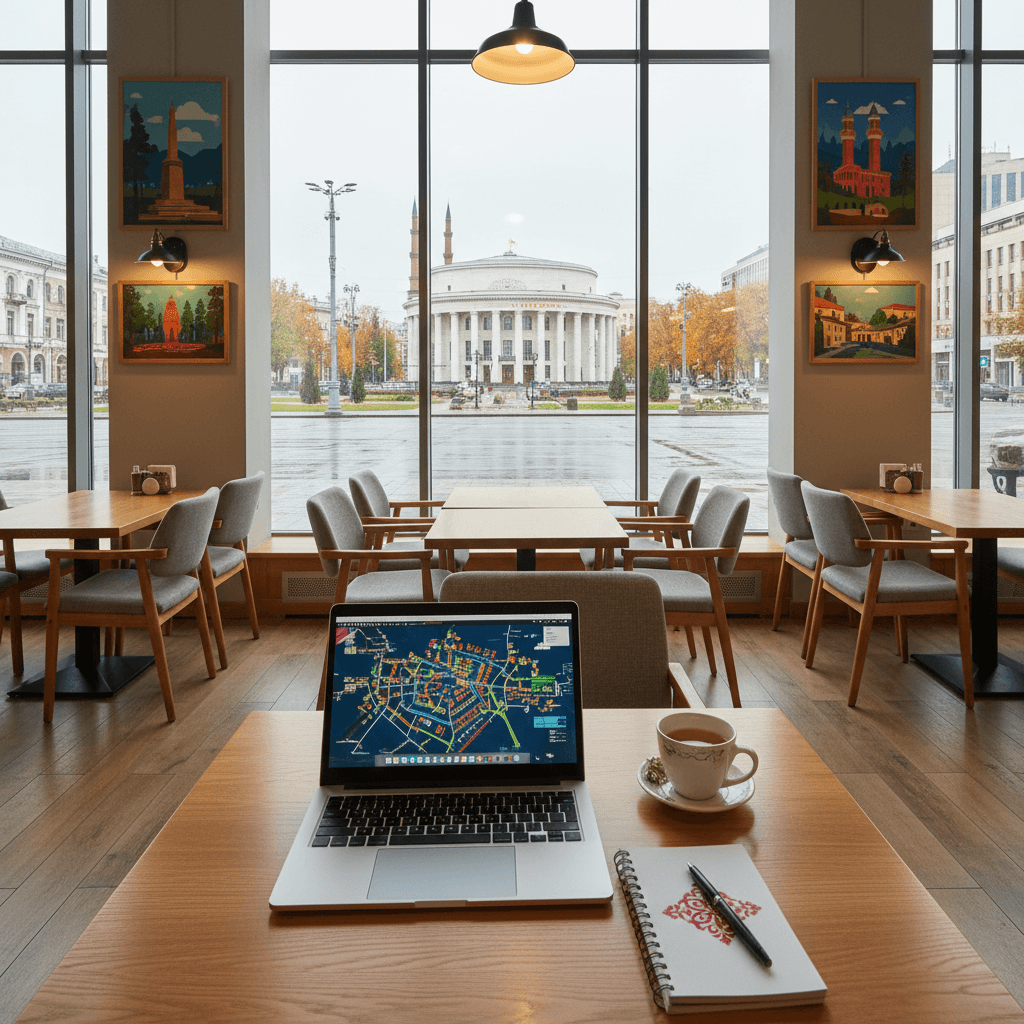
Ufa
🇷🇺 Russia
The Gateway to the Urals
Ufa doesn't feel like the typical Russian provincial hub. While cities like Kazan lean heavily into their tourist appeal, Ufa remains a bit of a secret, sprawling across a plateau at the confluence of the Belaya and Ufa rivers. It is the capital of Bashkortostan, a region where the vastness of the Russian steppe meets the rising peaks of the Ural Mountains. You'll notice the atmosphere is distinct from Moscow or St. Petersburg; it's slower, rooted in a unique blend of Turkic heritage and Slavic tradition.
The city's layout is defined by its rolling hills and a mix of architectural eras. You can walk past a 19th-century wooden merchant's house and find yourself staring at a gleaming glass skyscraper or a massive Soviet monument within the same block. For nomads, the appeal lies in this lack of pretension. It is an affordable, functional city that treats visitors with a genuine, unpolished hospitality that's hard to find in more westernized hubs.
The Local Vibe and Social Pulse
The energy in Ufa is centered around a newfound pride in urban spaces. The standout spot is Art-Kvadrat, a massive creative cluster that has transformed a historic city block into a maze of street art, cafes, and small boutiques. It functions as the city's living room. On any given evening, you'll find local entrepreneurs on laptops, skaters, and street performers all sharing the same space. It feels remarkably similar to the creative hubs in Berlin or Warsaw, but with a distinctly Bashkir twist.
Life here follows the seasons. In the summer, the city is surprisingly green, and the renovated Belaya River embankment becomes the place to be for sunset walks. In the winter, the city hunkers down, and the focus shifts to cozy indoor spots and the rugged outdoor sports available in the nearby mountains. People are generally reserved at first but incredibly helpful once you break the ice. You'll hear both Russian and Bashkir on the streets, adding to the city's multi-layered identity.
Key Neighborhoods for Nomads
- The Historical Center (Kirovsky District): This is where you want to be. It houses the main universities, the best coffee shops, and the Gostiny Dvor shopping arcade. It's walkable and contains most of the city's cultural landmarks like the Seven Girls Fountain.
- Zelenaya Roshcha: A greener, more residential area south of the center. It's popular with families and long-term expats who want more space and proximity to the forest parks, though you'll need to rely on taxis or buses to get to the main action.
- Chernikovka: Located in the north, this area is famous for its Stalinist architecture. It has a gritty, industrial history and a very different "old school" vibe, though most nomads find it a bit too far from the central coworking scene.
What Makes Ufa Different?
Ufa stands out because of its "middle-ground" status. It provides a high standard of living for a fraction of the cost of Moscow. You can find a high-end meal for 1,200 to 1,800 rubles or a great cup of specialty coffee for 250 rubles. It's a city that rewards the curious. You might spend your morning working from a modern cafe and your afternoon visiting the Monument of Friendship or the Bashkir State Art Museum, which houses an impressive collection of Mikhail Nesterov's works.
The emotional experience of Ufa is one of discovery. There is a sense of being "off the map" for Western travelers, which creates a bond among the small expat and nomad community here. It isn't a city that tries to impress you with flashy tourist traps; instead, it invites you to settle into its rhythm, explore its hilly streets, and enjoy the surprisingly sophisticated food and art scene that thrives beneath its quiet exterior.
The Bottom Line
Ufa hits that sweet spot for nomads who want a high quality of life without the Moscow price tag. It's significantly cheaper than the capital or St. Petersburg, yet it offers a polished urban experience. You'll find that your money goes surprisingly far here, especially if you're earning in a stronger foreign currency.
Most digital nomads can live very comfortably on a budget of $1,100 to $1,400 per month. This covers a modern apartment in the center, eating out frequently, and keeping a social life active at spots like Art-Kvadrat. If you're on a tighter budget, you can easily shave off a few hundred dollars by staying slightly outside the historical core.
Accommodation and Neighborhoods
Rent is your biggest variable. The city center, particularly around Gostiny Dvor and the Chernyshevskogo area, is where you want to be for walkability. While the city has plenty of older Soviet-era blocks, nomads usually gravitate toward the newer "comfort class" developments that feature better insulation and modern elevators.
- Modern One-Bedroom (City Center): Expect to pay between $350 and $500 per month. These usually come fully furnished.
- Studio (Outer Districts): Prices drop to around $250 to $300 in areas like Zaton or Sipailovo, though the commute can be a grind.
- Utilities: Heating, water, and electricity usually add another $60 to $90, depending heavily on how hard the radiators are working during the winter months.
Food and Dining
The food scene is a mix of traditional Bashkir flavors and modern European bistros. You'll find yourself eating out more than usual because the prices are so accessible. A business lunch, which is a staple in Ufa, typically includes three courses and a drink for a fixed price during weekdays.
- Mid-range Dinner for Two: Around $30 to $45 at a nice place in the center, including a couple of drinks.
- Business Lunch: Roughly $5 to $8 at most local cafes.
- Coffee: A flat white or cappuccino at a specialty shop like Godji or Mama Cook will run you about $2.50 to $3.50.
- Groceries: A weekly shop for one person at chains like Magnit or Pyaterochka usually costs about $40 to $55.
Getting Around and Connectivity
Ufa is sprawling, so you'll likely rely on apps for transport. Yandex Go is the go-to for both taxis and food delivery. Most nomads find the "Comfort+" tier of taxis is still very affordable, rarely costing more than $6 for a cross-town trip.
- Monthly Transport Pass: About $15 for unlimited bus and tram rides.
- SIM Card: A local plan with 50GB of data from providers like MTS or MegaFon costs around $8 to $12 per month.
- Coworking: A dedicated desk at a space like IT Ufa or AZIMUT City Hotel Ufa coworking usually costs about $120 to $150 per month, though many people just work from the spacious cafes in Art-Kvadrat for the price of a few lattes.
Lifestyle and Entertainment
Entertainment is where Ufa really shines for the budget-conscious. A ticket to the Bashkir State Art Museum is only a few dollars, and a night out at a local bar won't break the bank. Craft beers at local pubs generally cost between $3 and $5. If you're into fitness, a monthly membership at a high-end gym with a pool typically stays under $50.
The Urban Core (Tsentr) for Nomads
If you want to be where the action is, the historical center is your best bet. This area feels like a mix of old world Russia and modern creative energy. Most nomads head straight for the streets surrounding Art-Kvadrat. This repurposed urban space is the city's heartbeat, packed with cafes, street art, and small boutiques. It's the closest thing Ufa has to a dedicated nomad hub.
For deep work, the Gostiny Dvor area is the place to be. You'll find plenty of spots with solid Wi-Fi, and the atmosphere is professional yet relaxed. Local apartments here are often in renovated "Stalinkas" with high ceilings, though they come at a premium. Expect to pay around 45,000 to 60,000 RUB per month for a high quality studio in this district.
- Top Spot: Art-Kvadrat for networking and coffee.
- Internet: Reliable fiber optics are standard in most modern rentals here.
- Vibe: Fast paced, walkable, and culturally dense.
Zelyonaya Rosha for Expats
Expats who plan on staying for more than a few months often gravitate toward Zelyonaya Rosha. It translates to "Green Grove," and the name fits. It's located southeast of the center and offers a much better balance of price and space. You're surrounded by pine forests and parks, which makes the air feel significantly fresher than in the industrial parts of the city.
The infrastructure here is excellent. You have large shopping malls like Ultra and Arkadia, plus plenty of fitness centers. It's a bit of a commute to the center, usually 20 minutes by taxi or 40 minutes by bus, but the quiet nights are a fair trade. Rental prices are more digestible here, usually ranging from 30,000 to 40,000 RUB for a modern one bedroom apartment.
- Best for: Long term stays and those who prioritize nature.
- Amenities: Large supermarkets and modern gyms are everywhere.
- Transport: Well connected by the city's "marshrutka" minibus network.
Sipyaylovo for Families
Sipyaylovo is a massive residential district that sits in a bend of the Ufa River. While the architecture is dominated by high rise apartment blocks, it's incredibly functional for families. The Kashkadan Park was recently renovated and features a large lake, play areas, and a fountain show that kids love. There are schools and clinics on almost every corner, making logistics a lot easier.
The cost of living here is lower than in the center. You can find spacious three bedroom apartments for about 45,000 RUB. The main drawback is the traffic during rush hour, as there are only a few main roads connecting this "island" to the rest of Ufa. If you work from home and don't need to head downtown daily, it's a very comfortable bubble.
- Family Perks: Massive parks and plenty of extracurricular clubs for children.
- Shopping: Home to the Planeta mall, the largest in the region.
- Budget: Very affordable groceries and services compared to the Tsentr.
Chernikovka for Solo Budget Travelers
Chernikovka is the northern part of the city and has a distinct, gritty identity. It was originally a separate industrial city before being absorbed into Ufa. It's famous for its "Stalinist Empire" architecture, especially along Pervomayskaya Street. It's not the most polished neighborhood, but it's authentic and very cheap.
Solo travelers on a tight budget can find decent rooms or small apartments for as low as 20,000 RUB. The area has its own cultural life, including the Ordzhonikidze Palace of Culture and several local theaters. While it has a reputation for being a bit rougher around the edges, the main avenues are safe and well lit. It's a great choice if you want to see the "real" industrial soul of the Urals without the tourist gloss.
- Cost: The most affordable district for housing and local eats.
- Architecture: Incredible Soviet era facades and wide boulevards.
- Distance: About 30 to 45 minutes from the city center by public transport.
The Connectivity Landscape
Ufa is a surprisingly tech-forward city, largely thanks to its status as a major regional hub for the oil and gas industry. You won't struggle to find a reliable connection here. Most central apartments and modern rentals are wired with fiber optics, typically offering speeds between 100 Mbps and 300 Mbps. If you're staying in the newer developments or renovated units in the Centr district, you can expect stable, high-speed internet that handles video calls and large uploads without a hiccup.
Mobile data is incredibly cheap and ubiquitous. Picking up a local SIM card from providers like MTS, MegaFon, or Beeline is the first thing you should do. For roughly $8 to $12 USD a month, you can get a plan with generous data or even unlimited traffic. LTE coverage is solid across the city, though it might dip to 3G if you head out toward the more industrial outskirts or deep into the greenery of the Zaton area.
Top Coworking Spots
The remote work scene in Ufa revolves around a few key hubs, with Art-Kvadrat being the undisputed heart of the creative and digital community. It's more than just an office; it's a massive urban space built into a historical block. Inside, you'll find plenty of spots to park a laptop, but for a dedicated desk, nomads usually head to the professional setups nearby.
- IT Ufa: This is a well-regarded hub for the city's tech community. It offers a professional environment tailored for productivity, providing the necessary infrastructure for developers and digital professionals looking for a stable place to work.
Laptop-Friendly Cafes
If you prefer the hum of a coffee shop, Ufa has a thriving third-wave coffee culture. The staff in most central cafes are used to people working for a couple of hours, as long as you keep the lattes coming. Godzhi is a local favorite with a minimalist vibe and plenty of power outlets. The Wi-Fi is fast enough for most tasks, and the atmosphere is focused.
Another solid choice is Charlie, which has a more eclectic, cozy feel. It’s perfect for morning emails or light admin work. For those who need a bit more space, the cafes inside or surrounding Art-Kvadrat are your best bet. Because the area is designed for lingering, you won't feel rushed to leave. Just keep in mind that these spots can get loud on weekday afternoons when the local student crowd rolls in.
Practical Tips for Digital Nomads
While public Wi-Fi is common in malls and parks, you'll often need a Russian phone number to authenticate via SMS. This is why getting that local SIM card is mandatory rather than optional. Most nomads find that using their phone as a hotspot is a reliable backup, as local mobile speeds often rival the Wi-Fi in smaller cafes.
If you're planning on staying long-term, it's worth asking your landlord for the account details for the home internet. Most providers like Ufanet have English-capable apps or websites where you can top up the balance instantly using a local bank card or digital wallet. If you're working on a US or European schedule, the time zone (GMT+5) means you'll be working late into the evening, but luckily many of the central cafes and eateries stay open until 11:00 PM or midnight.
General Safety in Ufa
Ufa is generally a very safe city for foreigners, often feeling more relaxed than Moscow or St. Petersburg. The locals take immense pride in their Bashkir hospitality, and you'll likely find people more curious than cautious when they hear you speaking English. Walking through the historical center or along the Belaya River embankment at night is common and rarely poses a risk, provided you stick to well lit areas.
Petty crime like pickpocketing isn't a major issue, but it's still smart to keep your bag zipped when you're navigating the crowds at Gostiny Dvor or the Art-Kvadrat hub. The biggest "danger" you'll likely face is the winter ice. From December to March, the sidewalks can be treacherous; locals recommend buying boots with good grip or "ice attachments" from local markets to avoid a trip to the ER.
For getting around safely at night, avoid hailing random cars. Use apps like Yandex Go or Uber Russia. These services provide the driver's name, plate number, and a fixed price, which eliminates the risk of overcharging or getting lost.
Healthcare Infrastructure
If you need medical attention, Ufa has a solid mix of public and private facilities. For digital nomads, private clinics are the way to go. They are affordable by Western standards and often have staff who speak at least some English. Mat i Ditya (Mother and Child) is one of the most reputable private networks in the city. A standard consultation with a specialist usually costs between 1,500 and 2,500 RUB.
For dental work, Ufa is actually a bit of a regional hub because prices are lower than in Moscow. Clinics like Novikovskiye Stolomatologii are modern and use high end equipment. Most nomads find that they can get a professional cleaning or a filling for a fraction of what they would pay in Europe or the US.
- Emergency Number: Dial 112 for all emergency services; they usually have English speaking operators available.
- Pharmacies: Look for signs saying Apteka (Аптека). Chains like Farmlend are everywhere and many stay open 24/7.
- Prescriptions: Many medications that require a script in the US are available over the counter here, but always bring your original containers just in case.
Staying Healthy and Hydrated
Don't drink the tap water in Ufa. While it's fine for showering and brushing your teeth, the mineral content and old piping in some districts can upset your stomach. Most locals use a Barrier or Aquaphor filter pitcher, or they buy 5 liter jugs of bottled water from grocery stores like Magnit or Pyaterochka for about 100 RUB.
If you have specific allergies, especially during the spring bloom, be prepared. The city is incredibly green with lots of lime trees and poplars, which can trigger hay fever in May and June. You can find common antihistamines like Cetirizine or Loratadine at any local pharmacy without a hassle.
Insurance and Documentation
When you arrive, make sure your travel insurance specifically covers Russia, as many international policies have paused coverage recently. You'll need a policy that includes medical evacuation. It's also a legal requirement to carry a copy of your passport and your migration card at all times. While police rarely stop foreigners for random checks in Ufa, having a digital scan on your phone and a paper copy in your bag keeps things stress free.
Navigating the City
Ufa is spread out across a series of hills between the Belaya and Ufa rivers, which means your legs will get a serious workout if you try to walk everywhere. The city layout is somewhat linear, stretching from the historical center in the south toward the industrial and residential districts in the north. Most nomads stick to the southern hub, where the grid is predictable and the sidewalks are generally well maintained.
The backbone of local transit is a mix of large municipal buses, electric trolleybuses, and the ubiquitous private minibuses known as marshrutkas. While there is no metro system, the bus network is dense. You can expect to pay around 35 to 40 rubles for a single ride. If you are staying for more than a week, pick up an Alga card. It is a plastic transport card that knocks a few rubles off every fare and makes boarding much faster because you just tap and go.
- Buses and Trolleybuses: These are the most reliable for long hauls up the main artery, Oktyabrya Avenue. They usually run from 6:00 AM to 11:00 PM.
- Marshrutkas: These smaller vans are faster but can be cramped. You often pay the driver directly upon entering or exiting. They cover niche routes that the big buses miss.
- Trams: These mostly serve the northern districts and the outskirts. They are slower and older, but they offer a scenic, nostalgic way to see the less touristy parts of town.
Ride Hailing and Apps
For most expats and digital nomads, Yandex Go is the lifeline for getting around. It is the Russian equivalent of Uber and works seamlessly. You can link your local bank card or pay in cash. A typical 15 minute cross town ride will usually set you back between 200 and 350 rubles, depending on the time of day and traffic. During peak hours, specifically 8:00 AM to 10:00 AM and 5:30 PM to 7:30 PM, traffic on Oktyabrya Avenue can crawl, so plan accordingly.
If you prefer two wheels, Ufa has embraced the electric scooter craze. During the warmer months from May through September, you will see Whoosh and Urent scooters parked on almost every corner. You unlock them via an app, and they are perfect for ziping between Art-Kvadrat and the river embankment without breaking a sweat.
Walking the Center
The historical core is surprisingly walkable. You can easily trek from the Gostiny Dvor shopping complex over to the Monument of Friendship in about 20 minutes. The city has invested heavily in pedestrian zones lately. Art-Kvadrat is the gold standard here; it is a fully pedestrianized block where you don't have to worry about cars. The renovated Belaya River embankment is another favorite for evening strolls, though be prepared for a steep climb back up the hill to the city center.
Getting to and from the Airport
Ufa International Airport (UFA) sits about 25 kilometers south of the city center. The most painless way to get into town is a Yandex Go car, which costs roughly 600 to 900 rubles and takes 30 to 45 minutes. If you are on a budget, look for Bus 110 or Bus 101. These run frequently and will drop you off at major hubs like the Central Market or the main railway station for a fraction of the taxi price. Just keep in mind that hauling heavy luggage onto a crowded public bus during rush hour is a rite of passage you might want to avoid.
Regional Travel
If you want to head out of the city to explore the Ural Mountains or nearby Bashkir villages, the train station is your best bet. It sits at the bottom of a steep hill near the river. High speed "Lastochka" trains connect Ufa to nearby cities like Asha or Magnitogorsk, offering a comfortable way to see the rugged landscape. For local exploration, many nomads find it easier to rent a car for a weekend via local agencies, which typically costs around 2,500 to 4,000 rubles per day for a standard sedan.
The Bilingual Balance
Ufa is the capital of Bashkortostan, and that means you are stepping into a truly bilingual environment. You will see signs in both Russian and Bashkir, and while Russian is the primary language for business and daily life, the Bashkir language is a point of immense local pride. Most locals switch between the two seamlessly, though as a visitor, you will almost exclusively interact in Russian.
English proficiency is hit or miss. In modern hubs like Art-Kvadrat or trendy coffee shops like Godzhi, the younger crowd and baristas usually speak enough English to help you out. However, don't expect the person at the neighborhood grocery store or the bus driver to understand you. Learning the Cyrillic alphabet is a non-negotiable prerequisite here; it makes reading menus and street signs significantly less stressful.
Essential Communication Apps
To get by without a hitch, you need a specific digital toolkit. Google Translate is okay, but Yandex Translate is far superior for Russian because it handles Slavic grammar and slang much better. It also has a solid offline mode and a camera feature for translating menus at spots like Duslyk where English versions might not exist.
- Telegram: This is the lifeblood of communication in Ufa. From booking a haircut to joining local expat groups or finding apartment listings, everything happens on Telegram.
- 2GIS: Forget Google Maps. 2GIS is the gold standard for navigating Ufa. It shows you exactly which entrance to use for a building and even tracks the real-time location of buses and trams.
- Yandex Go: You will use this for taxis and food delivery. It removes the need to speak to drivers, which is a relief if your Russian is still at the "hello" and "thank you" stage.
Staying Connected
Getting a local SIM card is the first thing you should do after landing at Ufa International Airport (UFA). You can find kiosks for MTS, MegaFon, and Beeline in the arrival hall. A standard monthly plan with 30GB to 50GB of data usually costs around 600 to 900 rubles, which is roughly $7 to $10.
You will need your passport to register the SIM. Most nomads prefer MegaFon in Ufa because it tends to have the most stable 4G and 5G coverage throughout the hilly city center and inside the thick-walled Soviet era buildings. Wi-Fi is ubiquitous in cafes and coworking spaces, usually hitting speeds of 50 Mbps to 100 Mbps, though you often need a Russian phone number to authenticate and log in to public networks.
Cultural Nuances in Speech
People in Ufa are known for being incredibly hospitable, but they might seem reserved at first. Don't mistake a lack of "service smiles" for rudeness. It is just the local way. Once you start a conversation, locals are often eager to share tips about the best places to find authentic Chak-chak or horsemeat delicacies.
If you want to win some serious respect, learn a few words in Bashkir. Saying "Rakhmat" instead of the Russian "Spasibo" for "thank you" goes a long way. It shows you recognize the distinct culture of the region rather than just treating it as another Russian province. Travelers often find that even a tiny bit of effort in the local tongue opens doors to more personal, authentic experiences in the city.
The Seasonal Shift
Ufa sits in a unique spot where the Ural Mountains begin to ripple out into the plains, meaning the weather is far from subtle. You'll experience a classic continental climate here. Summers are surprisingly hot and humid, while winters are long, snowy, and uncompromising. If you're planning a stint here, your experience will be defined entirely by which side of the thermometer you land on.
Most nomads aim for the window between late May and early September. This is when the city truly breathes. The rolling hills surrounding the Belaya River turn deep green, and the riverside embankments fill up with people. During July, temperatures often hover around 25°C to 28°C, though heatwaves can push it past 30°C. It's the best time to enjoy Art-Kvadrat without shivering or to take a weekend trip into the nearby mountain ranges.
Surviving the Bashkir Winter
If you choose to stay through the winter, prepare for a serious gear investment. From December through February, the mercury rarely climbs above -10°C, and snaps of -25°C are common. The city handles snow well, but the days are short and the wind can be biting. On the plus side, the air is crisp, and the local tea culture becomes your best friend. It's the perfect environment for deep work if you don't mind the "hibernation" lifestyle.
The shoulder seasons are short. Spring usually arrives in a muddy rush in April as the snow melts, while autumn is a brief, golden flash in October. These months are unpredictable; you might get a week of perfect sweater weather followed by a sudden frost.
Best Time for Your Budget and Vibe
- Peak Season (June to August): Perfect for outdoor festivals, hiking in the Urals, and working from cafe terraces. Flights from Moscow or St. Petersburg are more expensive, and central apartments get booked early.
- The Sweet Spot (September): The "Velvet Season" brings cooler, comfortable air and fewer crowds. It's arguably the most photogenic time to see the city's wooden architecture against the changing leaves.
- The Budget Play (November or March): If you want the lowest possible rent and don't care about the gray skies, these are the months. Most expats find this time a bit gloomy, but the indoor coworking scene is still active.
What to Pack
Ufa isn't a place for "transitional" clothing. You need distinct wardrobes. For summer, light linens and decent walking shoes are a must for the hilly terrain. For winter, you need a heavy down parka, thermal layers, and boots with serious grip. Locals dress practically but stylishly; you'll see a lot of high-end outdoor gear mixed with modern urban fashion.
Pro tip: Don't forget an umbrella or a light raincoat for June. It's the wettest month, and the thunderstorms can be sudden and heavy. Most travelers find that having a solid windbreaker is useful year round because of the breeze coming off the river plains.
Getting Around and Staying Connected
Navigating Ufa is relatively straightforward once you download Yandex Go. It is the gold standard for ride-hailing here, and a cross-town trip rarely exceeds 350 RUB. For those who prefer public transit, the city relies on a network of buses and "marshrutkas" (minibuses). A single fare is usually around 35 to 40 RUB, and you can pay by tapping your credit card or using the Alga transport card for a small discount.
Staying online is easy and cheap. You can pick up a local SIM card from providers like MTS or MegaFon at the airport or near Gostiny Dvor. A monthly plan with 50GB of data typically costs about 600 to 800 RUB. Home internet is exceptionally fast, often reaching 100 Mbps for less than $10 a month, making it a reliable spot for video calls and heavy uploads.
Cost of Living and Budgeting
Ufa is significantly more affordable than Moscow or St. Petersburg. Most digital nomads find they can live comfortably on $900 to $1,200 per month, including a nice apartment and frequent dining out. The local currency is the Russian Ruble, and while cards are accepted almost everywhere, it is smart to keep some cash for smaller markets or older buses.
- One-bedroom apartment in the center: 30,000 to 45,000 RUB per month.
- Coworking day pass: 600 to 1,000 RUB.
- Business lunch at a cafe: 400 to 600 RUB.
- Local beer (0.5L): 150 to 250 RUB.
Where to Work
The remote work scene centers around Art-Kvadrat. This creative cluster is the heart of the city's modern soul, filled with cafes, street art, and open spaces. It is the closest thing Ufa has to a dedicated nomad hub. If you prefer the "laptop and latte" lifestyle, Kasha and Charlie are popular spots where the Wi-Fi is strong and the staff won't mind if you linger for a few hours.
Neighborhoods to Know
Most expats and long-term visitors stick to the Kirovsky and Leninsky districts. These areas comprise the historical center and offer the best walkability. You will be within steps of the best restaurants and the scenic Belaya River embankment.
Kirovsky (City Center)
- Vibe: Historic meets modern, very walkable.
- Rent: 35,000+ RUB for a modern studio.
- Best for: Socializing and being near Art-Kvadrat.
Zelenaya Roshcha
- Vibe: Quieter, residential, and greener.
- Rent: 25,000 to 30,000 RUB for a one-bedroom.
- Best for: Nature lovers who want to be near the forest parks.
Practical Realities
English proficiency is hit or miss. Younger crowds at places like Art-Kvadrat will speak it well, but you will need Yandex Translate or Google Translate for the grocery store or the pharmacy. Learning the Cyrillic alphabet is a weekend project that pays off immediately when reading street signs or menus.
Safety is generally not a major concern. Ufa feels like a large, sleepy provincial capital. Standard urban precautions apply, but walking around the center at night is common and safe. Just keep an eye on the weather; winters are long and can drop to -20°C, so high-quality boots and a heavy parka are non-negotiable if you are visiting between November and March.
Need visa and immigration info for Russia?
🇷🇺 View Russia Country GuideEasy Landing
Settle in, no stress