Udaipur
🇮🇳 India
The Venice of the East for the Remote Professional
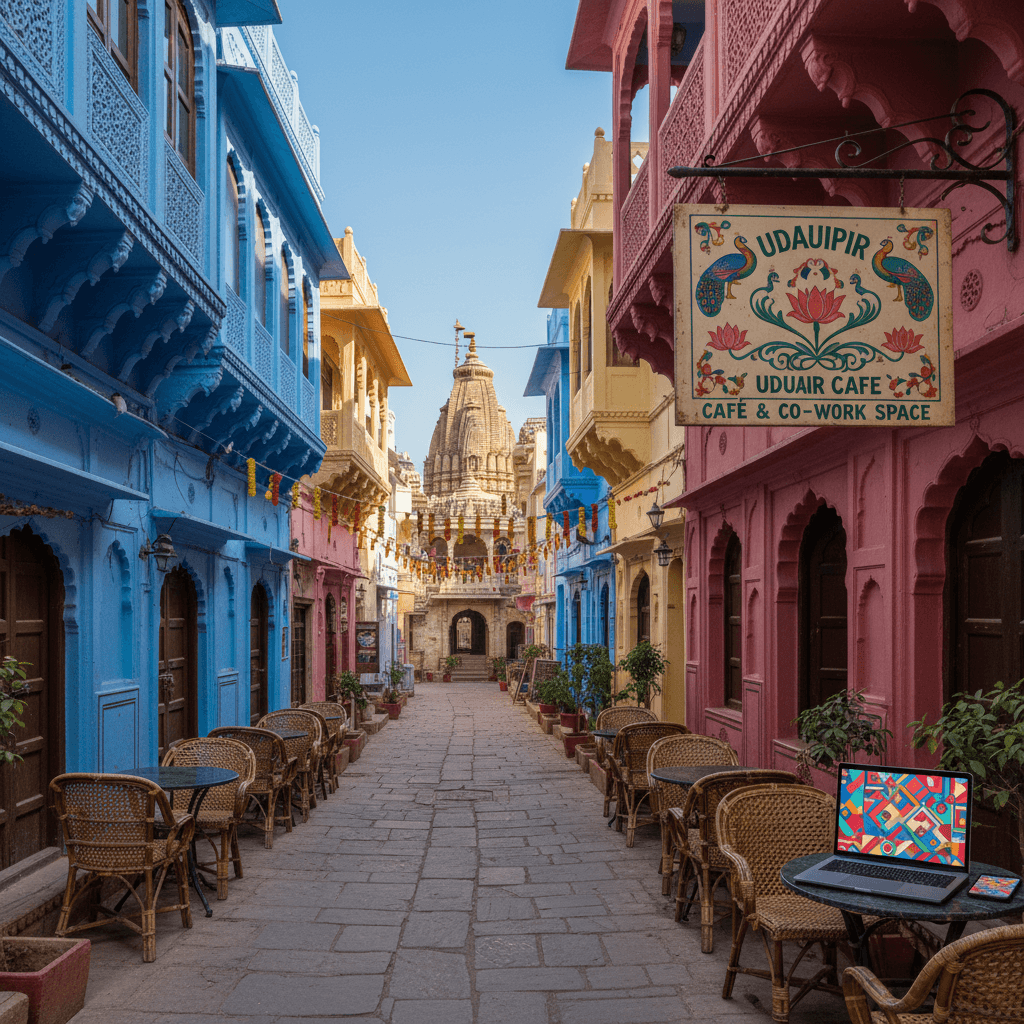
Udaipur is a refreshing break from the high-octane energy of Delhi or Mumbai. Often called the Venice of the East, it trades smog-choked skylines for the marble domes of the City Palace and the shimmering waters of Lake Pichola. For digital nomads, it's a place where the morning routine involves a cup of masala chai on a rooftop, watching the sun hit the Aravalli Hills before opening a laptop.
The pace here is slower. You'll find yourself walking through narrow, winding alleys where artisans still paint miniatures and dye textiles by hand. It's a city that feels royal but remains deeply accessible. While other Indian hubs focus on tech and startups, Udaipur centers on aesthetics, heritage, and a quiet productivity that works well for those in creative fields or anyone needing a mental reset.
The Living Experience
Most nomads gravitate toward the Old City (Polo and Lal Ghat) despite the chaos of its labyrinthine streets. It's the heart of the action, where you can find homestays that feel like private palaces. If you need more breathing room, Chandpole is the go-to for budget-conscious travelers; it's a bit more modern and residential but still close to the markets. For those with a higher budget, Rani Road on the west side of the lake offers tranquility and upscale boutiques, though you'll pay a premium for the peace.
The cost of living is one of Udaipur's biggest draws. You can comfortably manage on $500 to $1,000 per month depending on your lifestyle. Rent for a decent 1BR or studio in Chandpole is quite low, while a mid-range lakeside homestay with a desk and reliable WiFi will sit in that middle bracket. If you want luxury, expect to spend $1,000+ for a spot on Rani Road.
- Budget Tier: Under $500/month (Chandpole area, street food, local transport).
- Mid-Range: $500 to $1,000/month (Old City homestays, mix of cafes and local eats).
- Comfortable: $1,000+/month (Rani Road residences, coworking memberships, fine dining).
Connectivity and Workspace
Internet can be a mixed bag. Many homestays have leveled up their game, but it's smart to ask for a Speedtest screenshot before booking. Monsoons from July to September can occasionally knock out power or signal, so having a backup is a must. Most expats rely on Jio or Airtel SIM cards for 4G/5G data, which is generally reliable throughout the city.
Coworking is still a growing scene here. You'll find spaces charging between INR 500 and 2,500 per day (roughly $6 to $45). However, the real "office" culture happens in the cafes. Places like Jheel's Ginger Coffee Bar or various rooftop spots in Lal Ghat are unofficial nomad hubs. You'll see plenty of people working with a view of the Lake Palace, though it's polite to keep the coffee orders flowing if you're camping out for hours.
Daily Life and Logistics
Getting around is easy if you're comfortable with Uber or Ola, though many nomads rent a scooter for about INR 300 to 500 per day to navigate the tighter corners of the Old City. Walking is great for short distances, but the streets are narrow and you'll be sharing them with cows, motorbikes, and the occasional wedding procession.
Safety is high, and the local community is used to foreigners. However, keep an eye on the air quality during the winter months (October to March). While the weather is a perfect 15 to 30°C, the AQI can occasionally dip into the "poor" category. If you're sensitive to dust or pollution, a high-quality mask is worth packing.
Social Scenes and Slow Evenings
Udaipur isn't a party town. Nightlife usually means a sunset boat cruise or a long dinner at a lakeside restaurant like Ambrai. Socializing happens at miniature painting workshops, block printing classes, or the Shilpgram craft fair. To meet people, check out local expat groups on Fairytrail or Nomad Soulmates, though most connections happen organically at the popular cafes or through your homestay hosts.
- Street Food: INR 50 to 100 at Bada Bazaar or Hathi Pol.
- Mid-range Meal: INR 200 to 500 at a lake-view cafe.
- Workshops: INR 1,500 to 10,000 for traditional art experiences.
Ultimately, Udaipur is for the nomad who wants to trade the "grind" for a bit of grandeur. It's affordable, visually stunning, and just quiet enough to actually get some work done between palace tours and lakeside strolls.
The Bottom Line
Udaipur is one of those rare spots where you can live like royalty without the palace price tag. It is significantly more affordable than Goa or Mumbai, and while it lacks the tech infrastructure of Bangalore, it compensates with a pace of life that actually lets you enjoy your work day. Most nomads find they can live comfortably here for $600 to $900 USD per month, though you can easily push that over $1,200 if you opt for a luxury villa with a Lake Pichola view.
Monthly Budget Tiers
- The Budget Nomad (Under $500): You will be staying in Chandpole in a basic guesthouse or a long term hostel bed. You are eating mostly street food at Bada Bazaar and using local buses or walking to get around.
- The Mid Range Professional ($500 to $1,000): This is the sweet spot. You will snag a private room in a family run homestay in the Old City with a desk and decent WiFi. You are eating at rooftop cafes like Jheel's Ginger Coffee Bar and taking the occasional Uber or Ola.
- The Luxury Expat ($1,000+): You are likely based on Rani Road or in a high end boutique hotel. Your budget covers a private driver, daily coworking passes, and dinners at upscale spots like Ambrai.
Housing and Neighborhoods
Rent is your biggest variable and prices change based on how close you are to the water. In Chandpole, you can find simple studios that won't break the bank, but you'll trade the lake views for a more residential, local feel. It is the best bet for anyone trying to keep overhead low while staying near the action.
The Old City (Lal Ghat and Polo) is where most digital nomads gravitate. It is a labyrinth of narrow alleys and heritage buildings. You will pay a premium for a room with a window facing the lake, but the convenience of being steps away from every major cafe is usually worth it. Just be prepared for the noise; these streets are tight and sound carries.
If you need quiet to focus, look toward Rani Road. It is more spread out and tranquil, favoring couples and families who don't mind a short commute into the center for social events. It is pricier, but the air quality and noise levels are much better here than in the congested heart of the city.
Eating and Drinking
Food is where Udaipur really shines for the budget conscious. You can grab a filling meal of kachoris or samosas at a street stall for INR 50 to 100. A standard meal at a mid range cafe will run you between INR 200 and 500. If you are craving a "splurge" dinner at a palace hotel, expect to pay INR 1,500 or more.
Groceries are cheap if you shop like a local at Hathi Pol markets. Most nomads find that even with frequent dining out, their monthly food bill stays under $250. Coffee is the one thing that adds up; a good latte at a nomad friendly cafe costs nearly as much as a full lunch.
Connectivity and Workspace
Coworking isn't as established here as it is in larger Indian hubs, but it's growing. Day passes at local spots generally range from INR 500 to 2,500 ($6 to $45 USD) depending on the amenities. Many nomads prefer "cafe hopping" in the Old City, but always check the connection first. Reliable WiFi is hit or miss, especially during the monsoon season when power cuts are common.
- Mobile Data: Grab a Jio or Airtel SIM card immediately. It's cheap and often more reliable than guesthouse WiFi for hot spotting.
- Internet Tip: Before booking a long stay, ask the host for a Speedtest screenshot. Most reputable homestays listed on HomeyHuts are accustomed to this request.
Getting Around
The Old City is highly walkable, though the narrow streets can be a chaotic mix of cows, bikes, and tourists. For longer distances, Uber and Ola are your best friends and very affordable. Many expats rent a scooter for the month to get the most flexibility; it usually costs a fraction of what you'd spend on daily taxis. If you're arriving at Maharana Pratap Airport, a prepaid taxi is the most straightforward way to reach your accommodation, usually taking about 30 to 45 minutes.
For Digital Nomads: Chandpole
If your priority is a stable workflow without draining your bank account, Chandpole is your best bet. It sits just outside the high-pressure tourist zones, offering a mix of modern residential life and local commerce. You'll find the most competitive rents here, often under $500 a month for a basic studio or a room in a modern house. It lacks the postcard views of the lake, but the tradeoff is better access to grocery stores and slightly more reliable power grids.
- Rents: Generally the lowest in the city; expect to pay INR 15,000 to 25,000 for decent long-term setups.
- Connectivity: While you should always ask for a Speedtest screenshot, Chandpole has better infrastructure for fiber lines than the crumbling walls of the Old City.
- The Vibe: Functional and local. You're close enough to the action to walk in for dinner, but far enough to sleep without the sound of temple bells or motorbikes outside your window.
For Solo Travelers and Culture Lovers: The Old City (Lal Ghat & Gangaur Ghat)
This is the Udaipur you see on Instagram. Living here means navigating a labyrinth of narrow alleys, ancient havelis, and constant activity. It's the heart of the social scene, where most travelers meet up at rooftop cafes like Jheel’s Ginger Coffee Bar to work while overlooking the water. It's crowded and loud, but the convenience of having every major site within walking distance is hard to beat.
Most nomads here stay in family-run homestays. These are great because they often include home-cooked meals for INR 200 to 400 and provide a built-in social network. However, the streets are too narrow for cars; you'll be relying on your feet or a rented scooter to get anywhere. Expect to pay a premium for the view, with mid-range monthly costs landing between $500 and $1,000.
- Pros: Incredible atmosphere, dozens of cafes with WiFi, and easy access to craft workshops like miniature painting.
- Cons: High noise levels, patchy mobile signals inside thick stone walls, and poor air quality during the peak winter months of December and January.
For Families and Luxury Seekers: Rani Road
For those who need space and silence, Rani Road is the upscale choice. Located on the western banks of Lake Pichola and Fateh Sagar Lake, this area feels like a different city. The streets are wider, the air is slightly clearer, and the residences are much larger. It's where you'll find boutique villas and high-end apartments that cater to a more "comfortable" budget of $1,000+ per month.
Families prefer this area because it's safer for walking and lacks the chaotic traffic of the bazaar districts. You won't find many budget hostels here; instead, it's about private gardens and quiet evenings. You'll definitely want to use apps like Uber or Ola to get into the city center, as it's a bit of a trek on foot.
- Food: Upscale dining at palace hotels is nearby, though daily groceries usually require a quick trip toward the city.
- Coworking: This area is more residential, so most people work from home or commute 15 minutes to coworking spaces that charge between INR 500 and 2,500 for a day pass.
For Long-Term Expats: Hathi Pol and Bada Bazaar
Expats who have been in Udaipur for months often gravitate toward the edges of Hathi Pol. It’s the commercial soul of the city. You’re surrounded by the best street food, where a meal costs as little as INR 50, and you’re in the prime spot for local markets. It’s less "touristy" than Lal Ghat but more traditional than the modern outskirts. It’s the best place to find a long-term apartment if you’re willing to negotiate in person rather than booking through an app.
- Local Life: You'll be living among Rajasthani families, meaning you'll need to respect local customs regarding dress and noise.
- Practicalities: This area is great for those who want to be near the Jio or Airtel shops to manage their data plans or the main banks for easy ATM access.
Connectivity Realities
Internet in Udaipur is a bit of a mixed bag. While most homestays in the Old City and Chandpole advertise free WiFi, the thick stone walls of heritage buildings can be a signal killer. You'll find speeds fluctuate wildly between 10 Mbps and 50 Mbps. If you're planning on heavy video calls, the golden rule here is to ask for a speed test screenshot before you book. Most hosts are used to this request and will happily oblige.
Mobile data is your best backup. Grab a Jio or Airtel SIM as soon as you arrive. 5G coverage is surprisingly decent in the city center, and it often outperforms the local broadband during the monsoon season when overhead cables might take a hit. Using your phone as a hotspot is a common workaround for nomads when the power flickers, which happens occasionally during heavy rains.
Coworking Spaces and Costs
Udaipur doesn't have a massive "tech hub" feel, but the coworking scene is growing to meet the demand of travelers who need more than just a cafe table. You can expect to pay anywhere from INR 500 to INR 2500 per day for a professional desk. Monthly memberships offer much better value if you're staying for a few weeks, usually landing between $150 and $250 USD depending on the amenities.
- Daily Pass: ~INR 500 ($6 USD) for basic seating.
- Premium Desk: ~INR 2500 ($30 USD) for high speed backup and ergonomic chairs.
- Monthly Rate: Highly negotiable; always ask for a "long stay" discount.
Most nomads start with a day pass to test the air conditioning and the actual upload speeds before committing to a week. If you prefer a more social environment, the Old City is packed with rooftop cafes that are "laptop friendly" during the quiet afternoon hours between lunch and dinner service.
Best Neighborhoods for Productive Stays
Where you sleep dictates how much work you actually get done. The city is split between the atmospheric chaos of the center and the quieter, more modern outskirts.
Chandpole
- The Vibe: The go-to hub for budget nomads and solo travelers. It feels more "lived in" and less like a tourist museum than the immediate lakeside.
- Pros: Most affordable rent, easy access to markets, and a good mix of modern residential apartments.
- Cons: Lacks the direct "palace on the water" views you see on Instagram.
Old City (Polo and Lal Ghat)
- The Vibe: Pure Udaipur. Think narrow alleys, wandering cows, and stunning views of Lake Pichola.
- Pros: High density of cafes and boutique homestays with dedicated work desks. You're steps away from the best food and culture.
- Cons: Extremely narrow streets make it impossible for cars to reach your door; you'll be walking or using a scooter. It can get very loud during festival seasons.
Rani Road
- The Vibe: Upscale and tranquil. This is where you go if you have a higher budget and need silence.
- Pros: Spacious luxury villas and boutique hotels. It's much cleaner and easier to navigate by car.
- Cons: Higher cost of living and fewer "walkable" cheap eats.
Work-Friendly Cafes
The cafe culture here is one of the biggest draws for remote workers. Many spots in the Old City have adapted to the nomad lifestyle, offering power strips and "stay as long as you want" vibes as long as you keep the coffee orders coming. Look for places with "Lakeside" in the name for the view, but head deeper into the alleys for the best internet stability. Most nomads find that working from a rooftop in the morning is perfect, but the winter sun can get intense by 2:00 PM, so have an indoor backup plan ready.
Practical Tech Tips
Power outages aren't a daily occurrence, but they happen enough that you should look for accommodations that mention "power backup" or "inverters." Digital payments are the norm here; apps like PhonePe and Google Pay work almost everywhere, from high-end boutiques to small chai stalls. Keep a little cash for the smallest vendors, but otherwise, your phone is your wallet. If you're arriving from overseas, setting up a local SIM is much easier if you do it at a major shop in Chandpole rather than trying to find a kiosk in the labyrinth of the Old City.
Stay Sharp and Stay Healthy
Udaipur is generally a safe and welcoming hub for the remote work crowd, but it has its own set of quirks. While the vibe in the Old City and Chandpole is relaxed, the narrow, winding alleys can get disorienting after dark. Most nomads feel comfortable walking around during the day, but it is smart to avoid unlit backstreets late at night. Stick to the main tourist paths where the shops stay open late and the foot traffic is steady.
The biggest safety hurdle right now isn't crime; it is the air quality. During winter months, Udaipur's AQI often reaches moderate to poor levels (100-170), monitor via apps. If you have asthma or sensitive lungs, bring a high quality mask or consider staying closer to Rani Road where the air feels slightly clearer by the lake. Keep an eye on the weather apps, as the 13°C winter nights are beautiful but often come with that heavy seasonal haze.
Healthcare and Medical Support
If you get a bout of "Delhi Belly" or need a routine checkup, you are in good hands. Udaipur has solid private medical facilities that cater to expats and travelers. While the public hospitals are available, most nomads head to private clinics for faster service and English speaking staff. Pharmacies are everywhere, especially around Lal Ghat and Hathi Pol, and you can get most over the counter meds without a hassle.
- Emergency Numbers: Dial 108 for an ambulance or 100/112 for the police.
- Pharmacies: Widely available; look for "Chemist" signs. Most stay open until 9:00 PM or 10:00 PM.
- Payment: Private clinics usually prefer cash or UPI (PhonePe/Google Pay), though larger hospitals take international credit cards.
Navigation and Street Smartness
Traffic in the Old City is a chaotic dance of scooters, cows, and pedestrians. It is rarely dangerous if you stay alert, but it is loud. For getting around safely without getting ripped off, use Uber or Ola. These apps work well here and save you the mental energy of haggling with auto-rickshaw drivers who might try to overcharge you for a trip to Sajjangarh Monsoon Palace.
If you are renting a scooter to explore the outskirts near Lake Badi, wear a helmet and watch for potholes. The roads inside the city are too tight for cars, so walking is your primary mode of transport. Just keep your phone tucked away while walking through the busiest parts of Bada Bazaar to avoid opportunistic pickpockets, though such incidents are pretty rare here compared to larger Indian metros.
Practical Nomad Tips
For long term stays, many expats recommend choosing a family hosted homestay. Not only do they provide a layer of local security, but they can often help you navigate medical needs or find a trusted doctor if you fall ill. Always keep a digital copy of your passport and e-Visa on your phone, as hotels and some clinics will ask for these for their records.
- Water Safety: Never drink the tap water. Use filtered water provided by your homestay or buy 20 liter jugs for your apartment.
- Insurance: Ensure your policy covers scooter accidents, as this is the most common way travelers end up in the clinic.
- Street Food: Stick to busy stalls where the food is cooked fresh in front of you to avoid stomach issues.
Getting Around the City of Lakes
Udaipur is a city of two halves. In the Old City, you'll find a labyrinth of steep, winding alleys where a car is more of a liability than an asset. Meanwhile, the wider residential areas like Chandpole and the scenic stretches of Rani Road offer more breathing room. Most nomads find that a mix of walking and ride-hailing apps is the best way to handle the local geography without losing their minds in traffic.
Apps and Ride-Hailing
Forget trying to haggle with every rickshaw driver you see on the street. It's exhausting and you'll almost always pay a "tourist tax." Instead, download Uber and Ola as soon as you land. These apps are the gold standard for getting around Udaipur reliably. You can book a standard car for longer trips or a "tuk-tuk" (auto-rickshaw) for quick dashes through the city.
- Uber/Ola Auto: These are perfect for narrow roads. Expect to pay between INR 50 and 150 for most trips within the city center.
- Uber Premier/Go: Better for airport runs or when the afternoon heat makes air conditioning a necessity.
- Airport Transfers: A ride from Maharana Pratap Airport to the Old City takes about 30 to 45 minutes and usually costs around INR 600 to 900 depending on the vehicle type and time of day.
Two-Wheeler Rentals
If you're staying for more than a week, renting a scooter or a small motorbike gives you a level of freedom that apps can't match. It's the preferred choice for expats who want to explore the perimeter of Lake Pichola or head out to the Monsoon Palace without waiting for a driver. Just be prepared for the chaotic driving style; the "right of way" is often determined by who has the louder horn.
- Daily Rates: Expect to pay INR 350 to 500 per day for a standard scooter.
- Monthly Rates: Long-term nomads can often negotiate this down to INR 6,000 or 8,000 per month.
- Requirements: You’ll need an International Driving Permit and a bit of nerve. Always check the brakes and lights before you drive away from the rental shop.
The Walkability Factor
The Old City around Lal Ghat and Polo is highly walkable, provided you don't mind sharing the space with cows, motorbikes, and the occasional wedding procession. It’s the best way to soak in the artisan crafts and find those quiet lakeside cafes that don't show up on Google Maps. However, the streets are famously narrow. If you're carrying a heavy laptop bag, the steep inclines near the Jagdish Temple will give you a serious workout.
Travelers often say that while the Old City is charming, it can feel claustrophobic during peak tourist season. If you need a break from the crowds, the promenade along Rani Road on the west side of the lake is much more pedestrian friendly and offers a peaceful sunset walk away from the bazaar madness.
Practical Transit Tips
Public buses exist, but they aren't navigated easily by non-locals and don't really service the tourist or nomad hubs effectively. Stick to the apps or your own two wheels. If you're heading out for a day trip to places like Kumbhalgarh Fort or Chittorgarh, it’s usually better to hire a private driver for the day through your homestay or a local agency. This typically costs between INR 2,500 and 4,000 and saves you the headache of coordinating multiple rides in remote areas.
One final tip for the monsoon season: from July to September, the roads can get slick and some lower-lying alleys near the lake might flood. During these months, stick to the larger Ola cars rather than scooters to avoid a muddy mess on your way to a coworking session.
The Local Linguistic Mix
In Udaipur, your primary communication tools will be Hindi and Rajasthani. While Hindi is the official language and used for most formal interactions, Rajasthani is the heartbeat of the local community. It has a melodic, slightly rustic tone that you'll hear in the markets of Bada Bazaar and Hathi Pol. Don't worry about mastering the local dialect, though; standard Hindi is understood by everyone.
The city's heavy reliance on tourism means English proficiency is surprisingly high in the Old City and Chandpole. Most cafe owners, guesthouse hosts, and shopkeepers speak English well enough to discuss rent, menu customizations, or boat tour schedules. If you venture into the residential pockets of Rani Road or the outskirts for a tribal safari, you might find English speakers are fewer, but most nomads find that a mix of basic Hindi and gestures gets the job done.
Building Rapport with Locals
Udaipurites are known for their hospitality, especially if you're staying in a family run homestay. Learning a few phrases isn't just about utility; it's about breaking the ice. Starting a conversation with "Namaste" (hello) goes a long way. When you're haggling for a miniature painting or a leather journal, asking "Kitna rupaya?" (how much?) shows you aren't a complete newcomer. Always end your transactions with a sincere "Dhanyavaad" (thank you).
Digital nomads often find that the local language barrier is lowest in the lakeside cafes. Places like Jheel's Ginger Coffee Bar or the various rooftop spots in Lal Ghat are accustomed to international remote workers. In these hubs, the staff often speaks fluent English, and you'll have no trouble explaining your need for a stable WiFi password or a quiet corner for a Zoom call.
Digital Communication and Connectivity
While the spoken word is important, your digital communication is what keeps your work afloat. Most nomads recommend getting a local SIM immediately. Jio and Airtel are the two giants here. You can pick these up at the Maharana Pratap Airport or at small mobile shops in the city center. Expect to pay around INR 400 to 900 for a month of heavy data. Many expats also use eSIMs for convenience, though local physical SIMs usually offer better speeds for tethering.
For daily navigation and translation, Google Translate is your best friend. It handles Hindi script well, which is helpful when reading signs or menus that don't have English translations. For financial communication, PhonePe and Google Pay are the gold standards. Most local vendors prefer these over cash, and the apps are available in English, making the checkout process at a grocery store or pharmacy seamless.
Practical Communication Tips
- Bargaining: In markets like Bada Bazaar, bargaining is a standard form of communication. Start at about 50% of the quoted price and meet somewhere in the middle. Be polite but firm.
- WiFi Verification: Before you book a long term stay in the Old City, ask the host for a Speedtest.net screenshot. Communication about internet reliability should happen before you pay your deposit.
- Emergency Numbers: Keep 112 (all-in-one emergency), 100 (police), and 108 (ambulance) saved in your phone. Most operators at these numbers will have a basic command of English.
Navigating Udaipur is more about the vibe than perfect grammar. Residents are patient and often go out of their way to help if they see you struggling with a map or a menu. As long as you have a data plan and a few polite Hindi phrases, you'll find the communication flow in the Venice of the East to be quite manageable.
The Seasonal Sweet Spot
Timing your stay in Udaipur is the difference between productive lakeside afternoons and being trapped indoors by blistering heat. Most nomads aim for the window between October and March. During these months, the daytime temperatures hover between 15°C and 30°C, which is perfect for working from a rooftop cafe in the Old City without needing the AC on full blast.
The winter air is crisp, and the sunsets over Lake Pichola are at their most dramatic. However, there is a trade-off. Winter brings a significant dip in air quality, and AQI levels can get quite poor. If you are sensitive to smog, you might want to pack a high-quality mask or ensure your accommodation has an air purifier. It gets surprisingly chilly at night too, sometimes dropping to 10°C or 13°C, so bring a solid jacket if you plan on taking late-night walks through the Lal Ghat alleys.
The Summer Slump
If you arrive between April and June, prepare for a different beast. Temperatures regularly spike above 40°C. The city slows down, and the narrow streets of Chandpole become heat traps. While you can find deep discounts on luxury stays at Rani Road during this time, the heat makes it nearly impossible to explore during the day. Most expats who stay through the summer shift their schedules to be active only after the sun goes down.
Monsoon Realities
The rains arrive in July and last through September. This is when the surrounding Aravalli hills turn a brilliant green and the lakes fill up, which is beautiful for photography but tricky for remote work. The monsoon season is notorious for inconsistent power and internet outages. If you are here during the rains, a backup data plan via a Jio or Airtel SIM is mandatory because the local WiFi often flickers during heavy downpours. Some areas are also prone to localized flooding, making those charming narrow alleys difficult to navigate.
A Nomad's Calendar
- Peak Season (October to February): Best weather, most social events, but prices for homestays in the Old City are at their highest.
- Shoulder Season (March and September): A gamble on heat or rain, but you can often negotiate better monthly rates on platforms like HomeyHuts.
- Low Season (April to August): Intense heat and humidity. Only recommended if you have a high tolerance for 40°C+ days and plan to stay strictly in AC-equipped coworking spaces.
For those looking to balance productivity with the local social scene, try to time your visit around the Shilpgram Art Fair in late December. It is a great way to meet local artisans and other travelers when the weather is at its absolute best. Just keep an eye on those AQI numbers before you book a long-term stay in the peak of winter.
Connectivity and Workspace
Internet in Udaipur is a bit of a mixed bag. While most homestays and cafes in the Old City advertise free WiFi, the thick stone walls of heritage buildings can be signal killers. Most nomads recommend asking for a Speedtest screenshot before booking a long term stay. If you're planning to work through the monsoon months from July to September, be prepared for occasional power cuts and fluctuating speeds.
For a guaranteed stable connection, grab a local SIM card immediately. Airtel and Jio have the best coverage here. You can pick these up at the airport or small shops in Chandpole. Most local vendors use PhonePe or Google Pay for everything from chai to textiles, so setting up a UPI payment app linked to your international card is a massive time saver.
Coworking spaces are still popping up, with day passes typically ranging from INR 500 to 2,500. Many remote workers prefer the "cafe office" route. Places around Lal Ghat offer stunning views of Lake Pichola that make the grind feel a lot less like work. Just check for power outlets before you get comfortable; some of the older lakeside spots are light on plugs.
Budgeting for the Lake City
Udaipur is remarkably affordable compared to hubs like Mumbai or Bangalore. Your monthly burn will depend heavily on which side of the lake you settle on.
- Budget (Under $500/month): Stick to Chandpole. It is a commercial hub with cheaper guesthouses and plenty of street food in Bada Bazaar where a meal costs INR 50 to 100.
- Mid-range ($500 to $1,000/month): This is the sweet spot for most nomads. You can snag a comfortable homestay in the Old City with lake views and eat at mid-range cafes for INR 200 to 500 per meal.
- Comfortable ($1,000+/month): Look at Rani Road on the western side of the lake. It is quieter, more upscale, and puts you close to high end boutiques and luxury dining.
Getting Around
The Old City is a labyrinth of narrow alleys. It is great for walking, but cars often get stuck or simply can't fit. For longer trips, download Uber or Ola. They are reliable and prevent the need for haggling over every ride.
If you want more freedom, many expats recommend renting a scooter or bike for the month. It makes reaching spots like the Shilpgram artisan village or the Sajjangarh Monsoon Palace much easier. If you're arriving by air, a prepaid taxi from Maharana Pratap Airport takes about 30 to 45 minutes to reach the city center.
Health and Safety
Udaipur is generally safe and welcoming, though the narrow streets can feel overwhelming at first. Stick to well lit areas at night, especially around the ghats. The biggest health concern for nomads isn't crime, but air quality. During the winter months from October to March, the AQI can get quite poor. If you have sensitive lungs, bringing a high quality mask or an air purifier for your room is a smart move.
For medical needs, pharmacies are everywhere and stock most common medications over the counter. In an emergency, dial 108 for an ambulance or 112 for police assistance. Most doctors in the tourist areas speak excellent English.
Social Life and Local Etiquette
Don't expect a wild club scene here. Social life in Udaipur revolves around rooftop dinners, sunset boat rides, and craft workshops. Taking a miniature painting or block printing class is one of the best ways to meet both locals and fellow travelers. If you're feeling lonely, check apps like Fairytrail or look for expat groups on social media, though most connections happen organically in the cafes of Polo and Lal Ghat.
When visiting palaces or temples, dress modestly by covering your shoulders and knees. Bargaining is expected in markets like Hathi Pol, but keep it friendly. A simple "Namaste" goes a long way, and if you're asking for the price, use the phrase "Kitna rupaya?" to show you're not a total newcomer.
Need visa and immigration info for India?
🇮🇳 View India Country GuideEasy Landing
Settle in, no stress