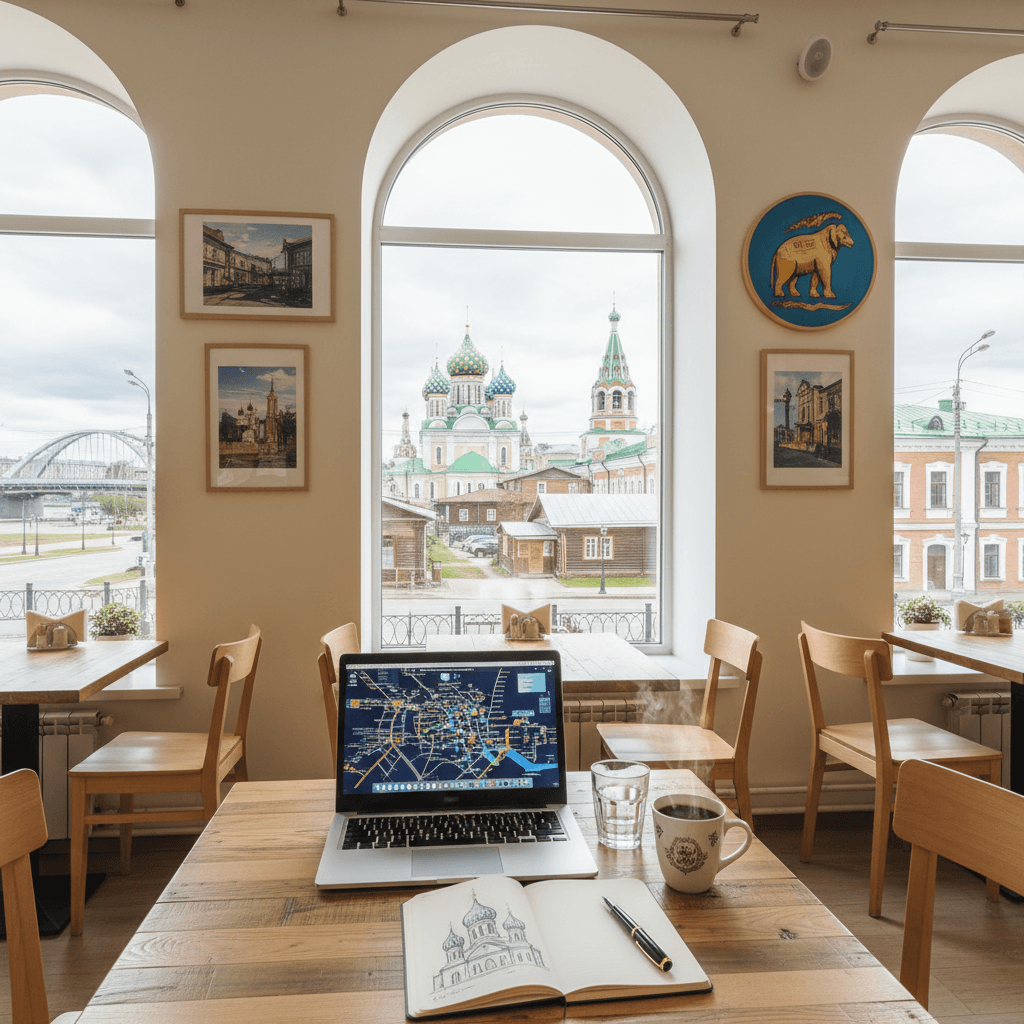
Tyumen
🇷🇺 Russia
The Siberian Oil Hub with a Polished Soul
Tyumen isn't the Siberia you see in old movies. While Moscow and St. Petersburg grab the digital nomad headlines, Tyumen quietly thrives as the "Oil Capital" of Russia. This wealth translates into a city that feels surprisingly manicured, safe, and modern. You'll find wide, clean boulevards and a four level granite embankment along the Tura River that puts many European capitals to shame. It's a place where industrial grit meets high end infrastructure, fueled by the energy sector's deep pockets.
The vibe here is noticeably more relaxed than the frantic pace of Moscow. People take their time, the air is crisp, and the surrounding taiga forest is never more than a short drive away. For nomads, the appeal lies in the "middle ground" experience. You get the reliability of a major urban center, high speed internet, and slick delivery apps, but with a cost of living that makes your budget stretch significantly further.
Living Costs by Lifestyle
Living in Tyumen is a bargain compared to Western Europe or even Russia's primary hubs. Most nomads find they can live a high quality life here for a fraction of their usual expenses. Since foreign cards are currently tricky, you'll want to set up local fintech or use cash once you arrive.
- Budget Tier ($800 to $1,200/month): This covers a modest apartment further from the center, plenty of street food like 200 RUB blini, and using the efficient bus system.
- Mid-range Tier ($1,500 to $2,000/month): The sweet spot for most. You'll get a modern 1BR in the city core for around 35,000 RUB, eat out at decent restaurants regularly, and keep a dedicated desk at a coworking space.
- Comfortable Tier ($2,500+ /month): This buys you a luxury flat in a new build, daily dinners at upscale spots, and constant use of Yandex Go for private rides.
Where to Plant Your Flag
Tyumen is relatively compact, but where you stay changes your daily rhythm. Most expats and remote workers gravitate toward the center to stay close to the action.
City Center (near Lenin Street)
- Rent: $350 to $450 for a nice 1BR.
- The Vibe: Walkable, safe, and packed with the city's best cafes. It's the most polished area and the easiest place to live if your Russian is limited.
Zarechny District
- Rent: $250 to $350 for modern apartments.
- The Vibe: Located across the river, this is a newer residential area. It's quieter and greener, favored by those who want more space and don't mind a quick bus or taxi ride into the heart of town.
Connectivity and the Grind
The internet is fast and cheap, often exceeding 100 Mbps in residential buildings. Mobile data via MTS or Beeline is reliable, with unlimited plans often costing less than 1,000 RUB a month. You can easily tether your phone for work if the cafe WiFi feels sluggish. Just remember that a VPN is mandatory for accessing most Western social media and news sites.
While there isn't a massive, English speaking coworking "scene" like in Bali, the cafe culture is strong. You'll see locals working on laptops in most central coffee shops. For a more formal setup, look for local business centers that offer monthly hot desks for around 10,000 RUB.
Survival Tips: Language and Weather
English levels are low here. You'll need Google Translate or Yandex Translate for everything from grocery shopping to talking to your landlord. Learning the Cyrillic alphabet and basic phrases like "Zdravstvuyte" (Hello) goes a long way with the locals, who are often pleasantly surprised to meet a foreigner in their city.
The weather is the ultimate dealbreaker. If you visit between June and August, you'll find pleasant 25°C days and lush greenery. If you stay for winter, prepare for a shock. Temperatures regularly drop to -20°C or lower from December to February. The city is well equipped for it, with powerful indoor heating and efficient snow clearing, but the cold is a physical presence you can't ignore. Most nomads recommend arriving in late spring to ease into the Siberian lifestyle.
The Siberian Value Proposition
Tyumen is a bit of a secret among the nomad community. While Moscow and St. Petersburg grab the headlines, this oil-rich hub in Western Siberia offers a level of infrastructure that punches way above its weight class. Because of the local energy industry, the streets are cleaner and the services more reliable than you might expect for a city of 800,000 people. Best of all, your dollar or euro stretches significantly further here than it would in the capital.
Most digital nomads find they can live a high-quality life on a fraction of a Western budget. You aren't just surviving; you're thriving in a city that blends modern Russian wealth with a relaxed, provincial pace. It is the kind of place where you can afford a premium apartment in the city center and still have plenty left over for weekend trips into the taiga.
Monthly Budget Tiers
- Budget ($800 to $1,200): This covers a shared apartment or a modest studio outside the immediate center, plenty of street food like blini or shawarma, and a monthly bus pass. You'll be living like a local student, which is perfectly comfortable but lacks frills.
- Mid-range ($1,500 to $2,000): The sweet spot for most remote workers. This gets you a modern 1BR near Lenin Street, regular dinners at mid-range bistros, a dedicated desk at a coworking space, and frequent Yandex Go rides.
- Comfortable ($2,500+): At this level, you're living the high life. Think an upscale apartment in a new development, nightly dinners at the city's best restaurants, and private tours or weekend getaways without checking your bank balance.
Housing and Neighborhoods
Rent is the biggest saving compared to Moscow. A solid 1BR in a central, walkable area typically runs between 25,000 and 40,000 RUB ($250 to $400). If you want something truly high-end with designer interiors, you might hit 45,000 RUB ($450), which is still a bargain by international standards.
City Center (near Lenin Street): This is where you want to be. It is the most walkable part of Tyumen, packed with cafes and parks. It is safe, well-lit, and puts you in the middle of the action, though you'll pay a small premium for the location.
Zarechny: Located across the Tura River, this area is popular with families and those looking for a quieter vibe. It is greener and more affordable, but you'll rely more on buses or taxis to get into the heart of the city.
Daily Expenses
- Dining: A quick lunch of blini or local pastries costs 150 to 300 RUB ($1.50 to $3). A nice dinner for two at a mid-range spot usually lands between 800 and 1,500 RUB ($8 to $15).
- Coffee: A standard latte in a nomad-friendly cafe is about 200 RUB ($2).
- Transport: A monthly pass for public transit is roughly 2,000 RUB ($20). Most nomads prefer Yandex Go, where a cross-town ride rarely exceeds 500 RUB ($5).
- Connectivity: A local SIM from MTS or Beeline with plenty of data costs around 500 to 1,000 RUB ($5 to $10) per month.
Practical Financials
Banking is the main hurdle right now. Since foreign cards are hit-or-miss due to sanctions, most expats rely on a mix of cash, local fintech accounts, or crypto to manage their funds. It is a bit of an extra step, but the low cost of living makes the effort worth it. For apartment hunting, locals swear by Avito.ru, though you'll definitely want a translation app handy as English proficiency in the real estate market is quite low.
Digital Nomads: The City Center (Lenin Street and Republic Street)
If you're heading to Tyumen to work, you'll want to stay within the central core, specifically around Lenin Street and Republic Street. This is the city's polished heartbeat, where oil wealth manifests as clean sidewalks, reliable infrastructure, and the highest concentration of English speakers you'll find in Siberia. It's the most walkable part of town, keeping you close to the Tura River embankment, which is perfect for a headspace break between deep work sessions.
- Rent: Expect to pay 25,000 to 45,000 RUB ($250 to $450 USD) for a modern studio or one bedroom apartment.
- Coworking & Connectivity: While dedicated coworking spaces are still a growing concept here, local nomads lean on high end cafe culture. Grab an MTS or Beeline SIM for about 1,000 RUB ($10) a month for unlimited data to tether when public WiFi requires a local SMS login.
- Vibe: Sophisticated but relaxed. It's safe, well lit, and puts you within walking distance of the best coffee shops.
Expats and Long Termers: KP (Kottedzhnyy Posolok) and Upscale Enclaves
Expats who are in town for the energy sector often look for a bit more insulation from the urban grit. The upscale pockets near the center or gated communities on the periphery offer a higher standard of living that mirrors Moscow's premium districts. You'll find newer builds here with better insulation, which is a massive factor during the -20°C winter stretches.
- Rent: High end apartments or small houses can go for 45,000 RUB ($450 USD) and up.
- Lifestyle: You'll likely rely on Yandex GO for everything. It's the lifeline for getting around when it's too cold to walk, and the app is incredibly efficient for both rides and food delivery.
- Dining: This crowd frequents mid range spots for shashlik or pelmeni, where a solid dinner typically runs 800 to 1,500 RUB ($8 to 15 USD).
Families: Zarechny and Green Suburbs
For those traveling with kids, the Zarechny district or the quieter residential areas across the river offer a slower pace. These neighborhoods are characterized by more green space and a break from the industrial hum of the center. It's more affordable, though you'll trade off the immediate proximity to the "cool" cafes for a bit more square footage and local parks.
- Pros: Lower noise levels, abundant grocery stores, and a more "local" feel.
- Cons: You'll be looking at a 15 to 20 minute commute to the center. Public buses are cheap at about 2,000 RUB ($20) for a monthly pass, but they can get crowded.
- Rent: You can often find larger two bedroom apartments for the same price as a central studio, roughly 30,000 RUB ($300 USD).
Solo Travelers and Budget Seekers: The Outskirts
If you're watching every ruble, the outskirts offer the lowest prices, but they come with a "rougher around the edges" reputation. Most solo travelers prefer to stick to hostels in the center to avoid the safety concerns of poorly lit peripheral neighborhoods at night. However, if you're just passing through and need a place to crash, the savings are significant.
- Accommodation: Budget hostels or shared rooms can drop your monthly housing cost to around 20,000 RUB ($200 USD).
- Food: Stick to street food like blini or local bakeries, where a quick meal costs 150 to 300 RUB ($1.50 to $3 USD).
- Safety: Stick to the center after dark. While Tyumen is generally safe due to its prosperity, the outskirts don't see the same level of policing or modern lighting as the Lenin Street corridor.
Tyumen might not have the flashing neon lights of Moscow, but for a nomad who needs to get things done, it is surprisingly efficient. The city's oil wealth has trickled down into a digital infrastructure that rivals most European hubs. You'll find high speed fiber in almost every apartment and 4G coverage that stays steady even as you head toward the edge of the taiga.
The Connectivity Situation
Internet speeds here are generally excellent. Most central apartments offer speeds between 50 and 100 Mbps for less than $10 a month. If you are working from a rental, you won't have issues with video calls or heavy uploads. However, the biggest hurdle is the local firewall. You absolutely need a reliable VPN to access Western social media, news sites, and certain work tools. Most expats recommend setting this up before you land on Russian soil.
Public WiFi is everywhere, from the riverside promenade to the local malls. To log in, you usually need a Russian phone number to receive a confirmation SMS. It is a bit of a hurdle for short term visitors, so getting a local SIM is the first thing you should do after checking into your hotel. Pick up a SIM from MTS or Beeline at carrier stores or malls. Unlimited data plans usually run between 500 and 1,000 RUB ($5 to $10) per month.
Coworking Spaces and Work Culture
While Tyumen does not have the massive coworking chains found in the capital, the local scene is professional and quiet. You won't find many "nomad meetups" here, but you will find serious locals working on tech and engineering projects. Expect to pay around 10,000 RUB ($100) for a monthly hot desk. If you just need a spot for a few hours, daily rates usually hover around 600 to 800 RUB ($6 to $8).
- Focus and Flow: Look for spaces near Lenin Street or the Tyumen State University area. These spots offer the most reliable ergonomic setups and quiet zones.
- The "Anti-Cafe" Scene: These are popular in Siberia. You pay for the time you spend (usually by the minute) and get free coffee, tea, and cookies. They are great for a few hours of light admin work but can get noisy with students in the late afternoon.
- Hotel Lounges: Upscale hotels near the Tura River often have quiet lobby bars with solid WiFi if you need a more formal atmosphere for a client call.
Cafe Hopping for Nomads
The cafe culture in Tyumen is surprisingly sophisticated. Most spots are "laptop friendly" as long as you aren't camping out for six hours on a single espresso during the lunch rush. The staff generally won't bother you, and the aesthetics are often top notch, featuring plenty of wood and industrial Siberian design.
For a reliable work session, try the cafes along Respubliki Street. You can expect a solid lunch and a latte for about 800 to 1,200 RUB ($8 to $12). Most nomads find that as long as they order a meal or a few drinks, they are welcome to stay for a three hour block. Just keep in mind that English proficiency is low, so have a translation app ready to ask for the "parol ot vai-faya" (WiFi password).
Tech Essentials for Tyumen
- Yandex GO: This is your lifeline. Use it for taxis, food delivery, and even checking bus schedules. It works flawlessly and accepts local cards or cash.
- Power Plugs: Russia uses the standard European Type C and F plugs. If you are coming from the US or UK, you will need an adapter.
- Tethering: Since 4G is so cheap and fast, many nomads simply use their phone as a hotspot if a cafe's WiFi gets sluggish during peak hours.
Overall, Tyumen provides a stable, low distraction environment for deep work. It is a "get your head down" kind of city. The lack of a massive expat bubble means you will actually get work done instead of being distracted by nightly networking events, all while enjoying some of the lowest overhead costs in the region.
Staying Safe in the Oil Capital
Tyumen feels significantly more orderly than many other Russian regional hubs, largely thanks to the local oil wealth that keeps the streets clean and the police well funded. Most nomads find the city center, particularly around Lenin Street, to be very safe for walking even after the sun goes down. The atmosphere is more relaxed than Moscow, though you should still keep your wits about you in the darker outskirts or near the industrial zones late at night.
The biggest safety hazard for most visitors isn't crime, it's the environment. Siberian winters are no joke, with temperatures regularly hitting -20°C. Locals are used to it, but if you're not dressed in proper layers, the cold becomes a genuine health risk within minutes. Stick to well lit main thoroughfares and use Yandex Go for door to door transport when the mercury drops; it's cheap and much safer than wandering through a blizzard looking for your apartment.
- Emergency Number: Dial 112 for all emergency services.
- Petty Crime: Generally low, but keep an eye on your tech in crowded cafes.
- Political Climate: Avoid protests or large political gatherings to stay under the radar.
Healthcare and Medical Services
If you need a doctor, Tyumen is actually one of the better places to be in Siberia. The city's prosperity has funded some solid medical infrastructure. Public hospitals are adequate for basic issues, but the language barrier will be a massive hurdle if your Russian is limited. Most expats recommend heading straight to private clinics like Doctor-A or Neftyanik, where you're more likely to find English speaking staff and modern equipment.
Pharmacies are everywhere, usually marked by a green neon cross. You can find most standard medications over the counter, but it's smart to have a translation app ready to show the pharmacist the active ingredient names. For anything serious, you'll want a solid international insurance policy that covers medical evacuation, just in case you need to head back to Moscow or abroad for specialized surgery.
Practical Health Tips
- Tap Water: Most locals don't drink it. Stick to bottled water or a good filtration system at home to avoid stomach issues.
- Skin Care: The air gets incredibly dry during the heating season. Invest in a humidifier for your bedroom and heavy duty moisturizer.
- Pharmacy Apps: Use Apteka.ru to check prices and availability of specific meds before you head out.
Insurance and Logistics
Since the sanctions, many western insurance providers have limited their coverage in Russia. You'll need to double check that your policy is still active and covers "incidents" in this region. If your card doesn't work at the clinic, you'll likely need to pay in cash (Rubles) and file for a reimbursement later. Keep every single receipt; Russian bureaucracy loves a paper trail, and your insurance company will need every stamp and signature to process a claim.
For day to day wellness, the city has plenty of modern gyms and banyas. The local banya culture is actually a great way to boost your immune system during the winter, just don't overdo it if you aren't used to the extreme heat and cold cycles.
The Layout of the Land
Tyumen is remarkably compact for a Siberian hub. Most of your daily life will revolve around the city center, specifically the area surrounding Lenin Street and the Tura River Embankment. This core is highly walkable during the summer months, with wide, clean sidewalks and plenty of greenery. Unlike Moscow or Novosibirsk, Tyumen doesn't have a metro system, but its road infrastructure is modern and well maintained, largely thanks to the region's oil wealth.
Most nomads find that staying central is the only way to go. If you venture too far into the outskirts or residential suburbs like Zarechny, you'll save on rent but lose the ability to pop into a cafe when the Siberian wind picks up. The city's layout is predictable; if you're within a twenty minute walk of the Drama Theater, you're in the heart of the action.
Mastering Yandex Go
In Tyumen, your phone is your most important transport tool. Forget trying to hail a car on the street. Everyone uses Yandex Go. It's the Russian equivalent of Uber but significantly more integrated. You can use it to summon a standard ride, a "Comfort+" vehicle for a few extra rubles, or even order groceries to your doorstep.
- Ride-hailing: A typical ten to fifteen minute cross town trip costs between 250 and 400 RUB ($2.50 to $4). Even during peak hours, wait times rarely exceed five minutes.
- Airport Transfers: Getting from Roshchino International Airport (TYM) to the city center via Yandex will set you back about 500 to 700 RUB ($5 to $7). It's a smooth twenty minute drive on paved highways.
- Payment: Since foreign cards are currently unreliable in Russia, set your app to "Cash" and pay the driver directly, or use a local bank card if you've managed to open a fintech account.
The Public Transit System
If you're on a budget or just want the local experience, the bus and marshrutka (minibus) network is extensive. The buses are surprisingly punctual and clean. You won't find old, rattling crates here; the fleet is relatively new. While there isn't a complex subway to figure out, the bus lines cover every corner of the city including the industrial zones and far flung shopping malls.
- Cost: A single ride is roughly 35-40 RUB. You can pay with cash or a local contactless card.
- Monthly Pass: Frequent riders can grab a monthly transport card for about 2,000 RUB ($20).
- Navigation: Use the 2GIS app or Yandex Maps. They provide real time tracking for buses so you don't have to stand outside in the cold longer than necessary.
Winter Logistics
Transport in Tyumen changes drastically between seasons. From June to August, the city is a playground for electric scooters (Whoosh and Urent are the main providers). You'll see locals zip along the embankment and through the parks. However, once the snow hits in late October, the scooters vanish and the city shifts into winter mode.
During the deep freeze of January, when temperatures can hit -25°C, walking more than ten minutes becomes a chore. This is when the Yandex Go app becomes your best friend. Expats recommend "ordering up" to the Comfort class during winter simply because those cars tend to have better heating systems and arrive more quickly. The city is excellent at snow removal, so you won't see the gridlock that plagues other regional cities after a heavy flurry.
Leaving the City
For day trips into the taiga or to visit the nearby hot springs, you'll likely want to book a private driver through a local agency like Big Country Travel. If you're heading further afield, the Trans-Siberian Railway stops right in the center of town. It's a reliable, albeit slow, way to reach Ekaterinburg or Novosibirsk. For domestic flights, Aviasales is the go to platform for checking routes out of Roshchino to Moscow or Sochi.
The Linguistic Reality
If you're coming to Tyumen expecting a high level of English proficiency, you'll need to adjust your expectations quickly. Outside of the major hotels or the most modern cafes near Lenin Street, Russian is the only game in town. It's a city built on the oil and gas industry, and while the infrastructure is polished, the international tourism scene hasn't caught up yet. You won't find many English menus or bilingual street signs here.
Most nomads find that a translation app isn't just helpful, it's a lifeline. Google Translate or Yandex Translate are the standard tools for deciphering everything from grocery labels to apartment contracts. If you can learn the Cyrillic alphabet before you land, you'll save yourself a lot of stress. Being able to sound out signs for the pharmacy or the supermarket makes a massive difference in your daily confidence.
Digital Communication and Connectivity
The good news is that while the spoken language is a hurdle, the digital infrastructure is world-class. You'll find free WiFi in almost every cafe and public space, though there's a catch. Most public networks require a local phone number for SMS authentication. This makes getting a local SIM card your first priority after checking into your accommodation.
Expats recommend heading to carrier stores like MTS or Beeline boutiques to pick up a SIM. You can usually get a plan with 20GB to 50GB of data for 500 to 1,000 RUB ($5 to $10) per month. These speeds are generally fast enough to tether your laptop for a full day of work if the cafe WiFi gets spotty during the lunch rush.
- MTS: Great coverage, even if you venture out toward the taiga.
- Beeline: Often has competitive packages for heavy data users.
- Yandex GO: The essential app for communication with drivers; it has a built-in chat translator.
The VPN Factor
Communication isn't just about what's said on the street; it's about what you can access online. Because of current restrictions, many Western social media platforms and news sites are blocked. You'll need a reliable VPN to stay in touch with your networks back home. Most travelers set this up before they enter the country to ensure they don't lose access to their Slack or Instagram accounts the moment they cross the border.
Essential Local Phrases
Locals in Tyumen are generally reserved but appreciate any effort to speak their language. A little bit of Russian goes a long way in breaking the ice. Start with these basics to get through your first few days:
- Zdravstvuyte: Hello (formal).
- Spasibo: Thank you.
- Gde WiFi?: Where is the WiFi?
- Ya ne govoryu po-russki: I don't speak Russian.
- Schet, pozhaluysta: The bill, please.
Navigation and Interaction
When you're out and about, don't expect the casual "customer service" smile common in the US or Western Europe. In Siberia, interactions are direct and functional. When you're using Yandex GO to get around, your driver likely won't say much. If you need to communicate a specific drop-off point, use the app's messaging feature. It translates your English text into Russian for the driver, which prevents a lot of confusion and avoids the language barrier entirely.
For social connections, the "language" of the city often happens in Telegram groups. Since there isn't a massive, visible expat community in Tyumen, nomads often lean on Moscow-based digital nomad channels to find people who might be passing through or living in the region. It's a quieter scene, but for those who value deep focus and a break from the typical nomad hubs, the communication challenges are a fair trade for the affordability and unique Siberian atmosphere.
The Siberian Reality Check
If you're planning a stint in Tyumen, your entire experience will be dictated by the thermometer. This isn't a city of moderate transitions; it's a place of dramatic swings. You'll either find yourself basking in nearly 20 hours of daylight during the lush summer or hunkering down in a cozy cafe while the wind howls across the Tura River at -25°C. Most nomads find that while the infrastructure is built to handle the extremes, your wardrobe might not be.
The Golden Window: June to August
Summer in Tyumen is surprisingly pleasant and serves as the peak season for a reason. Temperatures usually hover between 20°C and 25°C, though heatwaves can occasionally push things higher. The city truly comes alive during these months. The waterfront (Naberezhnaya) becomes the social hub of the city, and the nearby taiga forests are perfect for weekend escapes.
- June: Expect long days and mild weather. It's the best time for walking the historic center near Lenin Street.
- July: The warmest month, with averages around 25°C. It's perfect for exploring the nearby hot springs, which locals use year round but are much more approachable for beginners in summer.
- August: Still warm, though the rains can start to pick up toward the end of the month.
The Shoulder Seasons: May and September
These are the "blink and you'll miss them" months. May sees the last of the slush disappearing, while September brings a crisp, golden autumn that lasts about three weeks before the first frost. If you don't mind a bit of rain and temperatures between 5°C and 15°C, these months offer lower short term rental prices and fewer crowds at popular spots like the Tsvetnoy Bulvar.
The Deep Freeze: November to March
Siberian winters are legendary for a reason. From December through February, the mercury regularly drops to -20°C or lower. While the dry air makes the cold feel less "biting" than the damp winters of St. Petersburg, it's still extreme. Expats recommend investing in heavy duty down coats and thermal layers immediately upon arrival.
The silver lining? Tyumen is the capital of Russian thermal springs. There is a unique thrill in sitting in a 38°C mineral pool while snow falls on your head and the air is -15°C. Life doesn't stop; the city is exceptionally good at clearing snow, and the indoor heating in apartments and coworking spaces is usually cranked to the max.
Monthly Climate Breakdown
- January: The brutal peak of winter. Highs of -10°C, lows of -20°C or colder. Short days and heavy snow.
- April: The messy middle. Snow turns to slush (locally called "gryaz"), making walking difficult. Temperatures fluctuate around 5°C.
- July: The sweet spot. Highs of 25°C and lows of 15°C. Ideal for digital nomads who want to work from outdoor terraces.
- October: The transition. Temperatures drop to 0°C, and you'll see the first dusting of snow.
The Verdict
For your first visit, aim for June through August. You'll get the best of the Siberian nature, easy walkability, and a social scene that actually exists outdoors. If you're a fan of winter sports or want the "authentic" gritty Siberian experience, December is festive and beautiful, provided you have the gear to survive it.
The Financial Reality
Tyumen is significantly more affordable than Moscow or St. Petersburg, making it a strategic choice if you want your budget to stretch without sacrificing urban comforts. Most nomads find they can live a comfortable lifestyle here for $1,500 to $2,000 a month. If you are on a tighter budget, $800 to $1,200 is doable if you opt for shared housing and stick to local eateries.
Rent for a modern one bedroom apartment in the city center typically runs between 25,000 and 40,000 RUB ($250 to $400). If you want something high end or brand new, expect to pay closer to 45,000 RUB ($450). Dining out is equally reasonable. A quick lunch of blini or street food costs about 150 to 300 RUB ($1.50 to $3), while a nice dinner at a mid range spot will set you back 800 to 1,500 RUB ($8 to $15).
Where to Set Up Base
The City Center, particularly around Lenin Street, is the primary hub for anyone working remotely. It is the most walkable part of town and puts you within striking distance of the best cafes and shops. It is safe and polished, though you will pay a slight premium for the convenience.
For a quieter, more residential feel, expats often look toward the Zarechny district. It is greener and more family oriented, offering more space for your money, though you will rely more on ride hailing apps to get into the heart of the city. The outskirts are significantly cheaper but can feel isolated and are generally less recommended for solo travelers who want to stay connected to the local scene.
Staying Connected
Internet speeds in Tyumen are surprisingly solid. You can pick up an unlimited 4G or 5G SIM card from MTS or Beeline for roughly 500 to 1,000 RUB per month. Most people use these for tethering when public WiFi gets spotty. While most cafes offer free WiFi, be aware that many require a local Russian phone number for SMS authentication.
Dedicated coworking spaces are still a growing niche here, but you can find professional desks for around 10,000 RUB ($100) a month. Because of the current digital climate, a reliable VPN is a non negotiable tool if you need to access western social media or specific work platforms. For getting around, Yandex Go is the gold standard for ride hailing. It is cheap, fast, and works even in the more remote corners of the city.
Logistics and Local Nuances
Navigating the bureaucracy is the biggest hurdle. Most travelers now enter on an E-visa, which is available to citizens of over 60 countries and is processed relatively quickly through the government portal. Banking is the other major consideration. Since foreign cards are currently unreliable, most nomads use a combination of local fintech accounts, cash, or crypto to manage their daily spending.
- Language: English proficiency is low. You will want Google Translate or Yandex Translate pinned to your home screen. Learning basic phrases like "Gde WiFi?" (Where is the WiFi?) will go a long way.
- Weather: The Siberian winter is no joke. Temperatures frequently drop to -20°C between December and February. If you aren't a fan of the extreme cold, aim for a stay between June and August when the weather is a pleasant 25°C.
- Healthcare: Pharmacies are everywhere and public hospitals are adequate for basics, but 112 is the number to call for any serious emergency.
- Etiquette: Always remove your shoes when entering someone's home. It is a strict cultural norm that you shouldn't ignore.
While the nomad community here is smaller than in the capital, the oil wealth in Tyumen has created a clean, safe, and modern environment. It is a city that rewards those who prefer a slower pace and a lower cost of living over the frantic energy of Moscow.
Need visa and immigration info for Russia?
🇷🇺 View Russia Country GuideEasy Landing
Settle in, no stress