Tutong
🇧🇳 Brunei
The Low-Slower Pace of the River District
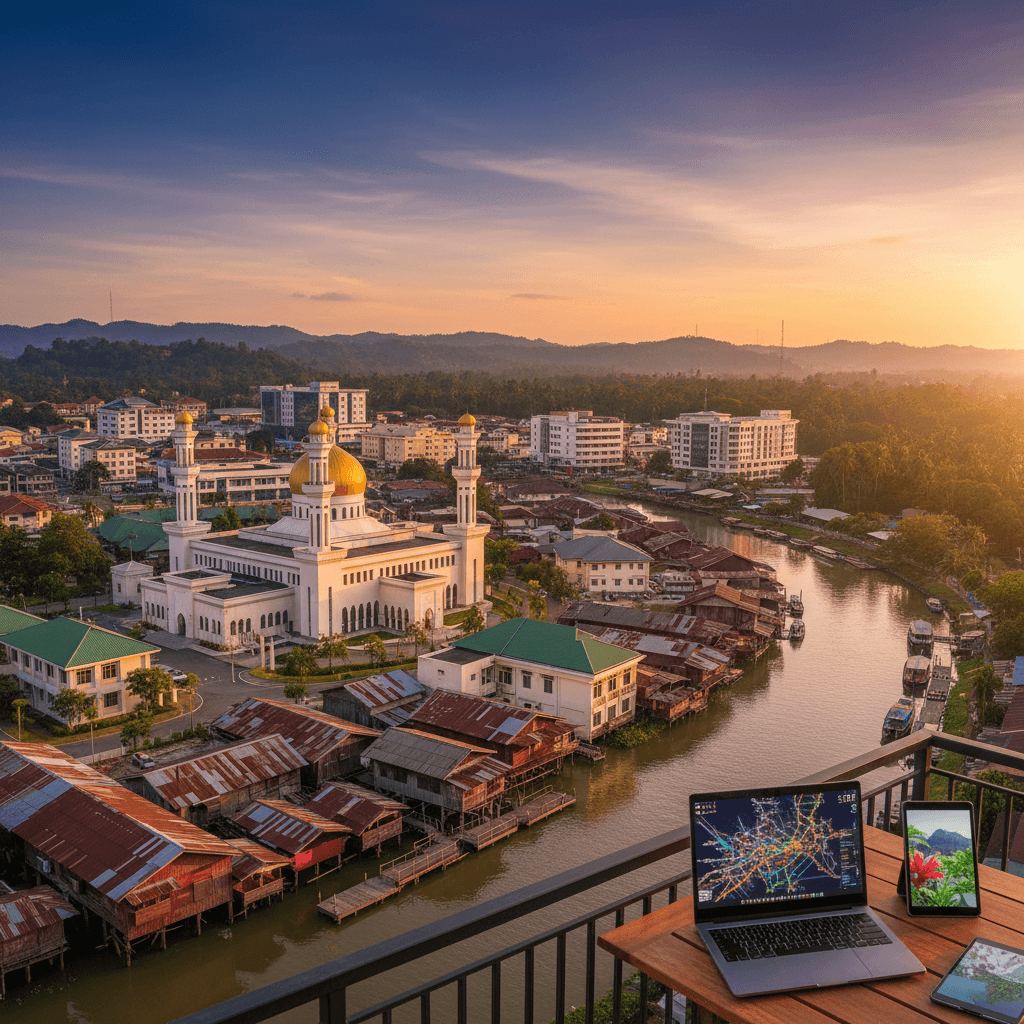
If Bandar Seri Begawan is the formal handshake of Brunei, Tutong is the relaxed nod over a cup of coffee. It is a place that moves at a pace most digital nomads aren't used to. You won't find the neon-soaked energy of Bangkok or the frantic scooter swarms of Bali here. Instead, Tutong offers a quiet, riverside charm that appeals to those who actually want to get work done without the constant pull of a party scene.
The vibe is distinctly local and surprisingly green. The district sits between the capital and the oil hubs of the west, but it feels like its own world. The Tutong River snakes through the town, providing a backdrop that dictates the mood: calm, steady, and unassuming. It is the kind of place where people recognize you after your second visit to the market, and where "rush hour" usually just means a few extra cars near the bridge.
Connectivity and the Digital Reality
Don't let the sleepy atmosphere fool you into thinking you'll be disconnected. The infrastructure is surprisingly robust for a town of this size. You can expect high mobile broadband coverage across the district, which is better than many rural nomad hubs in Southeast Asia. While you won't find a dedicated "Nomad Cafe" with ergonomic chairs and avocado toast, the local spots have reliable signals if you bring your own hotspot.
Living here isn't bottom-dollar cheap like northern Thailand, but it's manageable for a mid-range budget. Most nomads find that they need around $1,200 to $1,800 per month to cover their bases in Brunei comfortably. Data is one of your bigger overheads if you rely on prepaid SIMs. It is a trade-off: you pay more for your megabytes, but you gain a level of peace and safety that is hard to find elsewhere.
The Community and Social Landscape
Tutong is a "choose your own adventure" destination when it comes to socializing. There isn't a pre-packaged nomad community waiting for you. There are no weekly meetups or coworking mixers. Instead, you integrate into the local rhythm. You'll spend your afternoons at the Tamu Tutong (the local market) or walking along Seri Kenangan Beach, where the river and the sea nearly meet.
The social scene revolves around food and family. Expats who stay here long-term often mention that the lack of a "bubble" is exactly why they like it. You are forced to interact with the community, which is incredibly welcoming if you respect the local customs. It is a dry district, so "nightlife" usually means a long, late dinner at a seafood spot or a tea session at a local kedai kopi.
Logistics and Staying Put
One thing to keep in mind is that Brunei doesn't have a specific digital nomad visa. Most travelers enter on a standard tourist facility, so you'll need to keep an eye on your passport stamps and regional travel plans. It is a destination better suited for a slow-travel stint of a month rather than a permanent base.
- The Vibe: Quiet, riverside, and deeply authentic.
- Best For: Deep-work phases, nature lovers, and those who want to avoid tourist crowds.
- Connectivity: High 4G availability but higher-than-average data costs.
- Social Life: Local markets, beach sunsets, and quiet coffee shops.
Being in Tutong feels like a deep breath. It is a place to recalibrate. You'll find yourself waking up early with the sun, working through the morning heat, and spending your evenings watching the river. It isn't for everyone, but for the nomad who is burnt out on the "digital nomad trail," it is a sanctuary.
The Bottom Line
Living in Tutong offers a significant discount compared to the capital, Bandar Seri Begawan, but you have to be comfortable with a slower pace of life. While the country average for a remote worker sits around $1,562 per month, you can likely shave a few hundred dollars off that figure here. It is a quiet district where your biggest expenses will be housing and transport, as the lack of a massive tourism infrastructure means you are paying local prices for almost everything.
The currency is the Brunei Dollar, which is pegged 1:1 to the Singapore Dollar. This makes the math easy, but it also means the cost of imported goods stays relatively high. You won't find a dedicated digital nomad visa here yet, so most travelers rely on standard tourist entries, which means you won't be signing long term apartment leases or setting up local bank accounts easily.
Monthly Budget Breakdown
- Estimated Total: $1,200 to $1,450 per month
- Housing (Guesthouses or small rentals): $500 to $750
- Food and Groceries: $300 to $400
- Local Transport (Car rental is recommended): $250 to $350
- Data and Connectivity: $35 to $95
Connectivity and Data
Staying online in Tutong is surprisingly reliable. The district has 94% mobile broadband 4G coverage, so you can work from a beachfront cafe or a local coffee shop without much stress. Since there aren't established coworking spaces in the town center, you'll be relying heavily on your own data hotspot or guesthouse Wi-Fi.
For data, grab an eSIM before you land or at the airport. You can pick up a 3GB plan for 30 days for about $32.21. If you are a heavy user who spends the day on Zoom calls, the 10GB plan for 30 days costs around $93.05. Local providers like DST or Progresif often have better rates if you can get a physical SIM, but the eSIM is the path of least resistance for short stays.
Food and Daily Life
Eating out is where you save the most money. If you stick to local "kedai kopi" (coffee shops), a solid meal of nasi katok or laksa will only set you back $3 to $5. Western style meals or dining at the nicer spots near the Tutong River will push those prices up to $12 or $15 per person. Alcohol is not sold in the country, which keeps your "night out" budget at an absolute zero, though expats often bring in their own legal allowance from Sarawak.
Groceries are manageable if you buy local produce at the Tamu Tutong (the open air market). Imported snacks, cheeses, and specialty coffee beans are pricey, often double what you would pay in neighboring Malaysia. Most nomads find that a mix of market shopping and cheap local eats keeps the daily food spend under $15.
Transport and Utilities
Tutong is spread out, and public transport is limited. Most expats and long term travelers find that renting a small car is the only way to get around efficiently. Expect to pay around $20 to $30 per day for a basic sedan, though you can negotiate better monthly rates. Petrol is heavily subsidized and incredibly cheap, often costing less than a bottle of water.
If you manage to find a short term apartment rental, utilities are generally inexpensive. Electricity and water are subsidized by the government. Even with the air conditioning running through the humid afternoons, you are unlikely to see a monthly utility bill exceed $50 to $70.
The Nomad Choice: Pekan Tutong
If you're coming to Tutong to work, you'll want to stay close to the town center, known as Pekan Tutong. It's the only area where you'll find a concentration of amenities that make the remote lifestyle feasible. While there aren't formal coworking spaces here, several modern cafes along the riverfront provide decent Wi-Fi and plenty of power outlets. You can expect to pay around $4 to $6 for a solid latte and a light meal.
- Rent: $600 to $900 per month for a modest apartment.
- Connectivity: 4G coverage hits about 94%, so a mobile hotspot is your best friend here.
- Vibe: Quiet, riverside, and very slow-paced.
Most nomads find that staying near the Jalan Roberts area puts them within walking distance of the local markets and the main bus station. It's not a high-energy hub, but it's practical. You'll likely spend your afternoons working with a view of the Tutong River before heading to the Tamu Tutong market for a cheap $3 dinner.
The Expat Choice: Penanjong
Expats, particularly those working in the education or oil sectors, usually gravitate toward Penanjong. It's a coastal suburb that feels a bit more residential and private than the town center. The houses here are larger, often featuring gated driveways and small gardens. It's a car-dependent area, so you'll need to budget for a rental or a second-hand vehicle, as public transport is infrequent at best.
- Rent: $1,200 to $1,800 for a three-bedroom house.
- Food: Local grocery runs cost about $100 a week for a couple.
- Vibe: Suburban, breezy, and coastal.
The draw here is the proximity to the beach. After a day of meetings, you can head down to the sand for a sunset walk. It’s a tight-knit community where neighbors actually know each other, which helps if you're looking for a sense of belonging in a quiet district.
The Family Choice: Kampong Bukit Panggal
Families often look for space and safety, and Bukit Panggal delivers both. It's located slightly inland, away from the main highway noise, providing a peaceful environment for kids to play. The schools in this area are well-regarded, and the neighborhood feels like a traditional village evolved into a modern residential zone. You'll find more green space here than in the town center.
- Rent: $1,000 to $1,500 for detached homes.
- Utilities: Budget around $150 monthly, mainly for air conditioning.
- Vibe: Family-oriented, green, and secure.
Living here means you're about a ten-minute drive from the main shopping clusters. It's the kind of place where you'll see people out for evening walks when the temperature finally drops. Most families find the trade-off of a commute worth it for the extra square footage and the quiet nights.
The Solo Traveler Choice: Telisai
Solo travelers who aren't tied to a desk every day should look toward Telisai. It's further down the coast and serves as the gateway to some of the district's best natural spots, like Danau Beach. It's a bit more rugged and less "polished" than the town center, which appeals to those looking for a more authentic Bruneian experience. You'll find smaller guesthouses and homestays here that are much cheaper than the standard hotels.
- Daily Cost: $40 to $60 including basic lodging and local meals.
- Transport: A scooter rental is highly recommended for this area.
- Vibe: Adventurous, coastal, and rustic.
Soloists often enjoy the local seafood shacks that line the road near the coast. You can grab a fresh grilled fish and rice for under $8. It’s a great spot if your goal is to disconnect, explore the white sands of Seri Kenangan Beach, and live a very simple, low-cost life for a few weeks.
Connectivity and Coverage
You won't find Tutong at the top of many digital nomad hotspots lists, but that's part of its charm. When it comes to staying connected, the infrastructure is surprisingly reliable for a district that feels so rural. You can expect about 94% 4G coverage across the district, meaning you can work from a beach chair at Seri Kenangan or a quiet cafe in the town center without much anxiety.
Most nomads here skip the hunt for public Wi-Fi and go straight for a local SIM or an eSIM. If you're looking for an eSIM for a short stay, expect to pay around $32 for a 3GB plan or up to $93 if you need 10GB to get through a heavy month of Zoom calls. It isn't the cheapest data in Southeast Asia, but the stability makes up for the price tag.
Coworking and Workspaces
If you're looking for a dedicated coworking space with ergonomic chairs and networking mixers, you're going to be disappointed. Tutong doesn't have a WeWork or a specialized nomad hub. Most people working remotely here settle into the quiet corners of local cafes or work straight from their accommodation.
The vibe in Tutong is much slower than Bandar Seri Begawan. You'll find that local coffee shops are generally welcoming to people with laptops as long as you're ordering food and drinks. It's a "DIY" coworking culture. You'll want to bring a power bank, as accessible outlets can be hit or miss in the older buildings around the town center.
Digital Nomad Logistics
Brunei doesn't offer a specific digital nomad visa, so most travelers enter on a standard tourist visa. This means you'll be operating in a bit of a gray area if you're staying long term. Many expats and remote workers find that a monthly budget of roughly $1,562 covers a comfortable lifestyle here, including housing, food, and your data needs.
- Mobile Data: Reliable 4G covers almost the entire district.
- Work Spots: Local cafes in Tutong town are your best bet.
- Total Monthly Cost: Around $1,500 to $1,600 for a full nomad lifestyle.
- Visa Situation: No dedicated nomad visa; stick to standard tourist entries.
Data Plans and Costs
For those who need to stay tethered 24/7, local providers like DST or Progresif are the way to go. You can pick up a physical SIM card at the airport or in town for a few dollars and load it with data. While the eSIM prices mentioned earlier are convenient for those who want to be connected the moment they land, local prepaid plans usually offer better value for your money if you're staying for more than a week.
The internet speed is generally sufficient for standard remote work tasks. You'll have no trouble with emails, Slack, or project management tools. High resolution video editing or massive file uploads might test your patience, but for the average freelancer, the 4G speeds in Tutong do the job just fine.
Staying Safe in Tutong
Tutong is arguably one of the safest places you can park your laptop in Southeast Asia. Brunei as a whole has a remarkably low crime rate, and Tutong, being more of a quiet residential and administrative hub than a frantic metropolis, feels incredibly secure. You can walk around most areas at night without a second thought, though the town tends to get very quiet after the sun goes down.
The biggest safety concerns here aren't related to people, but rather the environment. If you are heading out to Tasek Merimbun or exploring the local jungle trails, keep an eye out for crocodiles and snakes. Local authorities are good about posting signs in high risk areas, so just pay attention to your surroundings when you're near the water. For daily life, standard common sense applies; don't leave your expensive gear unattended in a public cafe, even if the local vibe feels exceptionally trusting.
Since there is no dedicated digital nomad visa, most travelers enter on a standard tourist visa or a business visit pass. It is important to respect local customs and Sharia law, which is the legal framework here. Public displays of affection are frowned upon, and alcohol is not sold anywhere in the district. You can bring in a limited amount for private consumption if you are a non-Muslim, but you must declare it at the border. Following these local norms is the best way to ensure a hassle free stay.
Healthcare Facilities
If you find yourself under the weather, you won't have to travel far. The Pengiran Muda Mahkota Pengiran Muda Haji Al-Muhtadee Billah Hospital is the primary healthcare provider in the district. It is a government run facility located right in the heart of Tutong. While it handles emergencies and general consultations, for specialized procedures or private high end care, many expats and nomads make the 40 minute drive to Bandar Seri Begawan to visit Jerudong Park Medical Centre (JPMC).
For minor ailments like a cough or a skin rash, there are several private clinics around the town center. These are often faster than the hospital for non-emergencies. You will find that most doctors speak excellent English, having trained overseas in the UK or Australia, which makes explaining your symptoms a lot easier.
- PMMMHTB Hospital: The main public hospital for emergencies and general wards.
- Guardian Pharmacy: Located in the Tutong Central area for over the counter meds and basic first aid.
- Panaga Health: A bit of a drive toward Belait, but often used by the expat community for comprehensive checkups.
Insurance and Costs
Medical costs in Brunei are very reasonable compared to the US or Europe, but they can still add up if you aren't covered. A standard consultation at a private clinic might cost you around $30 to $50 BND. If you end up in the hospital for something serious, those bills will climb quickly. Most nomads here use international providers like SafetyWing or Genki, as local Bruneian insurance plans are usually geared toward long term residents and citizens.
Make sure your policy specifically covers medical evacuation. While the local facilities are clean and professional, very complex surgeries often require a flight to Singapore or Kuala Lumpur. It is better to have that safety net in place before you arrive.
Emergency Numbers
It is a good idea to keep these numbers programmed into your phone. Brunei uses a system similar to the UK, and the operators generally speak English.
- Police: 993
- Ambulance: 991
- Fire and Rescue: 995
Most nomads find that the peace of mind in Tutong is worth the slower pace of life. You aren't constantly looking over your shoulder, which lets you focus on your work and enjoying the natural scenery. Just remember to stay hydrated in the humidity and keep your insurance paperwork handy just in case.
The Logistics of Local Travel
Movement in Tutong requires a bit more foresight than the rapid-fire transit systems you might find in Bangkok or Kuala Lumpur. This is a district where the car is king. Most nomads find that while the town center is walkable, reaching the coastal retreats or the inland rainforests necessitates your own set of wheels. It’s a spread-out area, and you won't see many people hoofing it along the main roads under the midday sun.
The local bus system, often referred to as the purple buses, does operate through Tutong, connecting it to Bandar Seri Begawan and Belait. These are budget-friendly, usually costing around $1 to $2 for a trip, but they don't follow a strict digital schedule. You’ll be waiting at a stop and hoping for the best rather than tracking a live GPS feed on your phone.
Driving and Ride-Hailing
If you're staying for more than a few days, renting a car is the smartest move you can make. It gives you the freedom to hunt for quiet cafes or head out to Seri Kenangan Beach whenever the light is right for a Zoom call. Rental prices generally hover around $40 to $60 per day, though you can negotiate better weekly rates if you’re sticking around. The roads are well-maintained and traffic is rarely an issue compared to the capital.
For shorter trips, Dart is the local answer to Uber or Grab. It’s the primary ride-hailing app in Brunei and works reliably within Tutong's more populated zones. A quick trip across town will usually set you back about $5 to $8. It's a good idea to download the app and set up your payment details before you actually need a ride, as you'll want that 4G connection ready to go.
Connectivity on the Move
The good news for remote workers is that Tutong doesn't feel like a dead zone. The district boasts 94% mobile broadband 4G coverage, so even if you're taking a meeting from the back of a Dart or a roadside stall, your connection should hold up. You'll find that the infrastructure is surprisingly robust for a place that feels so laid back.
To stay connected without hunting for Wi-Fi passwords, grab an eSIM before you land or at the airport. You'll see prices like $32.21 for a 3GB plan that lasts 30 days. If you're a data-heavy user, the 10GB plans for $93.05 are a better bet. Having that data makes using Dart and navigating the winding roads much less stressful.
Walking and Cycling
Inside the Tutong town center, you can easily get around on foot to visit the open-air markets or grab a coffee. However, the tropical humidity is a real factor. Most expats recommend doing your walking early in the morning or after the sun starts to dip. If you're staying at a guesthouse, ask if they have a bicycle. It’s a great way to explore the riverfront paths, though you should always keep an eye out for afternoon rain showers that can appear out of nowhere.
- Dart Ride: $5 to $15 depending on distance.
- Daily Car Rental: $40 to $60 average.
- Local Bus: $1 per journey.
- Monthly eSIM (10GB): $93.05.
Ultimately, your transport strategy in Tutong depends on your work style. If you're a hermit who only leaves the house for dinner, Dart is plenty. If you want to see the lakes and the coast, budget for a rental car. It’s an added expense, but the access it provides to the quieter corners of the district is worth the investment.
The Linguistic Landscape
You'll find that Tutong is a fascinating place for anyone interested in how languages evolve. While Standard Malay is the official language for government and formal business, the heart of the district beats to the rhythm of Tutong Malay. It's a distinct dialect that sounds quite different from what you'll hear in Bandar Seri Begawan. Don't worry about being a polyglot to get by, though. Most locals are bilingual or trilingual, and English is widely spoken in shops, restaurants, and offices throughout the town center.
If you're planning to stay for a while, learning a few phrases in the local Tutong dialect will earn you immediate respect. It shows you're not just passing through but actually care about the community. That said, English is the primary medium of instruction in schools here, so you'll rarely face a total communication breakdown. Most signs are in Jawi (an Arabic script for Malay) and Romanized Malay, often with English translations right underneath.
Staying Connected
For a district that feels more laid back and rural than the capital, the digital infrastructure is surprisingly robust. There is near 100% 4G/5G coverage across Brunei. You can comfortably work from a cafe or your rental without worrying about your Zoom call dropping out. The main providers you'll see are DST, Progresif, and imagine. Most nomads grab a prepaid SIM card at the airport or in Tutong town for a few dollars and top up as needed.
If you prefer the convenience of an eSIM, you can set that up before you even land. Prices for data are higher than in neighboring Malaysia but manageable. Expect to pay around B$10-40 for 3-10GB depending on plan. Most guesthouses and the newer apartments in the town area provide fiber internet, which is generally stable and fast.
Communication Etiquette
Bruneian culture is polite and somewhat reserved. When you're speaking with locals, keep your tone soft and avoid being overly assertive. It's common for conversations to start with a bit of small talk about where you're from or if you've eaten yet. Punctuality is appreciated in business settings, but social gatherings often follow a more relaxed "island time" vibe.
- Greeting: A slight nod or a hand placed over the heart is a respectful way to acknowledge someone.
- Digital Apps: WhatsApp is the king of communication here. Whether you're booking a tour, ordering food, or chatting with a landlord, you'll do it through WhatsApp.
- Social Media: Instagram and Facebook are the best ways to find out about local events or pop-up markets in Tutong, as many small businesses don't maintain traditional websites.
Practical Tips for Nomads
While you won't find dedicated coworking spaces in Tutong just yet, the local cafe scene is your best bet. Look for spots near the Tutong Waterfront. They usually have decent Wi-Fi and won't mind if you linger over a coffee for a couple of hours. Since Brunei doesn't have a specific digital nomad visa, most travelers enter on a standard tourist visa or a business visit pass depending on their nationality. You'll want to budget roughly $1,562 per month to cover your living expenses comfortably while working remotely from here.
If you're heading out into the more remote parts of the district like Tasek Merimbun, download your maps for offline use. While the mobile coverage is wide, the thick rainforest canopy in the interior can occasionally interfere with your signal. Staying connected in the main town area is a breeze, but a little preparation goes a long way when you're exploring the greener side of the district.
The Tropical Rhythm
Tutong doesn't play by the rules of four seasons. Since it's sitting right near the equator, you're looking at a tropical rainforest climate that stays pretty consistent throughout the year. The temperature usually hovers between 24°C (75°F) and 32°C (90°F). It's the kind of humidity that makes your laptop fans kick in early and makes a cold kopi ice from a local cafe feel like a lifesaver.
You'll find that the rain here is theatrical. It doesn't just drizzle; it pours with enough force to drown out a Zoom call for twenty minutes before the sun pops back out like nothing happened. While it rains year round, the wettest window generally hits between October and January. If you're planning to work from the outdoor seating at spots near Seri Kenangan Beach, keep an eye on those dark clouds rolling in from the South China Sea.
When to Touch Down
The sweet spot for moving your remote setup to Tutong is from February to April. This is the "dry" season, though in Brunei, dry just means you'll only get soaked by a thunderstorm every few days instead of every afternoon. The humidity takes a slight breather during these months, making it much more comfortable to explore the Pekan Tutong waterfront or take your gear out to Tasek Merimbun without melting.
The period from June to August is also a solid choice for nomads. The weather stays relatively stable, and it coincides with the local fruit season. You can grab fresh durian or rambutan from the Tamu Tutong market for a few dollars, which is a rite of passage for anyone staying here long term. Just be prepared for the haze that sometimes drifts over from regional agricultural burning during these drier months; it can occasionally affect air quality and visibility.
Navigating the Calendar
Timing your stay isn't just about the rain. You need to account for the local pace of life, which is heavily influenced by the Islamic calendar. During the month of Ramadan, the vibe in Tutong shifts significantly. Most eateries close during daylight hours, and out of respect, you won't be eating or drinking in public. It's a quiet, introspective time that might be tough for social nomads, but the evening food stalls (Sungai Basong) are legendary once the sun goes down.
If you want to see the district at its most energetic, try to be here in July. The celebrations for the Sultan's birthday turn the town into a month long festival. You'll find night markets packed with local satay and grilled fish, and the community spirit is at an all time high. It's the best time to see Tutong shake off its sleepy reputation and show some local character.
Expats and long term travelers often suggest avoiding the very end of the year if you're sensitive to humidity. November and December bring the heaviest monsoon rains, which can occasionally lead to localized flooding in the lower areas near the Tutong River. While the 4G network coverage remains rock solid at 94% even during storms, the grey skies can get a bit repetitive if you're used to a sunnier workspace.
- Peak Season: February to April (best weather for outdoor work)
- Festival High: July (Sultan's birthday celebrations)
- Quiet Phase: Ramadan (dates shift annually; check the lunar calendar)
- Wettest Months: October to January (expect heavy daily downpours)
Connectivity and Data
You won't have much trouble staying connected while exploring the district. Tutong boasts 94% mobile broadband 4G coverage, which is surprisingly reliable even as you move away from the town center toward the coast. While you won't find a dedicated coworking space in the traditional sense, the local cafes serve as de facto offices for the afternoon.
For your phone, don't rely on international roaming; it gets expensive fast. Pick up a local SIM or set up an eSIM before you land. You can expect to pay around $32.21 for a 3GB data pack valid for 30 days. If you're a heavy user who needs to hop on Zoom calls from a beachside hut, the 10GB plan sits at about $93.05. Speeds are generally stable enough for most remote work tasks.
Budgeting for the Nomad Life
Living in Brunei isn't as cheap as neighboring Thailand or Vietnam, but it's manageable if you track your spending. On average, nomads find that a monthly budget of $1,562 covers the basics comfortably. This includes a mix of modest accommodation, local dining, and getting around.
- Monthly Living Cost: Approximately $1,562
- Local Meal: $4 to $8 at a typical kedai kopi
- Mid-range Dinner: $15 to $25
- Coffee: $3 to $5
Visa Logistics
Brunei stays a bit behind the curve when it comes to specific remote work incentives. There isn't a dedicated digital nomad visa program here like you'll find in Malaysia or Indonesia. Most travelers enter on a standard tourist visa or via visa-free entry depending on their nationality. Check your specific country requirements before booking, as you'll likely be operating under a social visit pass which doesn't officially recognize remote employment.
Getting Around and Staying Safe
Public transport in Tutong is limited, so most expats and long-term visitors recommend renting a car or using ride-hailing apps to get between the town and the scenic spots like Seri Kenangan Beach. The district is incredibly safe, with very low crime rates, making it a peaceful spot for those who prefer a quiet environment over a frantic city pace.
English is widely spoken in professional and retail settings, so you'll get by easily without knowing Malay, though learning a few local greetings goes a long way with the residents. Since Tutong is more conservative than the capital, keep your dress code respectful when you're out in public areas or visiting local markets.
Quick Reference Guide
- Currency: Brunei Dollar (BND), which is pegged 1:1 to the Singapore Dollar.
- Power Outlets: Type G (three-pin British style).
- Best Time for Connectivity: Early mornings in cafes before the lunch rush kicks in.
- Local Apps: Download Dart for ride-hailing services in the region.
Need visa and immigration info for Brunei?
🇧🇳 View Brunei Country GuideHidden Gem
Worth the effort