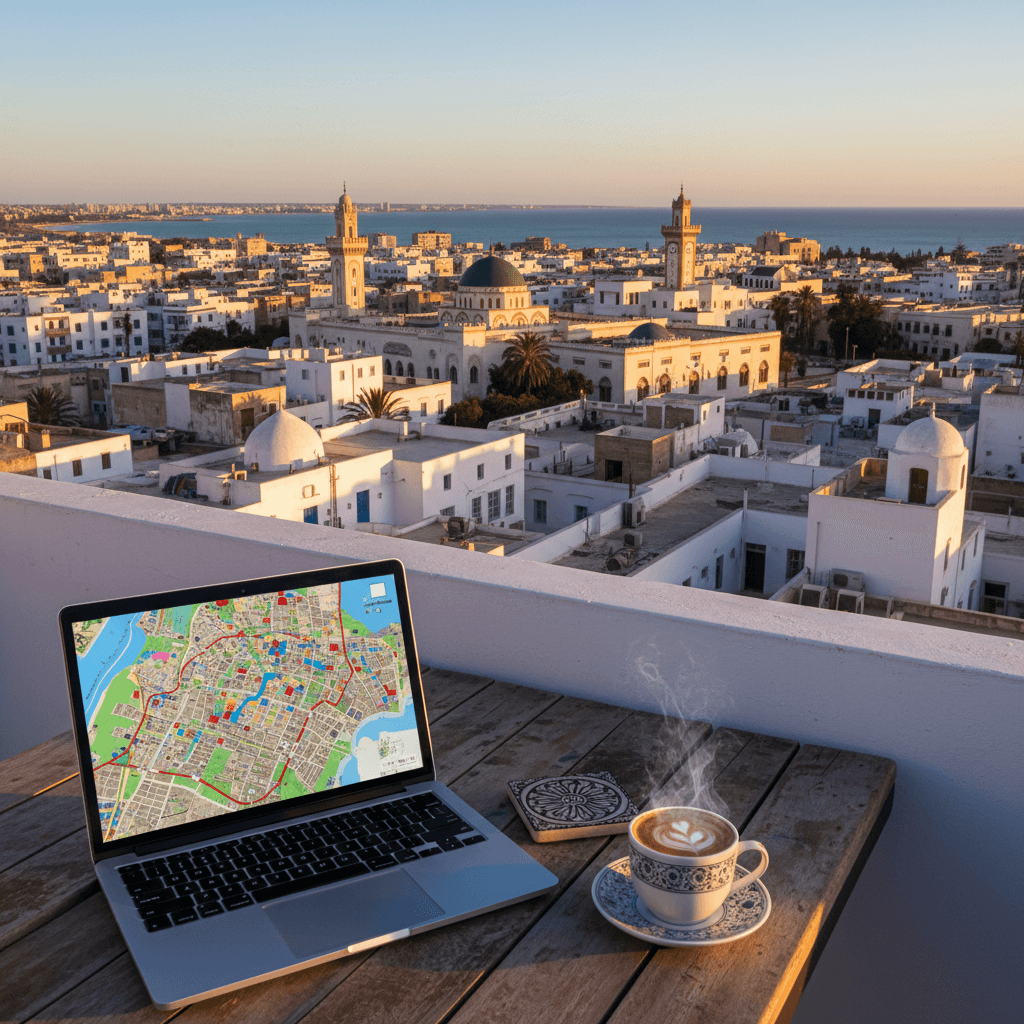
Tunis
🇹🇳 Tunisia
The Mediterranean Soul of North Africa
Tunis doesn't feel like the polished, glass-and-steel hubs of the Gulf or the predictable European capitals across the water. It’s a city of layers, where the scent of jasmine and frying brik hangs in the air of the Medina, while just a few miles away, the coastal suburbs of Gammarth feel like a sun-drenched slice of the French Riviera. Most nomads find the city hits a sweet spot of affordability and deep cultural authenticity that’s becoming harder to find in more "Instagrammed" destinations.
The vibe is undeniably laid-back. You'll see locals spending hours over mint tea and shisha, and that slower pace eventually rubs off on you. However, it’s not without its rough edges. You’ll likely deal with some traffic chaos, uneven sidewalks, and DSL internet that can be temperamental. If you can handle a little North African grit alongside your Mediterranean views, Tunis offers a lifestyle that’s both incredibly cheap and intellectually stimulating.
Cost of Living Breakdown
Your budget goes a long way here. A comfortable nomad lifestyle typically averages around $631 a month, though your choice of neighborhood will be the biggest variable.
- Budget Tier ($500 to $800): Staying in a shared apartment or a modest studio in Ariana, eating mostly street food like harissa sandwiches or lablabi, and using the bus or light rail.
- Mid-Range ($800 to $1,200): A private 1BR in Lafayette, regular coworking memberships, and dining out at mid-range spots like Dar El Jeld.
- Comfortable ($1,200+): An upscale villa or modern apartment in Gammarth or Les Berges du Lac, frequent taxi rides via Bolt, and high-end dining.
Where to Set Up Base
Choosing where to live determines whether you’re in the heart of the action or a quiet seaside retreat. These are the neighborhoods most expats and nomads gravitate toward:
Lafayette & Centre-ville
- Best for: Solo travelers and those who want to be central.
- Rent: 800 to 1,200 TND ($260 to $390) for a decent apartment.
- Pros: Walkable to the Medina, packed with cafes, and home to the best coworking hubs.
- Cons: It can be noisy, and the air quality suffers from heavy traffic.
Gammarth & Les Berges du Lac
- Best for: Families and those seeking high-end comfort.
- Rent: 2,000+ TND ($650+) for modern builds.
- Pros: Close to the beach, very safe, and home to many international embassies.
- Cons: It lacks the historic "soul" of the center and requires a commute to see the sights.
La Marsa & Carthage
- Best for: History buffs and beach lovers.
- Pros: Stunning coastal views, proximity to Carthage ruins, and a very relaxed, affluent atmosphere.
- Cons: It gets crowded during the summer months, and traffic into the city center can be a nightmare.
Work, Connectivity, and Community
While the city's Nomad Score is 54/100, the community is growing fast. You won't find the massive crowds of Bali or Lisbon, but the "Tunis Digital Nomads" Facebook group is active for meetups and advice. For reliable work sessions, El Medina Coworking in the center is a favorite, costing about 300 TND ($100) per month. If you’re out in Gammarth, La Maison Blanche offers a more corporate, polished environment for 400 TND ($130).
Internet speeds average around 38 Mbps. Most remote workers recommend skipping the standard DSL and sticking to mobile data. Grab an Ooredoo or Orange SIM at the airport; you can get 20GB for about 50 TND ($16). It’s also smart to have an eSIM like Airalo as a backup for those days when the local infrastructure decides to take a break.
Practical Realities
Getting around is easiest with apps like Bolt or Yassir. Short trips usually cost between 5 and 15 TND ($1.60 to $5), which is often better than haggling with street taxis. For longer hauls, the train to Sidi Bou Said is a steal at 2 TND.
The best time to visit is April to June or October, when the weather sits between 20 and 28°C. Avoid July and August if you can, as the heat can soar above 40°C, making the city feel like an oven. When you arrive, remember that while French is common, a few words of Arabic like "Shukran" (thanks) go a long way. Tunisia even offers a 12-month digital nomad visa, making it one of the more accessible North African options for a long-term stay.
The Bottom Line
Tunis is one of the most affordable Mediterranean hubs for nomads who want to stretch their budget without sacrificing the coastal lifestyle. With average monthly costs hovering around $631, your dollar goes incredibly far here. You can realistically live on $500 to $800 if you're comfortable in local neighborhoods, while $1,200 buys a high end lifestyle that would cost triple in nearby Italy or Greece.
The currency is the Tunisian Dinar (TND). While the exchange rate is favorable, keep in mind that Tunisia is still very much a cash society, especially in the medinas. Most nomads use Wise for transfers and keep a stash of physical bills for daily expenses. If you're planning a long stay, the 12 month digital nomad visa is a game changer, though you'll need to show proof of stable remote income to qualify.
Monthly Budget Tiers
- Budget ($500 to $800): Ideal for those sharing an apartment in Ariana or Lafayette. You'll be eating plenty of 5 TND harissa sandwiches and using the bus or light rail to get around.
- Mid-range ($800 to $1,200): This covers a private one bedroom apartment in a central area, daily coworking space fees, and several meals out at mid range spots like Dar El Jeld.
- Comfortable ($1,200+): At this level, you're looking at upscale villas in Gammarth, frequent Bolt rides, and dining at high end spots like Dar Naceur where meals start around 50 TND.
Housing and Neighborhoods
Rent varies wildly depending on how close you are to the Mediterranean. In Lafayette or Centre-ville, a decent studio usually runs between 800 and 1,500 TND. It's a favorite for solo travelers because it's walkable and close to the best cafes. Just be prepared for some traffic noise and older building infrastructure.
If you prefer a quieter, modern vibe, look toward Gammarth or Les Berges du Lac. These areas are popular with expats and families but come with a higher price tag, often 2,000 TND or more for a modern apartment. Ariana is the best bet for those on a strict budget, with simple studios starting as low as 700 TND, though it's a bit of a trek from the historical center.
Eating and Socializing
Food is where you'll save the most. Street food like brik or a tuna sandwich at a local stall costs between 5 and 10 TND. If you prefer a sit down meal at a mid range restaurant, expect to pay between 20 and 40 TND. Groceries are also inexpensive, especially if you shop at local markets rather than imported goods aisles.
Coworking is an emerging scene here with over 30 spaces citywide. El Medina Coworking is a top choice for those staying central, costing about 300 TND per month. In the more upscale Gammarth area, La Maison Blanche offers a sleek environment for around 400 TND monthly. For social life, nomads often connect through the "Tunis Digital Nomads" Facebook group to find meetups or weekend trips to Sidi Bou Said.
Getting Around
Public transport is dirt cheap, with bus and train rides often costing just 1 TND. However, many nomads find the local bus system confusing and opt for ride hailing apps like Bolt or Yassir instead. A short cross town trip usually costs between 5 and 15 TND. Taxis from the TUN airport to the city center should cost around 20 to 30 TND, but always confirm the price or use the app to avoid the "tourist tax."
Connectivity and Essentials
Internet can be a bit of a mixed bag. While average speeds are around 38 Mbps, DSL in older apartments is notoriously flaky. Most remote workers rely on mobile data or eSIMs as a backup. You can grab a local SIM from Ooredoo or Orange at the airport; 20GB of data typically costs about 50 TND and activation is usually instant. For healthcare, stick to private clinics like Clinique Ennasr, which offer high quality care that is still very affordable by Western standards.
The Urban Nomad: Lafayette and Centre-ville
If you want to be where the action is without draining your bank account, Lafayette is the consensus pick for most digital nomads. It sits right in the heart of Tunis, making it a breeze to walk to the historic medina or hop on a light rail. The vibe here is gritty but authentic, filled with classic French colonial architecture and street level energy.
Most nomads find the rent here very manageable, usually ranging between 800 and 1,200 TND for a decent apartment. You'll be surrounded by local cafes where a coffee costs next to nothing, and you're within walking distance of El Medina Coworking, a popular hub that charges around 300 TND a month. The trade-off is the noise; the traffic can get loud and the air isn't the freshest, but for the price and central access, it's hard to beat.
- Rent: $260 to $390 per month
- Best for: Networking, budget living, and central access
- Top Spot: El Medina Coworking for reliable 38 Mbps speeds
The Expat Bubble: Gammarth and Les Berges du Lac
Expats who prioritize comfort and modern infrastructure usually head north to Gammarth or the lakeside district of Les Berges du Lac. These areas feel worlds away from the chaotic charm of the city center. You'll find paved roads, high-end villas, and a much higher concentration of international schools and embassies.
Living here is significantly more expensive, with upscale apartments starting at 2,000 TND and climbing quickly. It's the best spot for those who need a quieter environment to work from home or want to be near the nightlife at places like Le Baroque. While it's safe and polished, some travelers feel it lacks the "real" Tunisia vibe found in the older quarters.
- Rent: $650+ per month
- Best for: High-end amenities, safety, and expat social circles
- Top Spot: La Maison Blanche coworking for a professional setup
Family-Friendly Coastal Life: La Marsa and Carthage
Families and those looking for a slower pace of life gravitate toward the coast. La Marsa offers a relaxed seaside atmosphere where you can walk along the beach after a day of work. It’s nestled right next to the Carthage ruins, giving the neighborhood a unique historical weight that's hard to find elsewhere.
The area is walkable and safe, though you'll likely need to use the Bolt or Yassir apps to get into the city center since the traffic can be a nightmare during peak hours. It gets crowded with tourists in the summer, but the sea breeze and the proximity to the iconic blue and white streets of Sidi Bou Said make it a favorite for long term stays.
- Rent: 1,500 to 2,500 TND per month
- Best for: Clean air, history, and beach access
- Commute: About 20 to 30 minutes to the city center via taxi
The Solo Budget Traveler: Ariana
If you’re flying solo and want to keep your overhead as low as possible, Ariana is a solid suburban choice. It’s located near the airport and offers some of the most affordable studios in the city, often found for as little as 700 TND. It's a quiet, residential area that doesn't see many tourists.
While it’s further from the medina’s tea houses and the Gammarth clubs, it’s a great spot to hunker down and get work done. You'll mostly be eating at local spots where a harissa sandwich or brik costs under 10 TND. Most solo travelers here rely on local Ooredoo or Orange SIM cards for data, as home DSL can be hit or miss in the suburbs.
- Rent: $230 to $325 per month
- Best for: Deep work, local immersion, and saving money
- Pro Tip: Use Wise for transfers to keep your banking costs down
Connectivity Realities
Internet in Tunis is a bit of a mixed bag. While the city averages around 38 Mbps, the experience depends heavily on your setup. Standard DSL lines in older apartments are notoriously flaky and prone to lag. Most nomads skip the landline headache and rely on mobile data or dedicated coworking spaces where the infrastructure is more robust.
For a reliable backup, pick up a local SIM from Ooredoo or Orange as soon as you land. You can get 20GB of data for about 50 TND ($16), and activation is usually instant. If your phone supports it, an eSIM via Airalo is a smart move for immediate data, though local physical SIMs generally offer better rates for long term stays.
Top Coworking Spaces
Tunis has a surprisingly mature coworking scene with over 30 spaces scattered across the city. These hubs are the backbone of the remote work community here, providing the stable fiber connections that home rentals often lack.
Work-Friendly Cafes
If you prefer a change of scenery, the cafe culture in Tunis is legendary. In the Lafayette neighborhood, you will find plenty of students and freelancers tucked into corners with laptops. While these spots offer a great atmosphere, always check the WiFi strength before ordering your second espresso. Many nomads find that using a mobile hotspot in a cafe is more reliable than hunting for a public password.
In the La Marsa and Carthage districts, the seaside cafes offer a more relaxed pace. They are perfect for light admin work or emails, though the afternoon crowds can get noisy. For deep work sessions, stick to the dedicated coworking hubs where air conditioning and ergonomic chairs are guaranteed.
Digital Nomad Logistics
Tunisia has become significantly more attractive for long term stays thanks to its 12 month digital nomad visa. You will need to show proof of income, but it allows you to bypass the usual 90 day tourist limit. For daily expenses, keep the Wise app handy for transfers, but always carry cash in the medina as smaller shops and cafes rarely accept international cards.
- Monthly Coworking Budget: Plan for 200 to 500 TND ($65 to $160) depending on your location.
- Reliability Tip: Always have a 4G dongle or a loaded SIM card. Power blips or DSL drops happen, and having a secondary source will save your Zoom calls.
- Community Hubs: Join the Tunis Digital Nomads or Remote Workers Tunisia Facebook groups. These are the best places to find out about temporary desk rentals or weekend meetups.
Safety in the City
Tunis generally feels safe and welcoming for digital nomads, especially if you stick to the well trodden paths of the Medina, the central Lafayette district, or the upscale suburbs along the coast. Most travelers find that the local police presence is visible and reassuring without being intrusive. While petty crime like pickpocketing can happen in crowded markets, violent incidents involving foreigners are rare.
The city has a relaxed Mediterranean vibe, but it pays to stay aware in high traffic areas. If you're exploring the Medina's winding alleys, try to head out before the shops close for the evening as the atmosphere changes once the crowds thin. Expats generally recommend using official yellow taxis or ride hailing apps like Bolt or Yassir rather than wandering into unfamiliar residential neighborhoods late at night. Rides usually cost between 5 and 15 TND, making them a cheap way to ensure you get home safely.
For solo travelers, the social code is relatively conservative but modern. Dressing modestly when visiting the Medina or religious sites shows respect for local customs and helps you blend in. While the northern suburbs like Gammarth and La Marsa feel very European, the city center is more traditional. Most nomads suggest avoiding remote border regions or unguided trips deep into the Sahara, but within Tunis itself, common sense is your best tool.
Healthcare Standards
If you get sick in Tunis, you're in good hands. The city is a hub for medical tourism in North Africa, and the private clinics are often excellent. Many doctors have trained in France or the US, so you'll find that French is the standard language for consultations, though many specialists speak decent English.
- Top Facilities: Most nomads head to Clinique Ennasr for high quality care and modern equipment.
- Pharmacies: You'll find pharmacies on almost every major corner, marked by a green cross. They are well stocked with European brands, and many pharmacists can provide basic medical advice for minor ailments.
- Costs: A standard doctor's visit usually runs between 50 and 80 TND. It's affordable, but you should still carry international health insurance for anything more serious.
Emergency Contacts
Keep these numbers saved in your phone just in case. Response times are generally good within the city limits.
- Police: 197
- Ambulance (SAMU): 190
- Fire Department: 198
Practical Health Tips
The Mediterranean sun is stronger than it looks, especially from June to September when temperatures hit 30 to 40°C. Staying hydrated is a priority, but most expats stick to bottled water rather than drinking from the tap to avoid stomach upsets. You can find large bottles at any "superette" for about 1 TND. If you're moving here for a few months, grab a local SIM from Ooredoo or Orange as soon as you land; having a data connection for maps and translation apps is a major safety boost when you're still finding your feet in the city's chaotic traffic.
The Reality of Getting Around
Moving through Tunis is an exercise in patience and strategy. While the city center is walkable, the sprawling nature of the suburbs and the Mediterranean heat mean you'll likely rely on a mix of apps and public transit. Most nomads find that the city's infrastructure has its quirks, but once you learn the system, it's incredibly cheap to navigate.
Ride-Hailing and Taxis
If you want to avoid the headache of negotiating fares, download Bolt or Yassir immediately. These are the gold standard for expats and nomads. A typical short trip across town usually runs between 5 and 10 TND, while longer hauls to the outskirts might hit 15 TND.
- Official Taxis: You can hail yellow cabs on the street. They're metered, but make sure the driver actually turns it on.
- Airport Transfers: Expect to pay 20 to 30 TND for a ride from Tunis-Carthage (TUN) to the city center. Using Bolt from the airport is often smoother than haggling with the arrivals line.
The TGM and Public Transit
For a more local experience, the TGM (Tunis-Goulette-Marsa) train is a nostalgic, slightly worn-down railway that connects the center to the coastal gems. It’s the best way to reach the ruins of Carthage or the blue and white streets of Sidi Bou Said for just 2 TND. It isn't luxurious, and it can get crowded, but the coastal views are worth the lack of air conditioning.
Buses are even cheaper, with rides costing about 1 TND. However, schedules are more of a suggestion than a rule. Most remote workers stick to the TGM for day trips and taxis for daily commutes to avoid the confusing bus routes.
Walking and Micromobility
The Medina and Lafayette are best explored on foot. The narrow, winding alleys of the old city aren't accessible by car anyway. Just keep your eyes on the ground; the pavement in Tunis can be uneven, and you'll often find yourself dodging traffic in areas where sidewalks disappear.
As for cycling or scooters, proceed with caution. The traffic in Tunis is famously chaotic, and there is very little dedicated infrastructure for bikes. Between the aggressive driving style and the occasional sandy patches on the road, most travelers find that walking or taking a car is a much safer bet.
Neighborhood Connectivity
Where you choose to live dictates your transport experience. If you stay in Lafayette, you can walk to El Medina Coworking and dozens of cafes. If you opt for the upscale villas in Gammarth or the modern apartments in Les Berges du Lac, you'll be almost entirely dependent on cars or Bolt to get anywhere, as these areas are designed for driving rather than strolling.
Practical Transit Tips
- Cash is King: While you pay for Bolt through the app, keep small TND bills and coins for the TGM and street taxis.
- Peak Hours: Avoid moving between the city center and the northern suburbs (La Marsa/Gammarth) during the morning and evening rush. Traffic can turn a 20 minute trip into an hour long ordeal.
- Safety: Stick to official yellow taxis or registered ride-hail apps, especially at night. The tourist zones are generally safe, but having a tracked ride provides extra peace of mind.
The Linguistic Landscape
In Tunis, you'll find a fascinating linguistic blend that reflects its history as a Mediterranean crossroads. The primary language is Tunisian Arabic (Derja), a dialect that sounds quite different from the Modern Standard Arabic you might hear on the news. It is fast, melodic, and heavily peppered with French loanwords. While most locals speak French fluently, it is the language of administration and higher education, so you will see it on everything from street signs to restaurant menus.
For English speakers, the experience is a bit of a mixed bag. In tourist heavy areas like the Carthage ruins or the upscale cafes of La Marsa, you will get by just fine. However, once you step into the daily life of Lafayette or the deep corners of the Medina, English proficiency drops off quickly. Most nomads find that learning a few basic phrases in Derja goes a long way in building rapport with shopkeepers and taxi drivers.
Essential Phrases to Know
- Salaam Alaikum: The standard greeting, used everywhere.
- Shukran: Thank you.
- Kam? How much? (Vital for the markets).
- Wesh rak? How are you?
- Labas: I am fine/Good.
Staying Connected
Reliable communication starts with a local SIM card. Do not rely on your home roaming plan; it is expensive and often sluggish here. You can pick up a SIM from Ooredoo or Orange right at Tunis-Carthage International Airport (TUN) or at many small shops around the city. Activation is usually instant with your passport.
- Data Costs: A typical plan with 20GB of data costs around 50 TND (about $16) per month.
- Mobile Speed: Mobile data is often more reliable than the DSL found in older apartments. You will likely see speeds around 38 Mbps on 4G.
- Backup Options: If you have a phone that supports it, an eSIM via Airalo is a great temporary backup, though it is usually pricier than local physical SIMs.
Digital Communication and Apps
The local tech scene is surprisingly active, and several apps will make your life significantly easier. For getting around, skip the street hailing and download Bolt or Yassir. These apps allow you to set your destination and see a fixed price, usually between 5 and 15 TND for city trips, which eliminates the language barrier and the need to negotiate with drivers.
For translation, Google Translate is your best friend. Be sure to download the Arabic and French packs for offline use. The camera feature is particularly helpful for translating menus at local spots that don't have English versions. If you are looking for community, the Tunis Digital Nomads and Remote Workers Tunisia Facebook groups are where most of the social coordination happens.
Coworking and Work Culture
The work culture in Tunis is relaxed, but you will need a dedicated space if you want to be productive. There are dozens of coworking spaces in the city. El Medina Coworking in the center is a favorite for its atmosphere and costs about 300 TND a month. If you are staying in the more modern Gammarth area, La Maison Blanche is the go to spot for about 400 TND.
Most nomads recommend carrying cash, specifically Tunisian Dinars (TND), for everyday transactions. While bigger establishments in Les Berges du Lac accept cards, the smaller cafes and markets are strictly cash only. For international transfers, Wise is widely used by the expat community to manage finances before withdrawing from local ATMs.
Seasonal Breakdown
Tunis follows a classic Mediterranean pattern, meaning you'll get plenty of sunshine and distinct seasons. If you're planning your stay, the timing can change your experience from a breezy seaside retreat to a sweltering urban grind.
Spring (April to June) is the sweet spot for most nomads. Temperatures hover between 20°C and 28°C. The air is crisp, the jasmine is blooming, and you can comfortably work from a terrace in Lafayette without breaking a sweat. It's the best time for walking tours of the Carthage ruins or catching the train to Sidi Bou Said before the summer crowds arrive.
Summer (July to August) is intense. Temperatures frequently spike between 30°C and 40°C. If your apartment doesn't have reliable air conditioning, you'll struggle to stay productive. During these months, the city center feels heavy and sluggish. Most expats and locals retreat to the coastal breeze of Gammarth or La Marsa. If you're here in August, plan your deep work for the early morning and stay indoors during the afternoon heat.
Autumn (September to October) brings a second wind. The extreme heat breaks by mid September, returning to that comfortable 20°C to 25°C range. The Mediterranean is still warm enough for a swim, but the city feels more functional again. This is a prime time for long term stays as the tourist rush fades but the weather remains reliable.
Winter (November to March) is mild but can be surprisingly damp. While you won't see snow, temperatures sit between 10°C and 20°C. November and January see the most rain, often in short, heavy bursts. Many older buildings in the Medina or Lafayette lack central heating, so you might find yourself working in a hoodie and sipping plenty of mint tea to stay warm.
When to Visit: The Verdict
- Peak Season (June to August): Hot, crowded, and expensive near the beaches. Great for nightlife in Gammarth but tough for focused work.
- Shoulder Season (April to June & September to October): The absolute best time for digital nomads. Perfect weather for exploring and lower accommodation prices than mid summer.
- Low Season (November to March): Quiet and very affordable. If you don't mind a bit of rain and cooler nights, you can snag great deals on long term rentals.
Practical Weather Tips for Nomads
Electricity can occasionally flicker during heavy winter storms or extreme summer heatwaves when everyone's cranking the AC. Most nomads recommend having a local SIM from Ooredoo or Orange as a hotspot backup. A 20GB data plan costs about 50 TND and is often more reliable than the DSL found in older apartments.
If you're sensitive to heat, prioritize neighborhoods like La Marsa or Gammarth where the sea breeze makes a noticeable difference. In the city center, the concrete trap of Lafayette can feel several degrees hotter than the coast during July. Conversely, if you're visiting in winter, specifically ask your Airbnb host if they provide portable heaters, as Tunisian nights get chilly fast once the sun goes down.
Keep an eye on the lunar calendar as well. If your visit overlaps with Ramadan, the city's rhythm changes completely. Many cafes and restaurants close during the day, and the pace of business slows down significantly until the evening feast, which can be a beautiful cultural experience but a challenge for those on a strict 9 to 5 work schedule.
The Cost of Living
Tunis is one of the most affordable Mediterranean destinations for remote workers. Most nomads find they can live comfortably on $800 to $1,200 per month, though budget travelers often get by on as little as $500 if they stick to shared housing and local markets. If you want the high life in a villa in Gammarth with frequent upscale dining, expect to spend $1,500 or more.
- Rent: A studio in central Lafayette or Ariana typically costs between 800 and 1,500 TND ($260 to $490). In more affluent areas like Gammarth, prices jump to 2,000+ TND ($650+).
- Meals: Grab a brik or a harissa sandwich on the street for 5 to 10 TND ($1.60 to $3.20). A mid range dinner at a spot like Dar El Jeld will run you about 30 TND ($10).
- Coworking: Monthly memberships range from 200 to 500 TND ($65 to $160).
Neighborhood Guide
Choosing where to base yourself depends on whether you want historical grit or coastal luxury. Each district has a distinct personality and price point.
Lafayette and Centre-ville
This is the heart of the action for solo nomads. It is walkable to the medina and packed with affordable cafes. Rents here are modest, usually 800 to 1,200 TND, though the trade off is heavy traffic noise and some pollution. It is the best spot if you want to be near coworking spaces like El Medina Coworking.
Gammarth and Les Berges du Lac
Expats and families gravitate here for the modern infrastructure and proximity to beaches. It feels more like a European resort town than North Africa. It is safe and quiet, but you will pay at least 2,000 TND for a decent apartment and you might feel a bit isolated from the authentic local culture.
La Marsa and Carthage
These areas offer a relaxed, coastal charm. You can wander through the Carthage ruins in the morning and work from a cafe in the afternoon. It is popular with travelers who want a slower pace, though the commute into the city center can be a headache during rush hour.
Internet and Productive Spaces
Internet speeds average around 38 Mbps, which is plenty for video calls and standard uploads. However, local DSL can be flaky. Most nomads recommend using mobile data as a primary or backup connection. You can grab a SIM from Ooredoo or Orange at the airport; 20GB of data costs roughly 50 TND ($16) and activates instantly.
For a dedicated workspace, El Medina Coworking in the center charges 300 TND per month and offers a reliable community. If you are staying further out, La Maison Blanche in Gammarth is a solid choice at 400 TND per month. Many cafes in Lafayette are also nomad friendly if you just need a few hours of WiFi and a strong coffee.
Getting Around
Public transport is incredibly cheap but can be confusing for newcomers. A bus or train ride is usually just 1 TND. For reliability and safety, most expats use ride hailing apps like Bolt or Yassir. A short trip across town usually costs between 5 and 15 TND. Avoid cycling here; the traffic is chaotic and the roads are often uneven.
Safety and Health
Tunis is generally safe for foreigners, especially in tourist hubs like the medina, Gammarth, and nearby Hammamet. Stick to well lit paths at night and use official taxis. For healthcare, the city has high quality private facilities like Clinique Ennasr. Pharmacies are easy to find and well stocked. In an emergency, dial 197 for police or 190 for medical assistance.
Language and Culture
Arabic is the main language, but you will hear French everywhere. English is common in tourist areas but hit or miss elsewhere. Learning a few phrases like Shukran (thanks) and Salaam alaikum (peace be upon you) goes a long way. Dress modestly when exploring the medina to respect local customs; it is a moderate Islamic culture, but covering shoulders and knees is appreciated in traditional areas.
The Digital Nomad Visa
Tunisia has introduced a 12 month digital nomad visa for remote workers. You will need to provide proof of income and work for a company outside of Tunisia. For many nationalities, an eVisa is available, making the initial entry process straightforward. Carry cash for transactions in the medina, but use Wise or local ATMs for larger transfers and daily spending.
Need visa and immigration info for Tunisia?
🇹🇳 View Tunisia Country GuideEasy Landing
Settle in, no stress