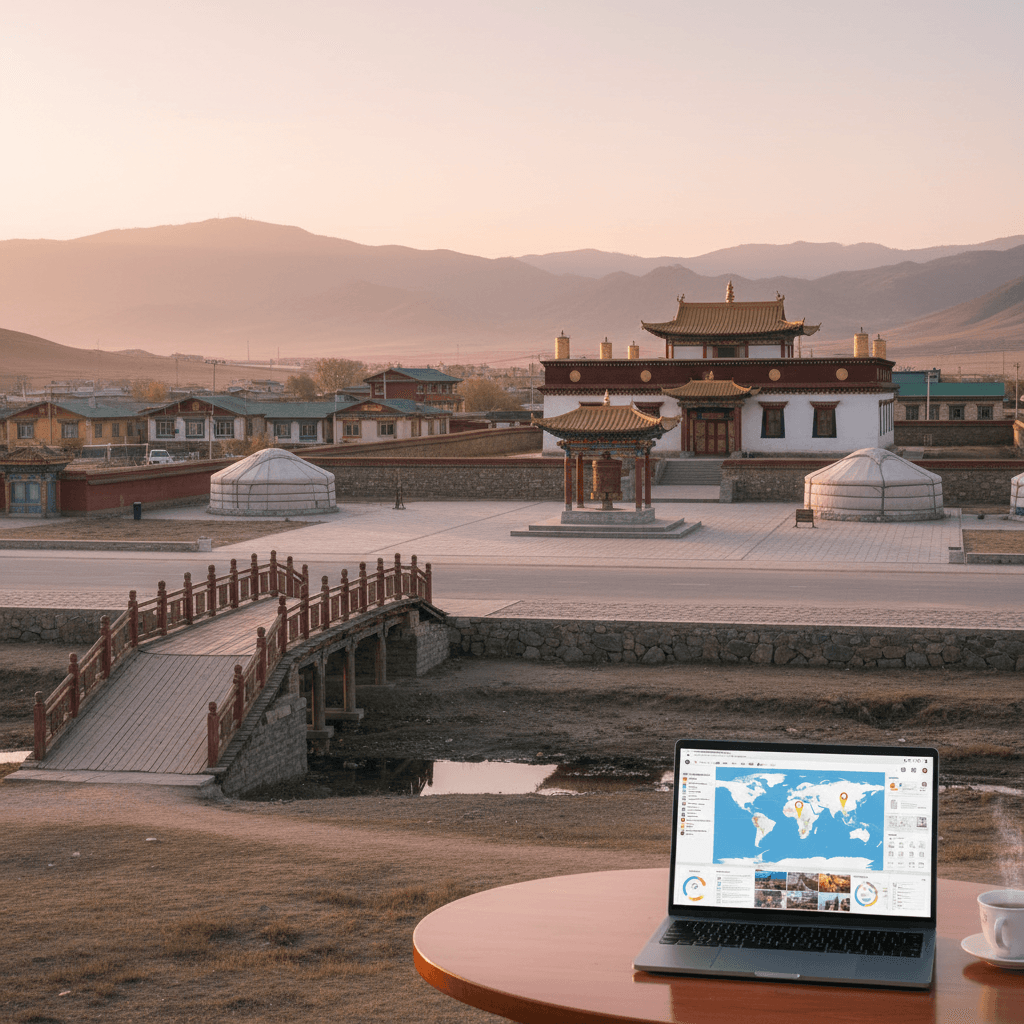
Tsetserleg
🇲🇳 Mongolia
The Mountain Sanctuary
If Ulaanbaatar is the frantic, smoke-filled heart of Mongolia, Tsetserleg is its deep, steady breath of fresh air. Tucked into a valley of the Khangay Mountains, this is arguably the only provincial capital in the country that feels genuinely cozy. It doesn't have the dusty, grid-like harshness of other steppe towns. Instead, you get steep forested ridges backing right up against the streets and a sense of history that predates the Soviet era blocks.
Living here feels like a deliberate retreat. You aren't coming to Tsetserleg for high-speed fiber or a networking scene; you're coming because you want to watch the light change on the granite cliffs while you work from a guesthouse terrace. It’s a place where the morning commute might be interrupted by a herd of goats moving through the main road, and the air always smells faintly of pine needles and woodsmoke.
The Local Rhythm
The vibe is slow, bordering on meditative. Most nomads who find their way here are looking for a "deep work" base or a jumping-off point for the wilds of Khorgo Terkh National Park. You'll spend your mornings at places like Fairfield Guesthouse, which has become the de facto hub for foreigners. It’s one of the few spots where you can find a reliable cup of coffee and a western-style breakfast while rubbing shoulders with researchers and hikers.
The town, formerly known as Erdenebulgan, is small enough that you'll start recognizing faces within forty-eight hours. There is a distinct lack of pretension here. You won't find flashy malls or "concept" bars. Instead, life revolves around the local market and the stunning Zayiin Gegeen Monastery, which sits at the foot of the northern mountains and gives the town its spiritual anchor. It’s a quiet, respectful atmosphere where the locals are hospitable but generally leave you to your own devices.
What Sets It Apart
Tsetserleg is unique because it manages to feel like a real community rather than just a transit stop. While most travelers blow through on a three-day expedition, staying for a month allows you to see the nuance. You'll notice the way the community gathers at the local basketball courts or how the evening light hits the "Bulgan Uul" mountain overlooking the city. It’s a rare Mongolian town that is actually walkable, which is a massive plus for your mental health when you're away from the big city conveniences.
The emotional experience is one of profound isolation, but in a restorative way. You are 450 kilometers from the capital, and the 12-hour bus ride over bumpy terrain acts as a physical barrier that keeps the crowds away. It’s the kind of place where you finally finish that book or project because the distractions of the modern world simply haven't reached this valley yet.
Practical Realities
- The Climate: Winters are brutal and honest. Temperatures frequently drop to -25°C, and the town slows to a crawl. Most nomads prefer the window between June and September when the mountains are lush and green.
- Connectivity: Don't expect dedicated coworking spaces. You’ll be tethering from a local Unitel or Mobicom SIM card, which usually provides decent 4G speeds in the town center, or relying on guesthouse Wi-Fi.
- Language: English is sparse outside of the main tourist lodges. Learning basic Mongolian phrases for the market and transport is a necessity, not an option.
- The Pace: Everything takes longer here. Whether it's waiting for the bus to fill up or getting a meal at a local canteen, you have to leave your "big city" expectations at the door.
Choosing Tsetserleg means trading convenience for character. It’s for the nomad who prefers a hike in the Khangay mountains over a night at a club, and who finds beauty in the rugged, unpolished edges of provincial Mongolian life.
The Price of Peace in the Khangay Mountains
Living in Tsetserleg is an exercise in extreme affordability, provided you can handle the trade-offs. This isn't Ulaanbaatar; you won't find luxury high rises or high end grocery chains here. Instead, you get the most picturesque provincial capital in Mongolia for a fraction of what you would spend in the capital city. Your biggest challenge isn't the cost, it is finding a landlord who understands the needs of a long term remote worker.
Most nomads who stay here for more than a week end up negotiating monthly rates with local guesthouses or small hotels like the Ashid Bekhi. Because the town is a transit hub for expeditions, there is a decent infrastructure for visitors, but the "expat market" is practically nonexistent. You are paying local prices for almost everything, which makes your dollar go incredibly far.
Monthly Budget Estimates
- Total Living Expenses: $600 to $900 per month
- Studio Apartment or Guesthouse Room: $250 to $450 per month
- Local Meals: $3 to $6 per person
- Coffee or Tea: $1.50 to $3
- Monthly Grocery Bill: $150 to $200
Housing and Utilities
The rental market in Tsetserleg is informal. You won't find listings on international apps. Most digital nomads find success by talking to the staff at places like Fairfield Guesthouse or checking local notice boards. A comfortable, heated room in a modern building will usually run you about $350 a month, often including basic utilities. If you are looking for a proper apartment in the newer concrete builds near the town center, prices can drop even lower, but you will likely need a Mongolian speaker to help you navigate the verbal contracts.
Heating is the most important utility here. Since winter temperatures regularly plummet to -25°C, you want to ensure your housing is connected to the central heating grid. If you are staying in a traditional ger on the outskirts, your costs will be lower, but you will spend your mornings hauling coal and wood, which isn't exactly conducive to a 9 to 5 workflow.
Food and Dining
Eating out in Tsetserleg is cheap and hearty. Local canteens, known as guanz, serve up plates of tsuivan (fried noodles) or khuushuur (meat pastries) for about 8,000 to 12,000 MNT. For a more "cafe" feel where you can actually sit with a laptop for an hour, prices are slightly higher but still negligible compared to Western standards. A solid dinner at a hotel restaurant will rarely top $10 including a drink.
Groceries are limited to what is in season and what can be trucked in from Ulaanbaatar. The local markets are great for meat, dairy, and basic root vegetables. Expect to pay a premium for imported goods like avocados, good chocolate, or specific spices. If you have a specific brand of coffee or snack you can't live without, buy it in bulk before you leave the capital.
Connectivity and Transport
Since there are no dedicated coworking spaces in Tsetserleg, your "office" cost is essentially the price of a SIM card and a cup of tea. Data plans from Unitel or Mobicom are generally more reliable than guesthouse Wi-Fi. The 4G signal in the center of town is surprisingly strong, though it drops off quickly once you head toward the hills.
Getting around town is mostly done on foot because the valley is compact. If it's too cold to walk, a quick hop in a local "taxi" (usually just a resident with a car) will cost about 2,000 to 4,000 MNT for a trip across town. The 12 hour bus ride from Ulaanbaatar costs around 30,000 MNT, making it one of the cheapest long distance commutes you will ever experience, even if it is a bit rough on the lower back.
For Solo Nomads: Erdenebulgan Central
Most solo nomads landing in Tsetserleg gravitate toward the central district, historically known as Erdenebulgan. It is the most practical choice because it keeps you within walking distance of the few reliable Wi-Fi spots in town. Living here means you are tucked into a valley surrounded by forested hills, giving you a scenic backdrop even when you are just running to the market for supplies.
The infrastructure here is the most developed in the province, but it is still rugged. You will likely find yourself staying at places like the Ashid Bekhi Hotel or local guesthouses that offer private rooms. These spots often serve as the unofficial social hubs where you can meet other travelers or find a fix for a spotty connection. Expect to pay around $25 to $45 per night for decent mid-range lodging with heating, which is a non-negotiable if you are visiting outside the peak summer months.
- Vibe: Functional, social, and the closest thing to a "walkable" downtown.
- Connectivity: Best chance for 4G signals and stable router setups.
- Daily Cost: Roughly $35 to $60 including meals and a private room.
For Expats and Long-Termers: The Northern Slopes
If you are planning to stay for more than a couple of weeks, look toward the residential areas creeping up the northern slopes near the Zayiin Gegeen Monastery. This area feels more like a community and less like a transit hub. It is quieter, the air is incredibly crisp, and you get a front-row seat to the town's 300-year-old history. Many expats working in education or regional development find small apartments or house shares in this vicinity.
Renting a local apartment is an exercise in patience and usually requires a local contact rather than an app. If you secure a spot, your monthly rent will be significantly lower than hotel rates, often hovering around $200 to $350 for a basic but warm unit. You will be trading the convenience of the central shops for a more authentic rhythm of life, punctuated by the morning chants from the monastery and the sight of locals hauling water or wood.
- Vibe: Quiet, traditional, and culturally immersive.
- Best for: Deep work and those who don't mind a 15-minute walk for coffee.
- Rent: Approximately 700,000 to 1,200,000 MNT per month.
For Families: The Southern Garden District
Families usually prefer the southern side of the main road where the density thins out and there is more open space for kids to run. Tsetserleg is famous for being one of the greenest cities in Mongolia, and this area lives up to that reputation. There are fewer tall buildings and more space between properties, which cuts down on the noise from the main thoroughfare.
Safety is rarely a concern in these neighborhoods, but the logistics of family life require more planning. You won't find international schools or Western-style playgrounds here. Instead, the "amenities" are the nearby hiking trails and the easy access to the Bulgan Uul mountain. For groceries, you will be heading to the central market, so having a local driver or a sturdy pair of walking shoes is a must.
- Vibe: Spacious, green, and very low-key.
- Proximity: Close to the Bulgan Mountain trailheads.
- Food: Local markets offer fresh dairy and meat at very low prices.
For Adventurous Solo Travelers: The Guesthouse Fringe
If your version of "remote work" involves a lot of offline time and a desire for raw nature, the outskirts near the road to Khorgo Terkh National Park are your best bet. Several guesthouses operate on the edge of town, offering a mix of wooden cabins and traditional gers. It is a rugged experience, especially when temperatures drop to -25°C in the winter, but the sense of isolation is perfect for a creative retreat.
You will likely be relying on a mobile hotspot here, so grab a local Unitel or Mobicom SIM card before you arrive. While the town center is only a short taxi ride away, you will feel worlds apart from the provincial capital's "hustle." It is the ideal base if you plan to spend your weekends exploring the deer stones or the Great White Lake.
- Vibe: Rustic, outdoorsy, and isolated.
- Transport: Local taxis are cheap, usually around 1,000 to 2,000 MNT for a short cross-town hop.
- Accommodation: Ger stays or basic cabins for $15 to $25 per night.
Connectivity and Speed
Living in Tsetserleg means trading high speed fiber for some of the most stunning mountain views in Mongolia. You won't find dedicated coworking spaces with ergonomic chairs here. Instead, your setup will likely be a wooden table in a guesthouse or a corner of a local cafe. Most nomads rely on 4G LTE rather than local Wi-Fi, which can be spotty and prone to outages during the frequent summer storms or winter deep freezes.
The local infrastructure is surprisingly decent for a provincial capital, but it has its limits. Most hotels like the Ashid Bekhi provide Wi-Fi in the lobby and some rooms, but speeds rarely climb above 5 to 10 Mbps. If you have video calls scheduled, you will want a backup plan. The town is small enough that you can usually find a signal, but once you head toward the Zayiin Gegeen Monastery at the base of the Bulgan Uul mountain, the connection can drop significantly.
Mobile Data and SIM Cards
Your best bet for staying online is a local SIM card. Unitel and Mobicom are the two main providers with the best coverage in Arkhangai province. You can pick up a SIM in Ulaanbaatar before you make the 12 hour bus trek, or visit the small provider shops near the central market in Tsetserleg.
- Unitel: Often cited by expats as having the most consistent data coverage in rural areas.
- Mobicom: Great for voice calls and generally reliable in the town center.
- Data Costs: Monthly packages vary; check current Unitel/Mobicom rates for available data (typically 3-5GB for 15,000-60,000 MNT).
I highly recommend buying a portable Wi-Fi dongle or using your phone as a hotspot. The 4G signal is often faster than the landline internet found in budget guesthouses. Just keep in mind that when the temperature hits -25°C in the winter, batteries drain fast and the hardware can get finicky.
Remote Work Spots
Since coworking spaces don't exist here yet, you'll be doing the "cafe hop" to stay productive. The options are limited but cozy. Most nomads gravitate towards the few restaurants that cater to the tourist crowd during the summer months, as they are more accustomed to people lingering over a laptop.
The Fairfield Guest House is the unofficial hub for foreigners in Tsetserleg. It has a cafe that serves western style coffee and food, and the staff is used to seeing people working on laptops. It is one of the few places where you can find a reliable power outlet and a relatively quiet atmosphere. Another option is the dining area at Ashid Bekhi, which is usually empty during the day and provides a professional enough backdrop for a quick Zoom call.
Power Reliability
The local grid is generally stable, but Tsetserleg isn't immune to the occasional blackout. These usually don't last more than an hour or two, but they can be a headache if you are on a deadline. A high capacity power bank is a mandatory piece of gear here. If you are planning to work through the winter, make sure your laptop is kept in a padded, insulated sleeve when you are moving between buildings to prevent the internal battery from freezing.
Most nomads find that their productivity in Tsetserleg follows the sun. You work while the light is good and the cafes are open, then unplug in the evening when the town slows down. It is a place for deep work and focus rather than high speed multitasking.
Staying Safe in the Valley
Tsetserleg is widely considered the most relaxed provincial capital in Mongolia. Because it is cradled in a forested valley rather than sitting on the open steppe, it lacks the windswept, transitional feel of other aimag centers. You will find the locals are generally welcoming, though the pace of life is slow and traditional. Street crime is rare here, but like anywhere in rural Mongolia, it pays to be mindful of your surroundings after dark, especially near the main market area or the bus station where public intoxication can occasionally lead to unpredictable interactions.
The biggest safety concern for a nomad isn't other people; it's the environment and the animals. If you're heading out for a hike behind the Zayiin Gegeen Monastery or into the Khangay mountains, tell someone at your guesthouse where you're going. Weather changes in minutes, and even a sunny afternoon can turn into a freezing downpour or snowstorm. Stray dogs can also be territorial. If you encounter a pack while walking on the outskirts of town, keep your distance and don't try to pet them. Most locals carry a small stone or stick just in case, though usually, a firm shout is enough to keep them at bay.
Winter safety is a different beast entirely. Temperatures regularly plummet to -25°C or lower between December and February. Frostbite is a genuine risk if you aren't geared up in heavy wool or high quality down. If you're planning to stay through the colder months, ensure your accommodation has a reliable heat source, as power outages can happen during heavy snows.
Healthcare Infrastructure
Medical facilities in Tsetserleg are basic. The Arkhangai Provincial Hospital serves the region and can handle minor ailments, basic stitches, or standard infections. However, for anything serious, chronic, or requiring surgery, you'll need to head back to Ulaanbaatar. The 12 hour bus ride to the capital is grueling on a good day and potentially dangerous if you're dealing with a medical emergency. Most expats and long term travelers keep a robust first aid kit on hand, including antibiotics and stomach meds, since "Mongolian belly" from unpasteurized dairy or undercooked meat is common for newcomers.
- Arkhangai General Hospital: Located in the center of town. Best for emergencies only.
- Local Pharmacies: Found near the main square. They stock basic Russian and Chinese medications, but English is rarely spoken.
- SOS Medica: This is the gold standard for nomads in Mongolia, but their clinic is in Ulaanbaatar. Keep their number handy for phone consultations or evacuation logistics.
Practical Health Tips
The water in Tsetserleg isn't safe to drink straight from the tap. Most nomads use a high quality filter like a Grayl or Sawyer, or they buy large 5 liter jugs of water from the local shops. If you're staying in a guesthouse like Fairfield or Ashid Bekhi, they usually provide purified water for guests. Air quality is generally excellent in the summer, but in winter, the town can get smoky from coal fires used for heating gers and homes.
If you're planning to spend months here, make sure your vaccinations are up to date before you arrive. Rabies is present in the wildlife and dog populations across Arkhangai. While you likely won't need the shots if you stay in the town center, it's a smart precaution if you're spending your weekends riding horses or trekking through the national parks. Also, keep an eye on your hydration; the high altitude and dry air can sneak up on you, leading to headaches that feel like a hangover even if you haven't touched the local vodka.
Emergency Contacts
Memorize these local emergency numbers, though keep in mind that English speakers are rarely on the other end of the line. It helps to have a local friend's number or your guesthouse host saved for translation help.
- Police: 102
- Ambulance: 103
- Fire Department: 101
Walking the Town
Tsetserleg is one of the few provincial capitals in Mongolia where you can actually enjoy getting around on foot. The town is tucked into a scenic valley, and the scale is small enough that you can walk from the central market to most guesthouses in under 20 minutes. The streets are relatively well paved compared to other aimag centers, though you should keep an eye out for uneven sidewalks and the occasional loose paving stone.
Most of the action happens along the main east west axis. If you are staying near the Ashid Bekhi Hotel, you are in the heart of the "downtown" area. From here, it is a quick stroll to the local supermarkets and the post office. Walking is your best bet for daily errands, especially since the mountain views at the end of every street are part of the draw of living here.
Local Taxis
When the weather turns or you are carrying heavy groceries from the market, local taxis are the standard way to move. There is no Uber or specialized ride hailing app here. Instead, you do it the Mongolian way: stand by the side of the main road and hold your hand out with your palm facing down. Almost any private car might stop to act as an unofficial taxi.
The fare is standardized based on distance, usually around 1,000 to 1,500 MNT per person for a short hop across town. If you are heading further out, expect to pay a bit more. It is smart to carry small bills since drivers rarely have change for large denominations. While most drivers don't speak English, simply stating the name of a landmark like the Zayiin Gegeen Monastery or a specific hotel will get you where you need to go.
Regional Connections
Tsetserleg serves as the primary transit hub for Arkhangai province. If you are looking to head back to Ulaanbaatar or move further west toward Tariat, you will spend some time at the local bus station. Large, reliable buses depart for the capital regularly. The trip usually takes about 8 hours depending on road conditions and the number of stops for tea and buuz along the way.
A ticket to Ulaanbaatar typically costs around 30,000 MNT. It is a good idea to buy your ticket a day in advance during the summer months when domestic travel peaks. For destinations deeper into the countryside, like Khorgo Terkh National Park, you won't find scheduled bus routes. Instead, nomads and travelers usually negotiate a rate for a private Russian furgon or a 4x4 Land Cruiser. Expect to pay significantly more for these private hires, often between 150,000 and 250,000 MNT per day depending on fuel costs and your negotiation skills.
Winter Logistics
Transportation changes drastically once the snow hits. From November through March, temperatures frequently drop to -25°C or lower. While the main road to Ulaanbaatar is usually kept clear, local travel slows down significantly. Walking becomes a test of endurance rather than a pleasant stroll, and you will find yourself relying on taxis for even the shortest trips.
If you are planning to explore the surrounding hills in winter, ensure any vehicle you hire is properly winterized. Diesel engines can struggle in the extreme cold, so many locals prefer petrol vehicles during the deep freeze. Always check the forecast before heading out of town, as sudden blizzards can turn a three hour drive into a multi day ordeal.
Getting Around Summary
- Town Taxis: 1,000 to 1,500 MNT per person for local trips.
- Bus to Ulaanbaatar: Approximately 30,000 MNT; 8 hour duration.
- Private 4x4 Hire: 150,000+ MNT per day for regional exploration.
- Walkability: High within the town center during summer and autumn.
The Language Barrier
In the forested valley of Tsetserleg, English is far from the norm. While the town is a favorite stop for travelers heading to the Khangay mountains, the local community primarily speaks Mongolian. You will find that younger residents and staff at modern spots like the Ashid Bekhi Hotel might have a basic grasp of English, but most daily interactions at the local markets or bus stations happen in the native tongue.
The Mongolian language uses the Cyrillic alphabet. If you have spent time in Eastern Europe or Central Asia, the characters will look familiar, but the pronunciation is distinct and guttural. Most nomads find that learning to read the alphabet is the single most helpful thing they can do before arriving. It makes identifying signs for pharmacies, grocery stores, and guesthouses significantly easier when you aren't relying on Google Translate for every single word.
Digital Communication and Connectivity
Staying connected in Tsetserleg requires a bit of planning. You won't find high tech coworking spaces here, so your mobile data plan is your lifeline. The main providers are Mobicom and Unitel. Most expats recommend picking up a SIM card in Ulaanbaatar before making the 12 hour trek to Tsetserleg, as the registration process is smoother in the capital.
While 4G coverage is surprisingly stable within the town limits, it drops off quickly once you head toward the Zayiin Gegeen Monastery or out into the surrounding hills. If you are planning to work remotely, ask your guesthouse or hotel specifically about their Wi-Fi reliability. Many local spots use routers that struggle with heavy video calls, so having a Unitel hotspot as a backup is a smart move for anyone with a 9 to 5 schedule.
- Mobicom: Generally offers the widest coverage in rural areas.
- Unitel: Often preferred by nomads for better data packages and faster speeds in provincial centers.
- Google Translate: Download the Mongolian pack for offline use; it is hit or miss with complex grammar but works for basic nouns.
Cultural Nuances in Conversation
Communication in this part of Mongolia is often direct but deeply polite. There is a specific etiquette to follow when entering a home or a ger. For instance, if you are offered a bowl of milk tea or a snack, it is polite to accept it with your right hand, often touching your right elbow with your left hand as a sign of respect. Even if you don't speak the language, these gestures go a long way in building rapport with locals.
Since Tsetserleg was formerly known as Erdenebulgan, you might still see that name on older maps or official documents. When asking for directions or booking transport, it helps to know both names to avoid confusion. Most people will refer to the town as Tsetserleg, but regional bus schedules can be inconsistent with their labeling.
Survival Phrases for the Khangay Region
You don't need to be fluent, but a few key phrases will change the way locals treat you. "Sain baina uu" is the standard greeting, and "Bayarlalaa" means thank you. If you are looking for the bus station to head back to Ulaanbaatar or further west to Khorgo Terkh National Park, asking for the "Avto voxal" will get you pointed in the right direction.
Expect a lot of non verbal communication. If you are stuck, pointing and smiling are your best tools. The people here are used to independent travelers passing through and are generally patient, provided you aren't in a massive rush. Life moves at a different pace in the mountains, and your communication style should reflect that.
Seasonal Realities
Living in Tsetserleg means embracing the dramatic shifts of the Khangai Mountains. Because the town sits at an elevation of nearly 1,700 meters, the weather is more temperamental than in the lowlands. You aren't just dealing with Mongolian steppe conditions; you're dealing with alpine microclimates that can swing twenty degrees in a single afternoon.
The sweet spot for setting up your workstation here is between June and late August. During these months, the valley turns a deep, lush green that justifies its reputation as the most beautiful provincial capital in the country. Daytime temperatures usually hover around 18°C to 23°C (64°F to 73°F). It is perfect for afternoon hikes up to the Zayiin Gegeen Monastery without breaking a sweat, though you should expect quick, heavy rain showers that roll in over the peaks.
Spring and autumn are transitional and notoriously unpredictable. May and September can be beautiful, but they're also prone to sudden dust storms or late-season snow. If you're planning to stay through September, make sure your guesthouse or apartment has a reliable heating source, as the mercury regularly dips below freezing once the sun goes down.
The Winter Lockdown
Most nomads flee Tsetserleg by October, and for good reason. Winter in the Arkhangai province is a serious undertaking. From November through March, temperatures frequently bottom out at -25°C (-13°F) or lower. While the town stays functional, the lifestyle becomes very insular. The surrounding mountain passes can get choked with snow, making the 12 hour bus ride back to Ulaanbaatar a gamble.
If you choose to stay during the cold months, you'll experience the "real" Mongolia, but your productivity might take a hit. Local infrastructure is strained by the cold, and you'll spend a significant portion of your day just managing the logistics of staying warm. Most expats who've braved a winter here recommend sticking to modern hotels like the Ashid Bekhi during this time, as they have more consistent heating systems than smaller guesthouses.
Peak Times for Culture and Connection
If you want to see the town at its most social, aim to be there for Naadam in July. While Ulaanbaatar hosts the biggest celebration, the local Tsetserleg festivities are far more intimate and accessible for photographers and those looking to mingle with locals. You'll see horse racing and wrestling without the massive crowds of the capital, though accommodation prices can double for that week.
Quick Climate Breakdown
- Best for Work and Hiking: July and August. Expect mild days, cool nights, and occasional rain.
- Best for Budget Stays: May or September. The crowds are gone, but you'll need a heavy jacket for the evenings.
- The "No-Go" Zone: January and February. Unless you have high-grade arctic gear and a high tolerance for isolation, the extreme cold makes digital nomad life nearly impossible.
- Average Summer Highs: 20°C (68°F)
- Average Winter Lows: -28°C (-18°F)
For those who rely on stable internet, remember that summer storms can occasionally knock out power for short bursts. Most long-termers recommend having a local Unitel or Mobicom SIM card with a fat data plan as a backup during the rainy months of July and August.
Getting There and Settling In
Reaching Tsetserleg is an exercise in patience. Most nomads make the trek from Ulaanbaatar by bus, a journey that officially takes around 9 hours but often stretches to 12 depending on road conditions and the driver's mood. Tickets usually cost about 30,000 MNT. If you value your spine, skip the shared minivans and book a seat on the large government buses departing from the Dragon Bus Terminal.
The town is compact enough that you won't need a car. Walking is the default mode of transport, though you can flag down local taxis for a few thousand tugriks to get across town. Since the town was historically known as Erdenebulgan, you might still see that name on some official documents or older maps; don't let it confuse you.
Connectivity and Workspace
Don't come here expecting dedicated coworking spaces with ergonomic chairs and free-flowing kombucha. You won't find them. You'll be working from your guesthouse or a handful of local spots. The Fairfield Guesthouse is the unofficial hub for foreigners and offers the most reliable Wi-Fi in town, along with decent coffee and western-style meals. It is where most remote workers congregate to swap tips on rural logistics.
For a backup, grab a local Unitel or Mobicom SIM card in Ulaanbaatar before you head out. 4G coverage is surprisingly decent within the town limits, though it drops off the moment you head into the surrounding hills. Expect speeds to fluctuate; it is enough for emails and basic Zoom calls, but maybe don't schedule a high-stakes live stream while you are here.
Climate Realities
The weather in the Khangay mountains is no joke. If you visit during the shoulder seasons, pack layers you can peel off as the sun moves. Winter is a different beast entirely. Temperatures regularly plummet to -25°C or lower, and the town takes on a quiet, frozen character. Most guesthouses and hotels like the Ashid Bekhi keep the heat cranked up, but you will want heavy-duty boots and thermal gear if you plan on stepping outside for more than five minutes.
Daily Costs and Logistics
Living here is incredibly affordable because there isn't much to spend your money on. Your biggest expenses will be housing and transport for weekend trips into the wilderness.
- Guesthouse Stay: $15 to $30 per night for a private room.
- Local Meal: $3 to $6 for a hearty bowl of tsuivan or khuushuur.
- Coffee: $2 to $3 at the few cafes catering to travelers.
- Monthly Budget: Most nomads can live comfortably on $800 to $1,000 inclusive of occasional guided trips.
Banking and Supplies
Cash is king. While some larger shops and hotels accept cards, the smaller markets and local eateries are cash only. There are a few Khan Bank ATMs in the center of town that accept international Visa and Mastercard, but they occasionally run out of bills during local holidays or festivals. It is smart to carry a healthy stack of tugriks as a safety net.
For groceries, the local market is the place to go. You can find staples like mutton, flour, and potatoes easily. If you have specific dietary needs or crave niche imported goods, stock up in Ulaanbaatar at State Department Store or Saruul Market before heading west. Tsetserleg is great for the basics, but your options for almond milk or gluten-free snacks will be non-existent.
Need visa and immigration info for Mongolia?
🇲🇳 View Mongolia Country GuideOff the Radar
Pioneer territory