Trabzon
🇹🇷 Turkey
The Black Sea Alternative
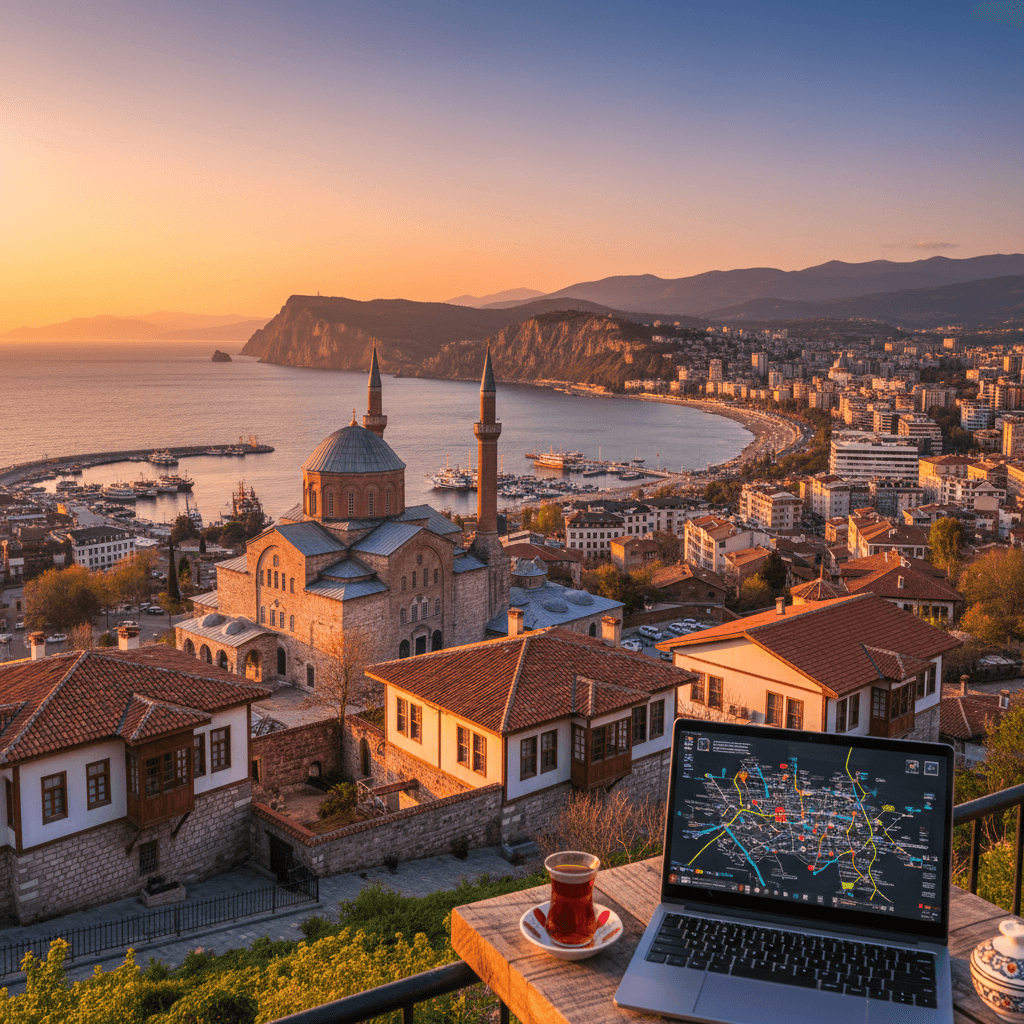
If you're tired of the scorched-earth heat and high-season crowds of Antalya or the frantic pace of Istanbul, Trabzon is the breath of fresh air you probably need. It's a city where the green of the Pontic Mountains literally spills into the dark blue of the Black Sea. The vibe here is noticeably more relaxed and grounded. You'll find a mix of conservative Ottoman history and a surprising surge of youthful energy, thanks largely to the massive student population at Karadeniz Technical University.
Living here feels less like being a tourist and more like being part of a working maritime community. You'll spend your mornings working from a cafe overlooking the water and your afternoons exploring Byzantine ruins or hiking through misty forests that look more like the Pacific Northwest than the Mediterranean. It's a place for nomads who value authenticity over a polished expat bubble.
Cost of Living: Your Budget Goes Further
Trabzon remains one of the most affordable coastal cities in Turkey. While prices fluctuate with the Lira, those earning in foreign currency generally find their purchasing power is significantly higher here than in the south. Most solo nomads can live comfortably on about $1,050 (₺35,000) per month, though you can scrape by on $600 (₺20,000) if you're sticking to local neighborhoods and street food.
- Housing: A modern one-bedroom apartment in the city center typically runs between $450 and $750 (₺15,000 to ₺25,000). If you head to the outskirts like Beşirli, you can find deals as low as $300 (₺10,000).
- Food: Local favorites like Pide or a Simit on the go cost between $0.60 and $1.50 (₺20 to ₺50). A solid dinner at a mid-range spot like Cemil Usta will cost around $6 to $9 (₺200 to ₺300).
- Connectivity: A 50GB data plan via a ZetSIM eSIM or a local Turkcell shop is roughly $9 (₺300).
Where to Plant Your Flag
Choosing a neighborhood in Trabzon depends on whether you want convenience or a view of the surf. Most nomads gravitate toward the coast for the breeze and the infrastructure.
Ortahisar (City Center)
- The Vibe: Historical, walkable, and the heart of the action. You're close to the Hagia Sophia and the best local markets.
- Pros: Everything is within walking distance; best access to banks and shops.
- Cons: Traffic can be a headache and it's the loudest part of town.
Beşirli & Akyazı
- The Vibe: The local favorite for a reason. It's a residential coastal stretch with a much slower pace.
- Pros: Great seaside walking paths, better air quality, and more modern apartment complexes.
- Cons: Fewer dedicated coworking hubs; you'll likely be working from your balcony or a local cafe.
The Nomad Infrastructure
The digital nomad scene is still in its infancy here, so don't expect the massive networking events you see in Bali. Instead, you'll find a growing community of remote workers in the cafes around the Kale (historic district) or near the university. Internet is reliable, with fiber-optic speeds hitting 100 Mbps in newer builds. For a desk, look for university-linked innovation hubs or quiet corners in places like the waterfront cafes, which usually cost between $30 and $75 (₺1,000 to ₺2,500) if they offer monthly memberships.
Getting around is simple. The local dolmuş (minibuses) and public buses are efficient and cheap at about $1 (₺32) per ride. For quick trips, the Martı app lets you grab an electric scooter for around $0.15 (₺5) per ride. If you're coming from the airport, the HAVAŞ shuttle is the most painless way to reach the center for about $1.50 (₺50).
What to Expect Daily
Language is the biggest hurdle. English isn't as common here as it is in Istanbul, so having Google Translate downloaded for offline use is a must. You'll also need to get used to the Black Sea weather. It's famously moody; the best window is June through August, while November to March can be a bit of a washout with heavy rain. Despite the clouds, the hospitality is warm. Expect to be offered tea constantly. It's polite to accept at least one glass, even if you've already had five that morning.
Safety is rarely an issue. The city is generally very safe for solo travelers, and healthcare is high quality. If you're staying long term, the new Turkish Digital Nomad Visa is an option if you earn at least $3,000 a month, giving you a legal path to stay and enjoy the Black Sea lifestyle properly.
The Bottom Line on Budget
Trabzon is where your foreign currency stretches significantly further than in the high energy hubs of Istanbul or the resort crowds of Antalya. It is a city that rewards the slow traveler, providing a high quality of life for a fraction of what you would pay on the Mediterranean coast. While prices fluctuate with the Lira, most nomads find they can live comfortably here on $1,050 to $1,500 per month, depending on how often they head out for Black Sea salmon and mıhlama.
The local economy caters to a mix of students from Karadeniz Technical University and a steady stream of regional tourists. This keeps everyday costs like groceries and transport remarkably low. If you are earning in USD or Euros, you'll find yourself in the "comfortable" tier without much effort.
Monthly Budget Tiers
- Budget Nomad: $600 (₺20,000). This covers a modest apartment in the outskirts or a shared flat, plenty of street food like pide and simit, and using the local dolmuş for all transport.
- Mid-Range: $1,050 (₺35,000). This is the sweet spot. You can afford a modern 1-bedroom in the city center, eat out at mid-range spots like Cemil Usta regularly, and keep a dedicated desk at a local hub.
- Comfortable: $1,500+ (₺50,000+). At this level, you are looking at premium coastal apartments in Beşirli with sea views, frequent car rentals for mountain trips, and upscale dining without checking the menu prices.
Housing and Neighborhoods
Rent is your biggest variable. While the city center is convenient, many expats recommend looking slightly west to the coast for a better atmosphere. You won't find many western-style "luxury" lofts, but modern builds with fiber internet are becoming the standard.
Ortahisar (City Center)
- The Vibe: Busy, historic, and walkable. You are near the Hagia Sophia and the main commercial districts.
- Rent: $450 to $750 (₺15,000-25,000) for a 1-bedroom apartment.
- Best For: Nomads who want to be in the thick of the action and near the best cafes for working.
Beşirli and Akyazı
- The Vibe: Relaxed coastal living. It feels less like a tourist trap and more like a local seaside retreat.
- Rent: $300 to $600 (₺10,000-20,000). You get more space for your money here.
- Best For: Those who prioritize sea air and a quieter morning routine.
Daily Expenses and Lifestyle
Eating out is a highlight of life in Trabzon. Street food is incredibly cheap; a quick simit or a hearty pide will only set you back $0.60 to $1.50. A solid meal at a mid-range restaurant usually lands between $4.50 and $9. Even a "splurge" at a waterfront restaurant rarely tops $15 per person.
Getting around is simple. The public bus and the ubiquitous dolmuş (minibuses) cost about $0.45 (₺15) per ride. If you prefer apps, use BiTaksi or check for Uber analogs to get around. For quick hops, look for Martı scooters near the shoreline, which usually cost around $0.15 per ride plus a small per-minute fee.
Connectivity and Remote Work
Coworking spaces are still an emerging scene in Trabzon. You won't find the massive chains here yet, but university-linked hubs and local business centers offer hotdesks for $30 to $75 (₺1,000-2,500) a month. Most nomads opt for the strong cafe culture in the Kale district or ensure their apartment has fiber-optic internet, which easily reaches 100 Mbps in newer buildings.
For mobile data, grab a Turkcell or Vodafone SIM. Travelers often suggest using an eSIM via ZetSIM for convenience. A 50GB monthly plan typically costs around $9 (₺300), giving you a reliable 4G backup for those days when you want to work with a view of the mountains.
The Digital Nomad Visa
If you're planning to stay long-term, Turkey's Digital Nomad Visa is a straightforward path. You'll need to prove a monthly income of at least $3,000. For the application, head to the official GoTürkiye portal. Once you have your permit, you can look into opening a local bank account at Ziraat Bank to make paying your rent and utilities even easier.
Solo Nomads and Remote Workers
If you're landing in Trabzon to get work done, Ortahisar is your best bet. This is the city's historic and commercial heart. It's walkable, packed with cafes, and keeps you close to the major landmarks like the Hagia Sophia. You'll find the best internet speeds here, with many modern apartments offering fiber optics up to 100 Mbps. While there aren't many dedicated coworking brands yet, the university hubs and historic cafes in the Kale district are popular spots to set up for the afternoon.
- Rent: Expect to pay between ₺15,000 and ₺25,000 ($450 to $750 USD) for a decent one bedroom in the center.
- Vibe: Fast paced for the Black Sea, but still relaxed compared to Istanbul.
- Work: Reliable 4G/LTE backup is available citywide; use ZetSIM for an easy eSIM setup.
Long-Term Expats and Sea Lovers
For those staying a few months and wanting a view of the water, Beşirli and Akyazı are the top picks. These coastal neighborhoods offer a much more laid back atmosphere than the center. Expats often prefer this area because it feels less like a tourist hub and more like a local community. You'll have easy access to the beach and waterfront promenades, which are perfect for decompressing after a long day of calls. It's quieter here, though you might have to commute about 15 to 20 minutes into the center for specialized services or specific coworking meetups.
- Rent: Slightly more affordable, ranging from ₺10,000 to ₺20,000 ($300 to $600 USD) for sea view flats.
- Lifestyle: Great for morning runs by the Black Sea and fresh seafood dinners at spots like Cemil Usta.
- Transport: Local dolmuş (minibuses) run constantly and cost about ₺15 per ride.
Families and Nature Seekers
If you're traveling with a family or just want to be closer to the mountains, look toward the outskirts in Yomra or even Çaykara. These areas provide much larger living spaces for your money and put you on the doorstep of the region's famous natural beauty. You're closer to the routes leading to Sumela Monastery and Uzungöl Lake. The trade off is the commute; you'll likely want to rent a car or rely on the HAVAŞ shuttles to get around comfortably. It's a peaceful existence, though the lack of English speakers is more noticeable here than in the city center.
- Budget: A comfortable family lifestyle here usually starts around ₺50,000 ($1,500 USD) per month.
- Healthcare: Proximity to Karadeniz Technical University Hospital provides peace of mind for medical needs.
- Space: Modern complexes often include playgrounds and private security.
Young Travelers and Students
The area surrounding Karadeniz Technical University (KTU) is the pulse of the city's youth culture. This is where you'll find the most affordable street food, like pide or simit for under ₺50, and the few bars and pubs that make up Trabzon's modest nightlife. It's the easiest place to meet people if you're under 30, as the student population is generally more fluent in English and open to meeting foreigners. It can get noisy during the semester, but the energy is infectious and the cost of living is the lowest in the city.
- Dining: Budget meals are easy to find for ₺150 to ₺300 ($4.50 to $9 USD).
- Social: Best place to find local Facebook expat groups or casual meetups.
- Connectivity: High concentration of student friendly cafes with free WiFi.
Connectivity and Speed
Trabzon is a solid choice for nomads who need reliable internet without the frantic pace of Istanbul. Most modern apartments in the city center and coastal districts like Beşirli come equipped with fiber optic connections reaching up to 100 Mbps. While it's not a tech capital, the infrastructure is surprisingly robust for a smaller Black Sea city. You'll find that 4G and LTE coverage is excellent across the urban sprawl, serving as a dependable backup if your home router decides to take a nap.
For mobile data, most expats recommend grabbing a physical SIM from Turkcell at the airport for the best regional coverage, though ZetSIM is the go-to for those who prefer setting up an eSIM before landing. Expect to pay around ₺300 ($9) for a 50GB monthly package. It's enough to handle your Zoom calls even if you're working from a tea garden overlooking the water.
Coworking and Study Hubs
The coworking scene in Trabzon is still finding its feet compared to Antalya or Izmir. You won't find many massive international chains here, but the city makes up for it with local business hubs and a strong university-driven study culture. Most nomads end up working from "work-friendly" cafes or specialized hubs near Karadeniz Technical University. Monthly hotdesk rates typically range between ₺1,000 and ₺2,500 ($30 to $75), making it one of the most affordable desk rentals in the country.
If you prefer a structured environment, look for hubs in the Ortahisar district. These spaces are often quieter than the city's cafes and provide the professional atmosphere needed for deep work. The vibe is generally collaborative, though you'll find more local entrepreneurs and students than international digital nomads.
The Cafe Office Scene
Working from cafes is a local pastime in Trabzon. The historic Kale (Citadel) area is home to several spots with reliable WiFi and plenty of power outlets. These cafes are perfect for a few hours of laptop time, especially if you enjoy the smell of fresh Turkish coffee and the sound of the Black Sea in the background.
- The Waterfront: Cafes along the Beşirli coastline are great for afternoon sessions. They offer plenty of space and a breeze that beats any air conditioner.
- Meydan Park: The heart of the city has several multi story cafes. Head to the upper floors to find the quietest corners and the best signal.
- University District: This area is packed with student focused spots that expect people to linger over books and laptops for hours.
Practical Workflow Tips
Since English isn't as widely spoken here as it is in the south, it's smart to have a translation app ready when asking for WiFi passwords or troubleshooting your connection with a local provider. Most cafes will have a sign with the password, but "WiFi şifresi nedir?" (What is the WiFi password?) is a phrase you'll use daily.
If you're planning to stay long term and apply for the Digital Nomad Visa, keep in mind you'll need to show a monthly income of $3,000. While Trabzon's low costs mean you'll live like royalty on that salary, the local banks like Ziraat are where you'll want to head to set up a local account for paying utility bills or long term rent. For quick currency conversions and daily spending, keep your Wise or Revolut card handy to avoid the high fees at traditional exchange booths.
One thing to watch out for is the rain. Trabzon is famous for its wet Black Sea climate. If you're planning to work from a terrace, always have a backup plan for when the clouds roll in. Most locals just shrug it off and move to the indoor section of the cafe, but it's something to keep in mind when choosing your "office" for the day.
Personal Safety and Local Vibes
Trabzon is a breath of fresh air if you are coming from the high energy chaos of Istanbul. It feels like a large town rather than a sprawling metropolis, and that reflects in the safety levels. Most nomads find the city exceptionally safe, even when walking through the Ortahisar district or along the coastal paths after dark. While property crime is rare, it is still smart to keep your wits about you in crowded areas like the Meydan Parkı, though locals are generally more curious about you than looking to cause trouble.
The city has a conservative but welcoming backbone. You will notice a heavy presence of students from Karadeniz Technical University, which keeps the atmosphere youthful and helps bridge the gap between traditional Black Sea values and modern expat life. Solo female travelers usually report feeling comfortable here, though sticking to well lit main drags in areas like Beşirli at night is the standard local advice. If you ever run into a bind, the emergency number is 112 for everything from police to medical help.
Healthcare Standards and Facilities
If you need medical attention, you are in good hands. Trabzon is a regional hub for healthcare, meaning people travel from all over the Black Sea region to use its facilities. The Karadeniz Technical University Farabi Hospital is the gold standard for specialized care, though several private hospitals offer faster service and more English speaking staff. Expats often recommend Medical Park or Imperial Hospital for outpatient visits because the intake process is smoother for foreigners.
Pharmacies, or Eczane, are everywhere. You can spot them by the glowing red "E" signs. They handle minor ailments with high efficiency, and pharmacists in the city center often speak enough English to help you find what you need. Remember that pharmacies take turns staying open 24/7 on a rotation system; you can find the "duty pharmacy" (Nöbetçi Eczane) for the night posted on the door of any closed shop or through local tracking apps.
Insurance and Practicalities
Since the Turkish Digital Nomad Visa requires proof of health insurance, you will likely already have coverage. However, if you are just passing through on a tourist visa, it is wise to have a policy that covers private hospital stays. Public hospitals are affordable but can be crowded and difficult to navigate without a Turkish translator. Most private clinics in Trabzon will expect payment upfront, which you can then claim back from your provider.
- Emergency Services: Dial 112 for all emergencies.
- Top Private Hospital: Medical Park Trabzon Star.
- University Hospital: Karadeniz Technical University Farabi Hospital (Best for complex issues).
- Prescription Costs: Generally very low, often under $10 for standard antibiotics or painkillers.
Staying Healthy on the Ground
The biggest health "risk" in Trabzon is honestly the humidity and the steep hills. If you aren't used to the Black Sea climate, the dampness can be a shock to the system in the winter months. Stick to bottled water for drinking; while the tap water is technically treated, most locals and long term nomads prefer Erikli or Kuzeyden brand bottled water for the taste and to avoid any stomach upsets. For a quick wellness boost, do what the locals do and head to the mountains for the crisp, clean air of Maçka or Uzungöl when the city humidity gets too heavy.
Getting Around the City
Trabzon is a city that stretches along the narrow coastline between the Black Sea and the mountains. Because of this geography, the layout is relatively straightforward. You'll likely spend most of your time in the flat coastal strips or the historic center, though some of the best views require a bit of a climb into the hills.
Public Transit: Buses and Dolmuş
The backbone of local transport is the municipal bus system and the dolmuş, those iconic Turkish minibuses. A standard dolmuş ride costs about ₺32 ($1). You can pick up a local transit card to make things easier, and if you're staying for a month or more, a pass runs around ₺500 ($15).
- The Dolmuş: These follow set routes but don't have fixed stops. You just wave them down and tell the driver when you want to hop off. They're faster than the big buses and run constantly between the center and neighborhoods like Beşirli.
- Municipal Buses: These are better for longer hauls or reaching the university area. They're generally cleaner and have digital displays showing the next stop.
Walking and Micromobility
If you're staying in Ortahisar, the city center is surprisingly walkable. Most of the administrative buildings, historic sites like the Hagia Sophia, and the central bazaar are within a 20 minute radius on foot. Just be ready for some steep inclines if you venture away from the water.
For the coastal stretches, nomads often use the Martı app. It's the local go to for electric scooters and bikes. A quick ride along the Beşirli seaside path usually costs around ₺5 ($0.15) plus a small per minute fee. It's the most scenic way to get between your apartment and a waterfront cafe for a morning meeting.
Ride-Hailing and Taxis
While you won't find a massive fleet of international ride-sharing cars here, BiTaksi is the reliable local alternative. It works just like Uber; you pin your location, see the fare estimate, and a yellow taxi shows up. It's much better than trying to explain your destination in broken Turkish to a driver on the street.
Taxis are metered and generally affordable for short hops across town. Just make sure the meter is running when you start. Most drivers are honest, but it’s a good habit to keep an eye on the dashboard.
Airport Transfers
Trabzon Airport (TZX) is incredibly close to the city, which is a massive perk for frequent travelers. You won't need to budget hours for the commute. The HAVAŞ shuttle is the most popular choice for nomads. It costs about ₺35 ($1) and takes between 30 to 45 minutes to reach the city center, depending on the traffic near the university.
Day Trips and Beyond
To reach the big ticket spots like Sumela Monastery or Uzungöl Lake, you'll want to head to the local bus terminal. Regional buses for these trips are frequent and cheap. A bus to the monastery area usually takes about an hour. If you’re traveling in a group, hiring a private driver for the day is often more efficient and lets you stop for photos of the mountain passes whenever you like.
The Language Barrier
In Trabzon, the local dialect has a rhythmic, sing-song quality that sets it apart from the standard Turkish you might hear in Istanbul. While the younger crowd at Karadeniz Technical University often speaks some English, the city at large remains firmly Turkish speaking. You won't find the same level of English proficiency here as you would in the tourist hubs of the south or the tech circles of the capital.
Most nomads find that while shopkeepers and waiters are incredibly patient, communication often involves a mix of gestures and translation apps. It is a place where people will go out of their way to help you, even if they don't understand a word you're saying. Learning a few basics like Merhaba (Hello), Teşekkürler (Thanks), and Hesap, lütfen (The bill, please) goes a long way in building rapport with the locals.
Digital Communication and Connectivity
The digital infrastructure is surprisingly robust for a city that feels so tucked away. Fiber optic connections are standard in modern apartments in neighborhoods like Ortahisar and Beşirli, often reaching speeds of 100 Mbps. If you are working from a cafe in the historic Kale area, you can generally rely on their WiFi, though it is always smart to have a backup plan.
- Primary Mobile Providers: Turkcell and Vodafone offer the best coverage. Turkcell is generally preferred for its reliable signal when you head into the mountains.
- eSIM Solutions: Travelers often recommend ZetSIM for an easy setup before landing. You can get roughly 50GB of data for about ₺300 ($9).
- Local SIMs: If you prefer a physical card, head to the Turkcell desk at Trabzon Airport (TZX). Just bring your passport; they are used to setting up tourist lines.
Essential Digital Tools
To get by day to day, you will want a few specific apps on your phone. Since English is limited, Google Translate is your best friend. Make sure to download the Turkish offline pack so you can translate menus or signs even when your signal drops in the rainy Black Sea hills.
For getting around, the Martı app is popular for renting electric scooters along the coastal paths. If you need a taxi, BiTaksi works well in the city center, though in quieter areas, you might just need to look for a local "Taksi" stand. For financial logistics, Wise and Revolut are the standard choices for nomads to handle Lira (TL) conversions without getting hit by massive bank fees.
Cultural Communication Nuances
Communication in Trabzon isn't just about the words; it is about the rituals. If a shop owner offers you tea (çay), it is a genuine gesture of hospitality. Accepting it is the best way to start a conversation, even if that conversation is mostly through Google Translate. It is also common for locals to ask where you are from and what you think of their city. They are proud of the Black Sea region and appreciate it when visitors show interest in the local culture rather than just passing through to see the Sumela Monastery.
Keep in mind that while the city is modernizing, it remains more conservative than Izmir or Bodrum. Dress modestly when visiting mosques, and always remember to remove your shoes before entering someone's home. These non-verbal cues often communicate more respect than a perfectly pronounced Turkish sentence ever could.
The Black Sea Rhythm
Unlike the Mediterranean coast where the sun feels like a permanent resident, Trabzon marches to a different beat. It is a place defined by the Black Sea climate, which means you should expect a mild, moody, and often damp environment. Nomads who thrive here usually prefer the mist rolling over green mountains to the scorching heat of the south. If you are coming from a place like London or Seattle, the weather patterns will feel strangely familiar, though with a distinctly Turkish twist.
Best Times to Visit
The window for peak productivity and exploration is narrower here than in other parts of Turkey. Most expats agree that June through August is the sweet spot. During these summer months, temperatures hover comfortably between 22°C and 27°C. It is the driest part of the year, making it the only reliable time to pack your laptop for a workday at a waterfront cafe in Beşirli or a weekend trek to the Sumela Monastery.
September and October bring a beautiful transition as the surrounding forests turn gold, but the rain starts to pick up significantly. By October, you can expect heavy downpours that might keep you indoors more than you'd like. If you enjoy a cozy, atmospheric vibe for deep work, the autumn is great, but don't expect many clear blue skies.
The Rainy Season and Winter
If you aren't a fan of grey skies, you’ll want to avoid the corridor between November and March. This is the heart of the rainy season. Winter temperatures are mild compared to inland Turkey, usually staying between 7°C and 12°C, but the humidity makes the cold feel much sharper. Snow is rare in the city center but common in the nearby mountains, which can occasionally complicate travel to inland spots like Uzungöl.
Spring, specifically April and May, is a bit of a gamble. The air is fresh and the flowers are blooming, with temps ranging from 12°C to 18°C, but the "Black Sea rain" can strike at any moment. Most travelers recommend bringing a high-quality waterproof shell regardless of when you visit; you'll likely need it even in July.
Seasonal Planning for Nomads
- Summer (June to August): Best for hiking, outdoor cafes, and coastal living. Expect higher prices for short-term rentals.
- Autumn (September to October): Quiet and scenic, but pack for rain. Great for those on a budget as the summer crowds thin out.
- Winter (November to March): The most affordable time for a long-stay, though some mountain attractions may be inaccessible.
- Spring (April to May): Unpredictable but beautiful. Ideal for photographers who want to capture the mist over the hills.
What to Pack
Layering is the name of the game in Trabzon. Because you can experience a 10-degree temperature swing just by driving twenty minutes into the mountains, you need versatile gear. Even in the height of summer, a light jacket is necessary for the evenings. If you plan on working from the historic Kale district or taking the HAVAŞ shuttle from the airport, comfortable walking shoes with good grip are a must, as those cobblestones get slick the moment the clouds open up.
Digital nomads should also consider a reliable power bank and a waterproof laptop sleeve. While the infrastructure in the city center is solid, the occasional thunderstorm can lead to brief flickers in service, and you don't want your gear caught in a sudden Black Sea squall while you're hunting for a cafe with decent WiFi.
Budget and Cost of Living
Trabzon is significantly more affordable than Istanbul or Antalya, making it a strategic choice if you're earning in foreign currency. While the Turkish Lira fluctuates, your purchasing power here stays relatively high. Most solo nomads find they can live comfortably on about $1,050 (₺35,000) per month, though budget travelers can easily get by on $600 (₺20,000) if they stick to local neighborhoods.
- Housing: A modern one bedroom apartment in the city center typically runs between $450 and $750 (₺15,000 to ₺25,000). If you head to the outskirts like Beşirli, prices can drop as low as $300 (₺10,000).
- Food: Local street food like a fresh simit or a cheese pide costs between $0.60 and $1.50 (₺20 to ₺50). A hearty dinner at a mid range spot like Cemil Usta usually averages around $6 to $9 (₺200 to ₺300).
- Utilities and Tech: A local SIM from Turkcell with a 50GB data package costs roughly $9 (₺300). Fiber optic internet is standard in newer builds, often reaching speeds of 100 Mbps.
Where to Set Up Base
Choosing a neighborhood depends on whether you want convenience or a view. Ortahisar is the heart of the action. It's walkable, close to the Hagia Sophia Mosque, and packed with amenities. It gets a bit congested during rush hour, but it's the best spot for those who want everything within a ten minute walk.
For a more relaxed, coastal atmosphere, look at Beşirli or Akyazı. These areas offer sea views and a long promenade perfect for morning runs. Expats recommend these spots for longer stays because the housing is newer and the vibe is less "touristy" than the center. If you're moving with a family or want total silence, Yomra offers larger apartments at lower prices, but you'll need to account for a longer commute into the city.
Connectivity and Remote Work
While Trabzon doesn't have the massive coworking hubs found in Istanbul, the infrastructure is reliable. Most nomads work from cafes in the historic Kale area or near the university. Look for spots with "WiFi" signs; the staff are generally welcoming to laptop users if you keep the tea orders coming. For a more formal setup, check out the university linked hubs or innovation centers in the city center, where hot desks go for about $30 to $75 (₺1,000 to ₺2,500) a month.
Getting Around
The city is well connected by an efficient network of dolmuş (minibuses) and public buses that cost roughly $0.45 (₺15) per ride. For quick trips across the center, download the Martı app to grab an electric scooter for about $0.15 (₺5) a ride. When you land at Trabzon Airport (TZX), skip the expensive private transfers and hop on the HAVAŞ shuttle for $1.50 (₺50); it'll get you to the center in about 30 minutes.
Health and Safety
Trabzon is a safe city with low crime rates. You'll feel comfortable walking most areas at night, though it's always smart to stay in well lit zones. For medical needs, Karadeniz Technical University Hospital provides high quality care. Pharmacies are easy to find and can help with minor ailments without a prescription. In any emergency, dial 112.
Practical Essentials
- Digital Nomad Visa: Turkey now offers a specific visa for remote workers. You'll need to prove a monthly income of $3,000 and apply through the official government portal.
- Banking: Use Wise or Revolut for daily spending to avoid bad exchange rates. For long term rentals, you might need a local account at Ziraat Bank.
- Language: English isn't as common here as it is in the south. Download an offline Turkish pack on Google Translate. Learning "Merhaba" (Hello) and "Teşekkürler" (Thanks) goes a long way with the locals.
- Climate: This isn't the Mediterranean. Expect rain, especially in October. The best window for work and play is June through August, when the mountains are emerald green and the air is clear.
Need visa and immigration info for Turkey?
🇹🇷 View Turkey Country GuideHidden Gem
Worth the effort