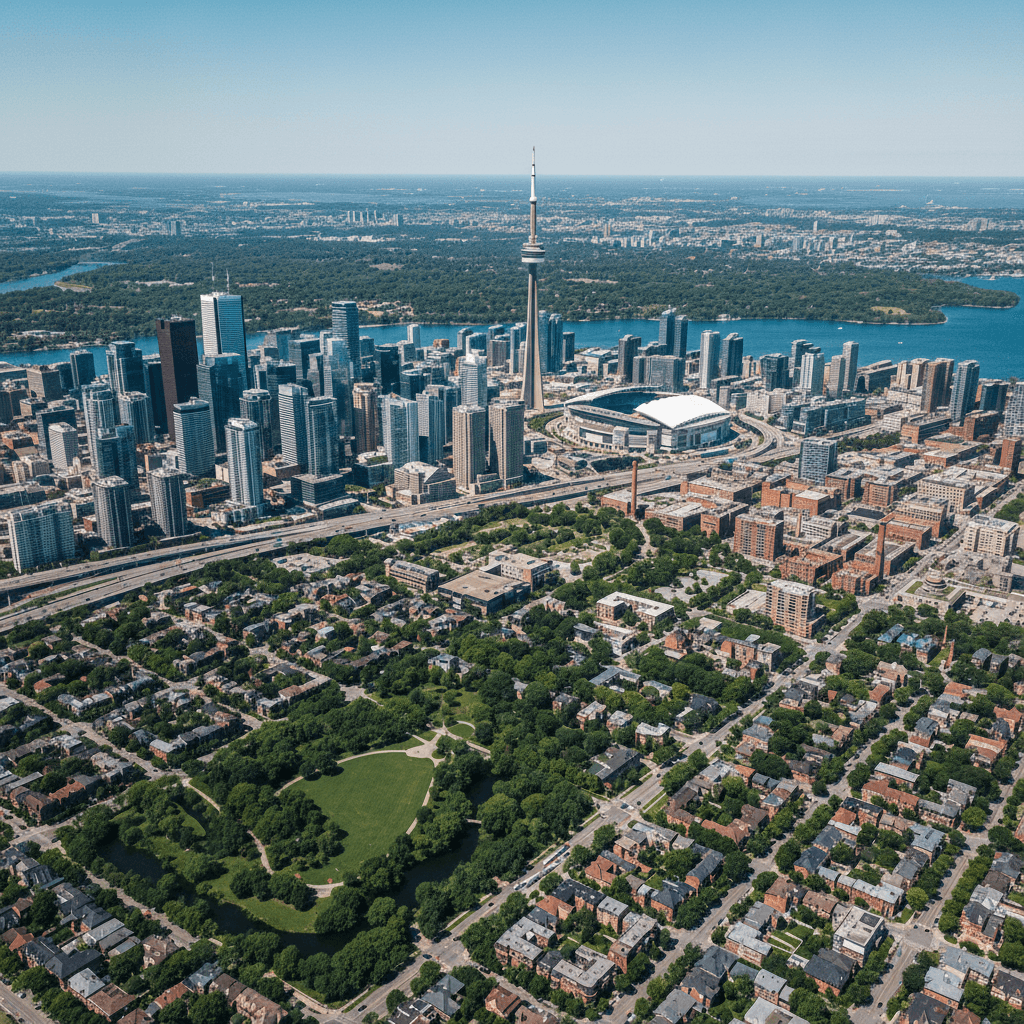
Toronto
🇨🇦 Canada
Toronto feels busy without being slick and that’s part of the charm. You get glass towers, TTC screeching around the corner, steam rising off sidewalk grates in winter, then a few blocks later you’re in a quiet park with squirrels, joggers and air that actually smells like grass.
It’s deeply multicultural, over 200 ethnic groups call the city home, so lunch can be bao, jerk chicken, pho or a samosa stuffed enough to ruin your afternoon. The startup scene is real, the cafe culture is strong and nomads usually settle into a rhythm fast, though the rent can sting and the weather can turn nasty without warning. Not cheap.
Downtown is the obvious base if you want energy and easy transit, but it can feel crowded and a bit noisy, especially around King West and the Entertainment District. Liberty Village is the nomad sweet spot for many people, because you get coworking, gyms, food spots and a quick ride downtown, though the prices are brutal and the streets can feel a little corporate after dark.
Best Areas for Different Stays
- Liberty Village: Best for remote workers, walkable, packed with cafes, pricey.
- King West: Best for solo travelers, bars and restaurants, loud at night.
- Yonge-Eglinton: Best for longer stays, balanced, a bit more suburban.
- Scarborough or North York: Best for lower rent, longer commutes, more space.
Budget matters here, honestly. A solo nomad can scrape by on about $2,500 to $3,500 CAD a month, but if you want a decent one bedroom, regular coffee shop workdays and a few dinners out, $4,000 to $6,000 CAD is the more realistic range and downtown can push higher fast.
Toronto’s best days are warm, busy and a little sweaty, with patios full and the lake air hanging heavy, but winter can be rough. January and February bring biting wind, icy sidewalks and that gray slush everyone complains about, still, the city doesn’t shut down, which, surprisingly, gives it a kind of stubborn energy you don’t always get in softer climates.
If you like a city that feels alive, practical and slightly overworked, Toronto fits. If you want cheap rent and easy winters, look elsewhere.
Toronto isn't cheap. A solo nomad can scrape by at roughly $2,500 to $3,500 CAD a month, but once you want your own place, decent coffee, a few nights out and a coworking desk, the bill climbs fast and doesn't really apologize for itself.
For a studio or 1BR, expect about $1,500 to $1,800 citywide, with Scarborough a touch easier on the wallet and North York sitting in the middle. Downtown rents bite harder and the city has that familiar sound of streetcars squealing, doors slamming and delivery bikes buzzing past your window at 11 p.m., which, surprisingly, makes cheap housing feel even rarer.
Typical Monthly Costs
- Budget: $2,500 to $3,500 CAD, usually shared housing, food courts, transit passes and very little room for impulse spending.
- Mid-range: $4,000 to $6,000 CAD, usually a one-bedroom, restaurant meals, coworking and the occasional overpriced pint.
- Comfortable: $7,000+ CAD, especially if you want a downtown one-bedroom, private office space and regular nights out in King West.
Food can be reasonable if you keep it casual. Street food, mall food courts and hole-in-the-wall spots in Kensington or Chinatown run about $10 to $15, while a mid-range meal lands closer to $20 to $40 and an upscale dinner gets expensive fast, honestly, especially once tax and tip show up.
Daily eating costs often fall around $35 to $50 if you're careful or $80 to $120 if you're living normally and not counting every dumpling. Groceries help, though Toronto supermarkets can still feel irritatingly pricey and the produce aisle smells like wet lettuce and cold air conditioning for some reason.
What Adds Up Fast
- Transit: $3.50 per ride, $170 monthly pass.
- Coworking: Around $250 to $400 a month, with places like WeWork and The Fueling Station charging more for location.
- Nightlife: King West and the Entertainment District drain wallets quickly, because drinks, cover charges and late-night rides don't stay cheap.
For a little more space, Liberty Village works well for nomads who want cafes, coworking and quick transit, though the rents are high and the place feels packed on weekday mornings. Scarborough and North York give you more square footage for the money, but you'll pay for it in commute time and that long TTC ride can drag on in winter when the platforms are windy and bitter.
If you want Toronto without the financial headache, keep your expectations grounded. It can be done, but it takes discipline, because this city rewards a solid income and punishes lazy budgeting.
Toronto’s best neighborhood for you depends on what kind of life you want to live and how much noise you can tolerate. Some places are polished and pricey, others feel practical but dull and a few are loud enough that your laptop screen starts feeling like a hostage.
Nomads
Liberty Village is the obvious pick, with coworking spots, coffee shops and easy tram or subway access downtown, though the rent can sting. It feels built for people who work odd hours, grab tacos at 10 p.m. and don’t mind seeing the same runners, startup folks and dog walkers every day.
- Rent: High, usually near the top of the city range.
- Best for: Walkability, coworking, quick downtown access.
- Downside: Expensive, a little self-consciously trendy.
Kensington and nearby West End pockets are better if you want cafe work sessions and food variety, though some streets get chaotic fast. The smell of espresso, fried dumplings and bus exhaust hangs in the air and honestly, that mix sums up Toronto pretty well.
Expats
Yonge-Eglinton works well if you want a calmer base with transit, groceries and decent apartment stock without feeling trapped in the suburbs. It’s especially good for longer stays, because you can get things done on foot, then disappear into a quieter side street when the honking starts to wear on you.
- Rent: Moderate to high, depending on building age.
- Best for: Transit, schools, errands, day-to-day routine.
- Downside: Less nightlife, less edge.
North York can be a smarter financial move, weirdly enough, if you want more space and don’t mind a commute. You’ll see more condo towers, more family-run restaurants and less of the downtown churn, which, surprisingly, some long-term expats prefer after a few months.
Families
North York and Scarborough are the practical choices, because the housing is cheaper and the units are often larger than what you’ll find closer to the core. Scarborough especially makes sense if you care more about space, parks and price than being three minutes from a cocktail bar.
- Rent: Lower than downtown, often the best value in Toronto.
- Best for: Larger homes, parks, budget control.
- Downside: Longer TTC or car trips.
If you want a nicer family rhythm, look near High Park or the quieter stretches of the West End. You get trees, playgrounds and less midnight chaos, though winter sidewalks can turn into a nasty stretch of slush and hard ice.
Solo Travelers
King West is the move if you want restaurants, bars and people around at all hours. It’s lively, sometimes too lively and the noise can follow you home, but for short stays it keeps things simple, especially if you like walking out the door and having options immediately.
- Rent: High.
- Best for: Nightlife, social energy, central location.
- Downside: Crowds, noise, late-night chaos.
Skip Moss Park and be picky around the Entertainment District late at night, because the city can feel grittier fast once the lights dim. Toronto’s safe enough overall, but your street choice matters here, a lot.
Toronto’s internet is solid and that matters when you’re trying to work through a rainy afternoon with a coffee that’s gone cold. In downtown areas, speeds usually sit around 250 to 300 Mbps, which is fast enough for video calls, cloud work and the usual laptop-heavy nomad routine. Honestly, the bigger issue isn’t speed, it’s finding a seat that isn’t claimed by a student, a freelancer or someone nursing one espresso for three hours.
The coworking scene, turns out, is one of Toronto’s better perks. It’s pricey, though and that’s the part people grumble about most, because a hot desk can eat a real chunk of your monthly budget if you’re staying a while. Still, if you need a proper desk, reliable WiFi and a room where nobody’s blasting phone calls over the hum of the HVAC, these spots do the job.
Best coworking picks
- WeWork locations downtown: Roughly $300 to $500 a month for a hot desk. Central, polished and convenient, but it feels corporate and the price reflects that.
- Kensington Market cafes: Reliable for laptop work, with decent coffee and a steady buzz of conversation, grinding cups and street noise outside. Go early if you want a plug.
Phones are easy to sort out, which is a relief after a long flight. Rogers and Telus usually have starter SIMs around $10, then monthly plans land near $30 to $55 for 3 to 10 GB, while Freedom Mobile is the cheaper bet if you can live with a bit less polish. If you’re staying longer, an eSIM can save you the airport kiosk headache and honestly, that line can be a mess.
For working from home or at least from a rented apartment with a kettle and bad lighting, neighborhoods matter. Liberty Village is the obvious nomad pick, because the cafés, gyms and coworking spaces are all packed into one walkable pocket, but the rents sting. North York and Scarborough are easier on the wallet, though the commute back into the core can feel endless when the TTC is packed and everyone’s talking over each other in five languages.
Quick take
- Best for convenience: Liberty Village
- Best for central access: Downtown Bay Street
- Best for saving money: North York or Scarborough
Toronto works well for people who need fast internet and don’t mind paying for it. Not cheap. But if you want dependable WiFi, decent coworking and enough café culture to keep your day moving, it gets the job done.
Toronto feels safe enough in the core, though not carefree. You can walk around King West or downtown with your phone out and probably be fine, but Moss Park gets sketchy fast after dark and the Entertainment District can turn messy when the bars spill out, with shouting, sirens and the sour smell of booze hanging in the air.
Violent crime is relatively low compared with a lot of US cities, still petty theft, open drug use and the odd aggressive encounter happen, honestly more often than first-time visitors expect. Keep your guard up on the TTC late at night, skip dim side streets and don’t hang around empty platforms with headphones blasting.
- Best day-to-day zones: Downtown core, Liberty Village, Yonge-Eglinton and most of North York are usually fine if you stay alert.
- Areas to avoid after dark: Moss Park is the obvious one and parts of the Entertainment District can feel chaotic, weirdly fast.
- Common annoyances: Bike theft, phone snatching, loud nightlife and the occasional panhandler who won’t take no for an answer.
Healthcare is solid once you’re inside the system, but getting through the door can be maddening. Toronto General and the big hospital network are well regarded, yet ER waits can be long and for non-urgent issues you’ll be happier with a walk-in clinic or telehealth app than a six-hour hospital wait under fluorescent lights.
Pharmacies are easy to find, Shoppers Drug Mart is everywhere and that helps a lot when you just need cold meds, bandages or something for a bad stomach. Bring prescriptions in their original packaging, carry travel insurance and know the basics, 911 for emergencies and 811 for non-urgent health advice.
- Good for urgent care: Toronto General, Mount Sinai, St. Michael’s, but expect delays unless it’s serious.
- Good for minor stuff: Walk-in clinics and pharmacies, which, surprisingly, often solve the problem faster.
- What to pack: Prescription copies, insurance details and any meds you can’t easily replace in Canada.
Winter changes the whole city. The wind off Lake Ontario cuts through you, slush hisses under boots and sidewalks turn slick by 5 p.m., so if you’re here from December to February, buy real winter shoes and don’t underestimate the cold just because downtown looks polished.
For most nomads, the sweet spot is simple, stay central, keep your evenings sensible and use the healthcare system for the right level of problem. Toronto isn’t dangerous, but it isn’t casual either.
Toronto’s transit is decent, honest, but it’s not magic and people who live here learn that fast. The TTC, that’s the subway, streetcars and buses, costs $3.50 a ride or about $170 a month and downtown you can walk a lot if you don’t mind honking traffic, wet slush and the occasional blast of subway heat.
For most nomads, the sweet spot is mixing transit with walking, then using rideshares when the weather turns ugly. Winters bite hard, summers get sticky and a 10 minute walk in July can feel weirdly fine while the same stretch in February leaves your face numb and your boots crunching through dirty snow.
Best ways to move around
- TTC: Best for daily life, especially if you’re between King West, Liberty Village and downtown.
- Uber or Lyft: Easy when it’s late, raining or you’ve got luggage, though it gets expensive fast.
- Bike Share Toronto: Handy for short hops, around $4 for 30 min single trip and good in warmer months.
- UP Express: The cleanest airport run, about 25 minutes to Union Station for $13.60 one-way.
For airports, take UP Express from Pearson if you can, because the taxi crawl on the 401 can be maddening and slow, especially in rush hour. Billy Bishop is easier, the free shuttle to Union is quick and you’ll hear ferry horns, suitcase wheels and that downtown wind snapping off the lake.
Neighborhoods that work well
- Liberty Village: Walkable, transit-friendly and full of coworkers, coffee and after-work noise.
- King West: Great if you want bars and late nights, though frankly it can feel packed and loud.
- Yonge-Eglinton: Better for longer stays, with smoother errands and less chaos.
- Scarborough and North York: Cheaper housing, but the commute can drag.
If you’re staying a while, pick your base carefully, because Toronto’s geography punishes bad choices. Liberty Village is practical, King West is fun but noisy and Scarborough can save money, though you’ll spend more time on buses, trains and platform edges staring at digital signs that seem to change their minds.
One last thing, buy transit credit before you need it, keep a rain shell in your bag and don’t count on driving to be faster. Toronto’s roads clog up, the streetcars get stuck behind turning cars and sometimes the fastest move is just to walk.
Toronto runs on English, mostly and you’ll hear it everywhere, from the TTC platform announcements to café banter in Liberty Village. French shows up in signage and official settings, but day to day, this city speaks in a mix of accents, slang and borrowed words from more than 200 ethnic communities.
That mix matters. A barista in Kensington Market might switch from English to Mandarin to Spanish in one breath and honestly, nobody blinks, which makes the city feel easier than its reputation suggests, even if the subway crowds, honking on King Street and the occasional deadpan "sorry" can throw newcomers off for a second.
What to know
- Main language: English, with very high proficiency across the city
- Secondary language: French, mostly in formal or government settings
- Reality on the ground: You’ll hear dozens of languages in cafés, condos and grocery stores
- Helpful app: Google Translate for menus, signs and quick messages
For digital nomads, communication is pretty painless. WiFi is fast, people are used to remote workers and most café staff won’t care if you sit with a laptop for a few hours, though places in King West can get noisy fast, with espresso machines hissing and chairs scraping every few minutes.
Toronto slang is mild, not a headache. "Sorry" gets used for everything, "loonie" and "toonie" mean the one and two dollar coins and if someone says "TTC," they mean the transit system, not some mysterious startup acronym. Weirdly, that saves time.
Useful phrases
- Sorry: Used for apologies, interruptions and general politeness
- Loonie: One dollar coin
- Toonie: Two dollar coin
- TTC: Toronto’s subway, streetcar and bus network
Expats usually recommend keeping your messages direct, because Toronto politeness can get slippery and people may say "we should connect" when they mean "maybe someday." In work settings, clear English wins and if you need help, most people will give it, just not always with much warmth.
If language is a worry, relax a bit, the city is used to newcomers and the bureaucracy, frankly, is more annoying than the conversations. You'll be fine ordering food, asking for directions or finding your way back after a late night on the subway, even if the platform smells like wet coats and hot brakes in January.
Toronto has four real seasons and they swing hard. Summer is warm, humid and full of street noise, with honking on Queen Street, patio chatter on King West and that heavy lake air that sticks to your skin.
If you want the easiest stay, aim for June through September. Days usually sit around 24 to 28°C, festivals are everywhere and you can actually walk around downtown without thinking about frozen eyelashes, though the city gets crowded and rent still stings.
Winter is rough. January and February are the months that make people complain, with highs around -1°C, cold wind off Lake Ontario, slushy sidewalks and the kind of damp chill that gets into your boots and stays there.
Best Time to Visit
- June to September: Best overall, warm weather, long evenings, patio season and the best chance of feeling like you picked the right time.
- May and October: Good shoulder months, fewer crowds, lower stress and still decent for walking around if you pack a jacket.
- January to February: Cheapest vibe-wise, sure, but brutal, honestly, unless you like grey skies, icy sidewalks and public transit delays.
Spring is messy but workable. You’ll get rain, then sun, then wind, sometimes all in one day, so bring layers because Toronto loves to fake warm weather and then slap you with a cold front by dinner.
For digital nomads, late spring and early fall are the sweet spot. Cafes stay busy, coworking spaces like WeWork and Regus are easier to use without the summer crush and the city feels more manageable, which, surprisingly, matters a lot when you’re trying to get work done.
What to Pack
- Summer: Light clothes, a refillable bottle, sunscreen and one decent rain layer for pop-up storms.
- Winter: Real boots, gloves, a hat, thermal layers and a coat that can handle wind off the waterfront.
- Year-round: An umbrella, because Toronto rain doesn’t ask permission and the sidewalks puddle fast.
One last thing, Toronto weather changes fast, so check the forecast each morning. The city can go from bright sun to grey drizzle in an hour and frankly, that’s more annoying than the cold itself.
Toronto works well for nomads who like big-city energy and don’t mind paying for it. The transit is decent, the coffee scene is solid and the city feels safer than a lot of North American metros, but the rent bites hard, honestly and winter can hit like a wet slap across the face.
Budget matters here. A solo month can run $2,500 to $3,500 CAD if you keep it lean, while a comfy setup in a central neighborhood can jump past $7,000 fast, especially once you add coworking, dinners and rideshares after a late night out.
Where to stay
- Liberty Village: Best for remote workers, lots of condos, cafes and quick access to downtown. Prices are high and it can feel a bit boxed in.
- King West: Good if you want bars, restaurants and an easy social life, though the noise can be relentless on weekends.
- Yonge-Eglinton: Practical for longer stays, with shops, schools and transit, but it feels calmer than the core.
- Scarborough or North York: Better for stretching your money, though the commute can chew up your day.
For housing, check Rentals.ca, Zumper and Kijiji, then move quickly when you find something decent because good units disappear fast. A one bedroom often lands around $1,500 to $1,800 CAD citywide and downtown places can push well past that if the building has a gym, a view or both, which, surprisingly, people still pay for.
Getting connected
- SIMs: Rogers and Telus usually start around $30 to $55 a month, Freedom Mobile is cheaper and airport SIMs are convenient but overpriced.
- Internet: Urban speeds are generally strong, around 250 to 300 Mbps, so Zoom calls usually hold up fine.
- Coworking: The Fueling Station in Liberty Village and WeWork on Bay Street are common picks, with day passes and monthly desks.
Food is easy to sort out, but it adds up. Street food and food-court meals can stay around $10 to $15, a casual sit-down lunch is often $20 to $40 and if you keep ordering cocktails in King West, your wallet will feel it by Thursday, frankly.
Small but useful habits
- Transit: The TTC is the move for most trips and the subway, streetcar and bus network gets you around without much drama.
- Etiquette: Tip 15 to 20 percent, queue politely and take your shoes off indoors, because that’s the norm.
- Day trips: GO Train to Niagara Falls works well for a break from the city grind.
January and February are rough, don’t plan a breezy lifestyle around them. Snow squeaks underfoot, slush soaks your shoes and the wind off the lake makes your face sting, so pack proper boots and a coat that can handle real winter.
Need visa and immigration info for Canada?
🇨🇦 View Canada Country GuideNomad Haven
Your home away from home
Monthly Budget Estimates
More cities in Canada

Vancouver
🇨🇦 Canada
Kitchener-Waterloo
🇨🇦 Canada
Canmore
🇨🇦 Canada