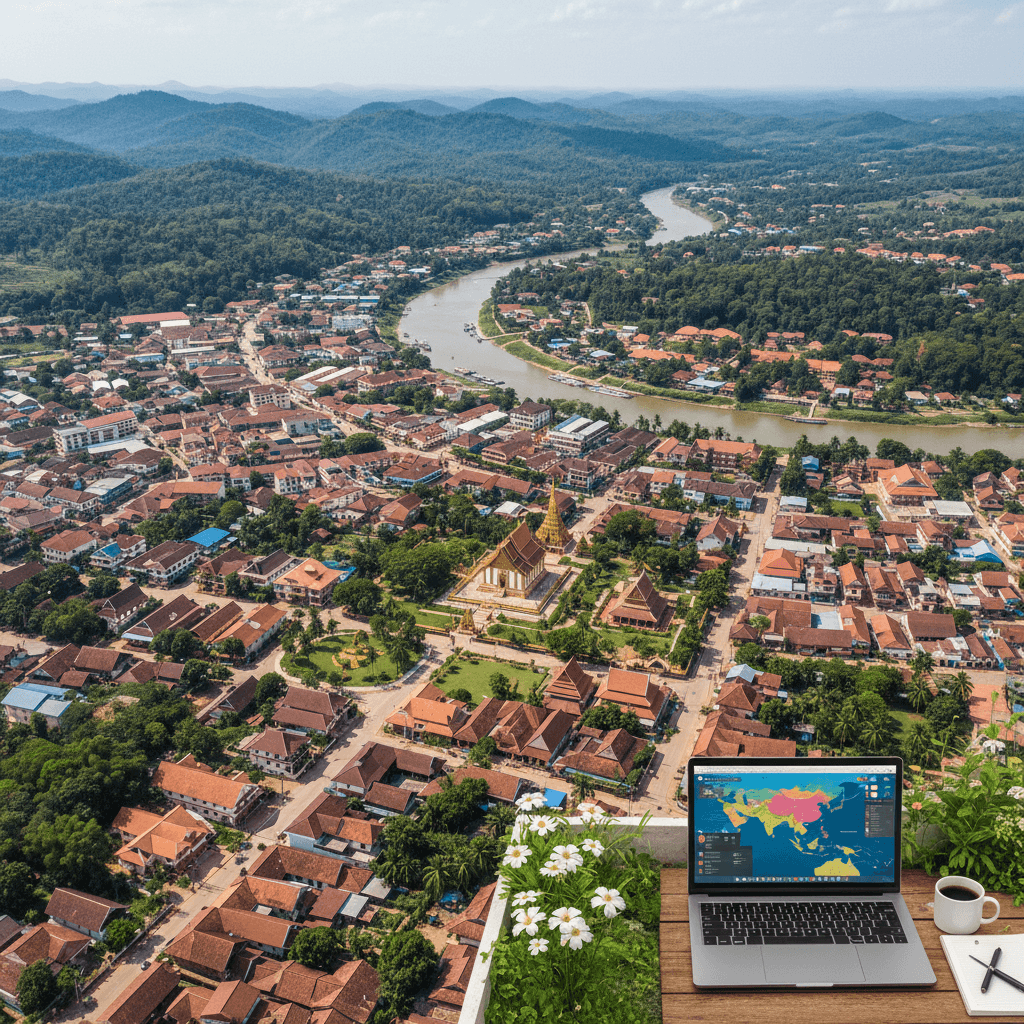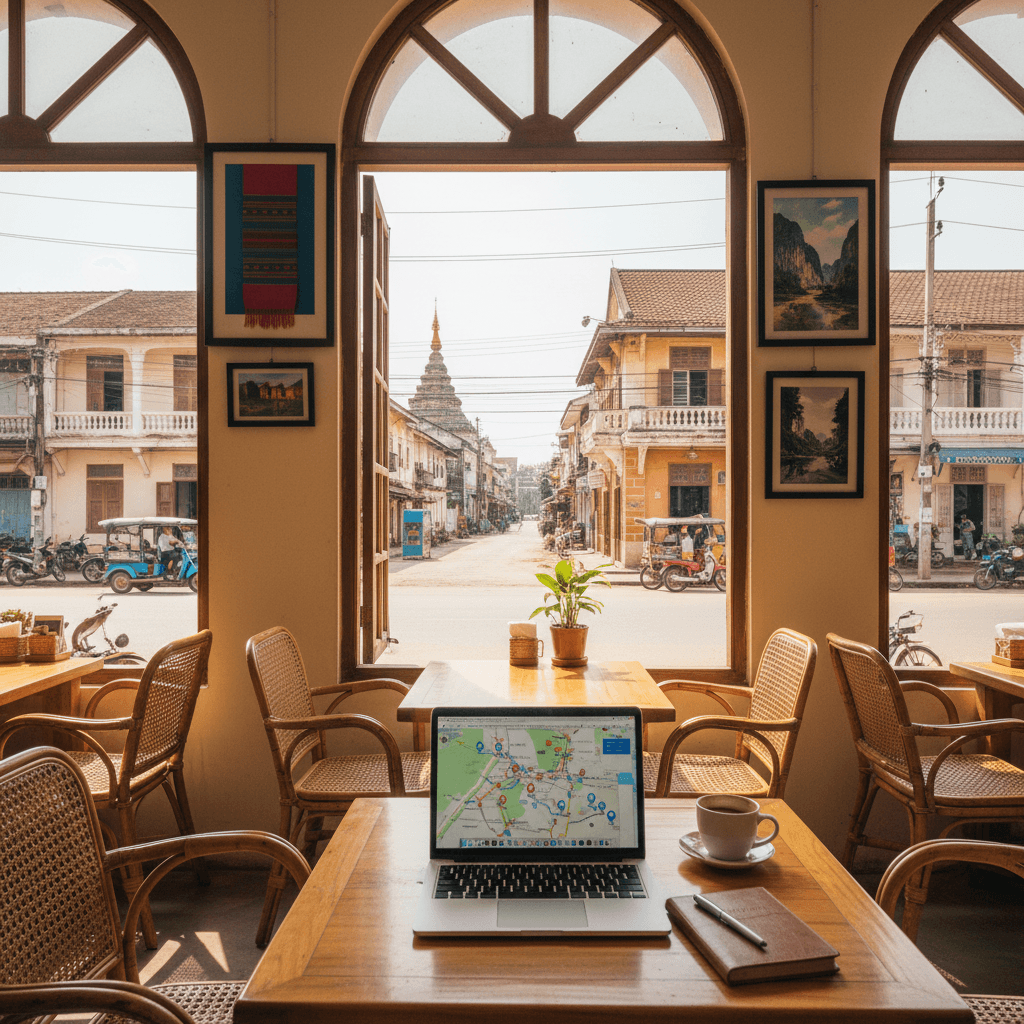
Thakhek
🇱🇦 Laos
The Vibe: A Slow Burn by the Mekong
Thakhek doesn't try to impress you with high rises or flashy malls. Instead, it pulls you in with a quiet, colonial charm that feels like a time capsule from the mid 20th century. While most travelers treat it as a quick pit stop to rent a bike and head for the hills, the nomad community here knows better. It is a place where the humidity slows your heart rate and the sunsets over the Mekong River are the primary evening entertainment.
The personality of the town is a fascinating blend of Lao and Vietnamese cultures. Historically, a massive chunk of the population moved here from Vietnam during the French era, and you still see that influence in the architecture and the food. You will find yourself eating a bowl of pork leg rice for lunch and a baguette for breakfast, all while sitting under the peeling yellow paint of a century old townhouse. It is gritty, authentic, and lacks the polished tourist sheen of Luang Prabang.
What Makes It Different
Unlike the high energy digital nomad hubs in Thailand, Thakhek is for the person who actually wants to disconnect. It is the ultimate "slow life" destination. You aren't here for networking events or high speed fiber optics; you are here because you want a $1.20 Beerlao and a view of Thailand across the water. The expat community is small but incredibly tight, mostly made up of climbers, outdoor enthusiasts, and long term travelers who fell in love with the pace.
The emotional experience of being here is one of relief. There is no pressure to be "productive" in the corporate sense. Most nomads find that their best work happens in the morning before the heat settles in, leaving afternoons free for exploring caves or wandering the riverfront. It is a town that rewards curiosity rather than a checklist.
The Reality Check: Connectivity and Infrastructure
Let's be honest about the hurdles. If your job requires eight hours of high definition Zoom calls a day, Thakhek will break your heart. The internet is famously sluggish and inconsistent. Most remote workers rely on Unitel or Lao Telecom SIM cards as backups because the hotel WiFi often hits a wall when the whole town logs on at night. It is a "work from a cafe" kind of town, not a "dedicated office" kind of town.
Healthcare is another consideration. While the Khammouane Provincial Hospital is right there on the riverbank, it is an older facility. For anything serious, expats usually cross the bridge into Nakhon Phanom, Thailand, where the medical facilities are much more modern. It is a trade off: you get the low cost of living and the adventure, but you lose the safety net of a major metropolis.
Living Costs at a Glance
Your money goes incredibly far here. A comfortable life in Thakhek is achievable for a fraction of what you would spend in Vientiane. Here is what to expect for monthly expenses:
- Budget Tier: $340 to $500 per month excluding rent. This covers street food meals for $2 to $3 and plenty of local beer.
- Mid Range Tier: $600 to $800 per month excluding rent. This allows for frequent dinners at spots like Patalai or La Casa and a daily cappuccino at $1.70.
- Comfortable Tier: $1,000+ per month excluding rent. At this level, you are living like royalty, eating at the best riverside spots and renting a high quality motorbike for $15 a day.
Rent varies wildly depending on your standards. A basic studio might run you $717, but many long termers negotiate better deals by looking in residential neighborhoods like Ban Tha Khaek. If you want the boutique experience in the town center, expect to pay $1,000 or more for a renovated colonial space.
The Social Anchor: The Night Market
When the sun goes down, the entire town gravitates toward the Thakhek Night Market at Centre Point. This is the social heart of the city. Travelers often say it is the best place to meet people because everyone eventually ends up here for $5 hot pot or Lao BBQ. It is not a party town with loud clubs; it is a town of long conversations at plastic tables, making it perfect for nomads who prefer genuine connection over a wild nightlife scene.
The Bottom Line on Budgets
Thakhek is one of those rare spots where your dollar stretches incredibly far, even by Southeast Standards. While it's the second largest city in Laos, the economy still operates on a very local scale. You can live quite comfortably here on a fraction of what you'd spend in Vientiane or Luang Prabang, provided you're okay with a slower pace and fewer "big city" luxuries.
Most expats find they can cover their basic living expenses for around $340 to $500 per month, excluding rent. If you're living a more cushioned lifestyle with frequent restaurant meals, you'll likely land closer to the $800 to $1,000 mark. The local currency, the Kip, can be volatile, so many long term residents prefer to think in USD or Thai Baht when planning their monthly spends.
Monthly Living Costs by Tier
Your lifestyle choices, especially regarding food and housing, will be the biggest variables in your monthly overhead. Here is how that usually breaks down for a single person.
The Budget Tier
- Estimated Monthly Spend: $340 to $500 (excluding rent)
- Housing: Basic 1BR or studio outside the center for $717 to $849.
- Food: Sticking to the Thakhek Night Market and street stalls where meals cost $2 to $3.
- Transport: Walking or using a bicycle, with occasional local transport.
The Mid-Range Tier
- Estimated Monthly Spend: $600 to $800 (excluding rent)
- Housing: A nicer apartment or small house in a residential area like Ban Tha Khaek for $849 to $950.
- Food: A mix of street food and sit down spots like Patalai or Sabaidee Thakhek, averaging $10 to $15 per person for dinner.
- Transport: Monthly motorbike rental around $150 plus fuel.
The Comfortable Tier
- Estimated Monthly Spend: $1,000+ (excluding rent)
- Housing: Modern, high end rentals or villas, often priced at $1,000 or more.
- Food: Frequent upscale dining and western style breakfasts, with dinners for two often hitting $20 to $30.
- Lifestyle: Regular weekend trips to explore the surrounding province.
Everyday Expenses
Small daily costs are where Thakhek really shines for the budget conscious. A large 0.5L Beerlao will set you back about $1.15 to $1.51, making the riverside sunset sessions very affordable. If you need a caffeine fix, a cappuccino at a local cafe typically costs around $1.72.
For getting around, a daily motorbike rental is the standard for most nomads and travelers. Expect to pay between $12 and $15 per day, though you can negotiate much better rates for monthly rentals. Shops like Wang Wang Bike Rental are popular for their reliable 125cc automatics. If you prefer taxis, an 8km trip across town will cost roughly $7.
Connectivity is one of the few areas where you won't spend much, mainly because the options are limited. A monthly internet plan with decent speeds is about $11.40, though reliability is a common complaint. Most residents supplement this with a local SIM card from providers like Lao Telecom or Unitel, which costs between $5 and $15 per month for a solid data package.
Housing and Neighborhoods
Rent is surprisingly high compared to the low cost of food, largely because the supply of high quality, expat ready housing is limited. The Riverfront is the most sought after area for its colonial charm and proximity to the night market, but you'll pay a premium for the view and the noise.
Longer term expats usually head to Ban Tha Khaek Nuea or Ban Tha Khaek Tai. These neighborhoods offer a much more authentic local feel and significantly lower rent prices. You'll need a motorbike to get around, but the peace and quiet are usually worth the trade off. Some even choose to stay on the Nakhon Phanom side across the border in Thailand for better infrastructure while still enjoying the low cost of the region.
For Nomads: The Riverfront & City Center
If you're in Thakhek to work, you'll want to stay as close to the Mekong Riverfront as possible. This is the historic heart of the city, where French colonial villas house the best cafes and guest houses. It's the only part of town that feels truly walkable, and more importantly, it's where you'll find the most reliable WiFi connections.
Most nomads gravitate toward the area around Thakhek Square and the Night Market. You'll be within a five minute walk of spots like Le Bouton d'Or, which are popular for afternoon laptop sessions. While there aren't official coworking spaces, the riverside cafes offer the best "office" views in town. Be prepared to pay a small premium for the convenience; a decent room here runs between $700 and $850 a month.
- Pros: Best internet speeds in town, easy access to the Night Market, high concentration of English speakers.
- Cons: Noisiest part of the city, slightly higher prices for coffee and meals.
- Best for: Short term stays and those who need to be near the "action."
For Long-Term Expats: Ban Tha Khaek Nuea & Tai
Expats who've settled in for the long haul usually move away from the tourist center and into the residential pockets of Ban Tha Khaek Nuea (North) and Ban Tha Khaek Tai (South). These neighborhoods feel like authentic Lao communities. You'll find wider streets, more trees, and much larger houses for your money. Rent here is significantly cheaper, often dropping below $500 for a comfortable house if you negotiate a long term lease.
Living here requires a motorbike. You won't find many cafes, but you will find the best local markets and authentic eateries like Sabaidee Thakhek. It's much quieter at night, which is a relief if you're trying to escape the backpacker crowds prepping for the Loop. The vibe is friendly, and neighbors will likely recognize you within a week.
- Rent: $400 to $600 for a multi-bedroom house.
- Food: Heavily local; expect to pay $2 to $3 for a solid bowl of Khao Piak Sen.
- Atmosphere: Peaceful, residential, and very safe.
For Families: The Outskirts & Border Proximity
Families often prefer the newer developments on the eastern edge of the city or closer to the Third Thai-Lao Friendship Bridge. These areas offer more modern construction and more space for kids to play. Being closer to the bridge is a strategic move for families who make frequent trips across to Nakhon Phanom in Thailand for better grocery stores or medical checkups at Thai hospitals.
While you're further from the riverside charm, you're closer to the Khammouane Provincial Hospital and larger schools. The infrastructure is a bit more modern here, though you'll definitely feel the "suburban" distance from the town center. Most expat families rely on a car or a dedicated tuk-tuk driver for school runs and shopping trips.
- Monthly Budget: $1,200+ for a comfortable family lifestyle.
- Transport: Car rental or ownership is highly recommended.
- Key Benefit: Quick access to Thailand for superior healthcare and shopping.
For Solo Travelers & Adventurers: The Loop Gateway
If you're a solo traveler visiting for the famous motorbike loop, stay near Wang Wang Bike Rental or Mad Monkey. This area isn't a formal neighborhood but a cluster of hostels and budget guesthouses on the edge of the city center. It's the best place to find a riding partner or swap tips about cave conditions and road safety.
Everything here is geared toward utility. You'll find cheap laundry services, gear shops, and plenty of places to grab a $1.50 Beerlao while you look over a map. It’s social, gritty, and perfect for those who only plan to be in town for a few nights before heading into the wilderness of the Phou Hin Poun National Protected Area.
- Daily Cost: $20 to $35 including a hostel bed and motorbike rental.
- Social Scene: High; easy to meet people at the Centre Point food stalls.
- Top Tip: Check your bike thoroughly before leaving this area; it's the last place for reliable repairs.
The Connectivity Reality Check
If your job depends on lightning fast fiber or seamless 4K video calls, Thakhek is going to test your patience. The internet here is noticeably slower and more temperamental than what you will find in Vientiane or Luang Prabang. While most guesthouses and cafes offer free WiFi, speeds often hover in the low double digits and can drop out entirely during heavy rain or local power fluctuations.
Most nomads living here treat Thakhek as a "deep work" destination rather than a place for heavy collaboration. It's perfect for writing, coding, or administrative tasks, but you should warn your clients that you might be off the grid for an hour or two if the local infrastructure decides to take a break. If you have a high stakes meeting, always have a backup data plan ready to go.
Mobile Data and SIM Cards
Since landline WiFi is hit or miss, a local SIM card is your best friend. Unitel and Lao Telecom are the two heavy hitters here. Most expats prefer Unitel for its slightly better coverage when you head out on the Thakhek Loop, but Lao Telecom often performs better within the town center.
- Cost: You can pick up a SIM card and a month of data for between $5 and $15 depending on your usage.
- Where to buy: Small mobile shops are scattered around the Thakhek Night Market area. Just bring your passport and they will register it for you in minutes.
- Pro Tip: Use your phone as a hotspot. Often, the 4G/LTE signal is more stable than the router in your guesthouse.
Where to Get Work Done
Thakhek doesn't have any dedicated coworking spaces yet. You won't find sleek offices with ergonomic chairs and standing desks here. Instead, the nomadic community rotates through a handful of "work friendly" cafes along the riverfront. The vibe is very casual, and as long as you keep ordering coffee or food, nobody will mind you staying for a few hours.
- Le Bouton d'Or: Located in a beautiful colonial building, this spot has a quiet atmosphere and decent coffee. It's one of the more reliable places to sit with a laptop for a morning session.
- Patalai: Known mostly for its pizza, it’s a spacious spot where you can spread out. The WiFi is usually functional enough for emails and basic browsing.
- Sabaidee Thakhek: This riverside restaurant offers great views of the Mekong. It’s better for late afternoon work when you want a $1.50 Beerlao to go with your spreadsheets.
Managing Your Expectations
If you find yourself hitting a wall with the local speeds, the nearest "real" coworking hubs are TOHLAO in Vientiane. Some nomads actually hop across the border to Nakhon Phanom in Thailand for a day if they need to upload massive files, as the Thai side generally offers much more robust infrastructure.
Ultimately, Thakhek is a place where you work to live, not live to work. Plan your heaviest tasks for when you’re in a larger city, and use your time here to enjoy the $12 daily motorbike rentals and the incredible cave systems nearby. It’s a trade off, but for many, the low cost of living and the stunning scenery make the slow internet worth the headache.
Thakhek is a breath of fresh air for anyone tired of the hyper vigilance required in larger Southeast Asian hubs. It feels more like a sleepy village than the country's second largest city. You'll find that the local community is incredibly welcoming, and the general safety level is high. Violent crime is almost unheard of here, and even petty theft like bag snatching is rare compared to Vientiane or Luang Prabang.
Day to Day Safety
Most nomads feel perfectly comfortable walking the riverside or the Night Market area after dark. The town is well lit in the center, and the atmosphere is social and family oriented. If you're staying in quieter residential spots like Ban Tha Khaek Tai, the biggest "danger" you'll face at night is likely a stray dog or a pothole you didn't see coming.
The one area where you need to stay sharp is on the road. If you're tackling the Thakhek Loop or just popping out to a cave, be aware of local police checkpoints. They often stop foreigners to check for international driving permits or helmets. If you're missing either, expect a "fine" paid on the spot. Expats usually suggest keeping a small amount of cash in an easy to reach pocket for these encounters and keeping your main wallet tucked away.
Healthcare Infrastructure
Being realistic about the medical scene is vital before you settle in. Khammouane Provincial Hospital is the primary facility right on the Mekong riverbank. While it’s a historic landmark dating back to 1924, it’s definitely "local" in its standards. They are currently modernizing with a new acute care building, but for now, it's best for minor ailments, basic stitches, or getting a quick prescription.
For anything serious, the strategy is simple: cross the river. Most expats and long term travelers head straight to Nakhon Phanom in Thailand for better diagnostics and specialists. If you have a true medical emergency, the goal is usually stabilization in Thakhek followed by an immediate transfer to Vientiane or across the border to a Thai private hospital.
Pharmacies and First Aid
You’ll find plenty of small pharmacies clustered around the town center and the night market. They are great for grabbing over the counter basics like Paracetamol, rehydration salts, or basic antibiotics. However, if you rely on specific, high end maintenance medications, don't count on finding them here. Stock up in Thailand or Vientiane before you arrive.
- Emergency Strategy: Always keep your insurance details and a copy of your passport on your phone.
- Travel Insurance: This isn't optional here. Make sure your policy specifically covers motorbike riding, as many accidents happen on the gravel turns of the Loop.
- Water Safety: Stick to bottled or filtered water. Even the locals don't drink from the tap, and a bout of "Lao belly" can ruin a week of work.
Quick Reference Contacts
- Khammouane Provincial Hospital: Located on the riverfront, south of the main colonial plaza.
- Medical Evacuation: Ensure your insurance includes "repatriation" or "transport to the nearest capable facility," which in this case, is usually Thailand.
- Local Pharmacies: Look for the green cross signs near the Centre Point area for the most reliable stock.
Overall, as long as you drive defensively and have a backup plan for major medical needs in Thailand, Thakhek is a very low stress environment. The peace of mind you get from the lack of scams and street crime is one of the main reasons people end up staying longer than they planned.
The Motorbike Capital
In Thakhek, your life revolves around two wheels. Whether you're here for a week to conquer the Loop or staying for months as an expat, a scooter is your primary ticket to freedom. Most nomads find the town center walkable enough for a morning coffee run, but the moment you want to explore a cave or visit a specific restaurant in the residential outskirts, you'll want an engine between your knees.
Rental shops are everywhere, mostly concentrated around the town center and the riverfront. Wang Wang Motor rental is the go-to spot for many travelers; they're known for being reliable and offering 125cc automatics for around 120,000 to 160,000 KIP per day. If you're planning a long-term stay, you can often negotiate a monthly rate that brings the daily cost down significantly. Just be prepared to leave your passport as a deposit, though some shops might accept a cash deposit if you're persistent.
Tuk-Tuks and Local Transport
Don't expect to find a fleet of air-conditioned taxis roaming the streets. Instead, you'll rely on the classic three-wheeled tuk-tuks. They're perfect for getting from the bus station to your guesthouse with heavy luggage, but they aren't the most economical way to get around daily. A short 8km trip will usually set you back about $7.00, and you'll definitely need to brush up on your bargaining skills before hopping in.
Unlike Vientiane, ride-hailing apps like Grab or Xanh SM haven't really taken over here yet. While you might see a stray driver on the app during peak hours, it's far more reliable to just flag someone down on the street or ask your hotel to call a driver they trust.
Navigating the Streets
The town layout is straightforward, with a grid-like center and a long road hugging the Mekong. It's a low-stress environment for driving compared to the chaos of Bangkok or Hanoi, but you still need to stay alert. Local police occasionally set up checkpoints on the roads leading out of town. Expats recommend keeping your international driving permit handy and ensuring your lights work to avoid being pulled over for minor infractions.
- Daily Scooter Rental: Expect to pay between $12 and $15 depending on the bike's condition.
- Gas Prices: Fuel is affordable, but keep an eye on your tank when heading into the countryside, as stations get sparse.
- Walking: The riverfront and the Thakhek Night Market area are very pedestrian-friendly, especially in the cooler evening hours.
Arriving and Departing
Getting into Thakhek usually involves a bus or a private transfer. Most expats arriving from Thailand cross the Third Thai-Lao Friendship Bridge, which is about 10km north of the city center. A tuk-tuk from the bridge into town is a standard rite of passage. If you're flying, the nearest major hub is Savannakhet Airport, located about 94km away. You'll need to arrange a private car or catch a local bus for the two-hour journey north to Thakhek.
For those heading out on the famous motorbike loop, the main roads are generally in decent shape, but the inner sections can get muddy or gravelly. If you aren't an experienced rider, stick to an automatic scooter and take it slow. The scenery is incredible, but the limestone dust can make the roads slicker than they look.
The Language Landscape
In Thakhek, you'll find a linguistic mix that reflects its position as a border town and its deep history with neighboring Vietnam. While Lao is the official language, the local dialect has a distinct rhythm. Because of the town's colonial past, about 85% of the population historically had Vietnamese roots, so it's common to hear Vietnamese spoken in family businesses and around the older quarters.
Most expats find that English proficiency is quite low compared to Vientiane or Luang Prabang. In the riverside cafes and guesthouses catering to the "Thakhek Loop" crowd, staff usually speak enough English to handle bookings and food orders. Once you step away from the tourist strip, however, communication becomes a game of gestures and translation apps.
Practical Communication for Nomads
If you're planning to stay for more than a week, learning basic Lao phrases isn't just a courtesy; it's a necessity for daily life. Locals are incredibly patient and usually thrilled when a foreigner attempts a few words. Most nomads find that "Sabaidee" (hello) and "Khop Chai" (thank you) go a long way in the night markets.
- Google Translate: Download the Lao language pack for offline use. The camera feature is a lifesaver for reading menus at local spots that don't have English translations.
- Language Apps: While Duolingo doesn't offer Lao, apps like Ling or Simply Learn Lao are popular among the expat community for picking up the basics.
- Thai Influence: Because Nakhon Phanom is just across the river, many locals understand Thai perfectly from watching Thai television. If you've spent time in Thailand, you'll find many words are similar or identical.
Connectivity and Staying Online
Reliable communication isn't just about what you say, but how you stay connected. Since the town's Wi-Fi can be hit or miss, a local SIM card is your most important tool. You can pick these up at small phone shops near the town center or the night market.
- Unitel: Generally considered to have the best coverage in rural areas, which is vital if you're heading out on the Loop.
- Lao Telecom: A solid secondary choice with competitive data packages.
- Cost: Expect to pay between $5 and $15 per month for a generous data plan.
Social Nuances and Etiquette
Communication in Thakhek is deeply tied to the "low pressure" lifestyle. People here are soft spoken and value politeness. Raising your voice or showing frustration during a misunderstanding is considered a major social faux pas and usually results in the other person shutting down entirely.
Expats recommend keeping a "Jai Yen" (cool heart) approach. If a service is slow or a translation goes sideways, a smile and a patient nod will resolve the issue much faster than getting annoyed. Digital nomads often find that the best way to integrate is to frequent the same coffee shops or noodle stalls; once the owners recognize you, the communication barrier tends to melt away into friendly, albeit limited, daily chats.
Key Phrases for Your First Week
- Sabaidee: Hello (universal greeting)
- Khop Chai (Lai Lai): Thank you (very much)
- Baw Pen Nyang: No problem or "it's okay" (the unofficial national motto)
- Tao Dai?: How much?
- Nee Pen Nyang?: What is this? (useful for identifying mystery snacks at the night market)
- Baw Phet: Not spicy (essential if you aren't ready for Lao chili levels)
The Seasonal Cycle in Central Laos
Thakhek follows the classic tropical monsoon pattern of Southeast Asia, divided into three distinct phases: the cool dry season, the hot season, and the monsoon rains. Because Thakhek is the gateway to the famous motorbike loop, the weather doesn't just dictate your wardrobe; it determines whether the mountain roads are safe and the caves are accessible. Most nomads and long term travelers find that the sweet spot for a visit falls between November and February.
During these months, you can expect daytime temperatures around 25°C to 28°C (77°F to 82°F). The air is crisp, the humidity is manageable, and the skies are a reliable shade of blue. It's the perfect window for trekking in the Phou Hin Poun National Protected Area or spending eight hours a day on a motorbike. Expats often joke that this is "Lao Winter," and you might actually want a light jacket for those early morning rides or breezy evenings by the Mekong.
The Heat and the Dust
As March rolls around, the thermostat starts to climb. By April and May, Thakhek can feel like a furnace. Temperatures frequently spike above 38°C (100°F). If you're sensitive to heat, this isn't the time to be here. The landscape turns a dusty brown, and the "slash and burn" agricultural season in the surrounding region can lead to hazy skies and poor air quality.
If you do visit during the peak of the heat, you'll want to plan your day like a local: get your outdoor activities done by 9:00 AM, retreat to an air conditioned cafe like Naga Hostel & Cafe or Le Bouton d'Or during the afternoon, and only emerge once the sun starts to dip toward the Thai border. The silver lining? Pi Mai (Lao New Year) in mid April is a massive, water soaked celebration that's the best way to beat the heat.
Monsoon Season and The Loop
The rains typically arrive in June and linger through October. While the jungle turns a brilliant, lush green and the waterfalls at Tad Song Sou are at their most impressive, the rainy season presents real logistical hurdles. Roads on the Thakhek Loop, particularly the unpaved sections toward the eastern side, can turn into slick mud pits that are dangerous for inexperienced riders.
Flash storms are common in the late afternoon. They're usually intense but short. However, if you're planning on exploring Kong Lor Cave, be aware that high water levels during peak rainy months can occasionally restrict access to certain parts of the cave system. On the plus side, accommodation prices are at their lowest and the town feels incredibly peaceful without the usual backpacker crowds.
Best Time for Digital Nomads
If you're balancing work and exploration, aim for November or December. The weather is stable enough that you won't have to worry about power outages from storms or heat induced lethargy affecting your productivity. You'll also find the social scene at the Thakhek Night Market is at its peak during these months, making it easier to connect with the local expat community and other travelers passing through.
- Peak Season (November to February): Best for motorcycling, trekking, and outdoor work. Expect prices to be slightly higher and popular guesthouses like Sabaidee Thakhek to fill up.
- Shoulder Season (March and October): A gamble on weather, but great for photographers who want to capture the changing landscape.
- Low Season (May to September): Best for those on a strict budget who don't mind the occasional downpour and high humidity.
Connectivity & Digital Infrastructure
If you're planning to work from Thakhek, you'll need to manage your expectations. Internet speeds are generally sluggish compared to Vientiane or Luang Prabang. Most nomads rely on a combination of hotel WiFi and local SIM cards, but don't count on it for heavy video conferencing or massive file uploads. It's best to get a local SIM from Unitel or Lao Telecom right away. A monthly data plan usually costs between $5 and $15, which provides a necessary backup when the router inevitably acts up.
You won't find dedicated coworking spaces here. Instead, the "office" culture revolves around riverside cafes. Sabaidee Thakhek and the various spots around the Night Market area are popular because they have decent seating and a relaxed atmosphere. If you have a deadline that requires high-speed stability, you might have to head to Vientiane or even cross into Thailand for a few days.
Money & Monthly Budgets
Thakhek is incredibly affordable, even by Southeast Asian standards. While the Lao Kip can be volatile, your dollars or euros will go a long way. Most expats find they can live comfortably on $800 to $1,000 per month, including a nice apartment and eating out daily.
- Budget Living: Around $340 to $500 per month (excluding rent). This covers street food and local transport.
- Mid-Range: $600 to $800 per month. This allows for more frequent meals at places like Patalai or La Casa.
- One-Bedroom Rent: Expect to pay anywhere from $700 to $950 for a modern, serviced space in the center.
- Daily Expenses: A large Beerlao is about $1.50, a cappuccino is $1.70, and a solid street food meal is roughly $3.
Healthcare & Safety
The town is very safe, and violent crime is almost unheard of. The biggest risk you'll face is on the road. If you're riding a motorbike, watch out for police checkpoints on the outskirts of town. They often stop foreigners for minor infractions or license checks. Always wear a helmet and keep some small bills handy just in case.
For medical needs, Khammouane Provincial Hospital is the primary facility in town. It's located right on the riverbank and is currently being modernized. While it's fine for basic ailments or stitches, anything serious requires a trip elsewhere. Most expats cross the bridge to Nakhon Phanom in Thailand for better facilities, or head to Vientiane for specialized care. Make sure your travel insurance is active and covers medical evacuation.
Getting Around
The town center is walkable, but you'll want wheels to see the surrounding caves and karst landscapes. Public transport is basically non-existent for daily errands. Most people rent a Honda Wave 125cc for about $12 to $15 per day. Wang Wang Bike Rental is the go-to spot for many travelers, offering reliable bikes for around 6 Euros a day if you're staying long-term.
If you aren't comfortable on a scooter, local tuk-tuks are available, but you'll need to negotiate the price upfront. A short taxi ride across town usually costs around $7. For arrivals, keep in mind that Savannakhet Airport is about 94km away, so you'll need to arrange a private transfer or a bus to get into Thakhek proper.
Visas & Logistics
Since Thakhek sits right on the border, "visa runs" are a way of life for long-termers. You can easily cross the Mekong into Thailand via the Third Thai-Lao Friendship Bridge. It's a quick process that allows you to reset your stay or visit better supermarkets and hospitals in Nakhon Phanom. Just be sure to check the latest entry requirements for your specific nationality before heading to the border.
Need visa and immigration info for Laos?
🇱🇦 View Laos Country GuideWild Card
Expect the unexpected
Monthly Budget Estimates
More cities in Laos
Muang Xay
🇱🇦 Laos
Vang Vieng
🇱🇦 Laos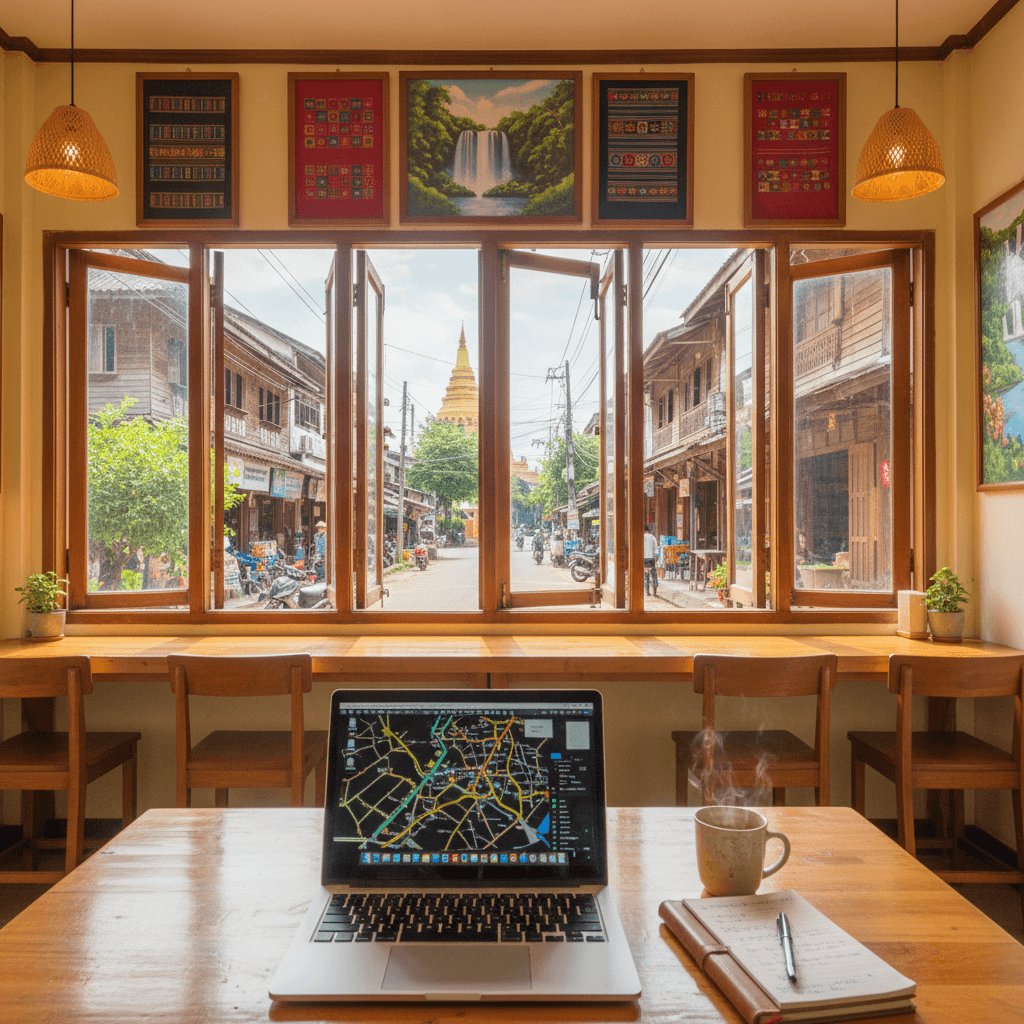
Paksong
🇱🇦 Laos