Tel Aviv
🇮🇱 Israel
The Silicon Wadi Pulse
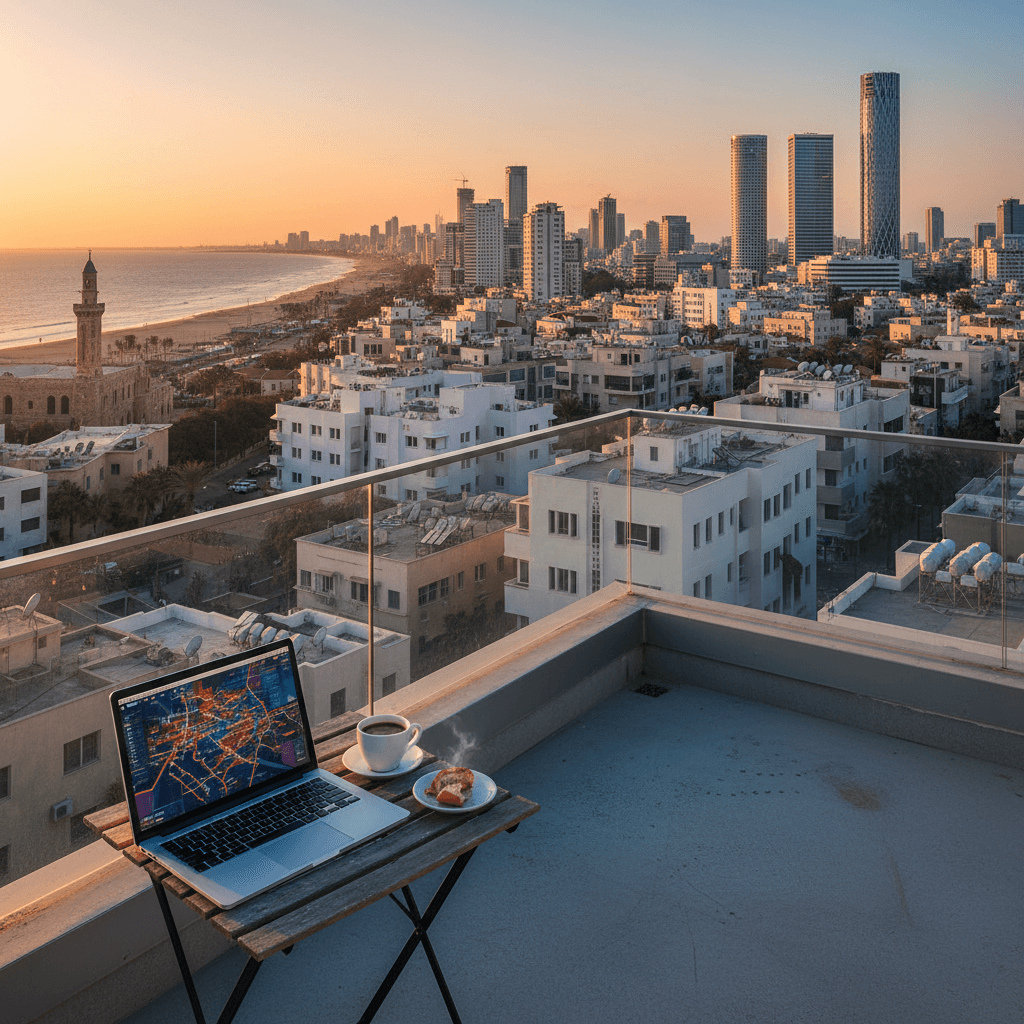
Tel Aviv doesn't just wake up; it hits the ground running with an espresso in one hand and a surfboard in the other. Known locally as the "Bubble," this city feels worlds away from the heavy historical gravity of nearby Jerusalem. It is a high-octane blend of Mediterranean hedonism and "Silicon Wadi" grit. You'll find yourself working from a sleek glass tower on Rothschild Boulevard in the morning and playing matkot on the beach by 4:00 PM. It’s a place where the startup hustle is real, but so is the commitment to a sunset beer.
The city’s personality is defined by its directness. People are blunt, fast-talking, and incredibly welcoming once you break the ice. For digital nomads, the draw is the seamless integration of work and play. With over 300 sunny days a year, your "office" is often a sidewalk cafe where the WiFi is fast and the tahini is fresh. It’s an expensive habit, but the energy of being surrounded by innovators and creatives makes it feel like a worthwhile investment in your career network.
The Price of Admission
Living here isn't cheap. In fact, it’s one of the most expensive hubs in the world. To live comfortably without constantly checking your bank app, you’ll want a budget north of $5,000 a month. If you’re scrappy and stick to street food like falafel or sabich, you can squeeze by on $2,500 to $3,000, but you’ll likely be sharing an apartment in a less polished building.
- Studio/1BR Rent: Expect to pay $1,600 to $2,700+ for a decent spot in the City Center.
- Daily Sustenance: A quick pita on the street costs 20 to 50 ILS ($6 to $15), while a mid-range dinner for two will easily hit 250 ILS ($70).
- Connectivity: A tourist SIM from Partner or Peptle with unlimited data runs about 50 to 100 ILS ($15 to $30).
Where to Plant Your Laptop
The city is compact and highly walkable, but each neighborhood has a distinct frequency. Most nomads gravitate toward the center to stay close to the action.
City Center & Rothschild
- Vibe: The heart of the tech scene, lined with Bauhaus architecture and high-end coffee shops.
- Pros: Home to Mindspace and WeWork; highly walkable; incredible nightlife.
- Cons: The highest rents in the city and constant construction noise.
The Beachside
- Vibe: Vacation mode, 24/7. Perfect for those who want to jump in the Mediterranean between Zoom calls.
- Pros: Proximity to the O Pod Hotel coworking space; great for meeting other travelers.
- Cons: Can feel overly touristy and lacks the "neighborhood" feel of the interior streets.
Mazeh 9 Area
- Vibe: Academic and entrepreneurial.
- Pros: Access to Mazeh 9, a city-subsidized space where you can work for free.
- Cons: It gets crowded quickly and the internet can be temperamental when the room is full.
Navigating the City
Forget cars. Between the traffic and the impossible parking, a car is a liability here. Most locals use the Bird app to grab an electric scooter or simply walk. The public bus system is efficient and cheap, usually 2 to 5 ILS per ride, but remember that everything grinds to a halt for Shabbat. From Friday afternoon until Saturday evening, public transport stops and shops close, though many cafes in secular Tel Aviv stay open to keep the coffee flowing.
Safety is a common question, but on the ground, the city feels remarkably secure. Petty crime is low, and the streets are active and well-lit deep into the night. While regional tensions are a reality of life in the Middle East, the day-to-day experience in Tel Aviv is focused on innovation, beach volleyball, and finding the best hummus in the city. Just download Gett for reliable taxi rides and Google Translate for the occasional Hebrew-only menu, and you’ll fit right in.
The Price of the Mediterranean Dream
Let's not sugarcoat it: Tel Aviv is expensive. It consistently ranks as one of the priciest cities globally, often compared to London or New York. However, for those working in tech or high-level creative fields, the "Silicon Wadi" premium usually feels justified by the high quality of life, the networking opportunities, and the fact that you're never more than a fifteen minute walk from a world-class beach.
Most nomads find they need a minimum of $2,000 to $3,000 per month just to cover the basics. This budget involves living in shared housing or slightly older apartments and sticking to the city's legendary street food scene. If you want a private one-bedroom in a renovated building and regular nights out at the bars on Rothschild Boulevard, you should expect to spend between $3,500 and $5,000 monthly.
Monthly Budget Breakdown
- Budget Tier: $2,000 to $3,000. Ideal for those using shared apartments and free coworking hubs like Mazeh9.
- Mid-Range: $3,500 to $5,000. This covers a private studio and a mix of home cooking and mid-range dining.
- Comfortable/Upscale: $5,000+. This gets you a modern apartment in the City Center, a dedicated desk at Mindspace, and frequent dinners at beachside spots.
Housing and Neighborhoods
Rent will be your biggest hurdle. In the City Center or near Rothschild Avenue, a renovated studio or one-bedroom apartment typically runs between $1,600 and $2,700+. Many nomads look for short-term rentals on Facebook groups or platforms like Madlan to avoid the steep fees of traditional agencies.
If you're looking to save, consider moving slightly further south toward Florentin, which has a grittier, artsy vibe, or looking for a spot near the O Pod Hotel area if you prefer being close to the water. Keep in mind that prices spike during the summer months when tourism hits its peak.
Daily Expenses and Food
Eating out is a highlight of living here, but it adds up quickly. You can grab a world-class falafel or sabich for 20 to 50 ILS ($6 to $15), which is the local hack for staying on budget. A sit-down meal at a mid-range restaurant will usually cost between 50 and 100 ILS ($15 to $30) per person, excluding drinks.
Groceries aren't particularly cheap either, especially for imported goods. Locals recommend shopping at markets like Shuk HaCarmel for fresh produce to keep costs down. When it comes to coffee, expect to pay around 15 to 20 ILS for a cappuccino at a nomad-friendly cafe.
Coworking and Connectivity
For those who don't want to work from their apartments, Tel Aviv has a tiered system for workspaces. If you're watching your budget, Mazeh9 offers subsidized, often free, workspace for young entrepreneurs, though the WiFi can be spotty when it's crowded. Most professionals opt for dedicated spaces like Mindspace or WeWork Rothschild, where monthly memberships range from $200 to $500. These spots are excellent for networking within the local startup scene.
Getting Around
The city is incredibly walkable and bike-friendly. Most nomads rely on the Bird app to rent electric scooters, which are everywhere. Public buses and the light rail are efficient and affordable, costing roughly 2 to 5 ILS per ride. For longer trips or late nights, the Gett app is the standard for ride-hailing. A trip from Ben Gurion Airport into the city center usually costs between 100 and 150 ILS by taxi. The train is the fastest and cheapest route at about ₪11-18.
Practical Savings Tips
- Get a local SIM card from providers like Partner or Peptle. Tourist plans with unlimited data usually cost between 50 and 100 ILS per month.
- Use Wise or Revolut for daily transactions to avoid high bank conversion fees. Credit cards are accepted almost everywhere, from high-end boutiques to market stalls.
- Remember that Shabbat (Friday evening through Saturday evening) sees a significant shutdown of public transport. Plan your travel accordingly or be prepared to pay for a taxi.
- Tipping is standard at 10% to 12% in cafes and restaurants.
The Solo Nomad: City Center and Rothschild
If you want to be in the middle of the "Silicon Wadi" action, the City Center around Rothschild Boulevard and Allenby Street is the place to be. It is the city's financial and tech heart, where renovated Bauhaus buildings house some of the most innovative startups in the world. Most nomads find this the best home base because it is incredibly walkable and puts you within steps of Mindspace and WeWork Rothschild.
Living here means you are trading peace for proximity. It is busy, loud, and the most expensive part of town, but the networking opportunities are unmatched. Expect to pay between $1,600 and $2,700+ for a renovated studio or one bedroom apartment. You will find plenty of cafes where a light bite and coffee costs around 20 to 50 ILS, and the WiFi is generally fast enough for video calls.
- Rent: $1,600 to $2,700+ per month
- Coworking: Mindspace, WeWork ($200 to $500/month)
- Vibe: Fast paced, professional, and high energy
The Budget Conscious Creative: Mazeh9 Area
Young entrepreneurs and students often gravitate toward the area around 9 Mazeh Street. The big draw here is Mazeh9, a subsidized hub that provides free coworking space. It is a fantastic place to meet local Israelis and other young travelers without the high price tag of a corporate office.
The trade off is that the free space gets crowded quickly and the internet can be spotty when the room is at capacity. Expats recommend arriving early to snag a seat. The neighborhood feels more residential and creative than the shiny skyscrapers nearby, though it is still central enough to reach the beach or the markets within fifteen minutes on a Bird scooter.
- Rent: $1,200 to $2,000 for shared housing or older studios
- Food: Street falafel and hummus for 20 to 30 ILS
- Top Perk: Free coworking at Mazeh9
Solo Travelers and Beach Lovers: The Promenade
If your version of work life balance involves a surfboard or a sunset beer, look for spots near the beach, specifically around the O Pod Hotel area. This strip is perfect for solo travelers because of the built in community. The O Pod itself has on site coworking with ultra fast internet, making it easy to grind through a project before hitting the sand.
While this area is more touristy and short term rentals can be pricey, the social energy is unbeatable. You can walk to the beach in two minutes and find dozens of beachside bars and cafes. Just watch out for the "beach tax" on food; prices here are often 20% higher than a few blocks inland.
- Rent: $2,000+ for short term seaside apartments
- Transport: Highly walkable; easy access to the light rail
- Social: Beach meetups and sunset yoga groups are common
Expats and Families: The Quiet Outskirts
Tel Aviv is a compact city, so moving just a bit further out from the center can significantly lower your stress levels and your rent. Families and long term expats often look toward the northern neighborhoods or the quiet pockets near Yarkon Park. These areas offer more green space and a break from the 24/7 noise of Allenby Street.
The commute into the center is easy via the efficient bus system or the light rail, with fares typically costing between 2 and 5 ILS. You will still have access to high quality healthcare at Ichilov Hospital and plenty of local pharmacies, but you will get more square footage for your money. Most families find that $3,500 to $5,000 a month provides a very comfortable lifestyle including private childcare and mid range dining.
- Monthly Budget: $4,000 to $6,000 for a family of three
- Healthcare: Close to major hospitals and English speaking clinics
- Atmosphere: Relaxed, green, and community focused
The Silicon Wadi Connection
Tel Aviv isn't just a beach town; it's a high octane tech hub often called Silicon Wadi. For nomads, this means you're working in one of the most innovative environments on the planet. The internet infrastructure is robust, with broadband speeds averaging over 100 Mbps and a reliable rollout of 5G across the city. Most cafes expect you to open a laptop, and you'll find that public spaces are generally well equipped for remote work.
While the connectivity is excellent, the city isn't without its quirks. Free public WiFi is common but can get sluggish during peak hours in popular spots. Most seasoned nomads recommend grabbing a local SIM card immediately to ensure a steady backup. You can find tourist plans from providers like Partner or Pelephone for around 50 to 100 ILS ($14 to $27 USD) per month, which usually includes unlimited data. You can pick these up right at Ben Gurion Airport or at mobile shops along Allenby Street.
Top Coworking Spaces
If you need a dedicated desk or a professional environment for calls, the city has plenty of high end options. Prices generally range from $200 to $500 per month depending on how much privacy you need.
- Mindspace: Located in the heart of the city, this is the go to for those who want a premium vibe. It's known for its sleek design, networking events, and a community of serious entrepreneurs.
- WeWork Rothschild: Situated on the city's most famous boulevard, this branch puts you in the center of the financial district. It's perfect if you want to be steps away from the best bars and restaurants for a post work drink.
- O Pod Hotel: A unique hybrid located near the beach. They offer on site coworking with ultra fast internet, making it a favorite for solo travelers who want to roll out of bed and straight into a Zoom call.
- Mazeh9: This is a city subsidized youth hub. It's free to use, which is a rarity in such an expensive city, but it fills up fast. The WiFi can be spotty when it's crowded, so show up early if you want a seat.
Cafe Culture and Remote Etiquette
The cafe scene is the backbone of the Tel Aviv nomad lifestyle. You'll see locals and expats alike parked at small tables with an espresso and a MacBook for hours. Most cafes are welcoming to remote workers, provided you aren't taking up a four person table during the lunch rush. Expect to pay between 20 and 50 ILS ($6 to $15 USD) for a light bite and a coffee.
Neighborhoods like the City Center and Lev HaIr are packed with laptop friendly spots. If you're working from a cafe, it's polite to order something every couple of hours. Many nomads find that the white noise of a busy Mediterranean bistro is the perfect backdrop for deep work, though you'll definitely want noise canceling headphones for the louder, more social spots.
Practical Logistics for the Digital Nomad
Navigating the city between work sessions is easy if you stay central. Most nomads rely on the Bird app to grab electric scooters, which are everywhere. It's the fastest way to get from a morning meeting on Rothschild Avenue to a sunset swim at the beach. For longer distances, Gett is the preferred ride hailing app, as Uber operates primarily through licensed taxis here.
Keep in mind the rhythm of the week. Shabbat, which runs from Friday evening through Saturday evening, sees most public transport grind to a halt and many businesses close. However, in secular Tel Aviv, many cafes in the city center stay open, though they might be more crowded with locals enjoying their day off. Plan your high pressure deadlines for earlier in the week to avoid the weekend bustle.
Coworking Costs at a Glance
- Hot Desk (Monthly): $250 to $400
- Daily Pass: $20 to $35
- Coffee at a Cafe: $4 to $6
- Unlimited Mobile Data: $15 to $30
Peace of Mind in the White City
Tel Aviv is widely considered one of the safest hubs for remote workers in the Middle East. Most nomads find the city exceptionally welcoming, especially for women traveling solo and the LGBTQ+ community. Street crime and theft are remarkably low compared to European or American cities of similar size, so you won't feel on edge walking home from a late night coworking session at Mindspace or a bar on Rothschild.
That said, the city has a unique security profile. While day to day life feels relaxed and high energy, you need to stay informed about regional tensions. Locals are experts at balancing a "live for today" attitude with situational awareness. You'll likely notice a visible security presence at malls, train stations, and public buildings; it's a standard part of life here, not a cause for alarm.
- LGBTQ+ Safety: Tel Aviv is a global sanctuary for the community, with a massive annual pride parade and a culture of total acceptance in almost every neighborhood.
- Personal Belongings: While pickpocketing isn't a major crisis, don't leave your MacBook unattended at a beachside cafe. Standard urban common sense applies.
- Emergency Numbers: In an emergency, dial 100 for police, 101 for ambulance (Magen David Adom), or 102 for fire department.
World Class Healthcare
If you get sick or injured, you're in good hands. Israel's healthcare system is top tier, and Tel Aviv is its beating heart. Most doctors and medical staff speak excellent English, often having trained or worked abroad. If you have an urgent issue, Ichilov Hospital (Sourasky Medical Center) is centrally located and provides high quality emergency care.
Expats recommend using private travel insurance like SafetyWing or World Nomads, as the public system is funded through local taxes. Without a local health fund (Kupat Holim), out of pocket costs for a standard doctor's visit can range from 300 to 600 ILS. However, pharmacies are everywhere, and pharmacists can often provide advice or over the counter remedies for minor ailments like "Tel Aviv belly" or heat exhaustion.
Staying Healthy and Hydrated
The Mediterranean sun is no joke. With over 300 sunny days a year, dehydration and sunburn are the most common health snags for digital nomads. Always carry a reusable water bottle; the tap water in Tel Aviv is safe to drink, though some people prefer the taste of filtered water. You'll find public water fountains along the beach promenade and in most city parks.
For those who prioritize wellness, the city is a playground. You'll see locals working out at the outdoor gyms in Hayarkon Park or taking sunrise yoga classes on the beach. If you need a break from the screen, the salt air and constant movement of the city are the best medicine for burnout.
Practical Security Tips
Since regional dynamics can shift, it's smart to download the Home Front Command app (Oref). It provides real time alerts based on your GPS location. While you might never need it, having it on your phone is a standard move for anyone staying longer than a week. Most apartments and office buildings are equipped with reinforced rooms or shelters, and locals will calmly show you where to go if an alert ever sounds. This "business as usual" attitude helps keep the stress levels low for newcomers.
- Pharmacy Hours: Most are open 8:00 AM to 8:00 PM, but there is always a designated "duty pharmacy" open 24/7 in the city for emergencies.
- Prescriptions: Bring a clear copy of any regular prescriptions from your home doctor to make it easier for a local physician to provide a refill.
- Insurance: Ensure your policy specifically covers Israel, as some providers have different tiers for the Middle East.
Getting Around Tel Aviv
Tel Aviv is a compact, dense city where the Mediterranean breeze makes walking the preferred way to get from a morning surf to a mid day meeting. Most nomads stick to the City Center and the beach promenade, where everything you need is within a twenty minute stroll. When the humidity kicks in during July and August, or you need to cross town quickly, you have plenty of tech forward options that fit the Silicon Wadi lifestyle.
Public Transit and the Light Rail
The city's bus network is extensive and generally efficient, with most rides costing between 2 and 5 ILS. You cannot pay with cash on buses; you will need a Rav-Kav smart card, which you can load via the Moovit or HopOn apps. The new Light Rail system has also started transforming cross city commutes, offering a smoother alternative to the sometimes erratic bus schedules.
Keep in mind that public transport, including trains and most buses, stops running on Shabbat. From Friday evening until Saturday night, the city quiets down. If you need to move around during the Sabbath, you will rely on your own two feet, a bike, or private ride hailing services.
Micro Mobility: Bikes and Scooters
This is where Tel Aviv truly shines for the remote work crowd. The city is flat and covered in a growing web of dedicated bike lanes. Electric scooters are the unofficial mascot of the local tech scene. You will see Bird and Lime scooters parked on nearly every corner.
- Bird App: The most popular choice for quick hops. You simply scan the QR code, ride, and lock it at your destination.
- Tel-O-Fun: The city's green bike sharing program, great for longer rentals if you want a workout.
- Safety: Local police are strict about helmets and sidewalk riding. Always stay in the bike lanes to avoid a 250 ILS fine.
Ride Hailing and Taxis
If you are heading out for dinner or carrying gear to a coworking space like Mindspace, ride hailing is the way to go. Uber operates here, but Gett is the local heavyweight. It is generally more reliable and allows you to book licensed taxis with transparent pricing.
- Gett: Best for local trips; you can pay via the app with a linked credit card.
- Bubble Dan: A hybrid between a taxi and a bus. It is an on demand van service that picks you up at a nearby stop and drops you close to your destination for a fixed, affordable price.
Airport Transfers
Getting from Ben Gurion Airport (TLV) to the city center is straightforward. The train is the fastest and cheapest route, costing roughly ₪11-18 and taking about 11 minutes to reach the HaHagana or Savidor Central stations. From there, a quick 15 ILS bus or scooter ride gets you to your apartment.
If you have heavy luggage or arrive during Shabbat, a taxi via the Gett app or the official taxi stand outside the terminal will cost between 100 and 150 ILS. Avoid unofficial drivers soliciting rides in the arrivals hall; always use the regulated queue or a trusted app.
Practical Transit Costs
- Single Bus/Light Rail Ride: 5.50 ILS (approx. $1.50 USD)
- Daily Transit Pass: 13 to 15 ILS (approx. $4.00 USD)
- Short Taxi Trip (Inner City): 35 to 60 ILS (approx. $10 to $16 USD)
- Scooter Rental: Roughly 20 to 40 ILS for a 15 minute ride (approx. $5 to $11 USD)
Getting By Without Hebrew
You'll find that Tel Aviv is one of the most English-friendly cities in the world outside of Anglophone countries. Because it's a massive global tech hub, the "Silicon Wadi" workforce operates almost entirely in English. Most locals under 50 speak it with high proficiency, and you'll have no trouble ordering at cafes in the City Center or discussing rent with a landlord on Rothschild Avenue. In fact, many expats find it so easy to get by that they never actually learn to speak the local tongue.
Hebrew is the primary language, written from right to left, which can be intimidating at first when you're looking at street signs. However, almost all public signage, menus, and transportation apps are trilingual, featuring Hebrew, Arabic, and English. If you find yourself in a bind, Google Translate handles Hebrew script quite well via the camera function, which is particularly helpful for reading labels at the grocery store or fine print on a lease.
The Local Communication Style
Prepare yourself for a directness that might feel abrasive if you're coming from a culture of polite small talk. Tel Avivians are famous for being "Sabras"—tough and prickly on the outside but sweet on the inside. People will tell you exactly what they think, often without the "please" or "thank you" padding you might be used to. Don't take it personally; it's just the local efficiency. Once you break the ice, you'll find the community is incredibly warm and eager to help.
In the tech and coworking scenes at places like Mindspace or WeWork, communication is fast-paced. Networking is less about formal introductions and more about "tachlis," a local term meaning "getting down to brass tacks." If you're attending a nomad meetup or a startup event, expect people to be blunt about their business goals and yours.
Useful Phrases to Know
While you can survive on English alone, throwing out a few Hebrew words goes a long way in building rapport with market vendors or taxi drivers. Here are the basics you'll hear every day:
- Shalom: Hello, goodbye, and peace. It's the universal greeting.
- Toda: Thank you. You'll use this constantly at the 50 ILS lunch spots.
- Slicha: Excuse me or sorry. Useful when navigating the crowds on Allenby Street.
- Bevakasha: Please or you're welcome.
- Sababa: Everything is cool or okay. It's the unofficial slogan of the city's relaxed beach vibe.
- Ken / Lo: Yes / No.
Digital Connectivity and Tools
Staying connected is rarely an issue here. Most nomads pick up a tourist SIM card from providers like Partner or Pelephone immediately upon landing at Ben Gurion. You can expect to pay around 50 to 100 ILS for a month of unlimited data. 5G coverage is excellent throughout the city, and even the public buses and trains offer functional WiFi.
For daily logistics, WhatsApp is the king of communication. Whether you're joining a local digital nomad Facebook group, booking a hair appointment, or talking to your landlord, it's all done through WhatsApp. For getting around, the Gett app is the standard for ride-hailing, while Bird is the go-to for grabbing an electric scooter to zip between meetings. If you're planning to use the public transit system, download Moovit, which provides real-time updates for buses and the light rail, usually for about 2 to 5 ILS per ride.
Cultural Nuances
Keep in mind that communication shifts during Shabbat. From Friday evening to Saturday evening, the city slows down. While Tel Aviv is more secular than the rest of the country, many businesses close and public transport stops. It's a good time to keep your communication low-key and enjoy the beach, but don't expect a quick response from local clients or service providers during these 24 hours.
Tel Aviv is a city that practically lives outdoors. With over 300 days of sunshine every year, the weather dictates the rhythm of life here, from morning meetings at a sidewalk cafe to sunset sessions on the beach. Most digital nomads find the Mediterranean climate makes it easy to maintain a solid work life balance, provided they time their visit to avoid the peak humidity or the occasional winter downpour.
The Sweet Spot: May to October
If your goal is to maximize beach time and outdoor networking, the window between May and October is your best bet. During these months, the city is in full swing. The weather is consistently sunny, and the rain is virtually non-existent. You can expect temperatures to hover between 28°C and 32°C (82°F to 90°F).
Expats recommend the shoulder seasons of May, June, and September as the absolute peak times to be in the city. The heat is manageable, the Mediterranean is warm enough for a swim, and you won't deal with the stifling humidity that hits in August. It is the perfect time to grab a seat at a cafe on Rothschild Boulevard or join a beach meetup without breaking a sweat the moment you step outside.
The Summer Sizzle: July and August
July and August are undeniably hot. While the temperatures stay around 32°C (90°F), the humidity can make it feel much higher. This is when the city’s air conditioning earns its keep. Most nomads shift their schedules during this time, working from high end coworking spaces like Mindspace or WeWork during the heat of the day and only heading out once the sun starts to dip.
- The Upside: The city never sleeps during summer. Beach parties, outdoor festivals, and late night social events are at their peak.
- The Downside: It is the most expensive time for short term rentals. You will also find the popular beaches like Gordon and Frishman quite crowded with tourists.
The Mild Winter: November to March
Winter in Tel Aviv is short and relatively mild compared to Europe or North America. Temperatures rarely drop below 10°C (50°F) at night, and daytime highs usually sit between 15°C and 20°C (59°F to 68°F). While it is the rainy season, the rain usually comes in short, heavy bursts rather than weeks of gray skies.
Travelers often say that winter is the best time for those on a slightly tighter budget. Short term apartment prices on platforms like Madlan or Airbnb tend to dip, and the city feels more local and less like a resort. However, be aware that many older buildings in the City Center lack central heating, so those stone floors can get chilly in January.
The Shabbat Factor
Regardless of the weather, you need to plan your arrival and travel around Shabbat. From Friday afternoon until Saturday evening, public transport like buses and the light rail stops running. While ride hailing apps like Gett and Uber still operate, and the Bird scooters are always available, the city slows down significantly. Most nomads use this time to head to the beach or host communal dinners.
Quick Seasonal Breakdown
- Spring (April to June): The prime time. 20°C to 25°C. Perfect for walking the city and working from outdoor terraces.
- Summer (July to September): Hot and humid. 30°C+. Best for beach lovers and those who enjoy a high energy nightlife scene.
- Autumn (October to November): Very pleasant. 22°C to 28°C. The water is still warm, but the summer crowds have thinned out.
- Winter (December to March): Cool and occasionally wet. 12°C to 18°C. Ideal for cozying up in coffee shops and saving on rent.
Money and Monthly Budgets
Tel Aviv is one of the most expensive hubs in the world, so your bank account will feel the squeeze. Most nomads find they need at least $3,500 to $5,000 per month to live comfortably in a one bedroom apartment near the center. If you are on a tighter budget, you can scrape by on $2,000 to $3,000 by choosing shared housing and sticking to street food like falafel or sabich, which usually costs between 20 and 50 ILS.
- Studio/1BR Rent: Expect to pay $1,500 to $2,500 in prime areas like Rothschild or the City Center.
- Mid-range Meal: A decent dinner with a drink typically runs 50 to 100 ILS ($15 to $30).
- Coworking: Dedicated desks at spots like Mindspace or WeWork cost between $200 and $500 monthly.
The Best Neighborhoods for Work and Play
The City Center, specifically around Rothschild Avenue and Allenby Street, is the heartbeat of the nomad scene. It is the financial and tech hub of the city, meaning you are always walking distance from a high end cafe or a professional office. The downside is the constant noise and the premium price tag on every square inch of real estate.
For those who want to roll out of bed and onto the sand, the Beachside area near the O Pod Hotel is a favorite for solo travelers. It has a high energy, social atmosphere, though it can feel a bit touristy during the peak summer months. If you are a young entrepreneur looking for a community vibe without the price tag, check out the area around Mazeh 9. It hosts a subsidized municipal entrepreneurship center that is great for networking, even if the WiFi can be hit or miss when it gets crowded.
Getting Connected and Finding Space
Israel is known as the Startup Nation for a reason. You will find 5G coverage almost everywhere, and home broadband speeds typically hover around 100+ Mbps or higher. For mobile data, pick up a tourist SIM from Partner or Pelephone at Ben Gurion Airport. They usually offer unlimited data plans for about 50 to 100 ILS per month.
When you need to get through a deep work session, Mindspace and WeWork Rothschild are the gold standards for reliability and networking events. If you prefer the cafe route, the city is packed with laptop friendly spots where a 25 ILS coffee buys you a few hours of productivity. Just keep in mind that free public spaces like Mazeh 9 are popular and fill up fast, so arrive early if you want a seat with a power outlet.
Getting Around Town
Tel Aviv is incredibly walkable, especially if you stay between the beach and the City Center. For longer distances, the Bird app is the local go to for electric scooters. You will see them parked on every corner; just scan, ride, and leave it at your destination. Public buses and the new light rail are efficient and cheap, costing roughly 2 to 5 ILS per ride.
For longer trips or late nights, Gett is the dominant ride hailing app, as Uber has a smaller footprint here. If you are coming from the airport, the train is the fastest and cheapest route at about 20 to 40 ILS. Keep in mind that public transport effectively shuts down for Shabbat from Friday afternoon until Saturday evening, so plan for taxis or walking during that window.
Safety and Local Customs
The city feels very safe for solo travelers and has a famously inclusive atmosphere for the LGBTQ+ community. While regional headlines can be intense, daily life in Tel Aviv remains relaxed and high energy. Standard urban awareness is all you really need. In an emergency, dial 101 for police or 102 for an ambulance.
Locals are known for being direct and blunt. Do not take it personally if a server or a shopkeeper is short with you; it is just the local communication style. English is spoken fluently by almost everyone in the tech and service industries, but learning a few Hebrew words like Shalom (hello) and Toda (thanks) goes a long way. When it comes to tipping, 10% to 12% is the standard at restaurants and bars.
Weather and Timing
The sweet spot for a visit is May through October. You will get endless sun and perfect beach weather, though July and August can be punishingly humid with temperatures hitting 32°C (90°F). Winters are mild but can be surprisingly rainy between November and March, which makes the city feel a bit more somber as the outdoor cafe culture retreats inside.
Need visa and immigration info for Israel?
🇮🇱 View Israel Country GuideHidden Gem
Worth the effort