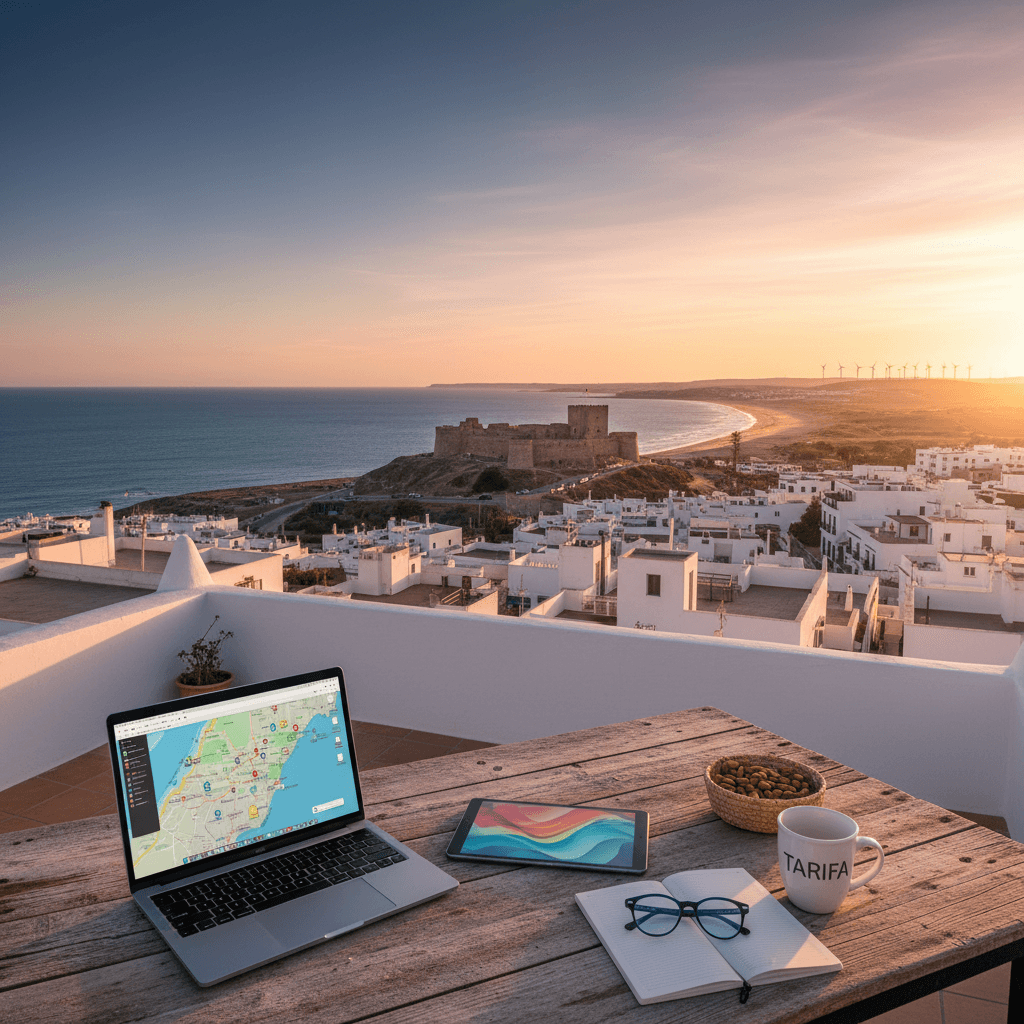
Tarifa
🇪🇸 Spain
The Wind-Swept Frontier of Europe
Standing at the southern tip of Spain, you can look across the Strait of Gibraltar and see the mountains of Morocco appearing so close you could almost touch them. This is Tarifa, a place where the Atlantic meets the Mediterranean and the wind never seems to stop. It is a town defined by its elements, attracting a specific breed of traveler who prefers a surfboard or a kite over a suitcase and a suit.
The vibe here is unapologetically bohemian and rugged. Unlike the manicured resorts of the Costa del Sol, Tarifa feels raw and authentic. It is a town of white-washed walls, narrow cobblestone alleys, and a creative energy fueled by an international expat scene. Most nomads find that the town operates on two distinct gears: the frantic, crowded party scene of the summer and the slow, community-focused rhythm of the off-season between November and May.
The Nomad Lifestyle and Cost of Living
Living here requires a bit more budgeting than rural Andalusia, but it remains more affordable than Madrid or Barcelona. A solo nomad should expect a monthly budget of around $3,190 (roughly €2,950) for a comfortable mid-range lifestyle. If you are looking to keep costs down, a budget of €1,500 to €2,000 is doable if you cook at home and opt for shared housing.
Rent is the biggest variable. In the off-season, you can find a studio in the center for €750 plus utilities, but those prices can triple or quadruple during the summer months. Many remote workers prefer coliving spaces like Nomadico, where rates start around €670 for a shared setup during the quieter months. For dining, you can grab a coffee for €2 to €4 or a glass of wine for €2.50. A mid-range dinner usually lands around €12, though vegan favorites like Chilimosa can run €20 or more for a full meal.
Where to Plant Your Laptop
Tarifa is compact and walkable, so you are never far from the action. Most nomads choose between three main areas:
- Playa de Los Lances: This is the heart of the beach culture. It is perfect if you want to finish a Zoom call and be on a kiteboard five minutes later. It gets loud and crowded in July, but it is the epicenter of the nomad community.
- Casco Antiguo (Old Town): Best for those who want local charm. You will be surrounded by shops and tapas bars, though the stone buildings can sometimes be a bit dark for a full day of remote work.
- The Outskirts: If you have a bike or scooter, the edges of town offer quieter, more affordable long-term stays with easier access to hiking trails and scuba diving spots.
Work, Connectivity, and Community
The internet is surprisingly reliable for such a small town. Most Airbnbs and hotels offer high-speed fiber, and the local cafes are generally welcoming to laptops during the day. For a dedicated professional environment, Tarifa Garage is the go-to coworking space, offering fixed desks for around €150 per month. Other popular hubs include TAF Coworking and the seasonal Nomadico Coworking.
What truly sets Tarifa apart is the social ease. It is incredibly easy to meet people through the Tarifa Digital Nomads Facebook group or by simply hanging out at Lola for tapas. The community is tight-knit but welcoming, often organizing weekend hikes or beach bonfires. Because the town is so small, you will likely run into the same faces at the grocery store or the surf shop, creating a sense of belonging that is rare in larger nomad hubs.
Practical Realities
Safety is rarely a concern here; it is a friendly, safe environment for solo travelers. Healthcare is solid, and you can access the public system if you have registered for social security. For short-term stays, ensure you have private travel insurance. While Spanish is the main language, English is widely spoken in the nomad and kitesurfing circles, so you will get by easily with basic phrases.
Getting here takes a bit of planning. Most travelers fly into Gibraltar, which is about an hour away by bus, or Jerez, about 90 minutes away. Once you are in town, you won't need a car. Everything is reachable by foot or a cheap bicycle rental. Just remember to pack a windbreaker; the Levante wind is legendary and can be relentless, but it is exactly what gives Tarifa its wild, addictive energy.
The Price of the Wind
Tarifa sits in a unique spot financially. It's more expensive than the sleepy white villages of inland Andalusia, but you'll get much more for your Euro here than in Madrid or Barcelona. For most digital nomads, a monthly budget of €2,950 (roughly $3,190) covers a high quality of life, though you can scrape by on much less if you're willing to share a flat and cook at home.
The local economy follows the rhythm of the seasons. During the off-season from November to May, the town belongs to the nomads and kiteboarders. Prices are reasonable and the community is tight. Come July and August, the vibe shifts. Short-term rentals skyrocket, and the quiet cafes you used to work in become crowded with summer tourists. If you're planning a long stay, lock in a winter rate early.
Monthly Budget Tiers
- Budget (€1,500 to €2,000): This covers a room in a shared house or a spot in a coliving space like Nomadico, which starts around €670. You'll be doing most of your grocery shopping at local markets and keeping the nights out to a minimum.
- Mid-Range (€2,500 to €3,000): The standard nomad experience. This gets you a private 1-bedroom apartment in the center, a dedicated desk at Tarifa Garage for €150 a month, and the freedom to eat out three or four times a week.
- Comfortable (€3,500+): You're looking at a premium apartment with sea views, frequent dinners at upscale spots like Chilimosa, and plenty of budget for weekend scuba diving or kiteboarding lessons.
Housing and Neighborhoods
The town is small enough that you can walk almost anywhere in twenty minutes, but where you park your laptop matters. The Casco Antiguo (Old Town) is beautiful but can get noisy. Expect to pay €750 or more for a studio here. You should also factor in an extra €250 for utilities and potential agency fees if you aren't booking through a nomad-friendly platform.
If you're here for the water, look toward Playa de Los Lances. It's the heart of the kitesurfing scene and home to several nomad hubs. It's slightly more modern and offers better beach access, though prices spike heavily in the summer. For those seeking peace, the outskirts near the hiking trails offer better value for long-term stays, but you'll likely want a bike or a scooter to get into town for social events.
Eating, Drinking, and Connectivity
Spanish cafe culture keeps daily costs down. A coffee will run you €2 to €4, and a glass of local wine is often just €2.50. Tapas remain the best way to eat well without breaking the bank, with small plates usually costing between €2 and €4. A mid-range dinner for one typically lands around €12, though vegan and specialty spots often push past €20.
Work-life balance is easy here because the infrastructure is solid. Fiber internet is standard in most rentals. If you need a professional environment, Tarifa Garage or TAF Coworking offer reliable speeds and a way to meet the community. For mobile data, grab a prepaid SIM from Orange or Movistar. They're cheap and provide a necessary backup for those days when you decide to work from a beach bar.
Practical Logistics
Tarifa is a walking town. You won't need a car unless you're planning frequent trips to Cadiz or Gibraltar. Most nomads just rent a bike or use their feet. If you're applying for the Digital Nomad Visa, keep in mind the Spanish government requires a minimum monthly income of €2,849 for a single applicant (200% of SMI; increases for dependents). For banking, many expats skip the traditional Spanish banks and use Wise or N26 to avoid the headache of local paperwork and high maintenance fees.
For Nomads and Solo Travelers
If you are in town to balance deep work with the adrenaline of the Strait, the beach areas near Playa de Los Lances are your best bet. This is the heart of the wind sports scene where the Levante and Poniente winds dictate the day's schedule. You'll find a high concentration of like-minded people here, especially during the nomad-heavy months of November to May.
Living near the beach gives you immediate access to kitesurfing and sunset meetups without needing a car. Many nomads opt for coliving setups like Nomadico, which offers a built-in community and reliable desk space starting around €670 per month in the off-season. If you prefer a private setup, expect to pay €750 or more for a studio, plus roughly €250 for utilities and fees. For your daily office, Tarifa Garage is the go-to coworking hub, offering fixed desks for about €150 a month.
- Vibe: Active, social, and focused on the outdoors.
- Pros: Immediate beach access, proximity to TAF Coworking, and easy networking via the Tarifa Digital Nomads Facebook group.
- Cons: Summer prices can skyrocket to €3,000 a month, and the noise from seasonal parties can be a distraction if you have early morning calls.
For Long-Term Expats
The Casco Antiguo (Old Town) is where you'll find the authentic soul of Tarifa. Living within these historic walls means being steps away from the best coffee shops and local markets. It is highly walkable and perfect for those who want to feel part of the local fabric rather than the transient tourist crowd. You'll spend your mornings grabbing a €2 coffee and your evenings sharing €2.50 glasses of wine at spots like Lola.
Expats usually look for apartments in the side streets to avoid the main thoroughfare noise. While the charm is high, the buildings are older, so check the heating and insulation if you are staying through the damp winter months. Most long-termers recommend hiring a local agent to find deals, as the best apartments often go via word-of-mouth rather than online portals.
- Vibe: Traditional Spanish charm mixed with bohemian boutiques.
- Pros: Everything is within a five-minute walk; easy access to vegan favorites like Chilimosa.
- Cons: Parking is a nightmare, and the stone streets can echo with tourist noise during the peak summer months.
For Nature Lovers and Adventure Nomads
If the town center feels too cramped, the Outskirts and areas near the northern hiking trails offer a quieter alternative. This area is ideal for those who prioritize silence and views over being near the bars. It is particularly popular with scuba diving enthusiasts and hikers who want to hit the trails of the Alcornocales Natural Park without a commute.
You will likely need a bike or a scooter to get into town, but the trade-off is more space for your money and a peaceful environment for remote work. Travelers often find that the outskirts provide the most "Spanish" experience, away from the English-speaking kitesurf bubbles. It is also the most affordable area for those on a budget of €1,500 to €2,000 a month, as you can find larger spaces for the price of a tiny Old Town studio.
- Vibe: Quiet, green, and spacious.
- Pros: More affordable long-term stays and easy access to mountain bike trails and dive spots.
- Cons: Not very walkable; you'll feel isolated without your own wheels.
For Families
Tarifa is a bit of a challenge for families due to the heavy party scene in the summer, but the residential areas just behind the main Batalla del Salado shopping street are the most suitable. These neighborhoods are flatter, making them easier to navigate with strollers, and they sit closer to local schools and pharmacies.
While the town is generally very safe for solo travelers and children alike, families usually prefer the modern apartment blocks in this area because they often include elevators and more reliable heating. You are still within a ten-minute walk of the beach, but you are far enough from the late-night bars to get a decent night's sleep. Keep in mind that for a comfortable family lifestyle with frequent dining and private housing, you should budget at least €3,500 per month.
- Vibe: Practical and residential.
- Pros: Close to supermarkets and medical services; more modern housing options.
- Cons: Lacks the historic "postcard" feel of the Old Town.
Connectivity and Speed
You won't have to worry about the internet failing you while the wind howls outside. Digital nomads consistently report that WiFi in Tarifa is reliable and fast enough for video calls and heavy uploads. Most Airbnbs and local rentals come equipped with fiber optic connections, and you'll find steady speeds even in the older buildings of the Casco Antiguo. If you're staying in a coliving space or a modern apartment near Playa de Los Lances, you can expect speeds that rival any major European hub.
For your mobile backup, grab a local prepaid SIM card as soon as you arrive. Orange, Vodafone, Movistar, and Yoigo all have shops in town. These plans are cheap and provide excellent 4G and 5G coverage throughout the city center. Having a local SIM is a smart move for those days when you want to tether your laptop from a beach bar or need to check the wind forecast on the fly.
Top Coworking Spaces
Tarifa has a small but high quality selection of coworking spaces that serve as the heartbeat of the remote work community. These spots are where you'll transition from solo worker to part of the local tribe.
- Tarifa Garage: This is a favorite for those who need a professional, spacious environment. A fixed desk goes for around €150 per month. It has a great community vibe and plenty of room to spread out without feeling cramped.
- Nomadico Coliving: Offers dedicated workspaces as part of coliving, popular with nomads. It focuses heavily on community building, making it the go to spot if you're looking for work life balance and networking events.
- TAF Coworking: A friendly and creative hub that attracts a mix of locals and expats. It's known for its welcoming atmosphere and is perfect if you prefer a less corporate, more artistic setting for your workday.
The Cafe Culture
If you prefer the hum of a coffee machine to a dedicated office, Tarifa’s cafe scene is very accommodating, especially during the off season. Between November and May, many owners are happy to let you linger over a €2.50 cafe con leche for a few hours. However, once the summer crowds arrive in July and August, the vibe changes. The noise levels spike and tables become a premium, so you might find it harder to stay productive in public spots during the peak heat.
For a reliable work session with great food, nomads often head to places like Chilimosa or the various beachside chiringuitos. Just remember the local etiquette; if the place starts filling up for the lunch rush around 2:00 PM, it's time to pack up your laptop and head to the beach.
Community and Networking
The best way to stay updated on the best work spots and social meetups is the Tarifa Digital Nomads Facebook group. It's a highly active community where people share everything from apartment leads to weekend hiking plans. Because the town is so compact, you'll likely run into the same faces at the coworking spaces and the surfboard rental shops, which makes building a professional network feel natural rather than forced.
Most nomads find that the community is most vibrant during the shoulder seasons. During these months, the focus shifts from pure tourism to a more sustainable lifestyle where morning deep work sessions are followed by afternoon kitesurfing or scuba diving. It's a rhythm that’s hard to beat if you value productivity as much as adventure.
A Safe Haven for Solo Seekers
Tarifa is widely regarded as one of the safest hubs in Southern Spain for digital nomads and solo travelers. Because the town is compact and the community is tight-knit, you won't find the "shady" neighborhoods typical of larger European cities. Most nomads describe the vibe as friendly and laid back, where the biggest risk is usually leaving your sunglasses at a beach bar rather than anything more serious.
While violent crime is almost non-existent, petty theft can happen in crowded areas during the peak summer months. Keep an eye on your gear at Playa de Los Lances if you're heading into the water, and don't leave valuables visible in your car if you're parked at remote hiking trailheads. Beyond those basic precautions, you can comfortably walk through the Casco Antiguo at 2:00 AM without a second thought.
Navigating the Healthcare System
Spain's healthcare is top-tier, and Tarifa is no exception. If you're here on the Digital Nomad Visa, you'll eventually gain access to the public system by registering with Social Security and obtaining your tarjeta sanitaria. This allows you to visit the local centro de salud for non-emergencies. However, the process involves some bureaucracy, so most short-term nomads stick with private insurance.
For those on a nomad visa or seeking residency, remember that you must show proof of income of at least €2,849 per month (200% of SMI) for a single applicant to qualify; increases for dependents. Many expats recommend carrying a private policy like SafetyWing or Sanitas anyway; it grants you faster access to English-speaking specialists and avoids the wait times often found in the public sector.
Pharmacies and Emergencies
Pharmacies in Tarifa, marked by bright green neon crosses, are your first stop for minor ailments. They're highly professional, and pharmacists can often provide advice or over-the-counter meds that would require a prescription in the US or UK. If you need help after hours, check the door of any pharmacy; they always post a schedule for the farmacia de guardia, the designated 24-hour shop for that night.
- Emergency Number: Dial 112 for police, fire, or medical emergencies. This is a free, EU-wide service with English-speaking operators available.
- Local Clinic: Centro de Salud de Tarifa handles primary care and minor emergencies.
- Major Hospitals: For serious specialized care, you may be referred to larger facilities in Algeciras or Cádiz, which are about 30 to 60 minutes away by car.
Practical Wellness Tips
The biggest "health hazard" in Tarifa isn't a bug or a crime, it's the wind. The powerful Levante can be relentless, sometimes causing "wind madness" or simple irritability in newcomers. It also makes the sun feel much cooler than it actually is. Expats suggest wearing high-SPF sunscreen even when it's breezy, as the Strait of Gibraltar sun is deceptively strong.
If you're here for the kitesurfing or scuba diving, ensure your insurance specifically covers "high-risk sports." Standard travel policies often exclude these, and a trip to the clinic for a board-related injury can get pricey without the right coverage. Most local schools require insurance for students, but if you're riding solo, double-check your fine print before hitting the waves.
The Walkability Factor
In Tarifa, your own two feet are your most reliable asset. The town is remarkably compact, especially within the Casco Antiguo (Old Town) and the primary residential areas stretching toward Playa de Los Lances. Most nomads find they can handle 90% of their daily life, from morning coffee at a cafe to late-night tapas at Lola, without ever touching a vehicle.
Walking isn't just a matter of convenience; it's the local culture. The narrow, winding streets of the center weren't built for cars, and parking is notoriously difficult during the summer months. If you're staying near the beach or the town center, you'll likely only need wheels for grocery hauls or transporting kitesurfing gear.
Bikes and Scooters
If you've settled on the outskirts near the hiking trails or scuba spots, a bicycle is the preferred nomad upgrade. Rental shops are scattered throughout town, and monthly rates are generally affordable. It's a flat, easy ride along the promenade that connects the town to the wider stretches of beach.
Electric scooters have also become a common sight for those who want to zip between Tarifa Garage and their apartment without breaking a sweat. Just be mindful of the wind; Tarifa's famous Levante can make upright cycling a legitimate workout. If the gusts are hitting 40 knots, you might find yourself leaning into the wind just to stay upright.
Public Transport and Ride-Hailing
Don't expect a robust metro or frequent city bus system here. Public transit within the town limits is minimal. For regional travel, buses run from the main station to Cádiz, Algeciras, and Gibraltar, but schedules can be sparse, so you'll need to check the boards in advance.
Ride-hailing apps like Bolt or Cabify operate sporadically in the area, but they aren't the ubiquitous presence you'll find in Madrid or Barcelona. Local taxis are available but are mostly used for late-night returns or getting to the ferry terminal. If you're planning a night out, keep a local taxi number saved in your phone as you won't always find them roaming the quieter streets.
Airport Transfers and Arrivals
Getting to Tarifa requires some advance planning since there is no local airport. Most travelers fly into Gibraltar Airport, which is about a 1-hour trip by bus or taxi. Alternatively, Jerez Airport is roughly 1 hour 40 minutes drive away (longer by bus with transfers), and Málaga-Costa del Sol Airport is about 2 hours by car.
- Gibraltar Taxi: Expect to pay around €60 to €80 for a direct ride.
- Bus from Málaga: A budget-friendly option, though it often involves a transfer in Algeciras.
- Car Rentals: Highly recommended if you plan on exploring the coast, though unnecessary if you stay strictly within the Tarifa bubble.
The Strait of Gibraltar Ferry
One of the most unique "commutes" in Tarifa is the ferry to Tangier, Morocco. The port is located right at the edge of the Old Town. High-speed ferries make the crossing in about 60 minutes. It's a popular day trip for nomads, but keep an eye on the weather; heavy winds frequently cause the port to close, sometimes for several days at a time. Always check the maritime forecast before booking your ticket.
The Linguistic Landscape
In Tarifa, Spanish is the undisputed king of the streets. Because this is the southern tip of Andalusia, you'll hear the local accent, which is famous for being fast, melodic, and prone to dropping the ends of words. Don't let that intimidate you; the town's small size and heavy influx of international windsurfers mean the locals are incredibly patient with learners. Most nomads find that while they can survive on English alone, a little effort in Spanish goes a long way in building rapport at the local tapas bars.
The town has a unique linguistic split. In the Casco Antiguo (Old Town) and among the older residents, Spanish is your only real currency. However, walk into a kitesurfing shop on Playa de Los Lances or grab a desk at Tarifa Garage, and you'll hear a mix of English, German, French, and Italian. It's a truly polyglot environment where English serves as the bridge for the global nomad community.
English Proficiency and Professional Life
If you're worried about your professional life, breathe easy. The coworking spaces like Nomadico and TAF Coworking are essentially English-first zones. You won't have any trouble networking, attending community events, or coordinating with fellow remote workers. Most cafe staff in the trendy spots, like Chilimosa or the beachside bars, speak functional English and are used to digital nomads ordering their third oat milk latte of the morning.
Expats recommend having a translation app ready for more formal situations. If you're dealing with a local landlord to secure a long term rental or visiting a pharmacy, you might hit a language barrier. For anything administrative, like applying for the Digital Nomad Visa or registering for your tarjeta sanitaria (health card), having a basic grasp of Spanish or bringing a Spanish speaking friend is a smart move.
Useful Phrases for the Tarifa Nomad
You don't need to be fluent to be respected. Mastering a few key phrases will help you transition from a tourist to a local regular. Locals appreciate the effort, even if you stumble over the pronunciation.
- "¿Cuál es la contraseña del WiFi?" (What is the WiFi password?) – Your most important question in a cafe.
- "¿Cuánto cuesta?" (How much does it cost?) – Useful at the local markets.
- "Una caña, por favor." (A small beer, please.) – The standard order for a quick afternoon break.
- "¿Hay buen viento hoy?" (Is there good wind today?) – The ultimate Tarifa icebreaker.
- "La cuenta, por favor." (The bill, please.) – Essential for those €12 mid range lunches.
Digital Tools and Translation
Most travelers and long term nomads rely heavily on Google Translate, especially the "camera" feature for reading menus or lease agreements. For those looking to stay more than a few months, it's worth joining the "Tarifa Digital Nomads" Facebook group. It's a goldmine of information where most posts are in English, but you'll often see local services advertised in Spanish. It's the best place to find a language exchange partner if you want to trade your English skills for some local Andalusian Spanish.
Communication isn't just about words here; it's about the pace. Tarifa operates on a slower clock. Whether you're waiting for a response from a landlord or waiting for your tapas, remember that a smile and a "no pasa nada" (no worries) will get you further than any perfectly conjugated verb.
The Wind and the Seasons
In Tarifa, the weather isn't just a backdrop; it's the main character. Most nomads find that the town's rhythm is dictated by two famous winds: the Levante (a hot, strong wind from the east) and the Poniente (a cooler, steadier breeze from the west). While these winds make Tarifa the kitesurfing capital of Europe, they also influence when you should plan your stay.
The sweet spot for digital nomads is typically between November and May. During these months, temperatures hover in a comfortable range of 15°C to 22°C (59°F to 72°F). It is mild enough for outdoor lunches and coastal hikes, but without the sweltering heat or the overwhelming crowds that take over in the summer.
When to Visit: The Nomad Perspective
- The Nomad High Season (November to May): This is when the community really thrives. Places like Nomadico and TAF Coworking are active, and you'll find plenty of like-minded professionals working from cafes. The air is crisp, the beaches are empty enough for a long walk, and rental prices are at their most reasonable.
- The Summer Peak (June to August): Temperatures climb to 25°C to 30°C (77°F to 86°F). While the weather is great for swimming, the town transforms into a party hub. Prices for Airbnbs can skyrocket to €3,000 a month, and the noise from late-night tourists can make focusing on a Zoom call difficult. Most long-term expats recommend avoiding this window if you value deep work.
- The Rainy Window (November to February): You will see some short, intense rain showers during these months. It rarely rains for days on end, but it's enough to keep the surrounding hills of the Cádiz province lush and green.
The Wind Factor
If you aren't here for wind sports, the Levante can be a bit of a shock. It can blow at high speeds for several days straight, making a day at Playa de Los Lances feel like being sandblasted. However, nomads who stay through the winter often say they grow to love the energy it brings to the town. When the wind drops, the silence that follows is one of the most peaceful experiences you'll have in Andalusia.
For those looking to balance productivity with adventure, the shoulder months of April, May, and October offer the best of both worlds. You get the warmth of the Mediterranean sun without the €20 salads and packed bars of August. You'll have enough light for a post-work session at Tarifa Garage and enough warmth to enjoy a €2.50 glass of wine in the Casco Antiguo as the sun sets.
Practical Climate Tips
- Layering is key: Even on sunny winter days, the wind can make it feel much cooler than the thermometer suggests. Always keep a windbreaker in your bag.
- Check the forecast: Local kiters use apps like Windguru or Windy. Even if you don't surf, these apps are more accurate for Tarifa than standard weather apps because they account for the Strait of Gibraltar's unique geography.
- Accommodation heating: Many older apartments in the town center don't have central heating. If you're visiting in January or February, double-check that your rental includes a heater or a heat pump, as those stone walls get chilly at night.
Budget and Costs
Living in the wind capital of Europe is cheaper than Madrid or Barcelona, but it carries a premium compared to the rest of Andalusia. A solo nomad should budget around €2,950 per month for a comfortable lifestyle. If you are keeping things lean by cooking at home and sharing a flat, you can get by on €1,500 to €2,000. For those wanting a private apartment and frequent dinners at spots like Chilimosa, expect to spend €3,500 or more.
- Rent: A studio in the center starts around €750 plus utilities. In the summer, prices skyrocket to €3,000 on Airbnb, so most long termers arrive in the off-season.
- Food: Tapas and coffee are affordable at €2 to €4. A mid-range dinner usually lands around €12, while a glass of wine is a steal at €2.50.
- Coworking: Dedicated desks at spots like Tarifa Garage go for about €150 per month.
Where to Set Up Base
Tarifa is compact and walkable, so you are never far from the action. Most nomads choose between the historic charm of the old town or the proximity of the beach.
Casco Antiguo (Town Center)
This is the heart of the social scene. It is perfect for expats who want shops and cafes at their doorstep. You will pay €750 or more for a small apartment here. The downside is the noise; the narrow streets echo with late-night crowds during the summer months.
Playa de Los Lances (Beach Area)
If you are here for the wind, stay near the beach. It is home to many coliving spaces like Nomadico. It offers a more relaxed, productivity-focused vibe compared to the center, though prices spike significantly when the tourists arrive in July.
The Outskirts
The areas near the hiking trails and scuba spots are better for adventure-focused nomads with their own transport. It is quieter and more affordable for long stays, but you will miss out on the walkable cafe culture.
Internet and Productive Spaces
The WiFi in Tarifa is surprisingly reliable. Most Airbnbs and hotels offer speeds plenty fast for video calls. For a dedicated work environment, Tarifa Garage is the go-to for its spacious layout and fixed desks. TAF Coworking is another favorite for its creative atmosphere, while Nomadico offers a community-heavy experience from November to May.
For mobile data, grab a prepaid SIM from Orange, Vodafone, or Movistar. It is a cheap safety net for those days when you want to work from a beach cafe. While the cafe culture is work-friendly in the winter, many spots become too crowded for laptops during the peak summer heat.
Getting Around
You won't need a car if you stay within the town limits. Everything is reachable on foot, and many nomads rent bikes or scooters for cheap daily rates to reach the further kite spots. Public buses are infrequent and mostly serve longer routes to Cádiz or Gibraltar.
Arriving can be a bit of a mission. Most travelers fly into Gibraltar (1 hour away) or Jerez (1 hour 40 minutes drive away) and book a shuttle or taxi ahead of time. There is no Uber here, so you will rely on local taxis or apps like Bolt and Cabify for occasional trips.
Health and Safety
Tarifa is exceptionally safe for solo travelers. Petty theft is rare, though you should still use common sense in crowded bars. If you need a doctor, the public healthcare system is solid. You can access it with a tarjeta sanitaria if you are registered, but most nomads carry private travel insurance for quicker service. In an emergency, dial 112.
Practical Essentials
- Language: Spanish is the main tongue, but English is widely spoken in coworking spaces and kitesurf schools. Knowing how to ask "¿WiFi contraseña?" will get you far.
- Banking: Use Wise or N26 to avoid local bank fees. If you are applying for the Spanish Digital Nomad Visa, you will need to show a monthly income between €2,520 and €2,762.
- Weather: The best window for nomads is November to May. Temperatures hover around 15 to 22°C, the crowds are gone, and the community is at its tightest.
Need visa and immigration info for Spain?
🇪🇸 View Spain Country GuideEasy Landing
Settle in, no stress