Taoyuan
🇹🇼 Taiwan
The Gateway City's New Identity
For most travelers, Taoyuan is just a blur of tarmac and terminal lights outside an airplane window. But for a growing community of digital nomads and expats, it's becoming a strategic home base. It feels like a functional, high efficiency suburb that hasn't quite realized how cool it is yet. You get the industrial grit of a major logistics hub softened by massive night markets and a surprisingly laid back, family oriented pace that Taipei often lacks.
Living here feels like having a backstage pass to Taiwan. You're 20 minutes from the capital via the MRT, but you're paying a fraction of the price for a modern apartment. It's safe, predictable, and incredibly connected. While it lacks the high energy nightlife of Xinyi, it replaces it with a genuine, unpolished Taiwanese charm where the coffee shop owners actually remember your order after two visits.
The Local Vibe and Atmosphere
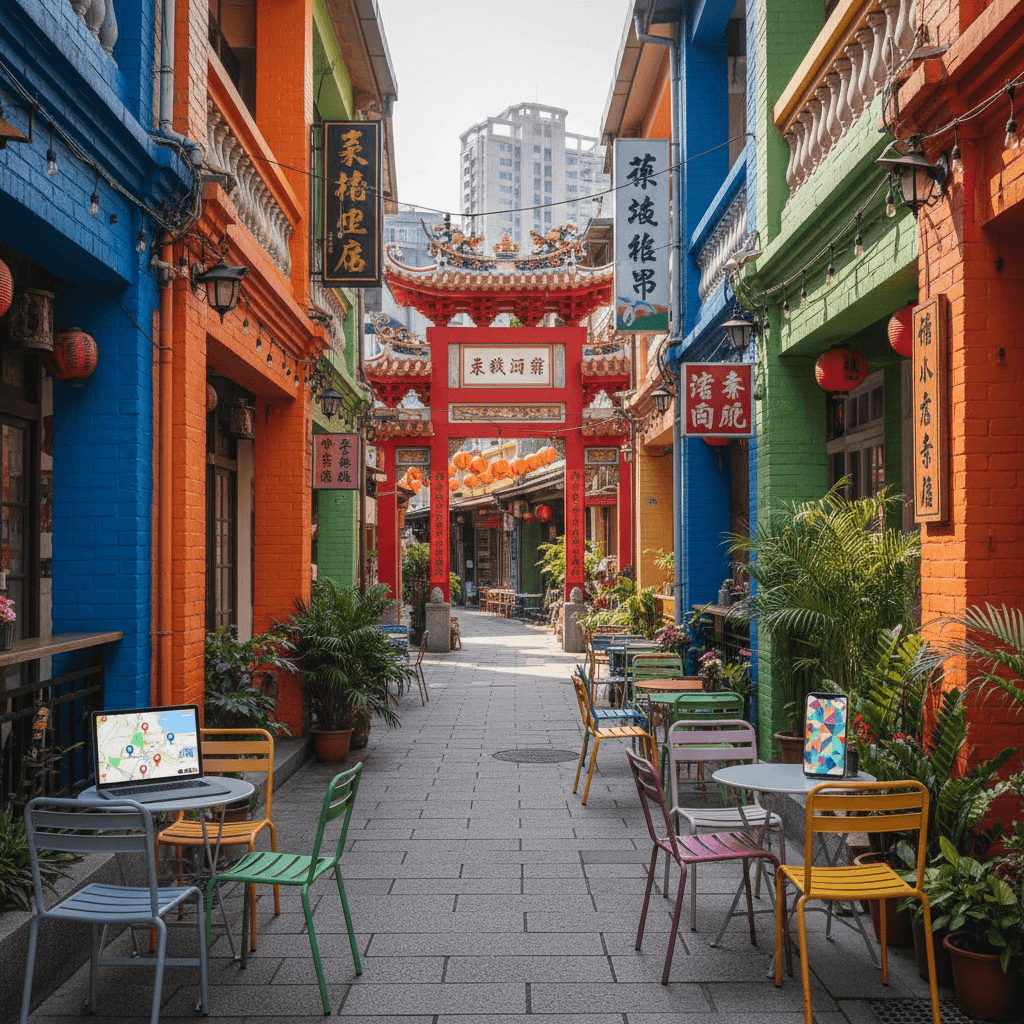
Taoyuan is a city of layers. You'll see sleek, glass fronted high rises standing right next to traditional Hakka eateries and sprawling industrial zones. It's a commuter city at heart, which means the "vibe" is focused on quality of life rather than tourist spectacles. Most nomads find the atmosphere refreshing because it doesn't feel like a bubble; you're living alongside local families and tech workers rather than a sea of influencers.
The city is famously safe. It’s the kind of place where you can leave your laptop at a table in Starbucks to grab a refill without a second thought. The main trade off is the language barrier. English proficiency is lower here than in Taipei, so you'll be relying on the Google Translate camera and the LINE app for almost everything from ordering beef noodles to talking to your landlord.
Cost of Living Breakdown
Your budget goes significantly further here, usually stretching 20% to 30% further than in Taipei. It's one of the few places in Taiwan where a comfortable lifestyle doesn't require a massive tech salary.
- Budget Tier ($1,000 to $1,500 USD): Best for those sharing housing and sticking to street food at the Taoyuan Night Market. You'll spend about $300 on a room and $200 on local eats.
- Mid-range Tier ($1,800 to $2,500 USD): This gets you a private studio for around $500, frequent cafe work sessions, and enough left over for weekend trips.
- Comfortable Tier ($3,000+ USD): This covers a high end 1BR apartment for $700, upscale dining, and the income proof often needed for long term visa stays.
Where to Plant Your Roots
Choosing a neighborhood depends on how often you need to escape to the capital or the airport.
Taoyuan District (City Center)
- Best for: Solo nomads and first timers.
- The Vibe: Busy, convenient, and loud. It's the heart of the action with the best access to the 20 minute train to Taipei.
- Pros: Massive density of cheap food and 24 hour convenience stores.
Zhongli District
- Best for: Families and long term expats.
- The Vibe: A bit more academic and cultural thanks to nearby universities and a strong Hakka influence.
- Pros: Larger apartments for your money and a slightly slower, more residential feel.
Dayuan District
- Best for: The "in transit" nomad.
- The Vibe: Quiet, industrial, and dominated by the airport.
- Pros: Extremely close to TPE Airport and very affordable hotels, though it lacks a social scene.
The Infrastructure Reality
The internet is blazing fast, with speeds of 100 to 500 Mbps being the norm in most modern apartments. However, dedicated coworking spaces are still rare. Most nomads adopt the local "cafe culture" instead. You'll see plenty of people working from Wooly Cafe or local libraries. For a serious office day, many just hop on the MRT to use Taipei's facilities.
Getting around is a breeze if you use the YouBike app for short distances or the EasyCard for buses and the MRT. The weather is your typical subtropical mix; it's pleasant from October to December, but the July to September window brings intense heat and the occasional typhoon. If you're looking for a base that is practical, affordable, and perfectly positioned for regional travel, Taoyuan is the quiet overachiever of East Asia.
The Price of Practicality
Taoyuan is the ultimate budget hack for anyone who wants the convenience of Taipei without the capital's price tag. Most nomads find that their money goes about 20% to 30% further here. You're trading the neon skyline for a more suburban, industrial vibe, but the savings on rent alone usually make the trade-off worth it. It is a city built on efficiency, and that reflects in a cost of living that feels surprisingly manageable for a major tech hub.
Expats often recommend Taoyuan as a base because you can secure a modern, high-quality apartment for what you'd pay for a cramped studio in Taipei's Xinyi district. While the city lacks a massive density of dedicated coworking spaces, the abundance of laptop-friendly cafes like Starbucks or local spots in the Taoyuan District city center keeps your overhead low. You'll likely spend your days working for the price of a NT$150 latte.
Monthly Budget Tiers
- The Budget Nomad ($1,000 to $1,500 USD): This lifestyle relies on Taiwan's legendary street food and shared housing. You'll be spending about $300 on a room, $200 on night market meals, and keeping your transport costs under $50 by sticking to buses and the YouBike system.
- The Mid-Range Professional ($1,800 to $2,500 USD): This is the sweet spot for most. It covers a private studio for $500, a mix of cafe hopping and restaurant dining for $300, and enough left over for weekend trips to Taipei via the Airport MRT.
- The High-Comfort Expat ($3,000+ USD): If you're applying for the 2025 Digital Nomad Visa, you'll likely be in this bracket to meet income requirements. You can afford a luxury 1BR for $700, frequent rideshares via Uber, and upscale dining at NT$800 per person without breaking a sweat.
Housing and Neighborhood Costs
Rent is your biggest variable. Prices fluctuate based on how close you are to the transit lines that feed into the airport or the capital.
Taoyuan District (City Center)
- Average Rent: NT$12,000 to NT$20,000 ($370 to $620 USD) for a furnished 1BR.
- Vibe: Best for solo travelers who want to be near the Taoyuan Night Market and have the easiest commute to Taipei.
Dayuan (Near Airport)
- Average Rent: NT$15,000 to NT$25,000 ($465 to $775 USD).
- Vibe: Higher prices due to the proximity to the TPE Airport and newer developments. It's quiet and practical but can feel a bit isolated.
Zhongli District
- Average Rent: NT$10,000 to NT$18,000 ($310 to $560 USD).
- Vibe: A student-heavy area thanks to local universities, meaning plenty of cheap eats and larger, older apartments that are great for families.
Daily Expenses and Lifestyle
Food is where Taoyuan really shines. You can grab a massive plate of oyster omelets or braised pork rice at a night market for NT$50 to NT$100. If you prefer a sit-down mid-range meal, expect to pay between NT$200 and NT$400. Travelers often say that the EasyCard is the most important item in their wallet; it works for the MRT, buses, and even at 7-Eleven or FamilyMart stores.
Connectivity is affordable too. You can pick up a local SIM from Chunghwa Telecom for NT$300 to NT$500 a month with unlimited data. If you need a change of scenery and want to head into Taipei for a "real" coworking office, a day pass will run you NT$300 to NT$600, plus the NT$150 fare for the Airport MRT express train.
While English proficiency is lower here than in Taipei, the locals are incredibly helpful. Using translation apps and the LINE app for communicating with landlords or service providers is the standard way to get things done. It's a low-friction city that rewards those who don't mind a slightly more local, less "touristy" experience.
For Digital Nomads: Taoyuan District (City Center)
If you need to be where the action is, the central Taoyuan District is your best bet. It feels like a more affordable version of Taipei without the soul-crushing crowds. You'll find a high concentration of coffee shops with fast WiFi, like the local favorite Wooly Cafe, where a latte runs about NT$150. Most nomads here appreciate the 20 minute MRT connection to Taipei, giving you easy access to big city networking while paying suburban prices.
- Rent: NT$12,000 to NT$20,000 for a furnished studio.
- Vibe: Urban, convenient, and practical for those on the 180 day Digital Nomad Visa.
- Top Perk: Proximity to the Taoyuan Night Market for cheap, NT$80 oyster omelets after a work session.
For Expats and Long-Termers: Zhongli District
Zhongli has a distinct personality, largely thanks to its heavy Hakka influence and several local universities. It's a bit further from the airport but offers a more established community feel for those staying a year or more. Expats often choose this area because apartments tend to be larger and more modern for the price. You'll find plenty of low key bars and a diverse food scene that ranges from traditional beef noodles to international spots catering to the student crowd.
- Rent: NT$14,000 to NT$22,000 for a 1BR or small 2BR.
- Vibe: Academic, local, and slightly slower than the main city center.
- Top Perk: Better value for square footage and a strong sense of local Taiwanese culture.
For Families: Xinzhuang and Suburban Zones
While technically a commuter hub, the Xinzhuang area and the newer residential pockets on the outskirts of Taoyuan are emerging favorites for families. These neighborhoods prioritize green spaces and wide bike paths over neon lights. It's much quieter here, and the air quality is often a notch better than the industrial zones. You'll want the YouBike app downloaded immediately to get around the parks, though a scooter is almost a requirement for daily errands in these parts.
- Rent: NT$20,000 to NT$30,000 for family sized apartments.
- Vibe: Residential, safe, and quiet.
- Top Perk: Access to large parks and a much higher safety rating for kids playing outdoors.
For Solo Travelers and Short Stays: Dayuan District
If you're just passing through or need a base for frequent regional flights, Dayuan is the place to be. It's right next to Taoyuan International Airport (TPE). While it's more industrial and lacks a traditional "neighborhood" feel, it's incredibly efficient. Travelers often stay here for a month or two to take advantage of the NT$150 Airport MRT fare into Taipei while keeping their overhead low. Just don't expect much in the way of nightlife; this area goes to sleep early.
- Rent: NT$15,000 to NT$25,000 for modern, airport adjacent units.
- Vibe: Industrial, transient, and extremely quiet at night.
- Top Perk: You can be at your boarding gate in 15 minutes from your front door.
Practical Neighborhood Tips
Regardless of where you land, communication is your biggest hurdle. English proficiency isn't high once you leave the airport hotels, so keep Google Translate and the LINE app ready. Most landlords and local businesses communicate exclusively via LINE. For getting around, the EasyCard is your best friend; it works for buses, the MRT, and even at 7-Eleven. If you're looking for a social life, most expats recommend joining the Digital Nomad Taiwan Facebook groups since local meetups in Taoyuan are still a bit sparse.
Reliable Connectivity in a Tech Hub
Taoyuan might not have the flashy coworking scene of Taipei, but it makes up for it with sheer reliability. This is a city built on industrial efficiency and tech manufacturing, so the infrastructure is rock solid. You can expect fiber speeds between 100 and 500 Mbps in most modern apartments and cafes. If you're staying in the Taoyuan District or near the airport, you'll rarely find a dead zone.
Mobile data is where Taiwan really shines for nomads. The coverage is seamless, even when you're deep in the MRT tunnels or exploring the outskirts of Zhongli. Most travelers recommend picking up a local SIM from Chunghwa Telecom or Taiwan Mobile right at the airport arrival hall. An unlimited monthly plan usually runs between NT$300 and NT$500. If you want to be online the second you touch down, Holafly or Airalo eSIMs work perfectly here, though they're slightly pricier than local physical SIMs.
The Coworking Reality
Dedicated coworking spaces are sparse within Taoyuan itself. The city serves more as a residential and industrial base, so you won't find a WeWork on every corner. Most nomads living here treat the 20 minute MRT ride to Taipei as a commute to their "office." Local options like Cospace provide a professional environment for those who want to avoid the commute.
For those who want to stay local, the Taoyuan Public Library system is a secret weapon. It's free, quiet, and the WiFi is surprisingly fast. If you prefer a more social environment, the local cafe culture is your best bet. Unlike some European cities where laptop users are discouraged, Taiwanese cafes are generally very welcoming to remote workers.
- Starbucks (Taoyuan District): It sounds basic, but it's the most reliable "office" in town. You'll see plenty of locals with laptops, and the staff won't bother you if you stay for hours.
- Zhongli University Area: Because of the student population, cafes around the universities are geared toward long study sessions with plenty of power outlets.
- Taipei Public Library: A short train ride away, offering free high speed access and a focused environment.
Digital Nomad Logistics
If you're planning to stay long term, the 2025 Digital Nomad Visa is a game changer. It allows for stays up to 180 days and is renewable. You'll need to show proof of income, typically around $2,000 USD per month, to qualify. For daily financial management, Wise is the preferred tool for most expats here to handle transfers and avoid hefty bank fees.
The LINE app is non-negotiable for living in Taoyuan. It's how you'll talk to your landlord, join local expat groups, and even book services. For technical issues or finding community, join the Digital Nomad Taiwan Facebook group or check Forumosa. While the local Taoyuan nomad community is small, it's growing as people realize they can save 20 to 30 percent on rent compared to Taipei while keeping the same high speed internet.
What to Expect on the Ground
- Day Pass Rates: If you do head into Taipei for a desk, expect to pay NT$300 to NT$600 per day.
- Power Outlets: Most modern cafes in Taoyuan District have them, but it's polite to ask "You chazuo ma?" (Is there an outlet?) before sitting.
- Security: You can comfortably leave your laptop on the table while you grab a second latte. Taiwan is incredibly safe, and theft in cafes is almost unheard of.
A Culture of Absolute Trust
If you're coming from a major Western city, the safety in Taoyuan feels like a glitch in the matrix. It’s the kind of place where you can leave your $2,000 MacBook Pro on a cafe table to use the restroom and find it exactly where you left it. Most nomads find that petty crime, like pickpocketing or bag snatching, is virtually non-existent here. You’ll see locals leaving scooters with keys in the ignition or delivery drivers leaving packages in open lobbies without a second thought.
There aren't really any "no-go" zones in Taoyuan District or Zhongli. Even late at night, the streets are well-lit and populated by people heading to 7-Eleven or late-night noodle stalls. While the industrial areas near Dayuan can feel a bit lonely and dimly lit after dark, the primary risk isn't crime; it's the traffic. Taiwanese drivers can be aggressive, and sidewalks are often blocked by parked scooters. Stay alert when crossing streets, especially in the older parts of the city center.
World-Class Care on a Budget
Taiwan’s healthcare system is legendary among expats, and Taoyuan is no exception. The quality of care is high, wait times are short, and the costs are surprisingly low even if you're paying out of pocket. If you’re here on the 2025 Digital Nomad Visa and staying longer than six months, you may eventually qualify for the National Health Insurance (NHI) scheme, but even without it, a standard doctor's visit usually runs between NT$500 and NT$1,000.
For any serious issues or emergencies, head to Taoyuan General Hospital. They have modern facilities and plenty of English-speaking staff, particularly in the ER and specialized departments. If you just have a cold or a minor skin irritation, look for local clinics marked with a blue and white "NHI" logo. These are everywhere, and you can usually walk in without an appointment.
- Emergency Services: Dial 119 for an ambulance or fire, and 110 for the police.
- Dental Care: High-quality and very affordable. A cleaning often costs less than NT$1,000.
- Pharmacies: Look for Cosmed or Watson’s for over-the-counter needs. For prescriptions, look for the "Pharmacy" sign with the green cross.
Practical Health Tips for Nomads
The biggest health hurdle for newcomers is usually the humidity. During the summer months from July to September, the heat index can stay above 35°C for weeks. Dehydration and heat exhaustion are real risks if you're out exploring. Expats recommend carrying a reusable water bottle; you'll find free filtered water dispensers in every MRT station, government building, and most large parks.
Don't drink the tap water directly. While it's generally treated to a high standard, the piping in older buildings in Zhongli or Taoyuan District can be ancient. Most apartments come with a built-in filtration system or a "water boiler" that everyone uses. If you're staying in a short-term rental, stick to the filtered tap or bottled water from the ubiquitous convenience stores.
Essential Apps and Logistics
To navigate the healthcare system efficiently, keep a few things on your phone. Google Translate is a lifesaver for reading medication labels, as many pharmacists may have limited English. Your EasyCard isn't just for the bus; it’s the universal tool for paying at pharmacies and convenience stores if you need a quick first-aid kit.
- Taiwan Weather App: Essential for tracking typhoons during the summer and air quality levels.
- LINE: Many local clinics allow you to book appointments or check queue numbers through their LINE official accounts.
- Insurance: Even though local care is cheap, travelers often recommend having a global policy like SafetyWing or World Nomads to cover major medical evacuations or accidents.
The Logistics of Getting Around Taoyuan
Taoyuan serves as the primary gateway to Taiwan, which means its transit infrastructure is built for efficiency. While it doesn't have the dense grid of Taipei, it's surprisingly easy to navigate once you understand the hub and spoke model. Most nomads find that the EasyCard is their best friend here. You can pick one up at any 7-Eleven or FamilyMart for about NT$100 and use it for almost every mode of transport across the island.
The Airport MRT and Local Trains
The Taoyuan Airport MRT is the crown jewel of the city's transit system. It connects the airport terminals directly to the Taoyuan District and Zhongli District before heading into Taipei. A trip from the airport to Taipei Main Station costs roughly NT$150 and takes about 40 minutes on the express train. For local travel between districts, the regular TRA (Taiwan Railways) trains are reliable and cheap, usually costing between NT$20 and NT$50 per ride.
Mastering the Bus System
Buses are the backbone of the city for areas the trains don't reach. While the routes can look intimidating at first, the Bus+ or Google Maps apps provide real time arrival data that's quite accurate. Be prepared for a bit of a language barrier on local routes; English signage is common on main lines but gets sparse in the suburbs. Just remember to tap your EasyCard both when you get on and when you get off to avoid locking your card.
Two Wheels: YouBike and Scooters
For short distances, the YouBike bike sharing system is ubiquitous and incredibly affordable. You'll see the yellow and white docks near most major intersections and transit hubs. To use them, you'll need a local SIM card to register your account on the YouBike app.
- Cost: Usually free or less than NT$10 for the first 30 minutes.
- Availability: High in Taoyuan District and near universities in Zhongli.
- Pro Tip: Check the tire pressure and brakes before you tap your card to unlock.
If you're staying long term and want more freedom, renting a scooter is a popular expat move. However, Taoyuan traffic can be aggressive. If you aren't experienced on two wheels, stick to the bikes or rideshares until you get a feel for the local flow.
Ridesharing and Taxis
Uber works perfectly in Taoyuan and is often preferred by travelers because it removes the language barrier. You'll find plenty of drivers in the city center and near the airport. Traditional yellow cabs are also everywhere. They're metered and honest, but many drivers don't speak English. It's a good idea to have your destination written in Chinese characters on your phone to show the driver.
Walkability and Layout
Taoyuan is a city of pockets. In the central Taoyuan District or around the Zhongli SOGO area, you can easily get by on foot. The sidewalks can be uneven or occasionally blocked by parked scooters, so keep your eyes open. Outside of these hubs, the city becomes much more industrial and spread out, making walking impractical for anything other than a quick trip to the nearest convenience store.
Key Transport Apps to Download
- Google Maps: Still the most reliable for general navigation and bus schedules.
- Bus+: Excellent for tracking specific bus arrival times in real time.
- T Express: Necessary if you plan on taking the High Speed Rail (HSR) for day trips to Tainan or Kaohsiung.
- Uber: For reliable, fixed price rides without needing to speak Mandarin.
Overall, your transport budget in Taoyuan will be significantly lower than in Western hubs. A typical nomad spending $50 to $100 a month on public transit can cover a lot of ground, including frequent trips into Taipei for coworking or nightlife.
The Linguistic Reality
Expect a bit of a language barrier once you step out of the airport terminals. In Taoyuan, Mandarin is the primary language for daily life, layered with a strong Hakka influence that reflects the local heritage. While Taipei feels international, Taoyuan retains a more local, practical atmosphere. English proficiency is generally low among shopkeepers, bus drivers, and older residents. You'll find that younger people and staff at major hotel chains speak some English, but for your day to day errands, you'll be relying on technology and patience.
Expats living in the Zhongli District or near the universities find that the student population is usually more comfortable practicing their English with you. However, in the industrial zones of Dayuan or the local markets in Taoyuan District, gestures and translation apps are the norm. Don't let this intimidate you; the locals are famously patient and will usually go out of their way to help if they see you struggling with a menu or a bus route.
The Digital Toolkit
You cannot survive in Taoyuan without the LINE app. It is the undisputed king of communication in Taiwan. From booking a hair appointment to chatting with your landlord or joining local expat groups, everything happens on LINE. Most nomads recommend setting this up the moment you get your local SIM card. For real-time translation, Google Translate with the camera feature is a lifesaver for reading menus at the Taoyuan Night Market or understanding labels at Cosmed pharmacies.
- Google Translate: Use the "Conversation" mode for back and forth chats with vendors.
- LINE: The primary way to network and contact local businesses.
- Uber: Useful because you can input your destination in English, avoiding any miscommunication with drivers.
- Taiwan Weather App: Essential for tracking typhoon warnings during the humid summer months.
Key Phrases for Your First Week
While you don't need to be fluent, learning a few Mandarin basics goes a long way in building rapport. People appreciate the effort, and it often turns a transactional interaction into a friendly one. Here are the essentials that most travelers use daily:
- Ni hao: Hello. (Simple and effective for any greeting).
- Xie xie: Thank you.
- Duoshao qian?: How much? (Crucial for street food stalls without printed prices).
- Bu yao: I don't want it. (Useful if someone is offering a bag or a receipt you don't need).
- Tai gui le: Too expensive. (Rarely needed as prices are usually fair, but good to know).
- Wo bu hui shuo Zhongwen: I don't speak Chinese.
Staying Connected
Reliable internet is the backbone of the nomad experience here, and luckily, Taiwan has some of the best mobile data in the world. You won't find many dead zones even in the more suburban parts of Taoyuan. If you want to hit the ground running, grab an eSIM from Holafly or Airalo before you land. If you prefer a local physical SIM for better rates, visit the Chunghwa Telecom or Taiwan Mobile counters at the airport.
Expect to pay around NT$300 to NT$500 for a month of unlimited data. Having a local number is particularly helpful because it allows you to register for the YouBike app, which is the easiest way to get around the city centers. Most cafes, like the ubiquitous Starbucks or local spots in Xinzhuang, offer free WiFi, but speeds can vary. Having your own 5G hotspot ensures you can work from anywhere without hunting for a password.
The Social Connection
Because the nomad scene in Taoyuan is smaller than Taipei's, social communication often requires a bit more initiative. Most expats recommend joining Digital Nomad Taiwan or Forumosa groups on Facebook. If you're looking for English speaking meetups, you might find yourself taking the 20 minute MRT ride into Taipei for organized events, but for local Taoyuan life, the LINE groups are where the real community building happens. Just ask a fellow expat at a cafe to "add you to the group" and you'll quickly find yourself in the loop for local dinners and weekend hikes.
Timing Your Stay
Taoyuan doesn't follow the typical tropical calendar you might expect from Southeast Asia. Because it sits in the northern part of the island, you'll actually experience distinct seasons. For most nomads, the sweet spot falls between October and March. During these months, the humidity drops and the air turns crisp. You'll want a light jacket for evening walks through the Taoyuan Night Market, but you won't be drenched in sweat while carrying your laptop to a cafe.
The window from January to March is particularly pleasant with average highs around 20°C (68°F). It is the driest part of the year, making it the perfect time to explore the hiking trails in the nearby mountains or take the 20 minute MRT ride into Taipei without worrying about sudden downpours. If you're planning a long term stay on the 180 day Digital Nomad Visa, aim to arrive in late autumn to catch the best weather of the year.
The Summer Heat and Typhoon Season
If you have the flexibility to choose, try to avoid the peak summer months of July through September. This is when Taoyuan gets heavy. Temperatures frequently climb above 32°C (90°F), and the humidity makes it feel significantly hotter. This is also prime typhoon season. While Taiwan's infrastructure is built to handle these storms, they can lead to "typhoon days" where businesses close and public transit slows down.
The May to June period marks the arrival of the plum rains. It isn't necessarily cold, but the persistent dampness can make commuting on a YouBike a bit of a chore. If you're here during this time, you'll find yourself relying heavily on the Taiwan Weather app and ducking into air conditioned malls or the Taoyuan Public Library to stay dry while you work.
What to Pack and How to Prepare
Packing for Taoyuan requires a bit of strategy because of the seasonal shifts. Even in the height of summer, the air conditioning in trains and malls is often set to "arctic." Expats usually recommend keeping a hoodie or light sweater in your bag regardless of the forecast.
- Spring and Autumn: Layers are your best friend. Think t-shirts with a light windbreaker or denim jacket for the 19°C to 25°C transitions.
- Winter: It rarely hits freezing, but the damp cold in January can feel bitey. A medium weight coat is plenty.
- Summer: Breathable, moisture wicking fabrics are mandatory. You'll also want a sturdy umbrella that can withstand the wind, which you can pick up at any 7-Eleven or FamilyMart for about NT$100 to NT$300.
Seasonal Practicalities
Your lifestyle in Taoyuan will likely shift with the thermometer. During the cooler months, the city center and the Zhongli District are highly walkable. You can spend your afternoons working from a local Starbucks or a quiet neighborhood coffee shop and then wander the streets for NT$80 oyster omelets without breaking a sweat.
When the heat hits in August, the nomad community moves indoors. This is the time to utilize the Airport MRT to hop between air conditioned hubs. Since Taoyuan is a major transit point, many travelers find that the city's indoor infrastructure, from the high end malls near the airport to the modern coworking spaces in nearby Taipei, makes the summer heat manageable if you plan your day around the midday sun.
Connectivity and Tech Setup
You'll want to hit the ground running, and in Taiwan, that means sorting your data before you even clear customs. Most nomads grab a local SIM from Chunghwa Telecom or Taiwan Mobile right at the airport. Expect to pay around NT$300 to NT$500 for a month of unlimited data. If you prefer the convenience of an eSIM, Holafly or Airalo are the go-to choices for immediate connectivity.
Taoyuan doesn't have the dense coworking scene you'll find in Taipei, so your apartment choice matters. While speeds of 100 to 500 Mbps are standard, double-check the router setup if you're booking an Airbnb. For a change of scenery, locals often set up shop at Starbucks or Wooly Cafe. If you need a dedicated office environment, the Taoyuan Airport MRT makes it easy to commute to Taipei's premium spaces like Impact Hub for about NT$150 each way.
Money and Budgeting
Living here is a strategic move for your wallet. You can comfortably get by on $1,800 to $2,500 USD a month, which would barely cover a studio in many Western hubs. A furnished one-bedroom in the Taoyuan District city center usually runs between NT$12,000 and NT$20,000. If you want to be closer to the airport in Dayuan, prices can climb slightly higher due to the convenience for frequent flyers.
Daily expenses are where you really save. A solid meal at the Taoyuan Night Market, like an oyster omelet or beef noodles, will set you back about NT$80 to NT$100. For managing your finances, Wise is the standard for transfers, especially if you're applying for the Digital Nomad Visa and need to prove a monthly income of at least $2,000 USD. ATMs are everywhere, usually tucked inside 7-Eleven or FamilyMart stores, and they play nice with international cards.
Getting Around the City
The EasyCard is your lifeline. You can use it for the MRT, local buses, and even snacks at convenience stores. Rides usually cost between NT$20 and NT$50. For quick trips across town, Uber is reliable and often more convenient than hailing traditional yellow cabs if you don't speak Mandarin.
If you're feeling active, download the YouBike app. You'll need a local phone number to register, but once you're set up, it's the cheapest way to navigate the flat, industrial streets of the city center. For longer trips to the Yangmingshan hiking trails or down south, the T Express app for the High Speed Rail is a lifesaver.
Language and Local Etiquette
English proficiency is lower here than in Taipei's Xinyi district. You'll definitely want Google Translate and the LINE app on your home screen. LINE isn't just for chatting; it's how you'll communicate with landlords, book hair appointments, and join local expat groups. Learning a few phrases like Ni hao (hello) and Duoshao qian? (how much?) goes a long way with vendors.
Socially, the rules are simple but firm. Always remove your shoes before entering a home or certain traditional guesthouses. Tipping isn't part of the culture here, so don't feel obligated to leave extra change at cafes or in taxis. It's also one of the safest places you'll ever live; travelers often leave their laptops on a table to use the restroom without a second thought.
Weather and Health
The climate is subtropical, which means humidity is a constant companion. The best window to visit is January through March, when it's cool and relatively dry. Avoid July through September if you can, as that's peak typhoon season with temperatures hitting 32°C and high humidity. Keep the Taiwan Weather app handy for real-time rain alerts.
If you get sick, Taoyuan General Hospital has high-quality care and English-speaking staff in the emergency room. For minor issues, look for the orange and green signs of Cosmed or Watson's pharmacies. They are on almost every major corner and stock most over-the-counter essentials you'd find back home.
Need visa and immigration info for Taiwan?
🇹🇼 View Taiwan Country GuideHidden Gem
Worth the effort