Tangier
🇲🇦 Morocco
The Gateway Vibe
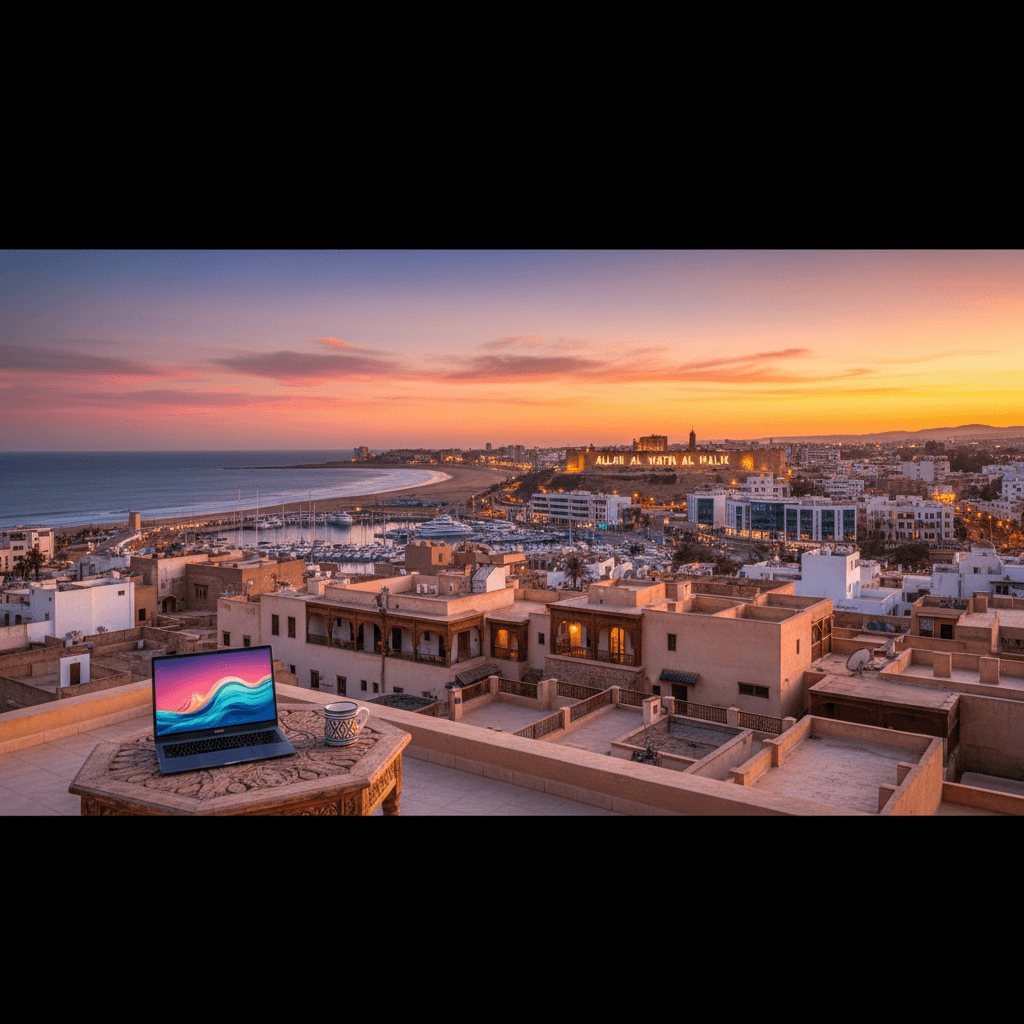
Tangier is a city of layers, shifting between the gritty romance of its past and a polished, modern future. For decades, it was an "International Zone," a lawless playground for spies, beatniks, and eccentric expats. You still feel that ghost of bohemian rebellion today, but it's now tempered by a massive wave of Moroccan investment. It isn't as polished as Lisbon or as nomad-saturated as Taghazout, and that's exactly why it appeals to people who want a bit of edge with their morning espresso.
The city sits right on the tip of Africa, looking across the Strait of Gibraltar toward Spain. On a clear day, you can see the European coast from the Kasbah walls. That proximity creates a unique psychological space; you're in Morocco, but the Mediterranean influence is heavy. The pace here is faster than the sleepy surf towns down south, yet it lacks the exhausting, high-octane chaos of Marrakech. It’s a place for people who want to work in a cafe overlooking the sea, then spend their evening getting lost in a labyrinth of limestone-washed alleys.
Life in the Interzone
Living here means balancing two worlds. Most nomads find themselves gravitating toward the modern pulse of the city near Ibn Battuta Mall or Tanger City Mall. This is where you’ll find the reliable fiber optic lines, the high-rise apartments with elevators, and the big supermarkets. It’s comfortable, functional, and very easy to navigate. However, the soul of the city remains in the Medina and the hilltop Kasbah.
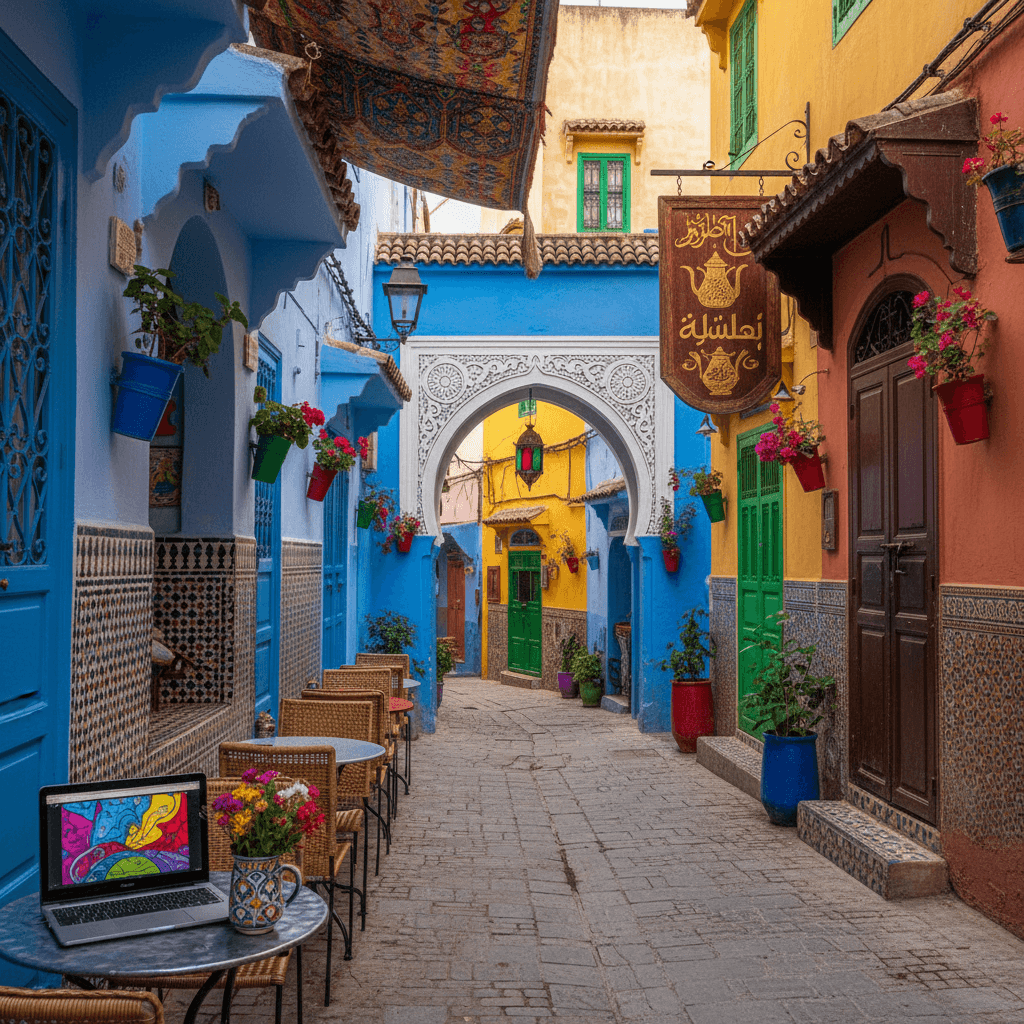
The emotional experience of Tangier is often tied to its geography. Walking from the Grand Souk down toward the beach promenade feels like traveling through time. You’ll pass Berber women selling bundles of mint and goat cheese, then five minutes later, you’re in a sleek French-style patisserie. Expats often say the city takes a few weeks to "click." Once you stop looking like a tourist, the persistent hustlers in the Medina tend to leave you alone, and you become part of the local furniture.
What to Expect on the Ground
Tangier is affordable, but prices can swing depending on how "local" you’re willing to go. While there isn't a massive, dedicated coworking hub like you'd find in Bali, the cafe culture is elite. You'll see locals and expats alike parked at tables for hours. Just keep in mind that the Medina’s thick stone walls are notorious for eating WiFi signals, so always test the connection before committing to a rental.
- The Social Scene: It’s more organic here. You won't find five nomad meetups a week. Instead, you'll meet people at the Sunday farmers market near San Andrés Church or while grabbing a mint tea at Cafe Hafa, a legendary spot where Mick Jagger and William Burroughs used to hang out.
- The Logistics: You’ll mostly get around on foot or via the "Petit Taxis." These are small blue cars that zip through traffic. A ride across town usually costs between 10 and 30 MAD. If you need to go further, the ONCF high-speed train is a game changer, connecting you to Casablanca in just over two hours.
- The Weather: It’s a Mediterranean climate, meaning the summers are hot but breezy, and the winters are surprisingly damp. If you’re visiting between November and March, make sure your apartment has a heater; those old stone buildings get chilly.
Monthly Cost of Living Tiers
Tangier remains one of the best value-for-money spots in North Africa. Most solo nomads find they can live very well on a mid-range budget without feeling like they're pinching pennies.
Budget: $800 to $1,200
- Housing: A simple studio in the Medina or a slightly older apartment further inland for 2,000 to 4,000 MAD.
- Food: Heavy reliance on street food like tagines and harira soup for 20 to 50 MAD, plus shopping at the local souks.
- Transport: Walking and the occasional local bus for 5 MAD.
Mid-Range: $1,200 to $2,000
- Housing: A modern 1-bedroom apartment near the malls or the Malabata area for 4,000 to 7,000 MAD.
- Food: A mix of home cooking and mid-range cafes where a meal costs about 60 to 100 MAD.
- Transport: Frequent Petit Taxis and the occasional Careem or Yassir ride.
Comfortable: $2,000+
- Housing: High-end apartments with sea views, modern kitchens, and gym access for 9,000+ MAD.
- Food: Regular dining at upscale spots like those along the beach promenade, where dinner might be 200 to 300 MAD.
- Extras: Weekend trips to Chefchaouen, first-class train travel, and private tours.
A Budget-Friendly Mediterranean Base
Tangier is one of the more affordable coastal entries for digital nomads in Morocco, especially compared to the skyrocketing prices in Marrakech. You get a unique mix of Spanish influence and Moroccan tradition without the heavy "tourist tax" found further south. Most nomads find they can live a high-quality life here for a fraction of what they would spend in Southern Europe, which is just a short ferry ride across the strait.
The local currency is the Moroccan Dirham (MAD), and while the city is becoming more modernized, cash is still king in the souks and smaller cafes. You'll want to keep a mix of coins for taxis and larger bills for your weekly grocery runs at the Grand Souk.
Monthly Budget Tiers
- The Budget Nomad ($800 to $1,200 USD): This lifestyle involves renting a traditional apartment in the Medina, eating primarily street food like harira or tagines, and using the local bus system. You'll be living like a local and keeping your overhead low.
- The Mid-Range Professional ($1,200 to $2,000 USD): This is the sweet spot for most expats. It covers a modern one-bedroom apartment near Tanger City Mall, a mix of cooking at home and dining at mid-range cafes, and frequent use of Petit Taxis.
- The High-End Expat ($2,000+ USD): At this level, you're looking at a premium apartment in the Malabata area with sea views, regular dinners at upscale restaurants, and a dedicated budget for weekend trips to Chefchaouen or Assilah.
Housing and Neighborhood Costs
Your biggest variable will be where you choose to drop your bags. The Medina is charming and cheap, but the thick stone walls are notorious for killing WiFi signals. Most remote workers now gravitate toward the modern districts where the infrastructure is more reliable.
Malabata / Near Ibn Battuta Mall
- Rent: MAD 3,000 to 6,000 ($300 to $600 USD) for a modern studio or one-bedroom.
- Vibe: Contemporary, close to supermarkets, and reliable 4G coverage.
- Best For: Nomads who need high-speed internet and proximity to gyms and malls.
The Medina
- Rent: MAD 2,000 to 4,000 ($200 to $400 USD) for traditional houses or shared riads.
- Vibe: Intense, historic, and loud. It is the heart of the city's culture but can be frustrating for work.
- Best For: Short stays or those who don't mind working from cafes.
Daily Expenses and Lifestyle
Eating out is remarkably cheap if you stick to local spots. A filling bowl of harira soup or a street-side snack will only set you back MAD 20 to 50. If you prefer working from a cafe, expect to pay around MAD 50 for a day's worth of coffee and a seat with a plug point. While Tangier lacks the massive coworking hubs of Marrakech, the cafe culture is welcoming to laptop users.
Getting around is easy on the wallet too. The blue Petit Taxis are the standard way to move between neighborhoods, usually costing between MAD 10 and 30 per trip. Just make sure the driver turns on the meter, or agree on the price before you close the door. For longer hauls, the ONCF train system is excellent; a first-class ticket to other major cities usually falls between MAD 250 and 350.
Connectivity is your other main cost. Expats recommend grabbing a SIM card from Maroc Telecom or Inwi immediately. You can get a solid data package with 20GB to 50GB for roughly MAD 100 to 200, which serves as a vital backup when your apartment WiFi inevitably flutters.
The Digital Nomad: Malabata and the Modern Center
If your priority is a stable connection and a space where you can actually take a Zoom call without background chaos, head straight for the modern districts near Ibn Battuta Mall and Tanger City Mall. This area, often referred to as Malabata, feels more like a Mediterranean European city than a traditional Moroccan outpost. It’s where most remote workers land because the infrastructure just works.
- Rent: Expect to pay between MAD 3,000 and 6,000 ($300 to $600 USD) for a modern one bedroom apartment.
- Connectivity: Fiber optic internet is common here, with speeds reaching 35 to 70 Mbps.
- Work Cafe Scene: Since dedicated coworking spaces are still popping up, nomads usually camp out in the cafes near the beach promenade. Places like Cappuccino or the cafes inside the malls offer reliable power outlets and a decent work environment for the price of a coffee.
The vibe here is functional. You’re within walking distance of the beach and large supermarkets like Carrefour, which makes daily life seamless. While it lacks the "old world" charm of the medina, you won't be fighting thick stone walls for a WiFi signal.
The Solo Traveler: The Medina
For those who want to wake up to the sound of the Adhan and the smell of fresh bread, the Medina is the only choice. It’s a maze of history where you can find a room in a traditional riad for as little as MAD 2,000 ($200 USD) if you’re staying long term and know how to haggle. It’s perfect for solo travelers who want to be in the thick of the action near the Grand Souk.
Living here means trading convenience for culture. The streets are narrow, Google Maps will definitely fail you, and the "hustle" from local guides can be persistent. Most solo travelers find that after a week, the locals recognize them and the pestering stops. Just be aware that the thick stone walls of these ancient buildings are notorious for killing WiFi signals; always ask for a speed test before signing a lease.
The Long-Term Expat: The Kasbah
Perched at the highest point of the city, the Kasbah is where the creative expat community tends to cluster. It’s quieter and more scenic than the lower Medina, offering sweeping views of the Strait of Gibraltar. It’s a bit more "boutique" and feels more exclusive, which is reflected in the slightly higher prices for renovated homes.
Expats love the Kasbah because it’s walkable and feels like a village within a city. You’ll find small art galleries and upscale cafes like Le Salon Bleu. The downside is the physical toll; those hills are steep, and getting groceries or a Petit Taxi usually involves a serious hike. It’s best for those who don’t mind a slower pace and have a bit more room in their budget for a scenic terrace.
Families: The California District and Val Fleuri
Families moving to Tangier usually skip the tourist centers entirely. The California district (named for its similar climate and hilly terrain) and Val Fleuri are the go-to spots. These neighborhoods are residential, quiet, and closer to international schools and private clinics. You’ll find larger villas and modern apartment complexes with multiple bedrooms.
- Rent: Larger family apartments start around MAD 7,000 ($700 USD) and go up significantly for villas.
- Transport: You’ll likely want a car here, though the Careem and Yassir apps work well for getting into the city center.
- Amenities: These areas are close to green spaces and the San Andrés Church area, which hosts popular farmers markets on Thursdays and Sundays for fresh Berber produce.
While these neighborhoods are less "exciting" for a weekend visitor, they offer the security and space that families need. You’re far enough from the medina to avoid the crowds but close enough to the Tanger City Center for weekend shopping and movies.
The Connectivity Reality Check
Tangier is currently in a transitional phase. While it doesn't yet have the established nomad infrastructure of Marrakech or the surf-and-work ease of Taghazout, it's catching up fast. Most nomads find that the internet situation depends entirely on where they choose to drop their bags. In the modern districts like Malabata or near Ibn Battuta Mall, fiber optic connections are becoming the standard, with speeds consistently hitting 35 to 70 Mbps.
The story changes when you enter the Medina. Those beautiful, thick stone walls that keep your room cool in July are the natural enemy of a stable WiFi signal. If you're eyeing an atmospheric Riad for a long term stay, don't take the host's word for it. Run a speed test in the specific room where you plan to work. Many travelers find the signal drops to a crawl or disappears entirely once you move a few feet from the router.
Coworking and the Cafe Culture
You won't find a massive selection of dedicated coworking hubs here yet. Unlike the famous SunDesk down south, Tangier relies heavily on its historic and modern cafe culture. For a focused work session, head toward the newer parts of town. The cafes surrounding Tanger City Mall are popular with the local expat community because they offer reliable power outlets and enough space that you won't feel rushed after your second espresso.
If you need a formal office environment, expect to pay around MAD 1,500 per month (roughly $150 USD), which tracks with the national average for professional spaces in Morocco. However, most remote workers here prefer the "cafe hop" method. Many local spots offer what is essentially a day pass for the price of a few drinks, usually around MAD 50. It's a low pressure way to work while staying mobile.
Mobile Data and Hotspotting
Because fixed line internet can be hit or miss in the old city, a solid mobile backup is non negotiable. Local SIM cards are cheap and the 4G coverage is surprisingly robust once you're outside the deepest alleys of the souks. You can pick up a SIM from Maroc Telecom or Inwi at the airport or any small shop in the city center.
- Initial Cost: Usually MAD 20 to 50 for the SIM card itself.
- Data Packages: Expect to pay MAD 100 to 200 for 20GB to 50GB of data.
- Top Ups: You can buy scratch cards (recharges) at almost any "Hanout" (corner store) in the city. Just look for the provider's logo on the door.
Expats frequently recommend using Maroc Telecom for the best overall coverage if you plan on taking day trips to the Kasbah or nearby coastal towns. If your home internet flickers out, these 4G speeds are usually plenty fast enough to tether your laptop for a Zoom call without much lag.
Digital Nomad Logistics
Managing your finances while working from Tangier has become much easier with the rise of digital banks. Most nomads use Wise or Revolut to handle currency conversions and ATM withdrawals. While the modern malls and upscale restaurants in the Malabata area accept cards, Tangier is still a cash heavy society. You'll need Moroccan Dirhams (MAD) for your petit taxi rides, street food in the Grand Souk, and most small cafe tabs.
For communication, download WhatsApp if you haven't already; it's how everyone from your landlord to your tour guide will coordinate with you. If you're struggling with the language barrier in the more traditional neighborhoods, Google Translate with the offline French and Arabic packs downloaded is a lifesaver for reading menus and signs.
Staying Safe in the White City
Tangier has shed its old reputation as a gritty playground for international spies and smugglers, evolving into a city where digital nomads generally feel secure. Violent crime is remarkably low. Most people find the atmosphere in the modern districts like Malabata or near Tanger City Mall to be as safe as any Mediterranean coastal city. You'll see locals and expats alike walking the beach promenade well into the evening.
The primary annoyance you'll face is the "hustle." In the Medina and around the Grand Souk, you might encounter unofficial guides or persistent vendors. They aren't dangerous, but they can be tiring. A firm, polite "La, shukran" (No, thank you) and continued walking usually does the trick. Avoid unlit, narrow alleys in the old city after dark, simply because it's easy to get disoriented in the maze-like streets where GPS often fails.
Solo female travelers often report feeling safe in populated areas, though catcalling can happen. Dressing a bit more modestly than you might in Spain or France, especially when exploring the historic Kasbah or the markets, helps minimize unwanted attention. Stick to the main thoroughfares at night and use apps like Careem or Yassir for rides instead of hailing random cars if you're feeling unsure.
- Emergency Police: Dial 19
- Ambulance/Fire: Dial 15
- Common Scams: Be wary of "closed" street signs or people claiming a museum is shut to lead you to their cousin's carpet shop.
Healthcare and Medical Services
If you get sick, you're in good hands for most routine issues. Tangier has modern private clinics and hospitals concentrated near the city center that meet international standards. Expats and long term nomads typically prefer private facilities over public ones for faster service and a higher likelihood of finding English speaking staff.
Pharmacies are everywhere, marked by bright green neon crosses. They are highly professional and can handle minor ailments like "Tangier tummy" or respiratory infections without a doctor's visit. Most pharmacists speak French and some English. For anything serious, head to the modern medical clusters near the Ibn Battuta Mall area.
Practical Health Tips
- Water: Don't drink the tap water. Stick to bottled water like Sidi Ali or Ain Saiss, which you can find at any small corner store for about MAD 5-10.
- Insurance: Always carry a policy that covers medical evacuation. While local care is good for basics, specialized surgeries might require a quick trip across the strait to Spain.
- Food Safety: Street food in the Grand Souk is delicious and generally safe if it's cooked hot in front of you. Just be cautious with raw salads or pre-peeled fruit from street stalls.
- Prescriptions: Bring your essential meds in their original packaging. While many things are over the counter here, specific brands might differ.
Medical costs are quite reasonable compared to North America or Northern Europe. A standard consultation with a private GP might cost between MAD 200 and 400. Most facilities expect payment in cash upfront, so keep your receipts to claim back from your travel insurance later.
Getting Around Tangier
Tangier is a city of two halves, and how you get around depends entirely on which version of the city you're inhabiting that day. The historic center is a dense, vertical maze where your own two feet are the only viable engine. Once you move toward the beach or the modern districts near Tanger City Mall, the scale opens up, and you'll rely on the city's ubiquitous fleet of small taxis.
The Petit Taxi System
The turquoise-blue cars you see everywhere are "petit taxis." They are the lifeblood of local transport. These small vehicles are restricted to the city limits and are incredibly affordable, usually costing between MAD 10 and MAD 30 for a cross-town hop. Most nomads find them reliable, though there are a few unwritten rules to follow.
- The Meter: Always ask the driver to turn on the meter (the "compteur"). If they refuse, it's often easier to just hop out and grab the next one.
- Shared Rides: Don't be surprised if the driver stops to pick up another passenger heading in your direction. It's standard practice, and you'll each pay your own fare.
- Night Rates: After 9:00 PM, a legal surcharge (usually 50 percent) kicks in.
Ride-Hailing and Apps
While Uber doesn't operate here, the digital scene is catching up. You can use apps like Careem or Yassir to book rides. These are great if you're in a less central neighborhood or if you want to avoid the "meter dance" with taxi drivers. Expats recommend these apps for late-night airport runs or when you have heavy groceries from the Ibn Battuta Mall.
Walking the Medina and Kasbah
The Medina is a strictly pedestrian affair. The alleys are too narrow for cars, and even Google Maps often struggles with the 3D layout of the stairs and tunnels. Comfortable shoes with good grip are non-negotiable here, especially after a light rain when the stones become slick. If you're staying in the Kasbah, prepare for a workout; it's the highest point in the city, and the walk up from the Grand Socco will definitely hit your daily step goal.
Trains and Long-Distance Travel
For getting out of town, Tangier has some of the best infrastructure in Africa. The Tanger Ville rail station is modern and efficient. The Al Boraq high-speed train can get you to Casablanca in just over two hours.
- Tickets: Book via the ONCF app or website. First-class ONCF Al Boraq tickets to Casablanca usually run between MAD 230 and MAD 300.
- Ferries: The port in the city center (Tanger Ville) has high-speed ferries to Tarifa, Spain. It's a 35-60 minute ferry trip to Tarifa, Spain, making Europe a viable day trip.
- Airport: A taxi from Ibn Battuta Airport (TNG) to the city center is a flat rate, usually between MAD 100 and MAD 150.
Buses and Alternatives
The local Alsa buses are the cheapest way to move, with tickets at MAD 5. They cover the outskirts well, but they can get incredibly crowded during rush hour. For a more flexible vibe, some nomads rent scooters for around MAD 50 a day from local shops near the beachfront. It's a fun way to reach the Hercules Caves or Cape Spartel, though you'll need to be assertive to handle Tangier's somewhat chaotic traffic flow.
A Linguistic Crossroads
Tangier is a city where conversations jump between three or four languages in a single breath. Because of its history as an International Zone, the local linguistic flavor is different from what you'll find in Marrakech or Casablanca. You aren't just dealing with Arabic; you're dealing with a gateway to Europe that has absorbed Spanish, French, and English influences over decades.
The primary language spoken on the street is Darija, the Moroccan Arabic dialect. It's famously difficult for students of Modern Standard Arabic to understand because it incorporates so many loanwords. In Tangier, you'll notice a heavy Spanish lean to the dialect compared to the south. While you can get by with "Shukran" (thank you), learning a few local phrases like "Shnu smiytek?" (What's your name?) or "Kifash har?" (How much?) goes a long way in the Grand Souk.
The French and Spanish Influence
French remains the unofficial second language of Morocco. It's the language of administration, banking, and higher education. If you're heading to the modern areas near Ibn Battuta Mall or Tanger City Mall, you'll find that most signage and menus are in French and Arabic. If you speak even basic French, your life will be significantly easier when dealing with landlords or official paperwork.
Spanish is surprisingly prevalent here due to the city's proximity to the coast of Spain. Many older locals in the Medina or the Kasbah grew up watching Spanish television, and you'll often hear "Hola" before "Bonjour." If you’re a nomad coming from a stint in Iberia, you might find your Spanish more useful in Tangier than in any other Moroccan city.
English for Nomads
English is definitely on the rise, especially among the younger generation and the tech-savvy crowd. In modern cafes and international hubs like the Malabata area, English is common. However, once you step into the deep alleys of the Medina, English proficiency drops off quickly.
Expats recommend keeping a few tools ready to bridge the gap:
- Google Translate: Download the Arabic and French packs for offline use. The camera feature is a lifesaver for reading handwritten menus in small stalls.
- Careem or Yassir: These ride-hailing apps remove the need to haggle over prices in Darija. You set your destination in the app, and the price is fixed, usually between MAD 10 and 30 for short trips.
- WhatsApp: This is the primary way everyone communicates. Whether you're talking to a landlord about a MAD 5,000 apartment or a tour guide, expect to use voice notes and text rather than email.
Communication Etiquette
Moroccans are generally very patient with language learners. Even a butchered "Salam Alaykum" (Peace be upon you) is seen as a sign of respect. When you're in the souks, communication is often theatrical. Haggling is a conversation, not a confrontation. If a vendor offers a price that seems high, a polite "La, shukran" (No, thank you) and a smile are better than an awkward silence.
Digital nomads often find that the "hustle" in Tangier is more manageable if you walk with purpose and avoid making eye contact with every person offering "the best terrace view." If someone is being overly persistent, a firm "Safii" (Enough/It’s over) usually does the trick. It’s a powerful word that signals you aren't a fresh tourist and you know how things work in the city.
Staying Connected
For actual data communication, don't rely on your home roaming plan. Most travelers grab a local SIM immediately. Maroc Telecom and Inwi are the big players. You can get a SIM card for about MAD 20 and load it with 20GB to 50GB of data for MAD 100 to 200. While 4G is reliable in the modern city center, the thick stone walls of the Medina act like a Faraday cage. If you're planning to work from a traditional Riad, always ask for a speed test before committing to a long stay.
The Mediterranean Sweet Spot
Tangier sits right where the Atlantic meets the Mediterranean, creating a microclimate that’s much more forgiving than the scorching interior of Morocco. While cities like Marrakech can feel like an oven in the summer, Tangier benefits from constant sea breezes that keep the air moving. Most nomads find the sweet spot for a visit falls between April and June or during the transition months of September and October. During these windows, you’ll get clear skies and temperatures sitting comfortably between 20°C and 25°C, perfect for working from a cafe terrace without breaking a sweat.
Summer: Beach Vibes and Crowds
July and August bring the heat, with temperatures often climbing toward 35°C. It’s rarely unbearable because of the coastal location, but this is also when the city gets packed. Local tourists from Casablanca and European expats flood the beach promenades and the Malabata area. If you’re planning to stay near the Tanger City Mall or the beach during these months, expect higher prices for short term rentals and a lot more noise. It’s a great time for swimming, but the Medina can feel a bit claustrophobic when the sun is beating down on those narrow stone alleys.
Winter: The Rainy Season
From November through March, Tangier enters its wet season. Being in the north, it gets significantly more rain than the southern surf towns. Temperatures hover between 10°C and 18°C, which sounds mild until you realize that many traditional Moroccan houses in the Kasbah or Medina aren’t built with central heating. Expats often complain about the dampness during these months. If you’re visiting in winter, prioritize a modern apartment in the newer parts of town where you’re more likely to find climate control and better insulation.
Seasonal Planning for Nomads
To help you plan your budget and wardrobe, here’s what to expect across the calendar:
- Spring (April to June): The best balance of weather and price. Expect to pay around $400 to $600 for a decent one bedroom. The hills around the city are green, and the Grand Souk is overflowing with fresh spring produce. You can also find local specialties at the farmers market near San Andrés Church on Sundays [6].
- Summer (July to August): Peak season. It’s hot and social. If you aren't a fan of crowds or loud beach clubs, you might find the city a bit overwhelming during this stretch.
- Autumn (September to October): The "Second Spring." The seawater is still warm enough for a dip, but the tourist crowds have thinned out. It’s the ideal time for long walks through the Marshaan neighborhood.
- Winter (November to March): The quietest time. You can find great deals on long term stays, sometimes as low as $300 a month in the Medina, but you’ll need a thick sweater and a raincoat.
The Wind Factor
One thing you won't see on every weather app is the "Chergui." This is a strong, persistent easterly wind that can blow through the Strait of Gibraltar for days at a time. It’s most common in the summer and can make the beach a bit sandblasted. If you’re a light sleeper, try to find a place with sturdy windows. Locals are used to it, but for a remote worker trying to take a Zoom call on a balcony, it can be a bit of a surprise. Check the wind forecast on apps like Windy if you’re planning any ferry trips to Spain, as high winds can occasionally cause cancellations.
Connectivity and Tech Setup
Getting online is your first priority. While the medina is charming, its ancient stone walls are notorious for killing WiFi signals. Most digital nomads find that speeds in old riads fluctuate between 35 and 70 Mbps, but it's hit or miss. If your work depends on video calls, look for modern apartments in the Malabata area or near Tanger City Mall where fiber optic is standard.
- SIM Cards: Skip the airport lines and head to a Maroc Telecom or Inwi shop in the city. You can get 20GB to 50GB of data for roughly MAD 100 to 200 ($10 to $20). 4G coverage is excellent throughout the city center.
- Workspaces: Tangier doesn't have a massive dedicated coworking scene like Marrakech. Most remote workers treat the cafes near Ibn Battuta Mall as their office. They're used to laptops, have plenty of outlets, and a day pass (often just the price of a few coffees) usually runs around MAD 50.
Budgeting and Banking
Tangier is incredibly affordable compared to European coastal cities. For a solo nomad, a mid-range lifestyle usually costs between $1,200 and $2,000 per month. This covers a modern one bedroom apartment, eating out frequently, and taking taxis everywhere.
- Rent: Expect to pay MAD 3,000 to 6,000 ($300 to $600) for a well equipped flat in the modern districts. Medina rooms can go as low as MAD 2,000, but you'll sacrifice comfort and bandwidth.
- Daily Costs: A tagine or bowl of harira at a local spot costs MAD 20 to 50. If you prefer upscale dining or "Western" style cafes, budget MAD 150 to 300 per meal.
- Money: Use Wise or Revolut to avoid heavy bank fees. ATMs are everywhere, and while cards are fine at the malls and supermarkets, you'll need cash for the Grand Souk and petit taxis.
Navigation and Safety
The city is split between the walkable, winding alleys of the Kasbah and Medina, and the wide, car friendly boulevards of the new city. You won't find Uber here. Instead, download Careem or Yassir for ride hailing, or hail a blue petit taxi. These small cars are metered, but it's smart to ensure the driver turns it on; most rides within the city cost MAD 10 to 30.
Safety is rarely an issue for seasoned travelers. Violent crime is very low, though "hustling" in the medina is a local sport. If a stranger offers to show you a "shortcut" or a "special market," a polite but firm "No, thank you" or "La, shukran" usually does the trick. Solo female travelers generally report feeling safe, especially in the more modern neighborhoods, though dressing modestly in the medina helps avoid unwanted attention.
Language and Local Customs
You'll hear a mix of Darija (Moroccan Arabic), French, and Spanish. English is common in the malls and hotels, but it drops off quickly in the residential areas. Keep Google Translate handy for reading menus or chatting with vendors. A few phrases go a long way: "Shnu smiytek?" (What's your name?) and "Kifash har?" (How much?) will earn you some smiles.
Remember that Friday is a holy day. Many shops in the medina close in the afternoon for prayers. When visiting someone's home, always remove your shoes at the door. If you're shopping in the souks, haggling is expected, but keep it friendly; it's a social interaction, not a battle.
Visa and Logistics
Morocco is generous with its entry requirements. Most travelers get 90 days visa free on arrival. There isn't a specific digital nomad visa yet, so if you plan to stay longer, you'll likely need to do a "border run" to Spain via the ferry or apply for a residency permit if you're settling in for the long haul. The ferry to Tarifa or Algeciras is a great weekend escape and takes less than an hour.
Need visa and immigration info for Morocco?
🇲🇦 View Morocco Country GuideHidden Gem
Worth the effort
Monthly Budget Estimates
More cities in Morocco
Imsouane
🇲🇦 Morocco
Ouarzazate
🇲🇦 Morocco
Essaouira
🇲🇦 Morocco