Tamraght
🇲🇦 Morocco
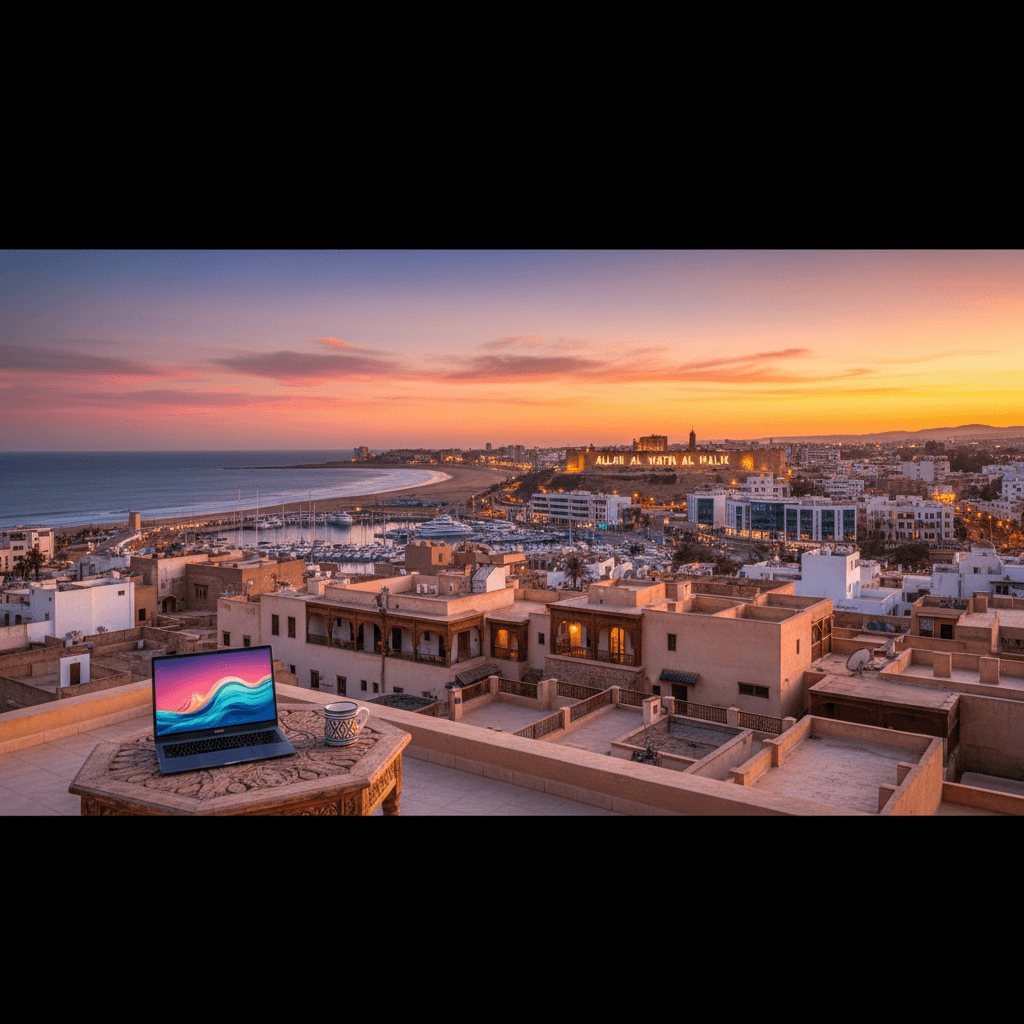
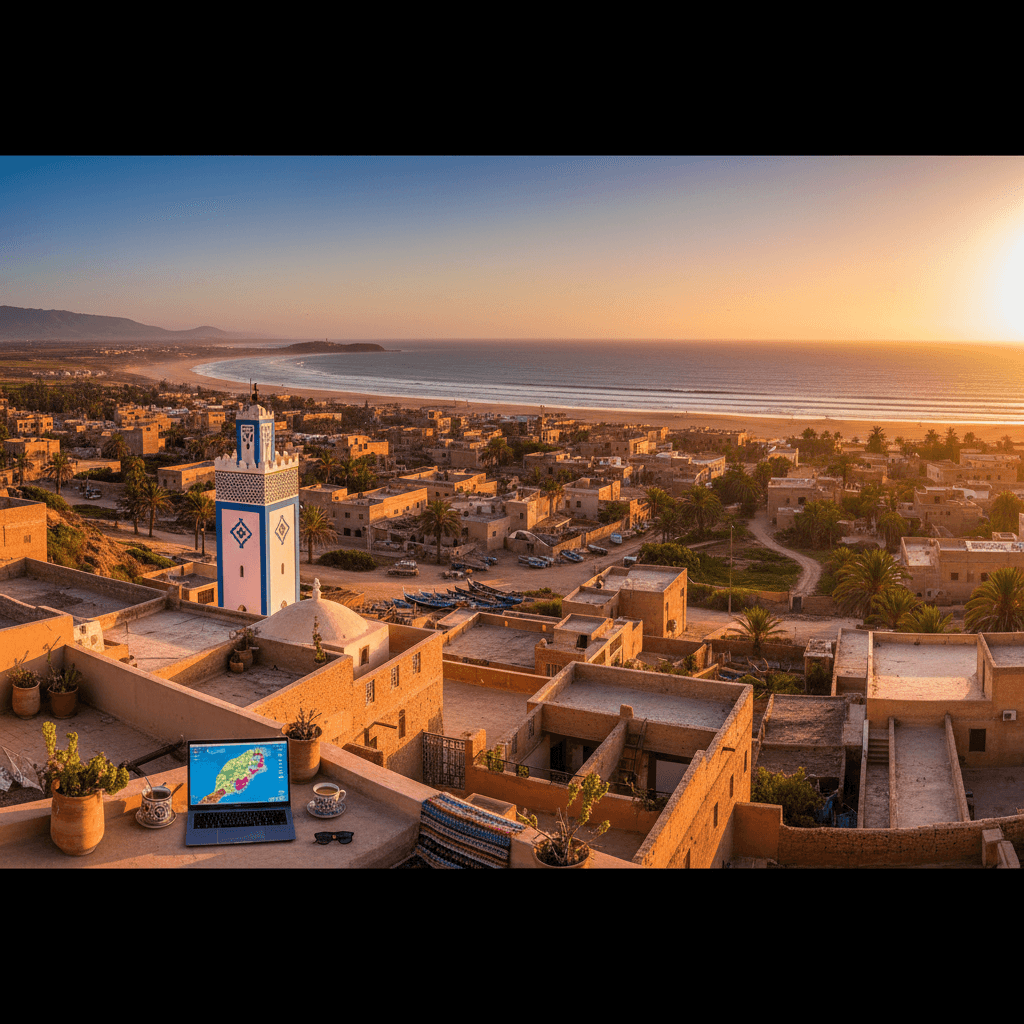
Tamraght isn't trying to impress you. That's, honestly, a big part of the appeal. It's a small surf village wedged between Agadir and Taghazout on Morocco's Atlantic coast and it moves at its own pace, dirt roads and all. You'll smell the salt air before you see the ocean, hear the call to prayer echo off whitewashed walls and watch locals carry bread home from the communal oven while a German nomad taps away on a laptop outside Hey Yallah café. These two worlds coexist here without much friction, which is surprisingly rare.
The vibe is low-key in a way that actually sticks. Most nomads who come for a month end up staying three, not because there's so much to do, but because the pace gets into your system. Mornings smell like argan oil and coffee, afternoons are for surfing Banana Beach or working from a rooftop at Kasbari House, evenings drift toward Pueblo Social Club or Le Petit Kawa with mint tea until midnight.
Still, it's not all golden hour photos and cheap tagines. Power cuts happen, sometimes mid-video call, the roads in Tamraght Village are unpaved and dusty when it's dry and muddy when it rains and rents have climbed enough to price out some locals, which creates a real tension underneath the postcard surface. Nightlife is basically nonexistent, you're heading to Taghazout or Agadir if you want anything past midnight.
What makes Tamraght different from other nomad spots is the community density. It's a small place, so you actually run into people repeatedly, at the Unplugged Social Club dinners, at the weekly Hey Yallah market, in the WhatsApp groups that organize everything from surf sessions to beach cleanups. You build a social life faster here than in a city three times the size.
The cost of living is genuinely low. Budget travelers get by on 5,000 MAD ($500) a month, mid-range nomads spend 7,000 to 12,000 MAD ($700 to $1,200) with coworking and eating out factored in and even a comfortable setup with a beachfront apartment and daily activities rarely breaks $1,500. Cash is king here, ATMs are limited, so plan accordingly.
Tamraght is, honestly, one of the more affordable places you can base yourself on the Atlantic coast without feeling like you're roughing it. Most nomads land somewhere between $800 and $1,200 a month for a comfortable setup and that includes rent, food, coworking and enough surf sessions to justify the move.
Rent is the biggest variable. A basic studio in Tamraght Village runs 2,800 to 3,600 MAD ($280 to $360), the beachfront spots in Lower Tamraght push closer to 4,000 to 5,000 MAD ($400 to $500) and if you want ocean views with AC that actually works, budget 6,000 MAD ($600) and up. Prices have crept up over the past few years and locals feel that squeeze more than nomads do.
Food is cheap, sometimes weirdly cheap. A tagine lunch from a street spot runs 10 to 20 MAD ($1 to $2), a sit-down meal at a café like Surf and Friends is around 50 MAD ($5), a proper restaurant dinner lands at 80 to 100 MAD ($8 to $10). Beachfront dining can hit 200 MAD ($20) and up, it's fine, but you're mostly paying for the view. Cash is king here, don't assume anywhere takes cards.
Coworking is reasonably priced. Kasbari House and Manzili Surf House both charge 50 MAD for a half-day or 80 MAD for a full day, with solid WiFi hitting 100+ Mbps. Zen Den runs 1,200 MAD a month ($120) if you want a dedicated membership, cafés like Hey Yallah and Daydream work fine for free if you're buying coffee anyway.
Getting around costs almost nothing. Short taxi hops are 6 to 10 MAD, a scooter rental runs about 50 MAD a day and the boardwalk to Taghazout is a free 3-mile walk. Agadir Airport transfers via private car run around 300 MAD ($30), turns out that's often the easiest option if you're arriving late.
Quick Budget Breakdown
- Budget tier: ~5,000 MAD/month ($500), street food, shared housing, café WiFi
- Mid-range tier: 7,000 to 12,000 MAD/month ($700 to $1,200), private studio, coworking, eating out regularly
- Comfortable tier: 15,000+ MAD/month ($1,500+), beachfront apartment, daily activities, no budget stress
Tamraght splits into two distinct zones and honestly, which one suits you depends entirely on why you're here and how much noise you can tolerate at 7am when the surf crowd starts moving.
Nomads & Solo Travelers: Tamraght Village
This is the one. The upper village is where most long-term nomads land, drawn by cheap rent, narrow streets that smell faintly of woodsmoke and cumin and a community that doesn't feel manufactured. Studios run 2,800 to 3,600 MAD a month, which is genuinely hard to beat for a coastal location anywhere in Morocco.
The dirt roads are a real thing, not a romantic quirk. They're dusty in summer, muddy after rain and your shoes will show it. Still, the tradeoff is proximity to cafés like Hey Yallah and Daydream where you can actually work, plus a social scene built around WhatsApp groups, Unplugged Social Club dinners and people who actually talk to each other.
- Best for: Remote workers, budget-conscious solo travelers, long stays
- Rent: 2,800 to 3,600 MAD/month for a studio
- Vibe: Quiet, local, community-driven
- Watch out for: Power outages, unpaved roads, cash-only everything
Expats & Families: Lower Tamraght (Beachfront)
Lower Tamraght is, turns out, a different world from the village above it. You're on the boardwalk, you can walk to Banana Beach and the cafés have ocean views instead of dusty alleyways. Families and expats with a bit more budget tend to cluster here, paying 4,000 to 5,000 MAD monthly for the convenience.
Summers get crowded, the prices creep up and you'll hear more French and English than Darija. It's comfortable, it's walkable, it's not cheap, but most expats say it's worth it for the lifestyle.
- Best for: Expats, families, surfers who want beach access without thinking about it
- Rent: 4,000 to 5,000 MAD/month mid-range
- Vibe: Relaxed, social, slightly more tourist-facing
- Watch out for: Peak season crowds, higher prices, weirdly limited parking
One rule applies to both areas: avoid the remote outskirts after dark. Limited lighting, no foot traffic. It's not dangerous exactly, just uncomfortable and unnecessary.
Tamraght's internet situation is, honestly, better than the village's dusty roads and fishing-boat vibe would suggest. Speeds at dedicated coworking spots regularly hit 100+ Mbps, Kasbari House clocked at 104 Mbps by nomads who actually tested it, which is fast enough for video calls, large uploads and anything else you'd throw at it. That said, power outages happen, they're not constant but they're real, so don't build your workday around a single connection without a backup plan.
Get a Maroc Telecom SIM card on day one. The shop's on the main road through the village, you'll need your passport and top-ups are cheap and easy via the app. Inwi and Orange work too, though Maroc Telecom has the strongest 4G coverage along the coast. If you want to skip the physical SIM entirely, Airalo sells eSIMs that activate before you land.
Where to Actually Work
- Kasbari House: 50 MAD for a half-day, 80 MAD full day. Garden setup, solid WiFi, popular with longer-stay nomads.
- Manzili Surf House: Same pricing as Kasbari, AC café space, good for afternoon sessions when the heat gets oppressive.
- Atlas Wonders: Around $10 for a half-day, includes a smoothie, rooftop terrace access through Nomadico gets you 30% off.
- Hey Yallah, Daydream, Café Nour: Free WiFi, power outlets, coffee culture that doesn't rush you out. These are, turns out, where most nomads default on casual work days.
Drop-in café work costs almost nothing. Most nomads mix both, coworking spaces for focused deep work, cafés for lighter tasks or calls when the salt smell off the Atlantic and the sound of kids kicking footballs outside makes staring at spreadsheets feel absurd.
The one frustration worth naming: occasional outages can kill a session with no warning, frankly at the worst possible moment. Keep your phone's 4G hotspot ready and download anything time-sensitive before you need it. Weirdly, that's the whole contingency plan and it works fine.
Tamraght is, honestly, one of the safer spots you'll find on Morocco's Atlantic coast. Crime is low, locals are genuinely friendly and solo travelers including women report feeling comfortable walking the main roads at night. That said, petty theft happens in tourist-heavy areas, so keep your bag close around the beachfront in peak summer and don't wander the unlit outskirts after dark, common sense stuff that applies anywhere.
The village itself doesn't have any real no-go zones, it's small enough that you'll quickly get a feel for where things are. For nights out, most expats head to nearby Aourir or Agadir rather than stumbling home through dark dirt roads, which is the smarter call anyway.
Healthcare is where things get more limited. Tamraght has a local pharmacy for basics like antihistamines, rehydration salts and minor wound care, but that's about it. Anything more serious means a trip to Aourir, where there's an Emergency Medical Centre and a Medical Clinic that can handle things like rabies shots (free with your passport, weirdly straightforward). For dental work, specialist care or anything that actually worries you, Agadir is your destination, roughly 20 to 30 minutes by taxi.
Dial 19 for an ambulance. Response times to a small village like Tamraght aren't going to be fast, so travel insurance with medical evacuation coverage isn't paranoia, it's just practical.
A few things worth building into your routine:
- Pharmacy: Local Tamraght pharmacy covers everyday needs; stock up on anything specific before you arrive.
- Aourir clinics: Emergency Medical Centre and Medical Clinic for urgent care, vaccinations and GP-level treatment.
- Agadir: Centre Dentaire Sonaba for dental work; better-equipped hospitals for anything serious.
- Emergency number: 19 for ambulance services.
- Travel insurance: Get it. Medical evacuation coverage specifically, not just trip cancellation.
The surf culture here means injuries do happen, turned ankles on rocky breaks, reef cuts, the occasional wipeout. None of that's dramatic, but it does mean having a basic first aid kit in your accommodation isn't overkill. Most long-term nomads keep one, turns out it saves a lot of unnecessary taxi rides to Aourir at odd hours.
Tamraght is, honestly, one of the easier places to get around without a car. The village is small enough that your legs handle most of it and the 3-mile boardwalk connecting Tamraght to Taghazout is flat, well-worn and lined with the smell of grilling fish and salt air. Most nomads walk that stretch daily without thinking twice.
For anything further, petit taxis are your go-to. Short trips run 6-10 MAD, which is less than a dollar and drivers are generally straightforward about pricing. There's no Uber here, but the WinkTaxi app works for booking rides without the haggling, it's worth downloading before you need it at midnight.
Scooter rentals run around 50 MAD a day, which opens up Aourir, the surrounding coast and Paradise Valley without depending on anyone else's schedule. The dirt roads through the upper village are genuinely rough, though, so don't expect a smooth ride if you're heading away from the beachfront.
Getting to and from Agadir Airport (AGA) is where people get tripped up. Your options:
- Budget option: Bus into Agadir then a local taxi to Tamraght, total cost around €15, just plan for 90 minutes minimum
- Direct transfer: Private shuttle via transfers.ma runs around 300 MAD and drops you at the door
- Souk to Surf shuttle: Runs between Tamraght and Taghazout for 55-65 MAD, handy for day trips
Cash is, turns out, non-negotiable for almost all of this. Drivers don't do cards, rental guys don't do cards and the nearest reliable ATMs are at the Afriquia petrol station or Camping Atlantica. Pull out more than you think you need.
Agadir is 20 minutes south by taxi and genuinely worth the trip for grocery runs, banking or a night out with actual late-night options. Tamraght closes early, the village goes quiet well before midnight, so if you need the city, plan around that.
One honest note: the dirt roads through Tamraght Village get gritty and wind-blown in January and after rain they're a mess. Sandals are fine most of the year, closed shoes are smarter in winter.
Tamraght runs on Darija, the Moroccan Arabic dialect most locals speak day-to-day, with some Tamazight mixed in depending on who you're talking to. French fills the gaps and you'll hear it constantly in shops, pharmacies and anything administrative. English exists, but it's thinner than you'd expect, concentrated mostly in surf cafés, coworking spaces and spots that cater to nomads.
Don't assume English will carry you through every interaction. It won't. A local vendor at the market or a taxi driver in Aourir probably has zero and fumbling through a transaction without any Darija gets frustrating fast, honestly for both sides.
Learn a handful of phrases before you arrive, they cost nothing and locals genuinely respond differently when you try.
- Sba lkhir: Good morning
- Msa lkhir: Good evening
- Labas?: How are you? (also used as a general greeting)
- Shukran: Thank you
- Afak: Please
- Bshal hada?: How much is this?
Opening with "labas?" before asking for anything, whether directions or the price of tomatoes, shifts the whole tone of a conversation. Expats who've been here a while all say the same thing: greet first, transact second. Skip the greeting and you'll get served, but you'll also get the tourist price and a blank stare.
Google Translate's offline mode is, turns out, your most practical tool here. Download the Arabic and French language packs before you lose signal, because you will lose signal occasionally and trying to load a translation on patchy 4G outside Tamraght village is its own special misery.
In coworking spaces like Kasbari or Manzili and in cafés like Hey Yallah or Daydream, English is fine. Most staff in those spots are used to nomads, the conversation flows easily. Step outside that bubble though and the dynamic shifts pretty quickly, French becomes your bridge language, Darija earns you goodwill and English alone starts to feel like a liability.
Body language matters more than people expect here. A smile, eye contact and a relaxed pace go further than any translation app, especially in a village this small where you'll see the same faces every day.
Tamraght's climate is, honestly, one of its strongest selling points. A mild Atlantic breeze keeps temperatures reasonable most of the year, the kind of weather where you can sit outside at Café Nour with a mint tea and not think about the heat at all. That said, some months are genuinely better than others.
Spring and autumn are the sweet spots. March through May and September through November bring daytime highs around 24 to 26°C, light winds and surf conditions that draw people from across Europe. The water hovers between 17 and 21°C year-round, cool enough that most surfers wear a shorty, warm enough that you won't dread paddling out.
Summer is a different story. July and August push past 32°C, the beach fills up fast and the village loses some of its quiet charm under the weight of domestic tourism. Prices creep up, rooms book out, it's louder. Most long-term nomads either leave for those two months or hunker down in air-conditioned coworking spaces and wait it out.
Winter is underrated, turns out. January days sit around 20°C, which feels cold to Moroccans but mild to anyone arriving from northern Europe. Nights drop to around 11°C, so you'll want a layer and the wind off the Atlantic can be gritty and persistent. But the crowds are gone, rents soften and the surf is often at its most consistent.
Rainfall runs November through February and is minimal by most standards, a few wet days scattered across the month rather than sustained downpours. Rain on the tin-roofed cafés sounds dramatic, it passes within the hour.
Quick seasonal breakdown
- Best months: March to May, September to November (warm, uncrowded, great surf)
- Avoid if possible: July and August (hot, crowded, prices spike)
- Underrated window: December to February (quiet, cooler, cheaper)
- Water temperature: 17 to 21°C year-round
- Hottest recorded average: 32.8°C in August
- Coolest nights: Around 11°C in January
Skip August unless you have a specific reason to be there, the village is better when it's breathing at its own pace.
Cash is king here, full stop. ATMs exist at the Afriquia petrol station and Camping Atlantica, but they run out on weekends, so pull enough to cover a few days and don't count on your card working everywhere. A Wise card saves you on conversion fees, it's honestly the smartest thing you can pack alongside your passport.
For a SIM, head to the Maroc Telecom shop on the main road (bring your passport) and grab a local card with a data bundle. Top-ups are easy via their app or you can grab credit at any mini-market. Airalo works if you want an eSIM sorted before you land, though Maroc Telecom's 4G coverage around the village is, turns out, solid enough that most nomads don't bother with a backup.
Power cuts happen. Not constantly, but enough that you'll want to know about them before your laptop dies mid-call. Keep devices charged overnight and have your phone's hotspot ready, because coworking spaces like Kasbari and Manzili handle outages better than most apartments do.
Finding accommodation works differently depending on how long you're staying. For a week or two, Booking.com is fine, but for anything longer, Facebook groups and local agents will get you a real price on a studio in Tamraght Village, where a decent one runs 2,800 to 3,600 MAD a month without the tourist markup. Beachfront spots cost more and fill fast in summer, plan accordingly.
A few customs worth knowing before you arrive:
- Greetings: A simple "labas?" goes a long way with locals and shopkeepers.
- Dress: Modest clothing outside of beach areas is just respectful, not optional.
- Tipping: Around 10% at restaurants, a few dirhams for café service.
- Right hand: Use it for eating and handing things over, it's the standard expectation not a cultural quirk, ignoring it will make things awkward fast.
- Friday couscous: Don't schedule anything important on Friday afternoons.
French gets you further than English outside nomad cafés and even a handful of Darija phrases, "sba lkhir" in the morning, "shukran" when someone helps you, will genuinely change how people treat you. Download Google Translate offline before you go, Tamazight speakers in the village won't always have French either.
Need visa and immigration info for Morocco?
🇲🇦 View Morocco Country GuideEasy Landing
Settle in, no stress
Monthly Budget Estimates
More cities in Morocco
Imsouane
🇲🇦 Morocco
Ouarzazate
🇲🇦 Morocco
Essaouira
🇲🇦 Morocco