Takoradi
🇬🇭 Ghana
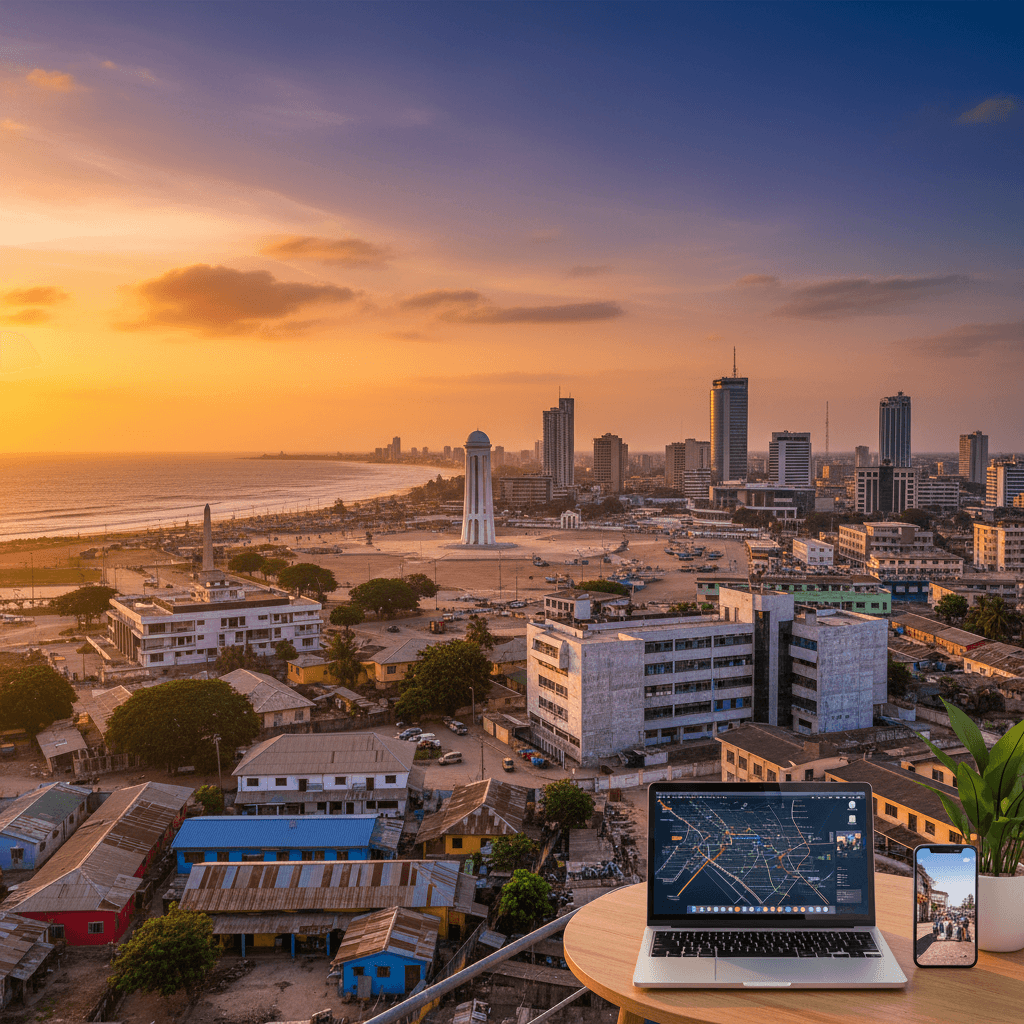
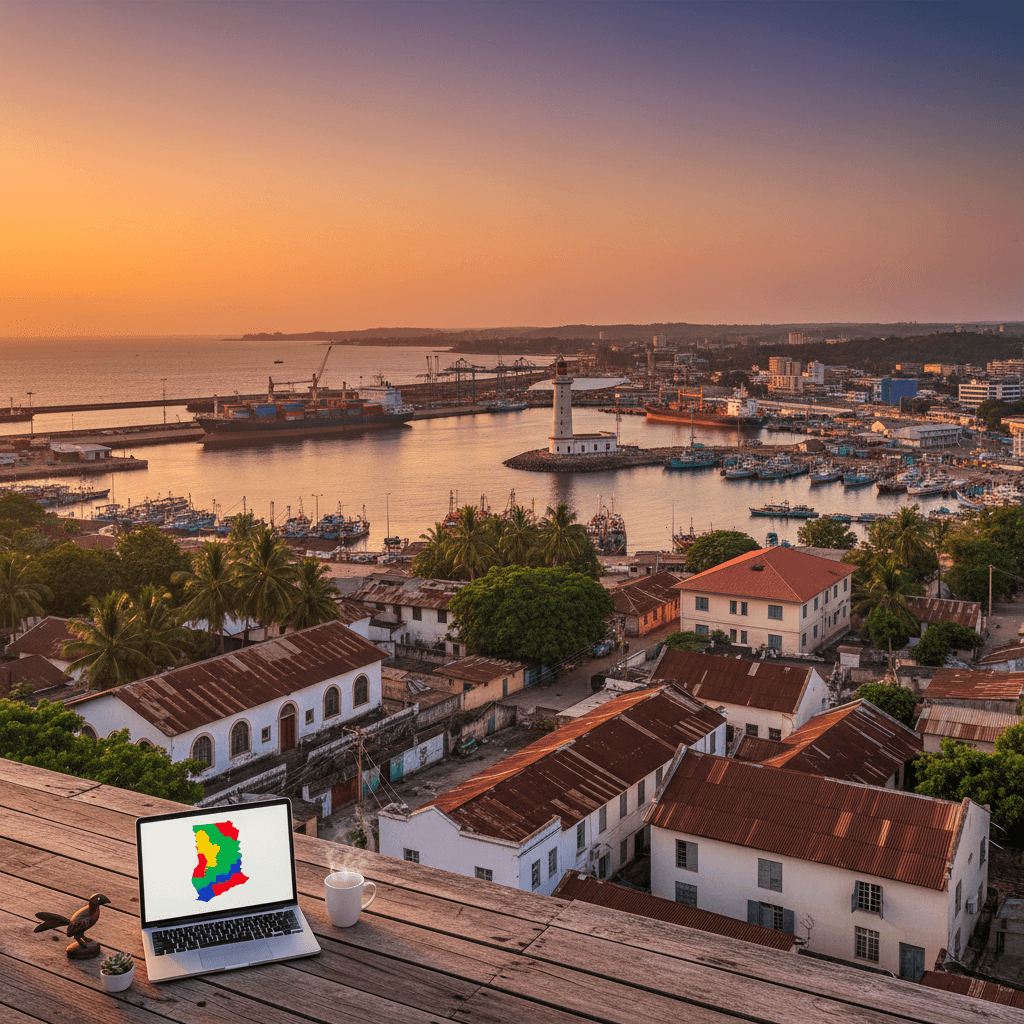
Takoradi feels slower than Accra, but not sleepy. You get harbor noise, diesel fumes, salt air and then a beach road cafe where someone’s laptop is open beside a plate of grilled fish, which, surprisingly, sums up the place pretty well. It’s a working port town with a friendly streak, a little rough around the edges and that mix keeps it interesting.
Don’t expect polished. Power cuts still happen, some streets feel patchy after dark and the high-end options are limited compared with bigger cities, but the tradeoff is real, lower costs, easier beach access and a pace that makes it easier to breathe. Honestly, that’s why a lot of nomads stay longer than planned.
Monthly cost: A single person can live here for about $684 with rent or around $450 before housing. Street lunches are cheap, a decent dinner out can still feel reasonable and if you’re not chasing imported groceries every week, your budget stretches further than it does in Accra.
Here’s the rough feel of the neighborhoods:
- Beach Road: Best for nomads and expats, with sea views, newer places and restaurants nearby, though rent can jump past $400.
- Airport Ridge: Quieter and more spacious, good for families or people who want less noise, but it’s pricier and less walkable.
- Chapel Hill: Lived-in and social, with nightlife close by and cheaper housing, though the infrastructure can be basic.
- Kwesimintsim, Anaji, Effiakuma: Better for budget hunters, with rentals around $200 to $500 and supermarkets nearby, but fewer expat comforts.
The internet scene is better than people expect, though it still isn’t flawless. Takoradi Innovation Center and Duapa Werkspace give you proper desks, WiFi and AC and cafes like The Coffee Corner work for lighter laptop days, but keep MTN or Vodafone data on your phone because backup matters here more than in polished remote-work hubs. That’s the real routine.
Safety is fairly calm by Ghana standards and most locals are warm if you greet them properly. English gets you far, Twi and Fante go even further and a simple Maakye or Mepa wo kyɛw gets a smile. The weather is hot and sticky for much of the year, then the rains hit hard, so bring patience, a fan and clothes that dry fast.
Takoradi is cheaper than Accra, but it isn’t dirt cheap. A single person spends about $684 a month with rent or roughly $450 without it and that number jumps fast if you want imported groceries, frequent taxis or a place near the sea. The heat, the salt air and the occasional power cut all nudge your budget in ways you’ll feel quickly.
Food is where a lot of nomads overspend, honestly. Street lunch can run about $5.67, a fast-food meal sits around $8 and a mid-range dinner for two is closer to $41, so if you eat local jollof, fufu, grilled fish and banku often, your monthly bill stays sane, but café habits and seafood dinners add up fast, weirdly fast.
- Budget range: $500 to $800 a month, usually local areas, trotro rides and lots of street food.
- Mid-range: $1,000 to $1,500 a month, better apartments, more taxis and regular meals out.
- Comfortable: $2,000+ a month, especially if you want Beach Road, upscale dining and backup power.
Rent swings by neighborhood and that’s where the real difference shows up. A one-bedroom in the city center averages about $227, while the outskirts are closer to $131, though Beach Road often starts above $400 and Airport Ridge pushes even higher because the compounds are quieter, newer and frankly more comfortable.
Beach Road
- Best for: Nomads and expats who want the sea nearby.
- Rent: Higher, usually $400+ for decent places.
- Feel: Modern enough, with restaurants and beach access, but not cheap.
Airport Ridge
- Best for: Quiet living and families.
- Rent: On the expensive side.
- Feel: Spacious and calm, though you’ll need transport for most things.
Chapel Hill
- Best for: Solo travelers and locals.
- Rent: More affordable.
- Feel: Livelier, with nightlife nearby and more basic infrastructure.
Utilities and internet usually land around $84 a month and mobile data is a smart backup because WiFi can wobble when the power does. MTN is the safer bet for most people and if you’re staying a while, a good SIM plan saves headaches when the connection suddenly drops mid-call and the ceiling fan goes silent.
Takoradi isn’t the place for reckless spending, but it’s also not a hardship post. Keep your expectations local, choose your neighborhood carefully and don’t pretend you need imported everything, because that’s how the budget disappears.
Takoradi is easy to like if you want beach air, lower rents and a pace that doesn’t chew you up. It’s also a bit messy, honestly, with power cuts, patchy sidewalks and a few too many stretches where the road noise and exhaust hang in the heat.
For nomads
- Beach Road: Best if you want sea access, better restaurants and a more polished feel, though rent can jump to $400+ and your wallet will feel it fast.
- Chapel Hill: Good for a more local, active base, with nightlife nearby and cheaper housing, but the infrastructure can be basic, so don’t expect slick apartment living.
- Kwesimintsim, Anaji, Effiakuma: The budget pick, with rooms and small apartments often around $200 to $500, plus easier access to supermarkets and everyday errands.
Most nomads land in Beach Road or one of the cheaper inland areas, then work outward depending on noise tolerance and budget. The coworking scene, turns out, is decent for a smaller city, with Takoradi Innovation Center, Duapa Werkspace and cafes like The Coffee Corner giving you a place to work when the fan’s just pushing warm air around.
For expats
- Beach Road: The smoothest option if you want restaurants, villas and easier access to the coast, though the prices are higher and the vibe skews more expat than local.
- Airport Ridge: Quieter, more spacious and popular with people who want a calm home base, but it’s less walkable and you’ll likely rely on Bolt or taxis.
Airport Ridge is the sort of place people choose when they’re done hearing horns at 6 a.m. and want a quieter street, cleaner compounds and fewer surprises. Beach Road is better if you like being near Captain Hook’s, The Dockside and a decent stretch of the city’s social life, though frankly you’ll pay for the convenience.
For families
- Airport Ridge: The safest bet for space and quiet, with a more suburban feel and less of the harbor buzz drifting in.
- Anaji: A practical middle ground, with newer development and improving housing options, weirdly appealing if you want value without going fully rough-and-ready.
Families usually prefer the calmer areas because the city can feel loud, hot and a little chaotic once the afternoon traffic starts piling up. You’ll still want backups for electricity and a reliable supermarket run, because no one enjoys making dinner by phone torch during an outage.
For solo travelers
- Chapel Hill: Best for meeting people, getting to bars quickly and staying close to local life without paying Beach Road prices.
- Beach Road: Better if you want comfort first and don’t mind a quieter, pricier base.
Solo travelers who want a social scene should skip the sterile compounds and stay somewhere with easy Bolt access and a few food spots within walking distance. Chapel Hill gives you that, plus the smell of grilled seafood, music spilling out late and enough street life to keep you from feeling stranded.
Takoradi’s internet is decent by Ghana standards, but it still has moods. Some days you’ll get a clean 50Mbps line and wonder why people complain, then the power flickers, the router sulks and you’re back on mobile data with the ceiling fan humming overhead.
MTN is the safer SIM to buy first, especially if you’re working remotely, though Vodafone can help as a backup. A lot of nomads keep both, because that’s how you avoid losing a call when one network gets patchy and honestly, the city still has enough outages that redundancy isn’t optional if your work matters.
Coworking
- Takoradi Innovation Center: The most obvious coworking pick, with WiFi, AC, kitchen access and parking and it’s the kind of place people use when they want fewer distractions and a proper desk.
- Duapa Werkspace: A practical option for freelancers who want a quieter setup, turns out, without paying Accra-level prices.
- The Coffee Corner: Good for a laptop morning, good coffee too and if you sit near the better plug sockets, you can usually get a few solid hours in before the room fills with chatter and spoon clinks.
Monthly internet plans around 50Mbps for about $48 are common enough now, which sounds fine until you remember the electricity can still wobble. Mobile data is cheap enough to keep you afloat, with MTN bundles starting tiny and bigger 30-day packages running around 300 GHS for roughly 130GB, so most remote workers treat fixed WiFi as the main line and data as insurance.
Where to Work
- Beach Road: Best if you want cafes, sea air and easier access to the nicer restaurants, but rent jumps fast and the area doesn’t pretend to be budget-friendly.
- Airport Ridge: Quiet, spacious and less frantic, though you’ll trade walkability for calm and spend more on housing.
- Chapel Hill: More local, more affordable and close enough to nightlife that the thump of music can sneak into your evening calls.
- Anaji, Effiakuma, Kwesimintsim: Better for saving money, with cheaper rooms and supermarkets nearby, but the setup is more basic and you’ll feel that in the little annoyances.
If you’re staying longer than a week, get a local SIM on day one and test your accommodation before you sign anything. A good apartment with backup power and strong MTN coverage beats a prettier place with dead air and no signal, because nothing ruins a deadline faster than warm, sticky darkness and a spinning upload bar.
Takoradi feels calmer than Accra and that helps, but don’t mistake calm for carefree. Petty theft happens, especially around crowded trotro stops, markets and darker side streets after sunset, so keep your phone tucked away and your day bag zipped, honestly that’s the main game here.
There isn’t a long list of neighborhoods locals warn people away from, which is reassuring, but you still want common sense at night. Beach Road and Airport Ridge feel the most comfortable for most expats, Chapel Hill is livelier and more local and the farther-out budget areas can feel a bit rough around the edges after dark.
Emergency basics are straightforward. Call 112 for emergencies or 191 for police and keep your phone charged because power cuts still happen. Pharmacies are widespread, which is helpful, but for anything serious, weirdly enough, many expats still head elsewhere for specialist care or better diagnostics.
Where people feel safest
- Beach Road: More expats, more visibility and easier access to decent restaurants and services, though rent jumps fast.
- Airport Ridge: Quiet, spacious and popular with families, but you’ll need transport for most errands.
- Chapel Hill: Good if you want a more local feel and don’t mind basic infrastructure.
For healthcare, Takoradi Hospital can handle routine consultations, minor injuries and basic treatment and that’s usually enough for day-to-day life. The staff are used to expats and travelers, though the system can feel slow, the waiting rooms can get hot and noisy and you may hear fans buzzing over the sound of people talking in the corridor.
Plan for backups. Bring any regular prescriptions with you, carry a small first-aid kit and keep a little cash aside for private clinics or taxi rides if you need faster help. For complex issues, serious infections, scans or anything that needs a specialist, people often travel out, because local care can be solid for basics but patchy for the rest.
Most nomads here settle into a practical routine, lock the apartment gate, avoid flashing valuables and use Bolt after dark instead of walking far. That approach works, frankly and it keeps Takoradi feeling relaxed instead of risky.
Getting around Takoradi is pretty easy once you accept that it runs on local timing, not app-polished efficiency. Traffic is usually calmer than Accra, but you’ll still hear honking, feel the heat bouncing off the asphalt and wait a bit longer than you think you should. Short trips add up.
Trotros are the cheap default and they’re what most people use for daily movement across the city and into nearby neighborhoods. A ticket usually runs about $1.18, which makes them hard to beat, but they’re cramped, noisy and you’ll sometimes sit while the conductor shouts stops over the engine and street noise.
Taxis are easier when you’re carrying a laptop bag, groceries or just don’t feel like sweating through your shirt. Negotiate before you get in, because the standard around town is roughly $10 for 8 km and if you don’t agree first, the price can magically rise at the end of the ride. Frankly, that’s part of the game.
Best ways to move around
- Trotros: Cheapest option for most trips, best when you’re not in a rush.
- Taxis: Good for direct rides, airport trips or evenings when you want the door-to-door convenience.
- Bolt: The ride-hailing app most people actually use, especially for airport runs and simple point-to-point rides.
- Walking: Fine in central Takoradi and around Beach Road, though the midday sun can be brutal and the sidewalks aren’t always friendly.
Bolt is the app to have on your phone, weirdly more useful than trying to flag everything yourself and it’s especially handy coming from Takoradi Airport, which sits only about 2 km from town. Uber doesn’t really show up here in any meaningful way, Yango may work sometimes and bike or scooter rentals are still limited enough that you shouldn’t count on them.
If you’re based on Beach Road or in the central parts of town, you can walk more than you’d expect, though the roads get dusty and the occasional generator hum or loud music spill from bars can make evenings feel busier than they look. Airport Ridge is quieter but less walkable, so most residents there still end up using Bolt or taxis. Honestly, that’s the trade-off.
For day-to-day life, a mixed setup works best, trotros for cheap local hops, Bolt for when it’s hot, late or raining hard on the tin roofs. If you’re staying longer, keep a local SIM with mobile data ready, because transport apps and driver calls both depend on it more than you’d like.
English gets you far in Takoradi, honestly, especially in hotels, offices, coworking spaces and anything tied to the port. Still, you’ll hear a lot of Twi and Fante in markets, trotro ranks and on the street, so a few local phrases go a long way and people usually light up when you try them.
Maakye means good morning and Mepa wo kyɛw is the polite one to keep handy when you need someone to slow down or repeat themselves. Locals are used to visitors, but they do notice effort, weirdly enough and a rough accent won’t bother anyone nearly as much as sounding impatient.
Face-to-face communication is warmer than email here and directness works better than polished corporate language. People may answer a message late, then pick up the phone and sort everything in two minutes, which, surprisingly, is often faster than trying to be neat about it.
- Best language for basics: English
- Useful local languages: Akan, especially Twi and Fante
- Best phrase to know: Mepa wo kyɛw, please speak slowly
- Nice greeting: Maakye, good morning
For digital nomads, the communication setup is decent but a little patchy. MTN and Vodafone are the safest bets for data and if your WiFi drops during a call, you’ll want a hotspot ready because power cuts and flaky connections still happen, frankly more than they should in a coastal city this size.
At places like Takoradi Innovation Center, Duapa Werkspace and even cafés such as The Coffee Corner, staff usually understand that you’re there to work, so don’t be shy about asking where the strongest signal is. The tone is relaxed, the pace is slower than Accra and people don’t tend to rush you, though you may have to repeat yourself once or twice over traffic noise, music or the hiss of a generator kicking in.
For calls and meetings, keep your audio gear simple and your expectations flexible. Headphones help, silence matters in shared spaces and if someone says they’ll “come now,” that can mean anything from five minutes to half an hour, so build in slack.
- Backup data: MTN or Vodafone SIM
- Call culture: More phone calls, fewer formal emails
- Work setup: Use headphones and a hotspot
- Local habit: Replies can be slower than you expect
If you’re polite, patient and willing to use a few local words, communication here is easy enough. Be clear, greet people properly and don’t bluff your way through directions, because that usually leads to a longer conversation, not a better answer.
Takoradi stays warm all year, usually sitting around 24 to 29°C and that means you’re rarely packing for real cold, just for humidity, sun and the occasional hard rain that drums on corrugated roofs. The dry stretch from December to April is the sweet spot for most visitors, especially December through March, when the air feels lighter, the skies stay clearer and beach days don’t get interrupted by muddy downpours.
Still, it gets hot. Really hot. By late February and March, the sun can feel like it’s sitting on your shoulders and if you’re renting without strong fans or backup power, afternoons can get miserable, honestly, especially when the breeze drops and the room turns still.
If you’re planning around weather, here’s the simple version:
- Best months: December to March
- Wettest stretch: May to October
- Roughest period: August to October
- Rain peak: October
The rainy season isn’t a dealbreaker, but it changes the feel of the city fast. Roads can get splashy and slow, gutters overflow and the sound of rain on metal can be constant for hours, which, surprisingly, some people love, though it does make commuting, laundry and even working from home a bit annoying.
Best Time by Traveler Type
- Beach lovers: December to March, when the coast is driest
- Budget nomads: May to October, if you don’t mind damp weather and fewer tourists
- Comfort-first expats: December to April, for lower humidity and easier day-to-day life
Beach Road and Cape Coast weekend trips are better in the dry months, because you can actually enjoy the sand instead of watching your sandals sink into wet grit. If you’re staying long-term, buy a proper rain jacket and a power bank, then thank yourself later, because outages and storms can arrive in the same afternoon.
My take, skip the humid peak unless you need a cheaper rental or you actually enjoy that heavy, tropical feeling. The best months are calmer, easier to work through and much better for getting around without arriving sweaty, soaked or both.
Takoradi is easy to like if you want a slower coast town with decent access to the basics, but it does come with real annoyances, especially power cuts and the occasional patchy internet day. Day one should be simple, get an MTN or Vodafone SIM, load a data bundle and set up MoMo for payments because cash still helps, though mobile money gets you through most everyday transactions.
The city runs on a practical rhythm. You’ll hear tro-tros coughing at intersections, taxi horns on repeat and rain hammering tin roofs when the wet season kicks in, so plan around noise, humidity and the fact that AC isn’t always reliable.
Money
- Budget: $500 to $800 a month in local areas if you’re eating street food and keeping rent low.
- Mid-range: $1,000 to $1,500 buys you more comfort, better apartments and more restaurant meals.
- Comfortable: $2,000 plus gets you Beach Road or other pricier spots, though honestly the jump in quality isn’t always dramatic.
- Rent: Roughly $227 for a 1BR in the center, closer to $131 on the outskirts.
Beach Road is the obvious pick if you want sea air, nicer buildings and quick access to places like Captain Hook’s, but it’s pricier and you’ll feel that in your rent fast. Airport Ridge is quieter and more spacious, Chapel Hill feels more local and a bit rougher around the edges and Kwesimintsim, Anaji and Effiakuma are where budget hunters usually start looking.
Getting set up
- SIM card: Buy MTN or Vodafone on arrival, around 300 GHS for a big data package.
- Internet: Home WiFi is improving, but keep mobile data as backup because outages happen.
- Coworking: Takoradi Innovation Center and Duapa Werkspace are the main names people mention.
The coworking scene, turns out, is one of the city’s better surprises and The Coffee Corner works fine for a laptop day if you don’t need silence. Most nomads keep a second battery pack or a power bank nearby, because a dead phone during a blackout is a stupid little disaster that happens here more than you’d like.
Getting around
- Trotros: Cheapest option, but crowded and slow.
- Taxi/Bolt: Best for comfort, airport runs and late nights.
- Walking: Fine in central areas and along Beach Road, less fun elsewhere.
Food is easy, seafood is everywhere and local plates like jollof or fufu can cost only a few dollars, so you can eat well without blowing your budget. Be polite with elders, greet people properly and don’t act impatient in markets, because that kind of behavior gets remembered.
For weekends, Busua Beach is the easy surf trip, Nzulezo is the weirdly memorable one and Cape Coast works if you want history with your road trip. Safety is fairly relaxed by Ghana standards, but keep an eye on your phone, don’t flash cash and use common sense after dark, because petty theft still happens.
Frequently asked questions
How much does it cost to live in Takoradi as a digital nomad?
Which neighborhood is best for digital nomads in Takoradi?
Is Takoradi a good place for remote work internet?
Where can I work from in Takoradi besides my apartment?
Is Takoradi safe for digital nomads?
What healthcare options are available in Takoradi?
Need visa and immigration info for Ghana?
🇬🇭 View Ghana Country GuideEasy Landing
Settle in, no stress