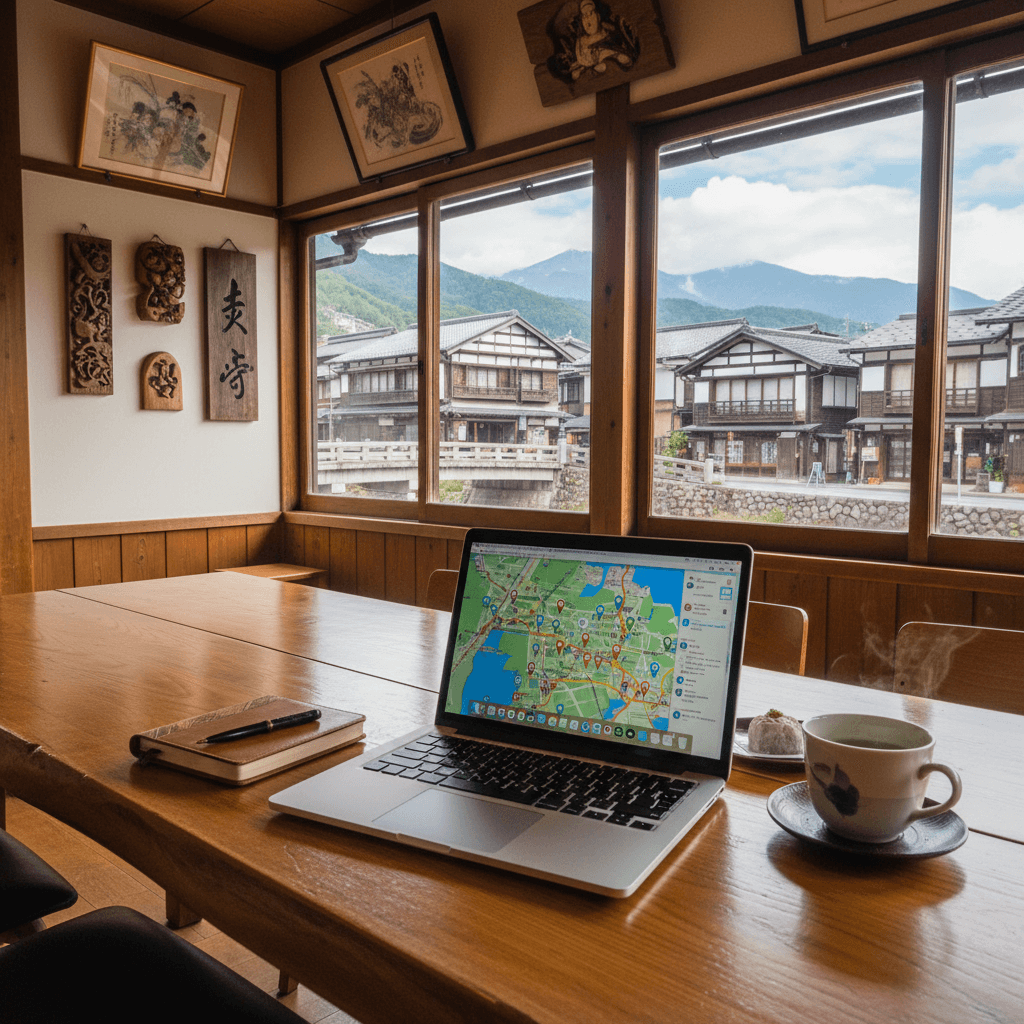
Takayama
🇯🇵 Japan
The Little Kyoto of the Alps
Takayama feels like a glitch in the timeline of modern Japan, but in the best way possible. While Tokyo and Osaka race toward the future, this mountain outpost in Gifu Prefecture remains anchored in the Edo period. Known as the Little Kyoto of Hida, it swaps the crushing crowds of its namesake for a quieter, more contemplative atmosphere. You aren't here for high-speed networking or neon-lit nightlife; you're here to work from a 200 year old merchant house and clear your head with the scent of cedar and mountain air.
The vibe is decidedly slow. Life revolves around the Miyagawa river and the preserved wooden streets of Sanmachi Suji. Early mornings start at the riverside markets with ¥500 Hida beef skewers and local crafts, while evenings are defined by the glow of lanterns outside sake breweries. It is a place of deep tradition where the seasons dictate everything, from the massive Takayama Matsuri festivals in spring and autumn to the heavy blanket of snow that transforms the town into a silent, white sanctuary in January.
Why Nomads Choose Takayama
Most digital nomads treat Takayama as a "deep work" retreat rather than a long term base. It is the perfect spot for a one to two week sprint when you need to finish a project without the distractions of a major metropolis. The isolation is the draw. You can spend your mornings hiking the 3.5km Higashiyama Walking Course through temple districts and your afternoons tucked away in a quiet corner of a cafe like Train Bleu.
The emotional experience of being here is one of grounding. There is something uniquely centering about walking past sake breweries marked by traditional cedar balls (sugidama) and knowing your biggest decision of the day is which Hida beef ramen shop to try for lunch. It is a town that forces you to unplug from the "hustle" and reconnect with a more analog way of living.
The Reality Check
It is not all Zen gardens and sake tastings. If you are looking for a robust nomad community, you won't find it here. There are no dedicated coworking spaces, and English proficiency is lower than in the coastal cities. You will be relying heavily on pocket WiFi and Google Translate to get by. Travelers often find the tourist crowds in the Sanmachi Suji district a bit much during midday, but once the tour buses leave at 5:00 PM, the town returns to its residents and the few lucky outsiders staying overnight.
The infrastructure is built for tourism, not remote offices. You will likely be working from your ryokan or a local cafe, and you will need to be comfortable with a slower pace of service. However, for those who value authenticity over amenities, the trade-off is more than fair.
Living Costs & Logistics
Expect your yen to go further here than in Tokyo. A comfortable mid-range lifestyle usually sits around ¥250,000 per month, though most nomads opt for shorter stays in guesthouses or traditional inns.
- Daily Food: ¥3,000 to ¥5,000 for a mix of market snacks and sit-down dinners like Jingoro Ramen.
- Transport: Almost ¥0 if you stay central, as the town is incredibly walkable. A rental bike goes for about ¥1,000 a day.
- Connectivity: Reliable 100Mbps+ fiber is standard in most guesthouses, but an eSIM from Sakura Mobile is a must for navigating the winding alleys.
Ultimately, Takayama is for the nomad who wants to swap the "laptop on a beach" cliche for a "laptop by a kotsu fireplace" reality. It is a place to breathe, write, and experience a version of Japan that feels increasingly rare.
The Mountain Discount
Living in the Japan Alps comes with a financial silver lining. While Tokyo and Osaka can drain a digital nomad's wallet, Takayama typically runs about 20% to 30% cheaper than the major hubs. You aren't paying for high-speed metro lines or skyscraper views; you're paying for a slower pace and mountain air. Expect to spend most of your budget on accommodation, as the town's popularity with tourists keeps short-term rentals at a premium compared to other rural areas.
Monthly Budget Tiers
- The Budget Backpacker (¥150,000): You'll be staying in shared guesthouses or older apartments, shopping at morning markets like Miyagawa for fresh produce, and keeping dining out to a minimum.
- The Mid-Range Nomad (¥250,000): This covers a private one-bedroom apartment or a decent Airbnb, frequent meals at local spots like Jingoro Ramen, and a few weekend trips to nearby Shirakawa-go.
- The Comfortable Expat (¥400,000+): You're looking at a high-end ryokan stay, like Sumiyoshi Ryokan, daily Hida beef dinners, and private transport or frequent JR train travel.
Housing and Neighborhoods
Takayama is small enough that you can walk almost anywhere, but where you plant your flag changes your monthly overhead. Most nomads look for stays through Airbnb or local platforms like Suumo, though English support is hit-or-miss.
City Center (Sanmachi Suji)
- Estimated Rent: ¥80,000 to ¥120,000
- The Vibe: You're in the heart of the action, steps away from the sake breweries. It's the most convenient but also the priciest area.
Old Town Takayama
- Estimated Rent: ¥70,000 to ¥100,000
- The Vibe: Historic and scenic. It's great for those who want to feel like they've stepped back in time, though the houses can be drafty in the winter.
Hachikenmachi
- Estimated Rent: ¥60,000 to ¥90,000
- The Vibe: A bit more residential and quiet. You'll get more space for your yen here while still being a short walk from the morning markets.
Food and Drink
The culinary scene is a major draw, but it can be a trap for your budget if you aren't careful. Morning markets are your best friend for cheap, fresh snacks and ingredients. A Hida beef skewer at a street stall will run you about ¥500 to ¥1,000, which is a great snack but adds up quickly.
For a standard lunch, a bowl of local ramen costs between ¥1,000 and ¥2,000. If you want the full Hida beef grill experience at a proper restaurant, plan to drop at least ¥5,000 per person. Coffee at a nomad-friendly spot like Train Bleu is reasonably priced, usually around ¥500, and they generally don't mind if you linger with a laptop for a bit.
Connectivity and Transport
Since there aren't dedicated coworking spaces in town, you'll likely be working from your accommodation or a cafe. A local SIM card or eSIM from Sakura Mobile is a smart move, costing around ¥1,000 per week for reliable data. If your guesthouse doesn't have fiber, a pocket WiFi is a necessary expense.
Transport costs are negligible if you stay central. The town is incredibly walkable, but if you need to head further out, a local bus ride is ¥200. Many travelers recommend renting a bike for about ¥1,000 a day to explore the outskirts like the Hida Folk Village. For arrival, the bus or train from Nagoya Chubu Centrair Airport costs roughly ¥5,000 and takes about three hours.
Practical Spending Tips
Cash is still king here. While 7-Eleven ATMs accept international cards, many smaller sake breweries and market stalls won't take Apple Pay or credit cards. Expats recommend using apps like Wise or Revolut to manage currency conversion fees, as local bank fees for international transfers can be steep. If you're staying long-term, try to time your visit for the shoulder seasons of May or October to avoid the peak tourism price hikes during the festival months.
For Digital Nomads: City Center (Sanmachi Suji)
If you are trying to balance work with the desire to soak up Takayama's Edo period atmosphere, the City Center is your best bet. It is the most walkable part of town, meaning you can close your laptop and be at the Miyagawa Morning Market in five minutes. Most nomads gravitate here because it is the only area where you will find reliable cafe culture, like Train Bleu, which serves as a makeshift office when your guesthouse Wi-Fi feels too cramped.
Living here puts you in the thick of the tourist action, which is a double edged sword. You have the best access to Hida beef stalls and sake breweries, but you will pay a premium for the convenience. Expect a decent studio or a small one bedroom apartment to run between ¥80,000 and ¥120,000 per month. It is crowded during the day, but the streets turn hauntingly beautiful and quiet after the day trippers leave around 5:00 PM.
- Vibe: Historic, convenient, and tourist heavy.
- Workability: Highest density of cafes with Wi-Fi.
- Top Spot: Sumiyoshi Ryokan for a traditional stay with solid service.
For Expats and Long-Termers: Old Town Takayama
For those sticking around for more than a few weeks, the residential pockets bordering the historic Old Town offer a more authentic pace. This area feels less like a museum and more like a mountain village. You are still close to the Funasaka Brewery for a post work drink, but you get more breathing room and slightly lower prices, with rents typically landing between ¥70,000 and ¥100,000.
Expats often choose this area for its proximity to nature. You can easily access the Hida Folk Village or jump on a Nohi Bus for a weekend trip to the Alps. The downside is the lack of modern infrastructure; you won't find many English signs here, and you will need to get comfortable using the Google Translate camera mode for your grocery runs. During the winter, be prepared for significant snow, as this neighborhood doesn't always get the immediate clearing priority that the main tourist drag receives.
For Families: Hachikenmachi and Surroundings
Families looking for a quiet, safe base should look toward Hachikenmachi. It is a bit further from the station but offers a much calmer environment for kids. The streets are wider, and you are closer to the Higashiyama Walking Course, a 3.5km path that winds through temple districts and forests, perfect for burning off energy without worrying about heavy traffic.
The housing here tends to be older heritage style homes, which are charming but can be drafty in the winter. Rents are the most affordable in the city core, often ranging from ¥60,000 to ¥90,000 for modest setups. While there are fewer western style amenities, the local shrines and museums like the Yoshijima Heritage House provide a built in playground of history. It is a quiet life, so don't expect much in the way of evening entertainment beyond a few local izakayas.
- Pros: Affordable, quiet, and close to nature trails.
- Cons: Limited English spoken and a longer walk to the main markets.
- Local Tip: Check out the Jingoro Ramen shop for a family friendly meal that won't break the bank.
For Solo Travelers: The Station Area
If you are only in Takayama for a short stint or using it as a jumping off point for Shirakawa-go, stay as close to the JR Station as possible. This isn't a "neighborhood" in the traditional sense, but it is where the most modern guesthouses are clustered. You can find beds in shared dorms or small private rooms that fit a budget of ¥150,000 a month if you are frugal.
Solo travelers find it easiest to meet people here, as the lack of a formal nomad scene means most socializing happens in the common areas of hostels or at the morning markets. It is functional rather than beautiful, but it saves you the hassle of dragging luggage through cobblestone streets. You will be steps away from the 7-Eleven ATMs and the main bus terminal, which is vital since ride hailing apps like Japan Taxi are rarely active in this part of Gifu.
Connectivity and Speed
If you are coming from Tokyo or Osaka, the first thing you will notice in Takayama is that the digital infrastructure feels a step behind. You won't find high-tech coworking hubs with ergonomic chairs and free-flowing kombucha here. Instead, you are relying on the hospitality industry. Most guesthouses and ryokans, like Sumiyoshi Ryokan, offer functional fiber optic internet with speeds ranging between 100Mbps and 500Mbps, but the thick timber walls of these historic buildings can turn your signal into a ghost real fast. Always ask for a room near the router if you have video calls scheduled.
For a reliable backup, don't rely on public city Wi-Fi. It is spotty at best and frustrating at worst. Most nomads in the region recommend grabbing a Sakura Mobile eSIM or a physical SIM from a konbini (convenience store) before you arrive. Expect to pay around ¥1,000 per week for a decent data allotment. Having a Pocket Wi-Fi device is a smart move if you plan on working from the morning markets or while taking the bus to Shirakawa-go, as cellular coverage in the surrounding Alps can be hit or miss.
The "Coworking" Scene
Since dedicated coworking spaces are virtually non-existent in Takayama, you will have to get creative with "cafe-working." The local culture is polite but traditional, so sitting for four hours with a single espresso might get you some side-eye. The key is to find spots that are spacious and accustomed to travelers. Train Bleu is a favorite for many because of its relaxed atmosphere and excellent coffee, though you should avoid peak lunch hours out of respect for the staff.
Other work-friendly options include:
- Funasaka Brewery: Not for your deep-focus mornings, but great for clearing out an inbox in the afternoon while sampling local sake. They have outdoor seating areas that are usually quiet on weekdays.
- Jingoro Ramen: Good for a quick 30-minute laptop session while you wait for your meal, but it is too small for a full workday.
- Miyagawa Morning Market: If you have a fully charged laptop and a mobile hotspot, the benches near the river provide the best "office view" in the Gifu Prefecture, especially during the spring bloom.
Practical Workflow Tips
Because the town is so walkable, you can easily bounce between your accommodation and a cafe. Most nomads find that a "split shift" works best here: handle your heavy bandwidth tasks at your guesthouse in the morning, then head into the Sanmachi Suji district for a change of scenery. If you are staying long-term, consider the Hachikenmachi area. It is quieter, has fewer tourists blocking your path, and the local cafes are more likely to welcome a regular with a laptop.
Keep these technical realities in mind:
- Power Outlets: They are rare in public spaces. Carry a high-capacity power bank if you plan on working away from your room for more than two hours.
- Offline Maps: Download the Takayama area on Google Maps before you head out. The narrow alleys of the Old Town can mess with GPS, and you don't want to waste data reloading the map.
- Translation: Use the camera mode on Google Translate for router setup instructions or local cafe menus, as English documentation is still limited in the smaller mountain shops.
While Takayama isn't a digital nomad mecca, the lack of distractions makes it a fantastic place for a "deep work" retreat. You come here to finish that book or code that new feature, not to network at a tech mixer. Just ensure your accommodation has a solid Wi-Fi reputation before you commit to a month-long stay.
Personal Safety in the Japan Alps
Takayama is arguably one of the safest places you'll ever set foot in. Like much of rural Japan, crime is practically non-existent here. You can walk through the historic Sanmachi Suji district or along the Miyagawa River at midnight without a second thought. Most travelers find the biggest "danger" is simply tripping on the uneven stone paths of the Old Town or getting caught in a sudden mountain downpour.
While you don't need to worry about pickpockets or scams, nature requires more respect. If you're heading out for a hike in Kamikochi or the surrounding trails, keep an eye on the weather. Mountain conditions change fast. During winter, the heavy snowfall makes sidewalks slippery, so it's smart to pick up a pair of detachable ice grips for your shoes at a local convenience store.
Healthcare Facilities and Access
For a town of its size, Takayama is well-served, though it's not a medical hub. Hida City Hospital is the primary facility for serious issues. The quality of care is high, but English proficiency among the staff can be hit-or-miss. Expats recommend having a translation app like Google Translate ready on your phone to help describe symptoms, or better yet, asking your guesthouse host to call ahead for you.
For minor ailments, you'll find several pharmacies near the morning markets and the main train station. Look for the "Yakkyoku" signs. Most common over-the-counter meds are available, but Japanese dosages tend to be milder than what you might be used to in the West. If you have specific prescriptions, bring enough for your entire stay, as getting a Japanese doctor to match a foreign script can be a bureaucratic headache.
Emergency Information
If things go sideways, the emergency numbers are the same as the rest of Japan. Dial 119 for an ambulance or fire, and 110 for the police. If you're in a pinch and need English assistance, the tourist information center right outside Takayama Station is staffed with helpful folks who can bridge the language gap.
- Ambulance/Fire: 119
- Police: 110
- Hida City Hospital: Main medical provider in the region
- Pharmacy Hours: Generally 9:00 AM to 6:00 PM; some 24-hour options exist at larger drugstores like Sugi Pharmacy.
Environmental Health
The air quality in Takayama is some of the best in the country, thanks to the surrounding cedar forests. However, if you suffer from hay fever, be prepared for high pollen counts in the spring. The tap water is perfectly safe to drink and tastes better than the water in Tokyo because it comes straight from the mountain runoff. You'll save a lot of yen by simply refilling your bottle at the tap rather than hitting the vending machines every hour.
Nomads staying for the winter should be aware of the "inside chill." Traditional buildings, including many older ryokans and guesthouses, lack central heating. They rely on kerosene heaters. While effective, these require regular ventilation to keep the air fresh. If you're sensitive to dry air or kerosene smells, look for more modern apartments in the Hachikenmachi area that use electric heat pumps.
Foot Power and the 3.5km Rule
In Takayama, your primary mode of transport is your own two feet. The city center is incredibly compact, and most nomads find they rarely need wheels to get between their morning coffee at Train Bleu and the Miyagawa Morning Market. If you are staying in the Sanmachi Suji district, you can reach almost every major historical site within a 15 to 20 minute walk.
For a structured way to see the sights, travelers often recommend the Higashiyama Walking Course. It is a 3.5km path that winds through the temple district and suburban greenery. It is well paved and easy to follow, making it a favorite for a midday break between deep work sessions. Just keep in mind that the historic streets are narrow and can get packed with tourists during peak hours, so walking early in the morning is the pro move.
Cycling the Miyagawa
If you need to get across town faster or want to explore the outskirts like the Hida Folk Village, renting a bicycle is the way to go. You can find rental shops near the river and the main station for about ¥1,000 per day. It is a flat, easy city to navigate by bike, though you should be prepared to park in designated areas to avoid a polite but firm warning from local officials.
Buses and Local Transit
For longer distances within the city, the Nohi Bus network is your go-to. Local loops typically cost between ¥200 and ¥500 per ride. It is reliable and punctual, as you would expect in Japan, but the routes are largely designed for tourists hitting the main landmarks rather than commuters. Most expats suggest using the Japan Taxi app if you are caught in a pinch, though be warned that vehicle availability is sparse compared to Tokyo or Osaka.
Regional Connections and Day Trips
Takayama serves as the perfect basecamp for exploring the Japan Alps, but you will need to rely on the JR Train lines or long-distance buses.
- Shirakawa-go: A 50 minute bus ride from the main terminal costs about ¥2,000.
- Kamikochi: Highly recommended for weekend hiking trips, accessible via a combination of bus and train.
- Nagoya (Airport Access): To reach Chubu Centrair International Airport, expect a 3 hour journey via bus or train costing roughly ¥5,000.
Digital Navigation
While the city feels like a step back in time, do not try to navigate it with a paper map. Google Maps is absolutely necessary for checking bus schedules and finding the tucked away sake breweries in Old Town. Since English signage can be hit or miss once you leave the main tourist drag, having a working eSIM from a provider like Sakura Mobile is a lifesaver. You can pick these up at the airport or at local convenience stores for around ¥1,000 per week.
One final tip for the winter months: Takayama gets serious snow. From December through February, those charming cobblestone streets can become slick. Invest in a pair of shoes with good grip or pick up some attachable snow spikes at a local shop if you plan on staying through the season. The city is diligent about clearing main roads, but the side alleys in Hachikenmachi can stay icy for days.
The Language Barrier Reality
In Takayama, Japanese is the undisputed king. Unlike the international hubs of Tokyo or Osaka, this is a mountain town where traditional roots run deep. While you'll find English signage at the JR station and menus with photos in the Sanmachi Suji district, daily life requires a bit more effort. Most locals, particularly older shop owners in the morning markets, speak very little English.
Expats living here find that while the language barrier is high, the patience of the locals is even higher. You'll often get by with a mix of polite bowing, pointing, and a few key phrases. If you're planning to stay for more than a few days, learning the basics isn't just helpful; it's a sign of respect that opens doors to better service and warmer smiles.
Survival Phrases for the Hida Region
You don't need to be fluent, but having these in your back pocket will make your morning coffee run at Train Bleu or your sake tasting at Funasaka Brewery much smoother:
- Sumimasen: (Excuse me / Sorry). Use this for everything from getting a waiter's attention to squeezing past someone in a narrow alley.
- Kore o onegaishimasu: (This one, please). Perfect for pointing at that specific cut of Hida beef at the Miyagawa Morning Market.
- Eigo ga hanasemasu ka?: (Do you speak English?). It's always better to ask than to assume.
- Arigato gozaimasu: (Thank you). Use the formal version here; Takayama’s culture leans toward the polite side.
- Oishii desu!: (It’s delicious!). Say this to the vendor selling you a ¥500 beef skewer and watch them light up.
Digital Safety Nets
Since English proficiency is low, your phone becomes your most important communication tool. Most nomads in Takayama rely heavily on Google Translate. The camera feature is a lifesaver for reading handwritten specials on izakaya chalkboards or deciphering labels at the local pharmacy near the station.
Because you'll be relying on cloud-based translation, a rock-solid data connection is mandatory. Travelers recommend picking up a Sakura Mobile eSIM before you arrive in the mountains. Expect to pay around ¥1,000 per week for reliable speeds. Don't count on finding public Wi-Fi while wandering the Higashiyama Walking Course; the signal holds up well in town, but the historic wooden buildings can sometimes act as a shield against spotty router signals.
Communication Etiquette
In Takayama, how you say something is often as important as what you say. The town moves at a slower pace, and communication is rarely blunt. Lowering your voice in public spaces, especially on the Nohi Bus or inside quiet temples, is expected.
When paying for your ¥1,500 bowl of ramen at Jingoro, use the small tray provided for your cash or card rather than handing it directly to the staff. It’s a small gesture, but it shows you understand the local rhythm. Most nomads find that a simple bow goes further than a long English explanation when trying to navigate a misunderstanding.
Connecting with Others
If you're looking for an English-speaking community, you'll have to be proactive. There are no dedicated nomad meetups here. Your best bet for social interaction is striking up a conversation with other travelers at the Miyagawa Morning Market or hanging out at Train Bleu. For more formal assistance, the tourist information center at Takayama Station has staff who speak excellent English and can help with logistics that your translation app might mangle.
Seasonal Rhythm and Best Windows
Takayama sits deep in the Japanese Alps, meaning the weather here is a different beast compared to the humid coastal stretches of Tokyo or Osaka. You'll experience four distinct seasons, each radically altering the city's accessibility and vibe. Most travelers find that May and October are the sweet spots. In May, the mountain air is crisp, flowers are blooming, and the average highs sit around 22°C (72°F), making it perfect for wandering the Miyagawa Morning Market without a heavy coat.
October brings dry, sunny days and cool evenings. It's the prelude to the famous autumn foliage, though if you time it for the peak colors in late October, expect the narrow streets of Sanmachi Suji to be packed. If you're planning to stay for a month or more, these shoulder seasons provide the most comfortable environment for walking the 3.5km Higashiyama Walking Course or taking day trips to Shirakawa-go.
The Deep Freeze: Winter in the Alps
From December through February, Takayama transforms into a snow-heavy wonderland. Temperatures regularly dip to -8°C (18°F) at night. While the sight of the traditional Edo-era rooftops covered in thick powder is stunning, it presents practical challenges for digital nomads. Snowfall can be heavy enough to disrupt local Nohi Bus schedules and make the train journey from Nagoya a bit more unpredictable.
Expats living in the region recommend leaning into the "slow life" during these months. It's the best time for sake tasting at Funasaka Brewery, as the cold weather is traditionally when brewing takes place. However, keep in mind that many older buildings and budget ryokans lack central heating; you'll likely be relying on kerosene heaters, which can be a bit of a shock if you're used to modern climate control.
Summer Heat and the Rainy Season
The rainy season typically hits in June and July. It isn't just a light drizzle; expect heavy, persistent downpours that can make the rural mountain roads a bit treacherous for cycling. Humidity also spikes during this time, though the mountain elevation keeps it slightly more bearable than the sweltering heat of Kyoto.
By August, the heat arrives in earnest. While daytime highs are manageable, the sun is intense in the thin mountain air. Travelers often say that summer is the best time to escape into the higher altitudes of Kamikochi for hiking, where temperatures stay significantly cooler than the city center.
Navigating the Festival Peaks
If your stay coincides with the Takayama Matsuri in mid-April or mid-October, be prepared for a total shift in the city's dynamic. These are some of the most famous festivals in Japan. While the ornate floats and processions are spectacular, accommodation prices triple and the quiet, contemplative atmosphere nomads love disappears entirely. If you aren't there specifically for the festival, aim to arrive at least a week before or after these dates to avoid the peak crowds and the premium "festival pricing" on rentals.
Summary of Conditions
- Spring (March to May): Crisp and clear. Highs of 15°C to 22°C. Best for walking and outdoor photography.
- Summer (June to August): Rainy in early summer, followed by humidity. Highs around 30°C. Great for mountain hiking.
- Autumn (September to November): Sunny and stable. Highs of 15°C to 20°C. The most scenic time for the Hida Folk Village.
- Winter (December to February): Heavy snow and freezing temps. Lows of -8°C. Ideal for sake lovers and those who want a quiet, cozy retreat.
Connectivity and Tech Logistics
While Takayama is a historic mountain town, you won't be totally off the grid. Since dedicated coworking spaces are nonexistent here, most nomads rely on high speed pocket WiFi or an eSIM. Sakura Mobile is the go-to for many travelers; you can grab an eSIM for around ¥1,000 a week with solid 100Mbps speeds. If you need a change of scenery from your guesthouse, head to Train Bleu. It is a local favorite for its coffee and pastry selection, and they are generally welcoming to those with a laptop for an hour or two.
For navigation, Google Maps is your lifeline. The old town streets can be a maze, and the camera translate feature will save you at smaller izakayas where menus are strictly handwritten in Japanese. Just keep in mind that many traditional ryokans have thick timber walls that can eat your WiFi signal, so always verify the signal strength with your host before booking a long stay.
Money and Banking
Cash is still king in the Hida region. While larger hotels and high end Hida beef restaurants take cards, the morning markets and smaller sake breweries often don't. Your best bet for withdrawals is the 7-Eleven ATM or the local post office. Both accept international cards like Wise or Revolut, which help minimize those annoying conversion fees. If you are planning a longer stay, keep a stash of ¥1,000 and ¥5,000 bills, as smaller shops sometimes struggle to break the larger ¥10,000 notes.
Getting Around
Takayama is incredibly compact. You can walk the Higashiyama Walking Course, a 3.5km loop through the temple district, in a single afternoon. If you want to cover more ground, rent a bicycle near the Miyagawa river for about ¥1,000 a day. It is the most efficient way to get between the morning markets and the Hida Folk Village.
For venturing further out, the Nohi Bus terminal next to the train station is your hub. Local rides are ¥200, while a trip to the UNESCO site of Shirakawa-go costs about ¥2,000. Don't bother looking for Uber or Grab here. They don't really exist in this part of Japan. If you need a car, use the Japan Taxi app, but expect a wait during the peak festival seasons in April and October.
Regional Etiquette
The pace of life in Takayama is slower than Tokyo, and the social rules are strictly observed. Always remove your shoes when entering a guesthouse, temple, or even some traditional restaurants. A small bow goes a long way when greeting shopkeepers at the Miyagawa Morning Market. If you are visiting during the Takayama Matsuri, remember that the festival floats are priceless local treasures; keep a respectful distance and follow the crowd flow. Noise travels easily through the thin walls of traditional houses, so keep your late night Zoom calls at a low volume to stay on good terms with your neighbors.
Health and Safety
This is one of the safest places you will ever visit. Walking home alone at midnight through the historic district is perfectly fine. For medical needs, Hida City Hospital provides quality care, though English speaking staff can be hit or miss. It is smart to have a translation app ready. In a pinch, pharmacies near the city center carry most basic supplies. For any serious emergency, dial 119 for an ambulance or 110 for the police.
Seasonal Planning
Timing your stay is everything. If you hate the cold, avoid January and February when temperatures regularly drop to -8°C and snow piles up high. May and October are the sweet spots with mild weather and stunning natural colors, though these months also bring the highest tourist prices. If you are on a budget, the shoulder seasons in late autumn offer a quiet, moody atmosphere that is perfect for deep work sessions.
Need visa and immigration info for Japan?
🇯🇵 View Japan Country GuideHidden Gem
Worth the effort