Tainan
🇹🇼 Taiwan
The Soul of Old Taiwan
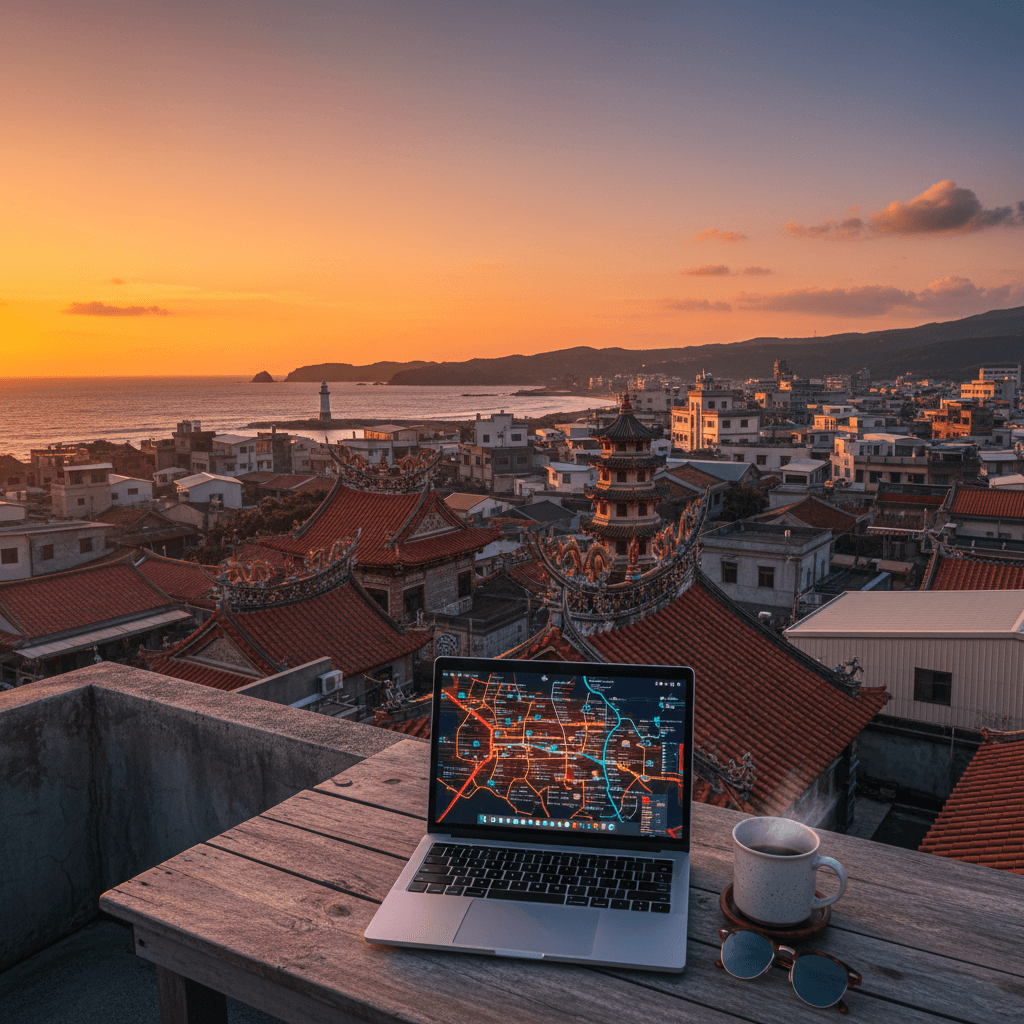
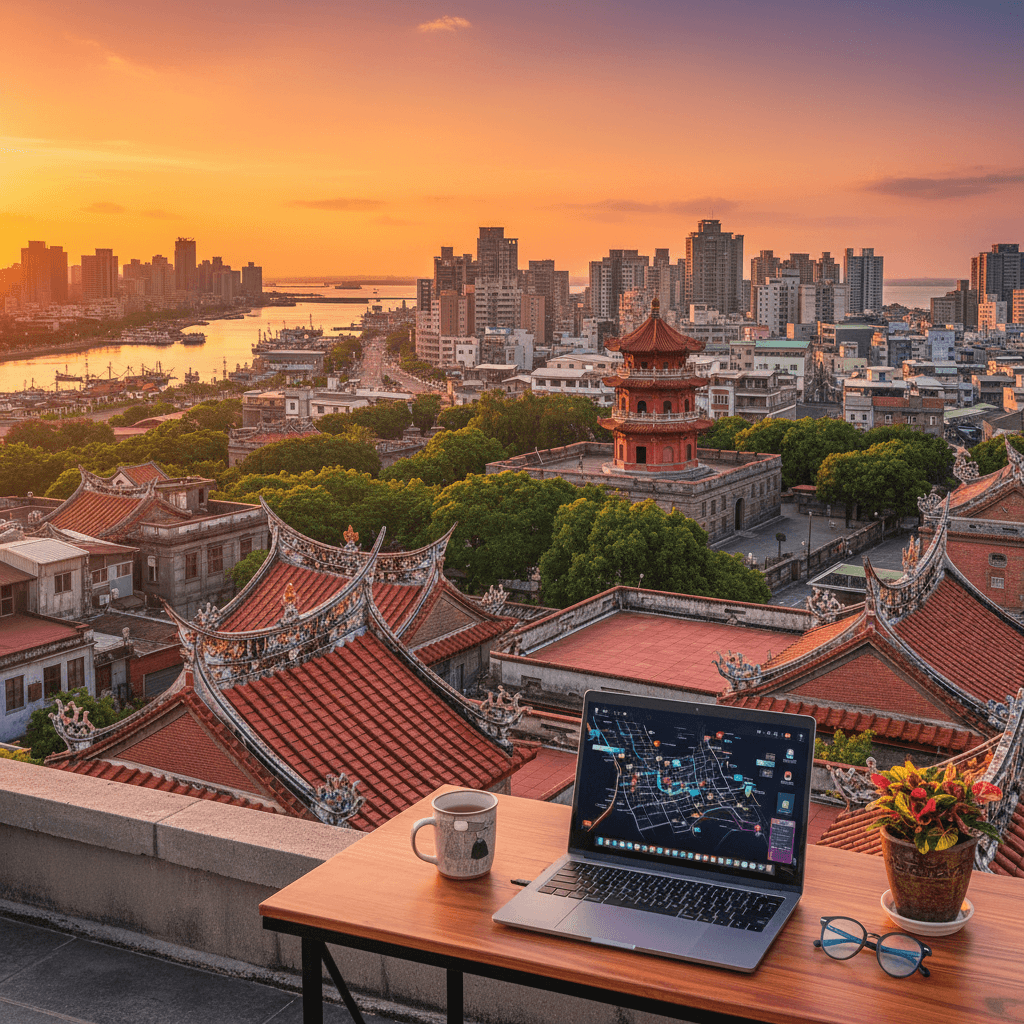
If Taipei is Taiwan’s high energy brain, Tainan is its slow beating heart. As the oldest city on the island, it doesn't try to impress you with glass skyscrapers or frantic neon. Instead, it pulls you in with a relaxed, ultra local pace where history isn't tucked away in a museum; it’s the backdrop of your daily life. You'll find yourself working from a 100 year old townhouse turned cafe, surrounded by the smell of incense from a neighborhood temple and the sizzle of a street food stall that has been run by the same family for three generations.
Living here feels like a deep dive into "real" Taiwan. It’s significantly more affordable than the capital, with most nomads getting by comfortably on $600 to $900 a month. Tainan actively promoted Taiwan’s new Digital Nomad Visa, attracting early nomads and signaling a major push to welcome remote workers. While the tech infrastructure is slightly more vintage than Taipei, the over 250 Mbps average internet speeds and the sheer density of "workable" cafes make it a surprisingly functional base for those who value culture over corporate polish.
The Nomad Experience: Pros and Cons
The vibe here is quiet and communal. You won't find a massive, English speaking expat bubble like you might in Bali or Chiang Mai. This is a place for the independent nomad who enjoys blending in. Most travelers find the lack of English a bit of a hurdle at first, but the locals are famously warm. You’ll rely heavily on Google Translate and LINE to get things done, but that’s part of the charm.
- The Upside: Incredible safety, world class street food for $2 to $4 a meal, and a cost of living that lets you save significantly while enjoying a high quality of life.
- The Downside: The social scene is low key. If you need nightly networking events or a high energy party circuit, Tainan might feel too sleepy. The humidity in July and August can also be punishing, often hitting 32°C (90°F) or higher.
Where to Plant Your Flag
Tainan doesn't have an "expat district," so your choice depends on how much "old world" charm you can handle versus modern convenience.
West Central District
This is the epicenter of Tainan’s foodie and temple culture. It’s highly walkable and packed with independent cafes where you can camp out with a laptop for hours.
- Rent: $300 to $400 for a central studio.
- Vibe: Historic, noisy, and incredibly authentic.
East District
If you prefer modern apartment buildings and proximity to shopping malls, this is where you’ll head. It feels more like a standard city and is popular with long term expats and families.
- Rent: $500 to $800 for a nicer 1BR.
- Vibe: Greener, quieter, and more organized.
Anping District
Located by the coast, this area is steeped in maritime history. It’s great for a weekend stay or a more relaxed pace, though it’s further from the main coworking hubs.
- Rent: $400 to $600.
- Vibe: Touristy on weekends, but peaceful and breezy on weekdays.
Daily Logistics and Stay
Getting around is simple if you embrace the local way. Most nomads use YouBike, which costs about $0.30 for a 30 minute ride. For longer trips, LINE Taxi or Uber are the go to apps. While there aren't many dedicated coworking spaces yet, the city is your office. You’ll see people working in 7-Eleven seating areas or local libraries using the free iTaiwan WiFi hotspots.
To stay long term, the new Digital Nomad Visa is a game changer. It allows for a 180 day stay if you can prove a monthly income of roughly $4,000. If you're just passing through, most nationalities get 90 days visa free, which is plenty of time to eat your way through the Garden Night Market and find your favorite beef soup stall. Just remember to bring a pair of slip on shoes; you’ll be taking them off at the door of almost every home and traditional workspace you visit.
The Lowdown on Tainan Living
If you're looking to stretch your budget without sacrificing the quality of your daily life, Tainan is a massive win. While Taipei grabs the headlines, Tainan quietly offers a lifestyle that's about 30 to 40 percent cheaper. Most nomads find they can live comfortably here for $600 to $900 per month. It's a city where your money goes toward authentic experiences rather than inflated "expat prices."
The real beauty of the local economy is the food. Tainan is the culinary capital of Taiwan, and the prices reflect a locals-first market. You'll find yourself eating world-class street snacks like coffin bread or shrimp rolls at the Garden Night Market for NT$50 to NT$100 ($1.50 to $3). Even if you step up to a mid-range sit-down spot for some famous local beef soup, you're rarely looking at more than $10 for a full meal.
Monthly Budget Breakdowns
- The Budget Nomad ($600 to $700): You'll likely snag a central studio for $300 to $400. You'll eat primarily at night markets and local stalls, use YouBike for transport, and work from laptop-friendly cafes like Fika Fika where the WiFi is free and the plugs are plentiful.
- The Mid-Range Professional ($700 to $850): This covers a 1-bedroom apartment in the West Central District for $400 to $600. You'll probably rent a scooter for about $100 a month and spring for a dedicated coworking desk for another $100.
- The Comfortable Expat ($850 to $1,000+): At this level, you're looking at upscale 1-bedroom units in the East District for $600 to $800. You'll dine at fusion restaurants, take LINE Taxis everywhere, and use private coworking day passes that run about $20 a pop.
Where to Plant Your Flag
Tainan doesn't have an "expat bubble," which is part of its charm. You'll be living alongside locals, but different neighborhoods cater to different work-life balances.
West Central District
This is the heartbeat of the city and where most solo nomads end up. It's the most walkable area, packed with historic temples and the best coffee shops for working.
- Rent: $300 to $600 for most apartments.
- Vibe: High energy, incredibly local, and very central.
- Trade-off: It can get noisy at night and English signage is sparse.
East District
If you want modern amenities, malls, and a bit more breathing room, head east. This is where you'll find the newer apartment complexes and a slightly more "suburban" feel.
- Rent: Expect to pay $500+ for a modern 1-bedroom.
- Vibe: Greener, quieter, and more organized.
- Trade-off: You'll lose that "old Tainan" historic atmosphere.
Anping District
Perfect for history buffs or couples who want a relaxed seaside vibe. It's the oldest part of the city, famous for its forts and seafood.
- Rent: Mid-range, usually $400 to $600.
- Vibe: Relaxed and touristy on weekends, but peaceful during the week.
- Trade-off: It's a bit of a trek from the main coworking spots and city center.
Connectivity and Practicalities
Taiwan's internet is blistering fast, averaging 217 Mbps. Even in Tainan's older buildings, you'll rarely struggle with Zoom calls. Public WiFi via iTaiwan is everywhere, and even 7-Eleven branches offer reliable seating and signal. For mobile data, pick up a local SIM from Chunghwa or Taiwan Mobile at the airport for about $15. If you want to hit the ground running, an eSIM from Holafly is the go-to for most travelers.
Getting around is cheap and easy. The YouBike system is your best friend; it costs about $0.30 for a 30-minute ride. For longer hauls, use the LINE Taxi app or Uber. If you're staying long-term, look into the Digital Nomad Visa launched January 2025. It allows for a 180-day stay if you can prove an annual income of $40,000, and it grants you access to the world-class National Health Insurance system.
For Nomads: West Central District
If you're coming to Tainan to work, the West Central District is the undisputed heart of the action. This is where the city's legendary $2 street food meets a growing cluster of laptop-friendly cafes. It's the most walkable part of the city, packed with centuries-old temples tucked between modern storefronts. Most nomads find this area perfect for a short to medium stay because you're never more than a five-minute walk from a 7-Eleven or a bowl of NT$60 beef soup.
- Monthly Rent: $300 to $400 for a studio.
- Vibe: High energy, historic, and dense.
- Connectivity: Reliable 250+ Mbps speeds are common in rentals here. Use the iTaiwan public hotspots if you're working from a park.
- Top Picks: Grab a desk at local spots like Fika Fika Café or use LINE Taxi to hop between the district's many hidden alleyway coffee shops.
The downside? It's noisy. Between the temple festivals and the scooters, it's rarely quiet. You'll also find the lowest English proficiency here, so keep Google Translate and LINE ready on your phone. If you can handle the language barrier, it's the most authentic way to experience Tainan's slower pace of life.
For Expats and Remote Professionals: East District
Expats looking for a bit more polish and modern infrastructure usually gravitate toward the East District. It's home to National Cheng Kung University, which gives the area a youthful, slightly more international feel. You'll find wider streets, actual shopping malls, and newer apartment complexes with elevators and gyms. It's less "old world" than West Central, but far more comfortable for a long-term stay.
- Monthly Rent: $400 to $600 for a modern 1BR.
- Vibe: Academic, green, and organized.
- Convenience: This area has better access to the THSR High Speed Rail station via local shuttle trains, making trips to Taipei much easier.
- Social Life: While the nomad scene is still small, you're more likely to find English-speaking locals and fellow expats in the bars and cafes near the university.
Living here feels a bit more like a standard city experience. You'll lose the "living in a museum" feeling of the historic center, but you gain proximity to National Cheng Kung University Hospital and better grocery stores. It's the best balance for those who want Tainan's $800 monthly budget without sacrificing modern comforts.
For Solo Travelers and History Buffs: Anping District
Anping is where Taiwan's recorded history began, and it feels like a seaside village that accidentally grew into a city. It's located out on the coast, away from the main city cluster. Solo travelers who prefer a relaxed, maritime atmosphere over urban density will love the seafood markets and the forts. It's incredibly safe, and the air quality is often slightly better than the city center.
- Monthly Rent: $350 to $500 for a guest house or apartment.
- Vibe: Touristy on weekends, sleepy on weekdays.
- Transport: You'll definitely want a YouBike or a scooter rental here. Public buses run to the center, but they aren't frequent.
- Food: Famous for shrimp rolls and oyster dishes that cost less than $5.
The main trade-off is the isolation. There are fewer dedicated coworking spaces, and the commute to the West Central District can take 20 minutes by scooter. It's ideal for a "work-cation" where the goal is to explore Anping Tree House and the old streets rather than networking.
For Families: North District and Suburbs
Families moving to Tainan often look toward the North District. It sits between the hectic center and the newer residential developments. It offers larger parks and more spacious 3-bedroom apartments that are rare in the older parts of town. It's quiet enough for kids but still close enough to the Garden Night Market for an easy dinner.
- Monthly Rent: $600 to $800 for a family-sized 3BR.
- Vibe: Residential and stable.
- Healthcare: Very close to major clinics and pharmacies like Cosmed.
- Safety: Like all of Tainan, crime is almost non-existent, making it safe for kids to walk to the local parks.
Most families find that the low cost of living here allows for a very high quality of life. You can afford private transport and upscale dining for a fraction of what you'd pay in Taipei. Just keep in mind that you'll likely need to navigate the school system or find specialized groups on Facebook, as there isn't a massive international school hub here yet.
Connectivity and Speed
Taiwan consistently ranks among the world leaders for internet speeds, and Tainan doesn't fall behind. You can expect average speeds around 250 Mbps, which is more than enough for video calls, heavy uploads, or streaming. Most Airbnbs and modern apartments in the East District or West Central come with fiber connections as standard.
When you're out and about, there are numerous iTaiwan public WiFi hotspots across the city, including parks, libraries, and train stations. If you need a reliable backup, grab a local SIM card from Chunghwa Telecom or Taiwan Mobile at the airport. A 30 day unlimited data plan usually runs between $15 and $30. For those who want to be connected the second they land, Holafly or Airalo eSIMs work perfectly here.
The Coworking Scene
Tainan's coworking landscape is still catching up to Taipei's, but it's growing quickly since the city became the first to launch the Taiwan Digital Nomad Visa in January 2025. You won't find a massive WeWork here, but you will find smaller, community focused spaces that feel more personal.
- Day Pass Rates: NT$300 to NT$500 ($10 to $15)
- Monthly Hot Desk: Approximately NT$3,000 ($100)
- Availability: Most spaces are concentrated in the West Central District to stay close to the cafe culture and food scene.
Because the dedicated coworking scene is sparse, many nomads treat the city's independent cafes as their de facto offices. Tainan is famous for its "hidden" cafes tucked away in narrow alleys. Local specialty roasters are usually very welcoming to laptops, provided you keep the coffee flowing. Just look for the "plugs available" signs on the door.
Convenience Store Workstations
Don't overlook the 7-Eleven or FamilyMart branches. In Tainan, these aren't just places to buy snacks; they are legitimate remote work hubs. Most have a second floor or a dedicated seating area with free WiFi, power outlets, and surprisingly good coffee. It’s a common sight to see people working on laptops here at 2:00 AM. It’s the ultimate low cost office for $2 a day.
Essential Apps for Nomads
To stay functional in Tainan, your phone needs a few specific tools. Since English proficiency is lower here than in the capital, these apps do the heavy lifting for you.
- LINE: This is non negotiable. It’s used for everything from booking a LINE Taxi to communicating with your landlord or joining local nomad meetups.
- Google Translate: Use the camera feature for menus in the Garden Night Market, as many smaller stalls don't have English translations.
- YouBike 2.0: This app allows you to unlock the yellow bikes found at almost every street corner for about $0.30 per half hour.
- Uber and Foodpanda: Both are extremely reliable here for transport and getting late night beef soup delivered to your door.
Digital Nomad Visa Logistics
Tainan has positioned itself as the gateway for the new nomad policy. If you can prove an annual income of $40,000, you can apply for a 180 day stay. One of the biggest perks for visa holders is access to the National Health Insurance (NHI) system, which is world class. Most nomads manage their banking through Wise for international transfers, but use LINE Pay for almost all daily transactions at local shops and cafes.
A Safe Haven with a Slower Pace
Tainan is arguably one of the safest cities in Asia for remote workers. Crime is remarkably low, and travelers frequently mention how comfortable they feel walking alone at night, even in the narrower alleys of the West Central District. While you should keep an eye on your belongings at the crowded Garden Night Market, petty theft is rare. The biggest safety concern isn't crime; it's the traffic. Scooters rule the streets here, and sidewalks can be inconsistent, so stay alert when crossing busy intersections.
The air quality is generally good, though it can dip during the peak humid months of July and August. If you have respiratory sensitivities, keep an eye on the local AQI apps during the transition between seasons. For any immediate help, the emergency numbers are 110 for police and 119 for ambulance or fire services. Both lines have English speaking operators available to assist foreigners.
World Class Healthcare Access
Taiwan's healthcare system is legendary for its efficiency and low cost, and Tainan is no exception. If you're visiting on a standard tourist visa, you'll find that out of pocket costs for seeing a doctor are surprisingly affordable, often ranging from $20 to $50 for a consultation and basic medication. Pharmacies like Cosmed are everywhere for minor ailments, but for anything serious, head to a major hospital.
- National Cheng Kung University Hospital: This is the top choice for expats. It is a major teaching hospital with many English speaking staff members and specialists.
- Chi Mei Medical Center: Another highly rated facility with modern equipment and a streamlined process for international patients.
- Local Clinics: For a quick flu shot or a cold, look for small neighborhood clinics. They are usually walk in only and very fast.
Insurance and the Digital Nomad Visa
If you're taking advantage of the new Digital Nomad Visa launched in January 2025, or if you hold a Gold Card, you'll eventually gain access to the National Health Insurance (NHI) system. This is a game changer for long term stays. Once enrolled, your medical costs drop to almost nothing. You'll receive a physical NHI card that you present at any hospital or dental clinic, and most prescriptions will only cost you a few dollars.
Before your NHI eligibility kicks in, or if you're just passing through for a month, most nomads recommend having private travel insurance like SafetyWing or World Nomads. While local costs are low, having coverage for major emergencies or medical evacuations provides that extra layer of security. Most hospitals in Tainan will expect payment upfront via cash or credit card, which you can then claim back from your provider.
Practical Medical Tips
- Dental Care: Tainan has excellent dental clinics. A professional cleaning usually costs around NT$800 to NT$1,200 ($25 to $40) without insurance.
- Prescriptions: Bring a copy of your existing prescriptions. While many drugs are available over the counter, stronger medications require a local doctor's note.
- English Support: Use the LINE app to communicate with boutique clinics; many use it for booking appointments and can translate your messages instantly.
The Walkable Core
In the West Central District, your own two feet are your best asset. This part of town is dense with alleyways that house century old temples and quiet tea houses, making it easy to wander between your morning coffee and a lunch of shrimp rolls. Most nomads find the central area perfectly navigable without a car, provided you don't mind the humidity during the summer months.
For anything beyond a ten minute walk, YouBike is the local favorite. These yellow and white bikes are parked at stations every few blocks. You can unlock them using the YouBike app or a local EasyCard. It costs about NT$10 ($0.30) for a 30 minute ride, which is usually enough time to get anywhere in the city center. The terrain is flat, so you won't break a sweat on your way to a coworking space.
Public Transit and Ride-Hailing
Tainan doesn't have an MRT subway system like Taipei or Kaohsiung. Instead, the city relies on a network of public buses. While they are efficient and cheap at NT$18 ($0.60) per ride, the schedules can be a bit infrequent. Most expats recommend using Google Maps to track arrivals in real time so you aren't standing at a stop for twenty minutes.
When you need a car, Uber works well here, but LINE Taxi is the real king. Since everyone in Taiwan uses the LINE app for messaging, the taxi integration is seamless and often faster than Uber. A typical cross-city trip will set you back about NT$150 to NT$250 ($5 to $8). If you are heading out to the Anping District for the afternoon, a ride-hail is your most comfortable bet.
The Scooter Lifestyle
If you want to live like a local, you'll eventually consider a scooter. It is the lifeblood of Tainan. While the traffic can feel chaotic at first, it's the most flexible way to explore the outskirts. You can find monthly scooter rentals for NT$300 to NT$500 ($10 to $15) at shops near the Tainan Train Station, though you will need an International Driving Permit that specifically covers motorcycles.
Regional Connections
Getting in and out of the city is straightforward. Tainan has its own small airport, but most international travelers fly into Taoyuan (TPE) and take the Taiwan High Speed Rail (THSR) south. The bullet train is a marvel; it takes about 90 minutes from the north and costs roughly NT$1,350 ($42).
- THSR Tainan Station: Located about 20 minutes outside the city center. A free shuttle bus or a short local train ride connects the HSR station to the downtown Tainan Train Station.
- Local Trains (TRA): Use these for cheap day trips to nearby spots like Kaohsiung, which is only 45 minutes away.
- Long-Distance Buses: Companies like Ubus and Ho-Hsin offer luxury seats with personal screens for budget-friendly trips across the island.
Practical Transit Tips
- EasyCard is Vital: Buy an EasyCard at any 7-Eleven or FamilyMart for NT$100 ($3). You can load it with cash and use it for buses, YouBikes, and even snacks at convenience stores.
- Download LINE: Beyond messaging, the app is your portal for booking taxis and paying for various services via LINE Pay.
- Navigation: Google Maps is highly accurate for bus routes and walking paths through Tainan's notoriously narrow "Snail Alley" and other historic lanes.
The Language Gap
Expect a significant shift in communication if you are moving down from Taipei. While the capital feels international, Tainan is unapologetically local. Mandarin is the primary language, but you'll hear plenty of Taiwanese Hokkien, especially among the older generation and at the street food stalls in the West Central District. English proficiency is lower here than in Taiwan's other major hubs, which is part of the city's charm but can be a hurdle for new arrivals.
Most nomads find that younger locals and staff in specialty cafes speak enough English to get by. However, in the traditional markets or when dealing with landlords, you'll likely rely on translation tools. It's a city where a smile and a respectful "Ni hao" go a long way.
Digital Tools for Survival
You cannot survive in Tainan without LINE. It is the undisputed king of communication for everything from chatting with new friends to booking a hair appointment or messaging your landlord. If you are looking for an apartment on 591.com.tw, don't expect many people to answer an email; get their LINE ID instead.
- Google Translate: Download the Mandarin Chinese pack for offline use. The camera feature is a lifesaver for reading menus at night markets where there aren't any pictures.
- Google Maps: It integrates perfectly with the YouBike system and bus schedules, making it easier to find your way when you can't ask for directions.
- LINE Taxi: Since hailing a cab in English can be hit or miss, using the app ensures the driver knows exactly where you're going without a word spoken.
Practical Communication Tips
Ordering food is the most common time you'll face a language barrier. Tainan is the food capital of Taiwan, and many of the best spots, like the beef soup stalls or Garden Night Market vendors, use paper menus where you check off what you want. If the menu is only in Chinese, travelers often recommend taking a photo of a dish someone else is eating and showing it to the vendor.
For official business, like setting up a bank account or visiting a hospital like National Cheng Kung University Hospital, you'll usually find staff who speak English. If you are here on the Digital Nomad Visa (launched January 2025), you'll have access to the National Health Insurance (NHI) system, and the registration process is generally foreigner-friendly.
Key Phrases to Know
While you don't need to be fluent, learning a few basics will change how locals treat you. People in Tainan are famously warm and will appreciate the effort. Prices are often written in standard numerals, but knowing how to ask "how much" helps in smaller shops.
- Ni hao: Hello
- Xie xie: Thank you
- Duoshao qian?: How much?
- Wo bu hui shuo Zhongwen: I don't speak Chinese
- Tai hao le: Great / Wonderful (useful when you've just finished a NT$60 bowl of eel noodles)
Connecting with the Community
Because the English-speaking nomad scene is smaller here, you have to be more proactive. Expats recommend joining the Digital Nomad Taiwan Facebook group to find meetups in Tainan. Most social life revolves around the cafes and the "slow life" pace of the city. Don't expect the high-energy networking events of Taipei; instead, look for community in the coworking spaces or by becoming a regular at a local tea house.
The Sweet Spot: When to Visit
Tainan is subtropical and stays warm year round, but there is a massive difference between a pleasant afternoon at a temple and melting into the pavement. Most nomads agree that October and November are the golden months. The humidity finally breaks, the skies clear up, and the temperature sits comfortably around 25°C (77°F). It is the perfect window to explore the West Central District on foot without needing three showers a day.
March and April offer a similar sweet spot before the heat cranks up. You will catch the tail end of the dry season, making it ideal for those long bike rides to Anping. While the city is quieter than Taipei, these shoulder seasons see a slight uptick in local tourism, so book your long term stays a few weeks in advance if you want to snag a spot near the best cafes.
The Summer Swelter and Typhoon Season
If you aren't a fan of dripping sweat the moment you step outside, avoid July and August. Temperatures frequently hit 32°C (90°F) or higher, and the humidity makes it feel significantly hotter. This is also the peak of the rainy season. Tainan gets heavy afternoon downpours that can turn streets into small streams in minutes.
Typhoons are a real factor from July through September. Most of the time, it just means a day or two of staying indoors with some 7-Eleven snacks, but it can disrupt travel plans. If you are here during the summer, you will spend most of your work day in air conditioned spots or the public libraries to stay productive.
Winter in the South
Winter in Tainan is incredibly mild compared to the north of the island. While Taipei is often grey and drizzly in January, Tainan usually stays dry and sunny with highs around 21°C (70°F). You might need a light jacket for the evenings, but it is rarely "cold" by international standards. It is a fantastic time for budget travelers because electricity bills for AC drop significantly, though the "ultra local" vibe can feel a bit sleepier during the shorter days.
Seasonal Breakdown
- Best Weather: October to November. Dry, sunny, and perfect for walking.
- Budget Window: December to February. Lower utility costs and fewer crowds, though some shops close briefly for Lunar New Year.
- The Humid Stretch: May to September. Expect heavy rain, high humidity, and the occasional typhoon warning.
- Festival Peak: February (Lunar New Year). Prices for accommodation spike and the city gets crowded, but the temple celebrations are unmatched.
Practical Climate Tips for Nomads
The air quality in Tainan is generally good, but like much of Southern Taiwan, it can dip during the dry winter months. Download the AirVisual app to check the AQI before heading out for a run. If you are sensitive to allergens, March can be tricky when the local flora starts blooming.
Since you will likely be getting around via YouBike, keep a lightweight poncho in your bag during the summer. The rain comes fast and disappears just as quickly. Most locals embrace the "slow life" during the hottest hours of the day, so plan your deep work for the afternoon and save your outdoor exploration for the cooler mornings or the legendary night markets after sunset.
The Vibe and Cost of Living
Living in Tainan feels like stepping into a slower, more soulful version of Taiwan. While Taipei is all about the future, Tainan is the island's spiritual heart. It’s where you’ll find the best street food, the oldest temples, and a community that values tradition over the corporate grind. It’s also incredibly affordable. Most nomads find they can live comfortably here on $600 to $900 per month, which is roughly half of what you’d spend in the capital.
- Budget ($600 to $700): You can snag a central studio for $300 to $400. Meals at night markets or local stalls run $2 to $4, and you’ll mostly get around using the $30 monthly bus pass or YouBikes.
- Mid-range ($700 to $850): This covers a nicer one bedroom apartment in the West Central District for $400 to $600, frequent cafe work sessions, and a scooter rental for about $100.
- Comfortable ($850 to $1,000+): At this level, you’re looking at upscale housing for $600 to $800, high end fusion dining at $20+ per meal, and private coworking day passes.
Where to Set Up Base
Tainan doesn't have a massive expat bubble, so you’re going to get an authentic experience no matter where you land. Most solo travelers and nomads head straight for the West Central District. It’s the historic core, packed with walkable alleys, temples, and more cafes than you can count. The trade off is the noise and the crowds, especially on weekends.
If you want more space and a modern feel, look at the East District. It’s popular with families and long term expats because the apartments are newer and you’re closer to shopping malls. Rents here usually start around $500 for a decent one bedroom. For a coastal, relaxed atmosphere, Anping District is great for its old forts and seafood, but it’s a bit far from the city center and lacks a solid coworking scene.
Internet and Productive Spaces
Taiwan has world class internet, averaging 217 Mbps, and Tainan is no exception. You’ll find free public WiFi through iTaiwan in parks and stations, and even 7-Eleven stores have reliable seating and connectivity. While dedicated coworking spaces are still popping up, many nomads treat independent cafes like their office. Places modeled after spots like Fika Fika Café usually have fast speeds and plenty of power outlets.
Expect to pay $10 to $15 for a coworking day pass, or around $100 for a monthly membership. For mobile data, pick up a local SIM from Chunghwa at the airport for about $10, or set up a Holafly eSIM before you land. Make sure you download LINE immediately; it’s the primary way everyone from your landlord to your local coffee shop communicates.
Getting Around and Staying Safe
The city center is very walkable, but for anything further, YouBike is your best friend. It costs about $0.30 for 30 minutes, and you can unlock them with an EasyCard or the app. If you aren't comfortable on a scooter, LINE Taxi and Uber are reliable and cheap. For trips to Taipei, the High Speed Rail (THSR) gets you there in about an hour and a half.
Safety is rarely a concern here. Violent crime is almost non existent, and nomads often report feeling perfectly safe walking alone at night. Just keep an eye on your wallet in the Garden Night Market when it gets packed. If you need medical help, National Cheng Kung University Hospital has solid facilities, and pharmacies like Cosmed are on every corner.
Practical Language and Visa Tips
English proficiency is lower here than in Taipei or Kaohsiung. You’ll need Google Translate for menus and LINE for daily interactions. Don't be afraid to point at photos or use basic Mandarin phrases like "Xie xie" for thanks. The locals are incredibly patient and usually happy to help you figure it out.
Tainan is leading the way with Taiwan’s new Digital Nomad Visa policy launched January 2025. If you can prove an annual income of $40,000, you can stay for 180 days. For banking, Wise is the easiest way to handle transfers, and most people use LINE Pay for daily purchases. If you're looking for a long term apartment, skip the English sites and check 591.com.tw or local Facebook groups for the best deals.
Need visa and immigration info for Taiwan?
🇹🇼 View Taiwan Country GuideEasy Landing
Settle in, no stress
Monthly Budget Estimates
More cities in Taiwan
Zhubei
🇹🇼 Taiwan
Hualien City
🇹🇼 Taiwan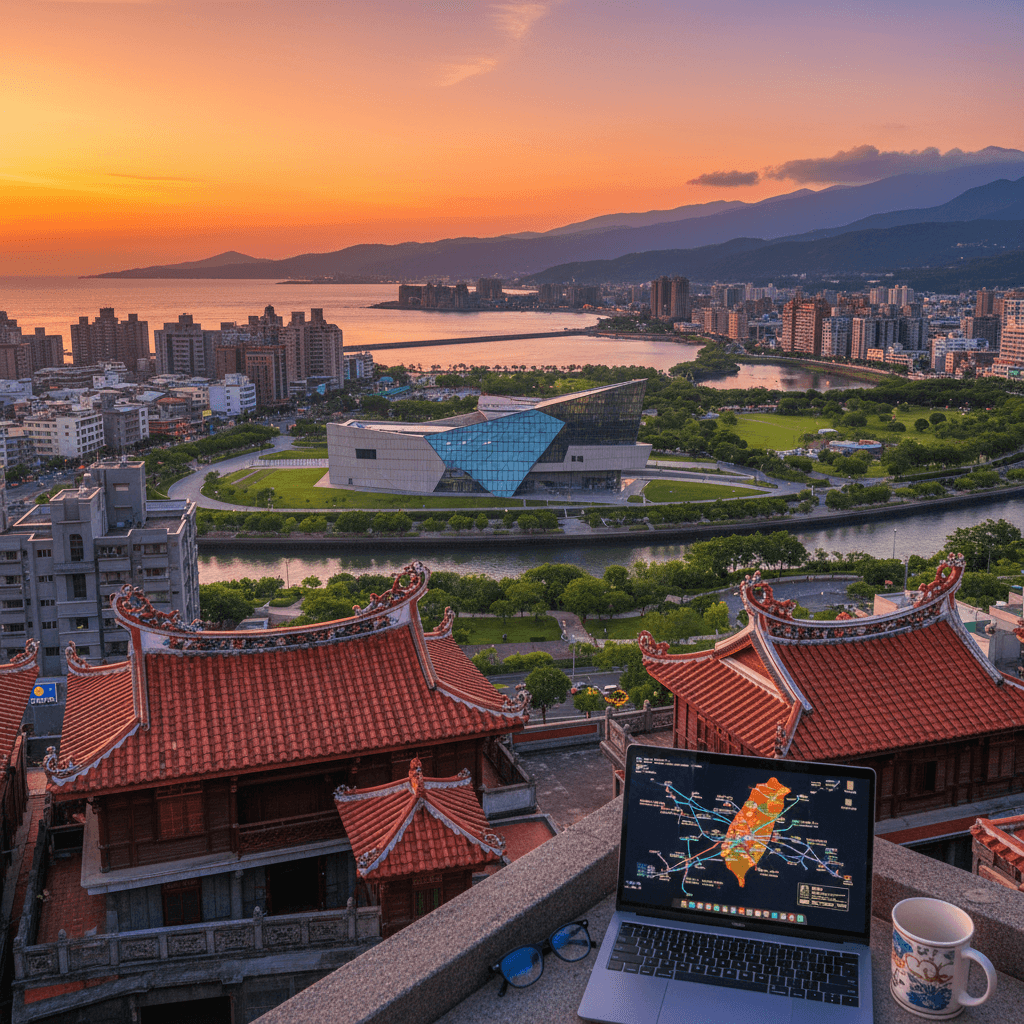
Yilan City
🇹🇼 Taiwan