Szeged
🇭🇺 Hungary
Szeged feels like a university town that never fully learned how to rush. It’s Hungary’s third-largest city, but the pace is slower than Budapest, the streets are flatter and the whole place has this sunny, slightly faded calm that suits long walks, cheap coffee and afternoons that drift into nowhere.
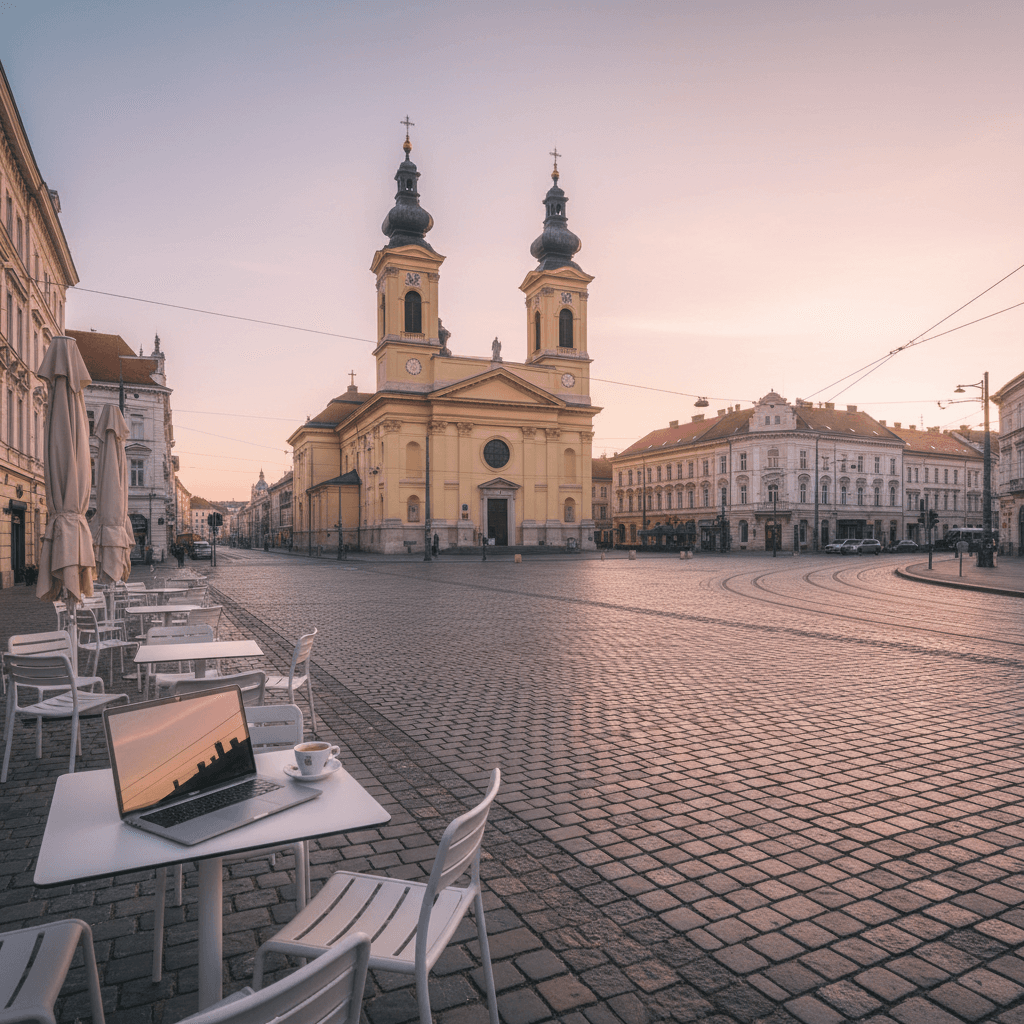
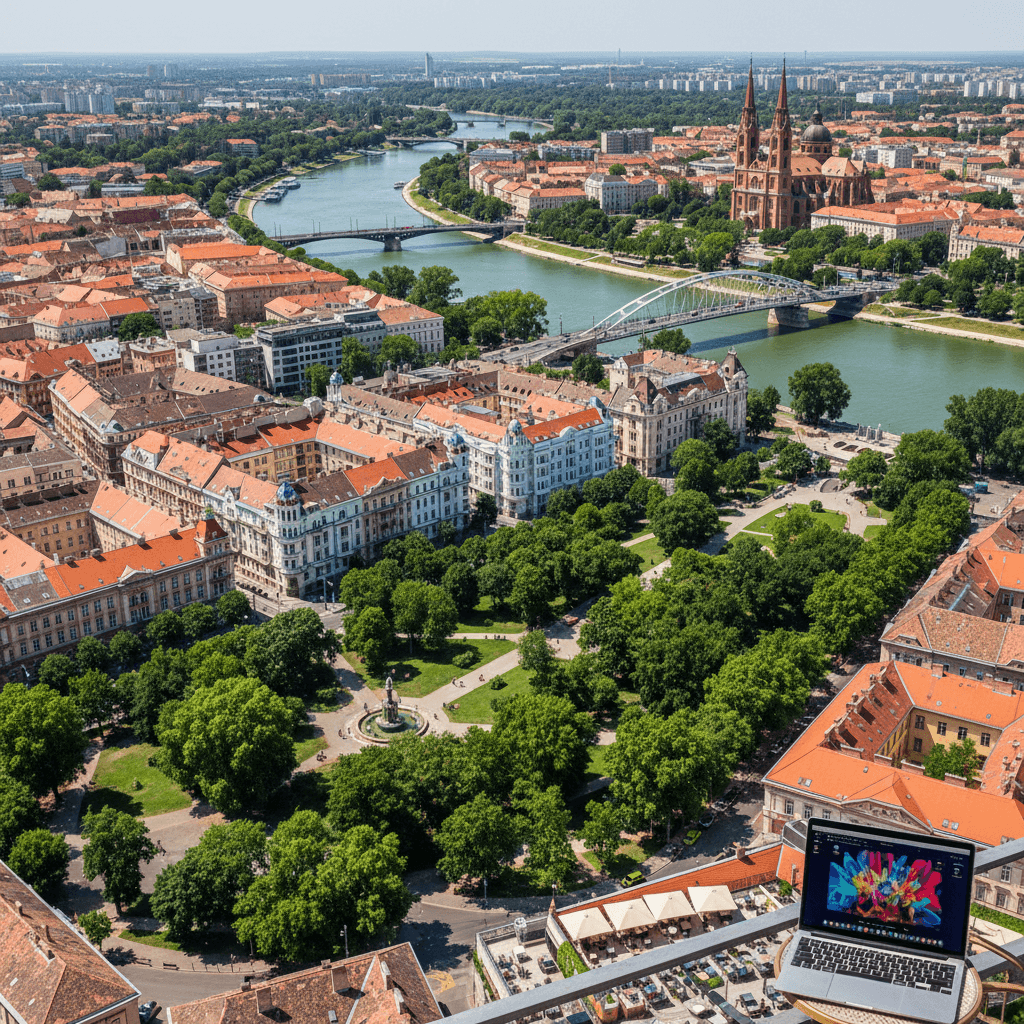
The center is handsome in a way that sneaks up on you, with Art Nouveau facades, tram bells and wide streets that smell faintly of roasted coffee, frying oil and summer dust. The city earns its “City of Sunshine” nickname and weirdly, it fits, because even on ordinary days the light feels sharper here, bouncing off pale buildings and the Tisza River.
Most nomads end up in Belváros, where you can walk to cafes, universities, bars and coworking spaces without thinking twice. It’s more expensive than the outer districts, but the convenience is real and honestly, that matters when you’re working and trying to keep your life from turning into a taxi schedule.
What it feels like day to day
- Vibe: relaxed, student-heavy, a little sleepy after dark
- Good for: walkability, cafe work, low-stress routines
- Less good for: wild nightlife, instant-English-everywhere convenience
Expect a friendly, manageable city rather than a nonstop social machine. The expat crowd is welcoming, the local festival scene gives the city real energy in season and the soundscape is usually trams, bike wheels, church bells and the occasional rowdy bar spillout rather than club noise until dawn, which, surprisingly, is part of the charm.
That said, the language barrier can be annoying, especially with older locals and some squares feel rougher late at night when the crowd thins out and the mood gets sloppy. Still, crime stays relatively low and most people find Szeged safe enough to live in without thinking about it constantly, which is a nice change from bigger, louder cities.
Living here
- Budget range: about $700 to $900 for shared housing and cheap eats
- Mid-range: about $900 to $1,200 for a one-bedroom and regular cafe meals
- Comfortable: $1,200+ for a central place and better dinners out
Internet is fast, coworking is decent and cafes near the river are perfectly fine for a laptop day as long as you buy something and don’t hog the table. Szeged works best for people who want affordable, walkable city life with enough culture to stay interested, but not the chaos, price tags or international buzz of a bigger capital.
Szeged is one of Hungary's cheaper city bases and that matters if you're living here month to month, not just passing through for a weekend. A solo nomad usually lands around $934 a month with rent or about $502 without it, which is honestly pretty manageable for a place with decent cafés, walkable streets and a student crowd that keeps prices from drifting too high.
Not cheap. Not expensive either. The real trick is your housing choice, because a central one bedroom or studio in Belváros runs roughly $324 to $417, while outer districts drop lower and you'll feel that difference every time you pay for coffee, groceries or a late tram ride home after the riverfront gets chilly.
Monthly budget ranges
- Budget: $700 to $900, usually shared housing, market groceries and street food like lángos
- Mid-range: $900 to $1,200, which covers a private one bedroom, café lunches and some nights out
- Comfortable: $1,200+, if you want a central studio, more dining out and less penny counting
Food is where Szeged stays friendly to wallets, though the nicer places along the river and in the center can still sting. A quick street food bite costs around $5.97, a mid-range lunch menu is about $7.91 and dinner for two at a proper sit-down spot can reach $47.40, which sounds fine until you start doing it twice a week, then it adds up fast.
Transport doesn't break the bank, but it isn't free and the city's flat layout means a lot of people just walk or bike. Monthly public transport passes run about $28.30, single rides are $1.63 and a taxi or Bolt trip across town is still reasonable at roughly $15.80 for an 8 km ride, so you can save by skipping cabs when the weather's good.
Everyday costs
- Internet: About $20 a month for decent home service, usually fast enough for video calls and uploads
- Doctor visit: Around $35, which helps if you need a quick private appointment
- Coworking: Around Ft42,247 to Ft46,900 monthly, depending on the space and desk type
Belváros costs more, but most nomads still prefer it because you can hear café chatter, tram bells and the weekend buzz without needing a car. If you want cheaper rent, look farther out near parks, but you'll trade convenience for quieter streets and a slower evening scene, which, surprisingly, isn't a bad deal if you mainly work and sleep at home.
Szeged feels easy at first, then the heat, the tram bells and the slower pace settle in. It’s cheaper than Budapest, walkable and sunny enough to make a terrace coffee habit feel very normal, though the language barrier can get old fast with older locals.
Nomads
Belváros is the obvious pick and honestly, it’s the one most nomads should start with. You’re close to the University of Szeged, cafes, the river and coworking options like Spaces, so you can work, eat and wander without needing a taxi every day.
- Rent: A central 1BR or studio usually runs about $324 to $417.
- Vibe: Walkable, lively, easy for meeting people, but pricier than outer districts.
- Best for: Remote workers who want cafes, bikes and quick access to everything.
The downside is simple, it can feel a bit sleepy at night and the international nightlife scene isn’t Budapest-level. Still, if you want a place where your laptop bag doesn’t feel like a burden and the internet is, honestly, reliable enough for real work, Belváros makes sense.
Expats
Longer-term expats often do better just outside the center, where rents drop and the streets get quieter. Areas near parks are calmer and you’ll hear less late-night chatter, fewer scooters, less bar noise, which, surprisingly, matters a lot after a few months.
- Rent: Lower than downtown, with more space for the money.
- Pros: Quieter blocks, greener surroundings, easier parking.
- Cons: Fewer late cafes, less spontaneous social life.
If you’re settling in, choose convenience near a tram line over a pretty but awkward street. The customs, Calvary and Mars Square areas can feel rough after dark, so expats usually keep their evenings elsewhere, especially when the squares fill with drunks, cigarette smoke and that tired, metallic city smell.
Families
Families usually do better in the outer neighborhoods near parks and schools, where apartments are cheaper and there’s room to breathe. You get less noise, more storage and fewer delivery scooters buzzing under your window at 11 p.m.
- Best fit: Quiet residential streets with access to green space.
- Tradeoff: Less nightlife and more time on buses or bikes.
- Budget: More comfortable on $900 to $1,200 a month.
The tradeoff is that the center starts to feel like a trip, not a default, so plan around trams, grocery runs and school commutes. That said, Szeged’s parks, low crime and slower rhythm make family life pretty manageable and you won’t spend your evenings dodging traffic or shouting over it.
Solo Travelers
Solo travelers should stay in or near Belváros if they want the city to feel simple. You can walk most places, hop on Mobiljegy trams and get back home without wrestling with taxis or dark side streets after dinner.
- Best base: Central streets near cafes and the river.
- Safety: Generally good, but avoid empty squares late at night.
- Social life: University bars, festivals and expat groups.
It’s not a wild city and that’s part of the appeal. You’ll get warm bread, paprika-heavy food, bike bells, church bells and summer air that sticks to your skin, then a quiet walk home, which feels safer and calmer than it sounds on paper.
Szeged’s internet is fast enough that most nomads stop thinking about it, which is exactly what you want. A basic home line runs around $20 a month for 50Mbps-plus speeds and in Belváros the connection is usually steady enough for calls, uploads and long writing days. Honestly, the bigger issue is finding a quiet corner, not Wi-Fi.
The coworking scene is small but decent and the pricing doesn’t try to mug you. Spaces at Bakay Nándor u. 24 comes in around Ft42,247 for a one-person desk, various flexible spaces around Ft40,000-50,000 monthly for a dedicated setup and HQ or Regus starts from about Ft46,900 a month, with day passes around Ft1,200. That’s not Budapest-cheap, but for Szeged it’s fair and the buildings are usually cleaner and calmer than a noisy café with clattering cups and blaring pop music.
Best options for working
- Spaces, Bakay Nándor u. 24: Best if you want a proper desk and fewer distractions.
- HQ, Regus: The safest pick for business calls, though it feels a bit corporate.
Cafés near the Tisza River are popular with laptop workers and some of them, weirdly, are better than the coworking rooms if you just need two focused hours and a strong coffee. You’ll hear plates, chairs scraping, tram bells outside and the occasional burst of Hungarian conversation, so it’s lively without turning into a nightmare. Skip the loud student bars during peak hours, they’re bad for concentration.
SIM cards are easy enough to sort out. Vodafone and Telekom both sell prepaid data deals for around €10 and that’s usually enough for maps, messages and a backup hotspot if your apartment internet gets flaky. For banking, Revolut and Wise are common among expats and OTP Bank ATMs are everywhere, so you won’t be hunting around the city at midnight.
If you’re staying a while, Belváros is the best base, because you’re close to coworking spaces, cafés, the university crowd and most of the city’s day-to-day rhythm. Out by the parks and outer districts, it’s quieter and cheaper, though you’ll spend more time on trams or bikes. The internet itself won’t be the problem here, frankly, it’s deciding how much city noise you can tolerate.
Safety & Healthcare
Szeged feels safe, especially in Belváros and around the university. Street noise drops fast after dark, though and Customs Square plus a few rougher pockets can get sketchy when the drunk crowd spills out, so don’t wander there alone at 2 a.m. if you can help it.
Violent crime is rare, petty stuff is the bigger annoyance and honestly that’s the norm for a calm Hungarian city this size. You’ll see older locals keeping to themselves, tram bells clanging, scooters buzzing past the cafés, then the smell of smoke and lángos drifting in from the street.
Where to be cautious
- Belváros: Safest bet for most nomads, busy enough to feel lively but still easy to read at night.
- Customs Square: Fine by day, less appealing after dark if the homeless and drinking crowds are hanging around.
- Calvary and Mars Squares: Best treated as transit zones late at night, not places to linger.
Healthcare is decent and the University of Szeged system is the name you want if something more serious comes up. Pharmacies, marked by the green cross, are everywhere, so picking up basic meds is painless and a doctor’s visit runs about $35, which is pretty manageable if you’ve got private insurance.
For emergencies, call 112, that’s the EU-wide number. Weirdly, the part that frustrates people most isn’t the medical care itself, it’s the language gap, because older staff may not speak much English, so having Google Translate open can save you time and a lot of hand-waving.
How nomads handle it
- Insurance: Bring private cover, public care can be slow if you’re not in the system.
- Pharmacies: Use a gyógyszertár for over-the-counter meds and late-night advice.
- Prep: Save your insurance details, passport photo and emergency contacts on your phone.
If you’re used to big-city chaos, Szeged will feel almost sleepy, which, surprisingly, is part of the appeal. You can walk home without clutching your bag, then deal with the real headache, bureaucracy, if you need anything beyond a standard checkup.
My take, skip the sketchy squares after midnight, carry a little cash and know where the nearest pharmacy is, because that’s usually enough to stay comfortable here. Not dramatic. Just smart.
Szeged is easy to live in if you like a city you can cross on foot without getting annoyed. Belváros is the obvious base, because most daily errands, cafes and tram stops sit close together and the whole center has that mild hum of students, bikes and espresso machines.
Walk. That’s the default. The pavements are manageable, the streets feel calm and even in summer you’ll hear church bells, tram wheels on the tracks and the occasional scooter buzzing past the riverfront, which, surprisingly, stays pleasant for longer than you’d expect in a Hungarian city.
Walking and biking
- Best for: Belváros, the university area and the Tisza riverfront
- Why it works: Most daily life sits close together, so you won’t need a car for coffee runs, groceries or coworking
- Watch out for: Nighttime around some squares can feel bleak and empty, especially if there’s a crowd of drunk guys or people hanging around
Bikes make a lot of sense here and locals treat them like normal transport, not weekend fitness gear. Rent one if you’re staying a while, because the flat terrain is kind to your legs, though summer heat can be brutal when you’re riding under exposed sun and breathing warm exhaust near busier roads.
Public transport
- Single ticket: about $1.63
- Monthly pass: about $28.30
- Best app: Mobiljegy for buying tickets on your phone
The trams and buses are solid for a city this size and they’re cheap enough that most nomads won’t think twice about using them for rainy days or longer hops. Get the pass if you’re commuting often, because buying singles gets old fast, especially when you’re standing at a stop in cold wind with diesel fumes drifting by.
Taxis and Bolt are the backup plan, not the main strategy. A typical ride within town can run around $15.80 for 8 km and that’s fine for late nights or luggage-heavy trips, but you’ll pay for the convenience, honestly, so don’t treat it like everyday transport.
Getting in and out
- From Budapest: Trains usually take about 2 hours
- Best for tickets: MÁV app
- Airport access: Most people connect through Budapest, then continue by train or bus
If you’re arriving from abroad, Szeged usually feels a step slower than Budapest right away, in a good way, less honking, fewer crowds and a lot more room to breathe. The tradeoff is simple, you get a calmer city and cheaper daily transport, but you won’t find the same dense late-night network of options you’d have in the capital.
Szeged feels easy at first, then the language barrier shows up fast. Younger people, especially around the University of Szeged, usually speak decent English, but once you’re dealing with older locals, a pharmacist or a landlord, Hungarian takes over and your patience gets tested, honestly.
The city isn’t hostile about it, just stubborn. You’ll hear quick Hungarian at the market, tram stops and cafés near Belváros, with that sharp, hissing rhythm that makes you realize how much you’ve been guessing and if you’re used to getting by on English alone, Szeged can be weirdly humbling.
That said, the basics go a long way. Köszönöm means thanks, Szép napot means have a nice day and saying either one usually softens the interaction, which, surprisingly, matters more here than perfect grammar or flashy pronunciation.
What English gets you
- University areas: Best odds for smooth English, especially with students, cafés and coworking staff.
- Central Szeged: Fine for daily life, though some shops still switch to Hungarian the second things get practical.
- Older locals: Mixed at best, so keep Google Translate open and don’t assume anyone wants to chat in English.
For daily life, digital tools help a lot, but they won’t save you from bad timing. Google Translate is the obvious fallback and the Hungarian-English offline dictionary on Google Play is handy when your data cuts out in a tram or a supermarket with terrible signal, because it will happen eventually.
Phone coverage is solid, so a local SIM from Vodafone or Telekom makes sense if you’re staying more than a week. Prepaid data is cheap, around €10 and in practice that means you can translate menus, call taxis and dodge the awkward moment when a cashier is waiting and you’re smiling like an idiot.
Useful habits
- Learn 5 phrases: Thanks, hello, good day, yes, no and where is... should be your starter pack.
- Use text first: Written Hungarian is easier to copy into an app than trying to catch it by ear.
- Speak slowly: People here usually respond better to calm, simple English than fast, touristy slang.
The real trick is attitude. Don’t expect everyone to accommodate you, because they won’t and if you stay polite, use a few Hungarian words and keep your translator ready, day-to-day life in Szeged gets much easier, even if the paperwork, the small talk and the occasional supermarket exchange still feel like a minor battle.
Weather & Best Time to Visit
Szeged earns its “City of Sunshine” nickname for a reason and yes, locals bring it up a lot. Summers are hot and bright, winters are cold and grey and the air can feel sticky in July when the Tisza river heat hangs over the pavements, the trams rattle by and you catch the smell of dust, espresso and frying lángos.
May through September is the sweet spot, with daytime temperatures usually sitting around 23 to 28°C, which is warm enough for long café hours and river walks without feeling punished for leaving the apartment. Honestly, this is when Szeged feels at its best, because the city stays lively without getting frantic and outdoor festivals, beer gardens and terrace cafés actually make sense.
January and February are the months most people grumble about. Not charming.
Month-by-Month Feel
- January: Around 2°C by day and -3°C at night, with about 12 rainy days, so expect cold sidewalks, wet gloves and that brutal tile-floor chill in older apartments.
- May: Mild, sunny and easy for walking, which, surprisingly, is when the city starts feeling made for long afternoons outside.
- July: Around 28°C by day and 16°C at night, good for swimming and evening drinks, but it can get sweaty fast and the humidity clings.
- June: The rainiest month, with roughly 72 mm and about 13 rainy days, so pack a light jacket because storms can roll in hard and loud.
- September: Still warm, usually calmer than peak summer and a solid pick if you want outdoor weather without the worst heat.
If you like sitting outside with a beer or working from a café terrace, aim for late spring or early autumn. The light is softer, the streets near Belváros are pleasant on foot and you won’t be peeling your shirt off after a ten-minute walk.
Winter isn’t a dealbreaker, but it’s a different city. You’ll spend more time indoors, the wind can bite along open streets and the low season feels quieter in a way that some nomads love and others find a bit flat, especially if they’re chasing nightlife.
Best Time for Nomads
- Best overall: May, June, September and early October.
- Best for festivals: Summer, when the riverfront and central squares fill up.
- Best for budget stays: Winter, though you’re paying with cold mornings and fewer reasons to linger outside.
My take, skip deep winter unless you really like quiet streets and heavy coats. For most visitors, Szeged is nicest when the sun’s out, the cafés spill onto the sidewalks and you can hear bike bells, tram clatter and people talking over the low hum of the city instead of fighting the weather.
Szeged is easy to live in, but it still has a few annoyances. The center is walkable, trams are reliable and the city feels calm compared with Budapest, though the language barrier gets old fast once you’re dealing with older locals or apartment paperwork.
If you’re planning a stay longer than a week, sort out your SIM and money setup first. Vodafone and Telekom both sell starter SIMs for about €10, Revolut and Wise are what most nomads use for daily spending and OTP Bank ATMs are everywhere, so you won’t be stuck hunting around when you need cash.
Daily Costs
- Budget living: $700 to $900 a month, usually shared housing, cheap lunches and more lángos than you probably planned on.
- Mid-range: $900 to $1,200 a month, which gets you a one-bedroom place and regular café lunches without constantly checking your app balance.
- Comfortable: $1,200 plus, for a central studio, nicer dinners and enough slack that a rainy week doesn’t wreck your budget.
Rent in Belváros, the downtown area most nomads pick, usually sits around $324 to $417 for a small central apartment and honestly that’s decent for a city this safe and walkable. Go farther out if you want lower rent and quieter nights, but then you’ll trade away the easy café crawl and the quick tram rides.
Useful Basics
- Internet: Fast enough for remote work, with common home plans around $20 a month and coworking spots like Spaces, Workin.space and HQ/Regus if you want a desk that isn’t your kitchen table.
- Getting around: Buy tickets in the Mobiljegy app, then use the trams and buses, because a monthly pass is only about $28.30 and the city’s compact enough that you’ll use it more than you expect.
- Food and social life: Street food like lángos is cheap, mid-range lunches run about $7.91 and places like Régi Híd Vendéglő or John Bull Pub are fine when you want something less greasy than a market snack.
Safety is generally good, though Customs Square and a few similar spots can feel sketchy at night when the benches fill with drunks and people hanging around. Keep your guard up there, especially if the air smells like beer, cigarette smoke and late tram exhaust, but don’t treat the whole city like a problem zone, because it isn’t.
For healthcare, the University of Szeged system is solid, pharmacies are easy to spot with the green cross sign and a doctor visit is around $35. Tip 10 to 15 percent in restaurants, keep things polite and a bit formal and if you want a simple day trip, Ópusztaszer or a train to Budapest works well without much fuss.
Need visa and immigration info for Hungary?
🇭🇺 View Hungary Country GuideEasy Landing
Settle in, no stress