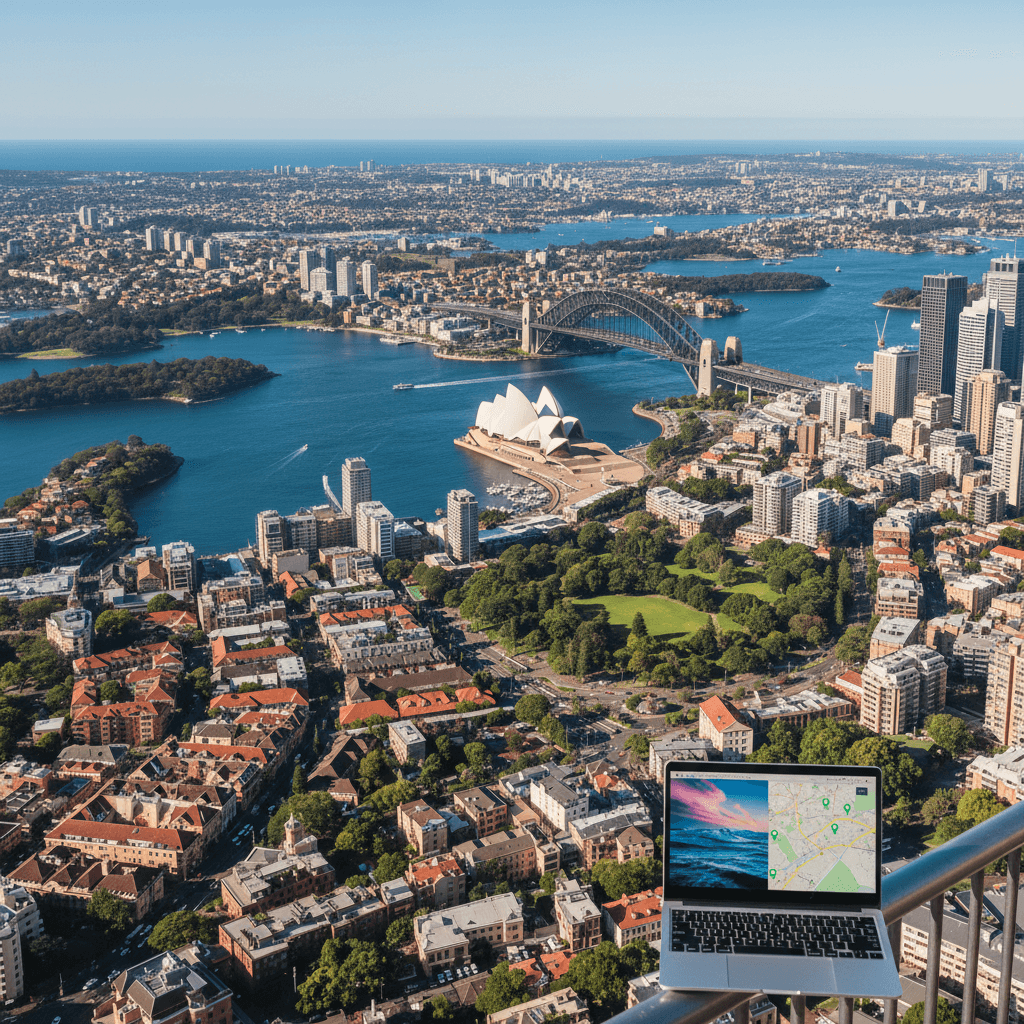
Sydney
🇦🇺 Australia
The Harbor City Spirit
Sydney is a city that refuses to choose between the boardroom and the surfboard. It has a high energy, polished feel that keeps you productive, but the moment the clock hits 5:00 PM, the suit jackets come off and everyone heads toward the water. It is a place where professional ambition meets a deep, cultural obsession with the outdoors. Unlike the gritty urbanism of Melbourne, Sydney feels bright, airy, and occasionally a little flashy, but it backs up the aesthetics with world class infrastructure.
Most nomads find the city incredibly easy to sink into because it functions so well. The internet is fast, the coffee is arguably the best on the planet, and the public transport system is intuitive. You will feel a distinct shift in vibe depending on where you plant your laptop. Surry Hills feels like a creative hub filled with media agencies and boutique cafes, while Bondi is a perpetual summer camp for the global remote work crowd. The "Sydneysider" lifestyle is about balance, usually involving a sunrise coastal walk, a focused six hour sprint at a coworking space, and a sunset drink by the harbor.
The Price of Paradise
Let's be honest: Sydney is expensive. It is the most costly city in Australia, and your budget will feel the squeeze, especially regarding housing. If you are coming from Southeast Asia or Southern Europe, the sticker shock is real. However, the quality of life is exceptionally high, and the safety and cleanliness often justify the premium for those with a steady remote income.
- Budget Tier: Expect to spend AUD 3,000 to 4,000 per month. This usually requires a room in a shared house and sticking to cheap eats like fish and chips or local Thai spots.
- Mid-range: Budget between AUD 4,500 and 6,000. This covers a private studio or one bedroom apartment in an outer suburb like Coogee, regular coworking access, and dining out a few times a week.
- Comfortable: If you want a central apartment in the CBD or a beachfront spot in Bondi, you will need AUD 7,000 or more per month to cover upscale dining and lifestyle perks.
Where to Set Up Your Base
Sydney is a collection of distinct villages. Nomads often recommend staying central for the first two weeks to get a feel for the commute before signing a longer lease. Transport is managed via the Opal card, which caps your weekly spend at AUD 50 for unlimited trains, buses, and ferries.
Surry Hills
- Best For: Urbanites and networking.
- Rent: AUD 2,500 to 3,500 for a one bedroom.
- The Vibe: The heart of the city's tech and creative scene. It is packed with coworking spaces like The Commons and Hub Australia.
Bondi Beach
- Best For: Surf culture and solo travelers.
- Rent: AUD 2,000 to 3,000 for a studio.
- The Vibe: Iconic but touristy. It is perfect if you want to work from a cafe in your boardshorts, though the commute to the city center can be a bit of a trek.
Manly & Coogee
- Best For: A relaxed, local beach feel.
- Rent: AUD 1,800 to 2,500.
- The Vibe: Manly requires a ferry ride from the CBD, which is arguably the most beautiful commute in the world. Coogee is more family friendly and offers a quieter alternative to Bondi.
Connectivity and Workspace
Working from cafes is common, but Sydney’s coworking scene is where the real networking happens. WeWork has eight locations across the CBD, usually costing between AUD 450 and 550 per month. For a more community focused environment, The Commons is a favorite at around AUD 350. If you need a local phone plan, grab an eSIM from Holafly or Jetpac before you land, or visit a Telstra shop for the best regional coverage if you plan on exploring outside the city.
Practical Realities
The weather is generally spectacular, but it can be unpredictable. September to November is the sweet spot: spring is in full bloom and the heat isn't oppressive yet. Winters are mild but can feel chilly in older apartments that lack proper insulation. Safety is rarely a concern here, as the city is highly regulated and well lit. Just remember that Australians are sticklers for rules, whether it's crossing the street at the light or queuing for a bus. If you embrace the "no worries" attitude and respect the local pace, you'll find Sydney is one of the most rewarding home bases a nomad can have.
The Reality of Sydney Pricing
Sydney is undeniably the most expensive city in Australia. For digital nomads coming from Southeast Asia or Southern Europe, the initial sticker shock can be a bit of a jolt. However, the high cost of entry buys you world class infrastructure, a safe environment, and an outdoor lifestyle that is hard to replicate anywhere else.
Most nomads find that their biggest hurdle is housing. The rental market is competitive and pricey, often requiring a strategy of booking a short term stay for the first 2 weeks to get a feel for the commute before committing to a longer lease. If you are on a tighter budget, shared housing via platforms like Flatmates is the standard way to survive here without draining your savings.
Monthly Budget Tiers
- Budget Tier: AUD 3,000 to 4,000. This lifestyle involves living in a shared house, primarily eating street food like fish and chips or meat pies, and sticking strictly to public transport.
- Mid-range: AUD 4,500 to 6,000. This covers a private studio or 1BR in an outer suburb like Coogee, regular meals at mid-range cafes, and a dedicated desk at a coworking space.
- Comfortable: AUD 7,000+. For those wanting a central 1BR in the CBD or Surry Hills, frequent upscale dining, and regular rideshares to get around.
Neighborhood Cost Breakdown
Where you plant your flag will dictate your monthly burn more than any other factor. Sydney’s neighborhoods have distinct price points and personalities.
Surry Hills
- Best for: Networking and urban vibes.
- Rent: Expect AUD 2,500 to 3,500 for a central 1BR.
- Pros: Home to the best coworking hubs and a dense concentration of cafes.
- Cons: High rent and noisy nights.
Bondi Beach
- Best for: Surf culture and solo travelers.
- Rent: AUD 2,000 to 3,000 for a studio or 1BR.
- Pros: Iconic coastal walks and a massive international nomad community.
- Cons: Extremely touristy and public transport is limited to buses.
Coogee or Manly
- Best for: A more relaxed, local beach experience.
- Rent: AUD 1,800 to 2,500 for a 1BR.
- Pros: Family friendly and slightly more affordable than Bondi.
- Cons: A longer commute if you need to be in the CBD frequently.
Food, Drink, and Socializing
Dining out is a major part of Sydney's social fabric. A quick meal at a market or a local chippy usually runs AUD 10 to 15. For a proper sit down lunch at a place like Bills in Surry Hills, you are looking at around AUD 30 or 40. If you are heading out for an upscale dinner at Circular Quay, prices easily climb past AUD 60 per person before drinks at restaurants like Bennelong.
Tipping isn't mandatory in Australia, though leaving 10% at high end restaurants is a nice gesture for great service. For casual cafes and bars, most locals just round up the bill or don't tip at all.
Coworking and Connectivity
Internet is reliable across the city, with fiber speeds of 100+ Mbps common in professional spaces. Coworking is a significant but worthwhile expense for the networking opportunities it provides.
- The Commons: Community focused, with memberships starting around AUD 525 per month.
- WeWork: Has 8 locations across the CBD with hot desks ranging from AUD 450 to 550.
- Hub Australia: High end spots with gyms and cafes for roughly AUD 500 per month.
For data, expats recommend grabbing an eSIM like Holafly or Jetpac for the first few days. Once settled, a local SIM from Telstra or Optus offers unlimited data for about AUD 30 to 50 a month.
Getting Around
The Opal card is your best friend. It manages all trains, buses, and ferries. The weekly spend is capped at AUD 50, meaning anything you travel beyond that is free. If you prefer wheels, Lime or Neuron scooters cost about AUD 5 per hour. A train from the airport to the CBD is AUD 20, while an Uber for the same trip will set you back AUD 50 to 70.
For the Digital Nomads: Surry Hills
If you want to be at the heart of Sydney's creative pulse, Surry Hills is the spot. It's the city's primary hub for tech startups and freelancers, located just a short walk from Central Station. You'll find the highest density of coworking spaces here, including The Commons, which offers memberships starting around AUD 525 per month, and several Hub Australia locations starting at AUD 500.
The lifestyle here revolves around high quality coffee and networking. Most nomads spend their mornings at local cafes like Bills before heading to a desk. While it's incredibly convenient, be prepared for the price tag. A decent one bedroom apartment in this area usually costs between AUD 2,500 and AUD 3,500 per month. It can get noisy on weekends, but the proximity to the CBD and the endless stream of networking events make it the top choice for those working remotely.
For the Solo Travelers: Bondi Beach
Bondi is where you go if you want the quintessential Australian experience. It's less of a corporate hub and more of a lifestyle choice. Solo travelers find it easy to meet people here through surf schools, coastal runs, or the local backpacker bars. The vibe is international and energetic, though it can feel a bit touristy during the peak summer months of December to February.
- Rent: Expect to pay AUD 2,000 to AUD 3,000 for a studio or small apartment.
- Vibe: Health conscious, surf focused, and very social.
- Drawbacks: Public transport is limited to buses; there's no train line directly to the beach.
For work, you'll likely find yourself at one of the many laptop friendly cafes or taking the bus into the city for a WeWork session. It's perfect if your priority is catching a wave before your first Zoom call of the day.
For the Expats: CBD and The Rocks
Professionals moving to Sydney for long term roles often gravitate toward the CBD or historic areas like The Rocks and Circular Quay. This is the financial heart of the city. Everything is polished, safe, and efficient. You're steps away from iconic landmarks like the Opera House and the best high end dining in the country, such as Bennelong.
Expats recommend this area for its sheer convenience. You can walk to almost any office, and the Opal card system makes it easy to jump on a ferry to explore the rest of the harbor. However, it lacks a bit of "soul" compared to the inner west or the beaches. Living here is expensive; you'll need a budget of at least AUD 7,000 per month to live comfortably, including upscale meals and central housing.
For Families and Slow Travelers: Coogee and Manly
If you're traveling with kids or just want a slower pace of life, look toward Coogee in the east or Manly in the north. Coogee is more relaxed than Bondi but shares the same stunning coastal paths. Rents are slightly more affordable, ranging from AUD 1,800 to AUD 2,500 for apartments further back from the water.
Manly offers a unique lifestyle because it's separated from the city by a 30 minute ferry ride. Many families love this "island" feel. It has its own ecosystem of schools, parks, and quiet beaches like Shelly Beach. While the commute to the CBD is scenic, it can feel isolated if you need to be in the city every day. It's the best choice for those who want a backyard for the kids and a community that feels like a permanent vacation.
Practical Local Tips
- Most locals use Flatmates.com.au or Domain to find housing; skip the hotels for stays longer than a month.
- Keep an eye on your transport spend; the Opal card caps your weekly travel at AUD 50, which is a steal for unlimited ferries and trains.
- For reliable data, grab a Telstra physical SIM for about AUD 30 if you plan on exploring outside the city, as they have the best rural coverage.
Reliable Speeds and Digital Infrastructure
Sydney is a heavy hitter when it comes to connectivity. You aren't going to struggle with patchy signals here. The city relies on high speed fiber, and most coworking spaces and cafes easily clock speeds over 100 Mbps. It is a professional town at heart, so the infrastructure is built to handle serious workloads without the spinning wheel of death during your Zoom calls.
For your phone, don't bother hunting for a physical shop the moment you land. Most nomads recommend grabbing an eSIM like Holafly or Jetpac before you touch down. It saves you the headache of finding a store while jet-lagged. If you are staying longer than a month, a local physical SIM from Telstra or Optus is the way to go. You can snag unlimited data plans for roughly AUD 30 to AUD 50 per month, and the coverage is solid enough for a weekend trip to the Blue Mountains.
The Best Coworking Spaces
The coworking scene in Sydney is world class, but it reflects the city's high cost of living. You are paying for premium design, ergonomic chairs, and networking opportunities with some of Australia's top startups. Most spaces are concentrated in the CBD and Surry Hills.
- WeWork: With 8 locations across the CBD, this is the most flexible choice. It's pet friendly, hosts regular networking mixers, and costs between AUD 450 and AUD 550 a month for a hot desk.
- Hub Australia: These spots feel more like a high end club than an office. They include perks like onsite gyms, cafes, and even parents' rooms. Expect to pay around AUD 500 for a monthly membership.
- The Commons: The Commons offers memberships starting around AUD 525 per month for hot desks. It is a local favorite for those seeking a community focused vibe.
Cafe Culture and Working Remotely
Sydney basically invented the modern brunch, and the cafe culture is deeply intertwined with remote work. In neighborhoods like Surry Hills and Bondi, it's common to see people parked with a laptop and a flat white. Most cafes are happy to host you for a couple of hours, but keep an eye out for "no laptop" signs during the busy weekend brunch rush.
Look for spots with communal tables and visible power outlets. Nomads often head to Bills in Surry Hills for a mid morning session. If you need total silence, the State Library of New South Wales is a stunning, free alternative with excellent Wi-Fi and plenty of desk space. It is a great hack for budget conscious travelers who want to save their AUD 35 day pass fee for a few rounds of drinks later.
Practical Connectivity Tips
- Power Plugs: Australia uses Type I plugs (three flat pins in a triangular shape). Bring a sturdy adapter, as the cheap ones often wiggle out of the wall sockets in older cafes.
- Public Wi-Fi: The city offers free Wi-Fi in many public squares and on some transport, but it's usually too slow for anything beyond checking a map. Stick to your hotspot or a dedicated workspace for real tasks.
- Library Hack: Beyond the State Library, local council libraries in suburbs like Marrickville or Darlinghurst offer quiet zones and free internet if you just need to grind for a few hours without the pressure to buy coffee.
Cost Breakdown for Digital Professionals
- Hot Desk (Monthly): AUD 450 to AUD 550
- Day Pass: AUD 35 to AUD 50
- Local SIM (Unlimited): AUD 30 to AUD 50
- Coffee in a Cafe: AUD 4.50 to AUD 6.00
Most expats recommend staying central for your first two weeks. This gives you time to test the commute to different coworking hubs before you commit to a long term apartment lease. Sydney is sprawling, and while the internet is fast everywhere, the traffic can be a nightmare if you pick a home base too far from your favorite office.
Staying Safe in the Emerald City
Sydney is fundamentally a safe, rule based society where you can generally walk around with your laptop bag without a second thought. Most nomads find the city incredibly orderly, which is a relief if you are coming from more chaotic hubs. While the vibe is relaxed, the local culture respects boundaries and public order.
That said, every major city has its quirks. While violent crime is rare, keep your wits about you in Kings Cross or the fringes of the CBD late at night. These areas can get a bit rowdy when the bars close. Stick to well lit main streets and you will be fine. Most travelers say the biggest "danger" in Sydney is actually the sun; the UV levels here are no joke, so SPF 50+ is a daily requirement, even if it looks cloudy.
- Emergency Services: Dial 000 for police, ambulance, or fire. It is the only number you need to know.
- Night Safety: Use ride hailing apps like Uber or DiDi if you are heading home late from Surry Hills or the CBD.
- Beach Safety: Always swim between the red and yellow flags. The rips at Bondi and Bronte are powerful and catch out even strong swimmers.
Healthcare for Nomads and Expats
The healthcare system in Sydney is world class, though it operates on a two tier system. Public care is excellent but often crowded, while private care is the standard for anyone staying long term. If you are on a Working Holiday Visa or a standard visitor visa, you won't have access to Medicare (Australia's public system) unless your home country has a reciprocal agreement.
For day to day issues, look for a GP (General Practitioner). You will usually pay an out of pocket fee of $80 to $120 for a standard consultation. If you need a script filled, Chemist Warehouse is the go to for the best prices on medications and essentials. They are everywhere and usually offer the lowest prices in the city.
Top Medical Facilities
- Royal Prince Alfred Hospital (RPA): Located near the CBD, this is one of the most prestigious public hospitals in the country.
- St Vincent’s Hospital: Situated in Darlinghurst, it is centrally located and highly regarded for emergency care.
- Sydney Children's Hospital: The primary spot for those traveling with family, located in Randwick.
Expats recommend securing private health insurance before you land. Without it, a trip to the emergency room or an overnight stay can easily run into the thousands of dollars. Most digital nomad insurance providers cover Sydney, but double check that your policy includes medical evacuation and high cost hospital stays.
If you just need a quick checkup, many clinics in Surry Hills and the CBD cater to the professional crowd and offer online booking through apps like HotDoc or Healthengine. These apps are the easiest way to find an available doctor near your coworking space without spenting an hour on the phone.
Mastering the Opal System
Sydney's transit backbone is the Opal card system, a seamless network covering trains, buses, ferries, and light rail. You don't necessarily need a physical card anymore; most nomads just tap on and off using a contactless credit card or phone wallet. The real win for your budget is the weekly cap. Once you spend AUD 50 in a week, the rest of your travel is free. This includes the famous ferry ride to Manly, which usually costs about AUD 10 each way but becomes a free scenic cruise once you've hit your limit.
Trains are the fastest way to get between the CBD and the inner suburbs. They're clean, double-decker, and generally run on time. Buses fill the gaps, especially for the haul out to Bondi Beach where the train line doesn't reach. If you're heading to the airport, the train is the gold standard. It takes about 15 minutes from Central Station and costs roughly AUD 20. An Uber or DiDi for the same trip will set you back AUD 50 to AUD 70 depending on the surge pricing.
Life on Two Wheels and Two Feet
If you're staying in Surry Hills or the CBD, you'll rarely need a vehicle. These areas are highly walkable, though the hills in Surry Hills will give your calves a workout. For a faster zip across town, keep an eye out for Lime or Neuron e-bikes and scooters. You'll find them scattered on street corners, and they usually cost around AUD 5 per hour. They're perfect for short bursts, but the costs add up if you use them for long commutes.
Sydney is also famous for its coastal walks. The path from Bondi to Coogee is a rite of passage for every new arrival. It's about six kilometers of stunning cliffs and ocean pools. It isn't just for exercise; it's a legitimate way to move between beachside neighborhoods without sitting in traffic. Just remember that while the city is pedestrian-friendly, the sun is brutal. Expats quickly learn to carry water and wear high-SPF sunscreen even for a short walk to a cafe.
Rideshares and Driving
Uber is the dominant player here, but DiDi is a popular alternative that often runs promotions or lower base rates. Most nomads find that rideshares are best saved for late nights or when you're lugging groceries home in the rain. Traffic in the city center can be a nightmare during peak hours, often making the train a faster bet anyway.
Renting a car is generally unnecessary unless you're planning a weekend escape to the Blue Mountains or the Royal National Park. If you do need a set of wheels for a few hours, GoGet is a car-sharing service with dedicated pods all over the inner city. It saves you the hassle of traditional rental agencies and the nearly impossible task of finding affordable parking in neighborhoods like Paddington or Darlinghurst.
Practical Transit Tips
- Tap On, Tap Off: Always tap your card or phone at the yellow readers when entering and exiting. If you forget to tap off on a bus or train, you'll be charged the maximum possible fare for that line.
- Off-Peak Savings: Travel outside of morning and afternoon rush hours to get a 30% discount on rail, bus, and light rail fares.
- The Manly Ferry: Catch the F1 ferry from Circular Quay. It's the best AUD 10 you'll spend for a view of the Opera House and the harbor.
- Late Night Safety: While Sydney is very safe, the NightRide buses replace trains between midnight and 4:00 AM, ensuring you can always get back to the suburbs after the bars close.
The Local Lingo
While English is the official language, Sydney’s version of it comes with a distinct rhythm and a heavy dose of shorthand. You’ll hear a mix of global accents in the CBD and Surry Hills, but the local "Strine" is what gives the city its character. Most nomads find that while the grammar is the same, the vocabulary takes a week or two to click.
The golden rule here is abbreviation. If a word can be shortened and have an "o" or an "ie" tacked onto the end, it will be. A service station is a "servo," an avocado is an "avo," and your breakfast is "brekkie." If someone calls you "mate," it’s usually a friendly baseline, though the tone tells you everything you need to know about the actual relationship.
Must-Know Aussie Slang
You don't need to sound like a local to get by, but knowing these phrases will save you a few confused stares at the pub or the coworking space:
- G’day: The standard hello. It’s rarely used as "Good day" in a formal sense; it’s just a casual greeting.
- No worries: This is the national motto. It means "you’re welcome," "it’s fine," or "don't apologize."
- Cheers: Used for "thank you" more often than for a toast.
- Thongs: These are flip-flops. If someone tells you to wear thongs to the beach, they aren't talking about your underwear.
- Arvo: Afternoon. "See you this arvo" is a common way to end a morning meeting.
- Good onya: Well done or good for you.
Multicultural Communication
Sydney is a massive melting pot, and you’ll hear Mandarin, Arabic, Cantonese, and Vietnamese spoken daily, especially in the western suburbs and Haymarket. This diversity makes the city incredibly easy to navigate if English isn't your first language. Most signage is clear, and the hospitality industry is used to dealing with people from every corner of the globe.
In professional settings, like the Hub Australia or WeWork offices, the communication style is direct but friendly. Australians generally dislike pretension. Whether you’re talking to a CEO or a barista, a down-to-earth approach works best. Expats recommend keeping things "low key" rather than being overly aggressive in networking situations.
Digital Communication and Connectivity
Staying connected is rarely an issue in the city center. You'll find high-speed fiber in most dedicated workspaces, often hitting 100 Mbps or more. While cafe Wi-Fi is common in Surry Hills and Bondi, it can be hit or miss for heavy video calls, so most nomads rely on a solid data plan.
- eSIMs: For immediate data upon landing, Holafly or Jetpac are the go-to choices for short-term stays.
- Local SIMs: If you're staying longer than a month, grab a physical SIM from Telstra or Optus. Telstra has the best coverage if you plan on taking weekend trips to the Blue Mountains or up the coast.
- Data Costs: Expect to pay between AUD 30 and AUD 50 per month for a generous data allowance.
- Apps: Download Opal Travel for transport, Wise for managing currency, and LiveTrax or TripView for real-time train and ferry schedules.
If you ever find yourself stuck, Google Translate works perfectly for the more diverse neighborhoods, but for the most part, a smile and a "no worries" will get you through almost any interaction in Sydney.
When to Pack Your Bags
Sydney is a year-round destination, but for a nomad, the "best" time depends on whether you're here for the surf or the focus. The city stays temperate, though it can be surprisingly moody. You'll want to avoid January and February if you can. These months are the hottest, often hitting 30°C (86°F) with high humidity, and the city is packed with school holiday crowds that drive short-term rental prices through the roof.
Most long-term travelers swear by the shoulder seasons. September to November is the sweet spot. The air is crisp, the jacarandas are blooming across Surry Hills, and temperatures hover around a perfect 20°C (68°F). It is dry, sunny, and ideal for those morning coastal walks before you settle into a booth at The Commons or Hub Australia.
If you don't mind a bit of rain, March through June sees the most precipitation. It is rarely freezing, but winter nights in July and August can dip to 8°C (46°F). Since many older Sydney rentals lack proper insulation, those winter nights feel chillier than the numbers suggest. Pack a solid hoodie and a light jacket; you'll need them for the ferry ride to Manly.
The Cost of Living Breakdown
Let's be real: Sydney is the most expensive city in Australia. If you're coming from Southeast Asia, the sticker shock is real. To live comfortably here without constantly checking your bank app, you'll want a budget of at least AUD 4,500 to 6,000 per month. If you're okay with a shared house and eating more meat pies than fine dining, you can scrape by on AUD 3,000 to 4,000.
Neighborhood Price Tags
- Surry Hills: Rent for a 1BR sits between AUD 2,500 and 3,500. It is the heart of the nomad scene, filled with the best cafes and coworking hubs, but you pay for the proximity to the CBD.
- Bondi Beach: Expect to pay AUD 2,000 to 3,000 for a studio. It is touristy and public transport is a bit of a headache, but the lifestyle is hard to beat if you surf.
- Coogee and Manly: These beachside suburbs are slightly more relaxed. Rent ranges from AUD 1,800 to 2,500 for smaller places. They're great for a slower pace but involve a longer commute to the city center.
Daily Expenses and Logistics
Public transport is one area where you can save. Grab an Opal card or just tap your credit card; weekly fares are capped at AUD 50. That covers all your trains, buses, and even the iconic ferries. For food, a quick lunch of fish and chips or a Thai takeaway will run you AUD 10 to 15. A mid-range dinner at a spot like Bills in Surry Hills usually lands around AUD 30 to 40 per person before drinks.
Coworking is a standard expense for the Sydney nomad set. The Commons is a favorite for its community vibe at AUD 350 a month. WeWork has eight locations across the CBD for around AUD 450 to 550, which is great if you want to hop between different parts of the city. Most nomads recommend starting with a two-week central stay to figure out your commute before signing a longer lease through sites like Flatmates.com.au or Domain.
Practical Connectivity
Don't wait until you find a physical store to get online. Most expats use Holafly or Jetpac eSIMs to get data the second they land. Once you're settled, a local SIM from Telstra or Optus is the way to go. You can get a solid data plan for AUD 30 to 50 a month. The internet is generally reliable, with most cafes and coworking spaces offering speeds well over 100 Mbps.
The Cost of Doing Business
Sydney is spectacular, but it isn't cheap. If you're coming from Southeast Asia or Southern Europe, the "sticker shock" is real. To live comfortably here without constantly checking your bank balance, you'll need a budget of at least AUD 4,500 to 6,000 per month. This covers a studio in an outer beach suburb or a room in a high end shared house, plus plenty of flat whites and coworking fees.
For those on a tighter leash, AUD 3,000 to 4,000 is doable if you prioritize shared housing through sites like Flatmates.com.au. On the flip side, if you want a sleek high rise in the CBD and frequent dinners at places like Quay, expect to burn through AUD 7,000 or more. Most nomads find the sweet spot in the middle, balancing home cooked meals with the occasional AUD 30 brunch at Bills in Surry Hills.
Where to Plant Your Flag
- Surry Hills: This is the heartbeat of the nomad scene. It’s packed with creative agencies, the best coffee in the city, and coworking hubs like The Commons. Expect to pay AUD 2,500 to 3,500 for a small apartment, but you'll save on transport because everything is walkable.
- Bondi Beach: If you want the "surf before standup" lifestyle, this is it. It’s expensive and touristy, with rents around AUD 2,000 to 3,000, but the coastal energy is unmatched. Just know that the bus into the city can be a slog during rush hour.
- Coogee and Manly: These offer a more relaxed, family friendly version of the beach life. Manly requires a ferry ride, which is arguably the world’s most beautiful commute for the price of an Opal card fare.
Staying Connected and Productive
The internet in Sydney is generally excellent, especially in the CBD where fiber is standard. For a dedicated desk, WeWork has eight locations across the city starting around AUD 450 per month. If you prefer a more community focused vibe, The Commons offers memberships from AUD 525. Hub Australia is another heavy hitter, popular with professionals who need amenities like gyms and parents' rooms for about AUD 500 a month.
Don't bother roaming with your home SIM. Grab an eSIM from Holafly or Jetpac before you land for immediate data. Once you're settled, a local prepaid plan from Telstra or Optus will run you about AUD 30 to 50 a month for more data than you'll likely ever use.
Getting Around the Harbor
The Opal card is your golden ticket. It works on all trains, buses, and ferries. The best part is the weekly cap; once you hit AUD 50, the rest of your travel for the week is free. It makes those weekend trips to the Blue Mountains or a ferry ride to Watson's Bay incredibly affordable.
The city is highly walkable, but for longer hauls, Uber and DiDi are the go to apps. If you're coming from the airport, the train is the fastest way into town at AUD 20, taking only 15 minutes. A rideshare for the same trip can easily cost AUD 70 depending on the legendary Sydney traffic.
Safety and Health
Sydney is remarkably safe for a major global city. You can walk through most neighborhoods at night without a second thought. Just keep your wits about you in the CBD fringes or around Kings Cross late on weekends when the pub crowds get rowdy. If you have an emergency, dial 000.
The healthcare system is world class, but it’s pricey for non residents. Make sure your travel insurance is solid. For everyday needs, Chemist Warehouse is the local go to for affordable prescriptions and sunblock, which you will need daily, even when it looks cloudy. The Aussie sun is no joke.
Local Nuances
- Tipping: It’s not mandatory. In casual spots, nobody expects it. In upscale restaurants, 10% is a nice gesture for great service, but you won't be chased down the street if you don't leave it.
- The Lingo: A "thong" is a flip flop, "no worries" is the national motto, and "cheers" works for both hello and goodbye.
- Timing: The best weather hits between September and November. Avoid January and February if you hate humidity and massive holiday crowds.
Need visa and immigration info for Australia?
🇦🇺 View Australia Country GuideNomad Haven
Your home away from home
Monthly Budget Estimates
More cities in Australia
Geelong
🇦🇺 Australia
Launceston
🇦🇺 Australia
Townsville
🇦🇺 Australia