Suzhou
🇨🇳 China
The Venice of the East Meets the Silicon Valley of the West
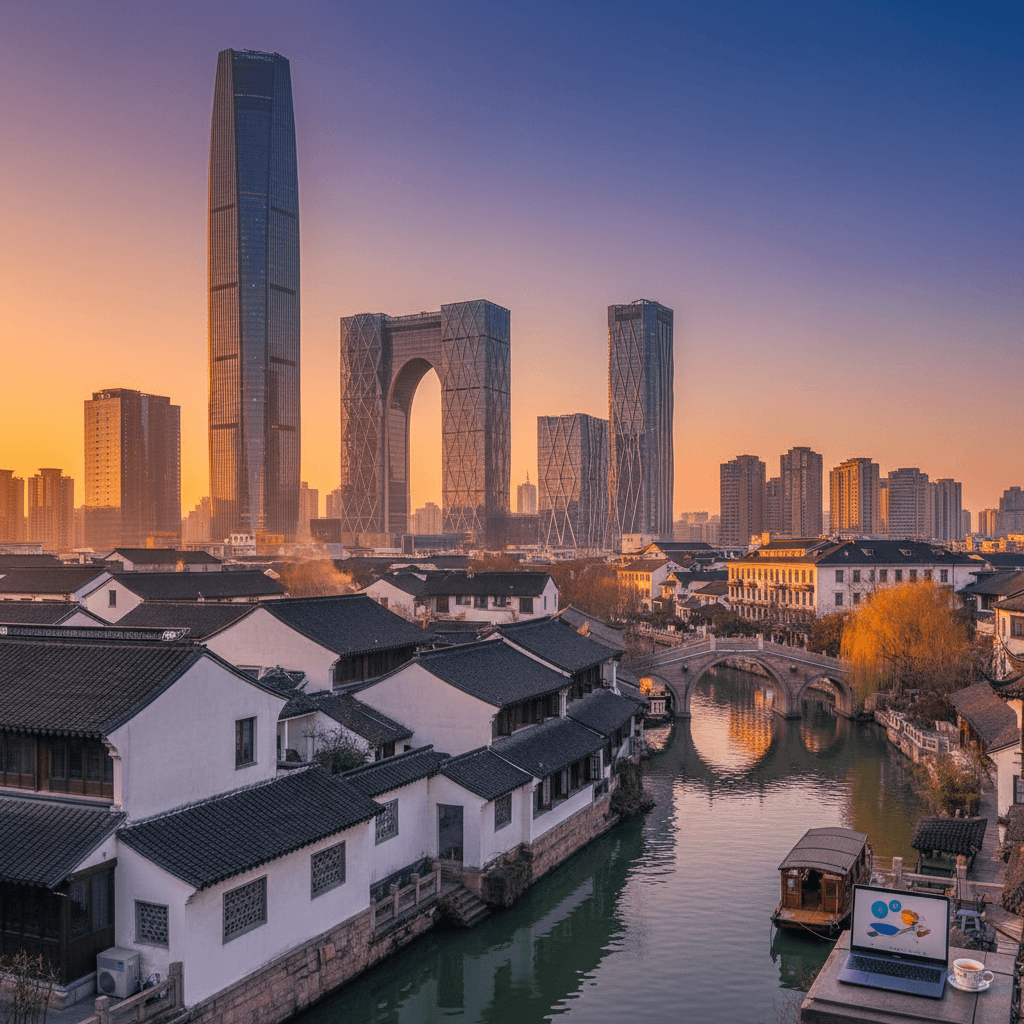
If Shanghai is a caffeinated sprint toward the future, Suzhou is a deep, mindful breath. It’s a city where you can finish a morning Zoom call in a sleek skyscraper in the Suzhou Industrial Park (SIP) and, twenty minutes later, be sipping green tea while overlooking a 1,000 year old canal. This is the ultimate "slow life" alternative for nomads who want China's world class infrastructure without the exhausting grit of a Tier 1 megacity.
The vibe here is poetic. You’ll find yourself walking through the Lingering Garden or wandering the white walled alleys of Pingjiang Road, feeling like you’ve stepped into a Ming Dynasty ink painting. But don't let the pagodas fool you. Suzhou is a high tech powerhouse. It’s this constant friction between the ancient waterways and the ultra modern tech hubs that gives the city its unique personality. It feels grounded, safe, and surprisingly affordable compared to its neighbors.
The Nomad Reality Check
Living here as a remote worker comes with a specific set of rules. Suzhou isn't a "plug and play" destination like Chiang Mai or Lisbon. You’re going to deal with the Great Firewall, meaning Astrill or LetsVPN are your lifelines. English proficiency is low once you leave the expat bars of the SIP, so you’ll be leaning heavily on WeChat and Baidu Translate to get through your day.
Most nomads find the trade-off worth it for the safety and the cost. With a very high safety rating around 88/100, it’s one of the few places on earth where you can walk home at 3:00 AM without a second thought. The monthly burn rate for a comfortable lifestyle sits around $741, which is a steal considering the quality of life. You get high speed rail access to Shanghai in just 30 minutes, giving you a backdoor to a global hub whenever you need a big city fix.
The Emotional Landscape
There’s a specific quietness to Suzhou mornings. Travelers often say the city feels like it’s whispering rather than shouting. You’ll see elderly residents practicing Tai Chi near the Tiger Hill Pagoda while young tech workers grab Suzhou-style dumplings for $2 on their way to a coworking space. It’s a place that rewards the curious. It’s for the nomad who wants to actually learn a culture, not just observe it from a laptop screen.
- The Best Part: The aesthetic. Every window in the old town seems to frame a perfect view of a willow tree or a stone bridge.
- The Hard Part: The digital friction. If you forget to turn on your VPN, your workflow stops. You have to be tech-savvy to thrive here.
- The Social Scene: It’s intimate. Because the expat community is smaller than Shanghai’s, people tend to look out for one another in the bars along Li公堤 (Ligongdi).
Cost vs. Location Breakdown
Your experience in Suzhou depends entirely on which side of the city you choose to call home. The city is split between its historic soul and its modern heart.
Suzhou Industrial Park (SIP)
- The Vibe: Modern, manicured, and very international. Think wide boulevards and luxury malls.
- Rent: $700 to $900+ for a modern 1BR.
- Food: $20 to $40 per day for mid-range fusion and expat-friendly cafes.
- Pros: Best internet, more English speakers, and proximity to Jinji Lake.
Pingjiang Road / Old Town
- The Vibe: Traditional, touristy, and incredibly atmospheric. Canals right outside your door.
- Rent: $500 to $700 for a central apartment with character.
- Food: $10 to $20 per day if you stick to local noodle shops and street snacks.
- Pros: Total cultural immersion and highly walkable.
Outskirts (Near Tiger Hill)
- The Vibe: Quiet, residential, and much more "local."
- Rent: $300 to $500 for those on a strict budget.
- Food: $10 a day for authentic local eats.
- Pros: Maximum savings and close to nature.
Ultimately, Suzhou is for the nomad who has outgrown the party scenes of Southeast Asia and wants a base that feels substantial. It’s a place to focus, to hike the hills on the weekends, and to experience a version of China that is as sophisticated as it is ancient.
The Price of Poetic Living
Suzhou is often called the Venice of the East, but for digital nomads, it's more like a budget friendly version of Shanghai with a lot more soul. You can live a high quality life here for roughly $741 a month, which is nearly half of what you would spend in Shanghai just thirty minutes down the tracks. It is one of those rare spots where you can enjoy world class infrastructure without the eye watering price tag of a global financial hub.
The local economy runs on Alipay and WeChat Pay. You will rarely use physical cash, though keeping 500 RMB in your bag for emergencies is a smart move. While the city is affordable, remember to factor in the cost of a high quality VPN, usually around $10 a month, to keep your Slack and Gmail running behind the Great Firewall.
Monthly Budget Breakdowns
Your spending will fluctuate based on whether you want to live like a local or stick to the expat bubbles. Here is how the tiers generally shake out:
- The Budget Nomad (Approx. $800/mo): You are likely living on the city outskirts or near Tiger Hill where rent sits between $300 and $400. You eat incredible street food like Suzhou style dumplings for $1 to $3 a meal and rely on the $0.50 metro rides to get around.
- The Mid-Range Resident (Approx. $1,200/mo): This gets you a central apartment near Pingjiang Road for $500 to $700. You mix home cooking with mid-range restaurant meals costing $5 to $10 each. You probably grab a $2 DiDi (the local Uber) when it rains.
- The High-End Expat (Approx. $1,900/mo): You are likely based in the Suzhou Industrial Park (SIP). Rent for a modern 1BR here starts at $900. You dine at upscale fusion spots for $20 plus per meal and use a dedicated coworking desk for about $300 a month.
Housing and Neighborhood Costs
Where you plant your flag changes your burn rate significantly. Most nomads find the trade off between price and commute time is the biggest factor here.
Suzhou Industrial Park (SIP)
- Rent: $700 to $900+ for a modern studio or 1BR.
- Vibe: Very modern, Westernized, and full of expats. It is the most expensive area but offers the most reliable internet and English speaking services.
Pingjiang Road and Old Town
- Rent: $500 to $700 for traditional style housing or older apartments.
- Vibe: Authentic and walkable with canals right outside your door. It is touristy during the day but quiet and atmospheric at night.
City Outskirts (Near Tiger Hill)
- Rent: $300 to $500.
- Vibe: Quiet and residential. You will get much more space for your money, but you will spend more time on the metro and might struggle with the lack of English signage.
Eating and Transit
Food is where Suzhou really shines for the budget conscious. A bowl of local noodles or a tray of pan fried dumplings rarely costs more than a few dollars. If you are craving Western comfort food, head to the SIP, but expect to pay $15 for a burger and fries.
Transportation is almost negligibly cheap. The metro system is spotless and efficient, costing about $0.50 per trip. Even if you take a DiDi across the city, you will rarely see the fare climb above $5. For those staying longer, renting a HelloBike via Alipay costs about $1 a day and is the best way to see the canal districts at your own pace.
Connectivity Costs
Internet is a variable expense. While many cafes offer free Wi-Fi, the speeds can jump from 13 Mbps to 193 Mbps depending on the day. Most serious remote workers pay for a local SIM card from China Mobile or China Unicom, which requires a passport to set up. Expect to pay $10 to $20 a month for a beefy data plan. If you prefer eSIMs, services like Airalo or Trip.com are convenient but usually cost a bit more for less data.
For Digital Nomads: Suzhou Industrial Park (SIP)
If you're landing in Suzhou to work, the SIP is your best bet. It doesn't feel like the "Old China" you see in movies; it's a hyper-modern, master-planned district that feels more like Singapore. Most nomads flock here because it's the only neighborhood where you'll find reliable high-speed internet averaging 49 Mbps and a high concentration of English speakers.
- Rent: Expect to pay $700 to $900 for a modern 1BR apartment.
- Work: While dedicated coworking spaces are scattered, most people work from high-end cafes around Jinji Lake.
- Pros: It's incredibly clean, safe, and just a 30-minute high-speed train ride from Shanghai.
- Cons: It lacks the ancient charm of the city center and can feel a bit sterile or "car-dependent" compared to the walkable historic zones.
For Solo Travelers and Culture Seekers: Pingjiang Road
For those who want to wake up to the sound of oars hitting canal water, Pingjiang Road is the place. This is the historic heart of Suzhou, famous for its narrow alleys and stone bridges. It's perfectly walkable and puts you right in the middle of the tea house culture. You'll spend your afternoons eating $2 dumplings and exploring the nearby Suzhou Museum.
- Rent: Short-term guesthouses or traditional courtyard stays range from $500 to $700 a month, though quality varies wildly.
- Vibe: Deeply authentic but very touristy during the day. It’s best for people who don't mind crowds and want to be steps away from UNESCO gardens.
- Tip: Download Alipay before you arrive. Even the smallest snack stall on the canal expects digital payment.
For Families and Long-Term Expats: City Center (Near Lingering Garden)
The area surrounding the Lingering Garden and the older city gates offers a middle ground between the glass towers of SIP and the tourist crush of Pingjiang. It's a practical choice for families because of the proximity to parks, metro lines, and mid-range housing that offers more square footage for your money. You're close enough to the Suzhou Municipal Hospital and international schools, making daily life much smoother.
- Rent: Mid-range apartments typically go for $500 to $800.
- Transport: The metro system here is excellent. A ride costs about $0.50, and you can pay by scanning a QR code in your Alipay or WeChat app.
- Healthcare: This area provides easy access to some of the city's best medical facilities, which is a major relief for those traveling with kids.
For Budget Nomads: Tiger Hill and Outskirts
If your monthly budget is closer to $750 total, look toward the outskirts near Tiger Hill. You'll sacrifice the convenience of being next to the major coworking hubs, but your rent will drop significantly. It's a quieter, more residential experience where you'll likely be the only expat in your building.
- Rent: You can find basic studios for $300 to $500.
- Food: Local wet markets and street food stalls are everywhere here. You can easily eat for $10 a day if you stick to local spots.
- Commute: You'll rely heavily on DiDi (China's version of Uber) or the bus system. A typical DiDi ride into the center will cost you between $3 and $6.
- Challenge: English proficiency is almost zero in these areas. You'll need Baidu Translate or Waygo on your phone to get anything done.
Connectivity and the Great Firewall
Working from Suzhou means dealing with China's unique internet ecosystem. You'll find average speeds around 200 Mbps or higher, though this fluctuates depending on whether you're on a local fiber connection in a modern apartment or using public Wi-Fi in a historic teahouse. Some users report speeds hitting 193 Mbps in the tech-heavy Suzhou Industrial Park (SIP), while others struggle with 13 Mbps in older districts.
The biggest hurdle isn't speed; it's access. The Great Firewall blocks Google, Slack, WhatsApp, and most Western social media. To stay productive, you need a reliable VPN installed before you land. Most nomads recommend having at least two options, typically Astrill or LetsVPN, to ensure you aren't cut off if one service gets throttled. For a seamless mobile experience, expats suggest grabbing an eSIM from Airalo or Holafly, which often bypasses certain blocks automatically, though a local SIM from China Mobile or China Unicom provides the best local data rates for about $10 to $20 per month.
Coworking Spaces and Work Hubs
While Suzhou doesn't have the massive coworking scene of neighboring Shanghai, it's catching up quickly, particularly in the SIP district. This area feels like a different world compared to the ancient canals, filled with glass towers and reliable infrastructure. You'll find shared office environments here where a dedicated desk typically runs between $100 and $200 per month. For those who want more flexibility, daily passes in the business districts usually cost around $10.
If you prefer a more "nomadic" vibe, the city's cafe culture is excellent. Many remote workers gravitate toward the cafes along Pingjiang Road for the atmosphere, though the Wi-Fi there can be spotty during tourist surges. For a more stable setup, head to the modern malls in SIP like Suzhou Center, where you'll find plenty of laptop-friendly spots with fast connections and power outlets. Just remember that most public Wi-Fi requires a Chinese phone number to receive a login SMS, so getting that local SIM is your first priority.
Digital Logistics and Apps
Your phone is your lifeline in Suzhou. Cash is rarely used; everything from your morning dumplings to your DiDi ride is paid for via Alipay or WeChat Pay. Most nomads find that setting up these apps with an international credit card is much easier than it used to be, but keeping about 500 RMB in cash as a backup is still a smart move for small shops or technical glitches.
- WeChat: Not just for chat. It's your payment method, your translation tool, and how you'll join local expat groups to find out about meetups.
- Baidu Translate: Essential for reading menus or signs, as English proficiency is generally low outside of high-end hotels and SIP.
- DiDi: The local version of Uber, integrated directly into Alipay. Short rides across town usually cost between $2 and $5.
- HelloBike: Great for short commutes along the canals. You can unlock these blue bikes for about $1 a day.
The Remote Work Lifestyle
The beauty of Suzhou for a digital nomad is the cost-to-quality ratio. You're getting a high-tech, safe environment for a monthly total of around $741, which is significantly cheaper than Shanghai. Most remote workers choose to live in SIP for the convenience and modern apartments but spend their weekends working from the quieter, more traditional areas near the Suzhou Museum or Lingering Garden.
Socially, the nomad community is growing but still tight-knit. Most networking happens in WeChat groups or through Facebook nomad communities. Because the city is so safe, with a safety index of 88/100, you'll often see people working late in 24-hour convenience stores or well-lit cafes without a second thought. It's a balanced lifestyle: high-speed productivity by day and peaceful canal walks by night.
Personal Safety and Street Smarts
Suzhou is exceptionally safe, even by high international standards. With a safety index of 88/100, it's the kind of place where you can walk home late at night through the canal districts without a second thought. Violent crime is nearly nonexistent, and most nomads find they can leave a laptop on a cafe table for a few minutes without issue, though standard common sense still applies in crowded tourist spots like Pingjiang Road.
The biggest "danger" you'll face is the silent approach of electric scooters on the sidewalks. Local riders are experts at weaving through pedestrians, but they don't always use bells or lights. Keep your ears open and don't make sudden sideways steps when walking. If you find yourself in a dispute or lose your passport, the police emergency number is 110. They are generally helpful, though you'll likely need a translation app like Baidu Translate to communicate effectively.
Healthcare Infrastructure
If you get sick, you're in good hands, especially if you're staying near the Suzhou Industrial Park (SIP). This area is home to Suzhou Kowloon Hospital or Sing Health Medical Clinic in SIP where English-speaking staff are more common. The Suzhou Municipal Hospital is a reliable go-to for general issues, while expats often head to these facilities for more specialized care or a smoother experience with western insurance.
For minor ailments, pharmacies are everywhere. Look for the green cross or the Chinese characters for "Yàodiàn." You can find most over the counter basics here, but it's smart to have your specific brand names translated into Mandarin ahead of time. If you need an ambulance, the number is 120.
Staying Healthy and Hydrated
The most important rule for your gut health is simple: don't drink the tap water. Even locals boil it or use filtration systems. Stick to bottled water, which is incredibly cheap and available at every FamilyMart or 7-Eleven for about 2 to 5 RMB. When it comes to food, Suzhou's hygiene standards are generally high, but use your best judgment with street stalls near the temples. If a place has a high turnover of locals, it's usually a safe bet.
Air quality can fluctuate, particularly in the winter months when smog from the north occasionally drifts down. Most nomads use the AirVisual app to check daily levels. On "grey" days, it's common to see people wearing masks, and many long-term expats invest in a small air purifier for their apartments to keep the indoor air crisp.
Insurance and Logistics
Before you land, make sure your health insurance covers international private hospitals. While public Chinese hospitals are very affordable, the wait times and language barrier can be a headache. Most private consultations will start around 500 to 800 RMB, and they usually accept Alipay or WeChat Pay instantly. Always keep a digital copy of your passport and visa on your phone, as hospitals will require identification before starting any treatment.
- Emergency Police: 110
- Medical Emergency: 120
- Top Expat Hospital: Suzhou Kowloon Hospital (SIP)
- Water Safety: Bottled or boiled only
The Digital Nomad’s Toolkit: Apps First
Before you even step off the train, you need to have your digital ducks in a row. China is a cashless society, and Suzhou is no exception. You'll need to set up Alipay or WeChat Pay immediately; most nomads link these to their international cards to handle everything from $0.50 metro rides to grocery hauls. Within these apps, you’ll find the mini-programs that make the city run, like DiDi for ride-hailing and HelloBike for those blue or yellow rentals you see on every corner.
For navigation, skip Google Maps. It’s notoriously inaccurate here. Expats and locals rely on Amap (Gaode) or Baidu Maps. Even if you don't speak Mandarin, the interface is intuitive enough to follow the blue arrow, and the real-time bus tracking is incredibly precise.
Mastering the Metro and Bus
Suzhou’s metro system is clean, fast, and expanding rapidly. It’s the easiest way to bridge the gap between the old-world charm of the Pingjiang Road area and the glass skyscrapers of the Suzhou Industrial Park (SIP). Most rides cost between $0.30 and $1.00. You don't need a physical card; just pull up the transport QR code in Alipay and scan it at the turnstile.
The bus network is even more extensive, covering the nooks and crannies where the metro hasn't reached yet. It’s a flat rate of about 2 RMB (around $0.30) for most routes. While it's cheaper, keep in mind that traffic in the city center can get sluggish during rush hour, so the metro is usually your best bet if you're on a deadline for a Zoom call.
Ride-Hailing and Taxis
When you're tired of walking the canals, DiDi is your best friend. It’s integrated directly into the Alipay app and has an English interface. A typical 15 or 20 minute cross-town ride usually costs between $3 and $7. It’s significantly more convenient than hailing a traditional taxi on the street, as you can input your destination exactly and avoid any language barriers with the driver.
If you do opt for a traditional taxi, make sure the meter is running. However, most nomads find that DiDi's "Premier" or "Express" options provide a more consistent experience and better vehicle quality for just a few extra yuan.
Biking the Canals
Suzhou is remarkably flat, making it perfect for cycling. You’ll see clusters of shared bikes near every metro exit. Use Alipay to scan the QR code on a HelloBike; it usually costs about $0.25 for a 30 minute ride. It’s the best way to explore the back alleys of the historic districts where cars can't easily fit.
- Metro: Best for long distances between SIP and the Old Town. Scan and go with Alipay.
- DiDi: Cheap, reliable ride-hailing with an English interface.
- Public Bikes: Ideal for short hops and exploring the UNESCO garden perimeters.
- Walking: The only way to truly see the Pingjiang Road and Shantang Street areas.
Arriving and Departing
Suzhou doesn't have its own major commercial airport for international flights yet, so you'll likely arrive via Shanghai Pudong (PVG) or Hongqiao (SHA). The high-speed train from Shanghai is a marvel; it takes about 30 minutes and costs roughly $6 to $15 depending on the seat class.
If you're coming from the airport with heavy luggage, a private transfer or a long-distance DiDi is an option, but it'll run you closer to $60 or $80. Most travelers recommend taking the airport shuttle bus or the metro to the Shanghai Hongqiao Railway Station and hopping on the bullet train. It’s faster and much cheaper. Just remember to bring your passport, as you'll need it to enter the station and board the train.
Breaking the Language Barrier
In Suzhou, Mandarin is the undisputed king of conversation. While you might find younger locals or staff in the high end hotels of the Suzhou Industrial Park (SIP) who speak some English, the general proficiency level across the city is quite low. Don't expect your barista or taxi driver to be fluent; most nomads rate the English accessibility here at a 1 or 2 out of 5.
The local Suzhou dialect, Suzhounese, is still spoken by the older generation and is known for being soft and melodic, often compared to the sound of flowing water. However, as a digital nomad, you only need to focus on Mandarin. Learning a few basics like Nǐ hǎo (hello) and Duōshǎo qián? (how much?) will go a long way in building rapport at the local dumpling stalls.
Digital Survival Tools
Since you can't rely on verbal English, your smartphone becomes your primary translator. Most expats and long term travelers wouldn't dream of leaving their apartment without a few specific apps installed. Baidu Translate or Pleco are the gold standards for translating menus or signs on the fly. Many nomads also use the built in translation feature within WeChat to communicate with landlords or local friends.
- Voice Translation: Use apps that allow you to speak into the phone and play back the Chinese translation. It's the fastest way to handle complex requests at the pharmacy or post office.
- OCR (Camera) Translation: This is a lifesaver for reading physical menus in the Pingjiang Road area where English versions are rare.
- Digital Payments: Set up Alipay or WeChat Pay immediately. They have English interfaces now, but the actual transaction prompts from vendors will be in Chinese, so getting used to the visual layout is key.
The Great Firewall and Staying Connected
Communication isn't just about speaking; it's about staying connected to your team back home. Suzhou's internet offers fast speeds, with fixed broadband often exceeding 200 Mbps in modern areas like SIP. The real hurdle is the Great Firewall, which blocks Google, Slack, and WhatsApp.
To keep your workflow steady, you'll need a reliable VPN strategy. Experienced nomads in Suzhou recommend having at least two different providers, like Astrill or LetsVPN, installed on your devices before you arrive in China. Expect to pay around $10 to $15 a month for a high quality service that can bypass the censorship consistently.
Local Connectivity
For mobile data, you've got a couple of solid paths. You can pick up a physical SIM card from China Mobile or China Unicom stores, but you must bring your passport for registration. If you want to skip the paperwork, many travelers opt for an eSIM through Airalo or Trip.com, which usually costs between $10 and $20 for a monthly data package. Just keep in mind that a local Chinese phone number is often required to sign up for public Wi-Fi in malls or to use certain delivery apps like Meituan.
Social Etiquette and Non-Verbal Cues
Communication in Suzhou is often more about patience than vocabulary. If there's a misunderstanding, stay calm and keep a smile on your face. Pointing and using calculators to show prices is perfectly acceptable in the markets. In professional settings or when meeting people through expat Facebook groups, a slight nod of the head is a common respectful greeting. While the language gap can feel wide at first, the local community is generally patient with foreigners who are clearly trying to adapt to the local customs.
The Seasonal Sweet Spot
If you're planning a stint in Suzhou, timing is everything. Most nomads agree that April to May and September to October are the goldilocks zones. During these months, the humidity takes a back seat and the temperatures hover between a comfortable 15°C and 25°C. It's the perfect weather for taking your laptop to a canal side cafe in Pingjiang Road without melting or freezing.
Spring brings the famous blossoms to the classical gardens, though you'll be sharing the views with plenty of domestic tourists. Autumn is arguably better for focused work; the air is crisp, the sky is often clear, and the gardens like the Humble Administrator's turn brilliant shades of orange and red. It's the best time for those long walks between coworking sessions in the Suzhou Industrial Park (SIP).
Survival Guide: Summer and Winter
Brace yourself if you're arriving in July or August. The humid subtropical climate means temperatures frequently hit 35°C, but the humidity makes it feel significantly hotter. You'll find yourself hopping from one air conditioned mall to another. This is also the rainy season, so a sturdy umbrella and a waterproof bag for your gear are mandatory. Most expats stick to the modern offices in SIP during this time to avoid the heavy, damp heat of the old town.
Winter, specifically January and February, is surprisingly biting. While it rarely snows heavily, the damp cold gets into your bones, with temperatures dipping toward 0°C. Because Suzhou is south of the Qinling Huaihe line, many older buildings don't have the robust central heating you'd find in Beijing. You'll want to ensure your apartment rental includes a reliable AC unit with a heating function, or you'll be working in your puffer jacket.
Timing Your Arrival: The Holiday Factor
When you're booking your flight, keep a close eye on the Chinese lunar calendar. You generally want to avoid arriving during Golden Week (the first week of October) or Chinese New Year (usually late January or February). During these times, the city gets incredibly crowded, prices for short term stays skyrocket, and many of the smaller, authentic local eateries close down so owners can visit family.
Nomads who've lived here recommend arriving just after these major holidays. The city breathes a sigh of relief, prices stabilize, and you'll have a much easier time finding a long term desk or a quiet corner in a tea house. If you're looking for a specific monthly breakdown, here's what to expect:
- March to May: High season. Beautiful weather, lush gardens, but higher prices for Airbnbs and more crowds.
- June to August: The "Sauna" months. Expect heavy rain, high humidity, and 30°C+ heat. Great for staying indoors and grinding on projects.
- September to November: Peak nomad season. Clear skies and cool breezes. This is when the city is most walkable.
- December to February: The low season. It's grey and chilly, but you can find the best deals on housing, sometimes as low as $300 for a studio on the outskirts.
Practical Prep for the Elements
Pollution can occasionally be a factor, though it's generally better than in the northern hubs. It's smart to have the AirVisual app or a similar AQI tracker on your phone. On days when the index climbs, most remote workers retreat to the modern high rises in SIP which often have better air filtration systems. If you're sensitive to air quality, late autumn and winter are the times when you'll notice it most, while the summer rains tend to keep the air much cleaner.
Connectivity and the Great Firewall
Working from Suzhou requires a bit of digital prep work before you land. You'll need a solid VPN to access Slack, Google, or WhatsApp. Most nomads recommend having two different services installed, like Astrill or LetsVPN, just in case one hits a snag. While the average internet speed sits around 49 Mbps, it can be hit or miss depending on your neighborhood. If you're doing heavy video calls, stick to the modern apartments in the Suzhou Industrial Park (SIP) where fiber is more common.
For your phone, grab an eSIM from Airalo or Trip.com before you arrive. It'll cost you about $10 to $20 for a monthly data pack. If you prefer a local SIM, head to a China Unicom or China Mobile store with your passport. You'll need it for a local number, which makes signing up for public Wi-Fi much easier.
The Digital Toolkit
Life in Suzhou runs on two apps: Alipay and WeChat. You'll use them for everything from buying a $1 street snack to booking a $3 DiDi ride. Set these up with your international credit card before you leave home. While you're at it, download Baidu Translate or use the built in translation tool in WeChat. English proficiency is fairly low here, especially once you step out of the expat bubbles, so being able to point at a translated screen is a lifesaver.
Getting Around Town
The metro system is world class and incredibly cheap, usually costing about $0.50 per trip. You can scan into the gates using the transport QR code inside Alipay. For late nights or rainy days, DiDi is the local version of Uber. A 15 minute cross town trip usually costs between $2 and $5. If you're staying in the historic Pingjiang Road area, the best way to see the canals is on foot or by renting a HelloBike for about $1 a day.
Cost of Living Breakdown
Suzhou is a steal compared to nearby Shanghai. Most nomads find they can live well on $741 to $1,200 a month. Here is how those costs typically break down:
- Housing: Expect to pay $300 to $400 for a studio on the outskirts. Central spots near Pingjiang Road run $500 to $700, while high end apartments in the SIP district start at $900.
- Food: Local dumplings and street food are $1 to $3. A mid range meal at a sit down restaurant costs around $8. If you're craving Western fusion in SIP, budget $20 or more.
- Coworking: Dedicated desks in SIP range from $100 to $200 a month, though many nomads just work from quiet cafes for the price of a coffee.
Health and Safety
Safety is one of Suzhou's biggest draws, with a safety index of 88 out of 100. You can comfortably walk alone at night in almost any neighborhood. For medical needs, expats usually head to Suzhou Municipal Hospital or international clinics in the SIP district. Just remember to stick to bottled water and keep about 500 RMB in cash tucked away for the rare occasion a small shop's digital payment system is down.
Weather and Packing
The city is beautiful but humid. Summers in July and August can be brutal, with temperatures hitting 35°C. Winters are damp and chilly, often hovering between 0°C and 10°C in January. Most buildings use AC units for heat, which can feel quite dry, so bring a good moisturizer. If you're visiting during the rainy season, a sturdy umbrella and waterproof shoes are mandatory for those canal side walks.
Need visa and immigration info for China?
🇨🇳 View China Country GuideEasy Landing
Settle in, no stress
Monthly Budget Estimates
More cities in China
Zhuhai
🇨🇳 China
Fuzhou
🇨🇳 China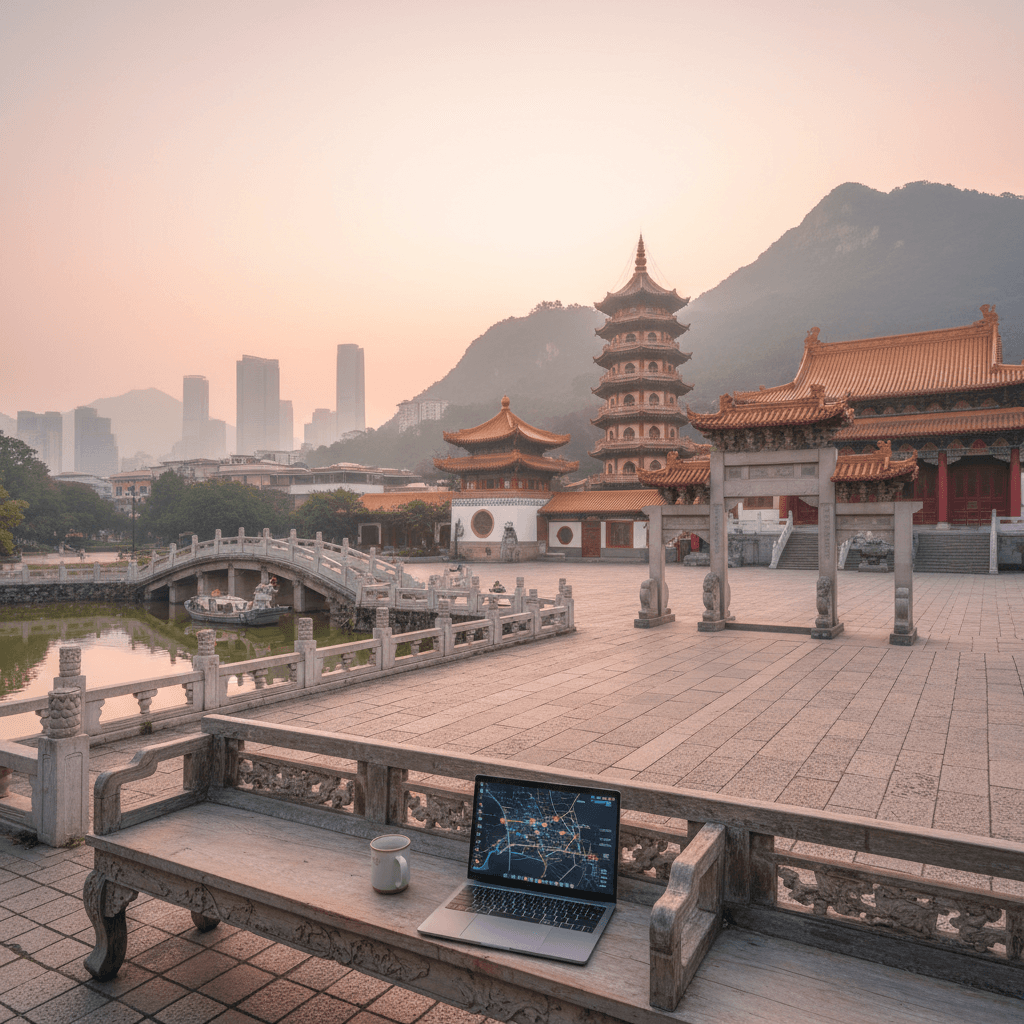
Xiamen
🇨🇳 China