Suva
🇫🇯 Fiji
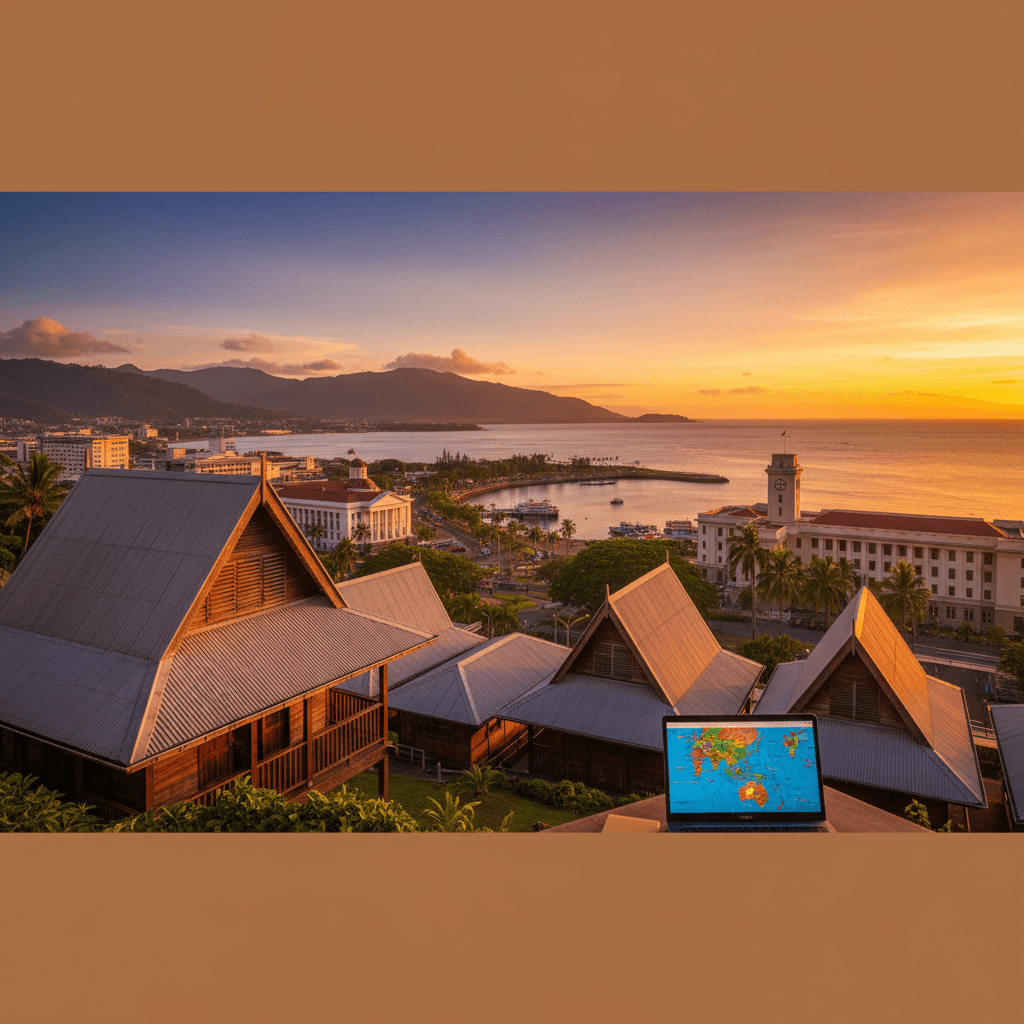
Suva doesn’t try to be postcard Fiji and that’s why some people end up liking it. It’s the capital, the biggest city in the South Pacific and the pace is slower than most capitals, but the streets still feel busy with buses coughing at intersections, market sellers calling out prices and rain hammering tin roofs in the afternoon.
The city has a colonial backbone, a strong Indian and Fijian presence and enough diplomats, students and office workers to keep it feeling practical rather than sleepy. You’ll see old government buildings, packed lunch spots and a waterfront that’s more about sea air than swimming, because the beaches people imagine when they think of Fiji aren’t really in the city. Honestly, that surprises a lot of first-timers.
Monthly living costs are mixed. Cheap here isn’t dirt cheap and comfort adds up fast. A solo nomad can scrape by around $1,000 to $1,500 if they’re careful, while a more comfortable setup often lands in the $1,500 to $2,500 range once rent, taxis, coffee and the occasional meal out are in the mix.
- Budget: Shared housing, bus rides and street food, think roti for FJD 5 to 10.
- Mid-range: A central 1BR, casual restaurants at FJD 20 to 40, some taxi use.
- Comfortable: Furnished homes in Tamavua or Domain, coworking and nicer dinners, which, surprisingly, can get expensive fast.
Neighborhood choice matters a lot. Suva Central and Victoria Parade work best if you want to walk to cafes, shops and the waterfront, though it gets noisy and crowded, while Domain, Thurston Gardens and Tamavua feel more polished, greener and safer, just pricier and often hillier.
- Domain/Thurston Gardens: Diplomatic, leafy, expensive.
- Tamavua: Secure, suburban, good for families.
- Lami: Quieter and cheaper, but a bit out.
- Walu Bay: Cheaper studios, industrial feel, creative edge.
The vibe can be lovely, then frustrating. People are warm, the seafood is fresh and the city has proper infrastructure for work and admin, but internet speeds often wobble between decent and annoying and power cuts still happen, so don’t expect a smooth remote-work day every day. The humidity clings to your skin, your laptop fan works overtime and the afternoon rain can make the whole city smell like wet concrete and jasmine.
Most nomads who stay here do it for the mix of convenience, affordability and personality, not for beaches or perfect digital nomad polish. Suva feels real and honestly, that’s its main appeal.
Suva isn't cheap, though it can still feel manageable if you keep your expectations grounded. A single nomad usually needs around FJD 2,797 a month for basics and once you add rent, decent meals and a few taxis, most people land somewhere between $1,500 and $2,500 depending on how picky they are.
Food is where the city stays friendly to budgets and where it can quietly creep up if you keep eating out near Victoria Parade. Roti and other street snacks run about FJD 5 to 10, a solid lunch at a casual café is usually FJD 20 to 40 and upscale dinners start around FJD 50, with the smell of curry, fried dough and exhaust drifting through the market air.
- Budget: $1,000 to $1,500, shared housing, bus rides, market food and a lot of saying no to taxis.
- Mid-range: $1,500 to $2,000, a central one-bedroom, mixed cooking and eating out, plus the occasional cab when the rain gets annoying.
- Comfortable: $2,000 to $2,500+, furnished places, more restaurant meals and coworking without sweating every dollar.
Rent jumps fast in the good neighborhoods. Domain and Thurston Gardens are polished and pricey, Tamavua has secure homes and embassy traffic and a decent one-bedroom or studio can sit anywhere from FJD 1,000 to 2,500, which honestly feels steep for a small city with patchy internet.
Neighborhood Costs
- Domain and Thurston Gardens: Best for diplomats and families, pretty and quiet, but you're paying for the address.
- Tamavua: Good for expats, hilly and secure, with fenced homes and ocean views if you don't mind the traffic.
- Lami: Cheaper and calmer, more like a commute compromise than a social hub.
- Suva Central and Victoria Parade: Handy for walkability, cafes and coworking, though the noise and humidity can get old fast.
- Walu Bay: Lower rents and a scruffier feel, which, surprisingly, some creatives actually prefer.
Transport won't wreck your budget. Buses are usually FJD 1 to 3 a ride, taxis in town often come in around FJD 5 to 15 and monthly transport can stay near FJD 50 to 100 if you're not crisscrossing the city all day. Coworking ranges from about FJD 10 to 35 a day, so the real question is whether you're paying for a desk or just escaping the bad Wi-Fi and the rain hammering on the roof.
That rain matters. It changes how you spend, because you end up taking more taxis, buying more coffee and staying indoors more often than you'd planned and the humidity clings to your clothes the second you step outside.
Nomads
Stick to Suva Central or Victoria Parade if you want to walk to cafes, buses and the waterfront. Internet is, honestly, patchy, so being near coworking spots like The Hive Suva or Greenhouse saves you a lot of grief when your apartment Wi-Fi crawls at 5 Mbps and the rain is hammering the tin roof.
- Best fit: Solo nomads, short stays, remote workers
- Rent: Studios or small flats from about FJD 800 to FJD 1,500
- Why here: Easy food runs, walkability, cafes and better access to buses
- Downside: Busy streets, noisy traffic, no beach nearby
Expats
Domain and Tamavua are the classic expat picks and for good reason, they feel calmer, greener and a bit more polished than the center. You pay for that peace, though, with higher rents, hillier commutes and the occasional crawl through traffic when everyone leaves at once.
- Domain/Thurston Gardens: Best for diplomats and professionals who want leafy streets and a more formal address
- Tamavua: Best for embassy staff, secure homes and ocean views, if you don't mind hills
- Rent: Usually FJD 1,500 to FJD 4,000 for better furnished homes
- Trade-off: Quieter nights, but you'll need taxis or a car more often
Families
Families usually end up in Tamavua or Domain, where gated homes, bigger yards and a little distance from the chaos make daily life easier. Lami is the cheaper alternative and weirdly, plenty of long-stay expats like it because it feels coastal and slow, even if you're still a 10-minute drive from central Suva.
- Best fit: Families, longer stays, people who want space
- Lami rent: Around FJD 1,000 to FJD 2,000
- Tamavua rent: Often FJD 2,000+ for furnished houses
- Watch out for: Steep roads, rainy-season potholes and power hiccups
Solo Travelers
If you're here alone and don't want to spend all day in taxis, stay near Suva Central. You'll be close to Suva Municipal Market, nightlife on Victoria Parade and enough coffee shops to break up the day, though the smell of exhaust and fried snacks can follow you around downtown.
- Best fit: Short-term stays, people watching, easy transport
- Budget option: Walu Bay, with cheaper studios and an artsier feel
- Food: Cheap roti, market lunches and casual cafes nearby
- Downside: No proper beach scene and rain can make everything feel grimy fast
Suva’s internet is fine for email, Slack and basic calls, then it starts to creak the minute you push it. In central areas, speeds often sit around 5 to 25 Mbps based on recent tests and honestly that means a Zoom-heavy workday can go from manageable to annoying fast, especially when the rain comes down hard and the power flickers for a few seconds.
Most nomads stick close to Victoria Parade, because that’s where the cafes, office buildings and better connections tend to cluster and you can usually work with a coffee rather than paying for a desk. The tradeoff is simple, it’s noisy, with bus brakes squealing, phones ringing and the smell of espresso mixing with damp pavement after a storm.
Coworking Spaces
- Greenhouse: FJD 35/day, at 33 Des Voeux Road, pricier but one of the better setups if you need a proper desk and a steadier workday.
- Walu Bay Creative Hub: FJD 10/day or about FJD 150/month, cheap and a bit scrappier, but useful if you’re on a budget.
The coworking scene, turns out, is one of Suva’s more practical wins. Still, don’t expect silky internet everywhere, because even the better spaces can dip and a backup hotspot from Vodafone or Digicel is a smart move if you’ve got deadlines.
Mobile Data and Backup Plan
- Vodafone/Digicel SIMs: Easy to buy at the airport or in town, with tourist plans around FJD 30 for 125GB over 30 days.
- Monthly bundles: Usually FJD 30 to FJD 40, which is fair enough for calls, maps, WhatsApp and light tethering.
- Best use: Great as a backup, but don’t bet your entire work setup on mobile data alone.
If you’re apartment hunting, ask about fiber before you sign anything and get screenshots of a speed test if the landlord claims the Wi-Fi is “good.” The apartments in Domain, Tamavua and Suva Central can be comfortable for remote work, though the rent climbs quickly and yes, the cheapest places often come with the weakest connections.
My take, skip the fantasy of beachside laptop life in the city, there aren’t many beaches anyway and set yourself up near the center where you can walk to a cafe, grab a roti and keep moving when the internet sulks. It’s workable, not dreamy.
Suva feels safe in the center and most nomads move around without fuss. Still, keep your wits about you after dark, especially on quieter streets away from Victoria Parade, because the city goes from chatty and bright to oddly empty fast.
Daytime life is easy. You’ll see market vendors calling out over piles of dalo and chillies, office workers spilling out for lunch and taxis edging through traffic, but that steady street noise drops off at night, so don’t wander sleepy lanes with your phone out.
Big picture: crime against visitors is generally low, though petty theft can happen, especially if you leave bags open or flash cash. Honestly, Suva rewards the same common sense you’d use anywhere, lock your room, use registered taxis and don’t assume a friendly smile means you can relax completely.
Where to be careful
- Suva Central: Fine in the day, busier and well lit, but stay alert after hours.
- Victoria Parade: Good for cafes and short walks, then it gets quiet once offices close.
- Outlying streets at night: Use a taxi instead of walking, especially if it’s raining, which, surprisingly, makes dark corners feel even more isolated.
Healthcare is decent for the region. Oceania Hospital handles private care, including scans and specialist consults, while Colonial War Memorial is the main public option, so choose private if you want speed, shorter waits and less paperwork.
Pharmacies are easy to find around town and you can usually get basics like pain relief, cold medicine and first aid supplies without a drama. For emergencies, call 911 or 000, then get to the nearest clinic or hospital, because waiting around and hoping for the best isn’t a plan.
Healthcare basics
- Private care: Faster, cleaner, more expensive and worth it if you’re dealing with anything more than a minor issue.
- Public care: Functional for routine treatment, but queues can be slow and the system feels stretched.
- Pharmacies: Widespread in central Suva, handy for everyday meds and quick advice.
There’s also a 2025 HIV outbreak tied to drug use, not tourism and that distinction matters. Avoid needles, don’t accept anything you didn’t ask for and if you’re out late near bars or house parties, keep your drink with you, frankly, the same old advice still applies here.
The biggest health annoyance in Suva isn’t disease, it’s the combo of humidity, rain and occasional power cuts when you’d really rather have the fan running. Drink plenty of water, use mosquito repellent and if you’ve got anything ongoing like asthma or prescription meds, bring your own supply instead of assuming you’ll find the exact same thing locally.
Suva’s center is compact enough to walk and that’s the best way to feel the place, hear the bus brakes squeal, smell fried roti and wet pavement, then duck under a veranda when the rain starts hammering down. For anything longer, buses and taxis are the practical answer, because the city’s roads get sticky fast in rain and traffic can crawl around the main strip.
Central Suva is pretty manageable on foot. The waterfront, Victoria Parade, the market and most cafes are close together, so you won’t need a car for daily life if you’re staying downtown, but the sidewalks can be uneven and the humidity clings to you by late morning, honestly.
- Buses: Cheap and frequent, usually FJD 1 to 3 for a ride, with Pacific Transport and Sunbeam running most of the useful routes.
- Taxis: Expect about FJD 5 to 15 for city trips and choose meter plates, the LT ones, so you’re not guessing at the fare.
- Ride-hailing: Bula app, Fiji Cabs, Mobility Fiji and GoFiji all work better than trying to flag something random in the rain.
For airport runs, Nausori Airport is about 25 minutes away by taxi and usually lands in the FJD 20 to 30 range, which sounds fine until you’re standing outside with bags and the humidity feels like soup. If you’re renting a car, drive on the left and expect to pay FJD 80 or more per day, plus the headache of parking in the center, where spots can disappear fast.
Most nomads skip cars unless they’re doing weekend trips. Parking, traffic and the occasional pothole make driving more of a chore than a perk and frankly the city’s small enough that a bus, a taxi and your own legs cover most days without much drama.
- Walk: Best for central Suva, especially around the market, cafes and government buildings.
- Bus: Best value for daily commuting, though service can feel slow when the roads are busy.
- Taxi: Best after dark, in heavy rain or when you’re hauling groceries or a laptop bag.
There’s no Uber here, so don’t plan around it. Use Bula or a regular taxi app, keep cash handy for smaller fares and if you’re staying in Tamavua, Lami or Walu Bay, build in extra time because those hills, weirdly, make every short trip feel longer than it should.
Language in Suva is pretty easy to manage, honestly. English is used in shops, offices, taxis and most places where visitors end up, so you won’t need to wrestle with translation apps just to buy lunch or ask for directions.
Outside the tourist bubble, you’ll hear Fijian and Hindi too, sometimes all in the same conversation, which feels very Suva and it gives the city a slower, friendlier rhythm. People are usually patient if you speak plain English, though a few local words go a long way and make interactions feel less stiff.
Use these phrases and you’ll get smiles fast, not perfection, just effort. Bula means hello, Vinaka means thank you, Io means yes, Sega means no and O cei na nomu yaca? means what’s your name?
- Bula: hello and it’s used constantly
- Vinaka: thank you, handy in markets and taxis
- Io: yes
- Sega: no
- O cei na nomu yaca?: what’s your name?
Don’t overthink pronunciation. People care more that you try and they’ll usually answer with a grin, sometimes while the rain hammers tin roofs or a bus coughs past with the windows rattling.
Google Translate works well enough for Suva, weirdly, especially for menus, signs or quick text messages, but it won’t save you if you’re trying to follow fast Fijian conversation in a noisy café on Victoria Parade. For everyday life, keep things simple, speak slowly and ask people to repeat themselves if the traffic, rain or market noise swallows half the sentence.
Communication here is friendly, direct and occasionally informal, so don’t expect polished service in every setting. If someone says they’ll call back, they might and they might not, so confirm details twice, especially for deliveries, rentals and repairs, because that’s where the delays start.
- Best for business: English, no problem
- Best for socializing: a few Fijian words help a lot
- Best backup: Google Translate, plus a patient attitude
- Most useful habit: ask twice, then wait
If you’re working remotely, that mix is manageable, though the internet can test your patience more than the language ever will. Suva’s communication style is warm and human, but it’s also loose around the edges, so stay clear, stay polite and don’t expect everything to happen on the first try.
Weather & Best Time to Visit
Suva is wet, often. Rain can hit hard, then stop just as fast and the air stays thick enough to stick to your skin, especially once the humidity climbs and the city starts smelling like wet pavement, exhaust and market food. The coolest months are June to August and honestly, that’s when most people breathe easiest.
Best time: June to August. Worst time: January to March, when it’s hotter, wetter and everything feels a bit soggy and tired.
There’s no true dry season here, just a less annoying one. From May to October, daytime highs usually sit around 23 to 27°C, so you can walk Victoria Parade without melting, though a sudden downpour can still soak you in five minutes and make taxi queues look like a bad joke.
What the seasons feel like
- Wet season, November to April: Hot, sticky and rainy, with highs around 28 to 31°C and feels-like temperatures that can push into the mid-30s.
- Dry season, May to October: Still humid, still tropical, but much easier to live with, especially if you’re working from town or staying near Domain, Tamavua or Suva Central.
- Rain reality: Suva gets a lot of it, over 3,000 mm a year, so pack a proper rain jacket, not a flimsy one that gives up after one bus ride.
Januarary to March can be brutally damp and the heat hangs over the city like a wet blanket, weirdly making even short walks feel longer, louder and more tiring. You’ll hear tires hissing on soaked roads, rain hammering tin roofs and the occasional thunder rolling over the harbor, then the sun comes out and the whole place steams.
For most nomads, September and October are a decent middle ground, warm enough for beaches outside town, but not so wet that errands turn into a slog. If you want the easiest daily life, pick the middle of the year, keep your plans flexible and don’t expect your shoes to stay dry for long.
Quick planning notes
- Bring: Light clothes, sandals, a rain shell and a dry bag for electronics.
- Skip: Heavy jackets, unless you run cold in air-conditioning.
- Watch for: Flooded streets, power blips and sudden showers that mess with buses and taxis.
Suva is easy to live in if you like short walks, cheap buses and a city that still smells like wet pavement after a downpour. It’s also annoyingly inconsistent, because the internet can be 3 Mbps one hour and fine the next and the rain loves to arrive right when you’ve got laundry on the line.
Most nomads sort out a local SIM on day one. Vodafone and Digicel both sell airport plans around FJD 30 and mobile money apps like M-Paisa and MyMoney help when a café or taxi driver doesn’t want to fuss with cards, which, surprisingly, still happen a lot. Cards work in most places, but expect a 3 to 5 percent surcharge sometimes, so keep cash in your pocket.
What locals actually do: remove your shoes when you’re invited inside, say “Bula” before anything else and dress modestly in town, especially near markets and churches. That’s standard, not theatre.
- Housing: Budget for FJD 1,000 to 2,500 for a furnished 1BR, with Domain and Tamavua costing more, while Walu Bay and Lami are easier on the wallet.
- Food: Roti and street snacks run FJD 5 to 10, decent lunch plates sit around FJD 20 to 40 and a nicer dinner can jump past FJD 50 fast.
- Transport: Buses are cheap at FJD 1 to 3, taxis usually land around FJD 5 to 15 and central Suva is walkable if you can handle heat, horns and the odd puddle the size of a small pond.
If you need a desk, try Greenhouse on 33 Des Voeux Road, The Hive Suva, FHCL Business Centre or Walu Bay Creative Hub. Internet there’s usually better than in apartments, because apartment Wi-Fi can be maddeningly patchy and power cuts still happen now and then.
For apartment hunting, Facebook groups move faster than formal agents and 4321 Property gets mentioned a lot by expats. Stay in Suva Central or Victoria Parade if you want cafés and errands on foot or pick Tamavua if you’d rather trade convenience for a quieter, more secure hillside place with views and traffic.
Easy day trips: Pacific Harbour for beach time, Colo-i-Suva Forest Park for shade and a cold dip and Nausori if you need the airport. Skip the idea that Suva is a beach town, it isn’t and honestly the city feels better when you stop pretending it's.
Need visa and immigration info for Fiji?
🇫🇯 View Fiji Country GuideHidden Gem
Worth the effort