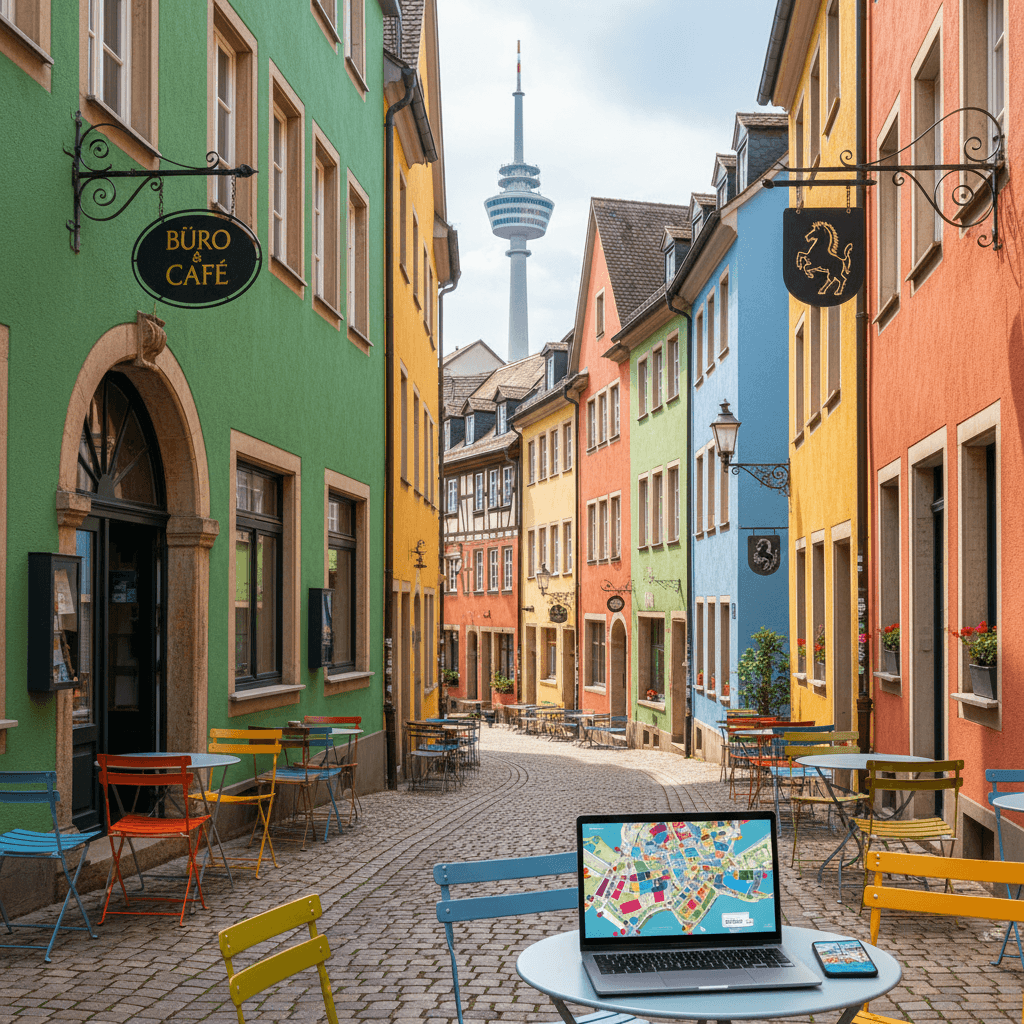
Stuttgart
🇩🇪 Germany
The High-Performance Haven
Stuttgart doesn't shout for attention like Berlin, and it doesn't preen like Munich. Instead, it hums with the quiet, focused energy of a precision-engineered engine. This is the city that gave the world the automobile, and that legacy of innovation is baked into the pavement. For nomads who work in tech, engineering, or design, being here feels like being at the source. It is a place where things work, people are punctual, and the infrastructure is rock-solid.
The emotional experience of Stuttgart is one of groundedness. You'll spend your mornings hitting 80-85 Mbps speeds in a sleek coworking space and your afternoons wandering through steep hillside vineyards that roll right into the city center. It is one of the few places in Europe where industrial might and lush greenery live in such close, comfortable proximity. If you're looking for a 24/7 party, you'll be disappointed. But if you want a safe, high-quality life where you can actually hear yourself think, you've found it.
The Local Rhythm
Life here follows the Swabian ethos: work hard, then enjoy the fruits of your labor quietly. You'll see this in the meticulously kept public parks and the hushed, respectful atmosphere of the Kunstmuseum Stuttgart. Nomads often find the city incredibly easy to settle into because of the high English proficiency and the general welcoming attitude toward professionals. It is a female-friendly destination where safety is rarely a concern, even late at night.
The downside? It isn't cheap. Living the Stuttgart lifestyle requires a healthy bankroll, with monthly costs for a single nomad averaging around $2,800-$3,200 per month. It is a "grown-up" nomad destination. You aren't here to rough it; you're here to enjoy the luxury of a city that values order and quality above all else.
What Nomads Love and Hate
- The Wins: Exceptional safety, lightning-fast internet, world-class museums like Mercedes-Benz and Porsche, and a massive amount of urban green space.
- The Challenges: The high cost of living, a quieter social scene compared to other German hubs, and a rental market that can be tough to crack without a solid budget.
The Cost of Entry
To live comfortably here, you need to plan your budget with precision. While you can scrape by on less, most expats recommend a mid-range budget to truly enjoy what the city offers without constant stress.
Budget Tiers
- The Budget Nomad: Expect to spend between €2,000 and €2,500 per month. This usually means a room in a shared flat (WG), eating plenty of €7 Döner kebabs, and sticking strictly to the VVS public transport network.
- The Mid-Range Professional: Budget €2,500 to €3,500. This covers a private 1BR studio or apartment, regular meals out at mid-range Swabian spots, and a dedicated desk at a coworking space.
- The High-End Resident: At €3,500+, you're looking at a central apartment in a prime district, frequent upscale dining, and the freedom to explore the surrounding Black Forest on weekends without watching every Euro.
The Neighborhood Feel
Stuttgart is geographically unique, tucked into a basin surrounded by hills. This creates distinct "pockets" of living. Most nomads gravitate toward the central districts to stay close to the action. Areas near the major museums are popular for their walkability and proximity to tech hubs. If you prefer a more local, neighborhood feel, look for spots near the botanical gardens. You'll trade a bit of nightlife for incredible air quality and peaceful mornings, but in a city this well-connected by the S-Bahn, you're never truly far from the center.
Ultimately, Stuttgart is for the nomad who has outgrown the backpacker hostels and wants a base that reflects their professional ambitions. It is a city that rewards those who appreciate the finer details of a life well-ordered.
The Price of Precision
Living in the home of Mercedes-Benz and Porsche isn't exactly a budget-friendly endeavor. Stuttgart is one of Germany's wealthiest cities, and the prices reflect that high standard of living. For a single nomad, you should prepare for a total monthly spend of around $2,800-$3,200 per month. While it's cheaper than Munich, it's significantly pricier than Berlin or Leipzig.
Most expats find that their biggest hurdle is the housing market. Supply is tight, and competition for central apartments is fierce. You're paying for safety, efficiency, and proximity to some of the world's most advanced engineering hubs. If you're earning a tech-industry salary, the costs are manageable; if you're just starting your nomad journey, the entry price might feel a bit steep.
Budget Breakdown by Lifestyle
Your experience in Stuttgart depends heavily on how much you're willing to shell out for housing and dining. Here is how the monthly tiers typically shake out for a single person:
- The Budget Traveler (€2,000 to €2,500): This requires a bit of hustle. You'll likely be looking for a room in a shared flat (WG) rather than your own place. Most of your meals will come from grocery stores like Lidl or Aldi, supplemented by the occasional €5 to €10 kebab or currywurst from a street stall.
- The Mid-Range Nomad (€2,500 to €3,500): This is the sweet spot for most professionals. You can afford a private 1-bedroom studio or a modern apartment slightly outside the city center. This budget covers a dedicated coworking desk, frequent meals at mid-range bistros (expect €15 to €25 per person), and a monthly public transport pass.
- The Comfortable Resident (€3,500+): At this level, you're looking at a prime central apartment in districts near the Kunstmuseum. You'll have plenty of room for upscale dining (€40+ per meal), weekend trips to the Black Forest, and all the premium amenities the city provides.
Rent and Accommodation
The rental market is the primary driver of your expenses. Expect to pay between €1,000 and €1,800 for a decent 1-bedroom apartment or studio in a desirable area. Short-term furnished rentals, which are popular with nomads, usually sit at the higher end of that scale.
Expats often use platforms like Immowelt or WG-Gesucht to find housing. If you want to save money, look for neighborhoods further out that are still connected by the S-Bahn; the efficiency of the local VVS transport network means a 20 minute commute is actually 20 minutes, not 40.
Food, Drink, and Socializing
Groceries in Stuttgart are surprisingly affordable if you shop like a local. However, eating out adds up quickly. A beer at a local kneipe will set you back about €4 to €6, while a coffee in a trendy cafe usually costs around €3.50 to €5.
- Street Food: €5 to €10 (Doner kebab, pretzels, or sausages).
- Mid-range Dinner: €20 to €30 including a drink.
- Monthly Grocery Bill: €300 to €450 depending on your dietary habits.
Utilities and Connectivity
If your rent isn't "warm" (all-inclusive), you need to factor in utilities. Electricity and heating have seen price fluctuations recently, so budgeting around €200 to €300 for a small apartment is a safe bet. For your phone, many nomads recommend using an eSIM like Jetpac, which provides reliable data for around $15 to $30 depending on the package. This is especially helpful for using Uber or Google Maps as soon as you land at STR airport.
Coworking and Transport
Stuttgart is a hilly city, so while the center is walkable, you'll likely want a monthly transport pass for the VVS network. This usually costs between €80 and €100. It covers all buses, trams, and S-Bahn trains within the city zones.
For work, a hot desk at a local coworking space typically ranges from €200 to €400 per month. These spaces are excellent for networking with the local tech and engineering crowd, which is the backbone of the city's economy. While the nomad scene isn't as "loud" as it is in Lisbon or Chiang Mai, the infrastructure here is rock solid, with average internet speeds hitting a reliable 95 Mbps.
For Nomads and Tech Professionals
If you are moving to Stuttgart for the 95 Mbps internet and the engineering-heavy vibe, you will want to stay in Stuttgart-Mitte or the areas immediately surrounding the Mercedes-Benz and Porsche museums. These districts are the heartbeat of the city's infrastructure. Living here means you are steps away from high-speed coworking spaces where memberships usually run between €200 and €400 per month.
Most nomads aim for apartments near the Kunstmuseum or the central train station. It is expensive, with studios often hitting €1,500 to €1,800, but the walkability is unbeatable. You can easily bounce between a morning deep-work session and an afternoon tour of the automotive galleries. The crowd here is professional and focused, so do not expect a wild party scene. It is a place for getting things done while enjoying a high standard of living.
For Expats and Long-Term Settlers
Expats looking for a more "lived-in" feel often gravitate toward Stuttgart-West or Stuttgart-Süd. These neighborhoods offer a slightly more relaxed atmosphere than the corporate center. You will find more local bakeries, independent shops, and a community of international professionals who have traded the nomad life for a more permanent base. Rent in these areas stays high, typically around €1,100 to €1,400 for a decent one-bedroom, but the proximity to local life makes it feel less like a transit hub.
The social life here revolves around Swabian taverns and quiet wine bars. Expats recommend using apps like Immowelt or WG-Gesucht to hunt for housing, though you should be prepared for a competitive market. Since the city is hilly, living in the "Kessel" (the valley floor) keeps you close to the VVS transit lines, making your daily commute to the major tech campuses much easier.
For Families
Families usually head for the greener, quieter fringes of the city near the botanical gardens and the larger public parks. Areas like Killesberg are highly sought after for their safety and access to sprawling green spaces. It is peaceful, safe, and incredibly clean, fitting the German stereotype of a perfectly organized suburb. The trade-off is that you will likely need a car or a dedicated monthly transit pass, which costs about €80 to €100, to get into the city center for dining or entertainment.
Housing here often leans toward larger apartments or multi-room flats, with budgets starting at €2,000 and climbing quickly. It is the best choice if you want your kids to have room to run around. While the nightlife is non-existent in these pockets, the air quality and the silence at night are the primary draws for those with children.
For Solo Travelers
If you are traveling solo and want to keep your budget closer to the €2,000 to €2,500 range, look for shared housing (WGs) in the university districts or slightly further out in Bad Cannstatt. This area is famous for its mineral baths and the annual Volksfest, but it also offers more affordable pockets than the sleek downtown core. It is well-connected by the S-Bahn, so you can reach the city center in about 15 minutes.
Solo travelers often find it easier to meet people in these more diverse, slightly more affordable neighborhoods. You can grab street food for €5 to €10 or a mid-range meal for €20 without the "fancy" markup of the museum districts. It is a great home base for anyone planning frequent day trips to the Black Forest or nearby castles, as you are never far from a major transit hub.
Connectivity in the Swabian Hub
Stuttgart is an engineering powerhouse, and that precision extends to its digital infrastructure. You won't find yourself hunting for a signal here. The city boasts average internet speeds around 80-85 Mbps, making it a reliable base for those handling heavy video uploads or constant Zoom calls. Most apartments come equipped with high speed fiber or cable connections, though you should always double check with your landlord before signing a lease, as some older buildings in the hilly outskirts can be slightly slower.
For mobile data, skip the hassle of physical stores and set up an eSIM like Jetpac before you land. It gives you immediate access to maps and ride hailing apps like Uber the moment you step off the plane. If you prefer a local provider, Telekom and Vodafone offer the most consistent 5G coverage across the city center and near the major tech campuses like Mercedes Benz and Porsche.
Top Coworking Spaces
While Stuttgart doesn't have the massive nomad "scene" of Berlin, it has a very professional, high quality coworking landscape. Most spaces cater to tech professionals and consultants, so the vibe is focused and productive rather than social and party oriented. Expect to pay between €200 and €400 per month for a hot desk.
- Design Offices: With multiple locations including one in Stuttgart Mitte near the city center, this is the gold standard for many expats. It feels like a high end hotel lounge with ergonomic furniture and excellent coffee. Day passes usually hover around €39.
- WIZEMANN.SPACE: Located in a former industrial area, this spot is perfect if you want a bit more creativity. It's a hub for social entrepreneurship and has a great on site cafe. It's a bit more relaxed than the corporate centers.
- Impact Hub Stuttgart: Part of the global network, this is where you'll find the most "nomad friendly" atmosphere. It's a great place to network if you're looking for local collaborators or sustainable tech projects.
Café Culture and Remote Work
Working from cafes is doable in Stuttgart, but you need to know the etiquette. German cafe owners generally expect you to order something every 90 minutes if you're taking up a table with a laptop. Avoid the busy lunch rush between 12:00 PM and 2:00 PM when tables are reserved for diners.
The area around the Kunstmuseum and the Schlossplatz has several spots with decent WiFi. Many nomads recommend the cafes in the West district, which is a bit trendier and more accustomed to the laptop crowd. Just keep in mind that "Free WiFi" signs don't always mean "Fast WiFi," so keep your hotspot ready as a backup.
The Cost of Staying Connected
Budgeting for your digital setup is straightforward here because prices are fairly consistent. Here is what you can expect to spend on your tech and workspace needs:
- Coworking Hot Desk: €20 to €40 per day / €250 per month.
- Dedicated Office: €500+ per month.
- Mobile Data (Prepaid 20GB): €20 to €30 per month.
- Home Internet (100 Mbps): €35 to €50 per month.
If you're staying long term, look for "Coworking Flatrates" which sometimes offer access to multiple locations across Germany. This is a huge plus if you plan on taking the ICE train to Munich or Frankfurt for weekend trips while keeping your workflow consistent.
Safety in the City
Stuttgart consistently ranks as one of the safest major cities in Germany. It lacks the gritty edge often found in larger hubs like Berlin or Frankfurt, largely because the local economy is driven by high-earning engineering and tech sectors. Most nomads feel perfectly comfortable walking alone at night, even in central areas like Schlossplatz or near the main train station.
Female travelers frequently mention that the city feels secure and respectful. Street harassment is rare, and the general vibe is one of quiet order. While there are no specific "no-go zones," the area immediately surrounding the Hauptbahnhof can get a bit rowdy late at night with transit crowds, but it's more of a nuisance than a genuine safety risk. Just keep an eye on your belongings in crowded spots like the Königstraße shopping mile, as pickpockets occasionally target distracted tourists.
The local police are professional and usually speak excellent English. If you ever find yourself in a bind, the emergency number for police is 110, while medical emergencies and fire services are reached at 112. You'll find that locals take rules seriously, so stick to the crosswalks and follow the bike lane etiquette to avoid a stern look from a resident.
Healthcare Infrastructure
Germany's healthcare system is world-class, and Stuttgart is no exception. The city is home to several top-tier facilities, including the Klinikum Stuttgart. You can expect high-tech equipment and doctors who, in the vast majority of cases, are fluent in English. This makes the administrative side of getting sick much less stressful for expats.
If you're in Stuttgart on a Freiberufler (freelance) visa, you'll need to prove you have comprehensive health insurance. Most nomads opt for private providers like Feather or Ottonova, which are designed for internationals and offer English-language interfaces. For shorter stays, standard travel insurance like SafetyWing is usually sufficient for emergencies.
Pharmacies, marked by a large red "A" (Apotheke), are everywhere. They're the only place you can buy even basic meds like Ibuprofen. Note that most pharmacies close on Saturday afternoons and are shut on Sundays. If you have an urgent need on a Sunday, look for the Notdienst (emergency service) sign in any pharmacy window; it will list the nearest 24-hour location.
Healthcare Checklist for Nomads
- Emergency Number: Dial 112 for ambulances or fire.
- Pharmacy Hours: Typically 8:30 AM to 6:30 PM, closed Sundays.
- Doctor Visits: Expect to pay €50 to €100 for a standard private consultation if you don't have local public insurance.
- Language: Most specialists speak English, but front-desk staff at smaller clinics might prefer German. Using an app like Doctolib helps you book appointments and filter for English-speaking practitioners.
Environmental Health
Stuttgart sits in a basin, which can occasionally lead to air quality issues during stagnant summer weeks. However, the city compensates with an incredible amount of green space. The "Green U" is a series of connected parks that allow you to walk almost entirely through nature from the city center to the outskirts. It's the locals' favorite way to stay sane and healthy while living in an industrial powerhouse. Tap water is 100% safe to drink and often tastes better than the bottled stuff, so bring a reusable flask to save money and stay hydrated.
The VVS Network: Your Daily Driver
Stuttgart is the heart of German engineering, so it's no surprise that the transit system runs like a well oiled machine. The VVS network is the backbone of the city, combining the U-Bahn (light rail/subway) and the S-Bahn (suburban trains). Most nomads find that they don't need a car here, even though it's the home of Mercedes-Benz. The city center is compact and walkable, but since Stuttgart is built in a "cauldron" (a valley surrounded by hills), you'll appreciate the trains when you're heading to the higher elevation neighborhoods.
A monthly pass typically runs between €80 and €100, depending on how many zones you need. If you're staying for a while, look into the Deutschland-Ticket. For €49 a month, you get unlimited regional transport across the entire country, which is a steal if you plan on taking weekend trips to the Black Forest or nearby castles.
Getting from Stuttgart Airport (STR)
When you land at STR, skip the expensive airport taxis. The S2 and S3 S-Bahn lines run directly from the terminal to the Hauptbahnhof (Main Station). The ride takes about 25 to 30 minutes and costs around €4 for a single ticket. Trains run every 10 to 20 minutes during the day, so you'll never be waiting long. If you're arriving late at night or have heavy luggage, Uber is available in the city, though it's often more expensive than local taxi apps like FreeNow.
The Two-Wheeled Lifestyle
Stuttgart is increasingly bike friendly, though the hills can be a challenge if you aren't used to them. Many expats recommend renting an e-bike to tackle the inclines without breaking a sweat. You'll see Call a Bike stations (run by Deutsche Bahn) scattered around the city. For short bursts, electric scooters from Lime or Tier are everywhere. Just keep in mind that police are strict about riding on sidewalks; stay in the bike lanes to avoid a €20 to €30 fine.
Practical Transit Tips
- Download the VVS Mobil App: This is your lifeline for real time schedules and buying digital tickets. It's much easier than fumbling with the kiosks at the station.
- Validate your ticket: If you buy a physical paper ticket from a machine, make sure to stamp it in the small orange boxes before boarding. Failure to do so can result in a €60 "increased fare" fine if a controller catches you.
- The "Zacke": For a unique commute, try the Zahnradbahn (Rack Railway). It's one of the only urban rack railways in Germany, taking you from Marienplatz up to Degerloch with incredible views of the city valley. It even has a special trailer on the front for bicycles.
- Connectivity: To keep your maps and transit apps running smoothly, grab a local eSIM. Services like Jetpac provide reliable data so you aren't hunting for spotty station WiFi when you're lost.
Walking the City
The city center, particularly the Königstraße, is one of the longest pedestrian shopping zones in Germany. It's perfectly safe and easy to navigate on foot. Most of the major landmarks, like the Kunstmuseum and the Schlossplatz, are within a 15 minute walk of each other. If you're living in the more residential, green areas near the museums, expect a bit more of a hike, but the air is fresh and the paths are well maintained.
The Language Barrier (Or Lack Thereof)
You can breathe easy in Stuttgart. As a global hub for engineering giants like Mercedes-Benz and Porsche, the city operates on an international frequency. English proficiency is exceptionally high here, especially among professionals and younger residents. Most nomads find they can navigate daily life, from ordering a €5 coffee to setting up a coworking membership, without knowing much more than basic greetings.
While you won't struggle to survive in English, the local culture is deeply rooted in precision and directness. In formal settings or when dealing with government bureaucracy for your freelance visa, German remains the primary language. Expats recommend having a translation app like Google Translate or DeepL ready on your phone for official documents or complex menus in traditional Swabian restaurants.
Swabian: The Local Flavor
Stuttgart is the heart of the Swabia region, and you'll occasionally hear locals speaking the Swabian dialect (Schwäbisch). It's distinct from the High German you might have learned in school, often sounding softer or more melodic. Don't worry about mastering it; even Germans from Berlin sometimes struggle to understand a thick Swabian accent. Hearing it is just part of the local charm, much like the vineyards that dot the city hills.
Essential Phrases for Your Pocket
Even though everyone speaks English, showing a little effort goes a long way with the locals. It breaks the ice and shows respect for the culture. Start with these basics:
- Hallo: Hello (Simple and universal).
- Guten Tag: Good day (More formal, used in shops).
- Danke: Thanks (Use this constantly; Germans appreciate politeness).
- Tschüss: Bye (The standard informal way to say goodbye).
- Sprechen Sie Englisch?: Do you speak English? (A polite way to transition into your native tongue).
- Die Rechnung, bitte: The bill, please (Crucial for those long cafe work sessions).
Communication and Tech
Staying connected is rarely a headache in Stuttgart. With average internet speeds around 80-85 Mbps, you'll have no trouble with video calls or heavy uploads. Most nomads skip the physical SIM card hunt and opt for an eSIM like Jetpac before they even land. It gives you immediate access to maps and ride-hailing apps like Uber the moment you step off the plane at STR airport.
For local communication, WhatsApp is the undisputed king. Whether you're coordinating with a landlord or joining a local expat meetup, almost everyone uses it. If you're looking to integrate further, consider signing up for a part-time German course at the Volkshochschule (adult education center). It's a great way to meet other expats while picking up enough "Amtssprache" (official language) to handle your own paperwork.
Social Etiquette
Communication in Stuttgart is famously direct. If a local corrects your recycling habits or tells you exactly what they think about a project, don't take it personally. It isn't rudeness; it's efficiency. They value punctuality and clear, honest feedback. If you're meeting a local contact for a €15 lunch, being five minutes early is considered "on time."
Seasonal Vibe Check
Stuttgart follows a classic Central European rhythm, but its position in a valley basin gives it a slightly warmer microclimate than the surrounding plateaus. You won't find the extreme humidity of the tropics or the biting winds of the North Sea here. Instead, expect a predictable shift between lush, green summers and crisp, quiet winters.
The city feels most alive from May through September. This is when the beer gardens fill up, the botanical gardens hit their peak, and the surrounding vineyards turn a deep, vibrant green. Temperatures usually hover between 20°C and 25°C, making it perfect for laptop sessions on a cafe terrace or weekend hikes in the nearby Black Forest. While it's the most pleasant time to visit, it's also when accommodation prices are at their highest, and central areas feel a bit more crowded with tourists visiting the car museums.
Winter, specifically November through February, is the quietest period. Temperatures often dip toward 0°C to 5°C, and the sky can stay gray for weeks at a time. It isn't the most inspiring season for digital nomads who rely on sunlight for productivity, but the city becomes incredibly cozy in December when the Christmas markets take over the central squares. If you're looking for lower rent on short term stays, this is your window, provided you don't mind the occasional drizzle.
When to Plan Your Stay
- Peak Season (June to August): The weather is reliable and the sun stays up late. It's the best time for outdoor networking and exploring the hills, but expect to pay a premium for centrally located apartments.
- Shoulder Season (April to May and September to October): These are the sweet spots for most expats. May brings the spring festivals, while September offers the harvest season in the vineyards. The weather is mild, and the city feels less "touristy."
- Low Season (January to March): It's cold and occasionally snowy. Many nomads find the social scene a bit stagnant during these months as locals retreat indoors, but it's the most budget-friendly time for housing.
Packing and Practicalities
Rain is a year-round guest in Stuttgart, though it rarely pours for days on end. Most residents carry a compact umbrella or a light waterproof shell regardless of the forecast. If you're visiting in the summer, heavy duty air conditioning is rare in residential buildings, so look for apartments with good natural ventilation or fans if you're sensitive to heat.
For those planning to stay through the winter, high quality layers are non-negotiable. While the city center stays relatively clear, the hilly outskirts can get icy. Most nomads find that a solid pair of waterproof boots and a heavy wool coat are enough to handle the 0°C lows. If you're here during the transition months of April or October, the temperature can swing 10 degrees in a single afternoon, so the "onion principle" of layering is the local gold standard.
The Nomad Verdict on Timing
If you want the quintessential Stuttgart experience, aim for an arrival in late August. You catch the tail end of the summer heat and move right into the wine festival season in September. This timing allows you to get settled while the weather is still conducive to walking the neighborhoods before the winter gray sets in. Most tech professionals and engineers who move here recommend avoiding a January start date, as the short days and cold weather can make the initial "settling in" period feel a bit isolating.
Connectivity and Tech Setup
You won't have to hunt for a signal here. Stuttgart is an engineering powerhouse, and its infrastructure reflects that. Expect reliable internet speeds that are plenty for heavy video calls or large file uploads. While many cafes are becoming more laptop-friendly, most nomads prefer dedicated spaces to avoid the "side-eye" during a long session.
For your phone, don't bother with local contracts if you're only staying a few months. Most expats recommend grabbing a Jetpac eSIM as soon as you land. It gives you instant access to maps and Uber, and the unlimited hotspot feature is a lifesaver if your apartment's router decides to take a day off. For banking, stick with N26 or Revolut. They're the standard for the international crowd because they bypass the bureaucratic headache of traditional German banks.
Navigating the City
The city's topography is hilly, but the VVS network handles it well. Between the S-Bahn and the Stadtbahn (light rail), you can get almost anywhere without a car. A monthly pass usually runs between €80 and €100. If you're heading to the airport, the S2 or S3 lines will get you there in about 25 to 30 minutes from the main station.
- Public Transport: Use the VVS app for real-time schedules and mobile tickets.
- Ride-Hailing: Uber is reliable here, especially for late-night trips when the trains slow down.
- Cycling: It's a great way to see the city, but get ready for some serious incline. Electric scooter rentals are scattered everywhere for shorter hops.
The Bureaucracy of Staying
Germany doesn't have a specific "digital nomad visa" yet. If you're planning to stay long-term, you'll likely be looking at the Freiberufler (Freelance) Visa. It requires a bit of paperwork, including proof of health insurance and a local address, so start the process early. For housing, skip the expensive hotels and check Immowelt or WG-Gesucht. Be prepared to pay €1,000 to €1,800 for a decent studio or one-bedroom in a central area.
Budgeting for the Swabian Life
Stuttgart isn't cheap, but it's manageable if you know where the money goes. A single nomad should budget roughly $3,632 per month for a comfortable lifestyle. Here is how the tiers usually break down:
Budget Tier: €2,000 to €2,500
- Housing: Shared apartments (WGs) or rooms in less central districts.
- Food: Cooking at home and hitting street food stalls for €5 to €10 meals.
- Transport: Standard monthly transit pass and lots of walking.
Mid-Range Tier: €2,500 to €3,500
- Housing: A private studio or one-bedroom apartment.
- Dining: Regular meals at mid-range spots for €15 to €25 per person.
- Workspace: A dedicated desk at a coworking space for €200 to €400 a month.
Comfortable Tier: €3,500+
- Housing: Modern apartments in prime central locations or near the museums.
- Dining: Upscale dinners at €40+ and frequent weekend trips.
- Extras: Private car rentals for Black Forest excursions and premium gym memberships.
Cultural Etiquette
The local culture is direct and punctual. If you have a meeting at 2:00 PM, show up at 1:55 PM. People here take their recycling very seriously, so learn the bin system in your building immediately to avoid a lecture from the neighbors. English proficiency is very high, especially among the younger tech crowd, but learning basic phrases like "Hallo" and "Danke" goes a long way. For everything else, Google Translate is your best friend when staring at a German menu or a complicated lease agreement.
Need visa and immigration info for Germany?
🇩🇪 View Germany Country GuideEasy Landing
Settle in, no stress