Sousse
🇹🇳 Tunisia
The Mediterranean Crossroads
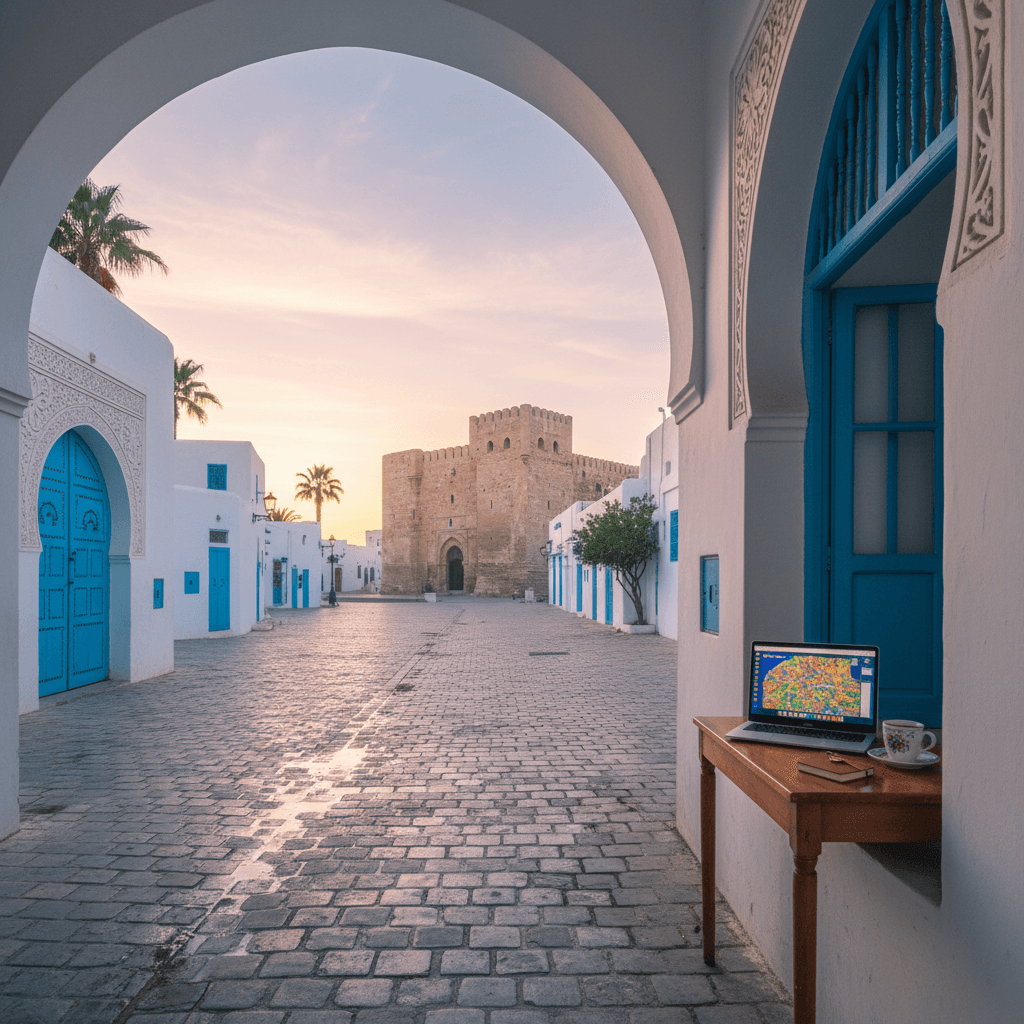
Sousse is a city of layers, where the salty breeze of the Mediterranean meets the heavy, spice-scented air of a ninth-century fortress. It doesn't try as hard to be "polished" as Tunis or as purely touristy as Hammamet. Instead, you get a working coastal city that feels lived-in and honest. Most nomads find the pace here slower than in Europe, dictated by the call to prayer and the heat of the afternoon sun.
The emotional core of the city is the UNESCO-listed Medina. Walking through the Bab al-Bahr, you leave the modern world behind for a labyrinth of whitewashed alleys and vibrant blue doorways. It is a place to get lost on purpose. While parts of the city can feel quiet during the shoulder seasons, the Medina remains a constant hum of activity where local life still takes precedence over the souvenir trade.
The Local Vibe
Expats often describe Sousse as "Tunisia Lite" because it offers a comfortable bridge between North African tradition and Western amenities. You can spend your morning working from a contemporary cafe in the Boujaffar area and your afternoon haggling for olives in a market that hasn't changed in centuries. It is affordable, walkable, and serves as the perfect logistical hub for exploring the rest of the country.
There is an undeniable residue of the city's past struggles with tourism, which has left some resort areas feeling a bit like a "ghost town" during the off-peak months. However, for a digital nomad, this is actually a plus. You get the infrastructure of a major resort destination, like high-speed internet in hotels and a wide variety of dining, without the overwhelming crowds or inflated prices of the northern Mediterranean.
The Neighborhood Breakdown
Where you choose to stay in Sousse completely changes your experience of the city. Most long-term travelers gravitate toward these three areas:
The Medina (Old City)
- The Vibe: Authentic, historic, and chaotic. You are living inside a fortress.
- Pros: Unbeatable atmosphere, incredibly cheap local food, and total immersion in Tunisian culture.
- Cons: No cars allowed, can be noisy, and apartments are often older with spotty plumbing.
Boujaffar & The Corniche
- The Vibe: The modern face of the city, running along the main beach.
- Pros: Great walkability, plenty of cafes with decent WiFi, and easy access to the water.
- Cons: Can feel a bit "touristy" and gets loud on weekend nights when locals cruise the strip.
Port El Kantaoui
- The Vibe: A manicured marina district about 15 minutes north of the city center.
- Pros: Very safe, modern apartments, and more Western-style grocery stores.
- Cons: More expensive than the city center and requires a taxi or InDrive to get into Sousse proper.
The Nomad Experience
Living here costs roughly $1,463 per month, which is a steal considering you are beachfront on the Mediterranean. While dedicated coworking spaces are still a growing concept, the cafe culture is strong. You will see locals sitting for hours over a single mint tea, and as long as you are ordering something, nobody will bother you for staying with your laptop.
Transportation is straightforward once you download the InDrive app. It is the local alternative to Uber and saves you from the inevitable haggling with traditional taxi drivers. For longer trips, the Metro Sahel train connects you to Monastir and Mahdia for just a few dollars, making it easy to change your scenery whenever the "city" feel gets too small.
Ultimately, Sousse is for the traveler who wants more than just a beach. It is for someone who wants to base themselves in a place where history is a daily reality, not just a museum exhibit. You'll find a community that is welcoming but not overbearing, and a lifestyle that allows you to live very well on a modest budget.
The Monthly Breakdown
Living in Sousse is remarkably easy on the wallet, especially if you're earning in USD or Euros. Most nomads find they can live a very comfortable, mid-range lifestyle for around $1,460 per month. This budget covers a nice apartment, frequent meals out, and weekend trips to nearby coastal towns. If you're more budget-conscious and stick to local markets, you could easily shave a few hundred dollars off that total.
Accommodation and Neighborhoods
Rent will be your biggest variable, but it's still a bargain compared to European coastal cities. On average, a modern one-bedroom apartment in a desirable area starts around $540 per month. Most expats and long-term travelers gravitate toward two specific areas.
- Port El Kantaoui: This is the upscale, manicured side of Sousse. It's built around a marina and feels more like a resort town. Expect to pay a premium here, likely $650 to $800 for a high-end flat with sea views. It's quieter and cleaner but lacks the grit and character of the city center.
- Khezama: This is the sweet spot for many nomads. It's a lively residential neighborhood with plenty of cafes, gyms, and shops. Rents here are more grounded, often between $400 and $550. It feels more "real" than the tourist zones while still being very safe.
Food and Groceries
Dining out is one of the best parts of the Sousse experience. A casual meal at a local spot in the Medina might cost you $5 to $8, while a three-course dinner at a nicer restaurant along the Corniche usually lands between $15 and $25.
If you prefer cooking, local markets are incredibly cheap for seasonal produce. A bag full of fresh vegetables, bread, and local fruit rarely exceeds $10. Imported goods like specific cheeses or branded electronics carry a heavy tax, so try to stick to local Tunisian brands to keep your costs down.
Transport and Connectivity
Getting around is cheap enough that you'll rarely think about the cost. Taxis are everywhere, but you should download the InDrive app. It works similarly to Uber and saves you from haggling over the meter or overpaying for short hops. A typical ride across town shouldn't cost more than $3 or $4.
For digital work, you'll want to verify the WiFi at your rental before signing anything. Speeds often hover around 12 mbps, which is fine for emails and basic calls but might struggle with heavy 4K video uploads. Many nomads supplement their home internet with a local SIM card; data packages are affordable, often costing less than $15 for a generous monthly allowance.
Daily Essentials
- Coffee at a local cafe: $1.50 to $2.50
- Monthly gym membership: $25 to $40
- Beer at a hotel bar: $3 to $5
- Train ticket to Tunis: $3.50
- Bottle of local wine: $7 to $12
While Sousse doesn't have a massive network of dedicated coworking spaces yet, the cafe culture is strong. You can spend an entire afternoon working from a terrace for the price of two mint teas, provided you aren't doing high-bandwidth tasks. It's a lifestyle that rewards those who can work flexibly and enjoy a slower pace of life.
For Solo Nomads: The Medina and City Center
If you want to be in the thick of it, the UNESCO listed Medina is your best bet. It is not just for tourists; it is a living, breathing neighborhood where you can find traditional dar rentals and small guesthouses. Living here means you are steps away from the best mint tea spots and the 9th century walls, though you will have to deal with narrow alleys that aren't car friendly. It is the most walkable part of the city and perfect for those who want an authentic Tunisian atmosphere.
Most nomads looking for a balance of history and modern amenities gravitate toward the Boujaffar area along the Corniche. This is the heart of the city's social life. You will find plenty of cafes with decent WiFi and a high density of restaurants. It is a bit noisier than the outskirts, but the proximity to the beach and the main train station makes it incredibly convenient for weekend trips to Monastir or El Jem.
- Average Rent: $450 to $600 per month for a decent apartment.
- Vibe: Traditional, high energy, and very walkable.
- Best for: People who want to skip the car and live like a local.
For Long Term Expats: Khzema and Sousse Promenade
Expats who plan on staying for six months or more usually head to Khzema. This is widely considered the upscale residential heart of Sousse. It is split into Khzema Est and Khzema Ouest, with the former being closer to the water. This neighborhood feels more "European" in its layout, featuring modern apartment blocks, boutique shops, and some of the better supermarkets in the city.
The infrastructure here is more reliable, and you will find a higher concentration of English speakers. It is less "touristy" than the beach resorts but still close enough to the water for a morning run. You will likely want to use the InDrive app to get around from here, as it is more reliable and transparent than flagging down yellow taxis on the street.
- Average Rent: $550 to $800 for a modern two bedroom flat.
- Vibe: Professional, quiet, and residential.
- Best for: Remote workers who need a quiet environment and reliable utilities.
For Families and Luxury Seekers: Port El Kantaoui
Located about 10 kilometers north of the city center, Port El Kantaoui is a purpose built Mediterranean style village and marina. It is much cleaner and more manicured than central Sousse. Families often choose this area because of the gated communities, green spaces, and the general sense of security. You have easy access to the golf course, the marina, and several private beach clubs.
While it can feel a bit like a "tourist bubble," it provides a level of comfort that is hard to find in the older parts of town. The apartments here often come with amenities like shared pools and dedicated parking. Keep in mind that prices for groceries and dining out in the marina are higher than in the Medina, so you will pay a premium for the convenience.
- Average Rent: $700 to $1,200 for high end villas or modern condos.
- Vibe: Resort style, relaxed, and secure.
- Best for: Families or those who prefer a vacation pace of life.
For Budget Conscious Travelers: Hammam Sousse
Sitting right between the main city and the luxury of Port El Kantaoui, Hammam Sousse offers a middle ground. It is a local town that has grown into a busy residential hub. It lacks the "glamour" of the marina, but it is where you will find the best deals on long term rentals. It feels like a real Tunisian town with local markets, cheap street food, and a very low cost of living.
You can easily hop on a louage or the Metro Sahel to get to neighboring cities from here. It is a great spot if you want to keep your monthly burn low while still being a short taxi ride away from the beach clubs and coworking spots in the city center.
- Average Rent: $350 to $500 for a basic furnished apartment.
- Vibe: Authentic, busy, and very affordable.
- Best for: Budget travelers and those who want to avoid the tourist crowds.
Connectivity and Speed
Internet in Sousse is a bit of a mixed bag. While the city is modernizing, you aren't going to find lightning fast fiber on every corner. Most digital nomads report average speeds around 12 Mbps, which is enough for Zoom calls and standard workflows, but might struggle with heavy video editing or large file uploads. If you're staying in a rental, always ask for a Speedtest screenshot before booking, as some older buildings in the Medina have thick stone walls that absolutely murder Wi-Fi signals.
For a reliable backup, pick up a local SIM card immediately. Ooredoo and Tunisie Telecom are the two main players. Coverage is generally excellent throughout the city and along the coast. You can get a generous data package for around $10 to $15 USD, and using your phone as a hotspot is often more stable than relying on hotel Wi-Fi. Most expats recommend Ooredoo for the most consistent 4G speeds in the tourist zones.
Coworking Spaces
Sousse doesn't have a massive "laptop cafe" culture yet, but there are a few dedicated spots where you can actually get things done. These spaces offer daily passes and monthly memberships that are very affordable, usually starting around $60 to $80 USD per month. It's a solid choice if you need a quiet environment and a desk that isn't a kitchen table.
Local hubs often lean towards the creative and startup crowd, making them great places to network with local Tunisian entrepreneurs. They often host events or workshops, providing a community rather than just a chair. Expect to pay about $5 to $7 USD for a day pass.
Work Friendly Cafes
If you prefer the background hum of a cafe, head toward the Corniche or Port El Kantaoui. Many of the upscale cafes along the water have decent Wi-Fi and won't mind if you linger for a few hours. Bora Bora and several spots near the Mövenpick area are popular with remote workers during the day. Just keep in mind that these places can get loud in the late afternoon when the social scene kicks in.
In the Medina, the vibe is much more traditional. You'll find plenty of spots for a mint tea, but the Wi-Fi is often non-existent or very spotty. Save the Medina for your "offline" work or deep thinking sessions. For serious productivity, stick to the modern district of Ville Nouvelle where the infrastructure is better and the power outlets are more plentiful.
Practical Tips for Remote Work
- Power Stability: Power cuts aren't frequent, but they do happen. Keep your devices charged and have a power bank ready.
- Peak Hours: Internet speeds can dip in the evenings when everyone is streaming. Try to schedule your heavy data tasks for the morning.
- Language: Most people in the tech and coworking spaces speak French and some English, so you won't have much trouble communicating your needs.
- VPN: It's a good idea to use a VPN for security and to access region-locked content from home.
Security Reality Check
Living in Sousse feels significantly different than just passing through as a resort tourist. The city has worked hard to overhaul its image, and you'll notice a heavy, visible security presence in the Bou Jaafar beach area and around Port El Kantaoui. For most nomads, the biggest daily annoyance isn't serious crime, but rather the persistent "guides" and souvenir sellers in the Medina who can be quite pushy with foreigners.
General street crime is low, but petty theft like phone snatching happens in crowded markets. Expats generally recommend keeping your phone tucked away while walking near the Sousse Voyageurs train station. If you're out late, stick to the main illuminated strips of the Corniche. While the city is quite liberal compared to the interior of the country, it's smart to dress modestly when you're away from the beach clubs to avoid unwanted attention.
Solo female travelers often find that while Sousse is safe, "catcalling" is a common occurrence. Carrying yourself with confidence and wearing sunglasses helps deflect some of the persistent eye contact. If you ever feel uncomfortable, ducking into a busy cafe or a high-end hotel lobby is a quick way to reset.
Navigating the Healthcare System
If you get sick, skip the public hospitals. They're often overcrowded and the bureaucracy is a headache. Instead, head to the private clinics, which are high quality and surprisingly affordable for those earning in Dollars or Euros. Many doctors in Sousse were trained in France and speak excellent French and decent English.
For urgent but non-emergency issues, look for a Cabinet Medical (a private doctor's office). You can usually get a walk-in consultation for about 50 to 80 TND ($16 to $25 USD). For more serious matters, the Clinique Les Oliviers is the top choice for the expat community. It's modern, clean, and handles everything from imaging to minor surgeries.
- Clinique Les Oliviers: Located in the Hedi Chaker area, this is the gold standard for private care in the city.
- Pharmacy Hours: Pharmacies operate on a "Garde" system. Look for the green neon cross; if one is closed, there's always a sign on the door pointing to the nearest 24-hour location.
- Emergency Number: Dial 190 for medical emergencies (SAMU) or 197 for the police.
Water and Wellness
Don't drink the tap water. While it's fine for brushing your teeth, the high mineral content and local treatment methods often lead to stomach issues for newcomers. Most nomads buy 5-liter jugs of Sabrine or Safia brand water at local Monoprix or Carrefour supermarkets. It's cheap, usually costing less than 1 TND per liter.
For your mental health and a bit of local culture, make the Hammam part of your routine. It's not just about getting clean; it's a social pillar. A full scrub and massage at a local spot will cost you around 30 TND ($10 USD) and is the best way to decompress after a long week of Zoom calls.
Digital Safety and Scams
Public Wi-Fi is rare and rarely secure. If you're working from cafes along the Route de la Corniche, use a VPN. Additionally, be wary of the "friend from the hotel" scam where someone claims to recognize you from your resort to lure you into a specific shop or a "private" tour. A polite but firm "Non, merci" is usually enough to end the interaction.
When it comes to getting around safely at night, use the InDrive app. It allows you to negotiate the fare beforehand and keeps a digital record of your trip, which is much safer than haggling with a random taxi driver on a dark corner.
Getting Around Sousse
Sousse is surprisingly easy to navigate once you get a feel for the layout. The city centers around the historic Medina and the beachside Corniche, where most of your daily life will happen. It's a place where you can rely on your own two feet for the basics, but you'll need a mix of apps and local transport to really unlock the region.
Walking the City
If you're staying near the Medina or the tourist zone along the beach, you'll find Sousse highly walkable. The Medina itself is a pedestrian-only maze of narrow limestone alleys where cars couldn't fit even if they tried. It's the best way to soak in the atmosphere, though the cobblestones can be uneven, so leave the flip-flops for the beach and wear sturdy sneakers. Most nomads find that a twenty-minute walk covers the distance between the main café strips and the central markets.
Taxis and Ride-Hailing
Yellow taxis are everywhere. You can hail them on the street, but there's a better way to handle it. Expats and savvy travelers almost exclusively use the InDrive app here. It works similarly to Uber but allows you to negotiate or accept a fare before the car arrives. It saves you the hassle of haggling over a meter or worrying about "tourist prices." A typical cross-town hop usually costs between 5 to 8 TND (roughly $1.60 to $2.60 USD).
The Metro Sahel
For getting out of the city without spending much, the Metro Sahel is your best friend. This isn't an underground subway; it's an electric commuter train that runs along the coast. It’s a lifesaver for quick trips to Monastir or Mahdia. The trains are basic but functional, and a ticket to Monastir will only set you back about 1.5 TND (less than $0.50 USD). It’s a great way to see the coastline while avoiding the traffic on the main roads.
Louages: The Tunisian Staple
If you're planning a day trip to the Roman amphitheater in El Jem or the holy city of Kairouan, you'll want to use a louage. These are white minibuses with a specific color stripe (usually red for long distance) that depart as soon as they’re full. You’ll find the main station, or "station des louages," slightly outside the city center. There’s no fixed schedule, but they run constantly. A seat to Kairouan usually costs around 6 to 9 TND. It's cramped and fast, but it’s the most authentic and efficient way to travel like a local.
Regional Trains and Car Rentals
For longer hauls, like heading back to Tunis, the national train service (SNCFT) is reliable and cheap. A first-class ticket from Sousse to Tunis is about 10 TND ($3.20 USD) and takes roughly 2 hours and 15 minutes. If you value total independence, car rentals are available for about 90 to 120 TND per day. This makes sense if you want to explore the smaller villages like Hergla at your own pace, but be prepared for aggressive driving styles and some creative interpretations of traffic laws in the city center.
Transport Summary
- InDrive App: The most reliable way to get a fair price for local rides.
- Metro Sahel: Best for cheap coastal hops to Monastir and Mahdia.
- Louages: Fast, shared vans for regional travel to El Jem and Kairouan.
- Train to Tunis: Costs roughly 10,000 millimes ($3.20 USD) for a comfortable two-hour journey.
While Arabic is the official language and Tunisian Derja is what you will hear on every street corner, Sousse is a place where your linguistic experience depends heavily on where you are standing. In the Medina or the local markets, Derja is king. It is a unique, fast paced dialect that blends Arabic with a heavy sprinkling of French, Italian, and Berber influences. If you speak standard Modern Standard Arabic (MSA), locals will understand you, but they will likely reply in Derja or French.
The French Connection
French is the unofficial second language of Tunisia and remains the language of administration, commerce, and higher education. You will find that almost everyone in Sousse over the age of ten speaks French with varying degrees of fluency. If you have a decent grasp of French, you will find life here significantly easier. Menus, street signs, and official documents are almost always bilingual in Arabic and French. Most nomads who stay for more than a month find that brushing up on basic French phrases is more practical for daily life than trying to master the complexities of the local Arabic dialect.
English Proficiency
English is definitely on the rise, especially among the younger generation and those working in the tech or tourism sectors. In the resort heavy area of Port El Kantaoui or the upscale cafes along the Corniche Boujaafar, you will have no trouble getting by with English. However, once you step away from the tourist bubbles, English proficiency drops off quickly. If you are dealing with a landlord or a local mechanic, expect to use a translation app or a lot of hand gestures if you don't speak French or Arabic.
Staying Connected
Getting a local SIM card is the first thing you should do after landing. Don't rely on international roaming; it is prohibitively expensive and often spotty. There are three main providers: Ooredoo, Tunisie Telecom, and Orange. Most expats and nomads lean toward Orange or Ooredoo for better data coverage in Sousse.
- Where to buy: You can find official kiosks at the airport, but you will get better service and shorter lines at the branded shops in the Sousse City & Beach mall or along Avenue Habib Bourguiba.
- Requirements: You must bring your physical passport to register the SIM. This is a legal requirement in Tunisia.
- Cost: A SIM card usually costs around 5 to 10 TND ($1.60 to $3.20 USD).
- Data Packages: Data is incredibly cheap. You can get 10-20GB of data for roughly 50 TND ($15 USD). You can top up easily using "recharge" cards found at almost any small "Hanout" (convenience store) or through the provider's mobile app.
Digital Nomad Essentials
While Sousse is a great base, the infrastructure can be temperamental. Fiber optic internet is becoming more common in newer apartments in Hammam Sousse and Sahloul, but many older rentals still rely on ADSL, which can be sluggish.
If your work requires high bandwidth for video calls, always ask for a speed test before signing a lease. Average speeds often hover around 20 Mbps, though you can find higher in dedicated spaces. For a reliable backup, the InDrive app is essential for navigating the city without the "tourist tax" often applied by traditional taxi drivers who might "forget" to turn on the meter. It allows you to negotiate the price upfront and avoids any language barriers regarding destinations.
The Sweet Spot: When to Land in Sousse
Timing your stay in Sousse is about balancing your tolerance for heat with your desire for a lively social scene. For most nomads, the shoulder seasons of April to June and September to October are the goldilocks zones. During these months, temperatures hover between 20°C (68°F) and 26°C (79°F), making it comfortable to work from a terrace without melting or needing the AC on full blast.
If you visit in May, be prepared for a bit of a "ghost town" vibe in certain resort areas. While the Medina stays active with local life, the tourist infrastructure is often just waking up. This is a perk if you want the beaches to yourself and lower negotiation starting points for long term apartment rentals.
Summer: The High Season Heat
July and August are intense. Temperatures frequently climb above 32°C (90°F), and the humidity coming off the Mediterranean can make mid day strolls feel like a marathon. This is when the city is at its loudest and most crowded, as the Tunisian diaspora returns home for the summer and European vacationers fill the resorts in Port El Kantaoui.
- The Upside: The nightlife is at its peak, and every beach bar is open until the early hours.
- The Downside: Expect to pay a premium for short term housing, and your electricity bill will spike from constant air conditioning use.
- Pro Tip: Do your deep work in the morning and join the locals for a late afternoon swim when the sun begins to dip.
Winter: The Quiet Season
From November to March, Sousse cools down significantly. Daytime highs usually sit around 16°C (61°F), but it can feel much colder indoors. Most Tunisian homes are built to keep heat out, meaning they lack central heating and have tile floors that stay icy. If you're staying during these months, make sure your rental includes a reliable heating unit or a "climatiseur" with a heat setting.
Rain is most frequent in January and February, though it rarely lasts all day. This is the best time for deep work and exploring inland spots like the El Jem amphitheater without the blistering sun. You'll find that many seasonal restaurants along the Corniche might close, but the authentic spots in the Medina and the city center stay open year round.
Key Seasonal Considerations
Beyond the thermometer, the lunar calendar plays a massive role in the city's rhythm. During Ramadan, the pace of life slows down significantly during the day. Many cafes and restaurants outside the main tourist hotels will close until sunset. While it's a fascinating time to witness the "Iftar" feast and the late night festivities, it can be a challenge for nomads who rely on working from cafes during standard business hours.
For the best overall experience, aim for late September. The Mediterranean is still warm enough for swimming, the summer crowds have thinned out, and the "InDrive" prices for getting around town become much more reasonable as demand drops.
Visa and Entry Requirements
For most Western travelers, including US, UK, and EU citizens, entering Tunisia is straightforward. You typically won't need a visa for stays up to 90 days. Just make sure your passport is valid for at least six months beyond your arrival date. While you don't need a visa, you will likely be asked for your accommodation address on a small arrival card at the airport, so keep your first hotel or Airbnb details handy.
Connectivity and SIM Cards
Don't rely on your home roaming plan here; it will be expensive and slow. As soon as you land at Tunis Carthage or Monastir Airport, look for the Tunisie Telecom, Ooredoo, or Orange kiosks. They often give away free SIM cards to tourists, and you can load them with 25GB to 50GB of data for roughly $10 to $15 USD.
In Sousse, fiber internet is still rare in residential apartments. Most nomads find that WiFi speeds hover around 12 Mbps. If you need a stable connection for video calls, use your phone as a hotspot. The 4G coverage in the city center and along the beach is surprisingly reliable.
Money and Banking
Tunisia is a cash heavy society. While high end hotels and restaurants in Port El Kantaoui accept cards, you will need Tunisian Dinars (TND) for almost everything else. ATMs are plentiful along Avenue Habib Bourguiba, but they often have a withdrawal limit of around 300 to 500 Dinars (roughly $100 to $160 USD) per transaction.
Expats often recommend using Attijari Bank or BIAT for international cards. Avoid exchanging all your money at once, as it is difficult to convert Dinars back into foreign currency when you leave. You will need to show your original exchange receipt to change money back at the airport.
Getting Around
Sousse is a walkable city if you stay near the Medina or the Corniche, but you will need wheels for anything further. Forget traditional street hailing for taxis; the drivers often ignore the meter with foreigners. Instead, download InDrive. It is the local go to for fair pricing and works like a charm for getting from the city center to the marina.
- Louages: These white minibuses with a red stripe are the lifeblood of Tunisian travel. They leave when full and will get you to Monastir or Kairouan for just a few dollars. The station is located near the outskirts of the city.
- Metro Sahel: This light rail connects Sousse to Monastir and Mahdia. It is incredibly cheap, costing less than $1 USD, though it can get crowded during rush hour.
- Trains: The SNCFT train to Tunis takes about 2 hours and 15 minutes and costs roughly $3.50 USD for a first class seat.
Health and Safety
Sousse is generally safe for nomads, especially in the well lit tourist zones. Like any major city, keep an eye on your phone and wallet in the crowded alleys of the Medina. For healthcare, the city has several reputable private clinics that are much better than the public hospitals. Clinique Les Oliviers is frequently recommended by the expat community for its modern equipment and English speaking staff.
Tap water is technically safe but has a heavy mineral taste that most people find unpleasant. Most nomads stick to bottled water, which is very cheap at local corner shops. Look for the Sabrine or Safia brands.
Language and Culture
Tunisian Arabic (Derja) is the local tongue, but French is the language of administration and business. In the tourist areas of Sousse, you will find plenty of English speakers, but learning a few basic Arabic phrases like "Aslama" (Hello) and "Shokran" (Thank you) goes a long way. The vibe is Mediterranean and relaxed, but remember it is still a conservative culture. Dressing modestly when exploring the Medina or visiting Kairouan shows respect and helps you blend in.
Need visa and immigration info for Tunisia?
🇹🇳 View Tunisia Country GuideHidden Gem
Worth the effort