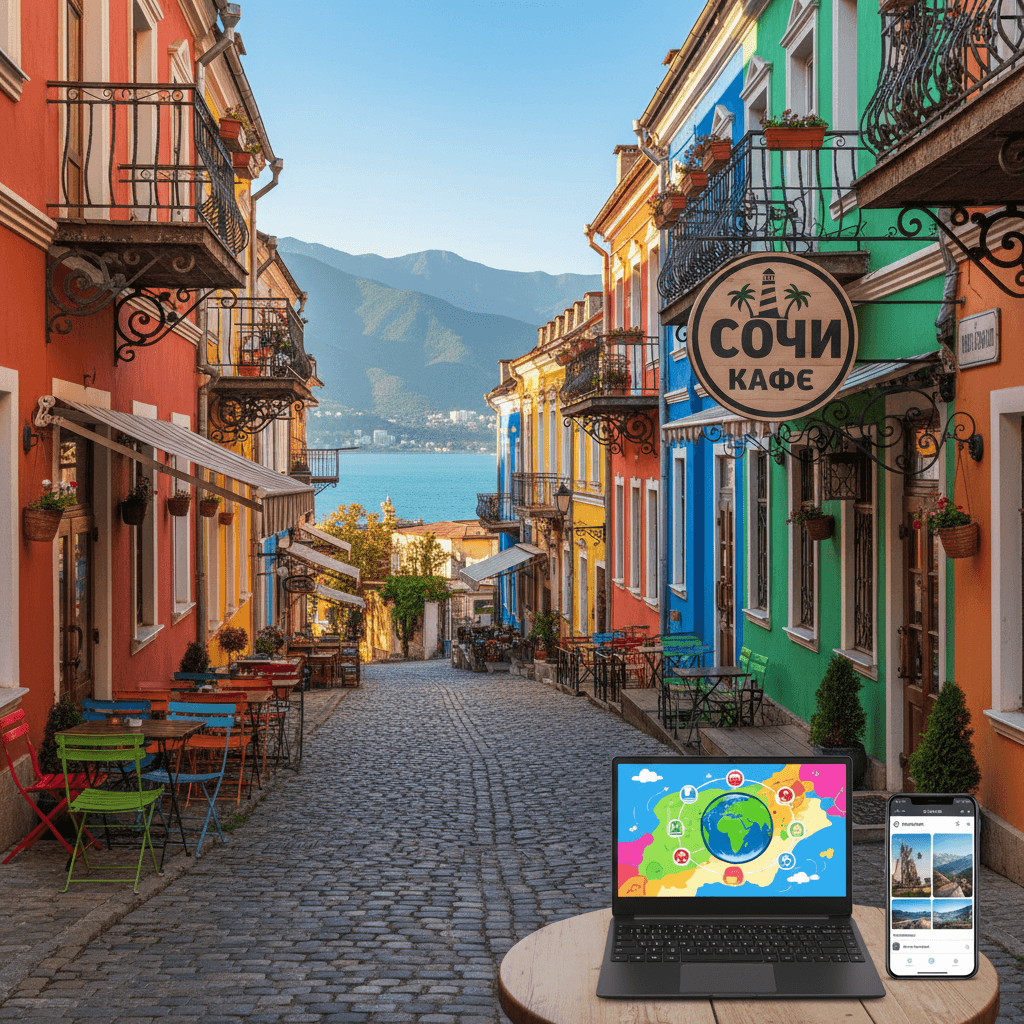
Sochi
🇷🇺 Russia
A Subtropical Slice of Russia
Sochi is a bit of a geographical anomaly that feels like a Mediterranean escape tucked behind the Iron Curtain. It is where Russia sheds its heavy coats and trades gray concrete for palm trees, black pebble beaches, and the salty breeze of the Black Sea. Since the 2014 Olympics, the city has evolved from a sleepy Soviet sanatorium town into a polished, year round hub that balances beach life with high altitude mountain adventures in nearby Krasnaya Polyana.
The vibe here is noticeably slower than the frantic pace of Moscow. You will find older men playing chess in the parks alongside digital nomads working from minimalist cafes. It is a city of contrasts where Stalinist architecture sits next to glass skyscrapers, and the scent of grilled shashlik mixes with the aroma of high end espresso. While it lacks the international polish of Bali or Lisbon, it offers a grit and authenticity that nomads seeking something off the beaten path tend to love.
The Cost of Living
Living in Sochi is remarkably affordable for those earning in Western currencies, though inflation means prices have crept up recently. You can maintain a comfortable lifestyle for a fraction of what you would spend in Europe.
- Budget Tier: Expect to spend 60,000 to 80,000 RUB ($600 to $800) per month. This covers a shared room or a modest studio in the outskirts, plenty of street food like khinkali, and using the bus system.
- Mid-Range Tier: Most nomads land here, spending 100,000 to 150,000 RUB ($1,000 to $1,500). This gets you a nice one bedroom apartment in the center, daily cafe meals, and regular Yandex Go rides.
- Comfortable Tier: For 200,000+ RUB ($2,000+), you are looking at upscale living in Adler or a luxury high rise, dining at spots like La Terrazza, and full time coworking memberships.
Where to Plant Your Flag
Choosing a neighborhood depends entirely on whether you want the metropolitan rush or the sound of the waves. Most nomads stick to the central districts for the best infrastructure.
Tsentralny (Central Sochi)
- The Vibe: The heart of the action. Walkable, packed with cafes, and close to the main promenade.
- Rent: 25,000 to 45,000 RUB for a decent apartment.
- Pros: Best WiFi reliability and the most English speakers you will find in the city.
Adler
- The Vibe: Modern, flat, and family friendly. It feels like a purpose built resort town because much of it was.
- Rent: 30,000 to 50,000 RUB, with prices spiking in the summer.
- Pros: Close to the airport and the Olympic Park, with wider beaches than the center.
Khosta
- The Vibe: A quiet, green retreat for those who want to hike and disappear for a while.
- Rent: 20,000 to 35,000 RUB.
- Pros: Great air quality and significantly cheaper than the tourist hotspots.
Connectivity and the Workspace
Internet in Sochi is generally excellent, with speeds hitting 50 to 100 Mbps in most central rentals. However, the digital landscape requires some prep work. You will need a solid VPN to access sites like Instagram or certain international news outlets. For a dedicated desk, Impact Hub Sochi is the gold standard for the community, charging about 15,000 RUB ($150) a month. If you prefer a view, FLAT Sochi offers day passes for 500 RUB right near the water.
Getting a SIM card is a manual process. Head to a Euroset or MTS salon with your passport for biometric registration. You can snag a massive data plan for around 600 RUB a month. Do not wait until you are at the airport; they often don't have cards available for foreigners there.
The Real Talk: Safety and Language
Sochi is generally safe, even for solo travelers, provided you stay in well lit, central areas. Petty theft can happen in crowded beach zones, so keep an eye on your tech. Healthcare is surprisingly good at private clinics like Meditsina, where a consultation costs around 3,000 RUB ($30).
The biggest hurdle is the language. Outside of major hotels and the nomad community, English proficiency is low. You will want Yandex Translate downloaded for offline use. Learning the Cyrillic alphabet will save you a lot of stress when reading bus routes or menus. It is also worth noting that foreign bank cards are essentially useless here. You will need to rely on Mir cards or local fintech apps like Tinkoff once you get settled.
The Seasonal Rhythm
The city breathes with the seasons. May to October is the prime window for beach lovers, though July and August bring intense humidity and crowds. If you hate the rain, avoid January to March, unless you are heading up to Krasnaya Polyana for the ski season. Even in the winter, the coastal temperatures rarely drop into the negatives, keeping the palm trees green while the mountains just an hour away are buried in snow.
The Price of Paradise on the Black Sea
Sochi hits a sweet spot for nomads who want a Mediterranean lifestyle without the Eurozone price tag. While it's pricey by Russian provincial standards, your dollars or euros go incredibly far here compared to Moscow or St. Petersburg. You can live a high-quality life with seaside views and fresh mountain air for a fraction of what you'd spend in a typical European digital nomad hub.
Most nomads find that $1,000 to $1,500 per month covers a comfortable mid-range lifestyle. This includes a modern one-bedroom apartment in a central area, daily cafe visits, and plenty of weekend trips to the mountains. If you're on a tighter budget, you can scrape by on $600 to $800 by sharing a flat in Khosta and sticking to local markets, while luxury seekers can live like royalty for anything over $2,000.
Breaking Down the Monthly Budget
- Housing: A decent studio in the Tsentralny District usually runs between 20,000 and 35,000 RUB ($200 to $350). If you want to be near the Olympic park in Adler, expect to pay 25,000 to 40,000 RUB ($250 to $400).
- Food and Dining: Street food like shashlik skewers or khinkali will only set you back 200 to 400 RUB ($2 to $4). A nice dinner at a mid-range spot like Khinkalnaya costs around 1,200 RUB ($12), while high-end seafood dinners in the harbor area generally start around 2,500 RUB ($25).
- Transport: A monthly bus pass is a steal at 2,000 RUB ($20). Most expats rely on the Yandex Go app for rides, with short city trips costing between 200 and 500 RUB ($2 to $5).
- Workspace: A day pass at Impact Hub Sochi or FLAT Sochi costs between 500 and 1,000 RUB ($5 to $10). Monthly memberships hover around 15,000 RUB ($150).
Neighborhood Price Tags
Where you park your laptop significantly changes your burn rate. The city is stretched thin along the coast, so choose your base wisely to avoid losing money on long taxi rides.
Tsentralny District (The Hub)
- Monthly Rent: 25,000 to 45,000 RUB
- Vibe: Best for solo nomads who want walkability and fast fiber internet. It's noisy in the summer but keeps the best cafes open year-round.
Adler (The Beach Base)
- Monthly Rent: 30,000 to 50,000 RUB
- Vibe: Modern and close to the airport. It's great for families, though prices spike during the summer holiday rush.
Krasnaya Polyana (The Mountain Retreat)
- Monthly Rent: 40,000 to 70,000 RUB
- Vibe: Expensive but worth it for skiers and hikers. Keep in mind that lift passes are an extra 2,000 RUB per day.
Practical Spending Tips
Banking is the biggest hurdle right now. Foreign cards are generally restricted, so you'll need to look into Mir cards or local fintech apps like Tinkoff to handle your daily expenses. For groceries, skip the tourist-facing shops and head to local markets for fresh produce and Caucasian spices at half the price.
When it comes to connectivity, don't buy your SIM at the airport. Head to a Euroset or MTS salon in the city with your passport for a biometric registration. You can snag a massive 1TB data plan for about 600 RUB ($6) a month. Just remember that a reliable VPN is a non-negotiable expense if you need to access Instagram or Western news sites while working from the beach.
For Digital Nomads: Tsentralny District (Central Sochi)
If you need to be within walking distance of a reliable espresso and high speed internet, Tsentralny is your base. This is the heart of the city where the Soviet era architecture meets modern palm lined promenades. It feels the most like a traditional European city, making it easy to navigate without a car.
Most nomads gravitate toward Impact Hub Sochi for a dedicated workspace, where a monthly desk goes for about 15,000 RUB ($150). If you prefer the cafe route, Cofix is the go to for cheap caffeine and functional WiFi. You'll find the best concentration of English speakers here, though you should still keep Yandex Translate handy for daily interactions.
- Average Rent: 25,000 to 45,000 RUB ($250 to $450) for a modern studio.
- Best Perk: High walkability and the most reliable fiber optic internet in the region.
- The Downside: It gets incredibly loud and crowded during the peak summer months of July and August.
For Families and Beach Lovers: Adler
Adler was the epicenter of the 2014 Olympics, and it shows. The infrastructure here is the newest in the city, featuring wide sidewalks, modern parks, and easy access to the airport. Families love it for the proximity to the Sirius educational spaces and the Olympic Park, which offers plenty of room for kids to run around.
Living here puts you right on the water, but the beaches are pebbly and can get packed. You're also perfectly positioned for the Aeroexpress train, which makes getting to the city center or the mountains a breeze. For groceries and household needs, look for Magnit or Pyaterochka supermarkets which are everywhere in this district.
- Average Rent: 30,000 to 50,000 RUB ($300 to $500).
- Best Perk: Proximity to the airport and the most modern housing stock in Sochi.
- The Downside: Higher prices during the summer season and a more "resort" feel rather than a local one.
For Solo Travelers on a Budget: Khosta
Khosta is the middle ground between the chaos of the center and the polish of Adler. It's an older, greener neighborhood nestled in the hills. It feels much more like a local village than a tourist hub, which is reflected in the lower prices at the small produce markets and local shashlik stands.
Solo travelers looking for peace and quiet will find it here. The hiking trails are right at your doorstep, and the neighborhood is very safe. While the nightlife is non existent, the train connects you to the more active districts in about 20 minutes for just 30 RUB.
- Average Rent: 20,000 to 35,000 RUB ($200 to $350).
- Best Perk: Incredible nature access and significantly lower cost of living.
- The Downside: You'll need to travel to Tsentralny for any serious coworking or networking.
For Winter Enthusiasts and Luxury Expats: Krasnaya Polyana
Technically a mountain suburb, this is where you go if you want fresh alpine air and a high end lifestyle. It's a favorite for expats who work in tech or finance and want a "work hard, ski hard" lifestyle. During the winter, it's the most expensive place in the region, but the summer offers deep discounts on luxury rentals.
The vibe is very different from the coastal areas; it's more about craft beer pubs and mountain biking. Just be aware that while the internet is generally good in the resorts, it can be spotty in the older wooden cabins further up the slopes. Always carry a local MTS or Beeline SIM card for backup data.
- Average Rent: 40,000 to 60,000 RUB ($400 to $600), though prices spike in winter.
- Best Perk: World class skiing and a tighter knit expat community.
- The Downside: Daily lift passes are pricey at 2,000 RUB, and you're about an hour away from the beach.
Connectivity and Speed
Internet in Sochi is surprisingly robust, a byproduct of the infrastructure overhaul from the 2014 Olympics. You can generally expect speeds between 50 and 100 Mbps in central apartments and hotels. While the fiber is fast, the digital landscape here requires some prep work. Because of local restrictions, a reliable VPN is a non-negotiable tool if you plan on accessing Instagram, Facebook, or certain international news sites, which often remain inaccessible on standard connections.
For mobile data, skip the airport kiosks as they are often overpriced or unavailable. Head to a Euroset or Svyaznoy salon in the city center to grab a SIM card from MTS or Beeline. You'll need your passport for biometric registration, but the payoff is worth it. A 1TB monthly data plan typically runs around 600 RUB, making it one of the cheapest places in Europe to stay connected. If you're just looking for a quick spot to send emails, chains like Cofix offer free WiFi and a coffee for about 150 RUB.
Top Coworking Spaces
The nomad community tends to gravitate toward two main hubs that offer reliable power and a professional atmosphere away from the beach crowds.
- Impact Hub Sochi: This is the gold standard for serious work. It’s the primary gathering spot for the local Nomad List community and hosts weekly meetups. A day pass costs 800 RUB, while a monthly desk goes for 15,000 RUB. The high-speed fiber here is the most stable in the city.
- FLAT Sochi: If you can't bear to be away from the water, this spot offers solid desk setups with actual beach views. It’s more affordable at 500 RUB per day, though it can get a bit livelier and less "corporate" than Impact Hub.
Digital Nomad Life in the Districts
Where you set up your laptop depends heavily on the vibe you want after you close the lid. Most nomads find Tsentralny (Central Sochi) the most convenient, as it’s the most walkable area with the highest concentration of cafes. You’ll find plenty of expats working from places like Khachapuri or local coffee shops along the promenade. Rent here for a workspace-friendly studio usually sits between 25,000 and 45,000 RUB.
If you prefer a mountain backdrop, Krasnaya Polyana is the go-to for the winter months. While it’s more expensive and remote, the air is clearer and the WiFi in the resort hotels is excellent. Just keep in mind that transport back to the coast takes about an hour, so it’s better to commit to the mountain life if you choose to work from there. For those on a tighter budget, Khosta offers a quieter, greener environment with lower rents around 20,000 RUB, though you’ll likely be working from your apartment rather than a dedicated coworking space.
Practical Tech Tips
- Banking: Your foreign Visa or Mastercard likely won't work at local ATMs. Expats recommend setting up a Tinkoff account or using Mir cards for daily transactions.
- Apps: Download Yandex Go for rides and Yandex Translate with the offline Russian pack. They are far more reliable than Uber or Google in this region.
- Housing: Avoid the international booking sites and use Avito.ru or Cian.ru to find monthly rentals. Just be sure to verify the host and check the WiFi speed before committing to a long-term stay.
General Safety and Nighttime Tips
Sochi feels remarkably polished and safe compared to other major Russian hubs. The 2014 Olympic legacy left behind a city that is heavily monitored and well-lit, especially in Tsentralny and the Adler resort zones. Most nomads feel comfortable walking the seafront promenades late at night, though you should stick to the main drags. The vibe is more Mediterranean resort than gritty metropolis.
While violent crime is rare, petty theft still happens in crowded spots. Keep an eye on your phone and wallet at the Sochi Central Market or on public buses. Travelers generally advise against wandering into unlit outskirts or the Maikop area after dark. If you're entering the country through land borders or major airports, be prepared for potential device checks; it is a standard procedure these days, so keep your digital house in order before you land.
- Police: Dial 102 from any mobile.
- Emergency Services: Dial 112 for a general dispatcher.
- Safety Apps: Use Yandex Go for rides rather than hailing cars off the street to ensure your trip is tracked and priced fairly.
Healthcare and Medical Services
The healthcare system in Sochi is a mix of aging state facilities and shiny new private clinics. For anything beyond a minor scrape, expats and nomads almost exclusively head to private providers. Meditsina Clinic is the go-to for the international community; it's modern, and you can usually find a doctor who speaks at least a little English. A standard consultation here will run you about 3,000 RUB ($30).
Public hospitals like Sochi City Hospital are available for emergencies, but the language barrier is steep and the wait times can be grueling. If you need a pharmacy, look for the Apteka.ru chain or the green cross signs scattered every few blocks. Most pharmacists won't speak English, so have Yandex Translate ready on your phone to show them what you need. While many basic meds are over-the-counter, bring your specific prescriptions from home to avoid any confusion.
- Ambulance: Dial 103.
- Private Care: Meditsina Clinic for English-friendly consultations.
- Pharmacies: Look for Apteka (Аптека) signs; most are open until 8:00 PM or 9:00 PM, with some 24-hour options in the center.
Practical Health Considerations
Tap water in Sochi isn't recommended for drinking. While it's fine for showering and brushing your teeth, most locals and long-term nomads rely on bottled water or large 19-liter jugs delivered to their apartments. You can pick up a 5-liter bottle at any Magnit or Pyaterochka supermarket for around 100 RUB ($1).
The subtropical climate means the sun is stronger than you might expect, especially when the sea breeze masks the heat. If you're spending the day at Riviera Beach or heading up to Krasnaya Polyana, pack high-SPF sunscreen. It is surprisingly expensive in the local shops, often costing 1,500 RUB ($15) or more for a small bottle. Also, be aware that the mountain air in the winter can be incredibly dry, so keep a good moisturizer in your kit if you're staying in the hills.
Transport Basics
Sochi is a long, narrow strip of land pinned between the mountains and the sea. Because the city stretches for nearly 100 kilometers, you won't be walking from one district to another. For local hops within the Tsentralny District, your feet are your best tool; the seafront is highly walkable and mostly flat. When you need to cover more ground, the public bus and marshrutka (minibus) network is surprisingly efficient. Use the Sochi Transport app to track arrivals. A single ride costs about 30 RUB, and you can tap your card or pay the driver directly.
If you're heading from the city center to the Olympic Park in Adler or the ski slopes of Krasnaya Polyana, skip the bus and take the Lastochka train. It's a modern, high-speed rail link that beats the coastal traffic every time. A ticket from central Sochi to the airport or Adler costs around 200 to 400 RUB depending on the distance, and the views of the Black Sea from the window are a great perk of the commute.
Ride-Hailing and Apps
Don't bother trying to hail a taxi on the street. You'll likely overpay, and most drivers prefer the apps anyway. Yandex Go is the undisputed king here. It works exactly like Uber or Lyft and allows you to see the price upfront. Short trips around the center usually run between 200 and 500 RUB. It's cheap enough that many nomads use it as their primary way to get around when the humidity kicks in during July.
For those who prefer two wheels, electric scooters are everywhere. Download the Whoosh app to unlock them. They cost about 10 RUB per minute. They're perfect for the flat promenades in Adler, though the hilly outskirts of Khosta might be a bit much for a basic scooter motor. Just watch out for pedestrians on the busy boardwalks; the crowds can get thick during the summer peak.
Airport Transfers
When you land at Sochi International (AER), you have three main choices to get to your accommodation. The Aeroexpress train is the most reliable way to avoid the notorious Sochi traffic jams, costing about 400 RUB for a 30-minute trip to the center. If you have a lot of luggage, a Yandex Go car from the arrivals terminal will cost roughly 500 to 800 RUB. Avoid the independent drivers hanging out by the baggage claim; their "special prices" are rarely a bargain.
Driving and Car Rentals
Most nomads find that they don't need a car unless they plan on frequent trips into the deep Caucasus mountains. Parking in the Tsentralny District is a nightmare, and the local driving style can be aggressive for newcomers. If you do want to explore, local rental agencies are available, but you'll need an International Driving Permit and a local Mir card or cash for the deposit. For quick trips, car-sharing apps like BelkaCar are popular if you have a valid Russian translation of your license and a local phone number.
Quick Reference: Getting Around
- Bus/Tram: 30 RUB per ride. Best for short city hops.
- Lastochka Train: 200 to 400 RUB. Best for Adler and the mountains.
- Yandex Go: 200 to 500 RUB for most city trips. Reliable and cheap.
- Scooter Rental: 10 RUB per minute via Whoosh. Great for the seafront.
- Monthly Transport Pass: 2,000 RUB. Worth it if you're staying 30+ days.
The Linguistic Landscape
In Sochi, Russian is the undisputed king of conversation. While the city underwent a massive facelift for the Olympics, the linguistic shift toward English didn't stick as firmly as the new infrastructure. You'll find that Russian is the primary language for everything from government forms to the menu at your local shashlik stand. In the Tsentralny District or high-end hotels in Adler, you might encounter staff with 20% to 30% English proficiency, but don't count on it for daily errands.
Nomads often find that locals are patient, but the language barrier is real. Beyond Russian, you might hear snippets of Abkhazian due to the city's proximity to the border, adding to the unique Caucasian flavor of the region. If you're planning to stay for more than a few weeks, learning the Cyrillic alphabet is a game changer. It makes identifying grocery items and bus stops significantly less stressful.
Digital Lifelines and Translation
Since English isn't widely spoken, your phone is your best friend. Most expats and long term travelers swear by Yandex Translate. It generally handles the nuances of Russian better than other major translation apps. Make sure to download the offline Russian dictionary so you aren't stranded if your signal drops while hiking in Khosta.
For getting around, Yandex Go is the standard for ride hailing. The app is available in English, which saves you the headache of trying to explain your destination to a driver. Similarly, Whoosh for scooter rentals and Sochi Transport for buses are manageable for non speakers, though you'll still want to cross reference stop names with a map.
Connectivity and Staying Online
Reliable internet is the backbone of the nomad experience here. Expect average speeds between 50 and 100 Mbps in most central cafes and apartments. However, the digital environment has some quirks. You'll need a reliable VPN to access sites like Instagram or certain international news outlets, as access remains inconsistent.
To get a local SIM card, head to a Euroset or MTS salon. You cannot buy these at the airport, so plan to use the airport WiFi to get to your accommodation first. You'll need your passport for a biometric ID scan to register the card. A standard data plan with roughly 1TB of data costs around 600 RUB per month. Beeline is another solid option with good coverage across the coast.
Socializing and Networking
Breaking into the local social scene usually requires a bit of effort. The Nomad List Sochi group on Telegram is a great starting point, often organizing weekly meetups at Impact Hub Sochi. For broader advice, the Expats in Sochi Facebook group is a helpful resource for navigating local bureaucracy or finding English speaking doctors.
If you're looking for a more organic way to meet people, Murphy's pub or the bars along More Street are popular spots where you're more likely to run into other internationals. While the "Mediterranean feel" of the city makes people a bit more relaxed than in Moscow, a few basic phrases will go a long way in earning a smile.
- Privet: Hello (informal)
- Spasibo: Thank you
- Skolko stoit?: How much does it cost?
- Ya ne govoryu po-russki: I don't speak Russian
Key Communication Costs
- Prepaid SIM (Starter): 300 to 500 RUB
- Monthly Unlimited Data: 600 RUB
- Impact Hub Day Pass: 800 RUB
- FLAT Sochi Day Pass: 500 RUB
The Subtropical Sweet Spot
Sochi is a bit of a weather anomaly in Russia. While the rest of the country is often bracing for sub-zero temperatures, this coastal strip enjoys a humid subtropical climate that feels more like the Mediterranean. You'll see palm trees lining the streets and people dining outdoors well into the autumn. The city’s unique geography, squeezed between the Black Sea and the Caucasus Mountains, creates a microclimate where you can literally sunbathe on a pebble beach in the morning and be snowboarding in Krasnaya Polyana by the afternoon.
For nomads, the best time to land here is during the shoulder seasons of May to June or September to October. During these months, the air is a comfortable 20°C to 25°C (68°F to 77°F), and the crushing crowds of domestic tourists haven't arrived or have already headed home. You'll get the best of the cafe culture in the Tsentralny District without having to fight for a seat or deal with spiked seasonal rental prices.
Summer: Peak Beach Season
July and August are the hottest and busiest months. Temperatures frequently hit 28°C to 30°C (82°F to 86°F) with high humidity that can feel heavy if you aren't near the water. This is when Sochi transforms into the "Summer Capital."
- The Vibe: High energy, packed beach clubs, and a 24/7 party atmosphere in Adler.
- The Downside: Accommodation prices can double, and the popular pebble beaches become standing-room only.
- Nomad Tip: If you're working, stick to air-conditioned spaces like Impact Hub Sochi during the day to avoid the midday swelter.
Winter: The Alpine Alternative
Winter in the city center is mild but damp. From December through March, temperatures hover around 8°C to 10°C (46°F to 50°F). It rarely snows at sea level; instead, you'll get frequent rain. However, the mountains tell a different story. The ski season is the big draw here, particularly for those who want to live in the mountain air of Rosa Khutor.
- Rainy Season: November to March sees the highest rainfall, often exceeding 100mm per month. Carry a sturdy umbrella if you're staying in the center.
- Skiing: The slopes are prime from January to March. Expect to pay around 2,000 RUB for a day lift pass.
- Atmosphere: The city feels sleepy and local, which many long-term expats prefer for focused work stints.
Monthly Climate Snapshot
To help you pack, here is what the typical year looks like in terms of averages and conditions:
January
- Avg High: 8°C (46°F)
- Conditions: Rainy and grey in the city; heavy snow in the mountains.
May
- Avg High: 19°C (66°F)
- Conditions: Pleasant and green. Perfect for hiking in Khosta before the humidity kicks in.
July
- Avg High: 28°C (82°F)
- Conditions: Sunny, hot, and humid. The Black Sea is warm enough for swimming.
October
- Avg High: 20°C (68°F)
- Conditions: The "Velvet Season." Golden trees, mild water, and significantly lower prices on Avito for short-term rentals.
Most travelers find that the transition periods offer the most balance. You avoid the 30 RUB crowded bus rides of summer and the gloomy rains of February. If you’re coming for the lifestyle rather than just the tan, aim for a September arrival. The sea remains warm, the fruit stalls are overflowing with local produce, and the city’s pace slows down to a manageable, productive rhythm.
Living Costs and Budgeting
Sochi is surprisingly affordable for a coastal resort, especially if you're coming from Western Europe or North America. You can live a comfortable life here for about $1,000 to $1,500 a month, which covers a nice one bedroom apartment in the center and regular meals out. If you're on a tighter budget, $600 to $800 is doable if you stick to shared housing and local shashlik stands.
Rent varies by district and season. In the Tsentralny District, expect to pay between 25,000 and 45,000 RUB. Adler is slightly pricier in the summer due to beach demand, ranging from 30,000 to 50,000 RUB. For those who want quiet mountain air, Khosta offers the best value with rents starting around 20,000 RUB.
Eating out doesn't have to break the bank. Local spots like Khinkalnaya offer filling meals for 800 to 1,500 RUB. If you want to splurge, La Terrazza or Baran-Rapan will run you 2,500 RUB or more. For a quick bite, grab a shashlik skewer for about 300 RUB.
Choosing Your Neighborhood
- Tsentralny District: This is the heartbeat of the nomad scene. It's walkable, packed with cafes like Cofix, and has the most reliable internet. It gets loud in July and August, but the convenience is hard to beat.
- Adler: Located near the airport and the Olympic Park, this area feels more like a modern resort. It's great for families but can feel a bit disconnected from the "real" Sochi.
- Khosta: A green, hilly retreat between the center and Adler. It's perfect if you're a solo nomad who likes hiking and doesn't mind a slower pace.
- Krasnaya Polyana: The place to be from December to March. It's a mountain suburb with world class skiing, though daily lift passes around 2,000 RUB and higher rent make it the most expensive base.
Connectivity and Coworking
Internet speeds in central Sochi usually hit 50 to 100 Mbps, but you'll need a reliable VPN to access sites like Instagram or certain international news outlets. For a dedicated workspace, Impact Hub Sochi is the top choice. A day pass is 800 RUB, and the community is great for meeting other remote workers. FLAT Sochi is another solid option, offering beach views for 500 RUB a day.
Getting a SIM card requires a trip to a shop like Euroset with your passport for biometric registration. MTS and Beeline have the best coverage. Avoid looking for SIMs at the airport; they're rarely available. Grab a data plan with 1TB for about 600 RUB a month and you'll be set.
For socializing after hours, Harat's Pub or the cocktail bars along Navaginskaya Street are popular spots where you're more likely to run into other internationals.
Getting Around
The Yandex Go app is your best friend here. It's much cheaper and more reliable than trying to hail a cab on the street. Short trips usually cost between 200 and 400 RUB. For longer hauls, like going from the airport to the center, the Aeroexpress train is a steal at 400 RUB and skips the traffic.
Public buses and trams are efficient in the center for just 30 RUB a ride. If the weather is nice, download the Whoosh app to grab an electric scooter for about 10 RUB per minute. The seafront is incredibly walkable, though you'll want wheels for anything in the hills.
Safety and Health
Sochi is generally safe, even for solo travelers. The central areas are well lit and polished, but expats suggest avoiding unlit outskirts or the Maikop area late at night. Petty theft can happen in crowded beach areas, so keep an eye on your phone and wallet.
For medical needs, Meditsina Clinic is the go to for expats since they're used to international patients. A consultation costs about 3,000 RUB. In an emergency, dial 103 for an ambulance or 102 for police. Pharmacies are everywhere under the Apteka.ru sign, though you'll likely need Yandex Translate to figure out the labels.
Banking and Logistics
Foreign credit cards are currently restricted, so you'll need to rely on local apps like Tinkoff or use Mir cards at ATMs. Most nomads handle their housing through Avito.ru or Cian.ru, which are the local alternatives to Airbnb. Just make sure to verify hosts before sending any deposits. For staying legal, the 30 day e-visa is the standard route, which you can apply for through the Ministry of Foreign Affairs website.
Need visa and immigration info for Russia?
🇷🇺 View Russia Country GuideEasy Landing
Settle in, no stress