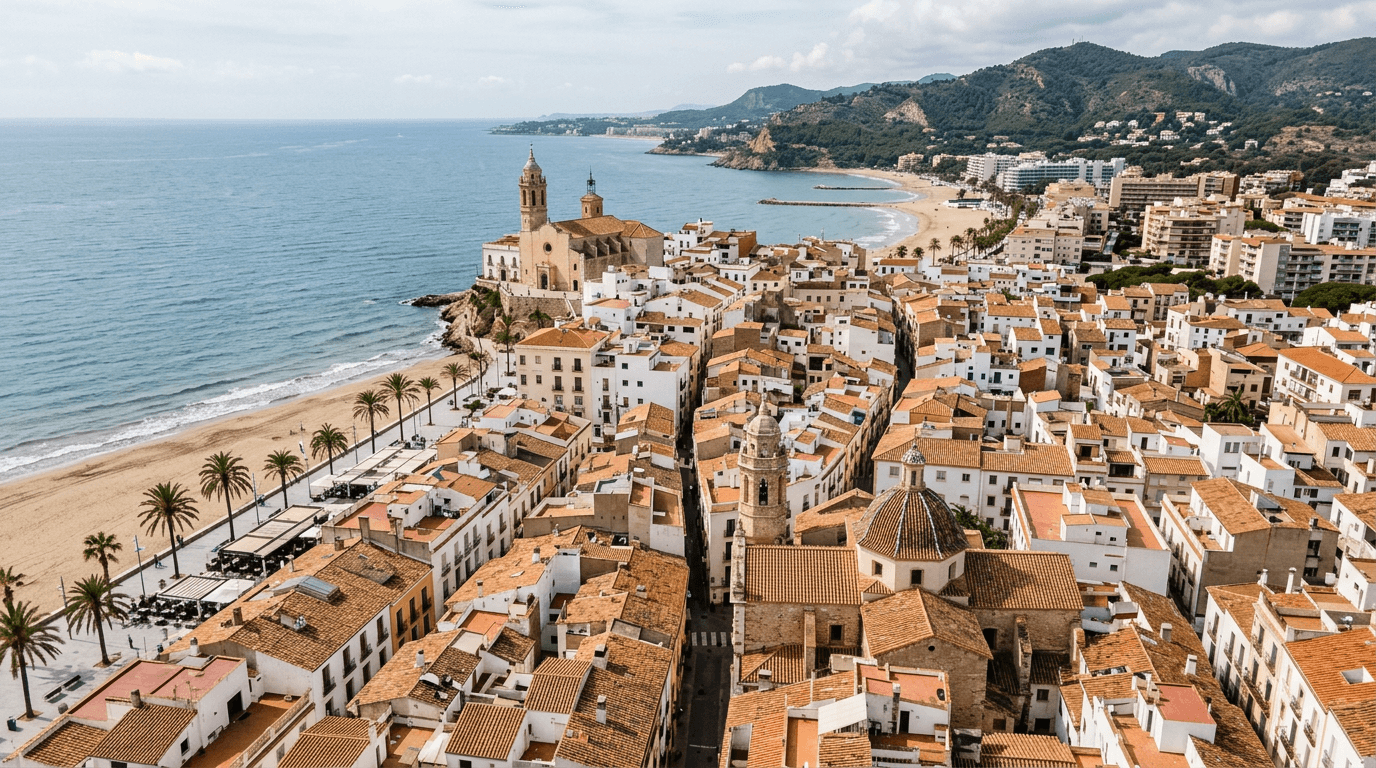
Sitges
🇪🇸 Spain
Sitges feels like Barcelona’s easiergoing seaside cousin, with a cleaner horizon, slower mornings and a town center you can cross on foot without thinking about it. Most nomads come for the beach, the sunshine and the fact that you can work by the sea in the morning, then be in Barcelona later the same day if you need a bigger-city reset.
It’s upscale, but not stiff. You’ll see linen shirts, rental scooters, gallery openings, beach bags and families heading to dinner all in the same few streets, with salt in the air and espresso cups clinking on terraces. Summer brings a lot of energy, especially around Festa Major, Santa Tecla and the Film Festival, but off-season the pace drops fast and some waterfront streets can feel almost too quiet.
The town works best for people who want lifestyle first and hustle second. If you need nonstop networking, endless coworking variety or a dense startup scene, Sitges can feel thin. If you want a walkable base with sea swims, easy train access and a social scene that’s friendly without trying too hard, it fits nicely.
Money-wise, Sitges isn’t cheap. Rent is the killer, especially for furnished or short-term places near the beach and the nicest pockets around the center, Aiguadolç, Vinyet and Terramar command a clear premium.
- Budget monthly: €1,300 to €1,700
- Mid-range monthly: €1,900 to €2,800
- Comfortable monthly: €3,000+
Food is more manageable than rent, though the seafront still comes with tourist pricing. A simple lunch menu often lands around €12 to €18, mid-range plates run €20 to €35 and nicer dinners near the marina can jump past €50 a head. The coffee is good, the seafood is fresh and the bill will remind you this is a beach town, not a bargain town.
For most nomads, the sweet spot is the center or Aiguadolç. El Centre gives you cafés, bars and easy beach access; Aiguadolç is quieter, with marina views and a slightly more tucked-away feel. Poble Sec and La Plana are more practical for longer stays, while Vinyet, Terramar and Can Girona skew more upscale and car-friendly.
Sitges also has a distinctly social, LGBTQ-friendly streak that makes it easier to settle in than in many coastal towns. People chat more here, especially in high season and the evening routine is pretty simple: beach, shower, wine, dinner, then out if you still have energy. It’s not intense. That’s the point.
Sitges isn't cheap, but it’s usually easier to live in than Barcelona if you care more about sea air and a short walk to everything than about big-city options. Rent takes the biggest bite, especially in the center, near the beach and around Aiguadolç, where furnished monthly places can jump into the low four figures fast. Off-season, the town feels calmer and a bit more reasonable; in summer, prices and noise both go up.
For one person, a realistic monthly budget looks like this:
- Budget: €1,300 to €1,700
- Mid-range: €1,900 to €2,800
- Comfortable: €3,000+
Food is a mixed bag. A simple menú del día usually lands around €12 to €18, decent sit-down plates run €20 to €35 and beachside or marina restaurants climb higher, especially once you add wine and dessert. Groceries are manageable if you cook, but don’t expect bargain-basement Spain prices once you’re buying in the center on a Saturday morning with the clink of café cups and the smell of sunscreen drifting in from the promenade.
What rent usually looks like
- Shared room: about €450 to €550 in nearby markets, often higher in Sitges itself
- Studio: about €700 to €800 nearby, more in prime Sitges areas
- 1 to 2-bedroom apartment: about €900 to €1,100 nearby, with Sitges premiums in better locations
Neighborhood choice matters a lot. El Centre and the Old Town are the easiest for daily life, but you’ll pay for that convenience and hear more street noise, scooter engines and late-night chatter. Poble Sec and La Plana are more practical if you want a quieter, more local feel. Vinyet, Terramar and Can Girona are where prices get serious and you’ll likely want a car or at least a bike with some gears.
Working costs
- Coworking day pass: about €20 to €30 in nearby Barcelona and other larger hubs; Sitges itself may have limited or changing options, so check current listings.
- Monthly desk: about €150 to €220 in nearby Barcelona and other larger hubs; treat this as a regional reference rather than a Sitges‑specific norm and confirm current prices.
- Home internet: roughly €42 a month for fast fiber and mobile in nearby reference markets
Sitges works well for remote workers who don’t need constant networking. The internet is generally solid, cafés are fine for short sessions and Barcelona is close when you want more office variety or a bigger professional scene. For many nomads, that’s the sweet spot, a quieter base with decent infrastructure and fewer rough edges than a larger coastal city.
Sitges is small, but the neighborhoods feel different fast. The center gives you cafés, noise and easy beach access, while the outer residential areas are calmer, greener and more car-dependent. If you’re working remotely, the sweet spot is usually walkability first, then a decent rental that doesn’t swallow your budget.
Nomads
El Centre is the easiest base for short stays. You can roll out of bed, grab coffee, hear scooters and church bells, then be on the promenade in minutes, but summer nights get loud and rents are high.
- Best for: Walkable routines, cafés, nightlife and quick beach access.
- Downside: Touristy, pricier and not great if you need silence.
Aiguadolç works if you like marina views, seafood dinners and a slower pace. It’s pretty, but a bit detached from the main town, so you’ll feel that hill or taxi ride more than you expect after dark.
Solo travelers
Sant Sebastià is a strong choice if you want the sea right outside your door without being in the thick of the central strip. Mornings here feel gentler, with salty air, pale light and fewer rental chaos headaches than the busiest parts of town.
- Best for: Beach walks, quieter evenings and scenic stays.
- Downside: Seasonal pricing and less street life than the center.
Vallpineda and Levantina can make sense if you want more space and don’t mind using buses, a bike or a car. They’re less polished and less social, but you’ll usually get better value than near the seafront.
Families
La Plana is the practical family pick. It’s more residential, quieter at night and close to everyday services, so you’re not dealing with beach traffic, late bars or tourists dragging suitcases over cobblestones at midnight.
- Best for: Longer stays, schools, errands and newer housing.
- Downside: Less charm and a weaker walk-to-the-beach lifestyle.
Vinyet and Terramar are the upscale options, with leafy streets, bigger homes and beach proximity. They’re lovely if budget isn’t tight, though the vibe is more quiet suburb than lively town center.
Expats and longer stays
Poble Sec is the most sensible everyday choice for many longer-term renters. It’s more local, often better value and less glossy than the waterfront, which means fewer postcard views but also fewer tourist headaches and a more normal rhythm.
- Best for: Day-to-day living, value and a local feel.
- Downside: Less scenic and farther from the marina or main beach strip.
Quintmar and Can Girona suit people who want quiet, views and privacy, not social convenience. You’ll trade walkability for space and in Sitges that trade is pretty clear once you’re carrying groceries uphill in the heat.
Sitges is a decent remote-work base if you want sea air, a walkable center and easy Barcelona access without living in the middle of Barcelona noise. The internet is usually solid, fiber is common in town and mobile coverage is generally reliable, though the summer crowds can make café work feel cramped and a bit sweaty.
Most nomads end up splitting time between home internet, cafés and an occasional coworking day. That works here because the town is small enough that you can get across it on foot, then hop on the train to Barcelona when you need more meetings, more desks or just a change of scene.
Internet and coworking basics
- Home internet: Expect fiber options in most rental buildings, with 1 Gbps plans and mobile bundles often around €42 a month in nearby market references.
- Coworking day passes: Coworking options in Sitges are limited and can change; check current listings in Barcelona or ask local groups for up‑to‑date prices rather than relying on a fixed local day‑pass range.
- Monthly desks: If you need a dedicated desk, expect Barcelona prices to be the main reference and verify specific spaces and rates before committing, since dedicated coworking options in Sitges itself may be scarce or temporary.
- Best mobile networks: Movistar, Orange, Vodafone, Digi and Yoigo are the safest bets for coverage.
Coworking options in Sitges aren’t as standardized as in Barcelona, so many remote workers check current listings through Coworkbooking or ask local expat groups before signing anything. If you want a quieter workday, this town can deliver, but don’t expect a huge startup scene or constant networking chatter over espresso.
Café work is fine early in the day. After lunch, especially in summer, tables fill with tourists, plates clink, espresso machines hiss and the air gets thick with sunscreen, salt and fried food from nearby terraces. If you need long focus blocks, pick a proper desk instead of hoping the beachfront café will stay calm.
Good areas for working remotely
- El Centre / Old Town: Best for walkability, quick coffee stops and a social routine.
- Aiguadolç: Good if you like marina views and a slower pace.
- Poble Sec: Practical and usually better value, though less scenic.
- La Plana: Quieter for longer stays, with newer housing and everyday services.
If you’re staying a month or more, prioritize a rental with strong fiber over a pretty terrace. Beach views are nice until your video call drops. For phones and backups, an official prepaid SIM from a major Spanish carrier is usually the least annoying option and it’s handy when a landlord’s internet mysteriously becomes “a little unstable” every afternoon.
Sitges feels calm and manageable most of the year, but it gets messy fast in summer. The main risks aren’t violent crime, they’re the ordinary stuff that follows beach crowds, late-night bars and packed festival weekends, phone snatches, pickpocketing, a bag left under a chair, that sort of thing. Keep your guard up around the promenade, train station and nightlife strips, especially when the air is warm, salty and full of scooter noise and clinking glasses.
Day to day, most nomads say Sitges is easy to live in. You can walk almost everywhere and that lowers a lot of stress, but it also means you’re carrying your phone, wallet and keys around more often than you would in a car-heavy town. Don’t leave stuff on terrace tables while you duck inside for a minute. People do that here and then they’re annoyed when it disappears.
Emergency number: 112 for police, fire and medical help.
Police presence: Visible in the center and around events, but petty theft still happens.
Night safety: Use licensed taxis late at night, especially after beach bars or festivals.
Healthcare is solid for a town this size. Pharmacies are easy to find in the center, along with after-hours rotating service windows and the broader Barcelona metro area gives you access to larger hospitals if you need more than a basic clinic visit. For common issues, the system works fine. For anything bureaucratic, expect paperwork, waiting and a few rounds of being sent to the wrong counter. Spain can be maddening that way.
If you’re staying longer, get private travel or expat insurance sorted before you need it. Most clinics will be straightforward with English, but don’t assume everyone will be. Basic Spanish helps a lot and a translation app is handy for prescriptions, discharge notes and pharmacy questions.
- Pharmacies: Easy to find in El Centre, Poble Sec and around the main residential streets.
- Best habit: Keep a photo of your passport, residency card and insurance details on your phone and in email.
- Beach caution: Sunscreen, water and shade matter more than you think. July heat can flatten you.
For most remote workers, Sitges is safe enough that the bigger concern is routine common sense, not fear. Lock your bike, watch your bag and don’t wander home with your laptop in a thin tote at 2 a.m. If you do those simple things, the town stays pleasantly low-drama.
Sitges is easy to live in if you stay near the center, the seafront or Sant Sebastià. Most daily errands are a walk, a bike ride or a short bus trip and that’s a big part of the appeal. The trade-off is that the town can feel sleepy once the day-trippers leave, especially outside summer.
For local movement, walking wins. El Centre, the beachfront and the marina are compact and you’ll hear scooter engines, clinking café cups and the sea moving against the promenade as you cross town. If you’re uphill in Vallpineda, Quintmar or parts of Terramar, the walk back gets old fast, especially in July heat.
Best areas without a car
- El Centre and Old Town: Best for everyday walking, cafés and beach access.
- Aiguadolç: Great if you like the marina and don’t mind being a bit separate.
- Sant Sebastià: Good for quieter beachfront living and long walks.
Trains are the main reason many nomads skip driving altogether. Sitges has regular regional rail links to Barcelona, so commuting, airport connections and day trips are straightforward if you’re willing to work around schedules. The station’s useful, but it gets crowded on summer weekends and festival nights, so don’t expect a calm platform.
Typical transport choices
- Train: Best for Barcelona and the wider coast.
- Taxi: Handy for airport runs and late nights.
- Bus: Useful for nearby towns, though timetables can be patchy.
Barcelona-El Prat is the nearest airport and most people get there by taxi, prebooked transfer or a train-and-transfer mix depending on luggage. Ride-hailing is less reliable than in Barcelona proper, so don’t count on opening an app at the last minute and getting a car instantly.
Bikes and e-bikes work well on flatter routes, but Sitges has enough hills to make regular cycling annoying in some neighborhoods. If you’re staying long term in Poble Sec, La Plana or the more uphill residential areas, a car starts to make more sense, especially for grocery runs and errands in bad weather.
Parking can be a headache in central Sitges and near the beach. Summer also brings tighter streets, more honking and more circling for spots, so if you don’t need a car, skip the hassle. For most remote workers, the sweet spot is simple, live walkably, use the train often and rent a car only for weekend escapes into wine country.
Sitges is easy to get by in if you stick to tourist-facing places, but it’s not one of those towns where English carries you through everything. Barcelona-style internationalism thins out once you’re dealing with a landlord, a mechanic or a doctor’s receptionist, so basic Spanish helps a lot. Catalan matters too and people notice when you make the effort.
In cafés, beach bars and hotels, English is usually fine, especially in summer when the staff are used to visitors arriving sunburned and half-lost. Outside that bubble, you’ll hear more Spanish than English, plus Catalan in everyday greetings, shop talk and local admin. Don’t expect everyone to switch languages for you. They might, but they don’t have to.
The town’s rhythm shows up in the language too. Mornings are full of quick "bon dia"s, scooters buzzing past the seafront and menus written in both Catalan and Spanish. In the off-season, things get quieter and people tend to be more patient, which makes errands easier.
- Hello, good morning: "Hola, bon dia."
- Do you speak English? "¿Hablas inglés?"
- A table for two, please: "Una mesa para dos, por favor."
- How much is it? "¿Cuánto cuesta?"
- I need help: "Necesito ayuda."
For daily life, Google Translate and DeepL are the two apps most nomads end up using, especially for rental contracts, WhatsApp messages and food labels. DeepL tends to handle longer Spanish and Catalan text more cleanly, while Google Translate is handy when you’re standing in a pharmacy trying to work out which cough syrup is which.
Stick to short sentences and simple words if you’re speaking Spanish. People in Sitges are used to foreigners, so the awkwardness is usually yours, not theirs. Say what you need, smile and don’t overexplain. That works better than trying to sound fluent and getting tangled up halfway through.
For written communication, WhatsApp is everywhere. Landlords, cleaners, surf instructors and even some coworking spaces will often prefer a message over a call and replies can be a bit slow if the person’s on beach time or handling summer bookings. Clear, polite messages get you much farther than long emails.
Sitges has a classic Mediterranean climate, which means long stretches of sun, salty air and a lot of blue-sky days that make the town feel built for outdoor living. Summers are warm rather than brutal, with average highs in the mid-20s C, while winter usually stays mild enough for a jacket instead of a heavy coat.
July and August are the beach months. The promenade fills up, the sea feels good and the town gets louder, pricier and more crowded. If you like a place with a bit of buzz, this is the time to come. If you don’t, the extra foot traffic, beach noise and packed restaurants can wear thin fast.
Best times to visit:
- Spring: Probably the sweet spot. March through May brings warm afternoons, manageable crowds and easier apartment hunting than peak summer.
- Summer: Best for beach life and nightlife, but expect higher rents, fuller terraces and more seasonal tourists in El Centre and along the waterfront.
- Fall: September is still beach-friendly and October can be lovely if you don’t mind rain. It’s also quieter once the summer rush fades.
- Winter: Mild, calm and cheaper, with fewer visitors and a more local rhythm. The tradeoff is that some places feel half asleep.
October is usually the wettest month, so don’t book it assuming nonstop sun. Rain here can come fast, with wet pavement, damp cold in the evening and that sharp smell of seawater mixed with wet stone. Still, even the gray days are rarely harsh by northern Europe standards.
For nomads, the timing really depends on what you want from Sitges. Spring and early fall are the easiest months for a balanced stay, with decent weather, open cafés and less tourist churn. Summer is better if you want to swim before work and spend evenings outside. Winter works if you care more about quiet and lower costs than social energy.
Festival season changes the feel of town, too. Festa Major, Santa Tecla, the grape-harvest events and the Sitges Film Festival all pull in crowds, so book early if your dates overlap. If you want the town at its most social, come then. If you want sleep, choose another week.
Practical weather tips:
- Pack layers: Sea breeze and evening humidity can make nights feel cooler than the daytime forecast suggests.
- Book early for summer: Temporary rentals tighten up fast and the better places disappear first.
- Check October plans carefully: It’s still pleasant, but rain can interrupt beach days and outdoor work sessions.
- Favor shoulder season: March to June and September to early October usually give the best mix of weather, price and livability.
Sitges works best if you want beach days, a walkable center and easy Barcelona access without living in the middle of a big city. It’s relaxed most of the year, then gets loud, crowded and expensive in summer. If you hate seasonal swings, think twice.
Budget: rent is the main pain point. Furnished temporary flats in the center or near the beach often start in the low four figures and the best locations, especially around the seafront, climb fast. A realistic monthly budget for one person is around €1,300 to €1,700 on the low end, €1,900 to €2,800 mid-range and €3,000+ if you want comfort and a good address.
Food is easier to swallow than housing, but Sitges isn’t cheap in the center. Simple lunch menus usually run €12 to €18, mid-range plates land around €20 to €35 and seafood spots near the marina can get pricey fast. The smell of grilled fish and garlic hits hard along the promenade at dinner and the terraces fill up early.
Best areas for nomads:
- El Centre / Old Town: Best for walkability, cafés and social life, but noisy in peak season.
- Aiguadolç: Good for marina life and sea views, though it can feel a bit detached from the core.
- Poble Sec: More residential and usually better value, with fewer postcard streets.
- Vinyet and Terramar: Leafy, upscale and close to the beach, but not budget-friendly.
For internet, Sitges is generally solid, especially if your place already has fiber. If you need coworking, expect pricing to sit in the regional band of roughly €20 to €30 for a day pass and €150 to €220 for a monthly desk, though local options aren’t always listed cleanly online. Many nomads split time between a coworking spot in town and Barcelona when they need more networking.
The town feels safe, but petty theft happens around beaches, bars and festival crowds. Don’t leave a phone on a terrace table while you go to the toilet and don’t carry every document you own to the beach. Use common sense at night, especially after the bars empty out and taxis get scarcer.
Getting around is easy if you’re central. Sitges is very walkable, trains to Barcelona are straightforward and most residents in the center don’t need a car. If you pick Vallpineda, Quintmar or other hillier neighborhoods, life gets less convenient fast and you’ll notice it every time you haul groceries uphill in the heat.
Language is manageable but not effortless. English works in many tourist-facing places, yet Spanish helps a lot and basic Catalan goes a long way with landlords and local errands. A few phrases, plus Google Translate or DeepL, will save you from awkward rental chats and badly translated menus.
Frequently asked questions
How much does it cost to live in Sitges as a digital nomad?
Which neighborhood is best for digital nomads in Sitges?
Is the internet good enough for remote work in Sitges?
How much does coworking cost in Sitges?
Is Sitges safe for solo travelers and remote workers?
What is the emergency number in Sitges, Spain?
Where should I stay if I want a quieter long-term base in Sitges?
Need visa and immigration info for Spain?
🇪🇸 View Spain Country GuideEasy Landing
Settle in, no stress