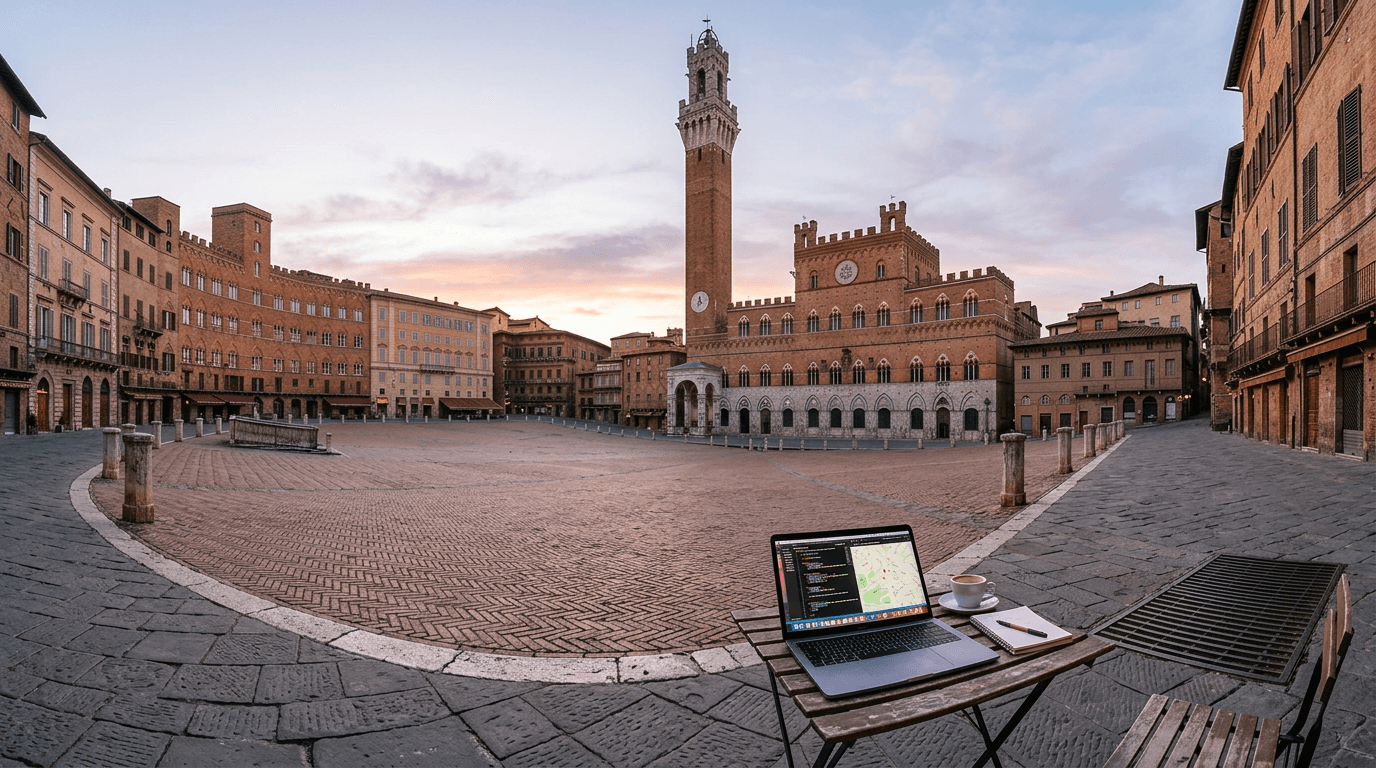
Siena
🇮🇹 Italy
Siena feels smaller than it looks on a map. It’s a walled hill town of about 50,000 people, all brick lanes, steep climbs and the kind of medieval center that makes you slow down whether you meant to or not. The Piazza del Campo is the obvious showpiece, but the real mood is quieter, with church bells, scooters echoing off stone and students spilling out of the University of Siena between classes.
For digital nomads, Siena is more about routine than hype. The center is so walkable you can live without a car and the city’s safety record and strong sense of local community make it easy to settle in. The contrade, those fiercely loyal districts, give the place a village feel that’s rare in a city this old. People still know their neighbors and that changes the way daily life feels.
That said, Siena isn’t trying to be Florence. The nightlife is modest, the international crowd is thinner and you won’t find coworking spaces on every block. Internet is usually fine for remote work, though not flashy and some buildings are stuck in the digital slow lane. If you need constant buzz, endless brunch spots and a huge nomad scene, this city can feel a bit sleepy. In winter, the stone streets get cold and the hills start to feel steeper than they looked at noon.
It suits slow travelers, expats and anyone who wants Italy to feel like Italy, not a curated expat bubble. The tradeoff is simple: less convenience, more atmosphere. You’ll hear church bells, catch the smell of coffee from bars at 8 a.m. and spend a lot of time walking uphill, which is annoying until it starts to feel normal.
Who Siena works best for
- Best fit: Slow travelers, students, expats and remote workers who care more about history and daily life than nightlife.
- Less ideal for: People who want a big coworking scene, lots of international food or a 24-hour social calendar.
- City feel: Compact, pedestrian and very Italian, with tourists in the center and a more local rhythm after dark.
If you want a place that feels lived-in rather than optimized, Siena delivers. It’s not polished and that’s part of the appeal.
Siena is cheaper than Milan and usually a bit easier on the wallet than Florence, but it’s still not a bargain town. The historic core is pricey and once you add rent, utilities, groceries and a few meals out, the numbers climb fast.
Monthly budgets
- Budget nomad: €950 to €1,300, usually a room in a shared flat, home cooking and only the occasional night out.
- Mid-range: €1,300 to €1,800, enough for a small studio or one-bedroom outside the center, plus regular café and restaurant spending.
- Comfortable: €1,800 to €2,300+, which gets you a better one-bedroom in or near the old center, more dining out and maybe coworking.
Rent is the big swing factor. A one-bedroom in the centro storico often runs about €600 to €900 a month, while places outside the center are more like €400 to €700. The closer you get to Piazza del Campo, the more you’ll pay for stone arches, church bells and a view that tourists will photograph under your window.
Everyday spending
- Espresso: €1 to €1.50 at the bar.
- Cappuccino: €1.50 to €2.
- Pizza or panino: €4 to €7.
- Casual trattoria meal: €12 to €20 per person.
- Mid-range dinner for two: €50 to €80 total.
Groceries for one person usually land around €200 to €300 a month if you shop smart. Mercato stalls, discount supermarkets and basic pasta, tomatoes, olive oil and wine go a long way here, though imported snacks and specialty foods can be absurdly overpriced.
Getting around and working
- Urban bus ticket: about €1.50 to €2 in advance, a little more onboard.
- Taxi start: around €3 to €4, then per-kilometer charges and surcharges at night or on holidays.
- Day pass for coworking: roughly €20 to €35.
- Monthly desk: often €150 to €250, depending on the space and perks.
Most locals walk and that’s the cheapest option by far. The hills can be a pain, especially after rain, when the stone streets feel slick and the climb back from the station leaves you breathing hard. Siena’s internet is fine for everyday remote work, but don’t expect the same coworking variety or blazing speeds you’d get in bigger nomad hubs.
Digital nomads
The historic center is the obvious pick if you want to roll out of bed, grab a €1.50 cappuccino and work within a few minutes of Piazza del Campo. It’s the easiest base for walking, café hopping and using spots like Siena Italian Hub, but it can get noisy when tour groups shuffle past and the Palio crowds start revving up in summer.
For a quieter setup, look at the area around the train station and Viale Toselli. It’s less pretty, more practical and usually easier on the budget. You’ll trade medieval charm for quicker bus access, bigger supermarkets and a shorter commute to the rest of Tuscany.
Expats
San Prospero and the north-west residential streets are the best fit for longer stays. The pace is calmer, rents are a bit softer than in the center and you still stay close enough to walk in for dinner or errands. It feels more local, with fewer selfie sticks and more laundry hanging from windows.
This is the part of Siena many expats settle into after a few weeks in the center. The hills can be annoying, especially after groceries, but the tradeoff is a more normal daily rhythm, less tourist traffic and easier access to schools, services and buses.
Families
Families usually do better outside the tightest historic core, where stairs, cobblestones and car restrictions can get old fast. San Prospero, the north-west edge and some of the wider residential streets give you more space, slightly lower rents and less of the constant foot traffic that clogs the center.
If you want more room and don’t mind a car, the countryside around Val d’Arbia or Valdichiana Senese works well. The air smells like cut grass and vines after rain and the nights are properly quiet, but you’ll be driving for almost everything.
Solo travelers
The historic center is still the smartest base if you’re only in Siena for a short stretch. You can wander to the Duomo, Piazza del Campo and dinner without thinking about transport, which matters when you’re alone and don’t want to deal with late buses or taxi surcharges.
Just don’t expect big-city nightlife. Siena gets sleepy, especially outside university term and high season, so solo travelers who want late bars and constant social churn usually get bored fast. If that’s you, book a few nights here, then move on.
Quick picks
- Best overall: Historic center for walkability and atmosphere.
- Best value: Area around Siena FS and Viale Toselli.
- Best for a local feel: San Prospero and north-west residential streets.
- Best for quiet: Val d’Arbia or the wider countryside.
Siena’s internet is good enough for most remote work, but don’t expect the easy, plug-and-play feel you get in Florence or Lisbon. In the center, speeds often sit around 15 to 20 Mbps, which is fine for email, docs, calls and light file work, though a bad day on Zoom can still happen. Older stone buildings, shared lines and thick walls can make the connection feel patchy, especially if your apartment sits under a roof that bakes all afternoon.
Most nomads here work in a hybrid way, mornings in a café, afternoons at home or in a coworking space. The city is small and walkable, so you can duck out for a cappuccino, hear the clatter of cups at the bar, then come back to a quiet desk without losing half your day in transit. That slow rhythm suits writers, students and anyone who doesn’t need a high-octane tech scene.
Best coworking and work spaces
- Multiverso Siena: The main coworking name in town. Expect desks, meeting rooms and a professional setup that feels more polished than a café.
- Siena Italian Hub: A good pick if you want a central spot near Piazza del Campo and don’t mind a more study-oriented atmosphere.
- Cafés around Piazza Matteotti and the center: Fine for a couple of hours, but don’t linger all day on one espresso. Staff will notice.
Day passes in Tuscany usually run about €20 to €35, while monthly desks often start around €139 and can climb to €250 or more depending on location and services. That’s not cheap for a small city, but it’s reasonable if you need a stable chair, quieter calls and a place that doesn’t smell like burnt coffee and rain-soaked coats by 4 p.m.
SIM cards and backup options
- Vodafone: Usually the safest bet for coverage if you’ll move around the province.
- WindTre: Often good value, though speeds can vary street by street.
- TIM: Solid national coverage and a decent fallback if you’re staying longer term.
For backup, many remote workers keep a mobile hotspot ready because one weak building line can ruin a call. Buy your SIM in person if you can, bring your passport and ask the shop staff to test the data plan before you leave. It saves a lot of headache later, especially when the internet drops right as someone says, “Can you hear me now?”
Siena feels safe by Italian city standards. The historic center is compact, pedestrian-heavy and usually calm, with more students, locals and day-trippers than the kind of street chaos you get in bigger places. Pickpocketing can happen in the busiest parts around Piazza del Campo and the Duomo, but violent crime isn’t what most people worry about here.
The annoyances are more practical. Nighttime streets can be dark and empty once the restaurants empty out and the steep cobblestones are slippery after rain. During the Palio, crowds, noise and a fair bit of drunk behavior can make the center feel tense, especially around Piazza del Campo.
How safe it feels by area
- Centro Storico: Safest and easiest for walking, but stay alert for bag theft in crowded squares and buses.
- Around Siena FS: Functional and well connected, though less charming and a bit less comfortable late at night.
- San Prospero and Antiporto: Quiet residential streets, generally low-key and good for longer stays.
- Out in the hills: Very quiet, but you’ll want a car and decent planning after dark.
Healthcare is solid enough for normal travel and expat life. Siena has pharmacies everywhere and the pharmacists are often the first stop for small issues, especially if you’ve got a sore throat, a rash or need basic over-the-counter medication. For anything more serious, the main hospital is the Policlinico Santa Maria alle Scotte, which handles emergencies and specialist care for the area.
If you’re staying longer, you’ll want to sort out access to the Italian health system or private insurance. Many expats use a mix of private care and the public system, because appointments can be slow and bureaucracy can be maddening. The upside is that doctors in Siena are used to students, long-stay foreigners and older residents, so basic English is more common than in smaller Tuscan towns.
Practical health tips
- Pharmacies: Look for "farmacia" signs and check the rotating night-duty pharmacy if you need help after hours.
- Emergency care: Go to the emergency room at Santa Maria alle Scotte for urgent problems.
- Heat and terrain: Summer stone streets get hot underfoot and the hills can wipe you out fast.
- Insurance: Keep your policy details and passport handy, because some clinics will ask for both.
For remote workers, internet is decent but not bulletproof. In central apartments, speeds are usually fine for email, calls and normal work, though older buildings can have patchy service and thick stone walls that kill Wi-Fi. If you need stable video calls all day, test the connection before you sign a lease and don’t assume a charming apartment comes with good internet.
Travel medical insurance is a smart move for short stays and private coverage makes life easier if you want faster appointments or English-speaking doctors. Siena is safe and manageable, but it’s not the place to be casual about paperwork, prescriptions or your router.
Siena is small enough that you can ignore cars most of the time. The historic center is a tangle of steep lanes, stone steps and pedestrian-only streets, so walking is the default and honestly the easiest way to get around if you’re staying anywhere near Piazza del Campo or the Duomo.
The city feels manageable on foot, but it’s not flat. Those medieval hills can leave your calves burning after a day of errands and the cobblestones are brutal on luggage wheels. In summer, the heat bounces off the brick walls and the streets can smell faintly of exhaust, espresso and hot stone by late afternoon.
Walking and the old town
Inside the centro storico, most places you’ll actually use, cafés, grocery shops, banks, restaurants and coworking spots, are within a 15 to 20 minute walk. The catch is elevation. Moving between the station side, San Prospero and the Campo means a steady climb, so plan for slower crossings than the map suggests.
Traffic is limited in the core, which makes the center calm but also a bit inconvenient. Delivery vans, scooters and the occasional impatient horn still cut through the quiet, especially early in the morning.
Buses, taxis and the station
Siena’s local buses are useful for uphill routes, the station and outlying neighborhoods, but they’re not the kind of system you plan your day around. Tickets usually cost about €1.50 to €2 if bought ahead of time, a little more onboard.
Taxis are easy enough to find near the station and major squares, though not cheap for short hops. A ride starts around €3 to €4, then climbs with distance and night or holiday surcharges.
- Best for: Lugging groceries, rainy days and getting back from the station when you’re tired.
- Not great for: Spontaneous late-night trips, since service thins out fast.
- Tip: Keep bus apps and ticket options on your phone, because hunting for a paper ticket at the wrong kiosk is annoying.
Getting in and out
The train station sits below the historic core, so arriving by rail still leaves you with a climb or a bus ride up. For Florence, the bus is often the simplest option and regional services are usually cheaper than the tourist-targeted ones.
If you’re staying outside the center or in the countryside around Val d’Arbia or Chianti, a car starts to make sense fast. In central Siena, though, most nomads and expats end up doing exactly what the locals do, walking, then complaining about the hills, then walking some more.
Siena is one of those places where Italian is the working language, not just the language on menus. In the center, shopkeepers, bar staff and bus drivers may switch to English for tourists, but day-to-day life still runs on Italian, with a Tuscan cadence that can feel quick and clipped if you’re rusty.
That’s great if you want immersion, less great if you’re hoping to coast by on English. Most expats and long-stay travelers say basic Italian makes errands easier, especially at the post office, doctor’s office and rental agencies, where people are usually polite but not eager to slow down.
What to expect day to day
- Street life: The center is compact and walkable, so you’ll hear a lot of greetings, scooter engines and the thud of shutters closing at lunch.
- Service level: English is common in hotels, student-facing places and tourist-heavy cafés, but it drops off fast in local bakeries, hardware shops and smaller bars.
- Paperwork: Forms, utility calls and municipal appointments are usually in Italian and the bureaucracy can be maddening if you don’t have help.
If you’re staying more than a few weeks, learn the practical stuff first, not textbook poetry. You’ll want phrases for buying a bus ticket, asking about Wi-Fi, explaining an address and saying you need a receipt, because receipts matter everywhere in Italy.
Phone service and internet are decent enough for most remote work, but Siena isn’t a plug-and-play nomad machine. Video calls usually work fine in newer apartments and coworking spots like Multiverso Siena or Siena Italian Hub, though older stone buildings can be patchy and a bit annoying when the signal drops in the middle of a meeting.
Useful language habits
- Use WhatsApp: It’s the default for landlords, tutors, drivers and a lot of small businesses.
- Keep a translation app handy: Google Translate and DeepL both come in handy for menus, lease notes and quick messages.
- Ask for slower Italian: "Più piano, per favore" gets you farther than pretending you understood.
The social vibe is warm but not chatty in the casual Anglo-American way. People aren’t rude, they’re just not performing friendliness on command. If you greet staff with a proper "buongiorno," make eye contact and don’t rush, you’ll usually get the better version of Siena back.
Siena has a real winter and a very real summer. The sweet spot is spring and fall, when the stone streets warm up without turning into a furnace and you can walk the center without sweating through your shirt by 11 a.m.
May and June are probably the easiest months for most visitors. The days are long, cafés spill out onto the squares and the city still feels local instead of fully touristed. October is close behind, with cooler air, fewer crowds and that dry Tuscan light that makes the brick buildings look almost unreal.
July and August are another story. They’re hot, crowded and noisy, especially around the Palio, when the city gets packed and the sound of drums, horses and people yelling in the Piazza del Campo carries late into the night. If you love that energy, fine. If you want sleep and easier restaurant bookings, avoid those weeks.
Winter is the quiet season. It can feel bleak if you’re expecting easy social life and the cold seems to cling to the old stone buildings, especially indoors where tile floors stay chilly all day. January and February are the least appealing months for most nomads, though rent can be softer and the city is much less hectic.
Best time by travel style
- For pleasant weather: April to June and September to mid-October.
- For festivals and atmosphere: July and August, if you don’t mind heat and crowds.
- For lower-key stays: November to February, when Siena slows down hard.
Remote workers usually do best in shoulder season. You’ll get enough movement in the city to stay sane, but not the crush of summer tourists or the long, sleepy winter stretch when some places cut hours and the streets empty out after dinner.
Pack for hills and weather swings. Siena’s center is walkable, but it’s still a hilly medieval city, so good shoes matter more than in flatter Italian towns. Bring layers, because mornings can feel crisp, afternoons warm up fast and a sudden rain can leave the cobblestones slick and shiny.
Siena is easy to live in, but it’s not particularly forgiving if you hate hills, quiet nights or old buildings that seem designed to make luggage wheeled across cobbles sound like a gunfight. The center is compact and walkable and most daily life happens on foot, though the climb back up from Piazza del Campo can leave you sweaty fast in summer and mildly annoyed in winter wind.
Best fit: slow travelers, students, expats and remote workers who want Italian immersion more than a nonstop social calendar. Less ideal: people who need lots of coworking choices, late-night bars or fast, flawless internet everywhere.
- Walk first, bus second: Most errands in the historic center don’t need transport. For longer hops, Siena’s local buses are cheap and useful, especially if you’re staying near the station or in a hillier district.
- Watch the Palio dates: July and August get noisy, crowded and expensive around the Campo. If you need sleep, book early or stay outside the center.
- Bring decent shoes: Stone streets, slopes and stairs are part of daily life here. Flat soles and a small backpack beat rolling luggage every time.
- Don’t expect Florence-style coworking: Siena has a few solid options, including Multiverso Siena and smaller study spaces, but the scene is limited. Many nomads just work from home, cafés or a desk near the station.
Internet is good enough for email, calls and normal remote work, but it’s not flawless. Fixed connections in Siena often sit around 15 to 20 Mbps in many buildings, though some places have fiber and better speeds, so always ask the landlord for a real test before signing anything.
For monthly planning, a shared room or modest flat can keep costs manageable, while a central one-bedroom gets expensive fast. Groceries are close to Italian averages, coffee is still cheap at the bar and a casual lunch out won’t wreck your budget if you avoid the tourist tables by Piazza del Campo.
- Budget basics: Espresso about €1 to €1.50, cappuccino €1.50 to €2, simple pizza or panino €4 to €7.
- Housing reality: one-bedroom apartments in or near the center usually run higher than the outskirts and good deals disappear quickly in student season.
- Safety: Siena feels calm and generally safe, even at night, but standard city sense still applies around the station and in empty streets after midnight.
Practical apps help more than language skills at first. Download Trenitalia, the local bus app and a translation app before you arrive, because station staff and landlords may switch between fast Italian and short, practical English without warning. That’s Siena: charming, a little old-school and not in a hurry to adapt to you.
Frequently asked questions
Is Siena a good city for digital nomads?
How much does it cost to live in Siena as a digital nomad?
What is the internet like in Siena for remote work?
Which neighborhood is best for digital nomads in Siena?
Is Siena safe for solo travelers and remote workers?
Where do people go for healthcare in Siena?
Need visa and immigration info for Italy?
🇮🇹 View Italy Country GuideHidden Gem
Worth the effort