Siem Reap
🇰🇭 Cambodia
The Siem Reap Experience
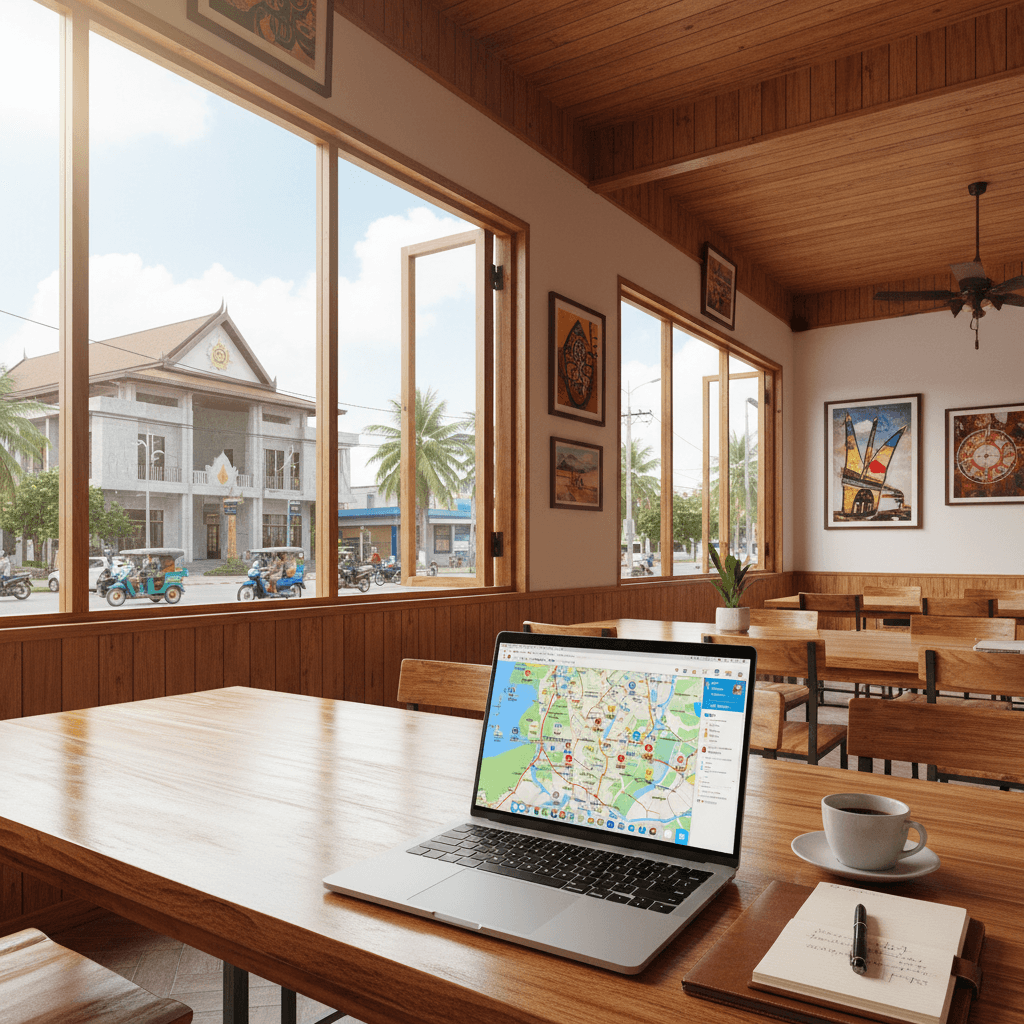
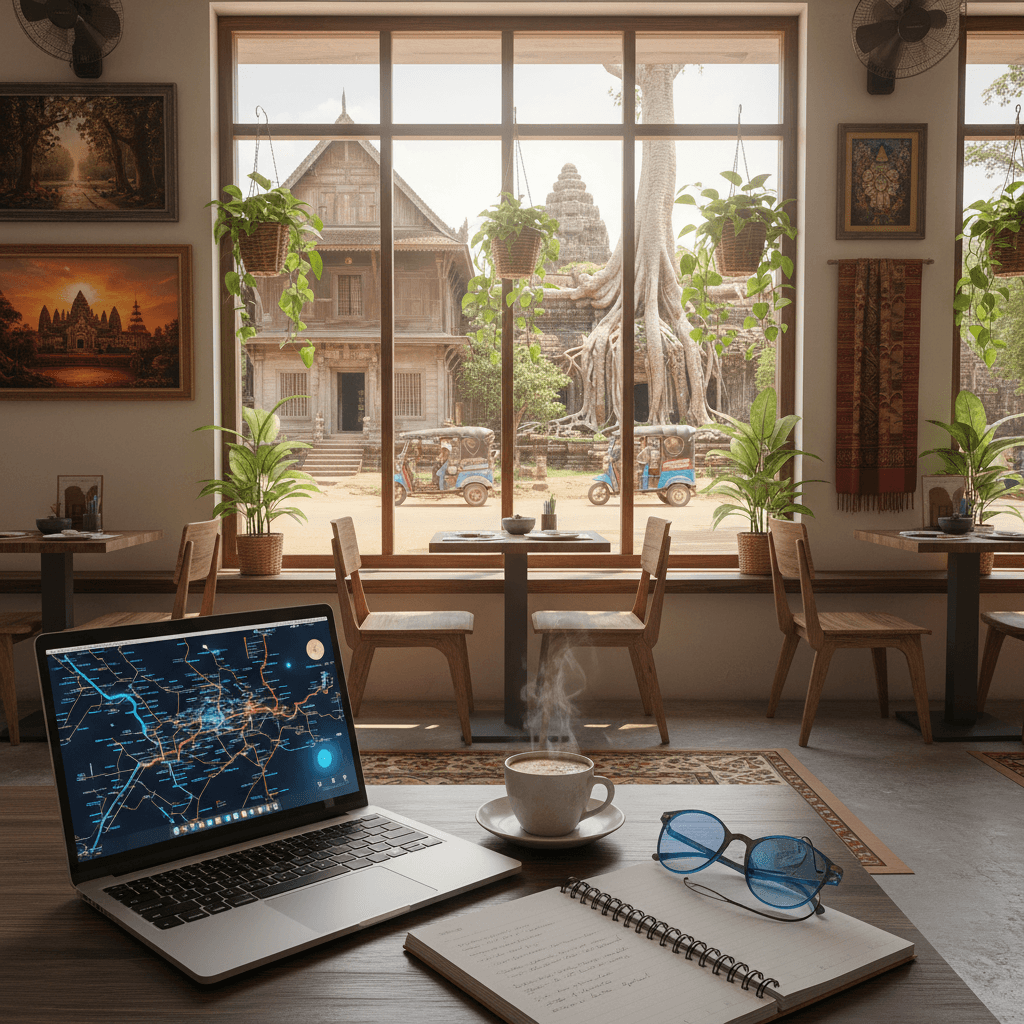
Siem Reap is a rare breed in the nomad world. It manages to feel like a dusty, tree-lined village while offering the infrastructure of a modern digital hub. While most people arrive with a three day pass for Angkor Wat in hand, nomads often find themselves staying for months. There is a specific rhythm here, a mix of spiritual stillness from the nearby temples and the high energy of a town that knows how to throw a party.
What sets it apart from spots like Chiang Mai or Bali is the scale. The center is remarkably walkable, featuring French colonial architecture and a river that bisects the city with wide, shaded promenades. You can spend your morning in a high speed coworking space and your afternoon cycling through rice paddies or exploring 12th century ruins. It is a place where work-life balance isn't just a buzzword; it is the default setting.
The Local Vibe and Atmosphere
The city feels remarkably safe and welcoming. Unlike the frantic pace of Phnom Penh, Siem Reap has a "slow living" energy. You'll see locals and expats mingling at the Old Market (Phsar Chas) or grabbing $0.50 draught beers on Pub Street. The community is a diverse blend of NGO workers, archaeologists, and remote professionals, which keeps the social scene grounded and less "transient" than other Southeast Asian hotspots.
The infrastructure has seen massive upgrades recently. You'll find working traffic lights, paved roads, and reliable Grab service for when the heat gets too intense. However, it still maintains its Cambodian soul. You'll hear the chant of monks from nearby pagodas and the smell of lemongrass and grilled meats from street carts at almost every corner.
What to Expect as a Nomad
Most nomads find the cost of living to be one of the lowest in the region. You can live a very comfortable life here for a fraction of what you'd spend in Thailand or Vietnam. However, it isn't without its quirks. Power outages happen occasionally, so having a backup battery or a local SIM card for a hotspot is a smart move. While the WiFi in cafes and dedicated workspaces is generally solid, mobile data can be a bit sluggish when you head toward the outskirts or the floating villages.
- Walkability: Rated 9/10 in the city center. The riverfront is perfect for evening strolls under giant tropical trees.
- Safety: Extremely high. It is common to see people walking alone at night without a second thought.
- Connectivity: Good in the French Quarter and Taphul Village, though it drops off significantly if you head to the islands like Koh Rong.
- Social Life: Very active. From food tours to art gallery openings and NGO fundraisers, there is always a way to meet people.
The Emotional Draw
There is a certain "Cambodian kindness" that defines the stay here. The locals are genuinely curious and friendly, and the hospitality is legendary. Staying in Siem Reap feels like being part of a community rather than just another tourist passing through. Whether you are watching the sunrise over Angkor Wat or just finishing a deadline at a riverside cafe, the city has a way of making you feel settled and productive at the same time.
The Lowdown on Local Costs
Siem Reap remains one of the most affordable hubs in Southeast Asia, offering a high quality of life for a fraction of what you would pay in Bangkok or Bali. It is a place where your dollar stretches incredibly far, allowing you to upgrade your lifestyle without draining your savings. Most nomads find they can live comfortably here on a budget that would barely cover rent in a Western city.
While prices are low, the city uses a dual-currency system. You will see prices in US Dollars and Cambodian Riel. Most ATMs dispense USD, and you will usually get Riel back as small change. It is helpful to keep a mix of both in your wallet for local markets and street food stalls.
Monthly Housing Estimates
The rental market is diverse, ranging from traditional Khmer-style apartments to modern boutique setups. Most rentals include internet, though you should always double-check the speed before signing a lease.
- Budget Apartments: Expect to pay around $660 per month (roughly $22 per night) for a studio or one-bedroom unit about 2km outside the city center. These are ideal if you want a quiet space with your own kitchen to focus on work.
- French Quarter & Taphul Village: These central areas offer a mix of guesthouses and boutique hotels. Prices vary, but you can find solid mid-range rooms in the $400 to $800 range depending on the level of luxury and amenities like a pool.
- Local Houses: If you are staying long-term, you can find multi-bedroom houses further out for $300 to $500, though these often require more legwork and local help to secure.
Eating and Drinking
Food is where you will see the biggest savings. Whether you are hitting up a night market or a trendy cafe in the French Quarter, the value is hard to beat.
- Street Food: You can grab a local meal for just a few dollars. Local favorites like bai sach chrouk (pork and rice) are staples for budget-conscious travelers.
- Local Markets: Markets like Phsar Chas (Old Market) and Phsar Leu are the places to go for incredibly cheap fresh produce, fruits, and pantry staples if you prefer cooking at home.
- Cafes and Restaurants: A meal at a mid-range restaurant with AC and good WiFi usually lands between $5 and $12. Many nomads treat these cafes as their secondary offices since the "work from cafe" culture is very welcomed here.
Transport and Connectivity
Getting around is cheap and rarely requires a car. The city center is highly walkable, but for longer distances, you will rely on apps and local rentals.
- Grab: This is the go-to app for getting around. A short tuk-tuk ride across town usually costs between $1 and $3. It is reliable, safe, and saves you from haggling over every trip.
- Bicycle Rentals: Many expats recommend renting a bike for $1 to $3 per day. It is a fantastic way to explore the riverfront and the temple outskirts.
- Mobile Data: While specific plan prices fluctuate, mobile data is generally affordable. However, it can be slower than the fiber connections found in coworking spaces, so most remote workers use it primarily as a backup.
Daily Lifestyle Budget
To give you a better idea of what to expect, here is how a typical daily spend looks for different styles of travel:
- The Budget Nomad: $25 to $35 per day. This covers a bed in a decent guesthouse, street food meals, and getting around by foot or bicycle.
- The Comfortable Remote Worker: $50 to $70 per day. This allows for a private apartment or boutique hotel, eating at nice cafes, regular Grab rides, and a few evening drinks or yoga classes.
- The High-End Expat: $100+ per day. This gets you a luxury villa or top-tier hotel, fine dining, private tours of Angkor Wat, and frequent weekend trips.
One thing to keep in mind is the occasional power outage. While they aren't constant, they can disrupt your workflow. Most high-end coworking spaces and hotels have backup generators, but if you are living in a budget apartment, it is a good idea to have a charged power bank and a local SIM card ready for hotspots.
For Digital Nomads: The French Quarter & Taphul Village
If you need to be within a three minute walk of a flat white and a reliable router, the French Quarter is your best bet. It sits right in the heart of the city, characterized by colonial architecture and a high density of cafes that double as makeshift offices. You'll find a mix of boutique hotels and guesthouses here, making it easy to transition from a morning Zoom call to a sunset walk along the river.
Just a short walk away is Taphul Village. This area has become a favorite for remote workers who want a slightly more residential feel without losing access to the city's main amenities. It's quieter than the immediate center but still packed with local eateries and small boutiques. Most nomads here find the internet speeds sufficient for video calls, though it's always smart to have a local SIM as a backup for the occasional power flicker.
- Vibe: Trendy, accessible, and workspace-heavy.
- Housing: Expect to pay around $400 to $600 for a decent mid-range apartment or boutique hotel stay.
- Perks: High walkability and the best concentration of air-conditioned workspaces.
For Socialites & Solo Travelers: Old Market (Phsar Chas)
Solo travelers looking to dive into the local energy usually gravitate toward the Old Market area. This is the pulse of Siem Reap. By day, you can browse the tight aisles of Phsar Chas for fresh fruit or textiles; by night, the nearby Pub Street comes alive. It's loud, it's crowded, and it's exactly where you want to be if you're looking to meet people at a hostel bar or a night market stall.
While it's the most tourist-heavy part of town, it's also incredibly convenient. Everything you need is right there. You won't need a bike or a tuk-tuk to find a meal, a pharmacy, or a laundry service. Just keep in mind that the noise levels stay high until the bars shut down, so light sleepers should look for side-street accommodation rather than anything on the main drags.
- Vibe: High energy, social, and unashamedly touristy.
- Housing: Budget guesthouses can go as low as $15 to $25 per night.
- Perks: You're seconds away from the best street food and nightlife in the city.
For Budget-Conscious Expats: The 2km Perimeter
If you're planning to stay for a few months and want your dollar to stretch further, look about two kilometers outside the city center. These neighborhoods offer a much more authentic Cambodian experience and significantly lower rent. You'll likely be living among local families and long-term expats who prefer the sound of roosters over the sound of tuk-tuks.
Living out here requires a bit more logistics. You'll definitely want the Grab app on your phone to hail rides into town, which usually cost a couple of dollars. The trade-off is a massive increase in living space. You can often find entire apartments with kitchens for the same price as a small room in the French Quarter.
- Vibe: Local, quiet, and focused.
- Housing: Studio apartments with kitchens can be found for around $660 a month, or even less for long-term leases.
- Perks: Close to local markets like Phsar Leu where groceries are remarkably cheap.
For Families & Slow Travelers: Wat Bo
Wat Bo is one of the oldest neighborhoods in the city and has evolved into a sophisticated, leafy enclave. It's across the river from the main chaos, offering a more relaxed pace that suits families and those staying for the long haul. The streets are lined with some of the city's best-rated restaurants and upscale craft shops, but it maintains a respectful, quiet atmosphere.
The area is very safe and features wider sidewalks than many other parts of town. It's a great middle ground: you're close enough to the Old Market to walk there in ten minutes, but far enough away that you can actually hear the birds in the morning. Many of the properties here include gardens or pools, which are lifesavers during the midday Cambodian heat.
- Vibe: Sophisticated, green, and peaceful.
- Housing: A mix of high-end villas and charming mid-range apartments.
- Perks: Excellent dining scene and a 9/10 walkability rating.
Connectivity and Speed
Siem Reap isn't the digital desert some might expect. The internet infrastructure here is surprisingly solid, though it comes with a few local quirks. Most nomads find the fiber connections in cafes and guesthouses more than enough for video calls and heavy uploads. You can generally expect speeds between 20 Mbps and 50 Mbps in the city center, which is plenty for most remote workflows.
The main thing to watch out for is the occasional power cut. These aren't daily occurrences, but they happen enough that you should have a backup plan. If the electricity drops, your WiFi goes with it. Most seasoned expats keep a fully charged power bank and a local SIM card ready to tether at a moment's notice.
Mobile data is reliable but notably slower than fixed WiFi. It’s perfect for Slack or emails while you're out, but don't count on it for a three hour Zoom marathon. If you plan on island hopping to places like Koh Rong later in your trip, do your heavy lifting in Siem Reap first; the islands are notorious for frequent disconnections and spotty service.
Coworking Spaces and Community
The coworking scene in Siem Reap is smaller than in places like Chiang Mai, but it’s high quality. These spaces are the best insurance policy against power outages, as many have backup generators and dedicated lines. While specific names and prices shift, you’ll find dedicated hubs in the French Quarter and Taphul Village that cater specifically to the nomad crowd.
Most spaces offer flexible memberships, ranging from daily passes to monthly desks. You’ll typically find a mix of quiet zones for deep work and social areas where you can grab a coffee and chat with other travelers. It’s a great way to break the "temple fatigue" and meet people who are also balancing a 9-to-5 with a travel itinerary.
The Cafe Office Culture
If you prefer a change of scenery, Siem Reap’s cafe culture is elite. The city is packed with French-influenced bakeries and modern, air-conditioned cafes that are very welcoming to people with laptops. In the French Quarter, you'll find plenty of spots with comfortable seating and reliable, free WiFi for customers.
- Vibe: Most cafes have a relaxed, "stay as long as you like" atmosphere as long as you're ordering food or drinks.
- Amenities: Look for places along the river or near the Old Market; many have large tables and plenty of power outlets.
- Noise Levels: Generally quiet during the day, though they can get lively around lunch and dinner hours.
Mobile Data and SIM Cards
Getting connected is one of the first things you should do after landing. You can pick up a SIM card at the airport or at any small phone shop in town. The process is quick, usually requiring just your passport and a few dollars.
- Top Providers: Smart and Cellcard are the two heavy hitters. Most nomads prefer Smart for its consistent coverage within the city limits.
- Cost: Tourist SIMs offer 25-60GB for $3-10 over 7-30 days; check for monthly expat plans.
- Setup: Have the shop attendant activate the plan for you to ensure the APN settings are correct before you walk out.
For those living a bit further out, about 2km from the center, you might find that your apartment's included WiFi is a bit hit or miss. If you're staying long term, you can usually negotiate an upgrade with your landlord or have a dedicated line installed for a small monthly fee. This is a common move for nomads who need 100% uptime for their jobs.
Personal Safety in the Temple City
Siem Reap feels more like a collection of villages than a major tourist hub, which makes it one of the safest cities in Southeast Asia for remote workers. You can walk through the city center at night without looking over your shoulder. The local vibe is gentle, and the presence of working traffic lights and organized infrastructure makes it much easier to navigate than the chaotic streets of Phnom Penh.
Most nomads give the city a 9/10 for walkability. The riverfront promenades are shaded by massive old trees and lined with benches, making it easy to get around on foot during the cooler morning or evening hours. While petty crime like bag snatching can happen, it's rare compared to other regional hubs. Just keep your phone tucked away while riding in the back of an open tuk tuk.
The biggest "safety" concern for most isn't crime, it's the infrastructure. Power outages happen occasionally, so it's smart to have a backup battery and a local SIM card with a data plan. If you're heading out to the nearby islands like Koh Rong, don't expect the same reliability you find in the city, you'll likely face frequent disconnections there.
Healthcare and Medical Services
While the city has modernized rapidly, healthcare in Cambodia still requires a bit of strategy. For minor ailments, the city is packed with pharmacies that are well stocked with international brands. You can find most over the counter medications easily, and pharmacists in the tourist areas usually speak excellent English.
For more serious issues, there are several private clinics and international hospitals geared toward expats. However, if you're dealing with a major medical emergency, most long term residents recommend being medevacked to Bangkok. It's a short flight, and the quality of care there is world class. Because of this, comprehensive travel insurance that includes emergency evacuation is a non negotiable for anyone staying more than a few days.
- Pharmacies: Widely available throughout the center and French Quarter.
- Minor Care: Local private clinics can handle basic infections, stomach issues, or stitches.
- Major Care: Seek stabilization in Siem Reap, then head to Thailand for surgery or complex diagnostics.
Practical Tips for Staying Healthy
The most common health hurdle for nomads here is "Bali Belly," or rather, the Cambodian version of it. While the street food is incredibly cheap and tempting, give your stomach a few days to adjust. Stick to bottled water for drinking and even for brushing your teeth if you have a sensitive system. It's cheap and available at every corner store.
The heat is the other factor to monitor. It gets intense between 11:00 AM and 3:00 PM. Most expats plan their day around this, doing their deep work in air conditioned cafes or coworking spaces during the midday peak and saving their exploration for the early morning or sunset.
Emergency Information
Keep the Grab app on your phone. It's the most reliable way to get to a clinic quickly if you're feeling unwell, as you can set the destination exactly and avoid any language barriers with the driver. Most nomads find the drivers are helpful and know the locations of the major medical centers in the French Quarter and surrounding areas.
The Walkability Win
One of the first things you'll notice about Siem Reap is how surprisingly easy it is to navigate on foot. Unlike the chaotic sprawl of Phnom Penh or other Southeast Asian hubs, the center here is built for strolling. The city has invested in wide, tree lined promenades along the river and actually functioning traffic lights, which is a rare luxury in this part of the world. Most nomads give the center a 9/10 for walkability. You can comfortably wander between the French Quarter and the Old Market area, enjoying the shade of massive old trees and stopping at riverfront benches when you need a break.
Mastering the Grab App
While walking works for the immediate center, you'll want to download Grab before you arrive. It is the go to ride hailing app here and eliminates the need to haggle over every fare. If you choose to live in a quieter spot like Taphul Village or a budget apartment about 2km out of town, a Grab ride is your primary link to the action. It's reliable, cheap, and saves you from the "tourist tax" sometimes applied to street hails. Most short trips across town will only set you back a couple of dollars.
Tuk-Tuks and Motos
For a more local experience, or for those days when the Cambodian heat is particularly intense, the traditional remork (Cambodian tuk-tuk) is everywhere. These are essentially carriages pulled by a motorbike and are perfect for catching a breeze. If you're traveling solo and in a rush, you can also hop on a moto taxi. For those who want total independence, renting a bicycle is a favorite way to explore the surrounding rice paddies and countryside. Many expats also rent motorbikes long term, though you should be comfortable with local driving habits before committing to two wheels.
Getting to the Temples
Getting to the Angkor Archaeological Park requires a bit more planning than a trip to the grocery store. Since the park is massive, most people hire a tuk-tuk driver for the entire day. This usually costs between $15 and $25 depending on which "circuit" of temples you're visiting and whether you're staying for sunrise. It's a great way to support local drivers, many of whom act as informal guides and will keep a cooler of cold water waiting for you after you finish hiking through a temple. If you're feeling athletic, you can cycle to the main gates, but keep in mind the distances between temples are significant.
Arrivals and Departures
The infrastructure in Siem Reap is modern enough that getting from the airport to your accommodation is rarely a headache. While specific airport shuttle prices fluctuate, Grab remains a solid option for airport transfers. Once you're settled in the city center, you'll find that everything from the Old Market (Phsar Chas) to the trendy cafes in the French Quarter is accessible within a ten to fifteen minute radius. It’s a small town vibe that makes you feel like a local much faster than you would in a massive metropolis.
Traffic and Safety
Outside of the morning and evening rush hours, traffic is relatively light. The streets are safe to walk even after dark, which is a major draw for solo travelers and digital nomads who work late hours in cafes. Just keep your phone and bag secure when you're near the busier nightlife areas like Pub Street, as you would in any tourist heavy city. Overall, the combination of organized infrastructure and a relaxed pace makes Siem Reap one of the most stress free cities to navigate in the region.
The Khmer Language Landscape
While Khmer is the official language of Cambodia, you'll find that Siem Reap is one of the easiest cities in Southeast Asia to navigate as an English speaker. Because the city's economy is so closely tied to tourism and the international expat community, English is the unofficial second language of the city center. Most locals working in hospitality, from tuk-tuk drivers to cafe baristas, speak it well enough to handle complex requests.
That said, the linguistic vibe shifts once you step away from the French Quarter or the Old Market. In the local markets like Phsar Thom Thmey or Phsar Leu Thom Thmey, or when exploring the more remote temples, communication becomes a mix of basic English, hand gestures, and smiles. Most nomads find that learning a few Khmer phrases goes a long way in building rapport with locals, who generally appreciate the effort even if your pronunciation is a bit off.
Key Phrases for Your Daily Life
You don't need to be fluent to get by, but these basics will help you navigate the markets and social scenes more smoothly:
- Choum Reap Sour: Hello (Formal/Respectful).
- Sues-day: Hello (Informal, great for friends and younger crowds).
- Or-kun: Thank you.
- Chhnganh: Delicious (Use this at street food stalls to make some fast friends).
- Boun-man?: How much?
- Sohm ket luy: The bill, please.
Digital Communication and Connectivity
Staying connected is relatively straightforward, but there are some local quirks to keep in mind. Most expats and nomads rely on Grab for getting around, which eliminates the need for verbal negotiations over prices. The app functions just like it does in Thailand or Vietnam, and it's the gold standard for avoiding "tourist pricing" on transport.
For mobile data, most travelers recommend picking up a local SIM card immediately. While WiFi in cafes and guesthouses is generally reliable for Zoom calls and remote work, having a backup is vital because the city does experience occasional power outages. These outages can knock out routers, so a hotspotted phone with a local data plan is your best insurance policy for staying online during a work sprint.
The Social Nuance
Communication in Cambodia is deeply rooted in "Face" and politeness. Even if there's a misunderstanding with a bill or a transport booking, keeping a calm, smiling demeanor will get you much further than raising your voice. Expats often remark that the "Cambodian smile" is a real thing; it’s the default response to most interactions. If you’re ever stuck with a language barrier, a patient attitude and a translation app like Google Translate (which handles Khmer script reasonably well) will solve 99% of your problems.
For those planning a longer stay, the expat community is very active on Facebook groups. This is where most of the "real" communication happens regarding apartment listings, community events, and niche recommendations. It's the best way to bridge the gap between being a tourist and a resident nomad.
The Seasonal Rhythm
Siem Reap operates on a two season cycle: the dry and the wet. Because the city is built around the Angkor temples and the Tonle Sap lake, the weather doesn't just dictate your wardrobe; it determines how much of the ruins you can actually see without melting or getting stuck in a downpour. Most nomads aim for the window between November and February. This is the "cool" season, though in Cambodia, cool still means a pleasant 25°C to 30°C (77°F to 86°F). It’s the best time for sunrise temple runs and evening strolls along the river without breaking a sweat.
By March, the heat starts to crank up significantly. April and May are the hottest months, with temperatures often soaring past 38°C (100°F). If you're sensitive to humidity, this period can be brutal. However, if you can handle the heat, you'll find the city much quieter and accommodation prices often dip as the crowds thin out.
The Rainy Season Advantage
From June to October, the monsoon arrives. Don't let the "rainy season" label scare you off. It rarely rains all day; instead, you'll usually get a massive, dramatic downpour in the late afternoon that clears the air and cools everything down. For photographers and nature lovers, this is actually a fantastic time to visit. The surrounding rice paddies turn a neon green, the temple moats fill up, and the dust of the dry season disappears. Just keep in mind that rural roads can get muddy, and boat trips to the floating villages become much more interesting as water levels rise.
When to Time Your Move
- Peak Season (November to February): Expect blue skies, manageable heat, and the highest prices. This is when the city feels most alive, but you'll be sharing the Angkor Wat sunrise with thousands of others.
- Shoulder Season (September to October): The tail end of the rains. The landscape is lush, the waterfalls are flowing, and you can often snag mid range boutique hotels for budget prices.
- The Hot Zone (April): If you’re here in mid April, you’ll catch Chaul Chnam Thmey (Cambodian New Year). It’s a wild, city wide water fight and street party. It’s the best way to beat the 40°C heat, but don't expect to get much deep work done during the festivities.
Practical Survival Tips
Power outages are a reality in Siem Reap, particularly during the hottest months when everyone’s air conditioning is running at full blast. Most high end coworking spaces and hotels have backup generators, but it’s a good idea to keep your laptop charged and have a local SIM card with a data plan as a hotspot backup. If you're planning to work from the French Quarter or Taphul Village, you'll find plenty of cafes with fans and shade, but the November to January breeze is the only time you’ll truly feel comfortable working outdoors.
Travelers often say that the dust in the dry season (January to March) can be a bit much if you have allergies. A light scarf or a mask for tuk-tuk rides is a lifesaver. Conversely, in the wet season, a sturdy pair of waterproof sandals is better than sneakers, as some streets in the center can experience flash flooding that clears up within an hour or two.
Connectivity and Power
Internet in Siem Reap is surprisingly reliable for most remote work, though it isn't without its quirks. Most nomads find the fiber connections in the French Quarter and Taphul Village plenty fast for Zoom calls and heavy uploads. However, the city does experience occasional power outages. While these usually don't last long, they can be a headache if you're in the middle of a deadline. If you're planning a trip to the nearby islands like Koh Rong, don't expect to get much work done; the WiFi there is notoriously spotty.
For a backup, grab a local SIM card immediately. While mobile data is generally slower than fixed WiFi, it's functional enough to tether your laptop during a brief outage. Most cafes and restaurants offer free WiFi as a standard, and the cafe working culture here is strong. You can easily spend an afternoon at a riverside spot with a $2 iced coffee and a laptop without anyone rushing you out.
Getting Around Town
One of the best things about Siem Reap is how manageable it is. The city center earns a 9/10 for walkability. The river is lined with wide, shaded promenades and large trees, making it one of the few places in the region where walking is actually pleasant. You'll even find working traffic lights and benches for people-watching.
- Grab: This is the go-to app for everything. Whether you need a car or a traditional remork (the local version of a tuk-tuk), it's the most transparent way to get around without haggling over prices.
- Bicycles: Many expats rent bikes for about $1 to $2 a day. It's the best way to explore the rice paddies and smaller trails surrounding the city.
- Motos: If you're comfortable on two wheels, motorbikes are available for rent, though the city is small enough that you might not even need one if you stay central.
Safety and Health
Expats and solo travelers generally feel very safe here. You can walk through the center at night without much worry. The vibe is more "small-town" than "chaotic metropolis," and the local community is famously welcoming. While there isn't much heavy traffic outside of rush hour, always keep an eye on your belongings in crowded areas like the Old Market or Pub Street, just as you would in any tourist hub.
For medical needs, pharmacies are tucked into almost every corner of the French Quarter and are well-stocked for common ailments. For anything serious, most nomads head to the private clinics in town, though the overall healthcare infrastructure is more basic than what you'd find in Bangkok or Phnom Penh.
Budgeting for Your Stay
Your dollar goes incredibly far here. If you're on a tight budget, you can find studio apartments about 2km outside the center for roughly $22 a night, which often includes a small kitchen and decent internet. These spots are perfect if you need a quiet environment to focus on a big project.
- Street Food: You can eat well for just a few dollars at local stalls. Stick to the busy ones where the turnover is high.
- Groceries: Visit Phsar Leu, the city's largest market, for the cheapest produce. Phsar Chas (the Old Market) is more central but slightly pricier due to its popularity with visitors.
- Socializing: Keep an eye on local listings like Wat's Up! for happy hour deals. Many bars offer $0.50 to $1 beers during sunset hours, making it easy to network without breaking the bank.
Need visa and immigration info for Cambodia?
🇰🇭 View Cambodia Country GuideNomad Haven
Your home away from home
Monthly Budget Estimates
More cities in Cambodia
Kep
🇰🇭 Cambodia
Kratie
🇰🇭 Cambodia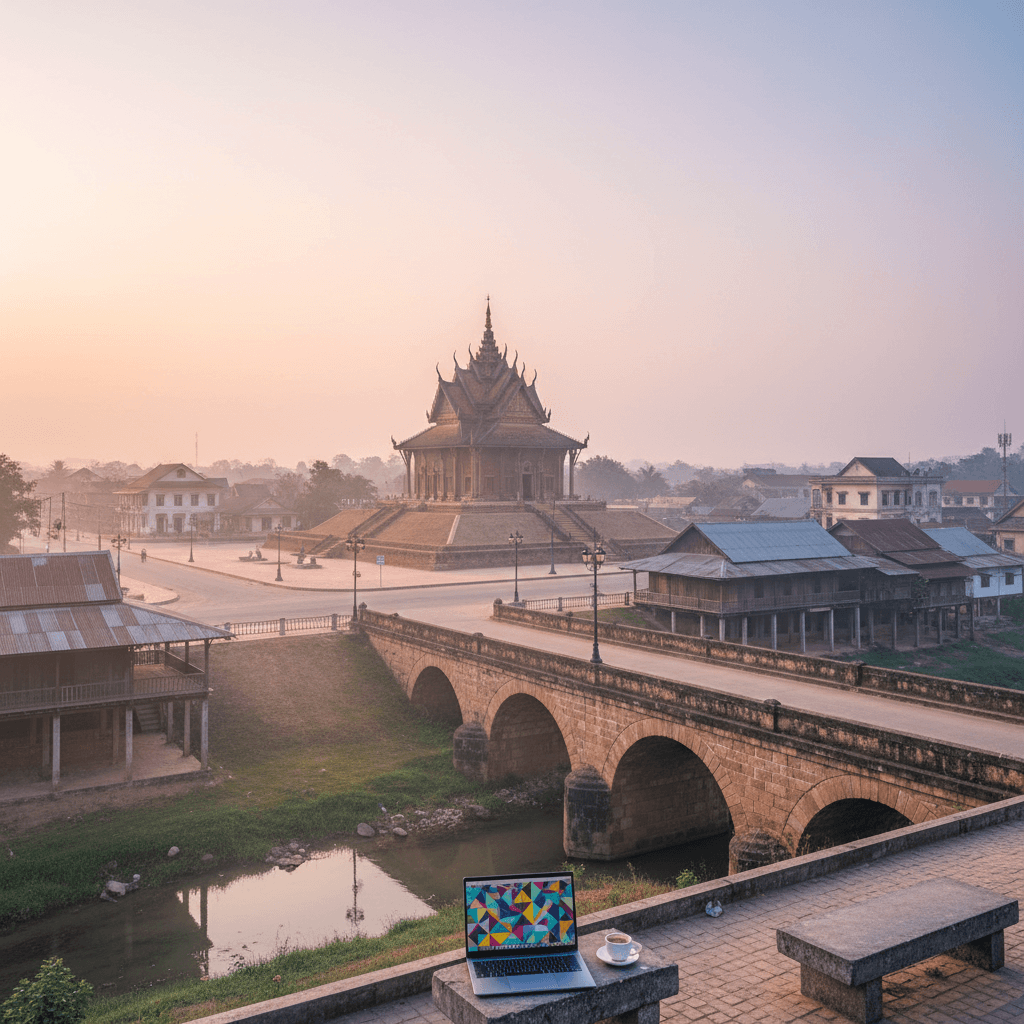
Sen Monorom
🇰🇭 Cambodia