Sibiu
🇷🇴 Romania
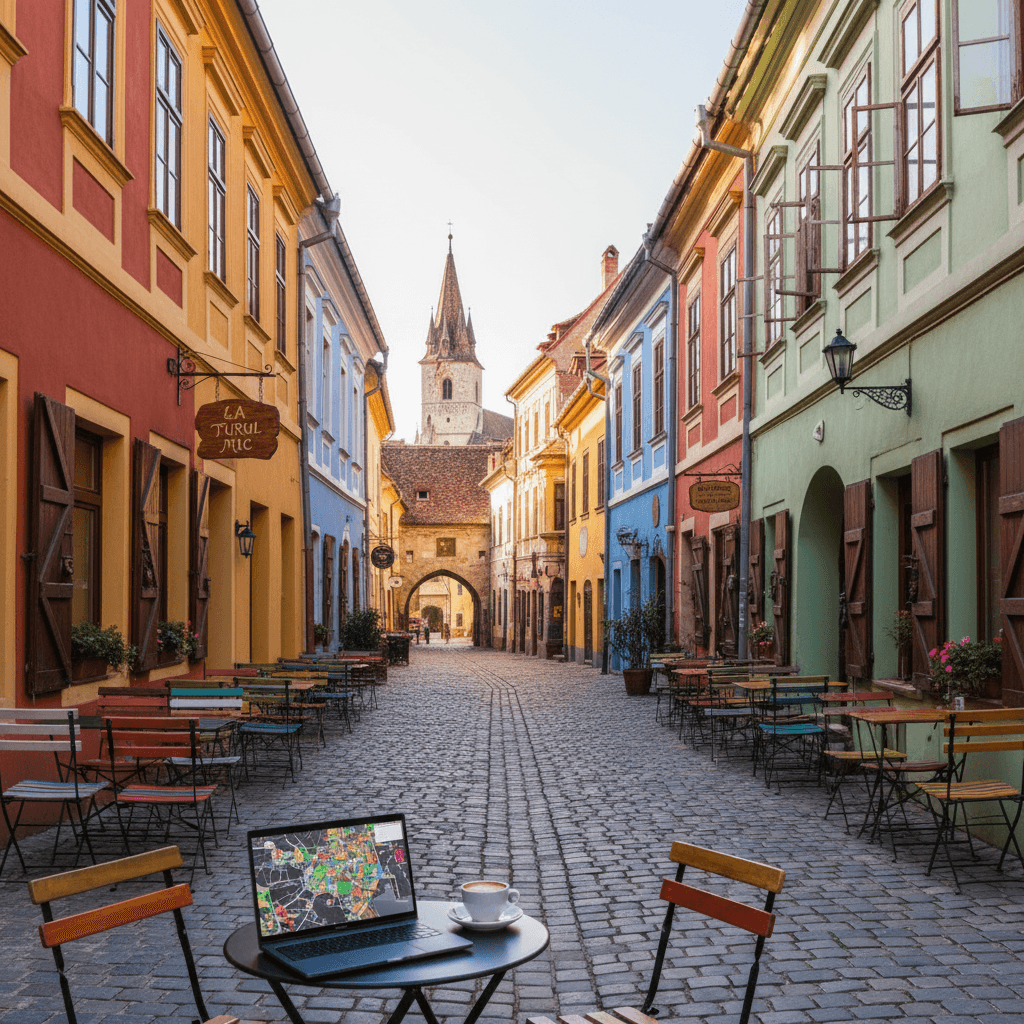
Sibiu feels calm in a way Bucharest never really does. The center is walkable, the streets are cobbled and tidy and you’ll hear church bells, soft traffic and café cups clinking rather than the constant roar of a bigger capital, which, surprisingly, makes working here easier.
It’s a pretty easy place to settle into. Monthly costs stay low for Europe, a single person can live around $840 and a decent 1BR in or near the center often lands between 1,200 and 1,700 RON, so you’re not bleeding cash just to live near the action.
That said, don’t expect wild nights. The nightlife is thin compared with Cluj or Bucharest and after a certain hour the city can feel almost too quiet, especially if you’re used to bars spilling noise onto the street until 2 a.m.
The vibe
- Best for: slow-paced remote work, expats who like order, travelers who want atmosphere without chaos
- Feels like: medieval postcard, but with decent WiFi and normal coffee prices
- Watch for: a smaller nomad scene, indirect local communication and nights that end early
New Center is probably the sweet spot if you want cafes, restaurants and quick access to Piata Mare without feeling stuck in tourist territory. Trei Stejari is quieter and practical, Dumbravi feels greener and more residential and the Historic Center is lovely for short stays, though rent gets pricier and the tourist foot traffic can be annoying.
The remote work setup is solid. Internet speeds are usually strong, coworking options like NOOK, Toffice and Transylvanian Coliving are decent and a day pass at Regus won’t wreck your budget, so you can actually work without crossing your fingers every time you upload a file.
Food helps the mood. Street food in the center runs around 30 to 40 RON, a mid-range dinner for two in Piata Mica is still reasonable and on a cold day the smell of grilled meat, soup and espresso drifting through the square makes the whole city feel lived-in, not staged.
Safety is another reason people stay. Sibiu is one of Romania’s safer cities and most problems are petty stuff on buses or around nightlife spots, not the kind of daily stress that makes you check over your shoulder every ten minutes. Still, be sensible late at night, because quiet streets get very quiet.
Sibiu is cheap by European standards and that’s the main reason a lot of nomads stay longer than planned. A single person can live on roughly $840 a month if they’re careful, which feels refreshingly sane after Western Europe. The old center has cobblestones, church bells and café chatter, but your bank account won’t scream every time you sit down for lunch.
Rent is the big variable. In Piata Mare and the historic core, a studio or 1BR usually runs 1,400 to 1,700 RON, while places outside the center, like Trei Stejari or Dumbravi, often sit around 1,200 to 1,500 RON and honestly the extra walk can save you real money. Older buildings can be a bit drafty in winter, with cold tile floors and heating bills that sneak up, so ask about utilities before you commit.
Typical Monthly Budget
- Budget: $800 to $1,000, shared flat or hostel, buses, cheap eats.
- Mid-range: $1,200 to $1,800, your own 1BR outside center, mixed dining, occasional Bolt rides.
- Comfortable: $2,000+, central apartment, coworking, nicer restaurants, fewer compromises.
Food is easy to keep affordable if you don’t get lazy. Street food and basic restaurants usually land around 30 to 40 RON a meal, so you can grab a filling lunch without thinking too hard, while a mid-range dinner for two in Piata Mica often runs 100 to 200 RON. Go upscale and the bill climbs fast, especially once you add wine, but the price jump still isn’t ridiculous compared with Bucharest or Western capitals.
Transport barely dents the budget. A monthly bus pass costs about 80 to 86 RON and the center is walkable anyway, so most people only use Bolt when it’s raining or they’re hauling groceries uphill, which, surprisingly, happens more often than you’d expect. Airport transfers to the center usually run 20 to 50 RON and they’re quick enough that you won’t waste half a day.
What You’ll Spend On Work Life
- Coworking: Day passes start around 65 RON, with monthly memberships higher.
- SIM data: Cheap plans start around 5 to 9 EUR for modest data bundles.
- Coffee and cafés: Good for laptop work, though table space can get tight at busy hours.
The real sweet spot is the balance, low costs, strong internet and a city that still feels lived-in instead of polished for tourists. That said, nightlife is limited and if you want wild weekends every week, Sibiu will feel quiet, maybe even a little sleepy, though that’s exactly why plenty of people like it. For remote workers, it’s a solid trade and the math is hard to argue with.
Nomads
If you want Sibiu to feel practical, start around New Center. It sits between Piata Mare and Sub Arini, so you can walk to coffee, dinner and coworking without burning half your day on buses and honestly that matters when your laptop’s open by 8 a.m.
The area around NOOK and the newer cafes has the best remote-work rhythm, with good WiFi, decent espresso and enough foot traffic to stop the street from feeling sleepy, but it can get noisy in the evening, especially when scooters buzz past and people spill out after work. Not quiet.
Expats
Trei Stejari is the easy pick if you want a calmer setup with fast access to the center, the train station and big-box errands. Rent for a studio or 1BR usually lands around 1,200 to 1,500 RON outside the core and you’re close enough to walk or take a cheap Bolt when the weather turns grim and the sidewalks get slick.
It’s a good fit for long stays because daily life feels simple, groceries are nearby and the neighborhood doesn’t have the tourist churn of Piata Mare, where selfie sticks, horse-carriage noise and clinking glasses can get old fast. The trade-off, weirdly, is that you’re a bit farther from Sub Arini Park, so green space takes more planning.
Families
Dumbravi works best for families who want greenery, newer buildings and easier access to Sub Arini Park. Parents like it because mornings feel calmer, the air smells less like exhaust and kids have more room to move than they do in the tighter central streets.
It’s slightly less central, though, so you’ll rely more on buses, bikes or a car for errands and school runs. Still, if you want quieter evenings and less tourist noise under the windows, it’s a solid call, frankly one of the few areas where Sibiu feels properly residential.
Solo Travelers
Historic Center is the obvious choice for a short stay, especially if you want to wake up near Piata Mare, Huet and the old cobbled lanes that smell like coffee, rain and chimney smoke in colder months. Rent is pricier here and the streets can feel packed by midday, but the place looks great at night when the lanterns come on.
Most solo travelers should keep their base in the center if they’re only here for a few weeks, because you can walk everywhere, grab food late and skip the hassle of daily transport. If you want sleep and space, pick Trei Stejari instead, but if you want atmosphere, the historic core wins, no contest.
Sibiu’s internet is solid and that matters because the city’s appeal is partly the work setup, not just the postcard streets and Saxon facades. Most apartments and cafes I’d trust for remote work give you 50 to 500+ Mbps, so video calls don’t usually turn into a frozen mess and yes, you can hear your laptop fan humming while church bells drift in from Piata Mare.
The real win is that good connectivity doesn’t cost much. Mobile data plans start around 5 EUR for 5 to 50 GB and local SIMs from Orange or Vodafone are easy to grab in the center, often near Piata Mare, though the paperwork can feel annoyingly slow if you hit the shop at lunch. Honestly, that’s the tradeoff here, cheap and decent, but not slick.
Best Coworking Spots
- NOOK: Best all-round choice in the center, with fast WiFi, events and a proper work-focused vibe.
- Toffice: Good if you want a quieter desk day and don’t care about showing off on Instagram.
- Transylvanian Coliving: In Trei Stejari, with ergonomic chairs and a setup that suits longer stays.
- Regus: Day passes available, check current pricing, which is handy if you only need a clean desk for a few hours.
Cafes work too, especially places like Nod, where the WiFi is strong and nobody gives you side-eye for ordering one coffee and staying half the afternoon. The coffee smell, the clack of keyboards, the scrape of chairs on tile, it all feels pretty normal here and weirdly, that calm atmosphere helps you get more done than a louder, trendier space might.
What Nomads Usually Like
- Speed: Fast enough for calls, uploads and backup work.
- Cost: Coworking starts around 100 to 200 RON a day, so it’s manageable.
- Location: The center is walkable, so you’re not wasting time on commutes.
If you’re staying a while, base yourself in New Center or Trei Stejari, then work outward from there, because being able to walk to a desk, lunch and the bus stop makes Sibiu feel easier than it looks on a map. The scene isn’t huge and that’s the downside, but the internet holds up, the prices stay sane and for most remote workers that’s enough.
Sibiu feels safe in the way a place does when people still leave their bikes outside a cafe and don’t look over their shoulder every ten seconds. Violent crime is low, petty theft happens mostly on buses or around nightlife spots and the center stays comfortable for walking after dark if you keep your head on straight. No drama. Don’t drift into empty side streets late at night, especially if the music’s loud and everyone’s had a few beers.
For most nomads, the real safety win is the city’s size. Piata Mare, Piata Mica, Huet and the New Center are easy to read fast, the streets are well lit and you’ll usually hear trampling footsteps, cafe chatter and the clink of glasses before you ever see trouble. Trei Stejari and Dumbravi feel calmer still, honestly, though you trade some central buzz for quieter evenings and a slightly longer walk home.
Where to stay
- Piata Mare and Huet: Safest-feeling for short stays, but touristy and pricier.
- New Center: Convenient and lively, with more noise at night.
- Trei Stejari: Quiet, practical and good for longer stays.
- Dumbravi: Green and family-friendly, a bit farther out.
Healthcare is straightforward. Sibiu County Emergency Hospital handles serious stuff, pharmacies are easy to find and most basic appointments or prescriptions don’t turn into a saga, which, surprisingly, is a relief in a smaller city. If you need help fast, call 112, that’s the emergency line across Romania.
Bring any prescription meds you rely on, because the system works fine for common issues but can be clunky if you need something unusual. Clinics in the center are handy for minor problems and you’ll hear the usual pharmacy rustle, the beep of card terminals and the sharp smell of antiseptic when you walk in, so things feel familiar even if you don’t speak much Romanian.
- Emergency number: 112
- Main hospital: Sibiu County Emergency Hospital
- Pharmacies: Common across central neighborhoods
- Best practice: Keep travel insurance and a photo of prescriptions handy
The biggest headache here isn’t safety, it’s the occasional indirect communication and the small-city rhythm. Ask clearly, double-check opening hours and don’t assume a friendly “yes” means tomorrow, because sometimes it just means “maybe.” Still, for a city this pleasant and affordable, Sibiu’s safety and healthcare setup is solid and most travelers settle in fast.
Sibiu is easy to live in if you like walking and honestly that’s half the appeal. The historic center, New Center and the streets around Piata Mare all connect fast on foot, so you can get coffee, groceries and a coworking desk without hunting down a taxi every time.
The center feels compact, with cobblestones under your shoes and church bells cutting through the morning air, though the tradeoff is that some streets get noisy when tour groups roll in. Buses are cheap, Bolt is handy when it’s raining and the airport run usually takes just 10 to 15 minutes, which, surprisingly, keeps the whole city feeling smaller than it looks on a map.
On Foot
- Best for: Historic Center, New Center, Sub Arini edges
- Why: Most daily errands are close and the center is flat enough to walk without cursing every block
- Downside: Cobblestones can be rough on wheels and winter slush makes the streets annoying fast
Bus
- Cost: About 3 RON per ticket or 86 RON (nominal) or 120 RON (non-nominal) for a monthly pass
- How to pay: Use the SibiuBus app or buy passes locally
- Best for: Trei Stejari, Dumbravi and airport transfers when you’re not in a rush
Ride Apps and Bikes
- Bolt: Good for late nights, groceries or getting across town when the weather turns ugly
- Bikes and scooters: Useful in warmer months, though traffic gets a little messy near the center
- Reality check: Drivers are usually fine, but the city isn’t built for constant car use, so don’t expect Bucharest-style speed
If you’re staying in Trei Stejari, you’ll get a quieter base with easy access to the train station and mall, while Dumbravi works better if you want more green space and don’t mind being a bit farther out. The New Center is the sweet spot for most nomads, because cafes, restaurants and coworking places sit close together, though the traffic hum and scooter buzz can get old after a while.
For airport trips, just budget around 20 to 50 RON by bus or taxi, then move on. It’s simple, affordable and frankly one of the few parts of city life here that feels almost too easy.
Sibiu’s language scene is easy for travelers, less so for anyone expecting nonstop English in every corner. In the center, younger locals usually speak it well and German still shows up because of the Saxon past, so ordering coffee or booking a Bolt ride is rarely a drama. Outside the core, though, conversations can turn indirect, a little polite and frankly harder to read than they first seem.
Romanian is the language you’ll hear most, with short, clipped street chatter, church bells, buses braking and the occasional burst of German near older institutions. Learn a few basics and people soften fast, honestly, especially if you start with a simple greeting instead of launching straight into English.
- Hello: Bună
- Thank you: Mulțumesc
- Yes: Da
- No: Nu
- Please: Vă rog
Google Translate works fine here and most nomads keep it open for menus, apartment chats and the occasional taxicab misunderstanding. Weirdly, some of the best English is in coworking spaces like NOOK, Transylvanian Coliving and around the New Center cafes, where people are used to remote workers asking where to print something at 5 p.m. or how to fix a SIM card issue.
- Best English: Historic Center, New Center, coworking spaces
- Use Romanian for: Markets, older shops, bus stops, apartment landlords
- Also common: German in older local institutions
Communication here can be a little indirect, so don’t expect a blunt no when something’s a no. People may say “we’ll see” or “maybe tomorrow,” and that can mean later or never, which, surprisingly, is just how things get done. Keep your tone calm, your questions specific and don’t rush the back-and-forth.
For practical stuff, English is enough to get by, but Romanian gets you faster replies, better prices sometimes and fewer blank stares at pharmacies, landlords or transport desks. If you’re staying more than a couple of weeks, learning the basics pays off quickly, because the city is friendly, but it isn’t trying to perform for you.
Sibiu has a proper continental mood, so summers feel warm, dry and easy to live in, while winter can turn the sidewalks slick and the mornings sharp enough to sting your face. The best stretch is usually May through September, when the city is at its nicest for walking, eating outside and lingering in Piata Mare after dark.
July and August are the most comfortable for most travelers, with daytime highs around 24 to 26°C, though afternoons can still feel hot on the sunlit stones and the cafes get busy. June brings the most rain, weirdly enough, so you’ll want a light jacket or umbrella if you’re out wandering the old center, because a gray sky over Huet Square can turn the whole place damp and quiet fast.
Best Months
- May: Mild, fresh and good for long walks. The parks smell green, the terraces reopen and it’s not packed yet.
- June: Pleasant but wetter, so expect some rain and sticky air after a shower.
- July to September: Best overall for festivals, patio dinners and day trips, though August can feel a bit sleepy when locals leave.
Winter is another story. January is the rough one, with highs near 1°C and lows that can drop well below freezing and honestly, the cold here sits in the bones because the wind cuts through narrow streets and the old apartment floors feel icy by morning.
If you’re remote working, shoulder season is a sweet spot, because you get quieter streets, lower short-term prices and still-decent weather for coffee runs between calls. November and February can feel grim, with gray light, slush and fewer things happening after dinner, so don’t come expecting a lively nightlife scene.
Weather by Traveler Type
- Digital nomads: Pick May, September or early October for the best balance of weather and calm.
- City breakers: July works well if you want terrace time and long evenings outside.
- Winter visitors: Come prepared with boots, layers and patience, because the charm is still there, but so is the cold.
The main thing is this, Sibiu shines when you can walk it. Sunny days make the historic center feel almost cinematic, while wet or frozen weeks can make the same streets feel a bit unforgiving, so time your trip around what you actually want to do, not just cheap flights.
Sibiu feels easy to live in, mostly because the city still works on a human scale. The center is walkable, the air smells like coffee, rain and old stone after a storm and even the bus system, which, surprisingly, does the job, won't eat your day. Internet is solid, prices are low for Europe and if you’re working remotely, that matters more than fancy branding.
Budget is where Sibiu really wins. A single person can get by on about $840 a month, with studio or 1BR rents around 1,400 to 1,700 RON in the center and a bit less outside it, while a decent meal usually lands at 30 to 40 RON, which feels fair until you compare it with Bucharest. Not cheap? No, cheaper than that.
Where people actually live
- Trei Stejari: Quiet, safe and practical, with easy access to the station, mall and city center.
- Dumbravi: Good if you want green space near Sub Arini Park and newer buildings.
- New Center: Best for cafés, restaurants and a more social feel, though it can get noisy at night.
- Historic Center: Beautiful and touristy, with higher rents and fewer long-term comforts.
For work, most nomads split time between home, NOOK, Toffice or a café with decent WiFi and honestly, that mix works well because the city isn’t huge enough to waste time commuting. A day pass at Regus sits around 119 RON, SIM cards from Orange, Vodafone or Digi are easy to grab near Piata Mare and mobile data plans start low enough that you won’t wince every time you open a hotspot.
Safety is a real plus. Sibiu feels calm after dark, though buses and nightlife spots are where petty theft happens, so keep your bag zipped and don’t drift into empty streets half-asleep. The hospitals and pharmacies are nearby, 112 is the emergency number and the city’s small size makes things feel, frankly, manageable.
Day-to-day life is simple: use the SibiuBus app, buy a monthly pass if you’re staying awhile and take Bolt when the weather turns ugly and cold tile floors make you regret every errand. For groceries, banking and apartments, local Facebook groups and Airbnb listings are still the fastest route and expats often recommend Wise or Revolut because Romanian bank admin can be slow and a little annoying.
Culture-wise, keep it easy. Say “Buna,” tip around 10% in restaurants and take your shoes off when invited indoors, because that’s just the polite thing here. Direct eye contact is normal, people can be a bit blunt and the city rewards patience more than charm offensives.
Frequently asked questions
How much does it cost to live in Sibiu as a digital nomad?
How much is rent in Sibiu for a one-bedroom apartment?
Is the internet good enough to work remotely in Sibiu?
What are the best neighborhoods for digital nomads in Sibiu?
How much does coworking cost in Sibiu?
Is Sibiu safe for solo travelers and remote workers?
How easy is it to get around Sibiu without a car?
Need visa and immigration info for Romania?
🇷🇴 View Romania Country GuideEasy Landing
Settle in, no stress