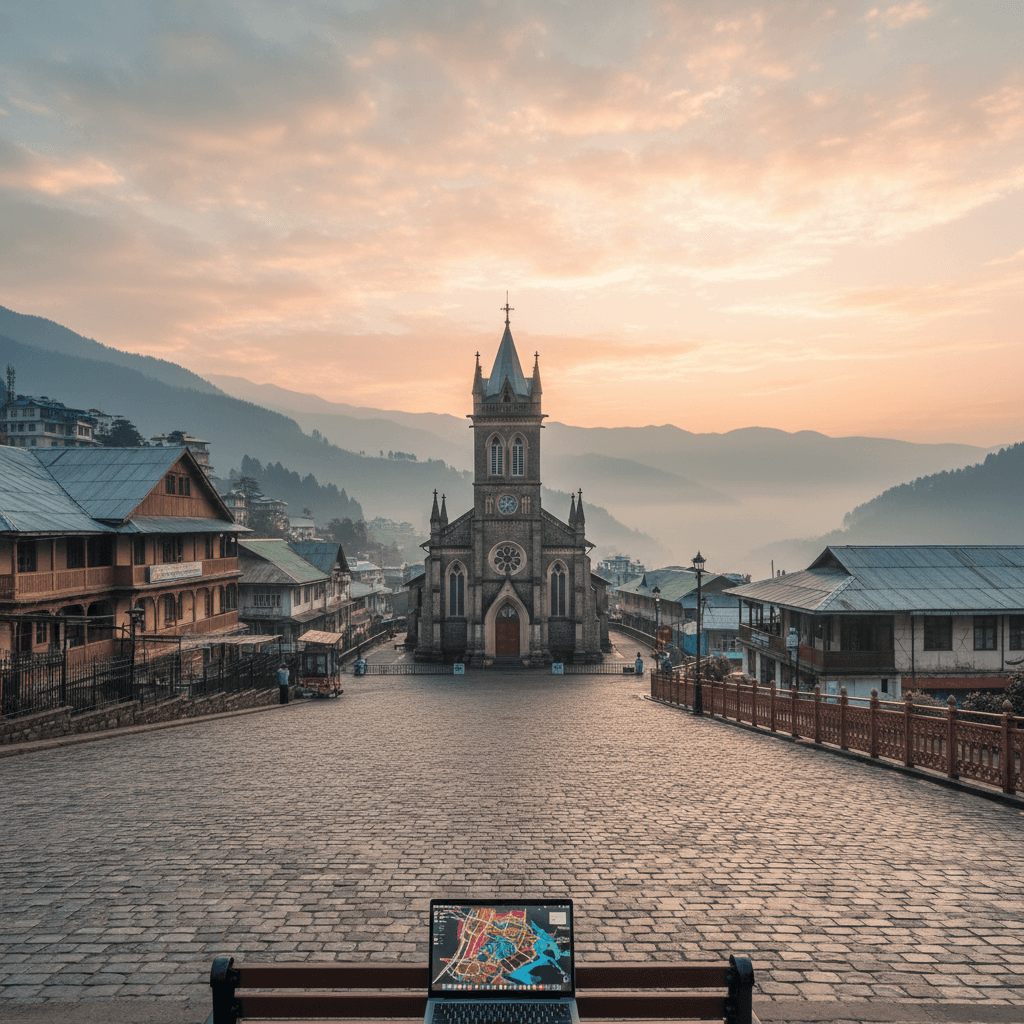
Shimla
🇮🇳 India
Shimla feels like a hill station that never fully shook off its colonial past and that’s part of the appeal. Pine smell, cold mornings, church bells, taxi horns and the scrape of shoes on steep stone lanes all mix together, so the city feels calm on the surface but oddly busy underneath.
It’s not an easy city. You walk a lot, sometimes more than you planned and the climbs can get old fast, especially if you’re carrying groceries or work gear. Still, the air is cleaner than most Indian cities, the views are proper postcard stuff and the pace is slower in a way that makes people stay longer than they expected.
Most nomads settle around Mall Road or The Ridge if they want cafés, people and easy access to everything, though it gets noisy and overpriced in peak season. Khalini is quieter and better for longer stays, with studios around ₹12,000 and Shimla Coworking nearby, while Mashobra suits people who’d rather hear birds than traffic, even if that means calling a taxi more often.
What life feels like
- Rent: About $50 in the outskirts, around $80 in the center and more if you want a furnished place with a view.
- Food: Street snacks run ₹50 to ₹100, a decent lunch is around ₹140 and you can still eat cheaply if you skip the café habit.
- Internet: Jio and Airtel usually hold up well, with home plans around $7 a month and café WiFi is, honestly, better than you’d expect in many spots.
- Transport: Local buses are cheap, taxis aren’t outrageous and Uber does work in town, though steep roads make even short rides feel like a small event.
The social scene is low-key, which suits people who don’t want Goa-style noise or a constant party crowd. You’ll find momos, thukpa, bakery tea and the smell of frying oil near Lakkar Bazaar, then suddenly a quiet lane where someone’s playing music behind a shuttered café and weirdly that contrast is what makes Shimla stick.
Winters are harsh, the monsoon can be grim and peak tourist months turn peaceful streets into bottlenecks, so don’t come expecting smooth year-round comfort. But if you want a place with mountain air, a small but friendly expat crowd and enough structure to work without feeling trapped in a big city, Shimla does the job and it does it with a bit of old-world attitude.
Shimla isn’t expensive by Indian hill-station standards, but it isn’t cheap either, especially once you factor in the slope tax. A solo nomad can live here on about $265 a month if they keep rent low, cook some meals and use local buses, though winter heating, taxi rides and the occasional cafe habit push that number up fast.
Food is pretty manageable. Street snacks like momos, thukpa and chana are often ₹50 to ₹100, a mid-range lunch runs about ₹140 and an upscale dinner for two lands around ₹460, which sounds fine until you’ve had three cafe coffees in a week and the bill quietly starts climbing.
Rent is where the real split happens. Mall Road and The Ridge cost more because you’re paying for location, foot traffic and easy access, while the quieter edges of town, like parts of Khalini or farther out toward Mashobra, give you much better value, if you don’t mind climbing steep lanes and hearing scooters grind uphill at 8 a.m.
What people usually pay
- Budget: Around $250 a month, usually an outskirts studio, street food and buses.
- Mid-range: Around $400 a month, a 1BR near the center, cafe meals and the odd taxi.
- Comfortable: $600+ a month, furnished housing, more rideshares and proper restaurant spending.
Typical monthly costs
- 1BR in the center: About ₹6,700, though Mall Road prices can jump above ₹12,000.
- Outskirts rent: Roughly ₹4,100 to ₹12,000, depending on the building and how far you’re willing to walk.
- Utilities and internet: Around $18 total and home broadband can be very cheap, honestly.
- Transport: A monthly bus pass is about ₹680, taxis are pricier and steep routes make walking tiring, weirdly fast.
- Coworking: Shimla Coworking in Khalini starts around ₹15,000 per person monthly, so that’s a serious bump if you want a dedicated desk.
Most nomads find Shimla best when they mix the center and the outskirts, stay near Mall Road for convenience, then move out if they want lower rent and quieter nights. The tradeoff is real, because the center gives you cafes, walkability and easy social life, while the outer neighborhoods save money but demand more taxis, more stairs and more patience.
My take, frankly, is to skip the overpriced tourist-facing stays on Mall Road unless you really want the buzz and the views, then look at Khalini or Mashobra for better monthly value. The air smells like pine after rain, the evenings cool down quickly and if you’re counting every rupee, Shimla can still work, just don’t pretend it’s a bargain town.
Nomads
Khalini is the pick if you want quieter days, a decent chance at finding a studio and easy access to Shimla Coworking, though the walks are steep and your calves will complain. The air feels cleaner up here, pine mixed with damp earth and frankly that beats staring at Mall Road traffic all day.
- Rent: Studios often run around ₹8,000 to ₹12,000, with furnished options going higher if you want a better view.
- Work setup: Shimla Coworking is here, plus cafes with solid WiFi, often 50 to 100 Mbps, which, surprisingly, holds up well for calls.
- Downside: Steep lanes, so you’ll either walk a lot or budget for taxis.
Solo Travelers
Mall Road and The Ridge make the most sense if you want cafes, easy walking and people around at all hours, though it gets noisy and crowded fast. There’s a constant mix of honking, café chatter and the smell of momos drifting out of snack stalls, so if you like quiet, skip this zone.
- Rent: Expect around ₹12,000 and up for a central 1BR, so it’s the priciest core area.
- Food: Tibetan momos, thukpa and cheap snacks in Lakkar Bazaar make daily eating easy.
- Vibe: Best for short stays, casual socializing and people who don’t mind tourist traffic.
Expats
Mashobra is where expats who want space, views and a slower rhythm usually end up, because it feels more residential and less packed with weekend crowds. You’ll still need taxis into town, but the tradeoff is quieter mornings, birds outside the window and a lot less diesel smell than central Shimla.
- Rent: Often cheaper than the center, especially for longer stays and larger flats.
- Lifestyle: Better for people who want long walks, cleaner air and a calmer home base.
- Catch: You’ll rely on taxis or buses for Mall Road, so don’t pretend it’s walkable.
Families
Mashobra also works best for families, mostly because it’s calmer and less chaotic than the tourist core and kids aren’t dodging crowds every time they leave the house. Kufri is more of a day-trip zone than a real base, it’s colder, more remote and honestly a bit inconvenient for everyday life.
- Best fit: Mashobra for space and quiet, Kufri only if your trip is adventure-heavy.
- Transport: Plan on taxis for school runs, shopping and hospital visits.
- Practical note: Avoid monsoon-prone spots, because the rain can turn the roads slippy and miserable.
Internet & Coworking
Shimla’s internet is better than people expect. Jio and Airtel usually give you 50 to 100 Mbps in decent stays and cafes and home plans can run around $7 a month, which honestly feels cheap until a monsoon outage or a dodgy inverter reminds you you’re in the hills.
It’s workable for calls, uploads and normal client work, though you should still avoid betting your day on one connection, because a storm, a power cut or a flaky landlord router can wreck a Zoom-heavy afternoon fast.
The coworking scene, turns out, is small but useful. Shimla Coworking in Khalini is the main name people mention, with desks from around ₹15,000 a month, fast WiFi and views that make spreadsheet jail slightly less grim, though the climb there can leave you breathless and annoyed.
Most nomads still end up working from cafes on Mall Road and around The Ridge, where you’ll hear cups clinking, buses grinding uphill and the occasional loud tourist group, but the tradeoff is easy coffee refills and a social buzz that a quiet flat usually lacks.
- Best for focus: Shimla Coworking in Khalini, quieter than Mall Road and better if you need steady desk time.
- Best for casual work: Cafes on Mall Road, good for emails, calls and a half-day session, not ideal for deep work.
- Best SIMs: Jio and Airtel, with eSIM options handy if you’re hopping in from abroad.
- Best backup: Keep a second data plan, because winter power cuts and random network dips do happen.
If you’re staying a month or more, ask for a speed test before you move in, then test it again at peak evening hours, because 100 Mbps on a listing can turn into something much less flattering once everyone in the building starts streaming. Coffee shops near Mall Road are fine for a few hours, though the chairs can be hard, the noise constant and the air thick with roasted beans, frying oil and wet wool in winter.
My take, honestly, is simple, work from Khalini if you want stability, use Mall Road when you want company and don’t expect the kind of polished coworking ecosystem you’d get in bigger Indian cities. Shimla gets the basics right and that’s enough for a lot of nomads.
Safety
Shimla feels fairly safe in the center, especially around Mall Road, The Ridge and Khalini, where there’s steady foot traffic, police presence and plenty of people out for evening walks, but the place isn’t carefree. Empty lanes get dark fast, the steep roads can be slippery after rain and monsoon flooding in low-lying spots can turn a simple errand into a headache.
Don’t assume the hill-station calm means you can wander anywhere at night. Most nomads say the real nuisance is petty stuff, loud traffic and the constant climb, not serious street crime and honestly that matches the vibe on the ground.
- Best for walking: Mall Road and The Ridge, busy, central, easy to keep an eye on.
- Use caution: lower or flood-prone areas during July and August, especially after heavy rain.
- Night time: take a taxi or Uber if the route is steep, dark or empty.
- Common annoyance: honking taxis, crowded footpaths and wet stone steps that catch you off guard.
Keep your phone charged, save local emergency numbers and don’t hike back alone after dark unless you know the route well. The hill roads are quiet in patches, which, surprisingly, can feel a lot lonelier than they look on a map.
Healthcare
For regular care, IGMC Shimla is the main hospital people rely on and it handles emergencies 24/7, even if the system can feel slow when the queues build up. 24-hour pharmacies around Sanjauli and IGMC Road are handy, so you’re not stuck hunting medicine in the middle of the night.
For most routine issues, the setup is decent, though not slick. You’ll still want travel insurance, because a bad fall on a wet slope or a stubborn stomach bug can mean scans, prescriptions and a lot of waiting around in cold hospital corridors.
- Main hospital: IGMC Shimla, best bet for emergencies and serious care.
- Late-night medicine: look in Sanjauli and along IGMC Road.
- Emergency number: 108.
- Good move: keep a basic kit with ORS, painkillers, bandages and motion-sickness tablets.
The air is cleaner than in most Indian cities, which helps, but winter dryness can be rough on skin and sinuses and the cold tile floors in older flats feel brutal at 7 a.m. If you need regular specialist treatment, plan ahead, because bigger appointments often mean waiting, then waiting some more.
Practical Advice
Stay in Mall Road, The Ridge or Khalini if safety matters more than cheap rent, because you’ll have easier access to pharmacies, buses and quick rides home. Mashobra is calmer, but you’re trading convenience for more taxi dependence and that adds up fast.
Carry cash for small clinics and pharmacies, keep a local SIM from Jio or Airtel for calling cabs and download Uber before you arrive since it’s the easiest backup when your knees are done with the hills. Frankly, the biggest health risk here is overestimating your own fitness on a steep, rainy street.
Shimla looks walkable on a map, then the hills kick in. The core around Mall Road and The Ridge is easy enough on foot, but once you drift toward Khalini, Sanjauli or the outer lanes, you’ll be climbing steep roads, dodging honking cabs and feeling that cold mountain air in your lungs. Honestly, that’s the tradeoff here, convenience in the center, calves of steel everywhere else.
Most nomads end up doing a mix of walking, buses and the occasional taxi. Local buses are cheap, with a monthly pass around ₹680 and they’re the smartest way to cut costs if you’re living outside the center, though they can be crowded, slow and a bit chaotic when tourists pile in. Taxi fares add up fast, around ₹310 for 8 km, so don’t treat them like a daily habit unless your budget can take it.
- Best for walking: Mall Road, The Ridge and nearby lanes, where you can grab coffee, run errands and work from cafes without needing a ride.
- Best for quiet stays: Khalini, where studios are cheaper but the hills are steeper, which, surprisingly, can turn a simple grocery run into a workout.
- Best for views: Mashobra, though you’ll usually need a taxi to get back into Shimla proper.
- Best for day trips: Kufri, if you want nature more than convenience, just don’t expect quick, easy transport.
Uber does work in Shimla Urban and parts of rural Shimla and that’s a relief when you’re hauling a backpack in the rain or trying to get back after dark. Ola’s presence is patchier and scooter rentals aren’t really a thing here, so if you’re used to zipping around on two wheels, forget it, this isn’t Goa. The roads are narrow, the turns are sharp and during peak season the traffic can crawl.
If you’re flying in, plan your airport transfer in advance. Shimla Airport is tiny, so most people just book a taxi or use Uber if it’s available, then head uphill and hope the driver knows the route, because mountain shortcuts can get weirdly confusing. For longer travel, buses to Chandigarh are the practical option and they’re usually better than trying to stitch together a chain of expensive rides.
My blunt advice, stay central if you can afford it. The walkability around Mall Road saves time, money and a lot of sweaty uphill trudging and the noise, crowds and exhaust smell are still easier to live with than being stranded on a slope after sunset. If you’re on a tight budget, choose an outskirts place with bus access, then accept that Shimla will make you move slowly, whether you like it or not.
Shimla runs on Hindi, Pahari and a fair amount of tourist English, especially around Mall Road, The Ridge and the cafes near Lakkar Bazaar. In the center, you can usually get by with English alone, though a simple Namaste and Dhanyavaad goes a long way and honestly people warm up faster when you try a few words in Hindi.
Outside the tourist core, English drops off fast, then you’re back to gestures, slow repetition and the same two or three phrases said louder, which, surprisingly, still helps. Most local shopkeepers understand basic requests, but don’t expect polished back-and-forth unless you’re in a hotel, a coworking space or a cafe that caters to long-stay visitors.
Communication here feels easy in the places nomads actually use, then a little clunky the moment you need something practical. Taxi drivers, landlords and bus staff often speak enough to sort things out, though rates, directions and timings can get fuzzy if you don’t confirm twice.
What to Expect
- Main language: Hindi, with Pahari widely spoken locally
- English level: Good in hotels, cafes and tourist areas
- Best support: Mall Road, The Ridge, Khalini and expat-friendly stays
- Useful tools: Google Translate, PhrasePal and offline Hindi packs
For everyday life, keep your phone ready because menus, rental chats and auto-rickshaw negotiations can turn messy fast. Internet is, honestly, decent enough for translation apps and video calls, so you won’t be stuck even if someone replies in a mix of Hindi and broken English.
Locals are usually patient if you’re respectful, but don’t be vague. Say the landmark, repeat the fare and confirm the address, because a driver who says “yes, yes” may still head toward the wrong slope while the engine groans and the city’s traffic horns bounce off the hills.
If you’re staying longer than a few days, learn a handful of everyday words and you’ll save time, money and a lot of awkward smiling. Namaste, kitne ka? and dhire will get used more than you’d think, especially when you’re ordering momos, asking for directions or trying to sort out a cab on a cold evening.
Shimla feels best in spring and early summer, when the pine air is crisp, the sky actually opens up and you can walk Mall Road without freezing or slipping on slush. March to June is the sweet spot, with daytime highs usually sitting around 15 to 30°C, though the sun can still feel sharp on bare skin once you’re out of the shade.
Winter is a different mood. January and February can dip below zero at night, tile floors turn icy and the hill wind gets mean, so if you hate cold rooms and heavy blankets, skip those months. Monsoon is messier, honestly and July to August brings long stretches of rain, slick roads, low clouds and that wet-earth smell that sounds romantic until your laundry won’t dry for days.
Best Months
- March to June: Best weather, clearer views, easier walking and the cafés around The Ridge feel lively without being packed to the point of irritation.
- September to November: Cooler, quieter and good for slow work trips, though evenings start dropping fast once the sun goes down.
- December to February: Cold, sometimes bitterly so, with frost, higher heating needs and a real chance you’ll spend more time indoors than you planned.
If you’re working remotely, spring and autumn are the easiest on the body and the brain. The internet stays fine, the roads are less annoying and you’re not dealing with monsoon delays or that dry winter air that seems to sneak into your throat.
Months to Be Careful With
- July to August: Heavy rain, muddy steps and occasional disruption in the hills, which makes day trips and taxi rides more of a gamble.
- Peak holiday periods: Crowds spike around summer breaks and winter holidays, so Mall Road gets noisy, honking builds up and hotel rates jump.
- January and February: Great if you want mountain chill, bad if you dislike cold mornings, damp rooms and walking uphill in gloves.
Most nomads end up preferring late March, April or October, because you get the best mix of clean air, decent temperatures and fewer tourist headaches. Weirdly, the weather can change fast, so carry a light jacket even on sunny afternoons, because once the shade hits, Shimla cools down quickly.
Money and monthly budget
Shimla can be cheap, but it depends where you stay and how often you cave and grab a taxi uphill. A solo nomad can scrape by on about $250 a month in the outskirts, while a more comfortable setup with café lunches and occasional rideshare runs closer to $400 or more.
Rent near Mall Road or The Ridge climbs fast and the quieter you go, the cheaper it gets, though your legs will pay for it. Out in Khalini or other residential pockets, studios are often around ₹8,000 to ₹12,000 and honestly that’s where most long-stay people start looking.
Where to stay
- Mall Road, The Ridge: Best for convenience, cafes and walkability, but it's crowded, noisy and pricier.
- Khalini: Good for longer stays, with calmer streets and Shimla Coworking nearby, though the slopes can be punishing after groceries.
- Mashobra: Quieter, greener and nicer for sleep, but you’ll need taxis for city errands.
Internet, SIMs and work
Internet is generally solid, with many cafes and homes getting 50 to 100 Mbps or more, which, surprisingly, is enough for calls and regular remote work. Jio and Airtel are the main SIM picks and you can grab a prepaid plan cheaply at local shops or even the airport.
If you want a dedicated desk, Shimla Coworking in Khalini is the obvious option, though it isn't cheap compared with just working from a café. Most people mix both, because the coffee shops on Mall Road are decent for a few hours, then the chairs start to feel like punishment.
Getting around
Shimla’s core is walkable, but the hills are steep and the air gets thin fast, so don’t plan on breezing everywhere. Local buses are cheap, a monthly pass is about ₹680 and Uber does work in parts of Shimla, though taxis are still the fallback when your knees give up.
Traffic can be annoying, with horns bouncing off the hills and buses grinding uphill in short bursts, so short trips often take longer than they should. For day trips, people usually hire a taxi to Kufri or Mashobra and that’s the sane move if you don’t want to burn half a day waiting.
Everyday basics
- Banking: ATMs are easy to find and PhonePe or Paytm are widely used for daily payments.
- Shopping: Housing.com and Airbnb are the common places to look for flats and studios.
- Food: Street snacks run about ₹50 to ₹100 and a mid-range lunch is usually around ₹140.
- Healthcare: IGMC Shimla handles emergencies and 24-hour pharmacies are available around Sanjauli and IGMC Road.
Local habits and common sense
Remove your shoes when you enter a home, dress modestly and don't litter, because people do notice, especially in a hill town where trash stands out against the pine slopes. Winters are bitter, monsoon can be messy and the best days here are the clear ones when the whole town smells like wet earth, cardamom chai and cold stone.
Need visa and immigration info for India?
🇮🇳 View India Country GuideEasy Landing
Settle in, no stress