Shanghai
🇨🇳 China
The Blade Runner Reality
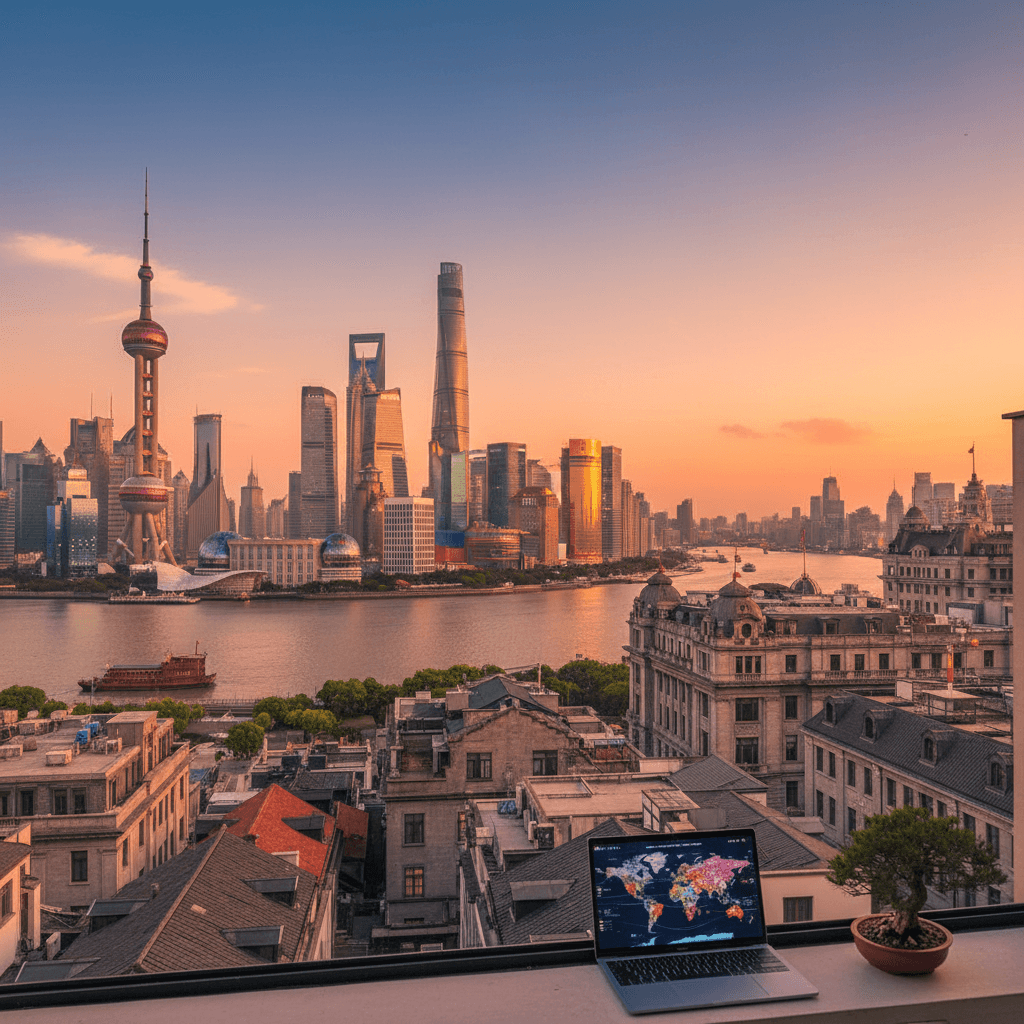
Stepping out of the Maglev train at 430km/h is your first hint that Shanghai doesn't do "slow." This is a city that lives in the future while keeping its ghosts in the attic. You'll find yourself working from a 1920s Art Deco villa in the Former French Concession one morning, then taking a meeting on the 50th floor of a glass needle in Pudong by afternoon. It is intense, loud, and occasionally overwhelming, but the sheer momentum of the place is addictive for anyone trying to build something new.
What sets Shanghai apart from Chiang Mai or Lisbon is the scale of its ambition. It isn't a place people go to "find themselves" or sip slow lattes; it is where you go to be at the center of the global machine. The energy is palpable in the startup meetups at Startup Grind and the late night glow of the Lujiazui skyline. You'll feel like a small part of a massive, high tech ecosystem that never actually sleeps.
The Digital Lifeblood
Living here as a nomad requires a specific toolkit. The Great Firewall is the first hurdle you'll face. Without a pre-installed VPN like Astrill or ExpressVPN, your usual workflow will grind to a halt. Most veterans here don't rely on cafe WiFi for important calls; they head to WeWork or Naked Hub where they can access high-speed fiber optic connections. If you're on a budget, look for MIXPACE Wonderwall or XNode for more flexible desk rates.
Cash is essentially dead in Shanghai. Your first mission is to link your international card to Alipay or WeChat Pay. From buying a ¥15 bowl of shengjianbao dumplings on a street corner to paying for a Didi ride across town, everything happens via QR code. It makes life incredibly seamless once you're set up, but the first 24 hours can feel like a digital hazing ritual if you aren't prepared.
Where to Plant Your Flag
Choosing a neighborhood defines your entire experience. Shanghai is a collection of distinct worlds connected by one of the world's best metro systems.
- Xuhui: The sweet spot for most nomads. It’s walkable, filled with leafy streets, and has a high concentration of coworking spaces like The Hub. Expect to pay $770 to $1,000 for a decent one bedroom apartment.
- Jing'an: The powerhouse district. It’s central, home to massive luxury malls on Nanjing Road West, and packed with expats. Rent is steeper here, usually between $1,000 and $1,500.
- Former French Concession: This is the postcard version of the city. Think plane trees, boutique coffee shops, and colonial architecture. It’s beautiful but pricey, with rents often hitting $2,000 for renovated lanes houses.
- Pudong: If you want space, modern high rises, and a bit of quiet, head across the river. It feels more sterile, but it’s great for families or those who need a break from the Puxi chaos. Rents start around $1,200.
The Monthly Burn
Shanghai isn't the bargain it used to be, but it caters to every tax bracket. A solo nomad can get by on $1,058 per month if they're savvy, though a comfortable lifestyle usually sits closer to $2,000.
Budget Living ($800 - $1,200/mo)
- Rent: ¥3,000 to ¥5,000 in Xuhui or outer districts.
- Food: Stick to local spots and street food (¥10 to ¥20 per meal).
- Transport: Use the Metro (¥4.5 per ride) and HelloBike rentals (¥10 per day).
Mid-Range Comfort ($1,200 - $2,000/mo)
- Rent: ¥5,000 to ¥8,000 in Jing'an.
- Food: Mix of local eats and mid-range restaurants like Din Tai Fung (¥50 to ¥100).
- Coworking: A hot desk at Naked Hub for ¥1,500.
Survival Tips and Local Flavor
The language barrier is real. While younger locals and those in expat hubs speak some English, you'll want Pleco and the WeChat translation tool ready to go. Learning "Ni hao" and "Xiexie" goes a long way, but "Duoshao qian?" (How much?) is what saves your wallet at the markets.
The city is incredibly safe, with almost no violent crime. You can walk through most neighborhoods at 2:00 AM without a second thought, though you should keep an eye on your phone in the tourist crush of People's Square. If you get sick, international clinics like United Family provide western standards of care, though they aren't cheap.
For the best experience, time your visit for March to May or October to November. The summers are a punishing, humid 35°C, and the winters are a damp, bone chilling cold that the city's lack of central heating makes even worse. When the weather is right, there's nothing better than a walk along the Bund, watching the neon lights of the future reflect off the Huangpu River.
The Price of Living in China's Financial Capital
Shanghai is a city of extremes where you can drop $30 on a cocktail at a Bund rooftop bar or fill up on ¥15 ($2.25) shengjianbao from a street stall. Most nomads find that a monthly budget of $1,058 covers the basics, but your lifestyle choices, especially where you choose to sleep, will dictate whether you're scraping by or living large.
Expats generally categorize their spending into three tiers. If you're on a budget, expect to spend $800 to $1,200 per month by living in Xuhui, eating local, and working from cafes. Mid-range nomads usually land between $1,200 and $2,000, allowing for a 1BR in Jing'an and frequent Didi rides. If you want a luxury high-rise in Pudong and high-end dining, you'll need $2,000+.
Monthly Cost Breakdown
- Housing (Studio/1BR): Budget options in Xuhui run ¥3,000 to ¥5,000 ($460 to $770). Mid-range spots in Jing'an cost ¥5,000 to ¥8,000 ($770 to $1,230). Premium apartments in Pudong or the Former French Concession start at ¥8,000 ($1,230) and go up quickly.
- Daily Meals: Street food and local holes-in-the-wall cost ¥10 to ¥20 ($1.50 to $3). A mid-range dinner at a place like Din Tai Fung costs ¥50 to ¥100 ($7.50 to $15). Upscale dining starts at ¥200 ($30).
- Transportation: The Metro is a steal at ¥4.5 ($0.60) per ride. Didi rides across town usually cost ¥20 to ¥40 ($3 to $6). Shared bikes like HelloBike are ¥10 ($1.50) for a full day.
- Coworking: A hot desk at Naked Hub averages ¥1,500 ($230), while WeWork charges around ¥2,000 ($310) per month.
Where to Set Up Base
Xuhui is a favorite for nomads because it balances cost and atmosphere. It feels approachable and walkable, with 1BR rents ranging from $770 to $1,000. It's close to the nightlife of the French Concession but without the same price tag.
Jing'an sits right in the center of the action. You're near the massive luxury malls on Nanjing Road West and have easy access to multiple WeWork locations. Expect to pay $1,000 to $1,500 for a decent 1BR here. It's convenient but can feel a bit touristy and loud.
The Former French Concession (Xintiandi) is where you'll find those iconic tree-lined streets and boutique cafes. It's the most scenic part of Puxi, but the rents are steep, often $1,200 to $2,000. Travelers often mention keeping a close eye on their bags here, as pickpockets frequent the busier shopping strips.
Pudong is the place for families or those who want a sterile, modern environment. You get high-speed internet and more green space, but you're physically separated from the historic "old city" soul. Rents start at $1,200 for modern builds.
Practical Spending Tips
Cash is almost obsolete in Shanghai. You'll need to link your international cards to Alipay or WeChat Pay immediately. Most vendors, even the smallest fruit stalls, prefer scanning a QR code over taking bills. For finding apartments or roommates, the Smart Shanghai app is the gold standard for expats.
Data is affordable, with SIM cards from China Mobile or Unicom costing ¥50 to ¥150 ($7.50 to $23) for a month of data. Just remember to have your passport ready at the kiosk. Before you land, download a reliable VPN like Astrill; without it, you'll be locked out of the tools you need for work. Most nomads suggest having two different VPN providers installed as a backup.
If you need to get to the airport, the Maglev train is a local favorite. It costs ¥50 ($7.50) and hits 430km/h, getting you to the city in 8 minutes. It's cheaper and faster than a ¥150 ($23) Didi ride during rush hour.
For Nomads: Xuhui
If you want to be where the action is without paying the eye-watering premiums of the central business district, Xuhui is your best bet. It sits right on the edge of the former French Concession, giving you access to those iconic leafy streets and colonial architecture while staying slightly more affordable. Most nomads find this the easiest place to integrate because the community is already established.
- Rent: $770 to $1,000 for a decent 1BR.
- Coworking: WeWork and other modern coworking spaces are the go-to spots here.
- Vibe: You can spend your mornings working in a quiet cafe and your nights at local bars that don't feel like tourist traps.
Expats recommend using the Smart Shanghai app to find apartments here, as local agents sometimes struggle with English. While the weekend crowds at the bars can get intense, the proximity to parks and the metro makes it the most balanced neighborhood for someone working remotely.
For Solo Travelers: Jing'an
Jing'an is the heart of modern Shanghai. It is central, flashy, and incredibly convenient. If you are only in town for a few months and want to be within walking distance of massive malls like those on Nanjing Road West, this is the spot. It is a major metro hub, meaning you can get anywhere in the city in under 30 minutes.
- Rent: $1,000 to $1,500. It is one of the pricier districts.
- Coworking: Multiple WeWork locations are scattered here, costing about $310 a month for a hot desk.
- Vibe: Fast-paced and international. You will find plenty of English menus and high-end gyms.
Solo travelers often say the convenience outweighs the cost. You won't feel isolated here, as there are always Startup Grind meetups or networking events happening nearby. Just be prepared for a more sterile, corporate feel compared to the older parts of town.
For Families and Corporate Expats: Pudong
Across the river from the historic center, Pudong feels like a different planet. It is where you find the famous skyline, wide boulevards, and massive apartment complexes. It is the preferred choice for families because it hosts the majority of international schools and offers much more green space than the cramped streets of Puxi.
- Rent: $1,200+. Prices vary wildly depending on how close you are to the river.
- Amenities: High-speed internet is more reliable in these newer builds, and large grocery stores stocking western brands are everywhere.
- Vibe: Modern, quiet, and a bit suburban in parts.
The downside is the commute. While the metro is excellent, crossing the river can feel like a chore if your social life is centered in the French Concession. Families usually prefer the safety and predictability of the gated compounds here, even if it lacks the grit and soul of the old city.
For the Aesthetic Traveler: Former French Concession (Xintiandi area)
This is the Shanghai you see in the movies. Think plane trees shading narrow alleys, boutique coffee shops, and tucked-away art galleries. It is the most walkable part of the city, making it perfect if you prefer exploring on foot or via a $1.50 daily bike rental.
- Rent: $1,200 to $2,000. You are paying for the "lane house" charm, which often comes with older plumbing.
- Food: This area is home to everything from $1.50 street dumplings to world-class dining.
- Vibe: Artistic, upscale, and undeniably cool.
Be careful with your belongings in high-traffic spots like Xintiandi or People's Square; travelers frequently report pickpockets in these crowded areas. Despite the high rents and occasional tourist swarms, the sheer character of the neighborhood keeps it at the top of most people's wish lists.
Staying connected in Shanghai is a tale of two realities. On one hand, you have some of the fastest fiber optic speeds in Asia, with modern coworking hubs offering high-performance connectivity. On the other, you're dealing with the Great Firewall, which blocks almost every Western tool you rely on, from Gmail and Slack to Instagram and Spotify.
The VPN Survival Kit
If you land without a VPN already installed on your laptop and phone, you're going to have a rough first 24 hours. You cannot simply download them once you're behind the wall because the provider websites are blocked too. Most long term nomads in the city swear by Astrill VPN as it tends to be the most stable for China's specific censorship protocols. ExpressVPN and NordVPN are popular backups, but it's smart to have two different services active just in case one gets throttled during a sensitive political week.
For mobile data, skip the international roaming and grab a local SIM. You can find China Mobile or China Unicom kiosks at Pudong International Airport (PVG). Expect to pay between ¥50 and ¥150 ($7.50 to $23) for a solid data package lasting up to 30 days. You'll need your physical passport to register the card, as every SIM in China is tied to a real name ID.
Top Coworking Spaces
Shanghai has a world class coworking scene that puts many European hubs to shame. These spaces aren't just for desks; they are the primary way to break into the local expat and startup networking circles.
- WeWork: With dozens of locations across Jing'an and Xuhui, this is the most seamless option. A hot desk goes for about ¥2,000 ($310) per month. The locations on Nanjing Road West are particularly popular for their central access and high energy.
- Naked Hub: A local favorite that many nomads prefer for its aesthetic. It feels more "boutique" and often features rooftop gardens and free flow beer or tea. Monthly hot desks hover around ¥1,500 ($230).
- MIXPACE Wonderwall: This space is famous for its striking architecture and design focused crowd. It's a bit more "Shanghai cool" and great if you're in a creative field.
- XNode: If you're looking to scale a business or find tech partners, this is the spot. They host Startup Grind meetups and focus heavily on the local accelerator scene.
Cafes and Public WiFi
You can find plenty of people working from laptops in the Former French Concession, but the experience is hit or miss. While coffee shops like Seesaw or Manner Coffee have great brews, their WiFi is often patchy and requires a Chinese phone number to receive an SMS verification code to log in. This is a common hurdle for travelers without a local SIM.
Most nomads use cafes for light admin or social tasks and save the heavy lifting for a dedicated desk. If you do work from a cafe, expect to pay around ¥30 to ¥50 ($4.50 to $7.50) for a quality latte. It's also worth noting that many local spots don't mind if you linger, but the "laptop ban" is starting to creep into smaller, high end artisanal shops during busy weekend hours.
The Fintech Essentials
Internet life here isn't just about browsing; it's about survival. You must download Alipay or WeChat and link your international credit card immediately. Shanghai is almost entirely cashless. From buying a ¥10 street dumpling to paying your ¥1,500 coworking fee, everything happens via a QR code scan. If you're relying on physical cash, you'll find that many vendors literally don't have change to give you.
For navigating the digital landscape, download Pleco for instant translations and Dazhong Dianping. Even if you can't read Mandarin, Dianping is the local version of Yelp and it's how you'll find the best hidden work spots and lunch deals near your desk. Just use the built in translation feature in WeChat to decipher the screenshots.
Staying Safe in the City
Shanghai is remarkably safe for a metropolis of its size. Most nomads find they can walk through the city at 2:00 AM without a second thought. Violent crime is rare, and the omnipresent security cameras, while a bit jarring at first, contribute to an environment where you can generally leave your laptop on a cafe table while you grab a refill.
That said, keep your wits about you in high traffic tourist zones. Pickpockets operate around Nanjing Road East and People's Square, often targeting distracted travelers. If you're exploring the narrow, historic alleys of the city after dark, stick to the ones with streetlights. While residential areas are secure, the uneven pavement in older neighborhoods is more of a threat to your ankles than any local resident.
Scams are the most common annoyance you'll face. Be wary of the infamous tea house scam where friendly students ask to practice their English and lead you to a private room for a $200 pot of tea. If a stranger approaches you with an overly enthusiastic invitation to a gallery or a ceremony, a polite but firm "No, xiexie" is your best defense.
Healthcare Quality and Access
If you get sick, you'll have two very different paths to choose from. Local public hospitals are efficient but can feel like a chaotic DMV. You'll pull a paper ticket, wait in long lines, and likely need a translation app to communicate with the staff. For anything minor, pharmacies like Watsons are everywhere, though many nomads use WeChat to find English speaking doctors for quick consultations.
Most expats and digital nomads with international insurance head straight to private international clinics. These facilities offer Western standards of care, English speaking staff, and a much calmer experience. Top rated options include:
- United Family Shanghai: A full service hospital known for high end care and 24/7 emergency services.
- Parkway Health: Offers multiple clinics across Jing'an and Pudong, making it easy to book a same day appointment.
- Jiahui Health: A modern facility that feels more like a tech campus than a clinic, popular for its streamlined digital booking.
Emergency Information
In a serious pinch, you need to know the right numbers. Don't expect the operator to speak English immediately; stay calm and use simple words. Better yet, have a local friend or your hotel concierge help if possible.
- Police: 110
- Ambulance: 120
- Fire Department: 119
For daily health maintenance, the air quality is something to monitor. On days when the AQI spikes above 150, travelers often recommend wearing a mask or staying indoors at coworking spaces like WeWork or Naked Hub, which usually have high grade air filtration systems. Keeping a bottle of water on you is also smart, as tap water in Shanghai isn't drinkable. Stick to bottled water or the filtered dispensers found in most modern offices and apartments.
The Metro: Your Shanghai Lifeblood
Shanghai has the longest metro network on the planet, and it's going to be your primary way to get around. With 20+ lines, you can reach almost any corner of the city for about ¥4.5 ($0.60) per ride. It's clean, efficient, and the signage is in English, making it surprisingly easy to navigate even if your Mandarin is non-existent.
Most nomads find that staying near a major hub like Jing'an Temple or Xujiahui is a game changer. It cuts down on transfer times and keeps you connected to the rest of the city. Just be prepared for the rush hour crush; it's a rite of passage here, but you'll want to avoid it if you're carrying a laptop bag or groceries.
Ride-Hailing and the Didi Era
Forget about waving your hand for a taxi on the street. In Shanghai, everything happens through Didi. It's the local version of Uber, and you can access it directly through the Alipay or WeChat apps. The best part? The interface is available in English, and it has a built-in translation feature so you can message your driver without a language barrier.
- Short hops: Expect to pay ¥20 to ¥40 ($3 to $6) for a ride across central neighborhoods like Xuhui or Jing'an.
- Airport runs: A Didi from Pudong International (PVG) to the city center usually costs between ¥150 and ¥200 ($23 to $31).
- Payment: It's entirely cashless. You'll need to link your international card to Alipay or WeChat Pay before you arrive.
Two-Wheeled Exploration
For shorter distances or exploring the tree-lined streets of the Former French Concession, grab a shared bike. You'll see thousands of yellow (Meituan) and blue (HelloBike) bicycles parked on every sidewalk. They're incredibly cheap, costing around ¥10 ($1.50) for a full day of use.
Expats recommend these for "the last mile" between the metro station and your coworking space. Puxi, the historic side of the river, is very walkable and bike-friendly. However, if you're in Pudong, the scale is much larger and the roads are wider, so you'll likely stick to the metro or cars.
The Maglev Experience
If you're landing at Pudong International Airport (PVG), you have a choice to make. You can take Metro Line 2 for a slow, cheap ride, or you can hop on the Maglev. It's the world's fastest commercial high-speed electric train, using magnetic levitation to hit speeds of 431 km/h.
It costs ¥50 ($7.50) and whisks you to Longyang Road station in just 8 minutes. From there, you can transfer to the standard metro lines to reach your final destination. It's a futuristic way to start your stay and beats sitting in airport traffic any day.
Walking the City
Shanghai is a city of contrasts that are best seen on foot. Travelers often say the best way to soak in the Art Deco architecture of the Bund or the hidden cafes in Xuhui is simply to walk. The sidewalks in central areas are well-maintained, though you should keep a sharp eye out for silent electric scooters that occasionally zip onto the pavement.
Stick to the Puxi side for the best walking experiences. Areas like Xintiandi and Nanjing Road are pedestrian-heavy and perfect for a mid-day break from the screen. Just remember to keep your phone tucked away in crowded spots like People's Square to avoid the occasional pickpocket.
Leaving the City
When you need a break from the neon, the high-speed rail network is world-class. You can get to the "Venice of the East," Wuzhen, or the tea hills of Hangzhou in about 2 to 3 hours. Tickets are affordable and the trains are punctual, making weekend trips a staple of the nomad lifestyle here.
The Language Gap
Mandarin is the pulse of Shanghai, and while the city is a global financial hub, don't expect English to be the default. In international districts like Jing'an or the Former French Concession, you'll find English menus and staff who can handle basic requests. Once you step into local noodle shops or hop into a taxi, that safety net disappears quickly.
Most nomads find that younger locals and university students are often eager to practice their English, but the older generation generally speaks only Mandarin or the local Shanghainese dialect. You don't need to be fluent to survive, but showing up with zero language prep will make your first week unnecessarily stressful. Learning a few survival phrases like Ni hao (hello), Xiexie (thanks), and Duoshao qian? (how much?) goes a long way in building rapport with vendors.
Digital Translation Tools
Your smartphone is your most important communication tool in China. Since the Great Firewall blocks most Google services, you cannot rely on standard browser translations without a VPN. Even with one, local apps often work better within the ecosystem.
- Pleco: This is the gold standard for English to Chinese dictionaries. It works offline, which is a lifesaver when your data drops or your VPN acts up.
- WeChat Translation: If you are texting a local landlord or a new friend, you can long press any Chinese message inside WeChat to translate it instantly. It is surprisingly accurate for daily logistics.
- Waygo or Google Translate: Use the camera features to scan menus and street signs. Just remember that Google Translate requires your VPN to be active to function.
The WeChat Ecosystem
In Shanghai, communication and commerce are fused into a single app: WeChat. It is not just for chatting; it is how you pay for coffee, book a Didi ride, and join networking groups like Startup Grind. Most expats recommend setting this up before you even board your flight.
When you meet someone at a coworking space like Naked Hub or WeWork, they won't ask for your phone number or LinkedIn. They will ask to scan your QR code. If you aren't on WeChat, you are effectively invisible to the local social and professional scene. Make sure to link your international bank card to WeChat Pay or Alipay immediately so you can handle transactions without fumbling for cash, which many small shops rarely use anymore.
Practical Communication Tips
Navigating the city requires a mix of tech and old school prep. Travelers often suggest carrying a physical business card or a digital screenshot of your apartment address written in Chinese characters. Most Didi drivers will follow the GPS, but if you need to give directions, having the destination written in Mandarin is the only way to ensure you get there.
- SIM Cards: Pick up a local SIM from China Mobile or China Unicom at the airport. Expect to pay between ¥50 and ¥150 ($7.50 to $23) for a monthly data package. You will need your passport for registration.
- The VPN Rule: Download and install your VPN (Astrill and ExpressVPN are popular choices) before you enter the country. It is much harder to bypass the blocks once you are already behind the firewall.
- Body Language: If all else fails, pointing and smiling works well. Shanghai is a fast paced environment, but people are generally patient with foreigners who are clearly trying to navigate the local customs.
Key Phrases for Your First Day
Keep these in your notes app for quick access when you're out in Xuhui or exploring the Bund:
- Wo yao zhe ge: I want this one (useful for ordering street food).
- Mai dan: The bill, please.
- Ting bu dong: I don't understand.
- Wo bu yao la: I don't want it spicy (vital if you aren't ready for the heat).
The Seasonal Sweet Spots
If you want to experience Shanghai without melting into the pavement or shivering through bone chilling dampness, timing is everything. Most nomads agree that March to May and October to November are the golden windows. During these months, temperatures hover comfortably between 15°C and 25°C (59°F to 77°F), making it perfect for walking the tree lined streets of the Former French Concession or taking your laptop to a rooftop garden at Naked Hub.
Spring brings the cherry blossoms, while autumn offers crisp air and clear skies, which is a relief given the city's struggle with occasional smog. These shoulder seasons are when you'll see the city at its most social; outdoor cafes in Xuhui fill up, and the parks become hubs for both tai chi masters and young professionals on coffee breaks.
Survival Guide: Summer and Winter
Be prepared for extremes if you arrive outside those windows. From June to August, Shanghai transforms into a literal sauna. Temperatures frequently climb above 35°C (95°F) with oppressive humidity that makes a five minute walk to the metro feel like a marathon. This is also the rainy season, characterized by sudden downpours and the occasional late summer typhoon. If you're here during the heat, you'll likely spend most of your time in the air conditioned sanctuary of WeWork or Jing'an shopping malls.
Winter, spanning December to February, is a different beast. While 3°C to 10°C (37°F to 50°F) doesn't sound freezing on paper, the humidity creates a "wet cold" that seeps into your bones. Since many older buildings in the Puxi area lack central heating, expats often find themselves wearing layers indoors. It's a quieter time for the city, but the grey skies can be a bit of a drag for long term stays.
Navigating the Calendar
Beyond the thermometer, the Chinese holiday calendar should dictate your arrival date. Avoid traveling during Golden Week (the first week of October) or Chinese New Year (usually late January or February). During these times, the city either becomes an impenetrable wall of crowds or shuts down almost entirely as people head to their hometowns. Prices for short term rentals on Smart Shanghai often spike, and getting a train ticket for a day trip to Hangzhou becomes nearly impossible.
- Best for walking: October and November. The humidity drops and the plane trees in the French Concession turn gold.
- Cheapest flights: Late February and March, right after the New Year rush.
- Avoid at all costs: July and August, unless you enjoy high electricity bills from constant AC use and 90% humidity.
Practical Prep for Your Arrival
Regardless of when you land, your first 24 hours will set the tone for your stay. Most travelers recommend hitting the ground running by handling your digital setup at the airport or shortly after. You won't get far without the right tools to bypass the Great Firewall or pay for your first meal.
- Connectivity: Grab a SIM from China Mobile or China Unicom at Pudong (PVG) for ¥50 to ¥150. You'll need your passport for registration.
- The VPN Rule: This is the most frequent advice from the nomad community. Download and test Astrill or ExpressVPN before you cross the border. Attempting to install them once you're behind the firewall is a headache you don't want.
- Finances: Cash is rare. Immediately link your international card to Alipay or WeChat Pay. From ¥10 street dumplings to ¥200 upscale dinners, everything is a QR code scan away.
- Language: English is hit or miss. Keep Pleco and the WeChat translation tool handy for reading menus or talking to Didi drivers.
Connectivity and the Great Firewall
Living in Shanghai means mastering a unique digital ecosystem. The most important thing you can do before landing at Pudong International is to install and test at least two different VPNs. Astrill and ExpressVPN are the most reliable choices for bypassing the Great Firewall to access Google, Slack, and Instagram. If you wait until you arrive, you might find the download pages for these services blocked, leaving you digitally stranded.
For your phone, skip the international roaming and grab a local SIM from China Unicom or China Mobile at the airport. You will need your passport for registration. Expect to pay between ¥50 and ¥150 ($7.50 to $23) for a solid monthly data package. Once you have a local number, immediately set up Alipay or WeChat Pay. Shanghai is almost entirely cashless; you will use these apps to pay for everything from street dumplings to your metro fare.
Finding Your Home Base
Where you stay defines your experience. Most nomads find the Former French Concession or Xuhui to be the sweet spot for lifestyle and cost. It is walkable, filled with plane-tree-shaded streets, and has a high concentration of cafes. Rent for a 1BR here usually sits between $770 and $1,000 per month. Smart Shanghai is the gold-standard app for finding rentals or roommates without getting lost in translation.
If you prefer a more polished, central vibe, Jing'an is the hub for high-end malls and the city's best WeWork locations. It is more expensive, with rents often hitting $1,500, but you are at the center of the metro network. For those who want futuristic views and don't mind a quieter, more corporate atmosphere, Pudong offers modern apartments starting around $1,200, though it lacks the historic soul of the Puxi side.
Coworking and Caffeine
Shanghai has some of the best coworking infrastructure in Asia. WeWork is everywhere, costing about ¥2,000 ($310) a month for a hot desk. If you want a more local but still high-end feel, Naked Hub is a favorite for its rooftop gardens and community events, priced at ¥1,500 ($230). Other solid options include XNode for tech-focused networking and MIXPACE Wonderwall for creative vibes.
While the city is packed with specialty coffee shops, they aren't always great for long work sessions. WiFi can be patchy and seats are often small. Use cafes for light admin and save your video calls for the high-speed connections found in dedicated coworking spaces.
Budgeting for the City
Your monthly burn depends heavily on your dining habits. A single nomad can get by on $1,058, but a mid-range lifestyle usually lands closer to $1,800. Here is how the costs break down:
- Budget Lifestyle: $800 to $1,200. Focus on ¥15 ($2) street food like xiaolongbao, use the metro for ¥4.5 ($0.60) per ride, and work from free-WiFi cafes.
- Mid-Range Lifestyle: $1,200 to $2,000. Rent in Jing'an, eat at spots like Din Tai Fung for ¥80 ($12), and use Didi (the local Uber) for ¥30 ($4.50) rides.
- Comfortable Lifestyle: $2,000+. High-end Pudong apartments, upscale dinners at The Bund for $30+, and a dedicated desk at a premium coworking space.
Navigation and Language
The Shanghai Metro is incredibly efficient and has English signage everywhere, making it the easiest way to get around. For everything else, download Didi; it has a built-in English interface and links directly to your international credit card via Alipay. If you want to explore the alleys of Puxi, rent a HelloBike for about ¥10 ($1.50) a day.
English is not widely spoken outside of the expat bubbles. You will want Pleco for dictionary lookups and the WeChat translation tool for reading menus or chatting with landlords. Learning basic phrases like Ni hao (hello) and Duoshao qian? (how much?) goes a long way with local vendors.
Health and Safety
Shanghai is remarkably safe for solo travelers. Violent crime is rare, though you should keep an eye on your phone in high-traffic areas like Nanjing Road. If you get sick, head to international clinics like United Family or Parkway Health. They are expensive but have English-speaking staff and Western-trained doctors. For emergencies, the police number is 110 and the ambulance is 120.
Best Times to Visit
Timing is everything here. Aim for March to May or October to November. During these windows, the weather is mild and perfect for walking. Avoid July and August if possible; the humidity is punishing, and it is the peak of typhoon season. Winters are short but can feel surprisingly biting because of the damp river air.
Need visa and immigration info for China?
🇨🇳 View China Country GuideNomad Haven
Your home away from home
Monthly Budget Estimates
More cities in China
Zhuhai
🇨🇳 China
Fuzhou
🇨🇳 China
Xiamen
🇨🇳 China