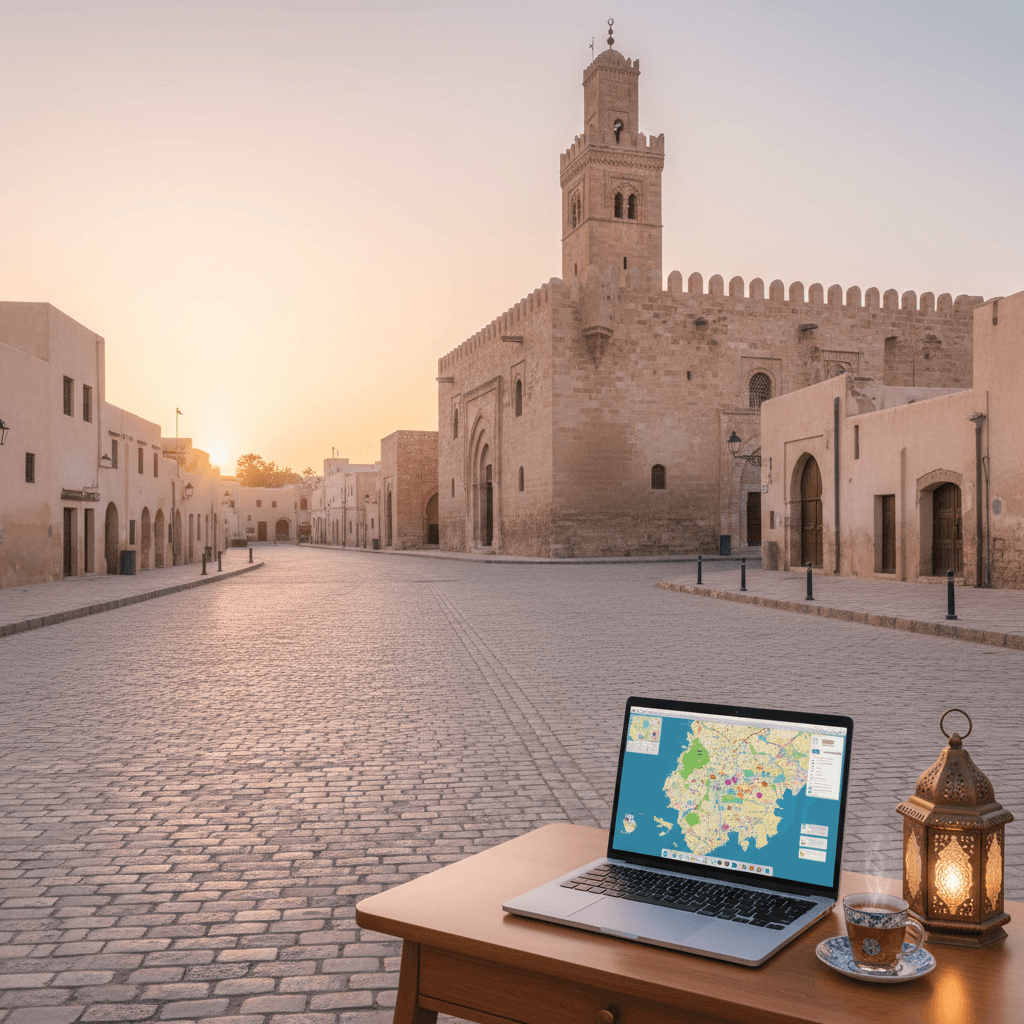
Sfax
🇹🇳 Tunisia
Sfax feels slower than Tunis and grittier than a beach town, with a working port, a preserved old medina and the smell of salt, diesel and grilled fish hanging in the air. It’s cheap, seriously cheap and that’s the main draw for nomads who’d rather keep rent low than chase a glossy scene.
The mood is practical, not polished. You’ll hear calls to prayer bouncing off stone alleys, scooters buzzing past bakery queues and the occasional clatter from the market, then you’ll realize the city can feel oddly calm once the rush hour noise thins out.
- Budget: Around $500 a month works for a tight setup, $800 gets you breathing room and $1,400 buys comfort, AC and more dinners out.
- Rent: A one-bedroom in the center often runs about $180, cheaper on the edges, though the outer areas can feel inconvenient and plain.
- Food: Street food and fast meals sit around $3 to $5, while a nice dinner for two is still around $21, which honestly feels absurdly low.
- Transport: Bus rides are dirt cheap and a monthly pass can be around $10, so getting around doesn’t hurt your wallet.
Where people base themselves
- Medina: Best for atmosphere, cheap eats and walking everywhere, though it can feel crowded and a bit rough around the edges.
- Ville Nouvelle: Better for daily life, cafes, errands and a slightly more modern rhythm, though traffic gets annoying fast.
- Taparura: Good if you want sea air and newer buildings, but there’s still construction noise and a half-finished feel.
Internet is the city’s weak point, frankly. Mobile data is usually the safer bet, fixed speeds can be uneven and coworking at places like Cocoon helps if you need a stable call or a quiet desk, because café WiFi can drop right when you need it.
Safety feels fine in the central neighborhoods during the day, then gets less comfortable near the southern outskirts and any area tied to migrant camps. Most nomads stick to the core, use Yassir or inDrive after dark and keep plans simple, which, surprisingly, works well here.
Social life is thin. You won’t find a big nomad crowd, so the city suits self-directed people who don’t mind long solo work sessions, strong coffee and evenings that end early unless you build your own circle through expat chats or local cafes.
Sfax is cheap, plain and simple. A single person can live here for about $495 a month with rent or roughly $313 before housing, which puts it among the cheapest large cities most nomads ever try, honestly. If you want to keep things tight, $500 a month works, $800 feels comfortable and around $1,400 gets you air conditioning, decent dinners out and a bit of breathing room.
Rent is where the savings show up fast. A one-bedroom in the city center runs about $180, while cheaper places on the outskirts drop closer to $127, though those outer areas can feel a bit isolated and, weirdly, less practical than they look on paper. Groceries and basic meals stay low, street food or fast food usually lands around $3 to $5 and a mid-range dinner for two is about $21, so you’re not spending much just to eat well.
Typical monthly costs:
- Rent, 1BR city center: about $180
- Rent, 1BR outside center: about $127
- Lunch or fast food: $3 to $5
- Dinner for two: about $21
- Local transport: around $19 a month
- Internet: about $15 a month
The real catch is that cheap doesn’t always mean smooth. Internet can be patchy and if you’re trying to work all day from cafes, you’ll probably hear the whir of ceiling fans, scooter engines outside and then lose WiFi at the worst possible moment, which, surprisingly, still happens in places that look perfectly modern. Most nomads sort this out with a local SIM and a coworking pass, because relying on cafe WiFi alone can get annoying fast.
Neighborhoods for your budget:
- Medina: Best for cheap eats, walkability and old-city atmosphere, but it’s crowded and less modern.
- Ville Nouvelle: Better if you want cafes, services and easier day-to-day work life.
- Taparura: Good for sea views and newer builds, though construction can be a headache.
If you want the cleanest tradeoff, pick Ville Nouvelle, not the touristy bits, because it gives you enough infrastructure without the chaos of the medina or the half-finished feel of the coast. For a tighter budget, the medina wins on price and character, but it’s louder, hotter and the call to prayer, traffic and fish-market smells all hit at once. That's Sfax living and it doesn't pretend otherwise.
Sfax isn’t a city of glossy expat bubbles and that’s part of the appeal. It’s cheaper than most places people land in Tunisia, the old town still feels lived in and the air near the port can smell like fish, diesel and sea salt all in the same block.
Solo travelers: Medina
The Medina is the best pick if you want old Sfax, not a polished version of it. Streets are tight, the souks are noisy, the call to prayer rolls over the rooftops and you’ll be close to cheap food, cafés and plenty of people watching. It’s walkable, honestly and you don’t need a car for daily life.
- Best for: Culture, low costs, walking
- Watch for: Crowds, rough edges, fewer modern comforts
- Rent: Usually lower than central modern areas
Pick this if you like character more than convenience, but don’t expect quiet nights or sleek apartments. The upside is simple, you’re inside the city’s heartbeat.
Nomads: Ville Nouvelle
Ville Nouvelle is the easiest place to base yourself if you need cafés, services and a slightly more modern rhythm. The traffic can get honky, the WiFi can be patchy and frankly you’ll still want a SIM card, but this is where most people find the best balance between getting work done and staying sane.
- Best for: Remote work, expats, longer stays
- Work setup: Better access to cafés and coworking spots like Cocoon Coworking
- Rent: Around $180 for a central 1BR, sometimes less outside the core
This area feels more practical than charming, which, surprisingly, is what many nomads want. You’re closer to banks, supermarkets and transport, so daily errands don’t turn into a scavenger hunt.
Families: Taparura
Taparura is the better bet if you want space, sea air and a newer feel. It’s still developing, so you’ll deal with construction dust and half-finished bits, but the tradeoff is room to breathe and a coastline that feels calmer than the center.
- Best for: Space, newer buildings, beach access
- Downside: Ongoing development, fewer services on your doorstep
- Good for: Car-based living and longer stays
Families who want a cleaner, quieter base usually prefer this over the tighter inner city. It’s not lively, it’s not cheap-luxury and it doesn’t pretend to be.
Expat tip: Avoid the far outskirts
Don’t drift toward the southern fringes just because the rent looks tempting. Those areas can feel isolated and exposed and most long-term residents stick closer to the core for a reason.
If you want a simple rule, stay near the Medina or Ville Nouvelle, then move north if you need more space. That’s the sweet spot.
Sfax is cheap, quiet and a little temperamental online. The city’s average fixed internet speed sits in the low teens Mbps, cafes can be fine for email and calls, but a random afternoon outage or a sluggish connection can ruin a work block fast, so most nomads keep a local SIM in their pocket and treat WiFi as a bonus.
Mobile data is the safer bet. Ooredoo usually gets the nod for coverage, Orange is decent and supports eSIM on some plans and Tunisie Telecom works if you’re staying put, honestly, but the trick is to buy the SIM in town or at the airport and top up before you’re desperate, because paperwork and shop hours can be annoyingly slow.
The coworking scene, turns out, is tiny but usable. Spaces like Regus on Ceinture Bourguiba or MindSpace on Avenue de l'Algerie offer proper desks, meeting rooms and more reliable speeds, while workin.space listings usually point to cheaper hot desk options around €5 a day or about €76 a month for open space.
Best areas for working
- Medina: Best for atmosphere and cheap lunches, with narrow streets, call to prayer drifting over the rooftops and old cafés where the WiFi can be patchy but the people-watching is excellent.
- Ville Nouvelle: Better for day-to-day work, with more cafés, services and easier access to banks and shops, though the traffic horn noise gets old quickly.
- Taparura: Good if you want space and sea air, but construction dust and half-finished projects make it feel unfinished, which, surprisingly, bothers some people more than the distance.
Most nomads settle in Ville Nouvelle, then hop to the medina for coffee breaks and cheap fish lunches. That split works because you get a more modern base without losing the smell of grilled seafood, diesel and the salty wind that comes off the coast.
For a realistic budget, expect internet to add about $15 a month if you’re sensible, with coworking still keeping Sfax far below Tunis or European cities. It’s not a glossy digital nomad hub and that’s the point, really, you trade polish for low costs, decent weather and enough connectivity to get your work done if you don’t mind a few irritating pauses.
Sfax feels calm on the surface, then you notice the edges. The medina is walkable, the sea air hangs around the port and the exhaust, fish stalls and call to prayer all mix into a city that’s more workaday than glamorous. Safety is usually fine in the center, but don’t drift toward the southern outskirts or the migrant camp areas unless you know exactly where you’re going.
Stay sharp after dark. Central neighborhoods are generally manageable, though lonely streets, bad lighting and random loitering can feel uncomfortable, honestly, especially if you’re coming back late with a laptop bag. Travelers tend to stick to Medina, Ville Nouvelle and the better parts of Taparura, then call a Yassir or inDrive instead of walking far at night.
Where to base yourself
- Medina: Best for atmosphere, cheap food and walking everywhere, but it’s crowded, noisy and a little rough around the edges.
- Ville Nouvelle: The easiest base for nomads, with cafes, services and better day-to-day convenience, though traffic can be a headache.
- Taparura: Quieter and newer, with sea views, but construction still bites into the vibe and the area feels unfinished in places.
Healthcare is decent for basics, not for drama. The University of Sfax hospital can handle common issues, pharmacies are everywhere and you won’t struggle to find antibiotics, bandages or a blood pressure check, but for anything complex you may end up wanting Tunis or even a flight out, weirdly enough for a city this large.
Emergency numbers are straightforward, which helps when things get messy. Call 190 for police and 198 for ambulance and if you don’t speak French or Arabic well, keep your phone ready for translation because service staff often switch between Arabic and French fast. Expect cold tiles in clinics, fluorescent lights and a lot of waiting, so bring water, cash and patience.
Practical safety moves
- Night movement: Use a taxi or ride-hailing app after dark, especially outside the center.
- Documents: Keep a passport copy and local SIM on you, because phone service can be patchy.
- Health prep: Carry basic meds, mosquito repellent and a small first-aid kit.
- Budget: A single person can live here around $495 a month, so medical surprises sting less than in many places, but they still add up fast.
Pharmacies are the real safety net here and they’re easy to spot. The city isn’t wild, but it isn’t carefree either, so the smart move is simple, stay in the center, avoid isolated outskirts and don’t assume every street after sunset will feel as relaxed as a cafe in Ville Nouvelle.
Sfax gets around the old-fashioned way and that’s part of the charm. The center is compact enough to walk, especially in the Medina and Ville Nouvelle, where you’ll hear scooter engines, car horns and the call to prayer echoing off pale stone. Still, the roads can feel chaotic and crossing streets takes a bit of nerve.
Public transport is dirt cheap. A bus ride is about $0.19 and a monthly pass can run around $10, so if you’re staying put for a while, it’s an easy way to keep costs down. The downside is frequency and comfort, which, surprisingly, don’t always match the low price.
Best ways to get around
- Walk: Best in the Medina and Ville Nouvelle, where most errands, cafes and lunch spots are close together.
- Bus: Cheap and useful for daily local trips, though schedules can be patchy.
- Louage: Shared taxis are the move for intercity trips to Tunis, Sousse and beyond and they’re usually faster than you’d expect.
- Ride-hailing: Yassir and inDrive work in town, cash is standard and there’s no Uber or Bolt to fall back on.
If you need a taxi from Sfax-Thyna Airport, expect roughly $3 to $5 into town, depending on traffic and how tired the driver looks. Honestly, that short ride is the easiest part of arrival, because once you’re in the city, the real question is whether you want cheap, simple or slightly less annoying. For most nomads, a local SIM plus Yassir covers the daily grind just fine.
Neighborhoods that make sense
- Medina: Walkable, atmospheric and the best pick if you want old-town life, but it gets crowded and the streets can feel rough after dark.
- Ville Nouvelle: Better for work balance, cafes and services, with easier access to transport and shopping.
- Taparura: A newer coastal zone with space and sea views, though construction noise still hangs around.
For longer stays, most people end up using a mix of walking, louages and an app-based taxi. That’s the sensible setup, because Sfax isn’t a city where you want to depend on one option and the heat in summer can make even a short walk feel like a bad decision. Biking can work in a few flatter areas, but it’s hardly a mainstream habit here.
If you’re planning day trips, louages are the cheapest fix and they’re how you’d usually get out toward Kerkennah or other Tunisian cities. The city doesn’t make transport glamorous. It just makes it cheap.
Sfax runs on Arabic first, French second and English only if you get lucky. Locals are polite, but don't expect everyone in a shop, taxi or pharmacy to switch languages for you, so a few words go a long way, honestly.
Start with As-salaam alaikum for hello, Shukran for thanks and Bay for okay, then keep Google Translate open because it saves time when you're ordering fish, asking for directions or trying to explain why your SIM card isn't working. French helps a lot in services, especially with landlords, telecom shops and anything mildly bureaucratic and the bureaucracy can be slow and weirdly circular.
- Arabic: Tunisian dialect is the everyday language, especially in the medina and local cafés.
- French: Widely used for housing, admin and business, so it's the practical backup.
- English: Limited outside tourism, so don't bank on it for errands.
In the medina, you’ll hear shopkeepers calling out prices, scooter engines buzzing past and the soft grind of doors rolling open before the heat settles in. In Ville Nouvelle, the pace is smoother, but conversations still jump between Arabic and French, usually mid-sentence, which, surprisingly, can make everyday life easier once you get used to it.
If you're staying longer than a week, learn the basics early. You'll need them for cafés, ride-hailing apps like Yassir or inDrive and especially for SIM setup, because the staff may be helpful but they won't always slow down for awkward English.
Most nomads get by with a mix of gestures, translation apps and patience, though the first few days can feel clumsy. That's normal. The city isn't unfriendly, it just doesn't bend around English the way more tourist-heavy places do and that can be frustrating when you're tired, sweaty and trying to sort out internet after a long taxi ride.
- Best phrase to know: "Shwayya shwayya," meaning slowly, because people use it all the time.
- Useful habit: Save addresses in French and Arabic, not just English.
- Best backup: Use translation apps before calling customer service or a landlord.
One last thing, speak simply and don't overcomplicate it. Short sentences, clear numbers and a bit of French will get you farther than polished English ever will and in Sfax that usually means fewer misunderstandings, less waiting and a much calmer day.
Sfax has a classic Mediterranean rhythm, but don’t picture postcard weather all year. Summers get hot fast, with August often hitting around 32°C and the heat sits on your skin by midday, especially if you’re crossing the medina with the smell of fish, diesel and baking stone in the air.
The sweet spots are April to May and October, when days usually sit around 22°C to 30°C and you still get plenty of sun. That’s when the city feels easiest, cafés spill onto the sidewalks, the sea breeze actually helps and you can walk around without feeling like you’ve stepped into an oven, honestly.
Winter is mild by northern standards, but it can feel damp and a bit grey. January and February usually land around 10°C to 18°C, so you’ll want a light jacket and the cold tile floors in older apartments can be weirdly brutal first thing in the morning.
Best Months
- April to May: Warm, bright and comfortable for exploring the medina, day trips and beach walks.
- October: Still warm enough for outdoor time, though rain can start creeping in.
- June and September: Manageable if you can handle heat and the city’s less tiring than peak summer.
Skip August unless you really love humidity and slow afternoons, because it can feel sticky and tiring, with air that clings to your clothes and makes every errand feel longer than it should. Rain isn’t a constant problem, but the wetter stretch runs roughly from September through April, so pack for the occasional downpour on tin awnings and slick pavement.
If you’re working remotely, spring is the easiest time to settle in. The streets are lively without being chaotic, cafés in Ville Nouvelle are comfortable for a few hours of laptop time and you won’t be fighting the heat while waiting for a louage or walking home after sunset.
Quick Take
- Best overall: April, May and October.
- Most uncomfortable: August, no question.
- Best for budget stays: Shoulder season, because you get better weather without the summer grind.
My advice is simple, come for the shoulder months and stay flexible. Sfax is pleasant when the weather behaves, but summer can be punishing and winter, while workable, doesn’t have much sparkle.
Sfax is cheap, but not painless. A one-bedroom in the center can land around $180, street food is often $3 to $5 and monthly transport can be under $20, so you can keep costs absurdly low if you don’t try to live like you’re in a beach resort. Internet, honestly, is the part that needs planning, because café WiFi can wobble and mobile data is usually the safer bet.
For most nomads, the money-saving move is simple, stay near the center and skip the outskirts. Medina gives you old-school lanes, souks and cheap bites with the smell of grilled fish and spice in the air, while Ville Nouvelle is better if you want cafés, services and a more workable day-to-day rhythm. Taparura has sea views and new builds, but it still feels half-finished in places.
Where to stay
- Medina: Best for atmosphere, walkability and low prices, though it’s crowded and not built for polished comfort.
- Ville Nouvelle: Better for remote work, coffee stops and errands, with more traffic and a busier feel.
- Taparura: Good if you want space and the coast, but construction noise can be annoying.
Get your SIM fast. Ooredoo and Orange are the usual picks and airport kiosks make setup easier than hunting for a shop later, which, surprisingly, saves you a lot of time and stress. For reliable workdays, most nomads carry a local SIM and treat café WiFi as a bonus, not a plan.
Cocoon Coworking is the main proper option people mention and it’s the kind of place you’ll want if calls matter, because Sfax average speeds aren’t glamorous. If you’re bouncing between cafés, test the connection before ordering a second espresso, then have a backup hotspot ready when the line drops, which it sometimes will.
- Banking: Use Wise or another fintech card, then pull cash from local ATMs when needed.
- Transport: Louages and trains are cheap and Yassir or inDrive can work for city rides.
- Safety: Stick to the core city, avoid the southern outskirts and migrant-camp areas and don’t wander around alone late at night.
The medina is fine in daylight, with shopkeepers calling out, scooters buzzing past and the occasional hiss of a tea kettle from a doorway. At night, though, keep your guard up, especially if you’re heading beyond the main streets. Basic Arabic helps, French helps more and a few polite words go a long way in shops and taxis.
For weekends, day-trip to Kerkennah or El Jem if you need a reset. Modest dress is the norm in older parts of town, tipping around 10% is standard and the bureaucracy can be maddening, so keep copies of your passport, your lease and your SIM registration details in one place.
Frequently asked questions
How much does it cost to live in Sfax as a digital nomad?
How much is rent in Sfax?
Is internet good enough for remote work in Sfax?
Which neighborhood is best for digital nomads in Sfax?
Is the Medina a good place to stay in Sfax?
Is Sfax safe for digital nomads?
How do people get around Sfax at night?
Need visa and immigration info for Tunisia?
🇹🇳 View Tunisia Country GuideOff the Radar
Pioneer territory